Shownotes
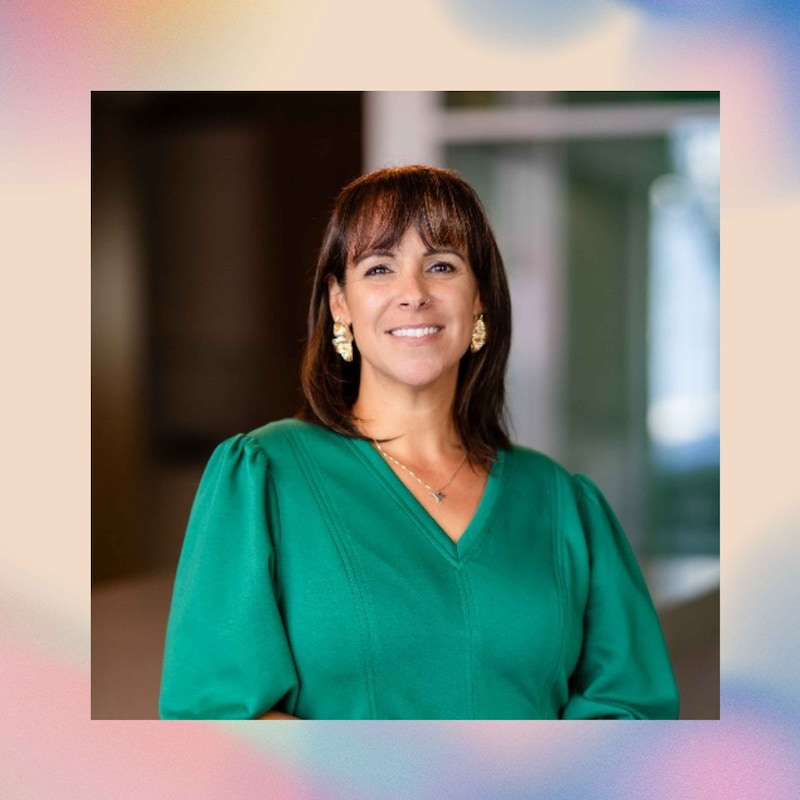
This podcast episode presents a profound dialogue featuring Amy Vaughan, a visionary leader who is actively transforming the realms of creativity and leadership within the digital landscape. At the forefront of our discussion is Amy's commitment to empowering women in the fields of digital and technology through her role as the CEO of Together Digital, a platform that has already made a significant impact by connecting over 500 women. With an illustrious career that includes leading innovative campaigns for global brands, Amy shares her insights on the importance of community building and strategic networking in fostering professional relationships. Furthermore, we delve into her latest endeavor, the Marketer Collaborative, which serves as a co-working space designed to facilitate creativity and collaboration among professionals. During our conversation, we explore the barriers women face in tech and marketing, emphasizing actionable steps that leaders can take to dismantle these obstacles and create more inclusive environments.
The discussion centers around the transformative journey of Amy Vaughan, a creative leader who has significantly impacted the realms of digital marketing and brand development. With over fifteen years of experience, Amy has redefined the intersection of creativity and leadership, advocating for purpose-driven innovation that empowers individuals and organizations alike. As the CEO of Together Digital, she has established a robust platform that supports women in technology and digital domains, facilitating strategic networking and community building. This episode delves into her personal evolution, highlighting her transition from a career marked by isolation to one enriched by collaboration and connection, illustrating her commitment to fostering environments where creativity and innovation can flourish.
Moreover, the conversation explores the importance of intentional team-building, emphasizing the need for diversity in perspectives and experiences within teams. Amy articulates the concept of hiring not just for culture fit, but for culture add, recognizing that varied backgrounds and communication styles enhance team dynamics and foster greater creativity. Listeners are invited to reflect on the significance of understanding individual motivations and the role of effective feedback in cultivating a loyal and high-performing team. The episode serves as a compelling narrative on the power of community and the essential nature of human connection in today’s workplace, especially for women navigating the challenges of the tech industry.
Takeaways:
- The podcast emphasizes the importance of community and connection in both personal and professional life, especially in the post-pandemic world.
- Amy Vaughan, the guest, highlights the significance of empowering women in digital and tech through strategic networking and community building.
- The discussion reveals that hiring for diversity and inclusion is crucial for creating effective and innovative teams in the workplace.
- Listeners are encouraged to seek out meaningful connections and to view networking as a form of self-care, particularly in combating feelings of isolation.
- Amy Vaughan shares insights on the challenges women face in tech, including the persistent pay gap and the importance of pay transparency.
- The conversation underscores the need for flexibility in work environments, balancing remote work preferences with the necessity for in-person collaboration.
Links referenced in this episode:
Transcripts
Welcome to Becoming Bridge Builders podcast where we share stories of leaders who are breaking barriers and building connections that matter. I am your host, Keith Haney and today we have an inspiring guest who is redefining creativity and leadership in the digital age.
Amy Vaughan is a rebel with a cause, a creative force who has spent over 15 years transforming brands and leaders through enterprise, creative leadership and purpose driven innovation.
As an award winning creative director, Amy has led campaigns for global brands like Ford P and G, Walmart, Humana, consistently pushing boundaries while delivering measurable impact. Today, Amy serves multiple missions.
As CEO of Together Digital, she leads a platform empowering over 500 women in digital and tech through strategy, strategic networking and community building. As the Managing Director of Marketeer Collaborative, she's creating spaces designed for innovation, creativity and collaboration.
We will dive into her journey, her vision for empowering women, and how creativity can drive meaningful change. Amy, welcome to the podcast.
Amy Vaughn:Thanks so much, Keith. I'm happy to be here.
Dr. Keith Haney:It's good to have you on. This is a great topic. One of my undergrad was in computer science, so I'm kind of geeky about that sometimes.
So I love to talk about that, but I'm asking my favorite question as we jump in here. What's the best piece of advice you've ever received?
Amy Vaughn:The best piece of advice that I've ever received. I mean, I've gotten a lot of great advice over the years, so it kind of just depends who I'm talking to and when.
But for me, I think some of the best advice I ever received from a friend and a peer mentor was that you always want to be running towards something, not away from something when it comes to anything in your life or career. And that has always stuck with me. Cool.
Dr. Keith Haney:So what are you running towards now?
Amy Vaughn:Right? More of what I'm doing, which is growing and building community and connections.
Which is why I love the basis of your podcast is because, you know, I spent the first, you know, almost 12, 13 years of my career really working in isolation. I was on teams and I worked with my coworkers, but I wasn't building like deep, long lasting professional relationships.
It wasn't until after, you know, I became a mom for the first time. I was well into my 30s that I finally lifted my head up and I looked around and I just really realized my network wasn't there.
And that's when I joined, became a member of Together Digital, the organization that I now own.
And it gave me the opportunity to get outside the four walls of where I worked and really find connection with Women who were equally as ambitious, but also balancing work and life and family. So I finally a place to show up whole. And now part of what I'm running towards is more of that, but in the physical space together.
Digital has done a great job of pivoting in the midst of the pandemic and how everything in the world has been shifting into being more of a hybrid organization. So we do a lot of virtual events, a lot of in person events, which makes it all the more accessible, especially for busy women.
But I really missed being in person and you know, creativity doesn't really work well in a vacuum. And so about four months ago I met my business partner partner who was a former agency owner. And the agency that he owned, he sold.
But the building in which the agency resided stayed. And he and I got to talking about how this industry in particular is going very gig and fractional and contract and freelance.
And everybody's working remote or from home or, you know, a little bit of hybrid. And so we really miss that creative collaboration and innovation when we're in the same shared space that is designed for those kinds of things.
And so that's how the marketer collaborative came to be, which is a co working and collaborative space for events and for desks and office space. We have a podcast studio, we have content studio.
All these amazing spaces that really facilitate everything we're striving toward and I get to see it in real time. So that's like my new newest endeavor.
Dr. Keith Haney:That's so cool. Everybody wants to be part of a great team, but we know how hard it is to create good teams.
What have you discovered as the secret sauce to great team building?
Amy Vaughn:Yeah, I think one of the biggest kind of pitfalls that we fall into when we're trying to hire is that we look for people who are a quote unquote, culture fit versus a culture ad. And so for me, I think it's important to know that people have similar values.
Values I think are important, but they need to have a variety of experiences and perspectives and points of view and communication styles. And so for me, effective teams have always come down to that. Really looking to add to the culture, to look to fill the gaps.
So if we have a lot of a type people, you know, or a lot of extroverts, we're introverts. If we have a lot of. I'm huge into the Enneagram, we've got a lot of sevens hanging out.
Like we're gonna need some fives and some ones, you know, we gotta have some balance And I think the other thing is really understanding what motivates each individual, each individual. And I think that can be learned by understanding people's enneagrams. Myers Briggs Love language even.
It really helps you open your eyes into how they, you know, want to give and receive feedback and praise and criticism and anything else. And so I think if you can work to truly understand the people that are coming to work with you, you are going to receive that back in return.
Which I think is like the greatest gift of all when you're building teams is teams that are just consistent and loyal and hardworking. And it's because you see them and they will turn and see you in return.
And by modeling those things, you just create a super safe environment for them to really show up.
And so, yeah, I have remade good friends with people I've even had to let go, you know, just because I try to do everything I do with intentionality and integrity when it comes to building, growing and creating my teams. And you know, I never ask them to do anything I wouldn't do as well. So I really try to kind of keep things flat in the way of an organization.
Dr. Keith Haney:I was going to ask how you do that because when I let them go, they usually aren't really happy. So I'm curious.
Amy Vaughn:Well, I mean, honestly, like I heard this is another good piece of career feedback I got once from a manager that was like, you know, when you're sitting in an annual review, there shouldn't be any surprises. Like feedback should be an ongoing conversation and discussion.
And so, you know, in a couple cases I've had to let people go because of financial, like that's kind of out of my hands.
And I was transparent about that and respectful and understanding and gave them plenty of heads up, you know, and really kind of treated them the way that I would want to be treated in that situation.
And then where it was performance based, I was just really clear throughout the whole time with them, letting them know, like, here's where I need you to be, here's where I think you are. Where do you think you are and where do you, how do you think, you know, we can make this work better?
And then, you know, again, I get so many little good nuggets. I have a lot of great mentors and, and good friends and I have a podcast of my own as well and a lot of good, great guests for that.
But you know, he said a higher, slow fire fast, which sounds so cruel with the fire fast. But I do think there's something important and I Had her on my podcast. Kim Scott, who wrote the book Radical Candor, talks really a lot. How?
You know, I think Brene Brown talks about it too. Clear as kind, you know, kind of stringing people along when maybe they're not quite the right fit for the organization is not doing them any favors.
It's not doing you any favors. It's actually hurting you, it's hurting your team, it's hurting your culture, and it's really holding them back.
There was an intern that I sat down, she was wanting to be a copywriter. And I told her, you know, I really feel like copywriters kind of fall in one of two camps.
They're either highly conceptual and have a lot of great ideas and are maybe really good at short form copy and others are great editorial writers, a long form copy. And she kind of never showed strengths in really either. And I asked her, I said, do you have a preference towards one or the other?
And she was like, no, I really don't. And I honestly don't know how much I love this work. And I said, well, this is an internship. That's why, that's why you do these things.
You figure it out, you feel it out. If it's not for you, maybe it's not for you.
And then she went off to move to California, got this job at this huge PR firm and is running all kinds of really cool PR programming for them. And so it was, I was terrified going into that conversation because I'm like, I'm going to go and let this kid down.
One, have to tell her about hiring her. And two, I have to tell her I don't think she's going to be a great copywriter, but I think she kind of already knew it.
She just needed to hear it in a kind and clear way. And so by me mapping out sort of how I see where that discipline and craft falls and then really saying, I don't see a particular strength.
Is there one you want to try to go towards and move into this? Is there one that gets you excited? She's like, yeah, no, no, you're right, maybe this isn't for me.
Dr. Keith Haney:So, yeah, I love that idea of hiring slow. Tell me what that looks like practically for you. How, how long do you say hire slow? Because I, I've always wanted to do that.
I'm like, I want to give you like a six month trial or something to make sure that this works before I commit to a long term thing. But it doesn't always work in every industry. So how does that work? And how you carry that out.
Amy Vaughn:As a small mission based business and owner, I, I do need to be cautious in the sense that like, you know, I will check references, always check references. I don't care how big or small you are, I will. Sometimes I don't really feel like they need to do background checks, but I do.
If I'm kind of like, if they get through the first round of interviews, I love to send them the Crystal Knows website, which is like all these different personality types that aggregates into one dashboard that talks about kind of how they might fit within the organization and the dynamic with the team. And I really spend a lot of time evaluating that. And so I usually don't interview more than twice.
And usually it's like if they don't get past the first round, I go right back to them and say, yeah, you know, you're great, but this isn't the right opportunity for you at this time. Maybe, you know, we'll keep in touch.
And then if they go to the second interview, it's really to me usually then about trying to make sure that I have all the information that I need and that they are clear on what the role and opportunity is. Because I think oftentimes we fall into the trap and the desire of being wanted and we're so excited about just getting the job.
And so the second interview is actually a little harder than the first because I might give them example scenarios. I try not to ask for free work. Right now the industry, the job industry is so flooded, people are taking five and six months to hire.
People doing upwards of five or six interviews, asking them to do free project work. That kind of hire slow I'm not down for. So I guess more than hire slow to me it's hire intentionally, which means don't just rush into it.
And then again, as a small business owner, I do like to start like contract to hire. I think that just gives us time both time to test the waters and see if it is the right fit.
I have made just those immediate hires, you know, to W2s at times, but that's definitely sort of that head and heart decision where they're just kind of checking all the boxes and it all feels right. And we spent enough time together that I really feel like, you know, this is the right fit in person. But hiring is hard.
Hiring is so hard and it's so tricky. And for a while there I was really worried I was getting better at letting people go than I was at hiring. But failure is, is learning, right?
Failure is data. Failure Tells me what I can do better next time. You know, if I landed it every time, I wouldn't be learning anything.
So I also take those bad hires, you know, and use them as ways to learn how to do a better job hiring the next time.
Dr. Keith Haney:I love that you mentioned some tests that you kind of use personality tests to kind of also discover fit. There are so many tests out there and they test different things. You know, Myers Briggs tests you in certain circumstances.
I love strength finder myself because that seems to work really well.
Do you go into a higher with the idea that, okay, we have these kind of people on a team, we're really missing this area and how do you search for that particular area in terms of. And you're hiring?
Amy Vaughn:Yeah, I fill the gaps for sure.
So I like Crystal knows, that's why I mentioned that website because it's an aggregate of, if I remember right, Myers Briggs Enneagram strength finders and maybe Destroy and those are really popular ones.
And then as far as finding those people, something else we need to do a better job at a lot of times when it comes to hiring is better job descriptions. You know, I'm trying to remember. Oh shoot, I can't remember the name of the book. I might have to go back to get back to you with it.
Somebody recommended it to me and it really breaks down how to write a job description in a way that it attracts the right people. People. And I'm sure there's more than just this book out there as a resource. And oftentimes we just write the job description.
We don't actually write what are the measurable goals and objectives for this job because you want people to look at it and say that is me. So you probably would use some language in and around that type, personality type. Right.
So if maybe they're an enneagram5, they're going to be more investigative, they're going to be more discerning, they're going to have a lot of questions and that might balance out the other person on your team who's a.
A Creative seven who's always got a million ideas and wants to go, go, go and doesn't really slow down to think about, you know, what's the strategy, what's the process, what are the parameters that we need to be working within for this client.
And so what's cool about Crystal knows is you can have a profile on all of your team members and then it allows you to look at that potential higher and kind of see how they fit within the whole mix. And So I think it's a little bit of the job description, the evaluations of your team members, and then looking at the bigger picture.
And like I said, don't try to put everybody on the same side of the room, same side of the circle, with the same kind of mentality. You really want a good mix of like background, experience, age, race, gender, identity.
Because all of those different levels of, and, you know, experience is, is going to add quality to your work in the way, in anything and everything that you do. And that doesn't mean everybody has to agree all the time. Again, I think it's the values, right?
So if it's all about like, say your values are honesty, integrity, hard work and collaboration, right? You want people who are like, they can ask questions and ask the hard questions.
And then everybody else in the room is going to be like, yeah, you can ask that. Like, we want those questions. I've literally been in cultures where I got told I asked too many questions, which was very curious.
Cause I'm like, how else am I supposed to do my job if I don't make things clear?
Dr. Keith Haney:Exactly. How do you balance out?
Cause I know as person who loves innovation and creativity, how do you balance out setting up that creative, innovative space but still having to get certain tasks done? Because I know there's always that, okay, we gotta meet the deadline of actual producing a product or whatever we're trying to do.
How do you make sure there's still the room for creativity and innovation, but also pro productivity?
Amy Vaughn:I think this comes from my upbringing within agencies.
And being a creative that also was really good at project management and strategy is that I think time management is like so important for creativity. I think sometimes everybody thinks you're creative. That means you're all over the place and you're scattered and you're not organized.
No, like, honestly, you know, if I can either organize myself or get people to help me be more organized and give me deadlines, I tend to be able to push the boundaries more. I can break the rules when I know the rules. And time management for me really allows for more creativity, Right. So I use time blocking.
I know what my more productive times are during the day. I know when I probably should be doing my more mindless tasks during the day because I pay attention to how and when and where I flow.
And so for me, it's about intentionally looking at your time in each day and blocking it and protecting it.
To say, like, my deep work happens for me in the morning because I'm a morning gal, you know, I'M up early, I'm at the gym, I'm getting the kids ready for school. I'm in the office by 8:15 and I'm ready to go. But come afternoon, that's going to be the easier, more light, mindless tasks.
And the deep work has to come first because that's when I have my most amount of energy and my focus. And so I block that so that people can't put events or meetings on my calendar.
During those times when I was working with an agency, I would literally spend eight hours a day in meetings and then have to stay at work till 7, 8 o' clock at night just to actually do the work. And so as soon as I started running my own business, I was like, no more. I. I own my time now and I'm going to protect it fiercely.
So I think time management is a huge tool for creativity. It actually creates balance and space for play when you can set it aside. But then I also think you need to be flexible, right?
Like if something shifts and something changes, you can't be totally rigid and you sometimes have to kind of just go with the flow, which kind of just serves me and my working style as well too. So I like the parameters and again, like the rules, like to know them so that I can break them.
Dr. Keith Haney:That's right. So you mentioned something I want to kind of circle back with.
You mentioned that part of the challenge after Covid was the lack of people wanting to be in person. I just talked to someone who has a company that he works with, a lot of young people coming on board and they really want to work from home.
And it's like, it really drives the company crazy because they're used to being in person and working together side by side.
How do you balance the desire that some people have to say, hey, I'm way more productive if I'm at home in my pajamas versus being in the car for, you know, hour and a half to two hours driving to work and then hour and a half, two hours driving home.
Amy Vaughn:I think it is absolutely a balance. I think a challenge that companies, and even like this co working space I'm running now, the challenge is before we used, it was just a given.
You went into the office every day and we would try to do the right things, put the words on the wall, make there be culture and make certain things fun.
And now all of that seems and feels superficial, right, because we were all faced with our own little mini Covid life crisis, right where we were staring down illness, you know, possibly death for people like it was traumatic for all of us. And I don't think we've really considered the weight of that and what it did to us.
But I think that it's showing up by people saying, I am going to be more intentional about how, when and where I spend my time. And I've seen it in networking, I've seen it in entertainment and public events.
I have a lot of friends who work in the event kind of space and arena.
And it is, it's been hard because again, people are being much more choosy about how, when and where they spend their time and they're valuing their time at home more, which really is kind of honestly not a bad thing. Right. I think as Americans, as a western society, we are a bunch of workaholics.
And you know, I think some of us are more productive at home, but I think offering up that flexibility to say, okay, yeah, three days a week we need to be in the office so we can have meetings, we can collaborate, we can feed off of each other's energy and then maybe a couple days a week, yeah, we work from home. I think what's sad is that like there's a lot of jobs and industries out there that will literally track.
And you gotta like log when you go to the bathroom, when you have your lunch. I mean like the amount of like it just, it just tells people we don't trust you. It just tells people you're not an adult.
And yeah, there's people that are out there that are like that, but they're going to show themselves not by not longing their bathroom times. You know, it's going to come out on how they do their work or if they get their work done.
I think there's a lot to be said for providing people with some sense of freedom and autonomy and ownership. Right. We want to feel like we're a part of something bigger. We want to feel like we belong. We want to feel like our voices are heard.
So I think when companies shut down the idea of any hybrid or remote work, they're just running the risk of basically becoming obsolete because more and more of the workforce is demanding it. It is exactly why the Marketer Collaborative exists. Our co workers that come into here, they come in when they feel like it.
And it's because they want to be here, because we've created the environment, the culture and the space that suits them and for what they need to do. And if companies aren't working hard to do that and then over mandating, of course they're going to get pushback.
world and going into:And so I think that's something else companies just need to be ready for is it's like a whole nother competitive set that they're not considering when they're looking at their organization. I think they think they can go back to the prior status quo and they're just in for a rude awakening, in my opinion.
Dr. Keith Haney:So for the old school CEOs who are used to the way it used to be, the good old days, how do you have company buy in?
How do you keep company morale when people are distant and they're not in the office and they're not there for the weekly rah rah event that the CEO is gonna do on the video, how do you keep that momentum going?
Amy Vaughn:Yeah, well, I think a lot of that too.
If you would talk to employees and ask them to answer honestly about those moments pre Covid, I think a lot of folks would say they already felt forced. And I think now when you try to force those things, they even feel more forced. So I think it's intentional type of work. I mean, think about it.
If you are saving electricity and overhead by not having a physical headquarters or office, you could fly out your whole team twice a year to somewhere really great to do team building, to do workshopping. And you know, I have a whole organization of women who pretty much connect 80% of the time virtually and 20% of the time in person.
And they have started businesses together. They have supported one another through taking care of aging parents, divorce, menopause, you name it.
Some of my best friends, like, one of my best friends lives in Costa Rica. She is a member. We met in person. It took us a year to meet in person. And then that was in January last year.
And then in September, I went to Costa Rica and stayed with her for a week. She produces my podcast. It's just there's a lot of opportunity.
I mean, if we can go online and meet the person we're going to marry, like we can, we can work as a group virtually as well. I think it just takes time and intentionality. So for our organization with together, Digital Slack has been a huge one for that.
We provide channels for conversations we start and generate conversations that we know are meaningful, that are helpful, that are supportive.
When it comes to our events that we host, we really try to make sure there's this ask and give mentality where, you know, we always open up the floor to let people ask for what they need. No guilt, no shame and give without any judgment.
There's just a lot that you can do intentionally to create the right kind of company culture and communication. Oh, another fun one on Slack is virtual coffee, which is like networking roulette.
It's a little bot that will match you with one other person within the organization about once a month. And you just get together like we are here now and you just get to know one another.
And I've always been floored at how great those conversations go and how much because then they'll have a fun conversation like let's do this once a month, you know, things like that. So I think that there's ways, it's just really if people are being open minded about it.
And the thing is is that it's only ever going to happen if it starts at the top and trickles down. So if people at the top aren't really buying into this idea that people can connect even while virtual.
Again, let me remind you, there's dating apps out there. People are getting together every single day by the thousands, dating and or marrying people starting off virtual.
So there's a lot that can be done to sort of bridge that gap. And I think also that makes that whole world that much more smaller. Right?
Because they're talking about hiring for like diversity and backgrounds and experience, a geolocation upbringing, a culture, all that has to do with where you live. So there's a lot of cool opportunities there if you're just willing to be open minded enough about it.
Dr. Keith Haney:I love that. So what are some of the biggest challenges women are facing in tech and marketing today and how can leaders break down those barriers?
Amy Vaughn:Yeah, thanks. So pay gap is still a real thing and it's not changing. I don't think it's budged this last year.
But I think certain things that people can do, executives, leaders, CEOs can do is pay transparency. When you're posting up jobs, put the pay band up there. Don't ask women how much they made at their last job.
It is not relevant to the job that they're getting ready to hire to get due to do for you. You have your budget like work with your budget like and if they don't negotiate, gosh, encourage them to negotiate.
And if you can, that's how I know I'm going to hire somebody, is if they actually negotiate because I'm like that, that means that they're going to always try to get what's best not just for themselves, but for the company, in my opinion. I would also say, you know, speak the names of the. Speak the names of the people that are not in the rooms that you're in. Women.
Actually, I was doing some research for a book I've been writing about closing the networking gap for women.
And I was reading a Harvard Business Review study that talked about the fact that women don't move up by getting more time with leadership or even by leading projects. They actually get higher and move farther faster by third party referrals.
So if you're in a room and it's a whole bunch of white dudes, you better start bringing up some names of people to represent folks that are not in that room because by you basically putting their name on the table as a sponsor champion of them, they are that much more likely to get through the hoops that they might have never gotten through. So that's another really important one. So pay transparency, championing and sponsoring people. Right now, you know, women in particular within the.
Because we've been disrupted a lot by AI for better or for worse. I mean, it's a love hate thing with AI, right? It's a great tool. It's an amazing tool. It creates a lot of efficiencies. You still need the humans.
AI is not going to replace us. We will just be replaced by people who know AI better.
And so what I have seen within our organization is that there are a lot of women who are working in companies that are maybe mid tier jobs in marketing that are getting kind of quasi replaced by AI. And what's going to happen is they're going to realize that that work that's getting done by AI is garbage.
And they actually need people that know marketing and AI to come in and do the job.
But for now, women are losing their jobs more disproportionately than men, especially women of color when it comes to marketing, advertising and tech. And the numbers were already low.
And so a lot of folks are still working in relatively hostile environments because it's all still very like bro culture, especially in the tech space.
And so those numbers are actually dwindling versus increasing between the economy changes, job loss, and then just a lack of desire to be in those spaces because it doesn't feel safe.
Dr. Keith Haney:If a woman was interested in getting to tech and marketing, what path would you recommend she begin or explore to get into that market?
Amy Vaughn:Yeah, I think the, the thing I see that women do a lot of, and I want to encourage you to just stop is getting more degrees Certifications, accreditations. You know, women don't apply for a job unless they're like 110% qualified. Men will if they're 60%.
And I think sometimes we think that we are the problem.
And so instead of trying to network, which feels ick sometimes and uncomfortable, and putting ourselves out there, we will say, I'll just go back and get my mba and then I'll just leave after a degree and have a job.
No, no, you have more debt and you probably don't have a job because you're not going to get hired on a degree within tech or marketing right now because the education can't even keep up with, with what's happening out there in the industry, in my opinion. So I think networking is paramount. I'm not saying don't. If you really want to get your mba, okay, yeah, sure, go get your mba.
If you want some letters behind your name, fine, do it.
However, I will say you should probably take some of that time and energy and put it towards making true, meaningful relationships again, where people will speak your name in the rooms you're not in. The whole reason I'm running a coworking space now is through networking. I met my business partner through another group here in the Cincinnati area.
And you know, I wouldn't have found this opportunity in this amazing new business endeavor if it wasn't for people connecting us. And so there's just a lot to be said about networking. 70% of jobs are not listed and 80% of jobs are hired on referral.
There's a huge hidden job market out there, and the only way you're going to find out about it is if you start reaching out to of people, making connections, having conversations. Job shadowing. You can job shadow when you're older.
It's fine doing freelance contract work to just try some things out on your own, even if it's like a little bit of a side hustle. But yeah, there's, there's a lot of opportunity out there. I think it's just really a matter of right place, right time.
But really knowing the right people is going to open a lot of doors for you.
Dr. Keith Haney:Well, have someone who has a doctorate. It makes you feel warm and fuzzy. It doesn't do anything else for you.
Amy Vaughn:I get it. Right, Yep. Yeah. No, I mean, it's a huge thing to have a PhD behind your name. I think it's amazing.
But like I said, with the current job market, like, I mean, I don't know, I've definitely, like, there are people that I know that do have that degree. And I do encourage them to be like, call yourself doctor, please, like you earned that. Do it.
But as far as like sometimes even landing the job, it might not be the thing.
I think that that era of the degree being the thing that gets you the job has kind of passed because a lot of people are just like men especially are going to get hired on potential women are going to get hired because somebody referred them most likely.
Dr. Keith Haney:Right, Love that. So you describe yourself as a rebel with a cause. What does that mean to you?
Amy Vaughn:That means I. Well, because I always was thinking of the line, playing off the line. Rebel without a cause, Rebel with a cause.
Because I really feel like I have, with the best of intentions sort of rubbed up against like the idea of authority and rules. But I do so as respectfully as I can because I have a greater mission and purpose.
And so I don't feel like, you know, being a full on rebel is going to be the thing that like makes the impact or the change or the difference. I think it does help when people listen and they're like, oh, I can't believe she said that. But that's so true. That's the rebel part.
But you know, I have, I have message, I have meaning. Meaning I have purpose behind that, which I think helps to ground it a little bit more.
Dr. Keith Haney:It makes sense. So I love to ask my guest this other question. What do you want your legacy to be?
Amy Vaughn:You know, for me, especially since I had kids, it's really just for them to look back and say the work that I did mattered. You know, being a parent is hard, whether you're mom or dad.
You know, like not being able to be around your kids all the time can be really difficult, especially at critical points of life. There's things you're going, moments that you're going to miss that you don't get back.
And so for me, it's really leaving a legacy of the kind of work that I can be proud of and that they can be proud of and say, you know, while my mom was away, she was at least making the world a better place. Even though my kids are 12 and 8 and my daughter kind of gets what I do, my son doesn't quite get it yet, but eventually they're going to get it.
And I look forward to being able to share that with them as well.
Dr. Keith Haney:That's awesome. So on season six, we have something new. So it's a surprise question. Oh, pick a number between 1 and 10 for your surprise question.
Amy Vaughn:Oh, 7.
Dr. Keith Haney:Oh, here we go. What would be your best day ever?
Amy Vaughn:Ooh, I like this. I'm going to speak it and then maybe it'll happen. Okay, I got to start with brunch. I love brunch.
I would probably get up early, go to a yoga class, a yin yoga, specifically. This is like, nothing crazy. It's all ground supported and it's where you hold poses for like three minutes.
I know it sounds excruciating, but it's not if you leave feeling like you got a massage. Then I would go to brunch maybe with some friends or maybe just by myself and like, maybe a football game's on that I can watch or something.
And then I would probably go for a hike. I love being outdoors, you know, like, nature is my bomb.
Whenever I'm feeling stressed, you know, just go and walk around, listen to the birds and check out the trees. Probably maybe a hike with my son. He's my hiking buddy. There would have to be some kind of like, I love campfire.
So there probably have to be a little bit of like a campfire towards the end of the day. And then right before I go to sleep, I want to massage, like a really good two hour massage.
And then I just literally want to roll off the massage table and into the bed and just go to sleep. For those of you who do morning massages, I don't understand you. I am like so ready for sleep after a massage, even just like a 50 minute one.
I'm like, where's the bed?
So, yeah, to me it would be very simple, very calm, very relaxing, very peaceful, kind of just spending time with people I love the most, doing the things that I love the most.
Dr. Keith Haney:That's awesome. Where can people find you and connect with you on social media?
Amy Vaughn:Yeah, absolutely. I am on LinkedIn, you know, networking queen here, so you can find me on LinkedIn. Amy P. Vaughan, you can check out Together Digital.
Togetherindigital.com is the website.
And then if you're in the Cincinnati area, or even if you just happen to be in the area and need a place to crash and work for a day, you can check us [email protected].
Dr. Keith Haney:As you wrap up this great. And it's a great conversation. Thank you so much.
Amy Vaughn:Of course.
Dr. Keith Haney:What is one piece of advice you want to leave with the audience to kind of summarize what we talked about today?
Amy Vaughn:Oh, good question. I would say that, you know, give credit to connection and understand that connection is a form of self care.
You know, we've talked a lot about the pandemic, coming back into the workplace and networking.
And I think that we are coming to a place, I hope, where we start to recognize and realize how important human connection is and how important community is.
There was a recent study done by the Surgeon General that talks about how perceived isolation so feeling alone even in a crowded room, which we've all felt that. But perceived isolation can be the same as smoking 15 cigarettes a day and can shorten your life by up to 15 years.
So we used to say sitting is the new smoking. I think now isolation and loneliness is the new smoking. There's like a whole loneliness epidemic among Gen Z specifically.
We don't have we've got very nuclear families. Everything is transactional when it comes to how we go about our day. So seek out and find connection and community anywhere and everywhere you can.
It takes time, but I promise you it's going to give you time back and it's well worth the while.
Dr. Keith Haney:Well, Amy, thanks so much for sharing your incredible journey today and insights for us. Your passion for creativity, innovation and empowering women is truly inspirational for our listeners.
If you want to learn more about Amy Vaughn Together Digital or the Marketer Collaborative, visit our website with links. Will be in the podcast episode below. As always, thank you for tuning in to Becoming Bridge Builders Podcast.
If you enjoyed this episode, subscribe, share and leave us a review. Until next time, keep building bridges that connect and inspire. Amy, thanks again so much for your time.
Amy Vaughn:You too, Keith.





