Shownotes
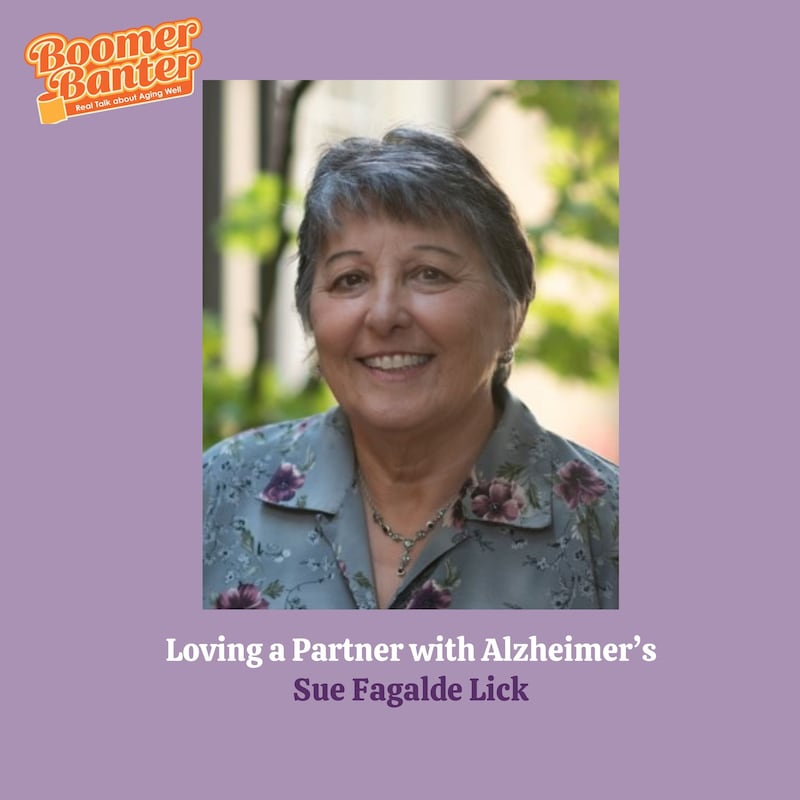
Facing the reality of a loved one with dementia can feel like trying to catch smoke with your bare hands. In this episode of Boomer Banter, we dive into a heartfelt conversation with Sue Lick, who shares her journey caring for her husband Fred as he battled Alzheimer's disease.
From the early signs of forgetfulness to the emotional weight of caregiving, Sue opens up about the challenges, the laughter, and the tears that accompany this often-overwhelming experience. She candidly discusses the financial strains of care, the identity shifts that come with being a caregiver, and the messy emotions that can bubble to the surface.
With humor and honesty, Sue reminds us that caregiving is not about perfection; it’s about doing our best in tough situations and understanding that it’s okay to seek help. Whether you’re currently caring for someone with dementia or preparing for what lies ahead, this episode offers validation, support, and a sense of community.
Takeaways:
- Caring for someone with dementia can be incredibly tough, and it's okay to admit that caregiving is hard work.
- Watching a loved one forget who you are is heartbreaking, and those feelings of loss are valid.
- It's important to seek help from friends or family when you're feeling overwhelmed by caregiving responsibilities.
- Financial strain can add to the stress of caregiving, and planning ahead for costs is crucial.
Links referenced in this episode:
- Find out more at Sue's website. sulick.com
- Sue's book, "No Way Out of This: Loving a Partner with Alzheimer's" is available on Amazon
- Check out our Substack: Wendy Green | Substack
Transcripts
Today, we're going to talk about something that many of you are facing right now, or you may face this in the future. And I want to warn you, this conversation may not be easy, but it's going to be honest. What do you do when the person you love begins to disappear?
Not physically at first, but mentally, when they can't remember what you told them yesterday, when they start to ask the same questions over and over, when they look at you and you can see they're trying to place who you are? My guest today. Sue Lick lived through this with her husband Fred.
Theirs was a second marriage for both of them, and Fred was almost 15 years older than Sue. In her memoir, no Way out of this, Loving a Partner with Alzheimer's, she doesn't just tell us about the medical journey.
She tells us about the financial strain, the identity crisis, the two badly behaved dogs that made everything harder, the guilt of placing Fred in memory care, and the messy, contradictory emotions that come with watching someone you love slowly slip away. Welcome to Boomer Banter, where we have real talk about aging.
Well, I am your host, Wendy Greene, and every week we talk about the challenges, the changes, and the possibilities that come with this season of life.
And if you're caring for someone with dementia or if you're caring for aging parents, this conversation is for you, because Sue's going to validate something you probably already know, but you're afraid to say out loud. Caregiving is hard. It can be really hard, and you don't have to be perfect at it. So, Su Lick, welcome to Boomer Banter.
Sue Fagalde Lick:Thank you very much. Thank you for that nice introduction.
Wendy Green:Well, there's so much to talk about here, so I want to start, you know, where most of us start at the beginning. So how. How long were you married to Fred before you started noticing something wasn't right?
Sue Fagalde Lick:Yeah, we were. It was about 15 years in.
Wendy Green:Okay.
Sue Fagalde Lick: , in: Wendy Green:So you had 15 good years leading up to that?
Sue Fagalde Lick:Oh, yeah. And he was so healthy and youthful, and his parents lived a long time and were energetic.
And it's like, okay, he's going to be around for a long time.
Wendy Green:Yeah, it was a good investment. Yeah.
Sue Fagalde Lick:Yeah, seemed like it.
Wendy Green:So what were some of the first signs that you saw, sue, that were troubling?
Sue Fagalde Lick:Well, you know, I went through this with my grandfather, so I had seen a certain amount of dementia before, and I'd also written about it, and I used to sing for memory care. Centers and things. So, you know, I had some experience.
There was a, there was a good period of about a year, I think, where we never fought much, but we were arguing because he didn't seem to remember anything I told him. And I'd be like, I don't. Don't you care enough to remember I told you that. You know, I'm sure a lot of people go through that. I, I told you that.
h his mother when she died in:And that evening he said, I'm really having trouble remembering things. And I said, well, you know, you've just been through a stressful thing and, you know, I'll hope you remember. It's okay.
But, you know, this is a man who is always turning to me to ask what. What was on the calendar for the day? What's the person?
You know, I was like the carrier of the information and didn't even realize that this was a problem. It's, you know, just an absent minded guy, you know.
Wendy Green:Right. And that was your role. I mean, you just assumed that was normal. Yeah.
So at what point did you start to say, oh, maybe there is something more serious here? I mean, was it after his mother's passing or.
Sue Fagalde Lick:Yeah, unfortunately, my mother passed not long after.
And in that period in between, you know, I was doing a lot of research and reading and you know, you look at all the things online and what are the signs, what are the symptoms? And you're going, oh, yeah. Yep, yep.
Wendy Green:Oh, I know. Because, you know, we all start, we all make excuses. Right. Like, where did I put my phone or my keys?
You know, why am I standing here in front of the refrigerator? And we do start to look for signs, but this was different.
Sue Fagalde Lick:Yeah. You know, you know, when things would come up, he couldn't remember his name and address.
I remember he went to give blood and he did that on a regular basis. And they turned him away because he couldn't give his home information, his phone number and address. You know, he was brokenhearted. Yeah.
Wendy Green:But he was young. He was what, 65 when this started?
Sue Fagalde Lick:Yes, yes. So sort of borderline early onset.
Wendy Green:So did you like go to the doctor and get an official diagnosis at some point?
Sue Fagalde Lick:Yes, eventually we went to our regular doctor. We live in a small rural town where we don't have a lot of specialists and things.
And our regular doctor said, well, you know, Fred just drinks too much. That's what it Is he enjoyed his wine. But, you know, did you agree?
Wendy Green:Did you think you drank too much?
Sue Fagalde Lick:No, no, no. I. You know, he wasn't. That wasn't a problem really, but, you know, some. But I was pretty sure that wasn't it.
But it took two years to get to a specialist with two hours away.
Wendy Green:And four hours away.
Sue Fagalde Lick:Two.
Wendy Green:Two hours away. Still.
Sue Fagalde Lick:I know, still. And he was rude and abrupt, and he administered the. What they call the mini mental exam and said, well, yeah, looks like that's what you got.
And then he was out the door.
Wendy Green:No further discussion with you about it?
Sue Fagalde Lick:No, no.
Wendy Green:So you and Fred, you must have looked at each other and was like, what just happened? Huh?
Sue Fagalde Lick:Pretty much, yeah. We got in the elevator and looked at each other and said, now what?
Wendy Green:Yeah, so now what? Did you go back to his ma, his regular doctor or.
Sue Fagalde Lick:We went to this guy a couple of times, got some prescriptions. Some of them backfired, and he had hallucinations and things that were really bad. But I. I so joined the local support group.
There was a local psychologist who hosted a support group here, and most of them were going to this other guy who was a little closer. And we changed doctors and went to him, and he was terrific. He really was.
Wendy Green:Oh, that makes such a big difference.
Sue Fagalde Lick:Yeah, he was kind and he always acted like he had all the time in the world and, you know, and he knew his stuff.
Wendy Green:Yeah. And it sounds like from your book that you and Fred both developed a very trusting relationship with him.
Sue Fagalde Lick:Yeah, yeah, yeah, yeah, yeah.
Wendy Green:So as. As this was progressing, how aware was Fred of what was happening to him?
Sue Fagalde Lick:He was aware. You know, he was frustrated. He was. He was a man who.
Well, he was a supervisor and the recreation department in San Jose when he was working, but he also had a tax preparation business and. And he. He had to. He sold that business, but he tried it one more year.
But he made a lot of mistakes, and people were getting letters from the irs, and, you know, that was terrible. And I can remember the day that he sold his practice and he took his business cards and turned them backwards on a little stand and it's like.
But, yeah, he knew. He knew at first, and it was very frustrating and hard for him. And for me, it's.
Wendy Green:And for you. Heartbreaking.
Sue Fagalde Lick:Yeah. You know, it's like he couldn't operate things like the TV remote and started having trouble reading.
He loved to read and he couldn't, you know, and he was the one who always taught me what to do on the computer, and suddenly I Was the one going, no, no, no, no, no, don't do that. You know, do this. And you know.
Wendy Green:Yeah, so I was going to ask you about that. Like your roles started to change and you were suddenly in charge of everything.
Sue Fagalde Lick:Yeah, I had to do my own taxes for the first time.
Wendy Green:And you were working. Like, tell me about what daily life was like at that point.
Sue Fagalde Lick:Ah, well, you know, I was doing a lot of freelance writing for local newspapers and things and doing a lot of creative writing too, and playing music at the church. I had, that was a part time job as a music minister.
And, you know, I had a busy life and I got my MFA in the middle of Fred's illness and, you know, I was 51 when I graduated and I wanted to teach and I started teaching, but as he got worse, I couldn't leave him. And he didn't even understand where I was going or what I was doing, you know, had to give it up.
Wendy Green:And did you bring help into the house, Sue?
Sue Fagalde Lick:I did the last couple of years. Yeah. Before, before he went into nursing homes. I, I did and he didn't, he didn't want it. You know, it's like, I don't need that. We don't need that.
And I said, well, I need some help around the house. You know, you kind of do the workarounds. You know, they'll help me clean, they'll help help shop and things.
And some of them were terrible, really useless. And some of them were very helpful. You know, they'd take him out to lunch, they'd take him shopping, he loved to shop. And I hate it.
Shopping or, you know, go to lunch or whatever, you know, just. And they do some cleaning or cooking to make sure he had his meals, but just keep him company. Yeah.
Wendy Green:And, and he got to where he was more comfortable with that.
Sue Fagalde Lick:The last couple ladies that we had were really terrific. And in fact, one of them is a friend now.
Wendy Green:Really? Oh, that's nice.
Sue Fagalde Lick:Yeah, because we had people that were, they were more trouble than they were worth. And at one point.
Wendy Green:So give us some, you know, give us some insight into that because people are going to experience this as they're going on their own journeys.
Sue Fagalde Lick:Yeah, my dad experienced it too.
It's, you know, you get people who don't show up, who just sit and look at their cell phones, you know, who don't actually do anything or who, who don't connect with the person or don't understand that you're there mostly for.
Wendy Green:Them, you know, and what, what kinds of things though? So You. You invite somebody into your house to care for your husband so that. I guess. So that you can teach or write or whatever.
What kinds of things would. Were you asking them to do?
Sue Fagalde Lick:Well, they were doing some house cleaning, some shopping, just keeping Fred company mostly. So he. He was still volunteering at the Oregon Coast Aquarium until the end.
Wendy Green:So they would take him there.
Sue Fagalde Lick:Yeah, yeah. I mean, he had to stop driving, and so people would give him rides and just keep him busy, basically. You know, whatever.
You know, play cards, whatever they could do to keep him occupied while I was madly making copies for my. My handouts and preparing for my classes and going and doing them.
Wendy Green:Yeah, yeah. But not showing up. Oh, boy. That's probably.
Sue Fagalde Lick:Oh, yeah, I know. And some. Some. Oh, I have. Fred lost our checkbook and. What?
At one point, because they went to the grocery store and the guy was off playing the lottery machine.
Wendy Green:He just left. Fred, huh?
Sue Fagalde Lick:Yeah. Yeah. So you get people who do that that are not paying any attention to him, really.
And, you know, we had one guy that was like, this guy's from heaven. He's wonderful. But he quit. He went off to some other activity.
Wendy Green:Oh, no.
Sue Fagalde Lick:And, you know, so there was a lot of that. That people just don't stay in that kind of work.
Wendy Green:Yeah.
Sue Fagalde Lick:My dad had one who ran her car into his garage door and broke it.
Wendy Green:Oh, my gosh. And meanwhile, you're just trying to hold everything together.
Sue Fagalde Lick:Right? Right.
Wendy Green:And then you had those crazy dogs. Sue, I'm sorry, but we have to talk about the one particularly crazy dog.
Sue Fagalde Lick:Yeah, My babies. She. You know, it was really not wise to adopt puppies at that point. And, you know, Fred couldn't handle them at all. You know, he.
Wendy Green:And when you got them, you already knew about his diagnosis.
Sue Fagalde Lick:Oh, yeah, yeah. Oh, yeah. He was well into it. But, yeah. You know, my old dog had died, and, you know, we both missed her a lot.
And I saw a thing at the post office, an advertisement for puppies. And I went, said, let's go look. And I wanted to get just one, but then Fred's holding this other one, this other little guy.
It's like, oh, can we get two? Well, you know, they were little and cute and. Sure. Don't do that. Don't do that.
Wendy Green:Because they don't stay little and cute.
Sue Fagalde Lick:No. And when they're little, it's like having an infant. I mean, there's, you know, they're whining and chewing and peeing and pooing everywhere and.
Oh, my gosh.
Wendy Green:But, yeah, but that one whose Name is escaping me. It just. You couldn't get him trained to stay in the yard.
Sue Fagalde Lick:He was wonderful in obedience school, but he wouldn't stay home. He just kept jumping the fence, and I built a higher fence, and he got over that, too. And, yeah, it was.
It was too much and broke my heart, but I had to get rid of him.
Wendy Green:I know, but that wasn't until Fred was already in the nursing home.
Sue Fagalde Lick:Yeah. Yeah, that's true.
Wendy Green:Yeah.
Sue Fagalde Lick:But I would come home from visiting him, and the neighbor would say, oh, your dog's out again. And, you know, God knows where he is.
Wendy Green:I know that part of the story. In the book, I'm just like, sue, you got enough on your hands. You don't have to chase this dog. I'm talking to you.
In the book, I'm like, sue, come on.
Sue Fagalde Lick:I know, I know. I kept Danny until she passed a couple years ago, and. Yeah.
Wendy Green:And I know we develop these relationships with these pets and especially with Fred gone. I mean, you. You needed the company, but.
Sue Fagalde Lick:Yeah.
Wendy Green:Oh, dear. That was so hard.
Sue Fagalde Lick:Yeah. Yeah. I don't have another one now, and people keep nagging me to get one, and I'm thinking, how am I gonna handle it?
Wendy Green:You know, it's kind of nice to have a little time right now, I'm sure. So. So let's talk about the financial piece, because this is definitely something that many of us are not prepared for. And.
And so besides the emotional toll, it can be devastating financially. So what happened to your household income when Fred's condition progressed? Sorry.
Sue Fagalde Lick:You know, he was retired from city government.
He had a pretty good pension, and he'd been the kind of guy who was always saving, you know, so we had a cushion in the bank, and his income was pretty good. But then the home health people cost $20 an hour, and now I think it's more about 30. And that's a lot. And he had to go into nursing homes.
I mean, oh, you know, the first day that he went into one, they wanted 7, $500 in cash up front. That's. That's a chunk.
Wendy Green:That's a chunk. And how long was that going to cover? How much of his day?
Sue Fagalde Lick:A month. I think there were all kinds, like, deposits and things to get started, but it was. It was about five grand a month throughout. And, oh, my gosh.
Quickly erased what we had in savings and signed up for Medicaid for, you know, government assistance, which was a harrowing process.
Wendy Green:Yeah.
Sue Fagalde Lick:And all the time it's like, well, okay, they want us to contribute as Much as we can. What am I going to live on if all of his income goes to the nursing home? Right. You know, so we.
All our savings went away, and it was really, really tight for quite a while.
Wendy Green:And you were making a little bit as a writer and a musician, but.
Sue Fagalde Lick:Yeah, yeah, it wasn't exactly a fortune, you know, because I was depending on his. I mean, he was. He was getting a good pension.
Wendy Green:But all of now, to get Medicaid, did you have to give up his pension? I know sometimes you have to be destitute to get Medicaid.
Sue Fagalde Lick:Well, we had to spend out all our savings, and we wound up setting up what they called an income cap trust. You know, I've got a friend who was a lawyer got into it, and so that I got a portion of his pension and a portion of it went to his care.
I mean, it wasn't. Neither one was enough, but enough. But we got got by. It was difficult. And then you come out of it with nothing.
You know, if I didn't have a house, I'd be in deep trouble.
Wendy Green:But he had a family. Did anybody step in to help?
Sue Fagalde Lick:No, no. You know, he was on. On the Oregon health plan and, you know, things that. Sorry, but people who don't have money and. Yeah, no, nobody did.
He has had three children from his previous marriage, and no, they did not help in any way.
Wendy Green:I'm sorry. And yet I also understand that's not terribly unusual.
Sue Fagalde Lick:No, I mean, they couldn't offer money. They didn't have any at the time, you know, but. Yeah, I wish they'd offered a lot more moral support and practical support.
Wendy Green:Right, right. And that was definitely missing in your book. You sounded. You were so on your. On your own. You know, your family was in California.
His kids weren't stepping in, and it was all on you.
Sue Fagalde Lick:Yeah.
You know, in retrospect, I should have been a lot more forceful about that and said, look, this is your father, and you have to at least help me make these decisions, you know, because.
Wendy Green:Do you think that would have made a difference for them?
Sue Fagalde Lick:Maybe. It was interesting to watch when their mother, their birth mother got sick. They were all there, I'll help you. And I'm like, oh, yeah?
What's the deal here?
Wendy Green:Well, I guess maybe. I don't know. Was she. Had she remarried?
Sue Fagalde Lick:No.
Wendy Green:Yeah. So they were probably like, well, you know, Sue's got this. She's. She's strong. Oh, boy. I know. So.
So you're managing all of this, the caregiving, the dogs, trying to do some Work, financial stress. And then Fred falls and he hurts his back and everything changes. Can you walk us through that?
Sue Fagalde Lick:H. Yeah, that was rough. You know, I snuck out to do a couple of errands and came back and he was, he was hurt. His knees were bleeding and stuff.
He had fallen outside and I guess the dog got loose and he was chasing him. Yeah. So we took him. He went to the hospital three times in one weekend.
Wendy Green:Really.
Sue Fagalde Lick:From the same fall because his, his cognitive abilities just took a dive with that. He was really out of it. But yeah, he would. They gave him Vicodin, which it turns out is very bad for people with, with Alzheimer's.
And it kind of worked for the pain and he was doing pretty well. But then he was down on the floor again and.
Wendy Green:But yeah, like, give me the Vicodin.
Sue Fagalde Lick:Yeah, really? Well, I thought it was a miracle drug until he was, you know, on the floor again and the ambulance came again.
Wendy Green:Oh, gosh. Because you couldn't get him up yourself, could you?
Sue Fagalde Lick:No, he was a 200 pound man and, and he was fighting it all the way. No, no, no, it hurts too much. I can't, you know.
Wendy Green:Oh gosh.
Sue Fagalde Lick:And yeah, I mean, he was not making any sense. He was really, he was shaking. He had this tremor thing going on as part of his illness and. Yeah, and he was not making any sense.
Friend of mine who had used to be a paramedic came over, said, let me take a look at him. I said, yeah, he needs to go to the hospital. And that third time they kept him there and they said, well, he really needs to be in full time care.
He can't be at home anymore. And he wasn't making any sense.
And he kept throwing his sheets off and throwing it, showing his genitals to the whole world and, you know, just not thinking we could just get up and walk through this wall, you know, he was not making any sense.
And you know, Medicare and it's all its glory is, you know, if you've been through it, you know that you have to be in the hospital a certain amount of time and have it classified as acute care for them to pay for nursing home care afterwards. And they did not classify it that way. And they booted him 24 hours before he could have gotten care paid for.
Wendy Green:And of course, why would you know that? I mean, this was your first time through it, right?
Sue Fagalde Lick:Yeah, well, yeah, well, actually they did that with my mom too, but. But they said, you know, go home and relax. He's not going anywhere.
And then they called and said, we're transporting him right now to the nursing home that's by the hospital. And so show up with a week's worth of clothes and 7, $500, and,.
Wendy Green:You know, oh, my gosh. Yeah. So the. So. So the insurance pitfalls are another thing to be. To think about, be aware of when you're going through something like this.
Sue Fagalde Lick:It is. Even with my dad, he's had some mental problems, but it was mostly physical. But he. He shattered his thigh.
And at one point, he was in his 90s, and they sent him to a really bad nursing home. And I'm here in Oregon, and they call and say, your father has to. We're not keeping him. He has to go.
Wendy Green:What?
Sue Fagalde Lick:He wasn't making progress in physical therapy because he couldn't put any weight on his leg. So they said, we can't keep him. You know, it's like, but I'm in Oregon, and where's he gonna go, right? So. Yeah.
Wendy Green:Okay.
Sue Fagalde Lick:So.
Wendy Green:So the doctor tells you he can't come home anymore. He has to go to. What did that do to you, Sue?
Sue Fagalde Lick:Oh, God. Well, I was. I was surprised because I really thought we'd be going farther into the. The illness.
And Fred was still, like, showering and things, dressing himself and things like that on his own. You know, the activities of daily living that they talk about, he was still doing them.
You know, he didn't understand what to do with salad dressing and things like that. You know, I thought we'd be going farther into it before he'd have to go into care.
So I felt kind of guilty, like I hadn't done enough, you know, certainly guilty because he'd fallen. It was interesting. It's like the first time I did laundry, you know, came home, it's like, I won't be washing his clothes anymore. I'm.
I'm living alone. You know, this is. Oh, this is a shock. And he was so upset. I mean, he just cried and cried and begged to come home and said, I'll be good.
I'll be good. Take me home. You know, and you want to. You know, you want to say, yes,.
Wendy Green:Of course you do.
Sue Fagalde Lick:Get in the car. We're going.
Wendy Green:You know, I know, because you probably at some point were questioning yourself, like, well, maybe if he comes home, I. I'll do a better job. I'll take care of him in a different way. I'll do more or whatever.
Sue Fagalde Lick:Yeah, yeah, for sure. Yes. And. Yeah. And at some point, he confused me with his first wife and thought I was divorcing.
Him, you know, because he didn't understand why am I here in this whole different place with these people who I don't even know? And yeah, it was, it was so hard.
Wendy Green:Yeah, that is, I, I, Yeah, I felt your pain as I was reading that. I was like, oh, my gosh. And so, so how long did he stay in that nursing home before he got moved again?
Sue Fagalde Lick:He was in four different places.
Well, he was in the first place for a couple of months, but they were allegedly doing physical therapy and that wasn't happening and it was not a good place. So they were opening this new adult foster care place in town and he would be one of the first residents there. Okay, that sounds perfect.
You know, five grand a month. I went with one of his caregivers and checked it out and moved him in. But they didn't know anything about Alzheimer's.
They didn't have any activities. There was nothing for him to do. There were times where I showed up and there was, there was nobody to help the people there.
You know, I remember an old guy needed to go to the bathroom and I'm like, where are all the staff? And I took him because there's nobody there. I actually turned them into the state caregiver authorities.
Wendy Green:Yes. The way you describe that was just horrible. Like so. And I had never heard of that. Foster care for Alzheimer's or.
Sue Fagalde Lick:Yeah, there's a lot of them, actually. Yeah, my brother's mother in law is in one now. And they can be wonderful just, you know, if they know what they need to do and how to do it.
But they didn't, they didn't keep the doors locked. He started, he was doing a chico. He started running away.
Wendy Green:The dog.
Sue Fagalde Lick:Yeah, because the dog not necessarily with clothes on.
Wendy Green:Yeah.
Sue Fagalde Lick:So we moved into another place an hour and a half away that was, you know, a memory care center, which is very nice. It's, it's still going. It's a, it's actually a beautiful place. And people really are well trained, but they don't handle medical stuff.
They, it's strictly memory care. And they were very good until he needed more.
Wendy Green:Yeah. So if, if somebody listening was starting to explore different options for somewhere to live.
I mean, what do you wish you had asked about that foster care or known more about the foster care that might have prevented you from going there?
Sue Fagalde Lick:Well, you know, they were brand new and I believed what they said. And I'm not sure how I would have checked them out except to be maybe more suspicious. You know, they said, oh, we know how to do this.
It was a husband, wife team. The wife was a nurse in China. China. She was from China. She had been a nurse. And, you know, it seemed like everything was good, but it wasn't.
And I don't know when It's a new facility. Yeah, I don't know how you check it out.
If it's someplace that's been going a while, you know, definitely visit, drop in, see if you can have a meal there. You know, see how they're.
How they're treating the people during meal time and what they're serving, whether it's good food or not, you know, definitely spend some time. And if you can get there different times of day. How is it in the evening? You know, how is it on a weekend?
Even the Good Place, half the staff is gone on the weekends. They don't work weekends. And they put everybody in front of the TV and expect them to be amused.
And, you know, I'd be sitting there looking at an old lady trying to get out of her wheelchair and thinking, okay, if she gets up, I'm going to have to jump and grab her, because there's no staff here, you know,.
Wendy Green:And this was at the Good Place.
Sue Fagalde Lick:This is at the Good Place. Yeah, but. But yeah, talk to people who. Talk to people who have their. Their loved ones there. I mean, definitely check it out all the way.
Wendy Green:So you were heroic, though, Sue. I mean, you made that drive every day.
Sue Fagalde Lick:No, I didn't make it every day.
Wendy Green:It seemed like you made it every day from your book. An hour and a half there. Then you would teach a class, then you'd go back, like, unbelievable what you did to be there with Fred and.
And then sometimes he didn't know you.
Sue Fagalde Lick:Yeah, the first time he really, truly didn't know me. I mean, for a long time he didn't know my name and thought, well, it doesn't matter. I wore a name tag for a little while.
But, you know, as long as he knew I was the one he loved, I didn't care that much. But the worst day was our 25th wedding anniversary because he truly did not know who I was.
He looked at me like a stranger, and that just broke me, you know, my heart.
Wendy Green:And you tried to take him out for dinner that night, right?
Sue Fagalde Lick:Not that night.
Wendy Green:I just.
Sue Fagalde Lick:That was a different photo albums and. Yeah, but. No, but many times I did take him out.
Wendy Green:Yeah.
Sue Fagalde Lick:More and more difficult because, you know, it's messy, you know.
Wendy Green:Yeah, yeah, you talked about that, too. I mean, the way he would eat, and it was just different. Yeah, yeah.
Sue Fagalde Lick:It's like a child who doesn't know what to do with food. And you know, their food winds up everywhere. On their face, on their clothes, on the table.
And he's like, you know, and then if they have to go to the restroom, you're like, oh boy. You know.
Wendy Green:Right. Especially like you can't take him into the men's room because you're a woman. So.
Sue Fagalde Lick:You wait outside the door and pray. Okay, has it been too long? Do I need to do something?
Wendy Green:Send some man in who's not going to know him. And it's, oh gosh.
Sue Fagalde Lick:Yeah, yeah. He didn't go out as much after a while. But you know, I did take him out sometimes.
You know, it's like at one point, because they don't remember they've already eaten. So he started gaining a lot of weight. It's like, you just ate. No, I'm starving, you know.
And they would give him more food so he gained weight and we had to go out and buy some clothes and it's like buying for a little boy. And then it's like, wait a minute, don't go anywhere. Will I pay for this? And you know, just like having a toddler.
Wendy Green:Yeah. And the showers. I mean, there were times that you talked about in the book where he was not cleaned up well by the staff before you got there.
Sue Fagalde Lick:No. Well, this is really the last place he was in.
The memory care center was pretty good, but the last place he was in was a Medicare place approved place and the care was terrible.
Wendy Green:He Medicare or Medicaid?
Sue Fagalde Lick:Medicaid. I'm sorry, Medicaid, Yes. Yeah, yeah, that was awful. And yeah, he wasn't clean. I don't think he got much water to drink.
He always was thirsty and crust on his mouth and he wouldn't eat and the food wasn't very good, but he just would not eat it and they drugged him so much at that place.
Wendy Green:And you, and you continue to go and visit, you sure. Continue to feel loving feelings for this person who wasn't really the person you knew?
Sue Fagalde Lick:No, not anymore.
Wendy Green:Did he at any point know you were his wife at that point?
Sue Fagalde Lick:No, I don't think so. I don't know.
It's like when I used to visit my grandfather, I was just the woman in the black coat and I, I, I would sing for his folks at his place and he knew that, but he didn't really know I was his granddaughter anymore.
Wendy Green:Yeah.
Sue Fagalde Lick:Yeah.
Wendy Green:Well, you are amazing and unfortunate that you had to go through this so many times. With so many family members, but so closely with Fred. And what I. One of the things I really appreciate is that is your honesty.
You know, you are not sugarcoating how difficult it was or the feelings that you had. And, and I think that's really helpful for people to know that. Feeling resentment or feeling guilt or feeling anger.
Those are normal feelings and absolutely are. And lots of tears. I mean, how do you come back? You know, you.
You leave feeling angry, you leave feeling frustrated, and then you come back being loving. What do you tell yourself?
Sue Fagalde Lick:Sometimes it's just obligation, you know, that. That you need to do this. And there are people. There are definitely.
I've seen a lot of spouses who go every day and are basically there for every meal and, you know, they spend their whole life is. Is hanging out at the nursing home.
Wendy Green:Wow.
Sue Fagalde Lick:You know, I would be watching the clock and going, well, especially with my dad, but with Fred, too. Has it been long enough? Can I go now? You know, it's. It's hard and there's nothing.
You can't have much of a conversation, you know, not too much, anyway. Yeah. Coming up with, okay, what's all the happy small talk that I can bring up? I'm not going to tell them all the troubles or anything or.
Wendy Green:Darn dog got out again.
Sue Fagalde Lick:Yeah. It's like, you have a dog, you know. You know, we're not going to talk about politics or. Or anything deep because they don't know.
Wendy Green:Yeah.
Sue Fagalde Lick:Sitting there and it's like, huh, your ring looks like my ring, you know. Yes. Because we're married, you know.
Wendy Green:Interesting. So. So to take care of yourself, you had the support group.
Sue Fagalde Lick:Was.
Wendy Green:Did you stay with that for a long time?
Sue Fagalde Lick:I did. I stayed with that until he was in a nursing home. And then the. They said, well, you don't really fit our criteria anymore.
Wendy Green:The group said that to you?
Sue Fagalde Lick:Yeah, yeah. It was really for people who were caring for folks at home now.
The nursing home had a group, but I wasn't going to drive that extra time to go to a group there, so I. Wow.
Wendy Green:So you lost that support. So then what did you do? Did you find another group or therapy or.
Sue Fagalde Lick:I was in therapy through pre. Pretty much. Pretty much the whole thing. I had. I started therapy after my mother died.
I went for a little while to a grief support group and that wasn't working. And all I wanted to talk about was Fred, you know. Yeah.
Wendy Green:Yeah.
Sue Fagalde Lick:So I went into individual therapy. Yeah.
Wendy Green:And was that helpful?
Sue Fagalde Lick:It was. It was person. I had moved back to California after a While. But then the next one I got, she was a saint. She was really wonderful.
Yeah, yeah, she was very helpful. And I. I don't know how you get through it without somebody to talk to.
Wendy Green:That's what I was going to say. I mean, I can't believe the group kicked you out. So, like, wait a minute.
Sue Fagalde Lick:Nobody understands unless they've been there.
Wendy Green:I think that's probably true. Yeah.
I mean, we can intellectualize it, which is what some of what we're doing in this conversation, you know, talking about what happens, how people can think about it. But. Yeah. So how long after Fred passed did you put together this book?
Sue Fagalde Lick:I had been writing the whole time. I would sneak into my office or write in my car or whatever. I'd been taking notes.
So I had about a thousand pages of journal that I condensed into a book. So it was a matter of several years. But before I got serious about Indiana, I'm just like.
I didn't want to be talking about Alzheimer's all the time, you know? Yeah, yeah. But, yeah, it's an important story to tell, so I did do it.
Wendy Green:So what do you normally write about, Sue?
Sue Fagalde Lick:Lately, I've been writing a lot about living alone, but I've done a couple of books on childlessness because I don't have children of my own. We didn't have any kids together, and I've written about childlessness for a long time. And this is a natural progression.
If your partner with whom your childless passes, then you're alone.
Wendy Green:Solo aging.
Sue Fagalde Lick:Yeah, solo aging. That is the focus these days. I've got a sub stack called Can I Do It Alone? Getting a lot of traction.
There are a lot of people out there who are alone or who are afraid of being alone. They're taking care of someone now, and they can see their future is going to be solo. So there are a lot of people.
I mean, people don't realize 27% of American households are occupied by just one person. Yeah, that's a lot.
Wendy Green:Yeah, that is a lot. You know, and I wonder what percentage of those have children that might be able to help. But, you know, not all children step up either. So.
Sue Fagalde Lick:No, you can't.
You can't count on that or that, you know, the way this way society is now, they may live across the country, you know, might not be able to help at all.
Wendy Green:And so as a solo ager, I know this is veering off a little bit, but as a solo ager, you still have to figure out who is going to be your community, because it takes A village. Right.
Sue Fagalde Lick:It does. It does. And that's. That's a lot of it. You need to build the connections that you don't have naturally, because you're not, you know, my.
You're not surrounded by. By loving family who will be there, you know, if you go to the doctor and they want to know who your emergency contact is, you have to think a bit.
Wendy Green:Yeah.
Sue Fagalde Lick:It's not just you put down your husband or your child, you know?
Wendy Green:Yeah. Yeah. It's a whole other set of challenges to face. Yeah. So what message would you want? People who are in the middle of this caregiving right now or.
Or, you know, who see it coming? What message would you want to leave them with?
Sue Fagalde Lick:Oh, you'll get through it. You've got to take care of yourself as much as you can and keep as much of your own life as you can, because you're going to need it when it's over.
And ask for help, demand help. If there are family, people, family members around who aren't stepping up, insist. Don't just let it slide, you know?
Wendy Green:You know, and that's a really good point, because I think a lot of us in this boomer generation, right, we were. We were so independent, and there's almost this mindset, you know, well, if I ask for help, then I'm admitting that I'm not able to do it myself and.
No. Ask for help.
Sue Fagalde Lick:Yeah. Yeah, definitely. And not just family either. You know, friends actually like to help. Most of the time, they're glad to be asked.
They see you're in trouble and they don't know what to do. I mean, if you can say, hey, could you go get this prescription for me? They'll do it. And it's not that big a trouble, you know?
Wendy Green:Right.
Sue Fagalde Lick:But if you don't ask, they don't even know that you need help. If you present this we're okay thing.
Wendy Green:Right.
Sue Fagalde Lick:We don't know.
Wendy Green:But in your situation, though, you probably couldn't have asked them to come stay with Fred so you could do something, because if he's, you know, not knowing what's going on, that might have been more upsetting. Is that right?
Sue Fagalde Lick:Well, I did, though. I mean, I had one friend from church come stay with him, and there was a weekend that I took myself off to bluegrass camp. You did? Oh, yeah. It was.
It was wonderful. But his. His sons. His two sons came and I had to pay them.
Wendy Green:You had to pay his sons?
Sue Fagalde Lick:Yeah. And he did understand why they were.
Wendy Green:He didn't understand why they were there.
Sue Fagalde Lick:Right. Why they were. You know, but the. They did the thing that one time.
Wendy Green:Did he know them then?
Sue Fagalde Lick:Yes. Yes. Okay.
Wendy Green:All right.
Sue Fagalde Lick:Yes. You know, I think they had some fun, but. Yeah, people aren't going to jump in unless you ask. You know, my.
My neighbor asked me to sit with her husband when he was still alive and had had dementia, and I. Okay. I didn't know him very well, but. Yeah, but I did. And, you know, we did our best to have a decent conversation, and it wasn't so bad.
Wendy Green:Well, thank you so much, sue, for sharing your story and for giving us permission to feel all the feelings and to make some of these hard decisions and. And really to be imperfect caregivers. You know, we do the best that we can. Right?
Sue Fagalde Lick:Yeah. Nobody's perfect at this. Nobody. And, you know, you have your own things.
They're going to be days when you just can't deal, you know, and that's honest.
Wendy Green:You know, that's the thing. Like, people say it in the back room of their house, but to say it out loud that they can't do it is not easy for people to admit. Yeah.
Sue Fagalde Lick:So I remember one day when I called my neighbor across the street, I said, can I just come over? I can't. You know, I can't handle this anymore. Just. Can I come over and talk? You know, you.
Wendy Green:I mean, this ability to be honest and vulnerable is a big part of who you are, obviously. Right. But. And care and caregiver is one of the hardest things that any of us will ever have to do because, you know, there's no instruction manual.
And typically we're caregiving. I mean, I know people that have to caregive for children, but typically we're caregiving for an elderly parent or spouse.
And so you kind of have this expectation that they're an adult. You know, they. Yeah, it's hard.
Sue Fagalde Lick:Yeah. And there's. There's all kinds of guilt and worry about what's coming, and. And. And you're looking at the money and.
Wendy Green:That's. Right.
Sue Fagalde Lick:All kinds of things. You know, it's. It's complicated. You know, if you have issues, you know, people have issues with their parent or their spouse that are not resolved.
This could make it even worse.
Wendy Green:Yeah. Well, let me show people how they can find you. You have a website called su lick.com lick l I c K. And all of your books are there. Right?
Sue Fagalde Lick:Right.
Wendy Green:And your sub stack and Sue's book is called no Way Out. Loving. What is it? Loving A Partner with. Yeah, Loving a Partner With Alzheimer's And I. I highly recommend it. It's. It's well written.
You know, I have a lot of books I have to read for this show. And yes, you know, there was a lot of takeaways for me in this book. I'm, you know, just starting on a caregiving journey with my mom.
She does not have Alzheimer's, thank goodness. But there was still a lot of things to consider as I was reading through some of what you went through.
So thank you for being so honest and vulnerable and sharing your book.
Sue Fagalde Lick:Well, thank you. And I sympathize, you know, having dealt with my. My father and my grandfather and my mother in law to a certain extent, it's. It's. It's not easy.
Wendy Green:Yeah. I mean, right now we're okay. But you're right, it's not easy. So. So thank you all for listening to Boomer Banter.
And I know there was a lot here that you guys found insightful and helpful. And I really hope that you will share this with people who might need to hear it. And remember that none of us are perfect.
We're all doing the best we can, and we're figuring it, figuring this out together. So my name is Wendy Green, and I hope all of you will take good care of yourselves. Thanks, Sue.
Sue Fagalde Lick:Thank you, Wendy. It's been great.
Wendy Green:Sa.



