What does twenty years of serious product work actually look like from the inside?
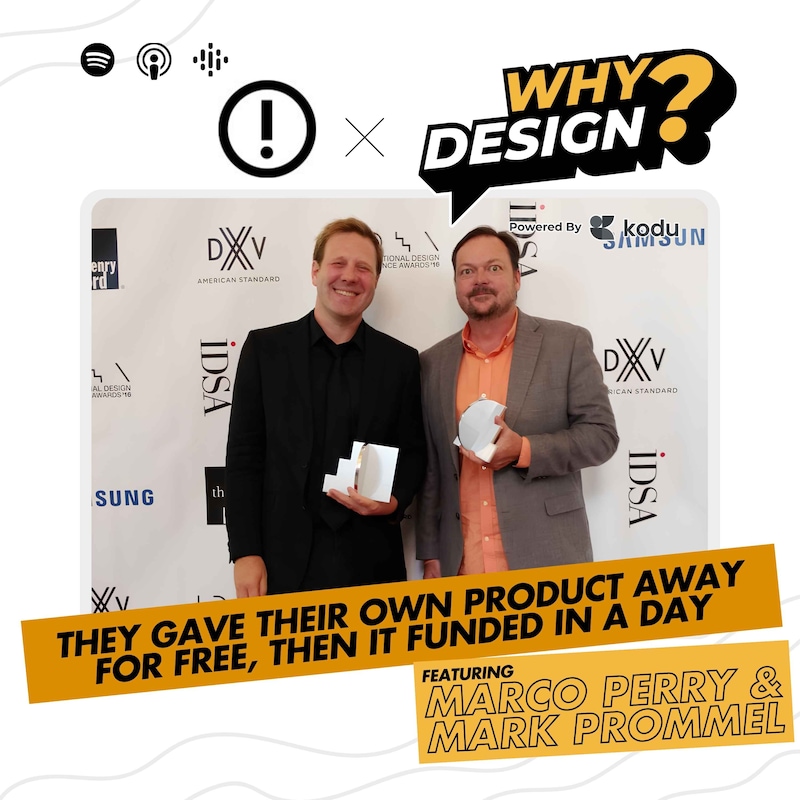
In this episode of Why Design, Marco and Mark, co-founders of Pensa, share the belief that sits at the heart of their work: that the best products come from designers and engineers working through the same problems at the same time, not handing work over fences and telling each other what can't be done.
Rather than building a conventional consultancy where disciplines operate in sequence, Marco and Mark built Pensa around a model they call finishing, not fixing. That decision led to a 20-year-old studio in Brooklyn that has worked on everything from razors to wire bending machines to medical implants, much of it still under NDA.
This conversation isn't about design trends or career highlights.
It's about what it takes to build something that lasts.
It's about what happens when you build a founding team of people who don't do the same thing.
It's about the ego problem in hiring, and why the people who want the job the most often show it the least.
Don't just listen. Go beyond the podcast. Join the Why Design community: teamkodu.com/whydesign
What You'll Learn
- Why involving engineers and designers together from day one produces better outcomes than the standard design-then-engineering handoff
- How Pensa solved a decade-long invisible portfolio problem by building their own products under the Pensa Labs name
- Why the most dangerous hire in a creative studio is the person who presents brilliantly but can't move a project
- How a wire bending tool built for internal use became a bootstrapped product business serving aerospace, orthodontics, and medical implants
- What "finishing not fixing" looks like in practice, including the OneBlade razor story where dozens of prototypes led to a pivot that became the foundation of all subsequent work
- Why storytelling is the most underrated skill for designers and engineers, and why the ability to bring a client along on a three-year development process matters more than most schools teach
Memorable Quotes
"It's not giving up to admit that we need to pivot to a direction that's simpler. And simpler is usually better."
"We got to see foldable phones ten years before they came out because we were working on it."
"People who have big egos often present very well. And the people who are humble but very talented often are a little too humble in the hiring process."
"You're not going to AI your way out of that discussion."
"The last thing you want is partners that do the same thing that you do."
Resources & Links
🎧 Listen on Spotify, Apple Podcasts, YouTube & Amazon → whydesign.club
👥 Join the Why Design community → teamkodu.com/whydesign
📸 Follow @whydesign on Instagram
🎥 Watch full episodes → YouTube.com/@whydesignpod
🔗 Follow Chris Whyte → linkedin.com/in/mrchriswhyte
🔗 Explore Pensa → pensa.co
🔗 Connect with Marco & Mark → Marco / Mark
About the Episode
Why Design is powered by Kodu, a specialist recruitment partner for the hardware and physical product development industry.
Through honest conversations with designers, engineers and creative leaders, we explore not just what they build but why they build it; the beliefs, decisions and responsibility behind meaningful work.
About Kodu
Why Design is produced by Kodu, a recruitment partner for ambitious hardware brands, design consultancies and product-led start-ups.
We help founders and leadership teams hire exceptional talent across industrial design, mechanical engineering and product leadership bringing structure and clarity to one of the hardest parts of scaling.
🔗 Learn more → teamkodu.com