Shownotes
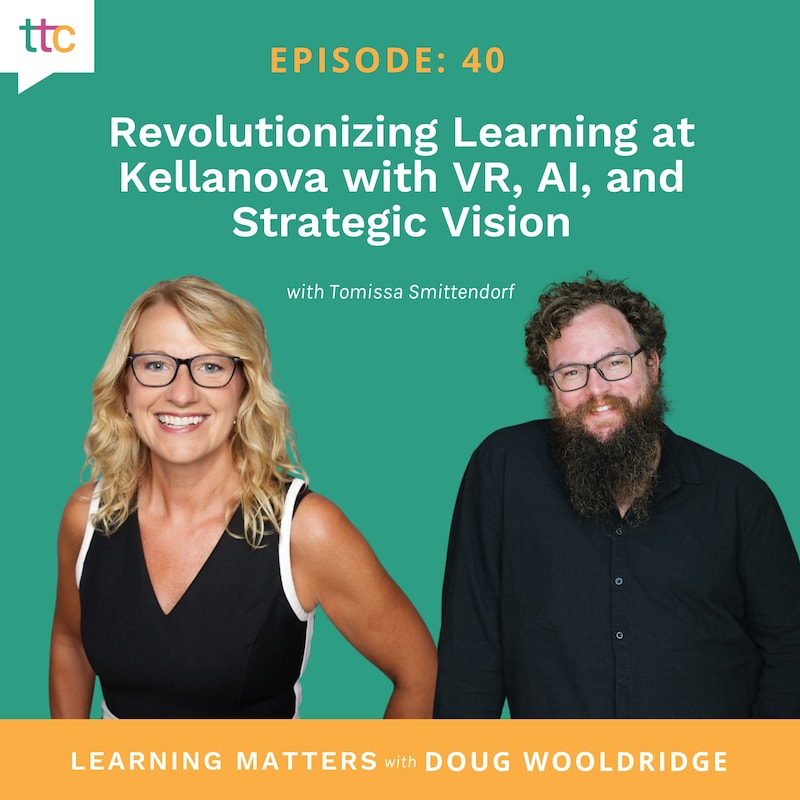
In this episode of Learning Matters, we sit down with Tomissa Smittendorf, Senior Director of Commercial Capabilities at Kellanova, to explore how her team is leading the charge in learning innovation through immersive technology, data-driven strategy, and AI integration.
Tomissa shares how Kellanova is using virtual reality to transform retail sales training, achieving measurable results in engagement and performance. She also discusses the importance of having a strong learning value proposition, building a culture of continuous development, and leveraging AI as a co-intelligence partner. From marketing L&D internally to managing change and well-being, this episode is packed with insights for forward-thinking L&D professionals.
✅ Topics Covered:
• Building a learning strategy that aligns with business goals
• Driving adoption of AI in learning
• Using VR for onboarding and skills development
• Measuring behavior change and learning ROI
• Navigating data overload and telling the “so what” story
• Fostering a people-first learning culture
🔗 Connect with Tomissa Smittendorf on LinkedIn: https://www.linkedin.com/in/tomissasmittendorf/
At ttcInnovations, we help businesses create lasting change with immersive learning experiences. Through instructional strategy, design, and content development we empower employee confidence, performance, and results.
💡 Looking for custom learning experiences without licensing fees? Contact us for a free consultation! https://bit.ly/4aOhPKq
🤝 Need extra hands fast? Try staff augmentation! Click here to get matched with experts in 48 hours - no job posting needed. https://bit.ly/3RiEfLT
🚀 Simplify outsourcing with our subscription plans - predictable pricing and limitless innovation. Book a meeting for your free first week! https://bit.ly/3RiEfLT
🎯 Boost results with serious games for optimal retention and results. Contact our Sales team to learn more: https://bit.ly/3RiEfLT
Transcripts
That is taking virtual reality to the next step. Yeah. So what we're doing is we're working on another use case with our account executive team and to be able to showcase the aisle and just what our amazing brands can do. I won't give away too much of it because we're right in the middle of developing it, but I hope to talk about it.
Thank you for sharing that insight. think that's so cool. I know a lot of companies are really interested in things like VR and AR, but don't really know how to, they don't know where to start. Welcome back to Learning Matters. I'm Doug Wooldridge, your host, and I'm very excited to be speaking with our guest today. She's an advisory board member for Tiger Hall and Cornell University executive programming. She's implemented a highly successful social learning platform with an 86 % adoption rate.
corporate learning networks,:Thank you so much, Doug. What an introduction. I love it.
Awesome. As always, we'll be discussing the latest and greatest developments in the world of learning and development. I'd like to start off with this first. What strategy do you think matters most in learning and development today?
(:Yeah, what matters absolutely most is to have a compelling vision. So I've developed a learning and development value proposition. And that really helps set the stage for the organization of what we do and how we do it. So my team is seen as the driving force to build knowledge capital in the organization. And the what we do is completely tied back to our business priorities.
And then how we do it is really creating that culture of developing that intentional learner mindset, because it's so important for us, for every employee, to learn, grow, and thrive. And so that strategy is really our North Star that sets us up for success.
Awesome. And has that always been the case or have you had to kind of adopt this mindset over time?
Yeah, I would say a few years ago, you know, I really wanted our team to be seen as a strategic business partner. And so I determined that we needed a value proposition to really, you know, set us up and be able to make sure that everything that we do ties back to that value proposition. And if it doesn't, we shouldn't be doing it. So that was really the call. And then
As well, if you go one click down beyond the strategy, it's really developing a multi-year capability building plan. And because you just can't do everything that you want to all in one year. being able to also meet learners where they're at, you've got to have a multi-year capability building plan. And then I would say you've got to be agile enough to adjust as needed.
(:I that's incredible because like you said, you got to meet the learner where they're at. They may not be right there yet to move up into the next position or move into a managerial role, but they might be close. So you do have to be quick on your feet and really make sure that you've captured them at the right time in the pipeline to keep moving their career forward. What's your biggest application for this strategy and how are you measuring the success of these applied efforts?
Yeah, so I would say, well, I'll jump to the measurement piece because everybody in L &D always wants to understand the measurement piece, right? yeah. That's the toughest thing. But you've got to be able to have a little bit of longer term vision on this to be able to see behavioral change happen in the organization. And I would say, as I think about an example for our sales organization, we're laser focused on developing sales. And
It takes time to be able to see as you're investing the capabilities that behavioral change to come to fruition. It doesn't always happen overnight. Obviously there are some things that can be immediately implemented, but there are some things that happen over time. So it's a progression, but we still do the surveys and things like that, just like everyone else does. And that really allows us to be able to see, you know, what's working well.
So let's keep those doing those things that are working well. And what could be even better if, and so we may have to pivot a little bit to make something better, but that's how you learn. You fail forward quickly with some mistakes that you might've made and then let's adjust and go.
the fail forward mindset. know folks are always looking to showcase ROI to their organizations, especially when it comes to L and D, which is why I think it's really nice that you touched on, you know, the, learning value proposition mindset. How do you showcase the importance of training to not just the C-suite folks, but the learners as well, who are taking valuable time out of their day, which is already filled, you know, they've got a plate already full of busy things that they're working on.
(:How are you showcasing that value to them?
Yeah, that's a great question, Doug. I think about if I put my change management hat on, it's all about what's in it for me. So no matter what you do, you've got to make sure that you give the learners a compelling vision of why they need to take the training and how that can help.
develop them. And so one fun way that we do it, in fact, we're just getting ready today to roll out our mid-year metrics. we put together a really cool video that highlights and showcases all of the capabilities that we've implemented. And we have some stats that fly in, some of the metrics. And it's just a lot of fun and a way to really market yourself. And I think that's key.
You've got to be able to market yourself as a learning organization and make sure that you're able to take that message back out to what your team's doing.
And are there any top trends that you're most excited about coming out here in our ever-changing, ever-evolving world of L &D?
(:my gosh, so many things. So let me touch on AI first because we've got to touch on that. You know, we really think about AI, you frame it as AI as your co-intelligence partner, can, you know, AI can work right alongside you. We're in it every single day. And why not make some of the work more efficient and be able to leverage the great stuff that's out there. And so it's really a partner. doesn't...
necessarily replace everything that you do. can make you more efficient. So we've been leveraging use cases and, and helping to spread that good word in the organization. think about just, we've implemented virtual reality for our retail sales onboarding program. So imagine you're a brand new employee coming into the organization and you're going to be out in our grocery stores upselling. We virtually put you in a headset.
It's immersive. It's super cool. And we teach you the eight steps door call process. And so we'll do that at the beginning of the week. And then the week builds, you know, they learn about our amazing brands and things like that. And then at the end of the week, we get you back in the headset again, and we can see all the different metrics that we collect within that, that headset experience. It's probably seven to 10 minute experience, but
We can see if they've missed where their eyes are going in the store, if they've missed any opportunity to upsell. And we've got some really great metrics. mean, imagine when you're immersive learning in this headset. Number one, there's no multitasking going on and people can remember when they were in that simulated environment. They, they really reflect back and remember a lot about that training. But.
We've seen some really good metrics. And I would say from the time we got them into the headset the first time versus the second time, we've seen a 90 % increase in upselling displays. We've seen 75 % of where the learner will identify and take care of any safety concerns. And so the numbers are staggering from the first to the second time. And it's been amazing.
(:And so we will continue with virtual reality because we clearly see the ROI on that.
Oh yeah, definitely. Can you tell me a bit about how that program came to fruition?
Yeah, so fun story. We used to have a grocery store at our headquarter office. so we would bring new employees in and they would actually go through the same experience in a grocery store environment. But you can imagine how much money it took to have.
actual building and that grocery store environment and constantly rotating product, things like that. We determined that we were going to close that down and do, you know, train a little more traditional. I wanted to look for an experience that was still very engaging and super cool that would set us up.
to differentiate us from anyone else in the industry. So I worked with Roundtable Learning and in the team we developed this amazing virtual reality experience. And so it's just really cool and I'm very pleased with it. And think about that savings right there.
(:Yeah, no kidding. Were there any challenges to adopting the program fully?
The only challenge we had is we were set to roll it out and then COVID hit. And so we couldn't bring learners in. So we pivoted and used these cardboard virtual reality where they put their cell phones in and we leveraged that for about a year and a half until then we started to bring team members back in for onboarding.
Thank you for sharing that insight. think that's so cool. I know a lot of companies are really interested in things like VR and AR, but don't really know how to, they don't know where to start. And they look at the potential costs that it is to build the program and then also have all of the hardware with it. I think it's very exciting that you guys were just able to jump right into the deep end and the numbers speak for themselves.
It doesn't have to be that expensive and it can be a scalable option. Start small and experiment. That's how I went in with it. I was like, we're just going to start small and we are going to experiment with this technology and see if it works.
Well, on the opposite side of trends, are there any problems that you see in our world that we need to kind of solve for as a community?
(:Yeah, beyond probably, I know I've listened to quite a few of your podcasts and the whole measurement piece and we'll get there with AI. believe that, you know, we've got opportunity, lots of opportunity to get even, even better than where we're at today. But I would say the other piece is with our changing environment and just everything going, all the change going on around us. I think making sure that.
you know, we incorporate well-being and some of these things to help people lead through change because change will never go away. And you'll just continue to, you know, whether you're going through a transformation in your company or whatever it is, I think we need to make sure that we come together as a community and share best practices and make sure that we take care of our people.
100%. Because that's who's driving all of the growth within the company, it's your people.
I always like to say people are the heartbeat of our organization. And so we spend at Kelenova a lot of time and our resources developing our people, but it's incredibly important.
Are there any initiatives that you and your team that you're working on for this year that you're most excited about?
(:my gosh, so many. Where do I start? Okay. I'll pick one and that is taking virtual reality to the next step. Yeah. So what we're doing is we're working on another use case with our account executive team and to be able to showcase the aisle and just what our amazing brands can do. won't give away too much of it because we're right in the middle of developing it.
But I hope to talk about it at the tech conference, the AES conference coming up in September. So hopefully we'll, yeah, have a really good use case to talk about.
Well, I'm excited to keep an eye on that one. Awesome. Before we transition into some more you questions, I want to go back to AI a little bit. It sounds like Kelo Nova has done a really good job of bringing AI into the folds and utilizing it as almost a virtual assistant for you and for the folks in your organization. How did you drive adoption for it? I know a lot of folks are a little timid about
bringing AI into their organization. They don't know if they're able to whitelist a program so they can keep all their data secure. Do you have any tips for folks that that would like to get into it but aren't quite sure of how they're going to do?
Definitely. So the first thing is you want to work very close with your IT business partners. So we are lock and step with our IT friends and we appreciate them so much. So we leverage the technology that we are allowed to and working with our IT department, I would say that's first and foremost to make sure that you're working with them. Secondly, I would say experiment.
(:So you can use some actual use cases. We have some really good proprietary insights. For example, our retail sales organization, they all have iPads when they're in the grocery store. And we've recently taken one of their reports and put it into our co-pilot and been able to see even more store insights for that particular store.
And so being able to leverage something like that, a use case that can really help drive sales, that right there, it just, just sells the idea and people are really responsive to want to be able to do the same thing. So it's all about finding that particular use case that really will incentivize the learner to be able to want to go in and leverage the technology.
You deal with the potential data overload side of things. So with the new technologies out there, we can amass an incredible amount of data. And how do you parse through that to make sure that you're getting the right data at the right time?
That's a great question. So it depends on the role that you're in within the company, but we certainly have data at our fingertips. It's being able to understand the so what of the data and then be able to tell that story. So for instance, we teach a class around communicating for influence. So whether you're communicating internal, external, you've got to understand that data and be able to tell that story, the so what of that data. And that's extremely important.
And that helps you to be able to maneuver through the data because you're taking those insights and populating almost your story of the reason why, the reason to believe.
(:I love the idea of the, so what of the data?
I say that all the time.
It's so awesome. I'd like to get into some more personal things. Tell me a bit about you, Tumisa. Take me back to your younger days. What led you into the world of learning and development? And how did you get to be the senior director of commercial capabilities at Kellenella?
Yeah, so I have actually been with Kellogg, now Kellenova, for 36 years. And when I first started with the organization, I had fantastic mentors. And that's the great thing about our organization is we have so many mentors and sponsors. And I remember sitting in one of the VP's office and talking about what I wanted to do and where I wanted to go. And he was like, Missa.
You've got to learn this company. You've got to do roles. You've got to gain experiences. This is a major organization and you've got opportunity to go everywhere and learn about the company. So I actually did that. So every couple of years I moved into different roles. So I went from sales finance into supply chain and then
(:back into customer service and retail sales. And then I went into HR and corporate comms and like the list goes on, change management. But I was gaining all these experiences and it was almost like starting a new job every couple of years. But now I'm able to step back and really see the company very holistically and help solve business problems. And I absolutely love it. And I'm thankful for that mentor who really pushed me.
to say, get out there and experience all these opportunities that you can. And that's what really led me here. then along the way, I did have a boss at one point that said, you love to invest in people. Developing people, that is your passion. Follow it. And so eventually, I made my way into learning and development. And I absolutely love it.
That's incredible. think a lot of people struggle with the idea of shaking things up. We can get very comfortable in the role that we're in, but having great mentorship and, having the freedom and the ability to move around and really experience life and other people's shoes and really take on new challenges is so powerful. And I think a lot of people have the ability to do it. They just need.
Maybe just a little bit of a push to get out and try something new. So that's incredible that you were able to do that. If you could go back in time and have a little discussion with yourself, let's say just coming out of college, what advice would you share with yourself? You know, not like what advice does the next generation need to hear, but you as a younger version.
Yeah, I would say really just continue to embrace change. I actually love change and that probably goes back to I changed roles all the time and everything was moving. But I feel like change equals opportunity. And there's always that silver lining. Sometimes you've got to dig really deep to find that silver lining and change, but I promise you.
(:eventually you will. You'll figure out something that really makes you step back and think, you know, I did this and I did the right thing or this was for the right reason. So I would just say embrace change.
Thank you for that. And I 100 % agree. And lastly, before I get you out of here today, where can people connect?
my gosh, they can connect with me on LinkedIn. I'm pretty sure I'm the only to miss out on LinkedIn. Doug, I would absolutely love to connect with people. I think it's so important that we share best practices, and I'm so appreciative that you've had me on this podcast because this is the way that we can really learn from each other, and I just value relationships, and I think that's incredibly important.
Well, I agree fully with that. So thank you so much for joining us today and sharing your incredible insight to MISA. I really, really appreciate it. And if you learned something new or had a laugh, share the show with someone, you know, thanks. This has been another episode of learning matters as always like, and subscribe wherever you get your podcasts. And don't hesitate to reach out to us here at TTC innovations to see how we can assist you with all of your training needs. See you next time.
Thanks Thanks for having me, Doug.


