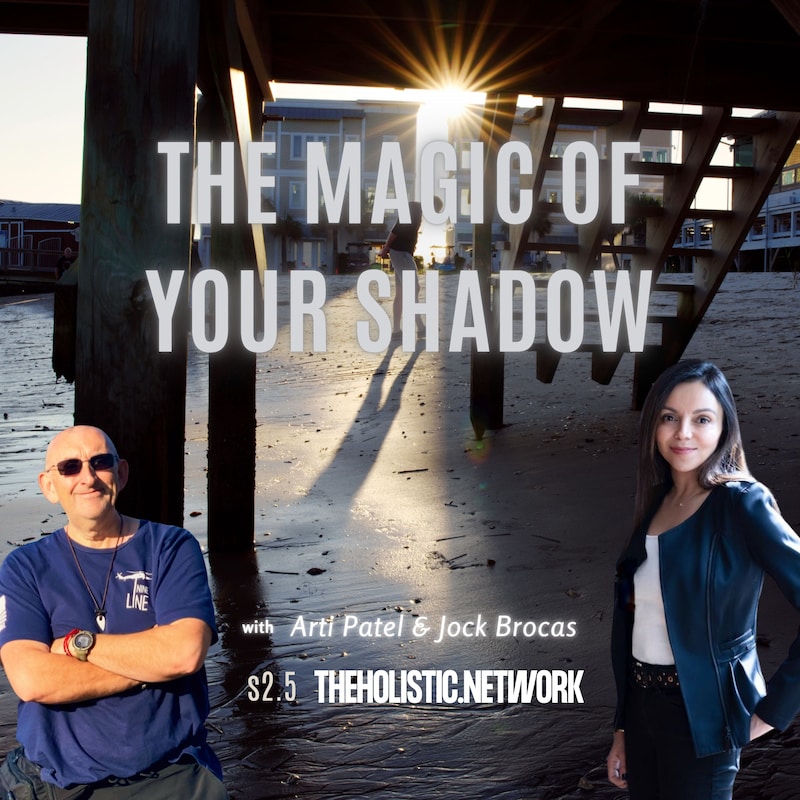
Shownotes
This podcast episode delves into the intricate concept of shadow work, illuminating its profound significance in the journey of optimizing human potential. We explore the notion that shadow work entails confronting and integrating the fragmented aspects of oneself that are often relegated to the periphery of consciousness. Through candid discussions, we offer insights into the transformative power of this psychological practice, emphasizing its capacity to foster self-awareness, authenticity, and emotional healing. Our guest, an academic colleague and personal friend, brings a wealth of knowledge and lived experience, enriching the discourse with practical applications and theoretical perspectives. Join us as we navigate the complexities of shadow work, aiming to enhance our understanding of its role in personal growth and psychological resilience.
In this enlightening episode of the Optimizing Human Potential podcast, the theme of shadow work emerges as a pivotal discussion point, emphasizing the profound impact that confronting one’s inner darkness can have on overall well-being. The hosts engage in a thoughtful dialogue with their guest, Ra, who draws from her academic background in transpersonal psychology to elucidate the significance of understanding and integrating the shadow self. The conversation navigates through a range of topics, including the psychological theories underpinning shadow work and the somatic effects it can have on individuals. Ra shares her personal revelations, detailing how shadow work has not only altered her emotional landscape but has also manifested in physical changes, enhancing her confidence and presence. The episode serves as a clarion call for listeners to embark on their own journeys of self-exploration, urging them to confront the uncomfortable truths that lie within and to embrace the transformative power of vulnerability and introspection, ultimately leading to a more harmonious existence.
Takeaways:
- The podcast emphasizes the transformative power of shadow work in understanding one's hidden aspects and promoting personal growth.
- Engaging in shadow work requires a willingness to confront uncomfortable truths about oneself, leading to profound emotional healing.
- Participants are encouraged to approach shadow work with compassion, allowing for a nurturing exploration of their inner selves.
- The discussion highlights the interconnectedness of physical and psychological experiences, demonstrating how shadow work can impact overall well-being.
Do You Want To Be A Part Of The Shadow Work Research?
You can contact arti direct at the holistic network or her email [email protected]
Links referenced in this episode:
Transcripts
Ladies and gentlemen, welcome to the Optimizing Human Potential podcast.
Speaker A:There are millions of things we can learn, and one of those things is the power of human potential to change your life.
Speaker A:There are ever changing rules to how we can act and interact.
Speaker A:This show is designed to stay on the cutting edge of how we as humans can optimize every minute.
Speaker A:And we can bring you the experts who help you optimize your human potential.
Speaker A:Potential life is exactly what you make of it.
Speaker A:So let's make ours perfect live in three, two.
Speaker B:Good morning, good evening, good afternoon, ladies and gentlemen.
Speaker B:This is John here.
Speaker B:This is.
Speaker B:Or Jock, whatever you know me as.
Speaker B:This is Optimizing Human Potential, brought to you by the Holistic Network or the Holistic Therapies Directory.
Speaker B:Today I've got a great guest, a great friend of mine and academic colleague who has been.
Speaker B:And I have known each other for quite a while, number of years now.
Speaker B:And we're going to have a great conversation all about shadow work, your shadow nature.
Speaker B:Now, shadow nature, to me, in shadows, we think about shadows.
Speaker B:We think about in photography, how we raise the shadows, drop the highlights, we play with it.
Speaker B:There's an element in everything that we do, whether you take an image or even yourself, how you see a shadow from yourself or you see a shadow cast on the wall the sun's behind because the shadow.
Speaker B:But shadow, your shadow nature goes so much deeper.
Speaker B:And it's an element that I don't really like doing, as you'll find out very, very soon.
Speaker B:My guest today is my good friend Ra, who, as I said, is my colleague.
Speaker B:And we're going to have a great conversation around shadow work.
Speaker B:And if any of you have ever done shadow work before, you'll know that it is not as easy as it seems.
Speaker B:Welcome to Optimize human potential.
Speaker C:Thank you so much, Jacques.
Speaker C:I appreciate you having me here.
Speaker B:I'm excited to have you because this is.
Speaker B:I've got to watch because I can.
Speaker B:I've got cameras everywhere, so I've got a habit of looking at the wrong camera.
Speaker B:And so if I do that, just ignore it.
Speaker B:We've known each other for quite a while.
Speaker B:I'm excited to get you on.
Speaker B:And this is your first episode you've ever done on a podcast.
Speaker C:That's right.
Speaker B:And this is because I've been trying to get you, pushing you to do something like this for ages.
Speaker B:But you and I know each other from Liverpool John Moore University, where we're both doing a Master's of science in Transpersonal psychology.
Speaker B:And of course, part of that work Is.
Speaker B:Is challenging ourselves as a transpersonal journey.
Speaker B:Why did you choose your subject matter?
Speaker B:I know that you're doing your dissertation on shadow work, but what is it that you love about this element of psychology?
Speaker C:Well, it's interesting that you ask, Jacques.
Speaker C:So when we began this program through Liverpool, John Moore's.
Speaker C:One of the first modules that we embarked upon was called Learning through Integrative Process.
Speaker C:And it forced us to really take a look at ourselves, whether it be on an emotional, psychological, spiritual, transpersonal, physical level and incorporate different modalities or new things that could kind of help us along in our journey.
Speaker C:Initially, I found that to be a bit of a challenging experience.
Speaker C:And we were asked to choose.
Speaker C:Something within each of those categories that might be able to help us.
Speaker C:I landed on shadow work because I thought that I could fake my way through it, and it turned out to be the biggest surprise of all.
Speaker B:You could fake your way through it, unbeknownst to you that, yeah, that's not quite the case.
Speaker C:That's right.
Speaker C:That's right.
Speaker C:When we embarked on that, on that module, I grabbed the first shadow book workbook that I could find at a thrift store and threw the corner and thought, I'll get to that and I'll just fill it out and I'll be fine.
Speaker C:And as I sat down, I realized that, oh, my shadows are really prevalent here, and I think I've got an issue.
Speaker B:So let me ask you this, though.
Speaker B:Were you interested in shadow work?
Speaker B:Did you know anything about shadow work before you started on this academic research?
Speaker B:Did you.
Speaker B:Were you interested in it before?
Speaker C:You know that I'm glad you asked me that, because it's something that I can look back on now.
Speaker C:I don't think I used.
Speaker C:I had the vocabulary to use the word shadow work prior to.
Speaker C:Getting this program, but it had been brought up in my therapy sessions.
Speaker C:And at one point, I had been through a traumatic event and had ptsd.
Speaker C:As I was working through all of that, my therapist said to me, oh, well, you know, I feel that you've graduated now and you don't have PTSD anymore.
Speaker C:And I looked at her and I said, you know, I'm really glad you're by my side here, because I'm ready to open that Pandora's box.
Speaker C:And I did not recognize that that was the shadow work that I was embarking upon.
Speaker B:And when you started doing that, obviously you've got deeper into it as we've gone through the kind of academic research, but when you in therapy from your traumatic event.
Speaker B:Which we're not going to talk about.
Speaker B:But you've opened up.
Speaker B:We know about that.
Speaker B:So I will let you know, ladies and gentlemen, that it's a very, very traumatic event that would paralyze a lot of people.
Speaker B:So what you've come through is absolutely phenomenal.
Speaker B:But having if.
Speaker B:What was, what was your feeling when you started, when you started this journey and you started to think, okay, I'm going to work with my shadow.
Speaker B:What was coming up for you?
Speaker B:I mean, because there's so many people that I've met, and I say, yeah, I've looked at my shadow.
Speaker B:I do shadow.
Speaker B:I mean, I hate it.
Speaker B:Right.
Speaker B:Because I said that to you many times.
Speaker B:I don't want to do that.
Speaker B:But what was it.
Speaker B:What was the pivotal moment for you that went, wow, this, this, this is my shadow nature?
Speaker B:And I, I.
Speaker B:This is not as easy or this is harder than I thought.
Speaker C:Yes, absolutely.
Speaker C:You know, that's.
Speaker C:It's very interesting because in hindsight, I can say that I had that moment, and I think it was, you know, kind of at the end of that, the therapy with ptsd, I started examining my relationships with my family, with my friends, and I realized that was really unhappy in many ways.
Speaker C:And my therapist helped me to recognize that if you're unhappy, you can't change the world.
Speaker C:All you can do is change yourself.
Speaker B:Oh, that's profound.
Speaker C:Yeah.
Speaker C:And it really propelled me deeply into what I was calling that Pandora's box.
Speaker C:Not necessarily.
Speaker C:Having that vocabulary of shadow work as the Jungian term, but I knew she's very Jungian, so I knew that's what she was trying to point me towards.
Speaker C:But it's one of those things that until you've done it and you've recognized the benefits of having gone through shadow work, not only gone through shadow work in terms of examining your shadow, but integrating it and allowing for true healing to take place.
Speaker C:That's when I realized through our course that it was something very powerful and almost addictive in a way.
Speaker C:Once you start to recognize the benefits.
Speaker B:It is because I think we get to the point, Artie, that we all, obviously, we all have a shadow is part of as we know that.
Speaker B:But whether you want to face it or not is another thing.
Speaker B:And I want to.
Speaker B:So if for anybody who's listening out there don't.
Speaker B:Doesn't understand what shadow work is, because we're talking here, colleges wrapping away hung in psychology or Jungian, wherever you come, if you're from Scotland, Jungian.
Speaker B:Let'S explain to people what shadow work is so they Understand it, because there's people that.
Speaker B:They're going to listen to this and they're going like, I don't know what they're talking about.
Speaker C:Absolutely.
Speaker C:And I think shadow work is.
Speaker C:It'S misunderstood, really.
Speaker C:According to Young, who, Who coined the term, it is acknowledging those fragmented parts of yourself, those, the.
Speaker C:The things we keep in the shadows.
Speaker C:So let me put it in really simple terms.
Speaker C:If something, for example, triggers you, that's a perfect place to start your shadow work and ask yourself, why does it trigger me?
Speaker C:What is in there that I'm not able to face?
Speaker C:And it's.
Speaker C:It doesn't have to be.
Speaker C:You know, it's often associated with a dark side, you know, with the shadow, but without light, without light, there is no shadow.
Speaker C:So it's not, it's not just understanding it, it's really owning it.
Speaker C:So I'll give you an example.
Speaker C:When we first started on that module, I. I had a really hard time with shadow work.
Speaker C:And I couldn't understand why the, the workbook that I, I was using, because I was trying to do it on my own with the guidance of my therapist.
Speaker C:But I thought, you know, I can, if I can fake it on my own, this is great.
Speaker C:Um, but as I started working through the workbook, you have to put pen to paper and you have to write down your deepest, dark, darkest, most inner thoughts.
Speaker B:Yeah, you do.
Speaker C:And I could not do that for the life of me.
Speaker C:I could not write down what I truly felt.
Speaker C:I was watching a video about something unrelated during that time, and somebody said, write it down like nobody's going to read it.
Speaker C:They were talking about writing a script for a film or something like that.
Speaker C:And I thought, oh, well, let me apply that to my life.
Speaker C:Let me write it down as though nobody else is going to read this.
Speaker C:And I couldn't jog.
Speaker C:I actually had to do shadow work behind that.
Speaker C:And as it turned out, my problem stemmed from my childhood, and there were a lot of shadows to be uncovered there.
Speaker C:When I was a young child, my sister.
Speaker C:I had one of those little diaries, you know, with the lock and key.
Speaker C:And I'd gotten it for Christmas one year.
Speaker C:I think it was about 10 or 11 years old.
Speaker C:I was so happy.
Speaker C:Within a couple of months, my sister broke it open and not only read it, but read it out loud to all of her friends.
Speaker C:And that was the pivotal moment in my life where I decided that I could not trust writing down anything.
Speaker B:Wow.
Speaker B:So even so, the journaling aspect of your shadow work was actually a big, momentous Yes.
Speaker B:A pivotal moment for you as well.
Speaker C:Absolutely, absolutely.
Speaker C:I couldn't do the shadow work without the journaling, considering the point I was at, because I was trying to do a lot of it on my own.
Speaker C:I mean, it is possible, possible with the help of a therapist or a somatic counselor.
Speaker C:There are many professionals out there who can help you with that.
Speaker C:But it is something that you're able to explore on your own as well.
Speaker C:It's just nice to be able to have that extra support when you need it.
Speaker B:How does somebody, so somebody that's out there who is struggling psychologically, either trauma or something else, what advice would you give them to start looking at their shadow nature?
Speaker B:And how would you get them to start?
Speaker B:Because you've mentioned that for you it was, it was a hurdle, you know, it was a wall to climb.
Speaker C:It was.
Speaker B:Which, which you're probably still doing.
Speaker B:You're still climbing and still getting over those hurdles.
Speaker B:What advice would you give to someone who's.
Speaker B:Look, they're interested in it because.
Speaker B:And, well, so I guess actually let's reverse back before we even tell them how to start.
Speaker B:What is the benefits?
Speaker B:Right?
Speaker B:What is the benefits of someone looking and working with their shadow?
Speaker B:Because, you know, like I've said to you many a time, I, I know I need to do it and I've done it, but there's.
Speaker B:It's hard for even me to look at my shadow nature because, like, you're almost reflecting, oh, I don't like that and I don't like feeling like that and I don't like feeling that emotion.
Speaker B:So let's tell people, what's the benefits that you've got out of it personally?
Speaker B:And what do you think someone would get out of it that they're interested in working with shadow?
Speaker C:Well, there are so many benefits.
Speaker C:There hasn't been enough research done on this, which is part of what my dissertation is about.
Speaker C:But I believe that the biggest benefit that people would find is that they become more self confident, they become authentic and true to who they are.
Speaker C:You no longer have these fragmented parts of yourself that, whether it comes through something you're ashamed of or something that is emotionally too much for you to deal with, and you've swept it under the rug all these years.
Speaker C:So looking at shadow work is really going back and examining your psyche and trying to determine what makes me tick, what makes me do the things I do.
Speaker C:Maybe it was something back in my childhood, maybe it was generational, maybe it was just something that happened to me a few weeks ago with a Friend.
Speaker C:And I've decided, oh, I'm not, you know, that's too much for me to handle.
Speaker C:It's never too late to start dealing with your shadow.
Speaker C:But it's also not a one and done process.
Speaker C:It's a long time.
Speaker B:It's a long going thing.
Speaker C:Yeah.
Speaker C:Because it's taken you so many years of conditioning and layering to create this person that you are.
Speaker C:You have to give yourself a little break and be compassionate with yourself as you're peeling back those layers and it feels very raw.
Speaker B:So what I'm hearing you saying is also that you can't expect to work with your shadow nature.
Speaker B:And it's just be done with and dealt with.
Speaker B:There's going to be a repetition, it's going to continually keep coming up.
Speaker C:Absolutely.
Speaker B:But if that's, if that's, if somebody's working with that and they've got an issue and it keeps coming up, how would you say to them at what point do they get to that I'm finally dealing with it or it doesn't affect me anymore.
Speaker C:You know, it's, that's a very personal.
Speaker C:Feeling to have.
Speaker C:And only you can know if you've adequately dealt with your shadows.
Speaker C:Your shadow will keep cropping up until you have in different forms, through a different medium, a different experience.
Speaker C:But it will repeat until, until you've resolved that.
Speaker C:The quickest way for me I found is just to look at my triggers and say, oh, if something is triggering me, I haven't dealt with that.
Speaker B:See, I love.
Speaker B:Now you're talking about triggers because I talk about triggers a lot in grief, as you know, because that's the side of research that I work in.
Speaker B:But.
Speaker B:Then it then begs a question.
Speaker B:If you're going to be triggered by your shadow, is there a danger to it?
Speaker B:Like can that trigger cause more imbalance?
Speaker B:Could it cause psychosis?
Speaker B:Is there a warning that someone, the shadow work that they're doing or even in this research, is there an ethical dilemma to it as well?
Speaker B:Is there a potential for it to be triggering and negative?
Speaker C:You know, I believe that it can, which is why anyone who is working with their shadow, it's so beneficial to have somebody on standby, a backup, a therapist or a counselor or a somatic worker to help you through the process because you can.
Speaker C:Come face to face and confront some things that perhaps you're not ready to.
Speaker C:So that part is really important.
Speaker C:Depending on which aspect of your, of your shadow that you're working with.
Speaker C:Generally our shadow doesn't allow us to process or Even face anything that we're not ready to, we tend to shut up.
Speaker B:Oh, that's interesting.
Speaker C:Yeah, we tend to shut down.
Speaker B:Never thought of that.
Speaker C:Our bodies, it's often somatic.
Speaker C:You can feel it in your heart.
Speaker B:So that was my next thing, because.
Speaker B:Yes, it's somatic in your body.
Speaker B:Yeah.
Speaker C:So you can.
Speaker C:You can sense that.
Speaker C:You know, I.
Speaker C:There are certain parts of my shadow self that I'm still working on, but I noticed that, you know, tightness in my shoulders and my chest.
Speaker C:When I started thinking about it.
Speaker C:My mind automatically wants to swerve to a different topic.
Speaker C:I don't quite want to go there just as yet.
Speaker C:And my best advice to anyone would be just do what you're comfortable doing.
Speaker C:You do have to push yourself a little bit with shadow work if you want to take it seriously and you do want to explore it as much as possible.
Speaker C:But be your own guide.
Speaker C:Don't.
Speaker C:Don't push yourself beyond those.
Speaker C:Those boundaries until you're ready.
Speaker B:It kind of reminds me of that story.
Speaker B:Oh, wait a minute.
Speaker B:I don't.
Speaker B:I gotta get it wrong now.
Speaker B:I think it's the turtle.
Speaker B:A turtle is one of the only animals that sheds its shell, but because it has to get uncomfortable to then get to being comfortable, because it starts to.
Speaker B:Can't breathe, it starts to feel tight in its shell and it has to retreat and shed its skin.
Speaker B:Or a lobster, maybe.
Speaker B:A lobster.
Speaker B:Actually, not a turtle, a lobster.
Speaker B:And they shed.
Speaker B:They shed the shell and then they have to regrow another one.
Speaker B:Would you.
Speaker B:I mean, is that a good analogy as well for shadow work?
Speaker C:That's a great analogy.
Speaker C:Nobody can be forced to do shadow work.
Speaker C:It is one of those things that has to come from inside of you.
Speaker C:If you're not ready to face your.
Speaker B:Shadow side, unless you're going through academic research.
Speaker C:You can do your best to fake your way through it.
Speaker C:But I could tell you, I attest that does not work.
Speaker B:I tried that myself.
Speaker B:Doesn't work.
Speaker B:But I get it as a good analogy for it now.
Speaker B:You're obviously.
Speaker B:Really interested in this.
Speaker B:There's a missing link in this shadow nature and this shadow work.
Speaker B:Let's talk a little bit about that missing link.
Speaker B:Because there's so many experts out there in the holistic world that teach shadow work.
Speaker B:Shadow Nate doing this.
Speaker B:But I guess if you don't really understand it, how could you really teach it?
Speaker C:Absolutely.
Speaker C:And that was one of the things I really appreciated about our master's program and this learning through integrative process.
Speaker C:You know, learn to Put on your own oxygen mask before helping others was the lesson that I took away from that.
Speaker C:And it was very beneficial for me because unless you've embodied it, it's really difficult to teach it, as you say.
Speaker C:One of the things that I've noticed throughout my own journey through my shadow work, as well as all the research that I've been doing for my dissertation, is that there is a missing link, as you mentioned.
Speaker C:So there's the element of the shadow, the aspects of us that are fragmented, that are disowned, that we want to face.
Speaker C:And then there's.
Speaker C:Our bodies.
Speaker C:Why do we have a visceral reaction to certain things?
Speaker C:Why do you get that churning in your stomach or that tightness in your chest when you hear a particular person talk?
Speaker C:There's something there that's bothering you.
Speaker C:But why is it that your body is having that kind of reaction first?
Speaker C:So that fascinated me as I've been exploring this topic, because I feel like that's the missing link is that our.
Speaker C:And you know, there are several experts out there like Gabor Mate or Bessel, Bent van der Kolk, and they talk about how the body holds onto a lot of trauma.
Speaker C:Now don't confuse trauma and shot at work.
Speaker C:It's not always the same.
Speaker B:I was going to ask you that because that's.
Speaker B:This is the thing everybody seems to label it.
Speaker B:You only do shadow work if you've, if you've gone through trauma.
Speaker C:It doesn't have to be a traumatic thing.
Speaker C:It can just.
Speaker B:Yeah, that's what.
Speaker C:Yeah.
Speaker C:I happen to be a certain way, you know, and I don't want to be that way anymore.
Speaker C:I'll give you an example.
Speaker C:I.
Speaker C:Well, you know, maybe it's not the best example, but because it's about people pleasing and people pleasing tends to be viewed as a, as a dark thing.
Speaker C:But it's not really traumatic.
Speaker C:It's just something that I grew up with culturally and my family.
Speaker C:Eldest child, you're the people pleaser.
Speaker C:And as a result, I've known this my entire life.
Speaker C:I've had issues with sciatica and so I'll tell you a story.
Speaker C:A couple of years ago I was listening to a podcast with this well known film director.
Speaker C:He was telling his a story about his wife and how she decided a few years ago to start coming onto set and she'd never done that before.
Speaker C:So she started coming onto set and she would get mad at him and she'd say, what's your problem?
Speaker C:Why are you always yelling at people all day long?
Speaker C:You know, they're doing their jobs, they're doing the best they can.
Speaker C:And he said, well, you know, I'm the director, I have to do this, this is my job.
Speaker C:And she said, oh, for example, this morning you got mad at these guys.
Speaker C:They were already feeling bad.
Speaker C:You getting mad at them didn't help.
Speaker C:Like it wasn't going to make the job get done any faster.
Speaker C:So she was trying to reason with him.
Speaker C:So he said, okay, fine.
Speaker C:He said, I will not yell anymore.
Speaker C:And he said that's the day that my sciatica issues began and he's had them ever since.
Speaker C:It's because it wasn't just he was holding it all inside and he wasn't releasing anything.
Speaker B:Right.
Speaker C:So my course, my takeaway after that was I, I need to yell at everybody.
Speaker C:You know, I came home and I announced to the family, I'm just going to become this yeller because that will help my, my sciatica.
Speaker C:It was a joke, but as I, as I went in a little bit deeper, I found that for me it was a lot of people pleasing.
Speaker C:I have silicon my right hip, which is also associated with.
Speaker C:With some forms of trauma.
Speaker C:I can be, you know, especially women who have experienced sexual trauma do tend to have that kind of pain.
Speaker C:For me, it was not ex, not expressing myself and not, not having my throat chakra open and not being able to communicate.
Speaker C:So my people pleasing tendencies involved silencing myself to appease everybody else.
Speaker C:And so I stopped doing that over it.
Speaker C:It took a couple of years.
Speaker C:I'll be honest.
Speaker C:It was not an overnight miracle and I haven't had any silica issues since then, so.
Speaker B:That's amazing.
Speaker C:Yeah, it really demonstrated to me that there's, there's obviously a link here between the body and the mind.
Speaker C:We, we know that, but this just re, you know, just really grounded that for me.
Speaker C:And some of my research has also found that the fascia we have, and that is, you know, the connective tissue kind of keeps everything together outside of our organs and skin and everything.
Speaker C:It's this matrix, this web and it has these neuro receptors which are, you know, they, they, they really listen to what's going on in your body and they tend to hold on to things.
Speaker C:So sometimes you can have a reaction to something or for example, a lot of people say this, you know, I, I didn't need to say anything, but my face showed it because that's your normal reaction to something bad or unpleasant that occurs.
Speaker B:I'm a great believer in that.
Speaker B:You're.
Speaker B:Your behavior can Talk louder volumes than your mouth can.
Speaker B:And you show it in your.
Speaker B:And so even in the work that I do as well, not in mediumship or anything, but in other types of work, you're looking at behavioral analysis.
Speaker B:You're looking at how their behavior is.
Speaker B:And that shows you can identify.
Speaker B:Someone'S story just by the things they don't see.
Speaker C:Absolutely.
Speaker C:And even those micro movements that they make or that second or two before they speak and react, you know, the expression on their face because they're trying to hold it all together, but you can see the underlying current there, that there is something happening.
Speaker B:You know, you mentioned before the, obviously Carl Jung was the person who kind of coined this phrase.
Speaker B:And you've mentioned Van der Volk, you know, the Body Keeps a Score, which is a fascinating book.
Speaker B:It was really, it's really good.
Speaker B:And the German.
Speaker C:Oh, Gabor mate.
Speaker B:No, not Gabor mate.
Speaker B:God.
Speaker B:I'm assuming to show my age, the German.
Speaker B:It was concentration camp.
Speaker B:Anybody who's listening out there, I've had a brain fart.
Speaker B:So feel free in the comments to tell me who I'm, who I'm talking about, what I'm thinking about.
Speaker B:But he was in a German concentration camp.
Speaker B:Man search.
Speaker B:Viktor Frankl.
Speaker B:Don't need to know.
Speaker B:They need to write in.
Speaker B:Victor Frankl, I think also perhaps covers a lot of that shadow nature and stuff in his work, you know, in his work where I think finding meaning in life and finding meaning.
Speaker B:So I think my question to you then is, can you find meaning in your shadow?
Speaker C:Absolutely.
Speaker C:I mean, I think that's the point.
Speaker C:I think that's the magic spot that you reach, you know, once you've, once you've owned your shadows.
Speaker C:And by, by owning, I mean really not, not sweeping anything under the rug, but really, really saying, no, this is who I am, you know, my, my faults, my strengths, everything.
Speaker C:I'm, I'm a.
Speaker B:Is that coming to a level of acceptance?
Speaker B:Is that what you accept in your shadow?
Speaker C:Absolutely.
Speaker C:Absolutely.
Speaker C:And as you own those shadow aspects, you end up with a clarity that I have not experienced honestly, in, you know, my.
Speaker C:Many 50 plus years on this planet.
Speaker C:I have not experienced any of that without sugar shadow.
Speaker B:You know that because we won't mention on ages and the fact that we forget things as well.
Speaker B:It's like, yeah, it's possibly a part of the shadow we don't want to look at.
Speaker B:It's interesting as we're talking about this.
Speaker B:Look at this, guys.
Speaker B:Look at the light in the shadow.
Speaker C:Yes, right.
Speaker B:It just shows you that there's polar opposites with this.
Speaker B:And to me, that.
Speaker B:I mean, not I'm saying I look beautiful, but to me, light and dark has a beauty in it.
Speaker B:So I guess there's also a beauty in dealing with your shadow.
Speaker C:Absolutely.
Speaker C:And I really feel that once you have dealt with your shadow side.
Speaker C:And as I said, it is a lifelong process, so it's not.
Speaker C:There's not a beginning and an end here, but once you've embarked on that journey, you end up becoming very authentic and true to who you are.
Speaker C:You're not filtering yourself for the sake of other people because you understand yourself quite well and you accept that I'm not perfect, and that's okay.
Speaker C:But, you know, if somebody comes to you and says you're a jock.
Speaker B:Oh, you know, you know, already in it.
Speaker B:But it reminds me of the, you know that Japanese art, Kintsugi.
Speaker C:Yes, right.
Speaker B:That's kind of, I think, indicative of what you're saying, because you're broken.
Speaker B:But beautiful is beautiful when you put it back together again, your shadows kind of helping you put yourself back together.
Speaker C:Again in a more beautiful way than you could have been before.
Speaker C:Because you've learned these lessons along the way, and it makes you.
Speaker C:I think we all are.
Speaker C:But I think, I feel that that authentic state that you're in once you have owned your shadow side puts you in a state of flow.
Speaker C:And that state of flow just makes life a lot easier.
Speaker C:It shows you all of the synchronicities that happen and how everything really is meant to be as it is.
Speaker B:So would you also say that it's intuitive, there's an intuitive process to it?
Speaker C:Yes, absolutely.
Speaker C:This is why I don't, as much as I do, appreciate all of the literature, all of these workbooks, and different ways to approach your shadow side.
Speaker C:It's something that cannot be.
Speaker C:You can be guided, but it's not something that is taught, like, you know, like math.
Speaker C:It's very intuitive.
Speaker C:You have to follow.
Speaker C:You have to, first of all, trust yourself.
Speaker B:You know what?
Speaker B:That's so much.
Speaker B:That's so true.
Speaker B:Because I say when I'm teaching or doing any lecturing at all, I talk about discernment.
Speaker B:And I said, discernment's not something you learn from a book or a course.
Speaker B:Discernment is something that has to grow with you and you have to work at it, and it has to evolve just as you evolve.
Speaker B:I'm a great believer, you know, from the formless, we became form, so we our shadow.
Speaker B:Although it is not form, it's from the Formless.
Speaker B:It's the energy and nature, if you like.
Speaker B:But we're reflective because we're, you know, we feel solid at the moment, but we break ourselves down.
Speaker B:We're just the same animating force that animates the shadow, animates life, animates everything.
Speaker C:Absolutely.
Speaker C:You hit it.
Speaker C:Yep, that's exactly what it is.
Speaker B:But, you know, and you mentioned something though.
Speaker B:There's so many workbooks and there's so many courses out there that certificated in shadow work or go on this course and learn how to do.
Speaker B:But you're basically saying, well, it's a lifelong process.
Speaker B:You can't really learn it from there.
Speaker B:You can maybe only get the tools.
Speaker C:Yes, absolutely.
Speaker C:You know, these books are, are very good to give you an introduction, but you really have to pick and choose because it.
Speaker C:Shadow work is.
Speaker C:Is extremely personal, it's extremely intuitive, and it's not something that is a one size fits all.
Speaker C:So you're gonna have to probably go through, like I did, several of these books if you wanted to examine your shadow carefully and.
Speaker C:Really gain some knowledge from this.
Speaker B:And Taylor, by the way, ladies and gentlemen, Ari will be writing her book very soon.
Speaker B:She's in the process, which will be published and probably about shadow work and everything else to do with that.
Speaker B:Just thought I'd throw that in there.
Speaker B:So as this is public, she's now tied down to doing that process.
Speaker C:Thanks for twisting my rubber arm into everything, Jock.
Speaker B:You know, I do.
Speaker B:So I want to kind of get by because there's.
Speaker B:I find Jung is incredible.
Speaker B:Right.
Speaker B:But incredibly difficult to understand.
Speaker B:Right.
Speaker B:So would.
Speaker B:Surely you wouldn't say, anybody who wants to start to work with a shadow to go and start to delve into Carl Jung because it's.
Speaker B:It's a real hard journey.
Speaker B:Is there somewhere that you would recommend this is how you should start?
Speaker C:Yes, there is.
Speaker C:I agree.
Speaker C:Don't go and buy Carl Jung's books and start reading those unless that's something that you're absolutely interested in.
Speaker C:Take it from Jockey.
Speaker C:But there are several different ways you can begin.
Speaker C:I have worked with people who have begun with.
Speaker C:Workbooks with their therapist with just going onto TikTok and looking up shadow work for.
Speaker C:I've worked with a person who actually put it into ChatGPT or one of those AI search engines.
Speaker C:I am interested in doing shadow work.
Speaker C:Where do I begin?
Speaker C:And that's how they began.
Speaker C:I think you have to work with whatever resonates with you.
Speaker C:If you're not a fan of going through workbooks and looking section by section.
Speaker C:Don't do that.
Speaker C:If you don't want to watch a YouTube video on doing it, don't do that.
Speaker C:Do whatever appeals to you.
Speaker C:Whatever makes it easy for you.
Speaker B:It's interesting because I found that some of the videos and some of the things that I've watched to do even some research into it, they're coming from very much their own perspective.
Speaker B:And expectation and tend to teach that based on their own perspective and expectation.
Speaker B:But literally what you're saying is this is.
Speaker B:You can't go by that.
Speaker B:Do you think it's a calling.
Speaker B:Do you think it's a calling in nature to challenge your shadow?
Speaker C:I think we all have it within us.
Speaker C:It's it.
Speaker C:We have to be.
Speaker C:Yes, absolutely.
Speaker C:I mean, we all, we all have to be called to, to examine our shadows.
Speaker B:How does somebody know.
Speaker B:How does somebody know that they need to work with a shadow?
Speaker C:Am I allowed to swear on here?
Speaker C:No.
Speaker B:Yeah, go for it.
Speaker B:It's just, It's a podcast.
Speaker C:Tired of your own, Right, that's.
Speaker C:Tired of your own.
Speaker B:That's not really sweating.
Speaker B:I thought you were going to really cuss, and that's, that's really posh.
Speaker C:No, it's true.
Speaker C:You know, it's.
Speaker C:It's when you're tired of it, you know, I got tired of my own bullshit.
Speaker C:And that's the day I decided I needed to examine my, My shadow because I couldn't keep living in this loop where I was unhappy and.
Speaker C:Working towards goals, But I kept having obstacles come in my way, but they were the same obstacles, just in a different form each time.
Speaker C:And, you know, 50 years of my life went by, and it's only in the last five years that I've started looking at it and saying, well, hold on one second here.
Speaker C:This doesn't work for me anymore.
Speaker C:And I don't know how it worked for me for these 50 years.
Speaker B:Do you regret.
Speaker B:Do you regret not doing it earlier?
Speaker C:Of course.
Speaker C:But, you know, hindsight is 20 20, and I, I, well, regret is a strong word.
Speaker C:I, I wouldn't say regret simply because I wasn't prepared prior to that time.
Speaker C:I had to go through.
Speaker B:When should someone start then?
Speaker B:Let me ask you this, then.
Speaker B:When should someone start to work with their shadow?
Speaker A:The online network for coaches and holistic entrepreneurs.
Speaker A:Join us today and advertise your practice 24 hours a day, seven days a week.
Speaker C:The minute they get tired of dealing with their own shit, that's the time.
Speaker C:If you wake up one day and you say, you know what?
Speaker C:I'm just Tired of this.
Speaker C:I can't do this anymore.
Speaker C:I can't hold it all together anymore.
Speaker C:I'm done.
Speaker C:And it often is on the precipice or at the time of a traumatic event, which is kind of what started it for me.
Speaker C:I had a big tower moment and.
Speaker C:A really rough seven years getting back to this point where I am today.
Speaker C:But it's.
Speaker C:It has to.
Speaker C:It's an intuitive.
Speaker B:I have to say, though, tell me from when you and I start working together.
Speaker B:Many years, years ago, as we went this academic journey, I'll have to say that you've made tremendous transformations and changes.
Speaker C:Thank you.
Speaker B:In your life.
Speaker C:As have you, Jock.
Speaker C:Even though you don't like shadow work, I can see it.
Speaker C:It's one of.
Speaker C:It's like.
Speaker B:It's like a hidden evil, I think.
Speaker B:It's like you have to do it.
Speaker B:Like, I know I have to do it, but there's elements of it that.
Speaker B:I mean, as you know, I did undercover work and I did various other different things in my life.
Speaker B:And you face these things and for me there is some regret.
Speaker B:There's regrets of the choices.
Speaker B:There's things that would I change the elements in my nature that I don't.
Speaker B:That I don't like.
Speaker B:And I think you're right.
Speaker B:You get to the point where you think, fuck it, I've got to change it.
Speaker B:I've just got to just.
Speaker B:This is it.
Speaker B:It's now or never.
Speaker B:But you don't.
Speaker B:You still have that problem.
Speaker B:I still.
Speaker B:I'm a massive.
Speaker B:I guess.
Speaker B:Here's the other thing.
Speaker B:I have a massive problem with trust, as we've talked about this before, massive problem with trust.
Speaker B:So do you feel then that shadow work.
Speaker B:Can help with people that are suffering with elements of their nature such as trust or even.
Speaker B:Even.
Speaker B:Let me go one stage further, right?
Speaker B:I've worked with people with addictions.
Speaker B:I've worked with people in psychosis as people who are maybe addicted to drugs, addicted to alcohol.
Speaker B:Addicted to sex, addicted to mine.
Speaker B:Pastor, he's a minister and he is a recovering sex addict.
Speaker B:And he's open about it, Right.
Speaker B:It'd be interesting actually.
Speaker B:Ask him if he worked with his shadow nature.
Speaker B:Do you think you're working with your shadow nature can heal or can transform addiction?
Speaker B:Addiction, personalities or break of your emotional regulation.
Speaker C:I think that's the key.
Speaker C:And you said it yourself, he was addicted, he was a sex addict, right?
Speaker B:Yeah.
Speaker B:I don't know if he did shadow work.
Speaker B:I'm going to ask him that.
Speaker B:Lee, if you're.
Speaker B:I'm going to ask you.
Speaker C:Yeah, I would presume he has done the shadow work if he's owning it.
Speaker C:You can't own something if you haven't looked at yet.
Speaker C:If you haven't done the shadow work behind it.
Speaker B:Can you own it and not like it?
Speaker C:Of course you can.
Speaker C:There are many aspects of my personality that you don't like.
Speaker B:I'm not.
Speaker B:We have done.
Speaker C:Of course you can.
Speaker C:But that, that's part of it, you know, Nobody is perfect.
Speaker C:There is no such thing as perfect.
Speaker C:So.
Speaker C:Perfection is only where, where we.
Speaker C:Assign a value to it.
Speaker C:And the shadow is, there's no value.
Speaker C:Don't attach a value to it.
Speaker C:I mean, I think that's why people get, they trip up as they're going through this because they say, oh, it's good, it's bad.
Speaker C:It's not good or bad, it's just what it is.
Speaker C:Yeah.
Speaker B:You can't label it.
Speaker B:I find that fascinating as well.
Speaker B:I think the problem comes in anything that we do is when we start to label something.
Speaker C:Absolutely.
Speaker B:Because we.
Speaker B:A label is an energy.
Speaker C:Yes.
Speaker B:And we attach an energy to it.
Speaker C:Absolutely.
Speaker C:No.
Speaker C:And our shadows are, they're not, they may be things that we don't.
Speaker C:We prefer that we are not.
Speaker C:Like.
Speaker C:I can be very.
Speaker C:I can be a perfectionist at times.
Speaker C:And sometimes I wish I wasn't so much of a perfectionist, but I own it.
Speaker C:That's who I am.
Speaker C:And if somebody comes up to me and says, you're so annoying, you're such a perfectionist.
Speaker C:Yeah, I kind of am.
Speaker C:I just.
Speaker B:Is that owning it just for you to admit it or is owning it different to just admitting it?
Speaker C:It's part and parcel, you know, it.
Speaker C:I think they go hand in hand.
Speaker C:A big part of it is owning it.
Speaker C:Sometimes it's easier to work through the shadow material before you own it, depending on how painful or complicated it can be.
Speaker C:And sometimes it's as simple as saying, no, you know what?
Speaker C:I own it.
Speaker C:Yes.
Speaker C:I'm like that.
Speaker C:I, I enjoy doing that, or I, I enjoy being a perfectionist.
Speaker C:I enjoy having my whole schedule planned out and that's just who I am.
Speaker C:And I understand that sometimes it doesn't work for other people, but it really, there's no shape in it anymore, in which case it's no longer my shadow and that's okay.
Speaker B:There's something that I often teach as well is awareness, acceptance and choice.
Speaker B:You become aware, aware of something, then you have to come to a level of acceptance and then you have the choice to change It.
Speaker B:Why would someone, when they're working with a shadow, choose not to change something they don't like?
Speaker B:That's what I would like to get into.
Speaker B:Because like.
Speaker B:Or has.
Speaker B:Is it to do with courage to change?
Speaker B:Do we have the courage to change?
Speaker C:I think that's a big part of it, is having that courage.
Speaker C:And then also there's so it.
Speaker C:How I see the shadow.
Speaker C:Shadow work is.
Speaker C:It's like you said, acknowledging it, integrating it, and then healing from it.
Speaker C:And it doesn't always look the same in every circumstance or with every shadow.
Speaker C:You can acknowledge a shadow side of yourself and integrate that.
Speaker C:I can say, I'm a perfectionist.
Speaker C:I have integrated that.
Speaker C:I understand that I'm not as much of a perfectionist.
Speaker C:I don't.
Speaker C:I don't hold on as steadfastly as I used to.
Speaker B:Right.
Speaker C:However, I have healed from it because I understand that this is a side of me that is a little bit more, let's say, if we're talking masculine, feminine, a little more skewed on the masculine side.
Speaker C:But it works for me in certain situations.
Speaker C:And in the situations where it doesn't work, I'm able to release that as well.
Speaker C:So it gives you a little bit.
Speaker B:You're always working.
Speaker B:I think this is fascinating as well.
Speaker B:I love this conversation.
Speaker B:Are you always working with your shadow or do you like.
Speaker B:So anybody who's out there, let me know that I'm doing the thing again.
Speaker B:I'm looking at different cameras.
Speaker B:Let me know in the comments if you want to ask Artie a question.
Speaker B:You set a self set aside some time to work with your shadow or have you got to the point, Artie, where and anybody out there, let us know.
Speaker B:Share it with us what you do or are you working with it, like all the time?
Speaker B:Like you're just working with your shadow work all the time?
Speaker C:That's a really good question, Jacques.
Speaker C:Initially, when I first started, it was I sit down, I do my shadow work.
Speaker C:It was a lot of journaling and asking myself a lot of probing questions.
Speaker C:And then I would put it away and I would give myself some time to integrate and see how I feel about it.
Speaker C:How few years down the line, I find myself doing it all the time.
Speaker B:So it's evolved for you?
Speaker C:It is.
Speaker C:It's really evolved.
Speaker C:I mean, I'm driving down the street, somebody cuts me off and I start yelling, well, why am I yelling?
Speaker C:It's not just that somebody cut me off.
Speaker C:You know, what is it?
Speaker C:Why, why, why?
Speaker C:And you keep asking yourself, why, why, why?
Speaker C:You drill down to what it is that's bothering you about that.
Speaker C:And you know, I'll give you an example.
Speaker C:There was somebody that.
Speaker C:I've worked with who is, oops, sorry about that.
Speaker C:Somebody I worked with who I found very annoying.
Speaker C:And there were always, you know, this keener who would always flip their hand and want to get their two cents in.
Speaker C:And I used to think, why is this?
Speaker C:That type of personality always bother me.
Speaker C:And I've been thinking about this for years and years and years and it finally came down to.
Speaker C:I remember when I was in high school, there was this kid who reminded me even looked similar to this guy and he'd always put up his hand and always be, you know, brown nosing the teachers.
Speaker C:And I used to.
Speaker C:And he would get good grades because he was doing that.
Speaker C:He wasn't really putting in the work.
Speaker C:And my body started reacting in that way like, oh my God, this guy is just like that.
Speaker C:And it turned out, you know what, it was just, it reminded me of that, that guy back then.
Speaker C:And I should have.
Speaker C:We were the, we have the top two grades in the class and he got a higher grade than I did.
Speaker C:But I know I knew the material better than he did and it was more, you know, kissing ass with the teacher sort of thing.
Speaker C:And whenever I see that behavior repeated, it brings me back to that moment.
Speaker C:I'm back in high school.
Speaker B:Wow.
Speaker C:And I'm actually.
Speaker B:You get triggered.
Speaker C:I get triggered by that?
Speaker C:Yes, absolutely.
Speaker C:Do I want to.
Speaker B:You wouldn't have real, you say you wouldn't have realized that now hadn't you have done that shadow, hadn't you been on the journey?
Speaker B:Shadow work.
Speaker B:So I guess it's one of these things where you start it, you've got to be aware that you're going to start becoming more aware.
Speaker C:You do, you do as much as you don't want to.
Speaker C:It really expands your awareness.
Speaker C:I had this.
Speaker C:I attended one of these well being sessions that was held by our university and it was about the shadow.
Speaker C:And she led us through a 10 minute meditation almost to explore our shadow side.
Speaker C:And the interesting thing that came out of it, she asked us to share our experiences afterwards.
Speaker C:For me, when I was faced with my shadow, my shadow handed me a mirror.
Speaker C:And this is home.
Speaker C:And it said this mirror will expand as you expand.
Speaker C:And I thought that was brilliant because that's exactly what's been happening.
Speaker C:Initially I could only focus on little parts of my shadow self and now it's second nature.
Speaker C:Everything is shadow work for me.
Speaker B:I think this Is fascinating.
Speaker B:Right.
Speaker B:Because there's something that I teach a lot and I think, I don't know, I think I wrote it in Deadly Departed, I'm not sure.
Speaker B:Or I wrote it in one of my articles or something.
Speaker B:I can't remember.
Speaker B:But see when people are scrying back in the day, thousands of years ago or hundreds of years ago, even John Dee who scryed and Nostradamus and these famous scryers from many, many years, we seem to look at scrying as reflection.
Speaker B:Utilizing a mirror.
Speaker B:Right.
Speaker B:And to use that mirror to tune into something.
Speaker B:In ancient Egypt they had the psychomantium and the sycomantium was in a darkened room and it a reflective surface.
Speaker B:But the interesting thing, and I think this is something that you're saying is and having that experience where you were handed the mirror and it would expand.
Speaker B:Mirrors were never used for reflection.
Speaker B:Mirrors were used to go beyond into the world of spirit.
Speaker C:Wow.
Speaker B:Right.
Speaker C:Beautiful.
Speaker B:So even when they were scrying they were using a mirrored surface not to reflect, but to go beyond.
Speaker B:So maybe that's, you know, that that's kind of indicative, a little bit of analogy.
Speaker B:Maybe what you got in that experience is that because I never look at.
Speaker B:I mean it's strange and using this.
Speaker B:I never.
Speaker B:I used to look at a mirror, just reflection.
Speaker B:But as I'm developing over the years and stuff like that, I now look at a mirror as a point of portal, a point of connection where.
Speaker B:Where you have the choice to go beyond what you see.
Speaker C:Yes, yes.
Speaker C:And some aspects of shadow work, when you get a little bit deeper into it, it does.
Speaker C:You are asked to.
Speaker C:There are some exercises I've seen where you're asked to look in a mirror and just stare at yourself for 10 minutes.
Speaker B:You really is that.
Speaker B:I didn't know that people can't do that.
Speaker B:Shadow work.
Speaker C:People can't do that.
Speaker C:It's impossible.
Speaker C:I couldn't do it.
Speaker C:I don't know if I could still do it for 10 minutes that I would find it extremely difficult.
Speaker C:But I love that analogy that it is a portal into.
Speaker B:Our psyche as we are talking as well I can see.
Speaker B:So in my grief community that I have, I'm going to be doing a get together, just a remembrance service that we'll do.
Speaker B:But I'm thinking about a candle.
Speaker B:Like a candle service.
Speaker C:Yes.
Speaker B:But I'm thinking as we are talking how the candle in a beautiful.
Speaker B:How the candle.
Speaker B:Shores casts shadows.
Speaker B:But in candlelight that casts shadows is beautiful.
Speaker C:Yes.
Speaker B:So maybe we need to get to the point of seeing ourselves as a candle with the shadow.
Speaker C:Absolutely.
Speaker C:Absolutely.
Speaker C:I love that.
Speaker C:That's beautiful, Jaques.
Speaker B:You know, and like as much as I.
Speaker B:And you're teaching me something now.
Speaker B:You don't even realize it because I've.
Speaker B:The way I'm asking is that I've always thought to myself, I'm going to do shadow work.
Speaker B:I have to.
Speaker B:Like when we're doing our lip or we're doing a transformative process in our research, you have to take that time.
Speaker B:And I would take that time, but it didn't feel right to me.
Speaker B:And until now when you said it just became part of you.
Speaker B:Maybe I've been doing shadow work without even knowing it.
Speaker B:And until now you're telling me that as anything happens out in my daily routine or in my communication is, I'm always analyzing what part of my nature is.
Speaker B:Is.
Speaker B:Is in process at the time.
Speaker B:And I wouldn't.
Speaker B:And maybe that's an element of shadow work I didn't even realize was done.
Speaker C:Yes, absolutely.
Speaker C:I, I believe we, we all do it on a subconscious level, whether we call it shadow work or not, because we do look at things in our lives and say, oh, I. I don't want to.
Speaker C:You know, I don't like this.
Speaker C:But then we only take it to a certain point because we're afraid of facing that and what's the worst that can happen?
Speaker C:So any emotion that we feel, the worst thing that can happen, that emotion only sits in your body for about 90 seconds.
Speaker C:That's what they've proven, however.
Speaker C:Really.
Speaker B:So I didn't know.
Speaker B:Is that really.
Speaker B:I didn't know that myself.
Speaker B:So 90 seconds is as fast as you promote.
Speaker C:Yeah.
Speaker C:Is.
Speaker C:Is how long you can feel that emotion when it really hits you.
Speaker B:Where did that come from?
Speaker B:Is that a paper you.
Speaker C:I'll send it to you.
Speaker C:I'll send you the paper.
Speaker B:This.
Speaker B:We're getting nerdy now, ladies and gentlemen, just to send me a paper.
Speaker B:Because I'm really fascinated with this now.
Speaker B:I guess I could probably.
Speaker B:Do you know what?
Speaker B:I actually should get you to come in or grief.
Speaker B:Maybe do something with our grief community as well.
Speaker B:Because I think shadow work could help in grief.
Speaker C:It certainly does.
Speaker C:It certainly does.
Speaker C:It's.
Speaker C:You know, I really feel that it can help.
Speaker C:And any part of anyone's life, it's just a matter of how deep you want to go.
Speaker C:And so what I would recommend to people who are listening out there and watching is, first of all, if you decide that you want to do shadow work, by all means go out there, explore, investigate different avenues, find out, see what resonates with you the most.
Speaker C:Because what works for me might not work for you.
Speaker C:Right.
Speaker C:Jock, you and I are on the same page with many things, but our shadow work techniques could be completely different.
Speaker C:So go out there and investigate, you know, whatever you like to use.
Speaker C:If you like to use YouTube, look at some YouTube videos.
Speaker C:If you like to use ChatGPT, throw them there.
Speaker C:But just sit back and watch what it comes back with.
Speaker C:See what really calls you.
Speaker C:And then secondly, be so kind to yourself when you're going through this process, because the shadow work that you're doing, if you've.
Speaker C:If you've.
Speaker C:For example, my example of not being able to put pen to paper and my shadow work originated from when I was 11 years old.
Speaker C:My reactions are like, I'm 11 years old when I have to put paper, pen to paper.
Speaker B:Right.
Speaker C:That's what your reaction is.
Speaker C:So I have to treat myself like a child when I'm doing that.
Speaker C:I have to be very kind to myself.
Speaker C:And a lot of our shadow material does come from childhood.
Speaker C:So that kindness and compassion that you would show to anyone else, show it to yourself, because otherwise it's going to be something that you never want to touch again.
Speaker C:And this can be done in a really safe and nurturing way.
Speaker B:You know.
Speaker B:That'S quite profound that, actually, because I think a lot of people or they have lack of compassion for themselves.
Speaker B:It's like I always say as well, they're always looking to be forgiven or to forgive.
Speaker B:And in reality, you don't have to forgive anyone, and you don't have to forgive yourself as an illusion.
Speaker B:You have to forgive the judgment because it's the judgment that causes the suffering.
Speaker B:So I guess as well, in the shadow work, it's the judgment you have to let go of.
Speaker C:Absolutely.
Speaker C:And not having compassion for yourself, there's some shallow work that needs to be done there.
Speaker C:Jacques, maybe you weren't showing compassion at some point.
Speaker B:Yeah.
Speaker B:If you spoke to my wife, I probably have a lot of shadow work to do in terms of compassion in myself.
Speaker B:Absolutely.
Speaker B:Those things.
Speaker B:As you've gone through this process.
Speaker B:Because obviously, Sanjeev, I love, you know, your husband is great guy, but have you been able to, from what you've developed in your shadow work, that's maybe.
Speaker B:Has he noticed it?
Speaker B:Has he been like, you know, what are you doing?
Speaker B:Has it made him inquisitive and the rest of your family like, wow, big changes.
Speaker B:What can I do to.
Speaker B:Oh, do you think it spreads?
Speaker C:Yes, absolutely.
Speaker C:You know, it's interesting that you ask.
Speaker C:So one of the big motivators for me is working with.
Speaker C:I have two children who are teenagers.
Speaker C:One is at university, one's still in high school, and I struggle with them sometimes, and especially the younger one.
Speaker C:And I dropped my hands one day and I said, you know, I can't do this anymore.
Speaker C:And I looked at my husband and I said, I can't change her.
Speaker C:I can barely change me.
Speaker C:So you know what?
Speaker C:I'm going to work on me.
Speaker C:I'm not going to work on her anymore.
Speaker C:And he said, okay.
Speaker C:And so I started changing some behaviors.
Speaker C:The way I react to her.
Speaker C:I was trying to figure out, why does she trigger me in the ways that she triggers me?
Speaker C:And I'm sure any.
Speaker C:Any parent who has children can relate to this because our children are mirrors of our.
Speaker C:Of our triggers, you know, and so are so our spouses.
Speaker C:And anyone who feels like, oh, I'm going to get married and have children and my shadow will disappear.
Speaker C:No, no, you will come face to face with your shadow in a way that you have never before.
Speaker C:And it's.
Speaker C:It's quite frightening.
Speaker C:And this is why many people have.
Speaker C:Have issues with their children, especially when they're in the teenage phase.
Speaker C:So I, you know, I did make some changes in that.
Speaker C:In that sense, and the outcome changed.
Speaker C:My relationship with my daughter changed.
Speaker C:And it's just one example of.
Speaker C:Of how I, you know, even my husband has.
Speaker C:Has noticed that.
Speaker C:But just on a general level, in the last few years, because I have been doing so much shadow work, he's noticed a big change in me.
Speaker C:And he noticed.
Speaker C:He actually said to me, he said, I usually something has happened in our house, and I reacted differently.
Speaker C:And he said, wow, that was unusual.
Speaker C:I expected you to get upset about this, but you didn't.
Speaker C:And I said, no, I decided that that doesn't upset me anymore.
Speaker C:And he said, well, how.
Speaker C:How can you decide that?
Speaker C:And I said, well, no, no, I did shadow work behind it to find out why it was upsetting me.
Speaker C:And my reaction.
Speaker B:That's fascinating.
Speaker C:I ended up losing 90% of my friends because I'm very.
Speaker C:That's a big one in the shadow world.
Speaker B:That's interesting, right?
Speaker B:Because.
Speaker B:When you decide to take up the cross, become, you know, get, so to speak, give yourself up, you know, choosing my life of working in mediumship and afterlife working still.
Speaker B:Yeah, you lose a lot of friends.
Speaker B:You lose a lot of people, right?
Speaker B:And.
Speaker B:And not that I had many to start with, but you lose it, you know, Even in connections with your family, I. I lose that as well.
Speaker B:So I find that really interesting that even when you do shadow work, you're gonna.
Speaker B:Why do you think that happens, Artie, that you.
Speaker B:Things change and your dynamics, it changes and you lose those connections?
Speaker B:What is it that makes that happen?
Speaker C:No, I think you're just.
Speaker C:You.
Speaker C:You vibrate on a different frequency or mentioned before.
Speaker C:You're.
Speaker C:You're more authentic.
Speaker C:You're more true to who you are.
Speaker C:And oftentimes in the process with shadow work, depending on what you're working on.
Speaker C:But generally, people end up with different boundaries as well.
Speaker C:So people who, Who.
Speaker C:Who love the fact that you didn't have boundaries before are obviously not going to like this new you.
Speaker C:You literally shed your skin.
Speaker C:You.
Speaker C:You become a different person as a result of changes.
Speaker B:It is the lobster effect.
Speaker B:It is that shed.
Speaker B:Going into yourself and shedding the shell and growing up another one so that you can continue your growth.
Speaker B:And I guess it comes back to that whole thing.
Speaker B:You don't know you have to grow unless you feel uncomfortable.
Speaker C:Absolutely.
Speaker C:Absolutely.
Speaker C:That's why it's so intuitive.
Speaker A:Don't forget, if you need help with your human potential, connect with our members on Holistic Therapy's directory.
Speaker B:Now, has this also sparked like, Sanjeev, has he wanted to do his own shadow work or.
Speaker C:Oh, well, I will leave that to him.
Speaker B:Maybe it's a working process.
Speaker B:Viking, dude.
Speaker B:So can you.
Speaker C:I think it's.
Speaker C:I.
Speaker C:To be honest with you, Jacques, I think it's.
Speaker C:It's.
Speaker C:It's almost impossible for people around you not to do it in your family to not want to do it.
Speaker C:You know, they know there's a change in you, and it's always for the positive.
Speaker C:And they're always curious, like, what's going on?
Speaker C:How did you do that?
Speaker C:You know, maybe I can do that.
Speaker C:It inspires them.
Speaker C:And it doesn't necessarily even have to be something that is cognitive.
Speaker C:I noticed that in my kids, they react a little bit differently.
Speaker C:They take a step back before reacting.
Speaker C:They say, oh, well, I used to behave that way.
Speaker C:All right.
Speaker C:I'm not sure the exact process in their mind, but I can.
Speaker C:I can see the hamster going and turning the wheel, and they're.
Speaker C:They're moving a little bit differently.
Speaker C:It's, It's.
Speaker C:It's really quite fascinating the impact it has on everybody around you.
Speaker B:You know what I also find interesting?
Speaker B:And I find it a bit fascinating when you.
Speaker B:Had I.
Speaker B:Until I known what shadow work was, if you'd have mentioned shadow Work to me, here's how the aversion would have went in me.
Speaker B:If you're a says jock, we're going to do some shadow work.
Speaker B:I'm like, what?
Speaker B:Like, I'm a guy, I'm tough.
Speaker B:We don't do that.
Speaker B:Like, we don't do shadow.
Speaker B:That is a certain.
Speaker B:That's a new age ebollox.
Speaker B:No, we're not doing that.
Speaker B:Right.
Speaker B:But now I've come to this appreciative side of it where I get to understand it.
Speaker B:And I think there's an element where people are still ignorant of what it is and the power of it.
Speaker B:And there would be men out there.
Speaker B:And because, let's face it, a lot of people are doing shadow work.
Speaker B:There's mainly going to be women.
Speaker B:And even in a lot of men hide away from their grief.
Speaker B:Right.
Speaker B:So I think there's a warrior aspect to accepting it and having this awareness and acceptance.
Speaker B:Because had you, like I said, if you said that to me a few years ago or a number of years ago, before we even met, when we met, then you know, we're going to learn.
Speaker B:Chad, I would have been, what?
Speaker B:Nah, you're off your head.
Speaker B:This is.
Speaker B:I don't do that.
Speaker C:No, absolutely.
Speaker C:Because you're forced to be vulnerable, and that is that.
Speaker C:Typically, men like to do neither.
Speaker C:Most women I know don't like to be vulnerable either, but they're a little bit more.
Speaker B:They're more open to it.
Speaker B:There's no doubt about it.
Speaker C:Yes, yes, I agree.
Speaker C:I agree.
Speaker B:So let's talk a little bit about.
Speaker B:I know we could go on.
Speaker B:I know we've gone over time, but it don't matter.
Speaker B:I knew this would happen, ladies and gentlemen, because when we get any really good conversations, let's talk about your research.
Speaker B:Right.
Speaker B:Because if anybody's out there, they've got an opportunity to work with you with your research.
Speaker B:So explain a little bit of why you chose the avenue and this particular part of your research that you're doing for your final dissertation, which is fascinating to say the least, but anybody that's out there, why you chose that and what is the research all about and how can anybody get involved with you?
Speaker C:Yes, of course.
Speaker C:So what I decided, we're required at the end of our masters to do a dissertation.
Speaker C:And it's quite open for the most part.
Speaker C:You can choose kind of anything you want, within reason.
Speaker C:And I like it.
Speaker C:Yes.
Speaker C:That'S true.
Speaker C:That's true.
Speaker C:I struggled initially, I'll be honest.
Speaker C:It was a little bit difficult for.
Speaker B:Me to remember we had loads of conversations over it.
Speaker C:I remember we did, and we had a great conversation earlier this year, Jock, which really just propelled me into it.
Speaker C:You reminded me of how much I loved hating shadow work.
Speaker C:If very much a love hate relationship with me.
Speaker C:I, I, I don't enjoy doing it, I don't think anybody really enjoys, enjoys, so to speak.
Speaker C:Work.
Speaker C:But the benefits of course outweigh all of that.
Speaker C:So absolutely it was, it was obvious to me that, that that was where I had to do my research.
Speaker C:And I'm just so fascinated by it.
Speaker C:And what I'm really interested in through my own experience and through hearing other people's stories is the somatic impact, like what does this do to you physically?
Speaker C:And so, you know, we were talking about the fascia, but I'm really, I'm really fascinated by how it manifests in our bodies.
Speaker C:I can say after doing shadow work, not only do I feel differently, not only do I behave differently, I am physically differently, I stand taller, my shoulders are further back, I'm, I walk with confidence.
Speaker C:And I believe it shows, you know, it's, I've had many people say to me, you've changed.
Speaker C:Even without having spoken a word, you've changed.
Speaker C:What's different about you?
Speaker C:Did you change your hair?
Speaker C:Did you change your.
Speaker C:No, I, I'm different on the inside.
Speaker C:It shows on the outside.
Speaker C:Yeah.
Speaker B:Do you know what it's helped me with?
Speaker C:I'm sorry?
Speaker B:Do you know what it's helped me with?
Speaker C:Help me.
Speaker B:I can now sleep in a complete pitch black, A pitch black room.
Speaker C:Wow.
Speaker B:I have never been able to do it.
Speaker C:No way.
Speaker B:And primarily because when I was in the military, I was the only Scotsman in this particular regiment and guys got into my room at 2, 3 in the morning and just beat me to within an inch of my life, really.
Speaker B:And I went awol.
Speaker B:And ever since that time, I was always aware.
Speaker B:And then of course my work in bodyguard work and high risk security operations, I always had to be.
Speaker B:My awareness level, situation awareness was just out, gone, berserk.
Speaker C:Yeah.
Speaker B:But I think going through the process of fighting with my emotion and then accepting it and then working with action, I could never ever sleep in a darkened room.
Speaker B:Never.
Speaker B:So my wife helped me through, I had ptsd, my wife helped me through that with meditation and understanding it.
Speaker B:I could never sleep in a dark.
Speaker B:I always had to have my wits about me and see light and doing that type of work, my body feels accepted and safe that I can actually now sleep in a completely pitch black room.
Speaker C:Wow, that's Fascinating.
Speaker B:That's only within the last few years, really.
Speaker B:And I'm 50 something now.
Speaker C:There you go.
Speaker C:You've been doing your shadow work, Jock.
Speaker B:Wait, I didn't even know it.
Speaker B:I didn't even know.
Speaker B:But I think, I think it's that powerful though.
Speaker B:So carry on.
Speaker B:So this is the element that you're really interested in yourself.
Speaker C:So I, what I want to understand, and I'm doing phenomenological research on this, so I want to understand the lived experience of people who have done the shadow work in the last couple of years and if they notice any somatic effects, you know, has, has anything changed in their body, do they feel differently?
Speaker C:Because it's not just about.
Speaker C:You know, gathering evidence and numbers and.
Speaker C:But I, I really want to understand what, what is making this change, you know, how does it, how does it feel to different people and how do they articulate that?
Speaker C:What words are they using to describe that?
Speaker C:That's what fascinates me in truly, I think in truly understanding the impact of shadow work, you have to understand how people not only interpret it, but how they find meaning in it.
Speaker B:Right?
Speaker B:Yeah, that's, I think, I think that's something that escapes a lot of people is how would they find meaning in the shadow work?
Speaker B:And I guess it's something I'm even trying to still figure out how to.
Speaker B:How I find meaning in it.
Speaker B:So how can people get involved you with your research now?
Speaker C:So I am actually recruiting research participants right now.
Speaker C:So anyone who is, any adults, English speaking adults who would be willing to have a video interview with me for about an hour, hour and a half, I would love to talk to you.
Speaker C:If you've embarked on shadow work in the last couple of years and noticed any physical changes that have gone along with that.
Speaker C:Or it could even be because of your physical, because of your.
Speaker C:What's the word I'm looking for, anything that's happening to you physically has prompted you to do the shadow work.
Speaker C:It can be vice versa as well.
Speaker C:I'd be really interested in talking to you and I will share my contact details with Jacques to add onto this podcast.
Speaker B:So anybody, anybody who's part of our holistic network, obviously you're going to get this in your email.
Speaker B:News in our email, you're going to get this so you'll be able to connect with that.
Speaker B:But also beyond this, in YouTube and all the podcast platforms, we'll have a link that you can connect with Arti direct and, and help her out with this research.
Speaker B:I think it's absolutely Fascinating.
Speaker B:Like.
Speaker B:Like I've said, ladies and gentlemen, it's not something I enjoy.
Speaker B:It's something that I learned even from this conversation.
Speaker B:I've learned that I've probably been doing a lot more, a lot more than I think.
Speaker B:And, you know, while I'm still have a bit of trepidation around it, I'm getting more comfortable with it.
Speaker B:I do see the benefits of it.
Speaker B:And if you're a guy out there, set aside the machismo attitude and really work on yourself.
Speaker B:Work on your shadow nature.
Speaker B:It's been an absolute pleasure having you.
Speaker C:Thank you so much for having me.
Speaker B:On.
Speaker B:Your first podcast episode.
Speaker B:Not.
Speaker B:Not the last.
Speaker B:I want to get you for people that I want to get you to.
Speaker B:Art is.
Speaker B:I've been pushing her to do this for ages, but Art is going to come and do a class, an introduction to Shadow Work, Shadow nature, that kind of stuff.
Speaker B:We'll have it available in the Holistic network, but also we'll have it available publicly.
Speaker B:And who knows, maybe Art will have a course soon as well that you'll be able to purchase that at some point.
Speaker B:We're going to push it to do that as well.
Speaker B:But.
Speaker B:Anybody who really is interested, I would say, to connect with you, because your lived experience is that there's many people out there that learn from theory and they teach things from theory from a book.
Speaker B:I always prefer to learn from people who have gone through it, that have had the lived experience to share that.
Speaker B:So I want to thank you for being my guest on Optimizing Human Potential.
Speaker B:I want to invite you as well to come and talk about shadow work and grief on Pillars of Grief.
Speaker B:And also in my community, I think there's so much benefit to the work that you're doing, especially from even carrying on from Vander Voilt's work.
Speaker B:Looking at shadow nature somatically in the body, I think it's fascinating.
Speaker B:And what's the final words that you would give to anybody there, Artie, that's really interested in this?
Speaker C:You know, if you have any questions, obviously you can contact me, but.
Speaker C:Do it.
Speaker C:If you're interested in shadow work, A, be kind to yourself.
Speaker C:Don't start this when you're not, because it won't go the way that you're.
Speaker C:It won't go in a positive way, and B, follow your intuition.
Speaker C:Let that be your guide.
Speaker C:And there are so many resources out there for you to be able to take advantage of, but make it a curated experience for yourself.
Speaker B:Absolutely, Artie.
Speaker B:Thank you.
Speaker B:This has been fascinating and we could go on and on and on and on, but I'm mindful of people want to listen.
Speaker B:But Artie will definitely be back as my guest and if there's something that you want to know about shadow work, then let us know because I can bring her back on and we can have another discussion and you can ask any questions that you have.
Speaker B:Artie, thank you for joining me, ladies and gentlemen.
Speaker B:Take care of yourself and then, as Artie said, be compassionate with yourself, especially if you're doing shadow work.
Speaker B:God bless.
Speaker C:Thanks Chuck.
Speaker B:There you go.
Speaker A:We really hope you enjoyed this episode of the Optimizing Human Potential podcast by the Holistic Therapies Directory.
Speaker A:Stay connected with us directly through holistictherapies directory.com you can also join us on Instagram @holistictherapies directory.
Speaker A:You can also live chat with us on the site or join our Facebook group at Holistic Network.
Speaker A:Thank you for pushing your mindset towards a better reality.
Speaker A:This concludes the most thought provoking portion of your day or evening.
Speaker A:Don't forget to like and subscribe to stay fully up to date until next time.
Speaker A:Don't don't let your belief in what you can do get in the way of what you can do.







