Shownotes
Sandy Weltman, a harmonica virtuoso with an impressive backstory, graces the podcast with his lively tales and musical insights. He kicks things off with a delightful connection to St. Louis sports legend Stan Musial, sharing how both he and Musial have a shared love for the harmonica. As the conversation unfolds, we explore the world of his love for musical instruments and their personal significance, especially the harmonica, which Sandy plays passionately.
His journey began at the tender age of 14, initially driven by the desire to impress a girl (spoiler: he didn't get her), but this whimsical pursuit led him down a path of musical exploration that included the banjo, ukulele, and eventually the harmonica. He recounts hilarious anecdotes about learning the banjo incorrectly for two years, as well as his serendipitous meeting with the legendary harmonica player Howard Levy, which changed his life forever. We also touch on the concept of 'playing by ear' and how Sandy’s dedication to mastering the harmonica has led him to achieve international recognition in competitions.
Sandy's sense of humor shines through as he shares the quirks of the harmonica world, like how he can coax out unexpected notes through various techniques. Listeners will be treated to an impromptu performance, showcasing Sandy’s talent and the versatility of the harmonica. The episode wraps up with reflections on the importance of community and creativity in music, reminding us that the journey is just as important as the destination. Sandy's infectious enthusiasm and love for music make this episode an absolute joy to listen to, whether you're a seasoned musician or just a curious listener.
[00:00] Stan Musial Tease
[00:28] Show Welcome
[01:28] Thought to Ponder
[02:41] Meet Sandy Weltman
[03:36] Banjo Beginnings
[04:57] Harmonica Journey
[06:39] How Harmonica Works
[10:51] Teaching Online
[13:39] Albums Nuthouse Series
[15:15] Books and Tablature
[19:47] Sponsor Break
[21:22] Live Harmonica Performance
[26:50] Styles and Techniques
[29:57] Harmonica Goes Classical
[30:43] Cello Range Harmonica
[32:04] Harmonica Ensembles
[34:24] Stan Musial Session Tale
[36:15] Banjo Beginnings
[38:09] Making Music Work
[38:56] Quitting Smoking
[40:54] Car Practice Hustle
[42:11] Sponsor And Foundation Break
[44:38] Ukrainian Tune Performance
[48:04] Roy Clark And Vince Gill
[50:59] Harmonica Links And Holidays
[53:15] Final Sign Off
Takeaways:
- Sandy Weltman shares his fascinating journey from banjo to harmonica, showcasing his musical evolution.
- The harmonica is a surprisingly versatile instrument capable of expressing a range of musical styles, including blues and klezmer.
- Sandy's connection to baseball legend Stan Musial highlights the intersection of sports and music in St. Louis culture.
- The podcast features humorous and insightful discussions that shed light on the harmonica's rich history and techniques.
- Listeners discover the nuances of playing harmonica, including techniques like bending and overblowing for emotive sounds.
- Sandy's experiences at harmonica competitions reveal his dedication and passion for music, inspiring aspiring musicians everywhere.
This is Season 9! For more episodes, go to stlintune.com
#harmonica #ukulele #banjo #howardlevy #onlinemusiclessons #stanmusial #SPAHConvention
Transcripts
Our guest and Stan Musial have something in common. The item that they used in their professional career is very valuable and important to them. Also, it involves the Triple Crown.
Find out on St. Louis in Tune.
Welcome to St. Louis in tune and thank you for joining us for fresh perspectives on issues and events with experts, community leaders and everyday people who make a difference in shaping our society and world. I'm Arnold Stricker along with co host Mark Langston. Mark, you're looking very fit over there behind the console over there. Mark?
Mark:Yep. I've started my chair yoga. So
Sandy:how does that chair do yoga?
Mark:It's not as easy as you think.
Arnold:It's made out of wood.
Arnold:How do you bend it like that?
Mark:You don't. Okay, so you have piqued my interest because I'm a big Stan the Man guy and. Yeah, I don't know.
Yeah, you've piqued my interest on our guests that we have today.
Arnold:Okay, good. I hope I've piqued the interest of our audience. We are glad that you've joined us today, folks.
We want to thank our sponsor, Better Rate Mortgage, for their support of the show. You can listen to previous [email protected] where you can also follow us. And we've got a thought to ponder here. Mark.
Mark:Okay,
Arnold:we have a thought to ponder. And folks, I moved recently and I've got all of my. My printer's not hooked up, so I'm doing everything electronically. Some people might say.
Why don't you always do it electronically? Yeah, it's a little bit more portable.
And sometimes we do the show in a variety of places other than the studio and it sometimes doesn't work that way. But here's our thought to ponder. I have but one lamp by which my feet are guided, and that is the lamp of experience.
I know no way of judging of the future but by the past. Take a gander at who that may be.
Mark:Okay. A gander is a goose or gander. I don't know. I. Shakespeare.
Arnold:No, not bad. Not bad. Guess I will give you a hint. Give me liberty or give me death.
Mark:What do you think?
Sandy:No, I'm not going to say. I. I know that saying. Is it not Patrick Henry? Oh, Patrick Henry.
Mark:Okay, I couldn't. Yeah, I couldn't have told you that.
Arnold:I have but one lamp by which my feet are guided, and that is the lamp of experience. I know not. No way of judging of the future, but by the past.
Mark:Okay, you've made us all feel dumb.
Arnold:Oh, no. What happened to your History from your.
Sandy:It only gets better from there, though, right?
Arnold:And that other voice is the voice of Sandy Weltman. Sandy, welcome to St. Louis in Tune.
Sandy:Thank you. I'm so glad to be here, you guys. It's a pleasure to be here.
Arnold:Sandy is. Now I'm going to explain this linkage to Stan Musial.
Arnold:Okay?
Mark:Okay.
Arnold:Sandy plays harmonica. Stan Musial played harmonica. Stan used that in his kind of professional shtick.
Sandy:Shtick is right.
Arnold:It wasn't his big shtick. That was the bat. But it.
Sandy:Stanley. The big shit.
Mark:Oh, that was good.
Arnold:Okay.
Sandy:All right.
Arnold:So there we go. And also, Stan, I believe, was a Triple Crown winner. That's batting average, home runs and RBIs, Sandy. He plays banjo and harmonica and ukulele.
Mark:Does that mean he's gonna get a statue in front of Busch Stadium?
Sandy:That. No. But it is the Triple Crown of three instruments that don't make any money.
Mark:But you're having fun.
Sandy:But you're having fun.
Arnold:Yeah.
Arnold:Sandy, tell us a little bit about
Arnold:yourself rather than me just expounding.
Sandy:Yeah. I grew up here in St. Louis. We all here went to U City. And I. I think when I was about 14, I got interested in music.
I wanted to impress a girl at my school.
Arnold:Now, we won't ask which one.
Sandy:Mark and I. Yeah, don't ask me which one, but I will tell you. I will tell you that I. I thought I needed to impress her, so I started learning the banjo. Wrong instrument to impress a girl.
Arnold:That's right.
Sandy:Just telling you right now.
Mark:It should have been a guitar.
Sandy:Yeah.
Mark:Yeah, but chicks love a guitar.
Sandy:Yeah, they don't. Banjo wasn't the one, but I. I don't know what it is.
Mark:I like a banjo myself. I think it's.
Sandy:Everybody loves it.
Mark:It's a tough. Is that a tough instrument to play, a banjo?
Sandy:To get good at anything. It's always.
Mark:Doesn't it have a string that's halfway down the neck?
Sandy:Yeah, yeah.
Arnold:Yeah, that's.
Sandy:Yeah. I don't know what they were thinking when they.
Arnold:No, that.
Sandy:That's called a drone string. But there's different types of banjos.
Mark:Okay.
Sandy:Four string, and that's a five string banjo, which is more of the country bluegrass stuff.
Arnold:Who knew?
Sandy:Anyway, I. I never got the girl, but I did. I did fall in love with the banjo, so. So that was a good thing. And I just had so much fun in high school playing. Playing that and skipping class.
No, I'm just kidding.
Mark:He's not kidding at all.
Sandy:There's a lot of Half truth there. There was a little half truth there. But I did. I just really enjoyed the banjo and. And then from there I went to other string instruments and.
And I ended up playing the four string banjo on some riverboats and five string and bluegrass stuff and I learned bass and guitar. And then eventually I had some finger issues and I had to give up banjo after many years and picked up ukulele.
And in between all that time I picked up harmonica.
And I was fortunate enough to study harmonica with one of the best harmonica players, if not the best in the world, a guy named Howard Levy, who used to play with Bay La Fleck and the Fleck Tones.
Arnold:Wow.
Sandy:And I've been real fortunate to meet some great musicians that have inspired me and taken me in a lot of different directions.
Arnold:And you've gained some international recognition at harmonica competitions too. Also. Don't hold back here.
Sandy:Many years ago I would do some competitions and things like that. Yeah. And we have a. Actually an organization called spa, the Society for the Preservation and Advancement of the Harmonica.
It's a big international harmonica organization and it's here in St. Louis this year and it's usually here every maybe three, four, five years. And so I used to attend a lot of those conventions and they. They used to have contests and then there's world harmonica competitions.
And I've entered some of those and did pretty well at a few of them.
Arnold:Yeah. Now I know what musical competitions are like. What do you play on the harmonica? Do you play like Flight of the Bumblebee or Toccata and Fugue?
Sandy:It's funny you should ask that. Oh, I heard that was good little. I like those sound effects.
Arnold:That's the pistachio gallery.
Sandy:I'm gonna can. I was telling somebody I'm gonna. I like their laughter. I'm gonna can and take with me to all my gigs.
If I ever say anything funny, then I'll just press. There you go. There you go. Man, I love that. Oh, wow. Anyway, what was the question? Totally forgot. I was really enjoying that.
Applause and I forgot what you play.
Arnold:Flight of the Bumblebee on horror. What kind of music do you put out?
Sandy:So here's the thing. I love to play all kinds of music. Of course we think of the harmonica. Originally it was designed to play German folk songs. Really? It was really.
The modern day harmonica was first invented in Germany and that's what they used it to play. And it's a really unbelievably interesting instrument. How it has evolved and how people have discovered different techniques on it. But then it.
As it came to America and people discovered some of these blues voicings on it. They developed that over the years. And nowadays, oh, my gosh. When there's different types of harmonicas.
But there's some amazing classical harmonica players and jazz players. And I. I like to play a lot of Jewish stuff music on it also. And I like to play everything on, to be honest with you.
Arnold:Now, there's different. I remember as a kid, we had. That was a two.
Arnold:Two row.
Sandy:Yeah.
Arnold:Harmonica. A little small one. But there's bass harmonica and there's triple rows.
Sandy:Yeah, yeah. And I brought. I should have brought a few others in, but I'm actually having a few harmonicas repair at the moment.
But I use pretty good custom harmonicas. But there are. There's a chromatic harmonica, which is the kind that. That I know the audience can't see it, but I'll show you guys. It's a.
Mark:Well, we have a camera here.
Sandy:Oh, you do have a camera. Yeah, there it is. And it's got a little push button slide.
Arnold:Okay.
Sandy:And. And this, like, Stevie Wonder plays. Okay, that. That kind of inflection. Yeah, that little button.
Arnold:Cool.
Sandy:And then there's the diatonic harmonicas, which are the ten hole kind. And these are the kind that, like I said, that's how it was designed to be played.
But then people came along and discovered that there's these things called bet notes, where you can make notes inflect down to other pitches. And so then this very simple folk instrument became a very emotive instrument where you could then create all these different cool emotions.
And for blues, obviously, that was. Yeah, it was great.
Arnold:Yeah, yeah.
Sandy:And then there's a lot of music in between.
Arnold:So blowing into one of the openings there, that's a 10.
Sandy:This is a tent hole. Diatonic is the.
Arnold:I'm just trying to think of the insides. What it looks like, are you getting a chord out of each single hole
Sandy:you're getting Inside the harmonica are these little thin strips of metal called reeds, like a reed on a clarinet or something. And there. There's one for the blow, for blowing. And then in that same chamber, there's one for a draw.
So there's a reed, a little metal reed on top and one on the bottom. Blow and draw. And here's the wackiest thing you've ever heard of.
So if you blow into a certain hole and you shape your mouth and tongue just right and draw or blow a certain way, those two reeds interact physically. And we'll create Another note or sometimes two or three other notes. And that's where we get these emotive bent notes.
Arnold:Interesting.
Sandy:And it was never designed to do that. It's a really fascinating instrument. Now that everybody's asleep, we don't know that's the case.
Mark:I can't imagine blowing.
Sandy:And so here's an example. Can I show you guys a. Let me grab a. So here's that chromatic harmonica I was telling you about. So to get all the notes in a. In music, like 12.
We have 12 notes. In music, you would use a combination of blow and draw, brass blowing out, breathing in.
And then use this little button to get some of the missing notes. And you could get all 12 notes. That's 12 notes, which is called the chromatic scale. This harmonic is not designed to do that. Wait a minute.
I just did it.
Mark:Tricked you.
Sandy:So even though there's only 10 holes here, you can actually get 36, 37 notes by using a combination of all these techniques, like bent notes and other overblows that weren't ever designed to be on this instrument.
Arnold:Wow.
Arnold:So it's no wonder I could never play around.
Sandy:It's a pretty fascinating instrument. The history and the. Just the evolution of how it's things people discovered and how they took it to different areas.
And now it's just all kinds of great music is being played on it.
Arnold:Wow, that's crazy.
Sandy:Yeah. Yeah. It's a really cool instrument to learn all that stuff.
Arnold:So you were playing. You were gigging around town. Yeah, with banjo and then ukulele, then finally harmonica. And now you are.
You have a great website where you teach harmonica online.
Sandy:Yeah, So I work. Yeah, I work for a big international teaching school called the Tomlin Harmonica School. And a fellow named Tomlin, he's from. He lives in Scotland.
He started it. And Tom Lin Lecky, and I'm one of the instructors. We. I create content and I grade people's performances.
They'll post something and then I'll do workshops on there. There's. There's four. Four of us instructors on there, but it's. He's got, oh, I don't know, maybe a thousand people on that school.
It's one of the world's largest harmonica schools. And it's. It's really a great place to learn whether you're a great, very beginner, advanced, intermediate.
We have so much fabulous information on there and tons of resources. And so I love doing that. It's. I do it from home and online learning. Everything has changed, so. And I still occasionally Will teach.
Teach a person in somebody in person or online as well, too.
Arnold:So these are zoom lessons or something like that.
Sandy:What they are there, there's a set of instructions and you go at your own pace.
Arnold:Okay.
Sandy:But then you have instructor feedback. Okay. And then you'll get to interact with the instructor sometimes in a workshop, a live workshop as well.
And there's just thousands of videos and you can interact with. It's got something for everybody. And so there's a little combination of all of that.
Arnold:This is starting from basic. No knowledge of music or no knowledge of the instrument. No.
Sandy:No knowledge of anything even. No knowledge of how to make cereal. Whoever it is, you know, they basically, you. We. In fact, we have a course.
I put together a course on there for music theory, beginning music theory or the harmonica as it relates to that specifically. So you don't have to know anything. And it's. It's really reasonable price as opposed to private instruction.
Arnold:Oh, yeah.
Sandy:But. So I love doing that. And the other thing I was doing, up until the Pandemic, I was teaching a lot in schools.
I had a lot of school programs and I did a number of shows at the Sheldon through a great organization called Springboard to Learn, used to be called Young Audiences. And then I did a lot of other programs through the schools. And when the pandemic hit, guess what? All that stopped. And so I kind of shifted my own.
I'd been doing that for years. Years. And so I took some time off and just really kind of the last few years went into a lot of composing.
I love to compose beats decomposing, as they say. Yeah, that's right, Mark.
Arnold:And I say, good to see you. I said, glad to be seen.
Sandy:Yeah, exactly. And this year I'm getting back out and starting to play again a little more.
Arnold:So some of these songs we may hear here. This is Arnold Stricker with Mark Langston of St. Louis in Tune. We're talking to Sandy Weltman.
Arnold:This.
Arnold:Is this your latest CD release?
Sandy:Yeah, but that's. It's. I haven't done anything in a while. That's still. That's.
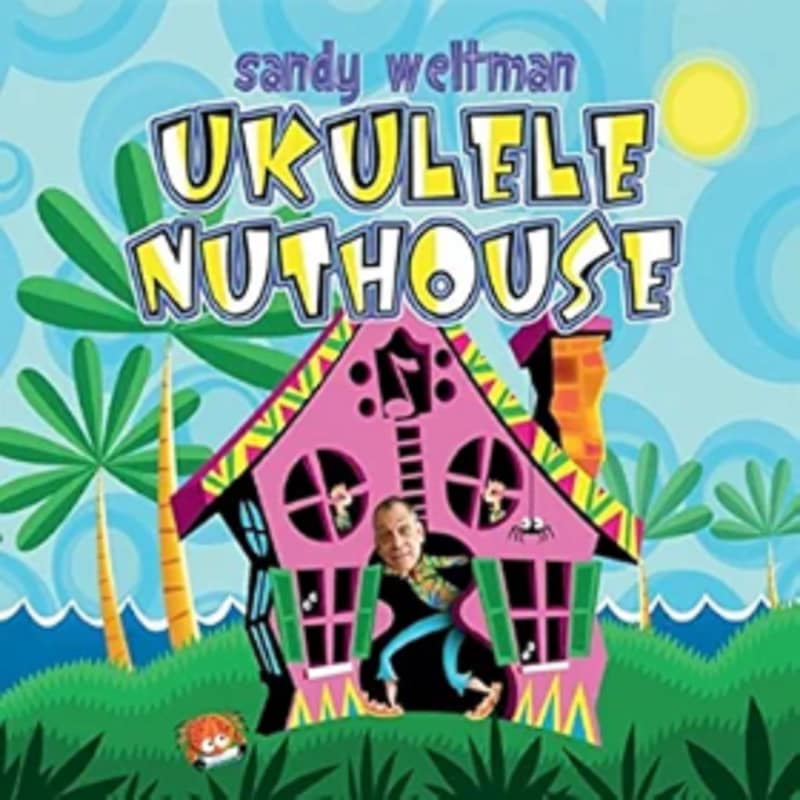
Arnold:It's called Ukulele Nut House. Yeah, Ukulele Nut House. So did you write all these songs on here?
Sandy:No, I wrote some of them and I have another. I'm doing a whole Nuthouse series and I haven't done the harmonica one yet. I do have some harmonica.
Harmonica, jazz, CD that I've done with the Carol Beth True and some other great local musicians. But I. I have a Klezmer Nuthouse and Klezmer, for those that aren't familiar with it, is like a gypsy, Jewish kind of a music.
Comes from Eastern Europe.
Arnold:Right.
Sandy:And I do. I interpret a lot of those songs through the harmonic and the banjo. And it's a lot of local. Great local musicians are on that one as well.
Then I've got the Ukulele Nuthouse.
Arnold:Okay.
Sandy:So the only one left I need to do is the Harmonica Nuthouse. So I. That's one of my projects.
Arnold:And you've got a. You're on Apple Music.
Sandy:Yeah.
Arnold:I also want to mention that Sandy's got a YouTube site and you can check all these things.
Go to sandy weltman music.com w e l t m a n music.com and you can find all about the Ukulele Nut House, the Banjo Nuthouse, the Klusburn Klezmer Nuthouse.
Sandy:It has banjo on it and it's pretty nutty.
Arnold:I love this 101 harmonica licks.
Sandy:Yes. That's actually, that's just about to be released. Tomlin is releasing that through. Through.
Is gonna publish it and then also put that on Amazon, I believe. And that. That was a book I did. Oh, I don't know, maybe five, six years ago.
Arnold:Okay, now let me ask you this. So you've got a book on harmonica licks.
Is there pictures on, like, you put it this way, or you go into this, you got to use this harmonica and you have to blow in or.
Sandy:Well, okay.
Arnold:You called it something else. I was calling it Suck In.
Sandy:Yeah. Yeah. We like to say harmonica players really suck.
Mark:Draw.
Arnold:That's why we use Draw.
Mark:This is a family. Can we keep it that way?
Sandy:Yeah. There's certain harmonica lingo that is acceptable and not acceptable.
There's a lot of good harmonica jokes we can't tell here, I guess, is what I'm saying.
Arnold:This is going to be great, Mark.
Mark:I don't know about that.
Sandy:Anyway, so how's this book work? So you open it up and you.
Arnold:So take harmonica out of box.
Sandy:Right. Kind of selfish. No. So that particular book is an ebook. Was originally an E book.
And it basically it has harmonica tablature, which is like real easy to read harmonica music notation. And then I also include on that an MP3 of each lick so you can hear it. And then you have see it written out.
Arnold:And see, this is new to me. I've got two degrees in music and it's the first time I've ever heard this harmonic tablature.
Sandy:Oh, is that right?
Arnold:I've never Heard that.
Sandy:So that look like there's a lot of. Everybody uses their own harmonica tablature. It's. And does it a little differently. It's really easy to read.
It's basically the whole number, like hole two.
Arnold:Okay.
Sandy:If you. The way I do it. If you draw. If you need a draw, you put a line under it. If you want to blow, you put a line over it.
Arnold:Okay.
Sandy:And then there's different things for draw bends and blow bends and other techniques over blows. But it's based. That's the basic system. It doesn't include any rhythmic content, a quarter note or eighth note, whatever.
Because, honestly, most harmonica players that start out don't read music, but they want to learn harmonica. So that's why we include the recording of it so that you can hear how long.
Arnold:But it's possible to go ahead and put, like, a time signature and put that tablature over the top of that.
Sandy:Absolutely, yeah. In fact, a lot of harmonica tablature will also include music notation.
Arnold:Okay.
Sandy:Over the top of that. And I also did a book. I also wrote a book called Learn to Play Harmonica. I'll tell you about this book. A company approached me.
They saw some of my YouTube videos, and it was a company in England. I'm not going to name names. And they said, would you write a. And they were pretty well established.
They did lessons for different instruments, and they were pretty established. They said, would you be interested in doing a harmonica book? We saw your YouTube videos. I said, sure. So I had this idea. I'd seen. I'd seen.
I looked through different harmonic instructions, and I was trying to do something a little different to bring to the table. And there was one book I saw that was really funny. A guy did. The book wasn't. That wasn't good for our Monica, but it was really fun to read.
And so I thought, I want to put a good book together for beginners that's also funny and enjoyable. That's not just so dry. So you were asking about diagrams in that book. I put diagrams.
In fact, my wife was the one that kind of stenciled out the diagrams and how to hold it and things like that. And then I put.
I told stories, like, based on analogies having to do with Gilligan's island or just silly things like that, just to make it enjoyable. So here's the story behind it. That book, I thought, turned out great. They wanted to include a harmonica with the book.
Arnold:Okay.
Sandy:And whenever I've seen that it's the worst harmonica and it's just real uninspiring. So I said, I don't think that's a good idea. And they said, no, we need to do it. The marketing people said we need to include a harmonica.
So they ended up picking up a really cheap company that put this harmonica in there that was literally unplayable.
Arnold:Oh, my gosh.
Sandy:This was 10 years ago and literally it wasn't even tuned to anything. So to this day, I still get people rioting at me or mad at me because they can't use this harmonica. So anyway, be careful what you sign up for.
That's the moral of this lesson.
Arnold:That's interesting. That's interesting. We're going to talk about more about Harmonica's and Sandy's illustrious career after this break.
This is Arnold Stricker with Mark Langson
Arnold:of St. Louis and Tune.
Arnold:Don't go away.
Arnold:As strange as it may sound, at Better Rate Mortgage. We love talking to people about mortgages. Everyone in St. Louis promises a better mortgage rate.
But what you really need to turn that perfect house into your dream home is a better mortgage. At Better Rate Mortgage, we open the door to so much more. Where are you in the home buying process?
Researching, maybe wondering how much you can afford? House hunting? Get a pre approval from Better Rate Mortgage Ready to buy. Our team is ready to make your mortgage process fast and easy.
Whether you're purchasing your first home or taking cash out to make your dream home even dreamier. Our door is open. Come on in and get started. Today we'll show you how.
-: Arnold:Lender the United States has a strong
Arnold:tradition of welcoming newcomers and refugees.
The welcome Corps is a new service opportunity for Americans inspired to welcome those seeking freedom and safety and in turn, help strengthen their own communities. Welcome Corps is a public private partnership
Arnold:that is inspired by what Americans represent
Arnold:to so many around the world. A beacon of hope and refuge. All it takes is a helping hand. Are you ready to learn more?
-: Arnold:Yeah. Serno Stricker with Mark Langston of St. Louis in Tune. Welcome back, folks. Welcome back. We have Sandy, weltman here in studio. He is going to.
He's picking out his harmonica. He's going to do a performance for us.
Mark:Can I ask before you go, Last hour we were talking, you went from the banjo to the ukulele?
Sandy:No, I actually, I went from the banjo. So I played string instruments like banjo, bass guitar.
Mark:And your fingers got bad. What happened?
Sandy:About 15, about 12 years ago, I started getting some arthritis in a few fingers. So it was getting harder and harder to play the banjo using that style and everything. And so I discovered the ukulele worked for me.
And if I play it slowly and I love arranging stuff on it. But in the meantime, when I was in my 30, early 30s, I discovered this guy. How? I didn't discover it, but he became known to me.
A guy named Howard Levy, who I loved his harmonica playing, and I was, like, very inspired by it. So I went and took some workshops with him and then studied with them. Okay. And I got really into the harmonica.
Arnold:Yeah. Okay. Yeah.
Mark, that shows you the skill and the level of professionalism that Sandy has when you can play certain instruments and go, okay, I can't do. I don't really want to do this anymore because it's not where the performance should be.
I'm going to take up this other instrument and to get to the level that he's at now, that is really focus. Yeah, that is real focus. So kudos to you, man.
Sandy:Or insanity, One of the two.
Mark:We wanted to be nice. We didn't want to say, you're nuts.
Arnold:By the way, he's got the ukulele nuthouse right here. Folks. Get that.
Sandy:I do have an old friend that actually he was learning. He was a fiddle player, and then he wanted to study jazz guitar at Webster University. And his. Which hand? I forgot. One hand started going really bad.
So he switched to the opposite hand on both instruments. And he did that for a while, but then that started going hands over. But he was an inspiration to me.
Just people you've known from your past that are so dedicated and tenacious.
Mark:I would think playing like that would keep your fingers from getting arthritis by the exercise.
Sandy:I think it can do either the overuse a lot of musicians have had to deal with, especially violinists, people that arch their head or their hand or their arms a certain way. I was having issues right here because of having my hand here was resting against the instrument right here. I'm talking about my forearm.
And so just doing anything that the same motion repetitively can affect your playing. So you have to be careful about
Arnold:that kind of like carpal tunnel syndrome.
Sandy:Yeah, exactly. Exactly.
Mark:I had no idea. I never thought about that.
Sandy:Luckily, I haven't had any lip arthritis yet, so I'm still going with that. I tried stretching my mouth.
Arnold:What are you going to play?
Arnold:Play for us.
Sandy:I'll tell you what, why don't I start by just playing a little blues? Something rather.
Arnold:Okay. And.
Sandy:And I'll put some. I'll put some. I'll put some bends and over blows in there. You won't know what's happening. You won't know what they are. I'll just do it for.
Mark:He still doesn't know what's happening.
Arnold:And this is the 10. This is the 10.
Sandy:This is the ten hole harmonic.
Arnold:It's not the one you can buy at Walgreens.
Mark:Those are very nice, too. I don't know if the folks can see him on our YouTube channel, but, boy, the harmonicas he's pulled out of there, they have to be expensive, the ones.
Sandy:I get mine customized. And that's a whole other topic we could get into at some point. But they're making a lot of harmonicas better now than they used to.
And there's more companies and more competition, so that they've upped the game, too. That's great. That's good.
Mark:That is.
Sandy:Why don't you guys help me out? Snap along. Give me a little groove going there. We'll see if these guys have rhythm. Yeah, sounds like they. Wow.
Arnold:Wow. There you go.
Mark:That's really good stuff.
Arnold:You only expect 10 notes?
Sandy:Yeah, yeah.
Arnold:Maybe 12. And then all of a sudden we dreamt an octave, then we jumped another octave.
Sandy:You heard that, man? That. Did you hear that? That one note? I did really high. Yeah, that's not on the harmonica. Oh, that's one of. That's called an overdraw note.
And so it's a note that. Again, those two reeds that blow in the drawer, interacting. After you shape your tongue, just that note pops out.
Arnold:You get the harmonics.
Sandy:You get the harmonics, exactly.
Arnold:So that was bluesy style. When did you first get in the blues?
Sandy:Oh, I think I first got into that when I started learning harmonica because up till then I was just like a bluegrassy, kind of skinny Jewish kid. I was the only bluegrass banjo, Jewish bluegrass banjo player on my block. Yeah.
Mark:Over big A temple.
Arnold:So talk about all these styles that you play. You play a variety of styles. And can you play that same or what would you play the same thing in classical style?
Sandy:That was. That was. I'm using an A Harmonica. Okay, so these, all these harmonicas are tuned to a different one of 12 keys.
But in order to play blues on an A harmonica, one of the things you want to do is play it in a different key to accentuate those, some of those bet notes. I was playing the key of E on an A harmonica. This I won't test you afterwards, but so every time you change a style or a key, you're.
You get to embellish these bends in a different way. So I'll stay on this A harmonica.
Arnold:Okay.
Sandy:And I'll still play in the key of E. We call that cross harp. But I'm going to play a little different sounding type of music. Now play a little klezmer Jewish music.
Arnold:Okay.
Sandy:Okay. Same harmonica. But now something that sounds a little different. Let's see. Actually, I'm going to use my little harmonica mute.
This is a, this is a harp one. It's a harpoir. It just mutes the harmonic and gives you a little wah, wah, wah kind of sound.
Arnold:Cool.
Sandy:So if I'm gonna do that just so I don't.
Mark:Wow.
Sandy:I can embellish these notes a little. Ram.
Arnold:Wow.
Sandy:So that's again the same harmonica. It's the. It's not. But you can coax these bluesy kind of notes into a Jewish kind of a right feel to get this exotic sound. Right.
Which is to me, that's like so attractive, that kind of sound on the harmonica.
Arnold:So you're playing different mode on a different harmonica. That's what you're doing. Same harmonica on same harmonica, playing a different mode.
Sandy:Yeah.
Arnold:Okay.
Sandy:Yeah.
Arnold:All right. Cool. Cool.
Sandy:Yeah. So there's, there's no limit.
One of the things when you start learning, all these people look at the harmonic and they think, oh, that's a cute little 5 inch, 6 inch instrument. And oh, that's great. That's cute. I'll play a few folk songs, maybe a bluesy song, and they stop there.
But it's really, when you get in and understand it, it's capable of everything that you can play on any other instrument. And when you explore that, then you find out, oh, that I can do that. But it's going to have a little different unique sound.
So it's really a mindset to take this instrument to a new territory.
Arnold:Matter of fact, when we were talking. Go ahead. You were going to ask a question.
Mark:Go ahead.
Arnold:When we were talking and going back and forth, I was thinking to myself, I wonder if there's a concerto for harmonica and orchestra. And no doubt. Oh, absolutely, there are There are, oh gosh, I'm going to say probably two dozen composers and many people will recognize us.
These composers. Malcolm Arnold, Robert Russell Bennett, Norman Del Joyo, Alan Havanas. Let's see here.
Mark:I haven't heard of any of these
Arnold:people in the music world. You would know those people. Hector Villalobos.
Sandy:Yeah.
Arnold:And then there's Howard Levy.
Sandy:Yeah, the guy. Yeah. He's written a contrari. I've actually written a few classical pieces. I don't have. I don't have my music here, but I would play some.
But I've written some and I've worked on some Bach stuff. I, I actually have a cello, harmonica. Cello. You know what that is? No, it's a. It's like this. Let's see. Where's all my heart?
Arnold:This way.
Sandy:Yeah. You take a bow and cross the holes.
Arnold:You've always wanted to see a cello march and marching band.
Mark:Okay.
Sandy:That would be good on wheels. You take, you take. The one I have is like this, a 12 hole chromatic harmonica, but it's tuned down in the range of a cello, so it's really low.
So I've been working on some, some Bach cello suites with it and it sounds really good. Except the reeds. Remember we're talking about the reeds. The reeds in there are really long and they.
Because they vibrate at the length they're at, they can tend to be very buzzy.
Arnold:Okay.
Sandy:Yeah. So you have to play it with enough force but not too much force. So we're making buzz. So it's a, it's a very delicate instrument to play.
Arnold:Gotta know the sweet spot.
Sandy:You gotta know the sweet spot.
Arnold:Now as you're talking about that, it makes me think this goes back and Mark, music people would know those composers and maybe some other people. But I was kind of maybe talking to music people. Those are musical.
Mark:But I know a lot about music, I think. Yeah, you do, but I don't. I've never heard of these harmonica folks. I've heard of a lot.
Arnold:And these are.
Arnold:I know them from playing band instrument, instrumental music.
Mark:Well known in the.
Sandy:What instrument do you play on?
Arnold:Clarinet.
Sandy:Oh, you play clarinet? I love clarinet. The old licorice stick, right?
Arnold:The licorice stick, yeah, man. When you were talking about the different harmonicas, is there like a quartet? A harmonica quartet. So you have a soprano, alto, tenor?
Sandy:Absolutely, yeah. The old trios actually they used to have. Now there are quartets and stuff.
But the old harmonica trios was real common and in the harmonica world they're still common. But do you remember a group called the Harmonicats?
Arnold:I remember the name.
Sandy:They had a big hit, Peg in My Heart.
Arnold:Yeah.
Sandy:Forgot how to play it. But anyway, that was usually done on a chromatic harmonica, but so they. They had a big hit with that in. What was it, 47, 48? Something like that.
And that kind of spurred on more groups doing that kind of stuff. So you have a bass harmonica and then you have the chord harmonica, which is that big one. It's double tiered. It's maybe. How wide am I? Maybe two feet?
Yeah, two to three feet, maybe.
Arnold:Wow.
Sandy:And.
Mark:And that's a harmonica that big.
Sandy:Yes, and it's double tiered, so there's two rows of it and each little section is a chord.
Mark:I would love to see someone play that.
Sandy:Oh, you guys should come. So come to the harmonica convention in August at the Westport Chalet, I think it's at. And it's for five days. It's.
You'll see all kinds of great stuff like that. Yeah.
Mark:And a lot of performances.
Sandy:Oh, tons. And workshops, too. I'll be playing. I don't know which night I'm playing, but I'll be doing some workshops too.
Mark:Yeah. Now that sounds like fun. It is, actually does.
Arnold:Yeah.
Sandy:Yeah, it's a lot of fun. You'll see some amazing performers.
Mark:Oh, I bet.
Sandy:Yeah. Yeah. And then. So those harmonica trios. And then there are harmonica orchestras. And now there. There are so many different types of harmonicas now.
People are making things and just pioneering this instrument like crazy.
Arnold:Yeah. How do you play? So a double row. You're going to cut off one of the bottom rows or.
Sandy:No, it's just like. They're two completely different harmonicas, but they're on a little thing that you can flex each row. You could. Okay.
Arnold:So you go up or down like this when you're playing it.
Sandy:Yeah, yeah. And so you can go to the top row or the bottom row, and then each of those rows is. Got little sections that are.
Got a number of holes that produces a chord.
Arnold:So Stan's got nothing on you. With me out to the ball.
Mark:Crazy.
Sandy:I've got a Stan story.
Arnold:Okay.
Sandy:Of course. Everybody loves Stan Musial. What a great guy. And he loved the harmonica. He came out and saw me play a few times and. Yeah.
And so he was supposed to call me. He was supposed to who? Somebody said he wanted to take some lessons with me. I said, oh, man, I'd be honored. So I never. He never called me about it.
But I did get a call one day From a studio. And they said, hey Sandy, what are you doing today? I said nothing. I go, why? He goes, we got Stan Musial down here. Him and Mel Bay.
And do you remember John Becker?
Arnold:No.
Sandy:John was a really great tenor banjo player here in St. Louis. I think he worked at KSDK5 also. And so John and Stan and Mel had a little group. John played banjo, Mel I think played guitar.
And then Stan played harmonica. And they do just whatever Stan could do, basically.
Arnold:Yeah.
Sandy:And Stan was. How can I put this? He wasn't not a great harmonica player, but he was Stan Musial.
Arnold:Yeah.
Sandy:And he could make it play simple songs.
Arnold:He played other songs, right?
Sandy:Yeah. But so for whatever reason he called this producer called me and said anyway, we got musical down here. I'm not sure he can get through all the tunes.
We might need you if you're free to come down and play some ghost. So I said are you asking me to pinch hit for Stan Musa? Yeah, that's it.
Arnold:I love that.
Sandy:And that was my best line ever.
Mark:Wow.
Sandy:Anyway, so it never materialized.
Arnold:He got through subbing for Stan Musial, Sandy Weltman.
Mark:Stan was going to lip sync it.
Sandy:I was going to bring my 32 ounce harmonica.
Mark:Just going to lip draw it.
Sandy:I was on the on deck circle. But I never got in again.
Mark:That's okay. Never brought you up from aaa, Brian.
Sandy:That was my chance. I could have been somebody.
Mark:Could have got the big bucks finally.
Arnold:So what'd you want to do before
Arnold:you were 15 and wanted to chase this girl and you took up the banjo? Had you had any aspirations about a career?
Sandy:No, not really. My dad was a Jewish wholesaler down in Washington. Sold dry goods and underwear and socks and all that stuff.
So I was going to take over the business of course and I. And I worked for him for a while and I'm like the underwear business has a lot of ups and downs. I'm sorry.
Arnold:No, that's good. I just right in.
Sandy:I just wanted to keep Mark busy over there.
Mark:Holy smokes. Get that horse out of here.
Arnold:We're on Wash Avenue.
Sandy:Oh, he had it. It was like between 24th and 12th Street. Yeah. Businesses and it was really. It was a great time. That was such a special right time down in that there.
And we used to go watch all the fail profit parades pass by for the storefront. And it was the International Shoe.
Arnold:Yeah.
Sandy:Company which is now was the last hotel. Yeah. It was always across from there. And yeah, that was such a cool area at that time.
But not that it's not now, but anyway, so I never saw myself in that business, but my parents wanted. Were interested in wanting having one of us kids go into that. And I, when I got the banjo, I was like, this is fun, man.
And I honestly, I played it completely wrong. For two years or so I didn't know what I was doing. I wasn't doing the right hand banjo picking patterns correctly.
And so I finally, I was having fun though, right. So I finally went to what's the store in the Del Mar. Lou. Baton music.
Arnold:Baton music.
Sandy:Remember baton, right? I do. And they had a. Got banjo teacher there and I took two or three lessons and he got me going on the right path and I'm like, man, now I get it.
Arnold:Yeah.
Sandy:And yeah, I never looked back.
Arnold:No kidding.
Arnold:That's great.
Arnold:And to do a musical career, to play as a performer is really difficult.
Sandy:Yeah, very difficult.
Arnold:How'd you land the gigs? Did you by just being heard or was it reaching out to other musicians that you were playing with at the time or.
Sandy:Yes, all of the above and then some. So I think most professional musicians at one time or another have to expand their horizons a bit. Teach.
There's very few people, unless they're playing with the symphony or something like that. Don't also teach. Book side gigs, maybe work at a music store. Things in the music industry. Produce record engineer.
I was interested in doing all of that. And it's all got a creative niche to it and it all goes into final product of that song or whatever.
Mark:So I guess your lungs are strong. You have to have strong lungs to play. So I quit smoking finally.
Sandy:Smoking? Yeah, yeah, I smoked in my. I smoked in my 20s.
Mark:Oh yeah, we all did.
Sandy:Yeah. Did you smoke too?
Mark:Yeah, it was okay to do it then.
Sandy:Yeah. It didn't hurt you then?
Mark:Yeah, everybody smoked. They had ashtrays everywhere.
Sandy:They did, yeah. Oh man, I'm crazy. How did you quit?
Mark:I took a freedom from smoking class from the. From the lung. The National Lung Association. It was like a month long class and it taught me how to what was going on.
And you'd get out of the shower, you'd light a cigarette. You get on the highway, you'd light a cigarette. So we kind of learned what the.
What it was all about and then finally got a buddy and they had the buddy program.
Sandy:Oh, no kidding.
Mark:Yeah, and we. Yeah, it was quite a deal. And I quit. I was doing two packs a day.
Sandy:How old were you?
Mark:I was in my 30s.
Sandy:Okay. Yeah.
Mark:When I finally quit, I still hack
Sandy:from that yeah, yeah, yeah. I know there's still things in me that I can tell or not that has taken away especially.
Mark:But you're better off.
Sandy:I'm better off. But I'm pretty sensitive to when I'm having a day where I'm like, I don't quite have my full breath there. I actually, I started playing harmonica.
Oh, was I about 30, 31. And I was smoking up to that point. I was like, I just fell in love with this instrument and I, that's what motivated me.
And then I started swimming and I was just like, I need to quit because I want to play this instrument. And in fact, going back to what you were saying, Arnold, about the things you have to do as a musician, here's what I did.
When I first started playing harmonica, the first few years I was just so fascinated with this instrument. All those things I was telling you about with the bends and overblows and.
Mark:But it wasn't a chick magnet, right?
Sandy:It wasn't a chick magnet.
Mark:Okay.
Sandy:Not yet.
Arnold:But later in life, the 85 year old chicks.
Sandy:Yeah, that's right.
Mark:Oh my gosh.
Sandy:I wasn't gonna go there. But anyway, but the, the. So because I wanted, I, when I got the harmonica, I wanted to play all the, the time. And it's pretty Portal portable.
Oh yeah. That's one of the other great things. So I took a job as a delivery driver for a photo lab and, and I did that for two years.
And I would practice all day in my car. Never had. I don't recommend this.
Arnold:Driving with his knee.
Sandy:I don't recommend this. But I would practice all day in the car and I never had an accident. I did a few times, I think twice.
I ended up, I was supposed to be like downtown at the Globe Democrat dropping something off and I looked up and I'm in Chesterfield, you know, like, where am I going? Had a few moments like that.
But, but by and large I really learned a lot in those two years because I was just, I was playing 12 hours a day, eight hours and then at home too. It was crazy. It was crazy.
Mark:That's good.
Sandy:But you do what you got to do and what your, what your. Where your passion is.
Arnold:You do, you do.
Mark:I know how that is.
Arnold:We're going to take another quick break and we'll be right back. We're going to, we're going to close this out. We're going to ask Sandy to play one more song and then we'll tell you what we're going to do.
What's on deck after that. This is Arnold Stricker with Mark Langston
Arnold:of St. Luis in Tunes.
Arnold:Stay with us.
Arnold:Everyone in St. Louis promises a better mortgage rate. But what you really need to turn that perfect house into your dream home is a better mortgage.
At Better Rate mortgage, we open the door to so much more. Whether you're purchasing your first home or taking cash out to make your dream home even dreamier, our door is open. Come on in and get started.
Arnold:Today.
Arnold: -: atemortgage.com and MLS Hot H: Arnold: Scott Heritage Foundation. In:The decision declared that Dred Scott could not be free because he was not a citizen.
,:The Dred Scott Heritage foundation is requesting a commemorative stamp to be issued from the US Postal Service to recognize and remember the heritage of this amendment by issuing a stamp with the likeness of the man, Dred Scott. But we need your support and the support of thousands of people who would like to see this happen. To achieve this goal, we ask you
Sandy:to download, sign and share the one
Arnold:page petition with others.
Arnold:To find the petition, please go to
Arnold:dredscottlives.org and click on the Dred Scott petition drive on the right side of the page. On behalf of the Dred Scott Heritage foundation, this has been Arnold Stricker of St. Louis in tune.
Mark:Foreign
Sandy:we are back, folks.
Arnold:This is Arnold Stricker with Mark Langston
Arnold:of St. Louis in Tune.
Arnold:Sandy Weltman has been with us. Having a great time with Sandy Mark, aren't we?
Mark:Yep. Gotta turn my microphone on. Yes.
Arnold:Just a wonderful time. And I just learned something off air that he referred to the harmonica as a harmonica.
Sandy:Oh, you mean Obian harmonica player.
Arnold:No, the heart. He called it a harp.
Sandy:Oh, the harp. I'm sorry. I'm sorry. Yes.
Arnold:And as opposed to the.
Sandy:Yeah, you know, string harp.
Arnold:The string harp, Right.
Sandy:Oh, yeah, we call them harps or the mouth harp. Yeah, yeah.
Arnold:And then the Sandy referred to a Harmonica player is a harmonicist. They dispense harmonicus.
Sandy:Like a pharmacist.
Arnold:Yeah.
Sandy:And sometimes drugs and harmonica. Yeah.
Mark:Wow.
Arnold:Harmonicist.
Sandy:Yeah. Yeah. I like that, Harper.
Arnold:Wow.
Mark:Okay.
Arnold:What are you gonna play for Sandy?
Sandy:I thought I'd end with it. This is a real pretty tune. I don't know. I learned this at a workshop. Somebody had dropped off this sheet music, and I just took it with me.
And it ended up being a klezmer tune, but it was. I think it was a Ukrainian tune. And I. And it's called the Ukrainian Etude.
And I thought, I love playing this with a. I have a pianist sometimes that I play this tune with Beth Tuttle, who's another local musician around town here. And I. I love the melody here. It's very poignant, sad. I thought it's appropriate with everything that's been going on in Ukraine.
Arnold:Right.
Sandy:The last few years. So I like to play this every chance I get. I don't have any company right now. Company, us. But I'll just do it solo.
Arnold:Sounds great. Looking forward to it.
Sandy:Here it is. It's called the Ukrainian Etud,
Arnold:Sam. So folks don't go thinking that simple kind of looking. Instruments are simple to play.
Mark:I picked it up, tried it and put it down myself.
Arnold:I did.
Sandy:Oh, I think it's cute.
Mark:I can't do it justice. I just didn't.
Sandy:Give me. Give me a holler. Give me a holler. I would.
Mark:I think it'd be fun to have.
Arnold:I think so, too.
Mark:Yeah. Sitting around Christmas time to Christmas music.
Sandy:Oh, Christmas music's great on the harmonica.
Mark:I bet it is.
Sandy:It's really fun.
Mark:I know that's. That's what kind of what hit me. I went, yeah.
Sandy:Yeah.
Mark:I could do Jingle Bells on the harmonica.
Sandy:Yes. Yes. That's a good one.
Mark:Yeah. See?
Sandy:It's a good one. That was one of the first songs I learned.
Mark:Is that a fact?
Sandy:I think it was.
Mark:I'll be there.
Sandy:Yeah.
Arnold:But there's. There's, like, simple harmonica songs, and then you work your way up.
Sandy:Yeah. I thought, you know, what's a good first song for a nice little Jewish boy?
Mark:And of course, that's it.
Sandy:What else would come to my mind?
Mark:Yeah, that's right.
Arnold:It has been an honor and pleasure to have you on the show.
Sandy:Been an honor and pleasure to be here. Good to see you guys.
Arnold:Mark, we worked on this for over a year, and you were moving. The last time I was trying to
Sandy:get you out, we got moved. Yeah.
Arnold:Yeah. And then we had our reunion of Sorts.
Sandy:Yeah. Yeah.
Arnold:And we had reconnected before that and set. And then set this up.
Mark:We're glad you came back.
Sandy:Why have me on any other time, man? I love it.
Mark:That's great.
Sandy:We'll do a ukulele next time.
Mark:The time just flew by, really. I know. I love stringed instruments.
Sandy:Oh, they're great.
Mark:Roy Clark was always my favorite.
Sandy:Yeah, he was fabulous.
Mark:I don't think anybody could play like Roy Clark myself.
Sandy:But I want a guitar from Roy Clark once.
Mark:No way.
Sandy:Remember Northwest Plaza?
Arnold:Yeah.
Sandy:And then he was up there at the. What? I forgot. The music store up there. And they were giving away a guitar, and Roy Clark was going to sign it, and it was a classical guitar.
I put my name in the hat and I won this guitar.
Mark:Did he sign it?
Sandy:He signed it, yeah.
Mark:Do you still have.
Sandy:I don't still.
Mark:What did you.
Sandy:I know I have. No, it's just.
Mark:Shame on you.
Sandy:I don't even want to talk about all the things I don't have anymore. Wow.
Arnold:I like to talk about things I want to get.
Sandy:Yeah, exactly.
Mark:He could play, and he could play any stringed instrument.
Sandy:Oh, he was fabulous.
Mark:Yeah, it's just amazing.
Sandy:Yeah, he was fabulous musician and good at it. He was a good entertainer. He was entertainer of the year, I think.
Arnold:Wow.
Mark:See, this guy's a wealth of information.
Arnold:Glenn Campbell was another one.
Mark:Oh, Glenn.
Sandy:Yeah. He's a fabulous guitar player.
Arnold:Yeah, Him. What's Vince Gill?
Mark:Oh, Vince Gil. I love Vince Gill.
Sandy:I've got a Vince Gill story, too, but I'll tell you that. Save that for next time.
Mark:Have you gone to a Vince Gill concert ever?
Sandy:I never have, but I went to lunch with Vince Gil when he was 20 years old.
Mark:I love.
Sandy:And I'll tell you that story some other time.
Mark:No, I've known Vince Gill when I was in country music.
Sandy:Oh, that's right. Yeah.
Mark:So for a long time. And his. When he does a concert after he gets done doing the show, the song that he's doing, he just jams for 10 minutes after that.
And he plays that guitar like crazy.
Sandy:Yeah, he plays a number of instruments really well, too.
Arnold:Yes.
Mark:Yes.
Sandy:And he's. He plays banjo.
Mark:Yeah. Yeah. Is it a long story? We have about five minutes.
Sandy:It was. It's a long story. A friend of mine, a great musician here in town, Thane Bradford, who's a great bluegrass fiddle bandolin everything.
He was going to audition for a group, a very famous bluegrass group in. In Louisville called the Bluegrass Lions. And Vince Gill was in that group. And he was taking Vince Gill's place in this group.
And if I get this right, I might be a little off on. But anyway, so we all went out to lunch. Vince Gill was 20 years old, just this star studded, could sing like a bird and played all his instruments.
At 20 he might have been 19. Actually, I can't remember exactly, but we all went out and had stromboli sandwiches with him.
Mark:Stromboli.
Sandy:That's what I. That's what I remember.
Mark:Oh, wow. That's a good story. Yeah, yeah, yeah. His very beginning.
Sandy:I'm sure he'd remember me.
Mark:His very beginning.
Arnold:Remember when we ate?
Mark:You might be surprised. You might remember. He remembers quite a lot of things. That's my recollection of what he is. Yeah, that's cool. He remembers a lot of things.
He might just remember.
Sandy:Oh, that would be cool.
Mark:You never know. Yep.
Sandy:It was great being off, you guys.
Arnold:Yeah.
Sandy:Like I said.
Mark:Thanks for having me.
Arnold:Yeah. Come back.
Sandy:Okay.
Arnold:We'll do invitation. Doors always open.
Sandy:Awesome.
Arnold:Okay, Mark, you have some. Is it like National Harmonica Day?
Mark:I wish it were. Let me see if I've got. I had something here.
Arnold:I wonder if there.
Arnold:I'm sure there is.
Sandy:There isn't. I think there is.
Mark:Is that right?
Sandy:I'm not. Real stupid information, but I think there is.
Mark:Yeah, go ahead.
Sandy:I don't remember. But I will remind you again about the Tomlin Harmonica School. Yeah, I'm gonna push that.
And T O M L I N. And then also the spa convention here in St. Louis in August.
Mark:And what. And your website. What is your website? You have a website?
Sandy:Sandywaltmanmusic.com.
Mark:you better spell it.
Sandy:S A N D Y W E L T m a n music dot com. And then I've got, gosh, hundreds of YouTube videos. If you go to my YouTube channel
Arnold:and we'll post those on the podcast.
Mark:Okay, That'll be fantastic to see. Yeah.
Arnold:And there is National Harmonica Day is celebrated annually on April 18th.
Sandy:Oh man, I should know that.
Arnold:April 18th.
Sandy:Okay.
Arnold:Yeah, what do you got, Mark?
Mark:Just real quick. We only have a couple little, let's see. National if Pet Hats. If Pets Had Thumbs Day. That's all my cat needs is thumbs. World Wildlife Day is today.
Arnold:Okay.
Mark:Canadian Bacon Day. Do you like Canadian bacon?
Arnold:I love Canadian bacon.
Sandy:Oh, yeah.
Mark:Is that right? You guys are right.
Arnold:Yeah.
Mark:International Irish Whiskey Day.
Sandy:Hello.
Mark:Thank you very much.
Sandy:I love Irish whiskey with bacon, in fact.
Mark:Oh, okay. I'd have to read more about this one. Missouri Compromise Day. That would be. Yeah, it's Mother's Day in Georgia. National Cold Cuts Day.
This is all today.
Sandy:Wow.
Mark:National Sportsman's Day, Peach Blossom Day, Navy Reserves birthday today. Okay, that's just a few of the many.
Arnold:And a couple quick things. These are words that have floated over from. From England to. From the island over here to the States. Here's the words.
Bonkers, snarky, cheers, bloody dodgy, cheeky, gobsmacked.
Sandy:Oh, that's good.
Arnold:And my joke of the day here. Since we're running out of time, this is breaking news. The CEO of IKEA has just been elected prime minister of Sweden.
He should have his cabinet together by the end of the weekend.
Sandy:I like that.
Mark:You could pay to have it put.
Arnold:Well, that's all for this hour, folks. Thanks for listening. If you've enjoyed this episode, you can listen to additional [email protected] where you can also follow us. Please do that.
Thanks to Bob Berthicel for our theme music, our sponsor, Better 8 Mortgage, our guest, Sandy Weltman and co host, Mark Langston. And we thank you for being a part of our community of curious minds.
Arnold:St. Louis in tune is a production of Motif Media Group and the US Radio Network. Remember to keep seeking, keep learning, walk
Arnold:worthy, and let your light shine. For St. Louis in tune, I'm Arnold Stricker.
Sandy:Sam.
Mark:J.






