Shownotes
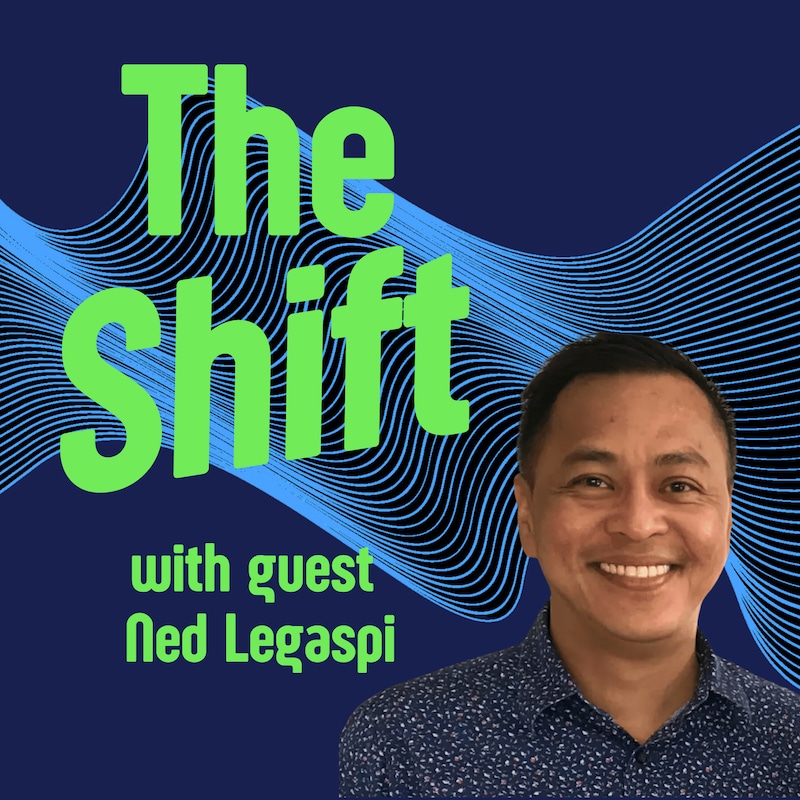
In this episode, Trisha interviews Ned Legaspi, a CQ Fellow and cultural intelligence consultant who spent three decades pioneering diaspora storytelling with ABS-CBN Global, the Philippines' leading media conglomerate.
Why do some stories resonate across continents while others remain culturally bound? What if the key to global storytelling isn't neutralizing culture, but deepening it? Ned introduces the CIS Bamboo Framework—a groundbreaking approach that asks not "what happens next?" but "what matters here?" Drawing from films like Parasite and How to Make Millions Before Grandma Dies, he reveals how stories rooted in specific cultural logic can bend without breaking, traveling authentically across cultural clusters. Discover why bamboo's interconnected roots mirror the way meaning moves through storytelling, and how cultural intelligence transforms the way creators approach narrative craft. Stay tuned for an upcoming episode where Ned and Trisha will apply this framework to analyze two powerful films: The Drover's Wife and How to Make Millions Before Grandma Dies.
Connect with Ned at nedlegaspi.com and on LinkedIn. His book, Culturally Intelligent Storytelling for Southeast Asian Creators, is available globally on Amazon, Apple Books, and Google Books.
Join Trisha in this journey of growth and discovery throughout the year via Substack or LinkedIn.
Resources Mentioned:
- Book: Culturally Intelligent Storytelling for Southeast Asian Creators by Ned Legaspi
- Available globally on Amazon, Apple Books, Google Books, Barnes & Noble, and Kobo
- Available in the Philippines on Shopee, Lazada, and TikTok Shop
- Book: Leading With Cultural Intelligence by Dr. David Livermore
Films Discussed:
- Parasite (South Korea)
- Squid Game (South Korea)
- Money Heist / La Casa de Papel (Spain)
- Dark (Germany)
- How to Make Millions Before Grandma Dies (Thailand)
Coming Soon: Stay tuned for upcoming episodes where Ned and Trisha analyze specific films using the CIS Bamboo Framework:
- The Drover's Wife: The Legend of Molly Johnson (Australia) by Leah Purcell
- How to Make Millions Before Grandma Dies (Thailand)
Transcripts
[00:00:39] Trisha: Hi there everyone. I'm Trisha Carter, an organizational psychologist and an explorer of cultural intelligence. I'm on a quest to discover what enables us to see things from different perspectives, especially different cultural perspectives, and why sometimes it's easier than others to experience those moments of awareness, the shifts in our thinking.
[:[00:01:36] Well, today we're gonna explore how this applies to storytelling, which is fascinating, and to help with this topic, I'm delighted to welcome Ned Legaspi
[:[00:01:54] Trisha: I am so thrilled to have you here, Ned. And dear listeners, if you don't know Ned, he is a cultural intelligence consultant and a CQ fellow, which is how we know each other. He spent three decades more in the what we would think of as the media entertainment industry. Is that the correct way to
[:[00:02:16] Trisha: He was with A-B-S-C-B-N Global, which is the Philippines leading media and entertainment conglomerate. It's known for producing top rated news and entertainment content, and he has been a part of the Filipino channel, which is its flagship global subscription network. And there Ned was pioneering diaspora storytelling across five continents.
[:[00:03:00] Ned: Oh yeah.
[:[00:03:07] Then I'd go off and watch something on TV and I'd be thinking about what he had said, and then I'd go back to the book and pick it up again. And I often had to reread bits because then watching things sort of made me apply it in my thinking. So it was an extremely helpful book. And in this book, Ned developed the cultural intelligence Storytelling Bamboo framework, a new approach to creating stories that resonate across cultures.
[:[00:03:57] And honestly, Ned, I can't hear them, but if they're talking to you, you know, feel free to stop and take care of them if they want you.
[:[00:04:06] hear them because Yeah. They want to join the conversation. Trisha?
[:[00:04:16] Ned: of course.
[:[00:04:24] Ned, what is a culture other than the culture you grew up in, that you have learned to love and appreciate?
[:[00:04:38] Trisha: Oh, no. Oh.
[:[00:05:18] I teach them or I practice English with them. In return. They practice French with me. And when I eventually went to France some, you know, some of them even invited me to stay in their homes.
[:[00:05:46] And I noticed that, you know, meals would last two hours even more, you know, and with multiple courses, multiple plates, you know, and long conversations. But as we discussed in cq, that is actually just the tip of the iceberg. But beneath that, I began to notice something deeper. You know, like what you said, I am a PhD student of cultural studies, and so I'll give a academic definition first of culture.
[:[00:06:39] So, that where, that was where I saw similarities with the Filipino culture. So, well, okay. First, both the French and Filipino culture place high value on relationships. No time is invested in people. It's not rush. No. Unlike probably Anglo, they rush for efficiency.
[:[00:07:13] Third and lastly, I think there's a valuing the both value, emotional nuances. Of course, feelings are expressed differently, but. Emotions or emotion is taken seriously. So meaning is layered and what's unsaid often matters as much as what is said though. So both cultures French and Filipino, they have that respect and high regard for heritage.
[:[00:07:51] love Because once you go beyond the surface, you realize how deeply relational, layered and meaning driven it is. So, so, that realization, you know, actually stayed with me both as a scholar and as a storyteller.
[:[00:08:28] Ned: The shift actually happened long before I had the language for it. So like what you as you introduced me, you know, I spent 30 years in global media, all of them with just one company by first and only company that is A-B-S-C-B and Global through the Filipino channel. So I served as head of global content.
[:[00:09:11] So, There was one particular Filipino film though that really stayed with me and it became a blockbuster hit in the Philippines.
[:[00:09:48] And I thought, well, was it not marketed well or is it the language issue or is it access issue? But, you know, Trisha language is no longer a barrier these days because audiences today are already comfortable. With subtitles end up content. I suppose that is also what you experience when you watch, you know, a Netflix or Amazon Prime content.
[:[00:10:16] subtitle and then it even gives you options you know, of English and even other languages. No. So in terms of access well, this film was available on major global streaming platforms, so that was when I realized, you know, it had to be something else.
[:[00:10:53] so they weren't responding.
[:[00:11:28] And at that point though, it, well, I didn't have a framework. I knew that, you know, something fundamental was happening with beneath the surface, and that realization changed how I approach stories from that point on.
[:[00:12:13] Tell me I guess, a little bit more about that work and what patterns you noticed about what stories did travel across cultures and what ones didn't.
[:[00:12:39] In parasite, for example. Anyone could relate to that. You know, desire for a better life though the fear of losing dignity and even the tension between aspiration and survival.
[:[00:13:16] So in parasite, you know, fear doesn't show up as a up in confrontation. Know it appears, you know, as quiet yet anxiety, shame, and that constant fear of being exposed or. Crossing invisible social boundaries. Those reactions are, you know, deeply shaped by Korean societal hierarchy and class consciousness.
[:[00:14:07] right.
[:[00:14:27] It's very Korean, but you know, they were unapologetically Korean. So I think that is the third pattern that I saw. It doesn't try to explain itself, you know, it just trust in, its what I call cultural logic. It's a social codes and it's moral tensions. So I theorize that is why it traveled.
[:[00:14:59] It stayed deeply Korean while touching something human that audiences like us or everywhere could feel. So, when stories try hard, too hard to be universal by, you know. Sanding their cultural edges, you know what I mean?
[:[00:15:19] lose the, that texture, you know? But parasite, I think did the opposite. No, it leaned into its specificity and I think that exactly that is exactly what allowed it to resonate across cultures. It even became the best picture of Oscars.
[:[00:15:59] Which is, you know, really using that cultural intelligence and especially CQ strategy, that awareness of what's going on moment by moment. How did you come to cultural intelligence? Where did you find cq and how did you get that into your work?
[:[00:16:39] So I bought it though as I read cq though well, CQ was, you know, defined as, you know, this ability to understand, adopt you and, you know, work effectively in diverse cultural settings. We all know that Trisha, right? But it's not just being aware of differences, but actively adjusting. Behavior, adjusting communication for successful cross-cultural interactions?
[:[00:17:37] Because Trisha's stories are communication
[:[00:17:43] Trisha: Yes.
[:[00:18:03] Later, I found that you know, more than 300, if I'm not mistaken, 377 from all over the world applied, but only 20 were accepted, and I was one of them. So, yes that experience gave me both validation, but at the same time, responsibility that it confirmed that, you know, this question that I had been carrying for years was worth, you know, pursuing seriously.
[:[00:18:44] Trisha: Was there sort of, I don't know, a moment when you realized that CQ could speak more deeply to the framework to, you know, did, was there a moment where it all sort of fitted into place? Or was it a gradual process of learning things and seeing, oh, this could help.
[:[00:19:25] So, it kinda establishes the why. This is like In CQ terms, my CQ drive, y'know, the motivation, but I wanted to create a framework to help Southeast Asian content creators, you know, craft narratives that would resonate across cultures. Part two of the book is, it's the seeking knowledge that is a part that I explained.
[:[00:20:09] Trisha: Yep. And boring.
[:[00:20:10] And boring. But it's something that they could relate and something that would resonate to them, you know? But yeah, that was the challenge of part two. But part three, this was supposed to be the CQ strategy, the actual framework. y'know and honestly, midway of the CQ Fellows that's where I got stuck.
[:[00:21:08] And they were crying.
[:[00:21:11] Ned: And of course I got intrigued though, so I went to the cinema and watch it also. And I cried and I thought this movie felt like a Filipino movie, but it's not.
[:[00:21:32] It was number one in Thailand. Of course there's Indonesia, Singapore, Malaysia, even the Myanmar and China. And that made me curious. I started asking why I looked at these countries where the film, you know, resonated and I noticed clear patterns. These audiences shared similar cultural value dimensions.
[:[00:22:30] I then asked, for AI for generative ai specifically Gemini, Claude Chat GPT and DSPy to independently, you know, conduct deep research and for them to give me sources. So I asked them the same question or prompt to give me top non anglo. non-Anglo films, TV shows, or streaming narratives that had resonated globally, if not at least originally, over the last 10 years.
[:[00:23:10] Because these are, these, they use different language models. So I kind of want, you know, different, uh, perspectives. So I kind of treated AI like my multiple investigators.
[:[00:23:24] Ned: yes, each checking the landscape from a different angle to give me perspective checking rather than a single answer.
[:[00:23:56] Uh, From Europe we have two. One coming from the Latin European cluster from Spain.
[:[00:24:29] A bigger picture emerges though. So we have like what I said, confusion. Asian represented by Korea, Latin, European represented by Spain German culture represented by Germany and Southeast Asia represented by Thailand. So, what does this tell us Trisha, that storytelling is no longer a unipolar with Hollywood, you know, dominating that Hollywood is the single center of story.
[:[00:25:58] And cultural intelligence or CQ gives us the tools to see and to work with those patterns intentionally.
[:[00:26:33] Strongly mono chronic. It is one of the things that I'm aware that I need to work with and I'm very well paired when I'm facilitating in training sessions, when I'm co-facilitating with somebody who is much more poly chronic. The tensions exist, but we then together do a much better job. But I have never noticed before, but I did after reading your book that sometimes I start a movie or a TV series and I go, Ugh, I just can't this isn't grabbing me so often.
[:[00:27:28] So it was quite an eyeopener for me to recognize that. But let's dig into the framework that you then applied so that you could help. And really I think your goal is to teach storytellers from the Southeast Asian area how they can create these stories that will travel and that people can hear the story.
[:[00:28:07] Ned: So when I was writing the book, no, I kind of entered into what I call creative trends. I think this is what, this is. What how do you pronounce the, her, his name? Csikszentmihalyi? The flow concept.
[:[00:28:21] Ned: Yeah. So, yeah, I was so immersed that ideas were, you know, you know, connecting on their own. And you know, because I was presenting a framework on how to craft stories that would resonate, you know, across cultures I knew that I needed more than concepts.
[:[00:29:12] But. I hesitated because icebergs are not something Southeast Asians live with. We don't see them.
[:[00:29:33] And then I thought of using pyramid, you know, to show progression you know, from the base you go up. But then again, pyramids, just like, the well it is globally recognizable, but still they don't feel close to Southeast Asians.
[:[00:30:31] Bamboo is everywhere. You go in Brunei, Jerusalem, Myanmar, there's bamboo in the Philippines, a lot of bamboos. So it's not exotic. It's actually part of you know, the daily life and, you know, okay. Second bamboo is interconnected. You know, it doesn't really grow like a single, you know, tree or single heroic tree.
[:[00:31:24] There are concepts of shame or face saving. In the Philippines we call it hiya Indonesia has a different word for it, but I think these are, you know, similar cultural logic
[:[00:31:49] No, so that's, I think the second, so the first would be familiarity the second, the interconnectedness. And I think the third would be the flexibility.
[:[00:32:20] Or by snap, I mean to lose the integrity. No, and I think the last would be why the bamboo? It's because well, I probably, yeah, the rootedness I mentioned about it. The rootedness and the resilience. No. So, from the bamboo grows underground, first, the unseen foundation comes before the visible structure.
[:[00:32:51] first before you start shaping for global resonance. So that became the CIS or culturally intelligent storytelling bamboo framework. So it has four parts patterned after a bamboo. It starts with the story root, that is where you ground the story in cultural values and context.
[:[00:33:21] yeah.
[:[00:33:44] And you could say echo though. So bamboo became the metaphor because I think it carries out this Asian worldview
[:[00:34:09] Trisha: Yeah, I think that's lovely.
[:[00:34:13] and one of the things that we had never seen before was scaffolding that was made of bamboo.
[:[00:34:22] Trisha: And so all of the scaffolding. Back home in New Zealand had been made of steel and we got there and this scaffolding and bamboo and I had, did not realize how strong bamboo is.
[:[00:34:56] So they might not be thinking about their story through that lens, but you are giving them the capability to think through that lens. Yeah. How is it different from other storytelling frameworks that creators might have learned? And here I have Western ones, I don't necessarily have Eastern ones, but things like the Hero's Journey or the three Act structure.
[:[00:35:26] Ned: The poor one. These are Western approaches to storytelling. The hero's journey in the three act structure they focus mainly on plot progression. So just like what you said a while ago though, you ask, okay, what's next? So, this approaches though, they ask questions like okay, what's the inciting incident?
[:[00:36:10] So, you can still use the three act or or the hero's journey, but you know, if you ignore culture, a story can feel, you know, technically correct,
[:[00:36:25] So, yeah I know that we plan to discuss your sample of films, just like, how to make Millions Before Grand Die, but yes to use that. If you analyze that film though from or through a Western plot lens, no, you might say, oh, the story is slow. The conflict is quiet, and, you know, there's no dramatic confrontation.
[:[00:37:18]
[:[00:37:19] Trisha: and what is right? Yeah. We are gonna we will come back to that because we go,
[:[00:37:40] Trisha: Absolutely.
[:[00:38:09] though. it helps you know, ensure that plots serves meaning rather than meaning being forced, you know, forced to serve
[:[00:38:42] So I think it's not just limited to Southeast Asia. I think this is a book, I mean, I know you wrote the book for those, that group, but I want to say, oh, I'm getting bossy now. I want to say that I think it's a book for storytellers full stop to help them to understand how culture has shaped themselves and their storytelling.
[:[00:39:09] Ned: Yeah. Yeah. You know what? Initially I thought I was writing. The book to help my former company, A, BSCB, and Global and the Filipino Channel, because the question, how do stories travel wasn't just my personal question, it was also a real, you know, practical question. We were asking inside the company, especially when I was head of you know, content and thinking about how Filipino stories could reach audiences beyond, you know, the Philippines.
[:[00:40:30] So in cultural intelligence or CQ terms, they form a cluster.
[:[00:40:38] Ned: Yeah. So while the countries are different, the underlying cultural logic is actually shared.
[:[00:40:57] And by that I mean writers, filmmakers, showrunners, and even, you know, media leaders who make decisions
[:[00:41:07] that stories, these stories can travel. So, that's also why the metaphor matters. I chose Bamboo because it's deeply familiar to Southeast Asia. It grows in clusters.
[:[00:41:58] So, so yeah. Ultimately the book is actually for everyone who wants to tell stories that are rooted, respectful and resonant.
[:[00:42:10] Ned: But my focus now is, of course, Southeast Asia
[:[00:42:16] Ned: Yeah.
[:[00:42:36] And I think there's both some risks and some benefits. And you gave an example before of how you used it to help you. What maybe, first of all, what impact do you think AI might have on storytelling and maybe what are the things to be careful of for storytellers? And then how do you think AI could be used productively, helpfully, you know, in a positive way?
[:[00:43:11] They fear that AI would eventually replace them, but, I think what's important now is to clarify your stand about ai. Is it man against machine or is it man with machine? Because, you know, like what I shared with you, I used AI to help me with the research.
[:[00:44:03] So if we want to be true to our culture, there is the danger of, you know, asking chatPGT Claude or n Gemini and even DSPy no you can use it or what is the culture of this country? I'm targeting to write for this country. But no, there is the danger that, you know, the output of the AI would be, you know, a result that is framed from a Western lens, not really from an insider perspective.
[:[00:44:57] Because ai, if you asked it can actually create story. But you know what? I tried asking AI to create stories, but I don't find it creative at all. Or, you know, the human mind is really more superior than this artificial intelligence. Well, I may be wrong. Probably not yet or not now, but I still have faith in the human mind.
[:[00:45:24] faith in humanity
[:[00:45:32] Trisha: that's, that is very true. So Ned where I'm coming to the end of our time here, so I'd love to know what advice you would give to someone who's hoping to follow in your footsteps. And I think the footsteps I'm thinking of is someone who wants to tell stories that will resonate culturally intelligent stories.
[:[00:45:56] Ned: Well, I like what you said a while ago about the, when you watch the film the example that you gave about the time that you're viewing it from a mono chronic lens. No. So, you know, coming from that, my advice would be, you know, start by. Understanding yourself before you adapt for others.
[:[00:46:36] Number two, as a storyteller. So you, I think you need to ask yourself or yourself, so what values shape your sense of conflict, your sense of emotion, just like what you said, Trisha your sense of time and even success.
[:[00:47:14] because I think you have to start with the story root first, then you adapt later. And only with intention. And by that I mean, don't force fit your media bosses might be forcing you.
[:[00:47:57] Trisha: I love that. Thank you.
[:[00:48:10] Trisha: Great advice.
[:[00:48:20] Ned: I am hoping that the world though, will move away from a single cultural center defining what good storytelling looks like.
[:[00:49:05] Yeah, that's my hope.
[:[00:49:20] Ned: I would thank you, Trisha, for giving me this opportunity to kind of promote the book. Culturally Intelligent Storytelling for Southeast Asian Creators is available globally on Amazon, apple Books, Google Books, Barnes and Noble, and Kabul. In the Philippines the book is available on Shopee, Lazada, and TikTok Shop.
[:[00:49:55] Trisha: And if people want to connect with you if they want to learn more about your work, how is it best for them to do that?
[:[00:50:07] Trisha: It is easy, but we will put it in the show notes as
[:[00:50:15] and Because of Trisha I am also starting beginning this month of February, 2026. I'm starting on Substack where I plan to write about storytelling culture and identity.
[:[00:51:04] in an upcoming episode
[:[00:51:07] So stay tuned to this podcast to see how we operationalize the CIS Bamboo framework
[:[00:51:15] Ned: in stories and in storytelling.
[:[00:51:43] You can watch the movie before you listen to our discussion. And we'll also be going to the Thai phenomenon, how to make millions before Grandma dies, which is why I shut Ned down earlier when he was beginning to unpack it. So we'll walk through things like the story route, the story craft, the story pulse, and the story lift to understand how deeply culturally rooted stories can resonate globally.
[:[00:52:18] Ned: Thank you very much Trisha I enjoyed you
[:[00:52:21] this. I will be very transparent. This is my very first podcast, guesting.
[:[00:52:37] Ned: Yeah. Thank you very much again,
[:[00:52:40] Trisha: you're very welcome. So thank you and thank you dear listeners, for being part of the shift today. Cultural intelligence is something we develop together, and these conversations are just part of our shared learning journey.
[:[00:53:13]
