Shownotes
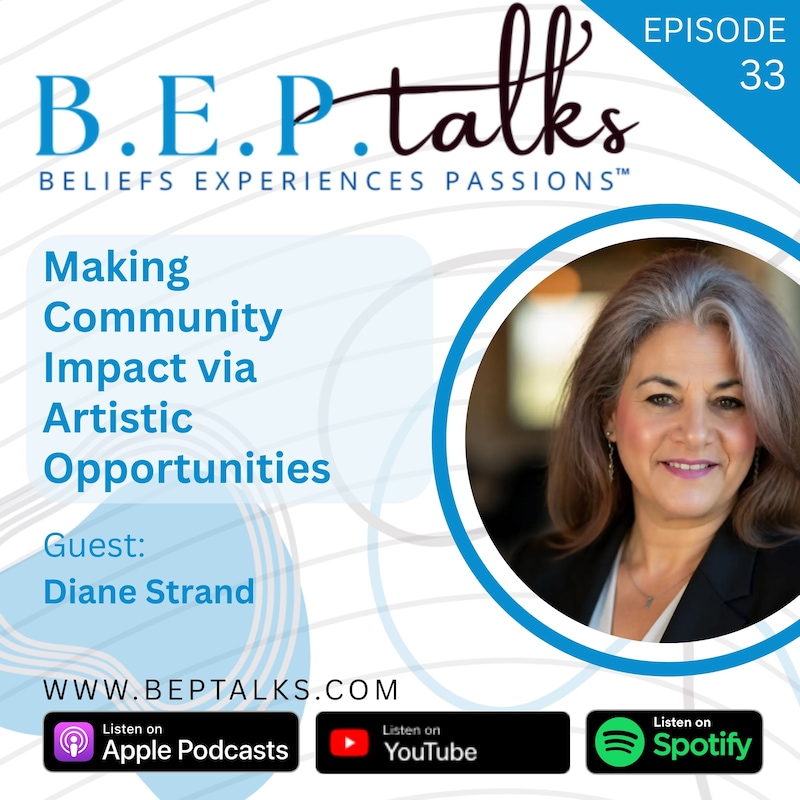
On today’s BEP Talks, I sat down with Diane Strand, an award-winning producer whose journey from struggling with dyslexia in second grade to building a million-dollar business in the arts is absolutely inspiring. Diane shared how saying yes to new opportunities and embracing creativity—even outside your comfort zone—can lead to unexpected success. Her passion for the arts not only transformed her own life, but is making a difference for neurodiverse adults through hands-on media training. If you want to learn how resilience, creativity, and showing up can connect the dots toward your goals, you’ll want to hear Diane’s story.
Support the arts in your community, and remember: there’s something for everyone, even if you haven’t discovered it yet. To connect with Diane, please visit: https://jdsstudio.live/
---------------------------------
B.E.P. Talks makes it possible to connect with those who most resonate with your own personal or professional life – or both. Follow-up in the moment or come back to them when you need them most, attend their events, read their books, participate in their courses.
Visit often! Meet experts from the cross section of the world. Let them motivate, inspire and educate you.
🎤Interested in telling YOUR story?
Visit https://www.beptalks.com/ for all the info you need.
Schedule an interview. Expand your reach and influence. Begin to change the lives of others by changing your own.
You’ll love the experience and your audience will appreciate you.
🔎Explore the MeetN Platform: https://meetn.com/features?x=94034
▶️Subscribe to our Channel: / @beptalks
Follow Us on Social:
Facebook: / thegsew
LinkedIn: / johnstonbeth
Transcripts
Well, hey there and welcome to today's edition
Speaker:of BEP Talks. We're amazing. People from all around the
Speaker:world, all walks of life, all industries and
Speaker:professions, all ages and stages of life and
Speaker:career, come to the BEP Talks stage to share
Speaker:their beliefs, their experiences and their
Speaker:passions. BEP Beliefs, experiences
Speaker:and passions. What I love so much about
Speaker:bedtalks is the generosity of the
Speaker:information that is shared. To
Speaker:inspire, to motivate, to educate, entertain,
Speaker:whatever it is. It's your story and we are here
Speaker:to share. BEP Talks is where you come to share well, to take
Speaker:center stage where you can become easy to remember and
Speaker:impossible to forget. I am so excited to introduce
Speaker:today's guest to you. Very
Speaker:multidimensional. She's going to share her stories, her beliefs, her
Speaker:experiences and passions. So please welcome to today's BEP Talk
Speaker:stage, Diane Strand.
Speaker:Hello. Hi there, Diane. And thank you so much
Speaker:for joining us here today on BEP Talks. I've
Speaker:been looking forward to this. As I said, so many of our
Speaker:guests really come from multidimensional
Speaker:places in life. You are certainly no exception to that.
Speaker:You have a fascinating history
Speaker:and I'm going to share with our listeners from my personal perspective
Speaker:why I feel that way. You come to us
Speaker:as the creative director. You're
Speaker:an award winning producer. You have an exciting Hollywood
Speaker:background. You and your family have an amazingly
Speaker:successful business called JDS Studios out on
Speaker:the west coast of the United States. I don't know
Speaker:where to begin because everything about you
Speaker:excites me and fascinates me. I'm going
Speaker:to share why I don't even know how many
Speaker:years to go back because we'll both be dated by this. Of being
Speaker:a viewer of General Hospitals, a show that you worked
Speaker:on the production of and Friends,
Speaker:one of the most popular sitcoms, has to be of all
Speaker:time. I still watch the reruns.
Speaker:It's one of those shows that's always there, it always
Speaker:entertains, always puts a smile on my face. So
Speaker:that fascinating background and then you had a pivot.
Speaker:You had a pivot. Share with us. And I
Speaker:know your story goes back further than that. It goes back to the second
Speaker:grade. Your love of the
Speaker:arts, of getting involved in the Hollywood whole
Speaker:biz, which kind of everybody, I think, dreams about somehow.
Speaker:Diane Strand, what is your story? Where
Speaker:does it begin? Well,
Speaker:it does have lots of different beginnings for sure,
Speaker:but the one through line that really comes through is the
Speaker:arts. That really connects it all the way
Speaker:from second grade to today. There's a
Speaker:great quote by Steve Jobs that says you can't connect your
Speaker:dots looking forward, you have to look back and trust that they will
Speaker:connect in the future. Every
Speaker:milestone or dot or pivot
Speaker:or change that has happened in my life, the through
Speaker:line has always been the connection to the arts and the
Speaker:tools that it teaches and how it really impacts
Speaker:life and business. Whether that was the second grade little
Speaker:girl who just wanted to play Betsy Ross in the school play
Speaker:and couldn't understand why teachers and even
Speaker:my parents said, maybe you should try something different,
Speaker:that isn't such the best idea. I couldn't read
Speaker:and as a young girl I was
Speaker:undiagnosed. But I am dyslexic
Speaker:and that didn't get diagnosed many years
Speaker:later. And I was a struggling
Speaker:reader and school was not my friend. But the arts kept me
Speaker:connected and somehow in second grade I figured out how
Speaker:to audition and I got the part of Betsy Ross
Speaker:in the school play. And you know, that other big
Speaker:pivotal moment in second grade was there was a huge
Speaker:fundraiser that year and whoever sold the most
Speaker:candy in the whole school, and this will date me, would
Speaker:win in a black and white 19 inch television set.
Speaker:And I really wanted that TV for my room so I could
Speaker:watch TV in my bedroom. And so I set a goal
Speaker:and I enlisted help from my parents, but I did the
Speaker:work and I sold the most candy in that whole school.
Speaker:And here I am still working in television. I
Speaker:still love the arts. I raise money for fundraising
Speaker:all the time now. And, and so those are
Speaker:like huge little milestones and dots in my
Speaker:life that connect all the way through, whether that's what kept me
Speaker:in school, back into college, started
Speaker:my career, what I do today in
Speaker:teaching other people about the power of the arts. It
Speaker:all connects. Yeah, that is such a great story.
Speaker:So I love that you quoted Steve Jobs and I'm thinking,
Speaker:let's go back to that second grade child who wanted to be Betsy
Speaker:Ross and became Betsy Ross. Were you on stage actually making
Speaker:the flag? Were you? Oh, I love it, I love it. I was.
Speaker:Could you at that time. And I know it's hard to go back and kind
Speaker:of put yourself there, but let's try to do that. Could
Speaker:it have been possible to foresee
Speaker:from the mind and the beliefs
Speaker:and the experiences of a second grader? Because at second grade you're
Speaker:like 8 years old. Could you ever have seen where all of
Speaker:those dots would bring you all these years later?
Speaker:Ever? No, never. And you know, I even
Speaker:say that because where I am today, if you would have asked me,
Speaker:this 10 years ago, would I be doing what I'm doing
Speaker:today? I wouldn't understand it because
Speaker:there, it all makes sense now.
Speaker:But when I was first
Speaker:approached with working with neurodiverse individuals
Speaker:and teaching them video production and multimedia, I'm
Speaker:like, what do I know about that? Right? I mean, I don't,
Speaker:I don't have a child that I had to has autism
Speaker:or learning disability. I mean, in hindsight,
Speaker:yes, because of course your dots connect. All three of my kids have
Speaker:adhd. All three of my kids, you
Speaker:know, do suffer from some sort of something.
Speaker:I would even say my oldest, you know, he's not diagnosed,
Speaker:but there are moments of autistic traits in there as
Speaker:well. But we all live somewhere on a
Speaker:spectrum. That's why it's called a spectrum. We're there
Speaker:now. There are different severities and executive
Speaker:functions that come into play when you were dealing with learning
Speaker:disabilities and how you could move through them. And that's what I
Speaker:know today. And that's why I say I would have never
Speaker:have known that 10 years ago. And putting the connection.
Speaker:And this is where my business philosophy comes into
Speaker:play, which is show up and say yes. Because I was at a
Speaker:chamber event introducing myself as an executive
Speaker:producer who does video and multimedia and
Speaker:you know, teaches acting and help launches acting careers. To have
Speaker:somebody come up to me and say, I'd love to talk to you about
Speaker:some of the clients that I serve at Inland Regional Center. And I'm like,
Speaker:inland Regional center, what's that? Oh, it's a
Speaker:clearinghouse for people with learning disabilities and on
Speaker:and on the spectrum. And if I would have said, oh, I
Speaker:don't know anything about that and pushed it away and not said tell me
Speaker:more and how can I serve or
Speaker:sure, I'll have that coffee meeting and learn more,
Speaker:I would have missed out on an a million dollar revenue
Speaker:business a year, you know. So that is the show
Speaker:up and say yes. And I would have never ever been able to believe
Speaker:that I could have done what it is that I'm doing had
Speaker:I thought about it, you know, in that
Speaker:moment, going, I don't know how to develop a program for that. I've never taught
Speaker:anybody. I'm not a teacher, I don't know anything about autism. Those would
Speaker:have been all the things that I could have fear came up, could
Speaker:have told me all those things that would have made complete sense to
Speaker:me. Right, right. But because I
Speaker:said show up and I say yes, it doesn't mean that I don't
Speaker:ever Say no to anything, because of course you have to know your limits and
Speaker:your boundaries. But you show up and you say yes,
Speaker:and you're open to serve and the pathways that
Speaker:open in front of you just
Speaker:are opportunities of so much.
Speaker:And then you look back and go, oh, now it completely makes sense.
Speaker:Now I really know why they connect. I am
Speaker:that young girl. I do know that hands on learning is what
Speaker:taught me. I do know tools that got me through school
Speaker:and dyslexia and business and all the things
Speaker:I had to learn and, and I had to figure out on my own. I
Speaker:want to share that with other people. And now I can. What a
Speaker:great story. So you know what I just heard here? As an eight year old,
Speaker:a second grader, you wanted to do something and you were
Speaker:kind of discouraged from even trying. Even your
Speaker:parents, you said, and your teachers, oh, maybe that's not the best role for you.
Speaker:Maybe you should just be like in the background as an extra kind of a
Speaker:person because of the reading. And then all those years later,
Speaker:someone approaches you from the opposite direction and
Speaker:you don't realize your capacity to be able to do it, but somebody
Speaker:else did. We just never
Speaker:know. That is such a lesson unto itself that
Speaker:everything is possible. If from my perspective,
Speaker:if there's a passion somehow burning in your heart that you might not have
Speaker:recognized until that moment, you are clearly a
Speaker:lifelong learner. Yes. And you have
Speaker:figured out for you the best way
Speaker:to learn. And it's not always by reading.
Speaker:It's not always by reading. It's by doing,
Speaker:hands on, touching, seeing. Now, it doesn't mean that, you know,
Speaker:obviously I can read and I follow steps, but
Speaker:don't, you know, I love everyone. Everyone always asks, what's your favorite
Speaker:book to read? I'm like, I write books. I don't necessarily read books.
Speaker:That's kind of my life. But I do read
Speaker:periodicals. I read for information, that sort of
Speaker:thing, which, you know, I have learned tools. But
Speaker:the best thing is I gotta learn something, I gotta do it, I gotta
Speaker:repeat it, I gotta go through that function over and over.
Speaker:And then I know how to do something. Instead of reading it five
Speaker:times, I do it five times. How you learn?
Speaker:Because I know a lot of people who were a whole lot better than I
Speaker:as students at young ages and
Speaker:got much better grades than I, who do read novels
Speaker:and everything else. But I will say something that we Learned
Speaker:back in 6th grade. How do you remember that? Because
Speaker:I actually learned it. I didn't just read it in the moment.
Speaker:I had like you, my own system for learning how
Speaker:many impressions were made, were made. And I want
Speaker:to go back. You commented about your children. You mentioned that you have three and
Speaker:you know, all of them. I give you such honor and praise for that because
Speaker:if we dig deeply enough on anybody, we will find
Speaker:something. So I want to congratulate you on having very
Speaker:normal children. Very normal children. And
Speaker:obviously being raised by an exceptionally wonderful
Speaker:mother. Share with us, Diane, what
Speaker:it was, because the common denominator here is the arts.
Speaker:Not only what got you through, and I love that as a
Speaker:second grader, you were performing, you were engaged
Speaker:in the arts way back then. And look.
Speaker:Oh, baby, look at you now. What is it about that
Speaker:common thread through life, the power of
Speaker:the arts? Talk to us about that, please. Oh,
Speaker:well, if you want something done in life, find a theater kid. That
Speaker:is for sure. They are going to know how to get something
Speaker:done on a shoestring budget. They're going to be able to do
Speaker:something and step outside their comfort zone and do it scared
Speaker:anyways. They're going to learn communication skills. They have.
Speaker:They understand education and history and
Speaker:they're able to market and they're able to
Speaker:just be in the moment as well
Speaker:as listen. Those are all the big tools that
Speaker:we need in life to be able to succeed.
Speaker:And so I truly believe that, that,
Speaker:you know, that's what. That's what creatives do every
Speaker:day. I really, truly call myself a creative preneur. Because
Speaker:we get creative in difficult moments. It's how we problem
Speaker:solve. It's how we pick ourselves back
Speaker:up with resilience. And, you know, it doesn't matter
Speaker:why or how you fell down. It matters that you get back up and you
Speaker:keep going. And those are the things that, you
Speaker:know, the arts really teach us. You know, you get up on stage and,
Speaker:you know, your scene partner forgets their line.
Speaker:You gotta figure out what to do right in the moment while there's
Speaker:100 people staring at you. This
Speaker:is how you learn how to improv your way
Speaker:through life. It's not fake it till you make it, but it's
Speaker:be prepared so that in moments that
Speaker:happen that are unscripted, you can
Speaker:go with the flow. You can not
Speaker:shrivel up and die. You just keep going and
Speaker:moving on. You know, fear has its right place. It
Speaker:tells us not to jump off the cliff without our parachute.
Speaker:But then I'm going to encourage you to pack your own
Speaker:parachute. Trust yourself so that
Speaker:when you need to jump, you know the
Speaker:parachute's gonna open because you packed it because you packed it.
Speaker:Wow, what a metaphor that is. So
Speaker:you're now so sad that
Speaker:money comes into every conversation somehow. So
Speaker:you look at school budgets,
Speaker:you're driving an incredibly powerful story
Speaker:about the benefits of the arts
Speaker:as a lifelong learning tool, a lifelong show up,
Speaker:you'll figure it out, you'll solve the problem. You'll think with that other side of
Speaker:your bring. Why are the budgets on the arts always the first things to be
Speaker:cut? Well, I truly believe because
Speaker:the more that you install the arts
Speaker:into kids and humans, they become
Speaker:critical thinkers. They start thinking outside the box, they start
Speaker:being disruptors, you know, but, you know, in
Speaker:that aspect, you know, but the arts
Speaker:are the only thing that is consistent through
Speaker:time in everything going way, way, way, way. All
Speaker:the way back before civilization, cavemen were
Speaker:drawing on the caves and the walls
Speaker:to tell stories, to share things to do that
Speaker:act things out. That's how language began. It all
Speaker:started with the arts. So, you know, I wish I had the
Speaker:magic answer of why they cut it out of so many budgets, but I'm
Speaker:here to tell you that if it's not in your school, go find
Speaker:it elsewhere for your kids there. It's never too late.
Speaker:I don't care if you're two, you're. Or 200.
Speaker:To get in, you know, get involved in the
Speaker:arts, be creative. I'm not telling you to go be an artist,
Speaker:to be an actor, to paint murals, to
Speaker:sing, you know, to go be a professional singer, but
Speaker:sing a song, color in a coloring book. Get
Speaker:up on stage and do things you've never done before. These
Speaker:are what's going to strengthen you on the inside and
Speaker:give you the tools that you need to
Speaker:solve that financial crisis you're going through. To
Speaker:be able to give you some new direction to pivot, to
Speaker:get creative, to not have to know
Speaker:how the end is going to resolve itself. Just
Speaker:know that you got to take the next step, which is, I'm standing here
Speaker:on stage. My obscene partner does not know what to do.
Speaker:So I have to figure out what to do. And that's where you
Speaker:just. Weren't you going to tell me that I needed to go get my
Speaker:hat so we could exit stage left? Whatever. It's going to
Speaker:be right. Fill in the blanks. Well, you know, that's so true.
Speaker:That's so true. And improv itself, as a. As
Speaker:an art form has become its own division
Speaker:in theater. Improv theater is fascinating to watch. I have a
Speaker:niece who, she's so talented. She sings, she dances she does
Speaker:comedy, she does drama. She's the perfect femme fatale. And what she,
Speaker:she hosts GMCs. And what she loves most, because I
Speaker:think it's where genius is really recognized, is in
Speaker:improv. Not to have had that script.
Speaker:Just to get an idea and work with people around you. And if
Speaker:nothing else, at least support the arts. If you're not
Speaker:someone, support the arts for others. So you and your
Speaker:family, your passion is palpable,
Speaker:your experience is incredible.
Speaker:And of course all built on your own personal beliefs and experiences.
Speaker:You have done a lot in the arts to support
Speaker:others. You mentioned about this woman approaching you and say, how
Speaker:about doing this? Tell us about your, your not for profit
Speaker:and how you've brought the arts to that group of
Speaker:people. Well, when we
Speaker:started really stepping into teaching the arts from
Speaker:our video production company, we created JDS Actors
Speaker:Studio, which was a professional actors studio. My
Speaker:partner in life and business, my husband Scott, he's a
Speaker:professional actor and he's been in film and movies. And
Speaker:he was getting that itch. And so we were also
Speaker:noticing that there wasn't a lot of the arts in the school.
Speaker:And so we decided that we were going to create a drama
Speaker:club. And it started as an after school drama club.
Speaker:And we thought maybe 15 to, you know,
Speaker:20 kids might show up. And we had over 55 kids
Speaker:who showed up for the first drama club eight week
Speaker:session. And that really grew into the actor studio. And
Speaker:in four years of growing from a drama club to an
Speaker:actor studio, we were being asked, can you do
Speaker:musical theater? Can you teach us? Camera, you do video? Can you do.
Speaker:So it was like, oh, there's still only 24 hours in a
Speaker:day. And that's where I knew I had to pull in some of my other
Speaker:industry professionals. And we gathered around my kitchen
Speaker:table and decided that we were going to create
Speaker:a nonprofit. And started as
Speaker:a nonprofit for the arts is really how it began. Where
Speaker:we could bring in other industry professionals to
Speaker:teach musical theater, script writing, some other
Speaker:creative classes that we were beginning to start. And as
Speaker:that was developing, it was all out of the nonprofit. It was
Speaker:really, we were a nonprofit nonprofit for the arts. And we still are. But
Speaker:then it really grew into. When I was
Speaker:approached by Beth Crane
Speaker:at Inland Regional center to talk about
Speaker:a Title 17 program, which is for
Speaker:adults who are neurodiverse and
Speaker:intellectual, have intellectual disabilities. And
Speaker:at that point I did have, you know, there are gaps
Speaker:in that story. I had written a curriculum with a
Speaker:educator out of Mount Sin Jacinto Community College. And we
Speaker:created an apprenticeship. And so that got approved
Speaker:through the state of California. So I took that
Speaker:curriculum and I started augmenting it of
Speaker:how it would really work for somebody who might not
Speaker:traditionally learn. And that's how we created
Speaker:the Title 17 program to be
Speaker:for adults with developmental disabilities. And
Speaker:In May of 2018, we
Speaker:welcomed our first participants through the door. And
Speaker:sitting next to me on the other side of that
Speaker:wall, right next to me is 30 adults with
Speaker:developmental disabilities who are here learning,
Speaker:doing production and multimedia. They support our
Speaker:productions and multimedia. We've placed 13 into real
Speaker:industry jobs and now we have
Speaker:a whole bunch of television shows and festivals.
Speaker:And we just finished Guys and Dolls. We're doing
Speaker:Fiddler on the Roof. So, you know, we have the theater art side,
Speaker:the performing art side. We have the
Speaker:digital art side. We partner with all the school districts
Speaker:and pre apprenticeship. So it's.
Speaker:It's fun. It sounds
Speaker:fun. It sounds incredible. What a major project. And as you say this
Speaker:24 hours in the day, how you get all of this done, obviously you have
Speaker:a team and I love that it's a family business that your husband,
Speaker:you mentioned and your kids, you're all involved in this. And
Speaker:the one word that I kept hearing and I wasn't necessarily
Speaker:listening, Arts, arts, arts, arts. And
Speaker:for my own life, thinking back about what are the things that you've
Speaker:enjoyed the most? Where do your memories come from? You think of
Speaker:what's your favorite song? What was your favorite
Speaker:movie? What was your I'm a New Yorker. What was your favorite Broadway
Speaker:show? It's all the arts now I'm a sports
Speaker:junkie. And sometimes sports in schools takes
Speaker:precedence over arts. As we're discussing it here today.
Speaker:It's all financial legacy kind of stuff. But isn't that a form
Speaker:of art in a way? It's putting on a production. It's
Speaker:a business. It's entertainment. Multi. Billions
Speaker:of dollars. And those are the. It's somebody else's
Speaker:performing or putting on some kind of a show. So
Speaker:what. What I'm hearing from often relate sports and
Speaker:athletics and athletics. Performance. Performance,
Speaker:absolutely. What I've heard is that there's nothing
Speaker:for everyone, but there's something for every. There's not one thing that's
Speaker:for everyone, but there's something for everyone. And
Speaker:often it's in the arts. We just don't think of it the
Speaker:way you've brought it to life for us. I think we've all thought that
Speaker:you have to be Academy Award and this. That
Speaker:it doesn't need to be at that level, it's even when
Speaker:I watch with my little great niece and nephew, their nanny,
Speaker:how she's performing for them all day long and getting
Speaker:them to. To create things and to put on their little
Speaker:shows and to do art and that
Speaker:they're exposed to it. It's her gift that she's giving them because
Speaker:it's the gift that God gave her. You've
Speaker:really provoked a lot of thought here. Is it fair to ask you
Speaker:of all the things you've done? It's probably not, but I'm going to ask you
Speaker:anyway. What's. Was there a favorite show that
Speaker:you worked on? Was there a favorite production that you
Speaker:did? I mean, sure. I mean,
Speaker:you know, at different phases and times in my life, you
Speaker:know, when I was in my Hollywood days
Speaker:working at Disney Channel
Speaker:was, you know, that was one of the great dreams ever.
Speaker:Even more so than, you know, you mentioned General Hospital.
Speaker:I watched General Hospital be from when I was in
Speaker:sixth grade, and that was like my favorite show. And then I
Speaker:worked on the show for over two years and
Speaker:then I left the show. And still today, I still
Speaker:watch the show every single day.
Speaker:So, you know, as far as that goes, I would say
Speaker:they all have different meanings, but work wise, I
Speaker:mean, I could tell you the moment that Barbra Streisand picked me out of
Speaker:the producer pool and asked me to be her personal producer. I mean, I
Speaker:have great moments like that. But then the moments that
Speaker:make a difference are when we do wizard of
Speaker:Oz and I watch my daughter now play Dorothy,
Speaker:right. Or, you know, I get to
Speaker:have one of the adults with developmental disabilities come up to me and
Speaker:tell me that I'm making their dreams. Dreams come true. So
Speaker:it es and flows from what would be my favorite
Speaker:moment, you know, to my favorite show. And, you know, and
Speaker:there are proud moments. I mean, winning non profit of the year or
Speaker:winning business of the year, you know, there are those
Speaker:kinds of moments too, that, you know, they all kind of
Speaker:just stack up and, and I'm so grateful.
Speaker:I'm just so grateful. And I have,
Speaker:you know, a very full, beautiful life with, yes,
Speaker:yes. With wonderful family and people who support
Speaker:me on my team and, you know, I get
Speaker:to serve and see other people's dreams come true.
Speaker:So, yeah, you casually,
Speaker:you casually mentioned the name Barbra Streisand, but my
Speaker:feeling was it's the people on the other side of that wall that
Speaker:you just referenced that really
Speaker:resonate with you so much in your heart. I get that
Speaker:every day with those people. I get that about you. So
Speaker:you said, you know, show up. Say yes.
Speaker:Try something. You always show up. And you
Speaker:have made it possible for other people to show up and to find
Speaker:the way for them to connect their dots and where their
Speaker:futures are taking them. For you to be one of those dots
Speaker:on that chain, God bless you,
Speaker:that has to be exhilarating and so gratifying.
Speaker:And I am so blessed to now know you, Diane, and I'm so
Speaker:grateful for the time that you have taken to share with me today
Speaker:and with our viewers. And I want to say to
Speaker:everybody viewing show up, say yes. Try
Speaker:something new. Sing a silly song.
Speaker:Crayons and adult coloring books came back 10
Speaker:or so years ago. Do something silly. Do something and
Speaker:celebrate something that maybe you've never tried before.
Speaker:Music is in my heart, but every time I sing, I'm told to
Speaker:stop. And all that does, Diane, is encourage
Speaker:me to sing more, because it's in my heart and I
Speaker:don't have to sound great. I. I still sing. I still
Speaker:sing. And I think that's. That's such a gift. I give it to myself
Speaker:somehow. It sounds good to me, but it doesn't sound good,
Speaker:apparently, to anybody else. So. The arts. The arts,
Speaker:the arts. Thank you for your life's work. Thank
Speaker:you to that little girl who played Betsy Ross, who. Who.
Speaker:Who played the role of someone who. Who created the American flag
Speaker:for us. And through that experience, look what you have created
Speaker:for so many other people. You're still putting stripes.
Speaker:You're still putting stripes and stars. You're creating stars now
Speaker:for other people. And I honor you for that. I thank you for that.
Speaker:I. I am so appreciative, truly, Diane, just to
Speaker:know you. Just to know you. And as I say to
Speaker:everybody watching, go do something.
Speaker:Go and look up JDS Studios. There's got to be
Speaker:something that you can do through Diane's charities,
Speaker:through her programs, to help a child, to encourage somebody
Speaker:else. Just even support the arts. Do something
Speaker:fun. And as we always say, you have a story.
Speaker:We want to hear it here on BEP Talks. And until we talk again,
Speaker:we say, may the best always be yet to come. And
Speaker:I know when you say goodbye to me, you're jumping over on that other
Speaker:side and going back and playing a
Speaker:very, very beautiful role in the lives of those 30
Speaker:people. Go talk to me. And keep doing it. Keep connecting the
Speaker:dots. You are an amazing inspiration.
Speaker:Thank you so much. Thank you. Thank you. Bye. Bye.