Shownotes
What's really happening to animals on Skid Row in Los Angeles—and who's protecting them?
From reports of animal abuse and illegal breeding on the streets of Los Angeles to the controversy surrounding New York City's carriage horses and overcrowded animal shelters nationwide, the fight for animal welfare has never felt more urgent.
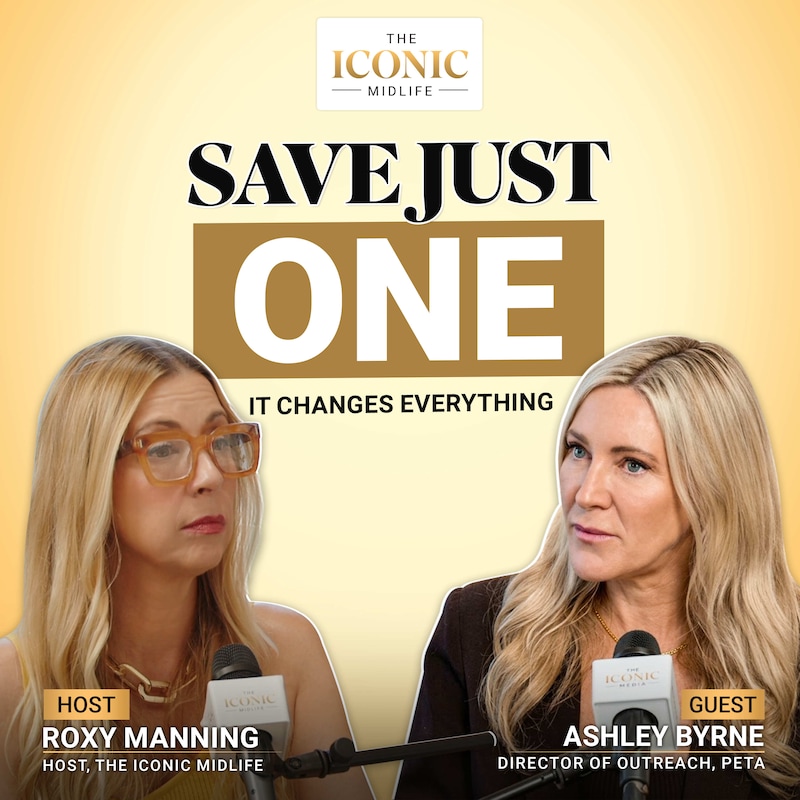
This week on The Iconic Midlife, Roxy Manning sits down with Ashley Byrne, Director of Outreach for PETA (People for the Ethical Treatment of Animals), for an eye-opening conversation about animal cruelty, rescue, advocacy, and the changes needed to protect vulnerable animals.
As a lifelong animal lover and rescue dog mom, Roxy has always felt a deep connection to animals and a responsibility to speak up for those who cannot speak for themselves.
Ashley shares how her passion for animals became her life's work and takes us behind the headlines of some of the most pressing animal welfare issues in America.
In This Episode:
- The Skid Row animal crisis: Reports of abuse, neglect, and illegal breeding in Los Angeles, and whether city officials are doing enough to intervene.
- NYC carriage horses: The realities of the horse-drawn carriage industry, concerns about working and living conditions, and efforts to ban carriage rides.
- America's overcrowded shelters: Why shelters are struggling, what contributes to euthanasia, and what needs to change.
- Adopt, don't shop: The impact of puppy mills, breeding, and consumer demand on animal homelessness.
- Vegan fashion and cruelty-free beauty: How to make more compassionate choices without sacrificing personal style.
- Advocacy at every age: How our priorities and willingness to speak up can evolve in midlife.
- How you can help: Practical ways to support animal rescue, report suspected cruelty, foster, volunteer, and advocate for stronger animal protections.
This conversation isn't just about the heartbreaking realities facing animals. It's about accountability, compassion, and understanding how individual choices can contribute to meaningful change.
Because loving animals is one thing. Taking action to protect them is another.
Connect & Take Action
Learn more about PETA's animal advocacy work: https://www.peta.org
Explore animal adoption and fostering opportunities through your local shelters and rescue organizations.
Follow The Iconic Midlife
Social Media (show): @theiconicmidlife
Social Media (host): @redcarpetroxy
YouTube: The Iconic Midlife
Love this conversation?
Subscribe to The Iconic Midlife on Apple Podcasts, Spotify, Amazon, or your favorite podcast app. Download the episode, leave a rating and review, and share it with someone who cares about animals.
And don't forget to subscribe to our YouTube channel for the full video interviews and exclusive content.
Your voice matters. And so do theirs.
Links referenced in this episode:
Companies mentioned in this episode:
- PETA
- Starts With One Today
- Los Angeles Animal Services
- Los Angeles Police Department (LAPD)
- Best Friends Animal Society
- Central Park Conservancy
- Cirque du Soleil
- Gucci
- Stella McCartney
- Marie 1998
- Sans Beast
- PETA Business Friends
- U.S. Food and Drug Administration (FDA)
- YouTube
- Iconic Midlife
Transcripts
On top of being an animal lover, I have a deep sense of needing justice in the world.
Speaker A:Like, when I see justice not being served, it drives me crazy.
Speaker B:As it should.
Speaker B:We shouldn't be able to rest until we see things that are wrong righted.
Speaker B:The way they put it is the dogs on skid row are treated as currency.
Speaker B:The dogs are just treated as currency objects.
Speaker B:They're kind of traded around.
Speaker B:They're traded for drugs, they're traded for sex, they're traded for money.
Speaker B:The city kind of made this big announcement that it was going to be a no kill city.
Speaker B:That sounds like a wonderful thing.
Speaker B:The math doesn't work because you still had people breeding dogs.
Speaker B:It comes down to keep calling and being annoying until something gets done.
Speaker B:And if nothing's getting done, call PETA.
Speaker B:We will help you.
Speaker A:Even if you save one one, you've made all the difference in that animal's life.
Speaker B:Absolutely.
Speaker B:No, no.
Speaker B:That is such a great point.
Speaker B:That is an entire life changed, right?
Speaker A:If you.
Speaker A:You know that animals have always had a huge piece of my heart.
Speaker A:I was that kid who felt everything when it came to animals.
Speaker A:And honestly, I still do.
Speaker A:I've always had this instinct to protect them, speak up for them, and probably bring home every animal that needs a family, if my husband would let me.
Speaker A:So today's conversation is a really personal one for me.
Speaker A:My guest is Ashley Byrne, director of outreach for PETA.
Speaker A:And we're talking about some of the biggest issues facing animals right now here in Los Angeles with what's happening to animals on skid row, the reports of abuse, neglect, and illegal breeding, what's being done about it, and what still needs to change.
Speaker A:We're also getting into New York's controversial carriage horse industry, the overcrowding crisis in animal shelters across the country, puppy mills and breeding, and the choices we can make from the animals we bring into our homes to the fashion and beauty products we buy that can have a real impact.
Speaker A:And I don't want this conversation to simply make us angry or heartbroken.
Speaker A:I want it to make us informed, empower, and ready to actually do something.
Speaker A:So if you love animals like I do, download this episode, subscribe to the Iconic Midlife and share it with another animal lover, Ashley Byrne.
Speaker A:Welcome to the Iconic Midlife.
Speaker A:Welcome to the Iconic Midlife.
Speaker B:Ashley, how are you today?
Speaker B:Thank you so much.
Speaker B:I'm doing great.
Speaker B:It's amazing to be here.
Speaker B:Thanks for having me.
Speaker A:Absolutely.
Speaker A:Well, I'm thrilled to have you here.
Speaker A:I know before we started rolling, we were talking a little bit about our Pets and our animals, who we love so much, who we have.
Speaker A:And I was telling you about being a foster failure mom.
Speaker A:I 100% will admit every single time I have tried to foster a dog, they never leave.
Speaker B:Is that bad?
Speaker B:No.
Speaker B:I so get it, because my cats are foster failures.
Speaker B:And I'm happy every day that, you know, I literally.
Speaker B:I fostered them for months, and I think, you know, the rescue was pretty packed.
Speaker B:And finally one day they contacted me and said, hey, we're so sorry.
Speaker B:Let's get these kitties adopted.
Speaker B:And I was like, don't you dare.
Speaker B:Don't even think about it.
Speaker B:But fostering is a wonderful thing, too, when you actually are able to help the animals into their new homes.
Speaker B:It's an incredible experience.
Speaker B:And I, as we were discussing, I've been a serial foster mom over the past three years, since my most recent dog died.
Speaker B:And it's just been an incredible experience.
Speaker A:That's amazing because it truly does save lives.
Speaker A:It really does.
Speaker B:It does.
Speaker B:It does.
Speaker B:And especially with shelters just being packed to the gills the way they are right now.
Speaker B:I mean, we are in a true homeless animal crisis, and they need all the help they can get.
Speaker B:So, you know, people who are willing and able to foster absolutely should.
Speaker B:You know, it's just.
Speaker B:It's so needed.
Speaker A:So before we get into the really serious stuff, I want to know a little bit more about you.
Speaker A:So growing up, were you always somebody who gravitated towards animals, who loved animals?
Speaker A:You know, wanted to protect animals?
Speaker B:Because I also was like that.
Speaker B:So I need to know, like, your story about that.
Speaker B:I. I absolutely was.
Speaker B:And, you know, it's so interesting because working at PETA, I meet people who tell me, you know, I've never been a big animal person.
Speaker B:I can just see that this is a social justice issue and that the, you know, the way we treat animals is.
Speaker B:Is wrong.
Speaker B:You know, it's inherently wrong to treat animals as objects to, you know, to abuse them.
Speaker B:And I have so much respect for that because for me, I got into this because I have just been obsessed with animals my entire life.
Speaker B:And I'm like, that's amazing that you can see this so objectively.
Speaker B:I've just.
Speaker B:You have not been able to keep me away from, you know, the animal in the room since I was, you know, just a toddler.
Speaker B:I grew up in a house with dogs, cats, you know, just a whole pack of dogs, all kinds of other, you know, companion animals growing up.
Speaker B:And my parents were wonderful about teaching me kindness to animals.
Speaker B:Even the little.
Speaker B:The snails out in the garden.
Speaker B:So, yeah, it's been a lifelong thing for me.
Speaker B:And so for you, too?
Speaker B:Yes, totally.
Speaker A:And, you know, it's funny that you're talking about, you know, the people you've encountered working at PETA who feel, you know, the social justice aspect, because for me, too, on top of being an animal lover, I have a deep, deep sense of needing justice in the world.
Speaker A:Like, when I see justice not being served, it drives me crazy.
Speaker B:As it should.
Speaker B:Yes, absolutely.
Speaker A:Yes.
Speaker B:Yes.
Speaker B:We should not.
Speaker B:We shouldn't be able to rest until we see things that are wrong righted.
Speaker B:I mean, that's, you know, that's the right way to feel.
Speaker A:Yes.
Speaker A:So was there a particular experience or animal or something that happened along the way that really sparked it for you?
Speaker B:Very much so, yes.
Speaker B:Well, so, again, my entire life, I just loved animals.
Speaker B:Our animals were our family.
Speaker B:You know, we grew up.
Speaker B:I grew up with cats.
Speaker B:I mean, like I said, a pack of dogs.
Speaker B:And I had intense bonds with all of them.
Speaker B:And, you know, when I was pretty little and asked my parents one day at the kitchen table, why is this stuff we're eating called chicken?
Speaker B:Like a bird is called a chicken.
Speaker B:Why do they have the same name?
Speaker B:And I found out I was eating animals, I was not happy.
Speaker B:And my parents actually said, some people are vegetarian.
Speaker B:If you want to do that someday, that's an option.
Speaker B:So from the time I was little, I kind of kept saying, someday I'm going to be vegetarian.
Speaker B:Someday I'm going to be vegetarian.
Speaker B:But I would just kind of forget.
Speaker B:I would just, you know, habits are a powerful thing.
Speaker B:And I would say, okay, I'm going vegetarian.
Speaker B:And then I would go to the mall with my friends and eat chicken nuggets and just forget until I was 16, and I snuck into a horrible documentary called Faces of Death with my boyfriend at the time.
Speaker B:And the idea of this documentary was a series, and it was supposed to be real footage of people dying, which once I got in there, the second I was seated in the theater, I was like, why am I here?
Speaker B:This is horrible.
Speaker B:I don't want to see this.
Speaker B:And you kind of got the vibe, though, that a lot of the footage was fake, that it was, you know.
Speaker B:But then they showed slaughterhouse footage of animals being killed, and it was devastating.
Speaker B:And the thing is, I knew that wasn't fake because they didn't have to fake it.
Speaker B:I knew that that was something that really happened.
Speaker B:I just kind of had gone out of my way never to actually see what it looked like.
Speaker B:And then after that, Came a scene where there was a kitchen, there was a woman chopping vegetables and boiling water, like, to make dinner.
Speaker B:It was clearly in another country.
Speaker B:And then it cut to footage of little puppies running around in a pen on the floor.
Speaker B:And one by one, she began picking them up and killing them, butchering them with a knife, throwing them into the boiling water.
Speaker B:And, I mean, again, I had grown up with.
Speaker B:We had dogs before I was born, you know, who were viciously protective of my mom while she was pregnant.
Speaker B:I had been with dogs since I was an infant, and I knew the suffering that these dogs were going through because I knew from lifelong experience that dogs felt fear, pain, emotions, love.
Speaker B:I knew that this was.
Speaker B:That this was a horrible, evil, awful thing.
Speaker B:And I had never been so angry and upset at really almost anything that I had ever seen.
Speaker B:But then the narrator said, you know, this may be upsetting to a lot of people, but in this country, it's completely culturally acceptable, the way it's culturally acceptable in our country to, you know, eat a chicken or a cow or a pig.
Speaker B:And there's no scientific difference because those animals are as smart as dogs and cats.
Speaker B:And they have, you know, they feel pain like dogs and cats.
Speaker B:And I really went home.
Speaker B:Not okay.
Speaker B:And I wasn't okay for weeks.
Speaker B:And I thought, I can't accept that it's okay to do that to a dog.
Speaker B:So I guess I have to accept that it's not okay to do this to any animal.
Speaker B:And that just kind of spiraled into me learning more and more about what we actually do to animals in laboratories, in slaughterhouses, just the elephants in the circus, all the ways that humans were using and abusing animals.
Speaker B:And I realized, as you said, if you learn about an injustice, you have to fight it.
Speaker B:And so it just.
Speaker B:I realized that I could not rest as long as I knew this was happening.
Speaker B:And obviously, there's so much injustice in the world.
Speaker B:But I think what especially got to me about this was that I knew it was happening, but I knew that most people kind of hadn't really seen the reality of it, and they were participating in it because they didn't know, you know, they were having a hand in these just violent, devastating things, not because they were bad people, but because they just hadn't been exposed to what I had.
Speaker B:And so that one thing led to another, and eventually I ended up working at PETA, and it's almost been 20 years now, and I never looked back.
Speaker A:It's amazing, you know, speaking of injustices and people not knowing about what's going on.
Speaker A:I think one of the biggest hotspots is right here in Los Angeles, Skid Row.
Speaker A:There is so much going on.
Speaker A:There's so many disturbing things.
Speaker A:You know, animals are being tortured, you know, killed, used to test drugs on, you know, and just not being protected.
Speaker A:So, you know, I think you've been directly involved in bringing attention to this, which I think is so important.
Speaker A:What have you seen down on Skid Row that you want people to know about and really become aware of?
Speaker A:And how did we even get to this point?
Speaker B:That's a great question.
Speaker B:Thank you for asking about this.
Speaker B:Because as you said, this is something that's going on right in the middle of the city.
Speaker B:I mean, right in the middle of all of us.
Speaker B:But until recently, almost no one knew about it.
Speaker B:It was just hidden from public sight.
Speaker B:Because I think, you know, I grew up in LA and I had never been to Skid Row until the past year.
Speaker B:It's just so.
Speaker B:It was so easy for this to just be happening out of sight.
Speaker B:And so, as you say, I think we need to start with how did we get to a point where Skid Row became just an open circus of abuse and illegal breeding and neglect and just animal hell, basically?
Speaker B:Well, the way we got there was that our entire city has basically been experiencing an animal crisis for several years.
Speaker B:We have drastic overcrowding in our city's animal shelters.
Speaker B:We have just cases of abuse and neglect.
Speaker B:People are.
Speaker B:People are always calling PETA saying, you know, I called Animal Services because I saw this abuse happening, or because, you know, I see this dog who's just left in a tiny cr.
Speaker B:Outside in the sun, in my neighbor's yard for days, hours.
Speaker B:Nothing's going.
Speaker B:And they make these calls and no one was responding or just nothing.
Speaker B:Somebody was responding and then nothing was happening.
Speaker B:So as PETA, we hear about this, so we know this has been going on for a long time.
Speaker A:And.
Speaker B:There are a lot of things behind it.
Speaker B:One of the issues is that several years ago, during the last administration, the city kind of made this big PR friendly announcement that it was going to be a no kill city.
Speaker B:And hey, that sounds great, right?
Speaker B:That sounds like a wonderful thing.
Speaker B:Well, the math doesn't work because you still had people breeding, breeding dogs, breeding dogs in backyards, breeding, you know, breeding.
Speaker B:You had backyard breeding, but you also had, you know, people going to these kind of fancy breeders.
Speaker B:And all of it is just producing dogs, puppies, animals, and just unchecked.
Speaker B:And so the shelters started filling up because there were, you know, more dogs and cats than there were homes.
Speaker B:And you know, to be a no kill city, you have to be a no birth city.
Speaker B:And that didn't happen.
Speaker B:The policies, some policies were in place like they passed a spayneuter ordinance but they didn't enforce it.
Speaker B:And you know, what good is a law if you don't enforce it?
Speaker A:It's good in theory, but if it's not practically enforced, then what's the point?
Speaker B:Exactly.
Speaker B:And people were still breeding.
Speaker B:The city was still issuing breeding licenses.
Speaker B:Now a couple of years ago, the city did pass a moratorium on breeding when the shelters reach a certain threshold.
Speaker B:Everybody was thrilled.
Speaker B:That was so necessary.
Speaker B:Once again, it hasn't been enforced.
Speaker B:So we've had this crisis spiraling out of control in the city for so long and skid row is basically all of that, but like under a microscope.
Speaker B:It's basically a reflection of the crisis that's been going on throughout the city of.
Speaker B:But instead of being as it is in so many other places, hidden in backyards or hidden behind the walls of a, you know, of an overcrowded shelter that most people are never going to visit, it's happening right out there on the street where it can't be ignored.
Speaker B:And so you see things like, you know, just, I have to say, going there, I've been there a few times now and walked around with the advocates who are, who are out there almost every day, day in, day out, addressing, oh my God.
Speaker B:Addressing nightmares that should be getting addressed by the city and aren't.
Speaker A:And they're spending their own money to do this and time and time and.
Speaker B:Effort and spending their own time, their own money.
Speaker B:These are people who have part time jobs.
Speaker B:Yes.
Speaker B:And so walking around with them, it is shocking.
Speaker B:You see puppies everywhere, puppies just people just with these litters of tiny puppies very often separated from their moms way too early.
Speaker B:And puppies are changing hands the way these advocates from starts with one today, this incredible, incredible group that's doing work.
Speaker A:Down there with Joey Tuccio.
Speaker A:Joey, he's an angel.
Speaker B:He's a superhero.
Speaker B:He really is.
Speaker B:Yes.
Speaker B:And the way they put it is the dogs on skid row are treated as currency.
Speaker B:People aren't treating them as compare.
Speaker B:I mean some, there are a few people who are.
Speaker B:But by and large the dogs are just treated as currency objects.
Speaker B:They're kind of traded around, they're traded for drugs, they're traded for sex, they're traded for money.
Speaker B:People refuse to get their dogs fixed even though it's the law and you have People like Joey and you know, Victoria and Jonathan from Starts with one today who will come and say, we will take your dog to the vet.
Speaker B:We'll get them medical care, we'll get them their vaccinations, we'll get them fixed.
Speaker B:I've walked around with the.
Speaker B:Most people refuse.
Speaker B:Most people say, no, I intend to breed my dog.
Speaker B:And you see people who've already bred their dogs and they're like, no, well, she has more litters left in her.
Speaker B:This is blatantly illegal, the breeding right now because the moratorium is in place.
Speaker B:The shelters are very much over that threshold.
Speaker B:So the breeding is absolutely illegal.
Speaker B:Having an unfixed dog or cat is illegal.
Speaker B:We have a spay neuter ordinance.
Speaker B:And so, you know, that's illegal.
Speaker B:Selling puppies, like, just for cash on the street, again, illegal.
Speaker B:Nothing's being done about it.
Speaker B:You know, they will, Joey and you know, Victoria, Jonathan, they'll report this and then they'll say no one came out, or they'll say, you know, they'll beg and beg and finally someone will come out.
Speaker B:And the most that ever happens is maybe a citation.
Speaker B:And do we think that that's going to stop someone who, you know, like the small citation when they can turn around and just keep churning out litters of puppies and selling them for hundreds of dollars each?
Speaker B:It is a true crisis.
Speaker B:And that is just the illegal breeding.
Speaker B:If you know about Joey, you've probably seen some of his other videos.
Speaker A:It's horrible, horrific, horrific.
Speaker A:The torture, the, you know, just the things that are done to these poor, innocent beings who did not ask to be put in this place, who should be in, like, warm, safe, loving home somewhere, and no one's doing anything about it.
Speaker B:You know, these animals can't call for help.
Speaker B:No, they, you know, they can't leave.
Speaker B:They can't.
Speaker B:And the thing is, I mean, anyone who follows these accounts, who follows Joey Tuccio, who follows, starts with one today, will be overwhelmed at just the sheer number of videos showing horrific abuse, showing dogs who are wounded, burned, who have, you know, broken bones, who either have been beaten or have been hit by cars because they're just running around loose, who are sick, who are malnourished.
Speaker B:It is overwhelming.
Speaker B:It is horrific.
Speaker B:It's gruesome.
Speaker B:And, you know, like, basically the advocates say that they are reporting these cases and that next to nothing is happening and that they will beg for someone to come and on occasion, like, they will.
Speaker B:They'll be able to get some dogs removed or something.
Speaker B:You know, there was a woman who was a hoarder.
Speaker B:Imagine a hoarder out on the sidewalk, on skid row, out in the open.
Speaker B:She had just animals stacked in cages filled with feces.
Speaker B:Filthy.
Speaker B:It was horrifying.
Speaker B:And again, all happening out on the open, out in the open.
Speaker B:And nothing was done about it until.
Speaker B:Until they just made such an issue.
Speaker B:And PETA also called and said that this is unacceptable.
Speaker B:And finally, the animals were removed.
Speaker B:The woman was arrested.
Speaker B:Guess what?
Speaker B:She's back out on skid row, continuing to get animals.
Speaker B:And granted, legally, she's not supposed to, and people have intervened and keep taking the animals from her.
Speaker B:But this tells you what the atmosphere is like down there, that she just keeps getting animals.
Speaker B:They get taken away and she gets them.
Speaker B:So little spurts of enforcement here and there, you know, just to kind of avoid bad publicity.
Speaker B:That's not enough.
Speaker B:The entire system down there and throughout our city needs drastic change.
Speaker A:What is that change?
Speaker A:You know, because we see in the press or we see on social media, you know, the city is, like, announcing partnerships with, you know, LAPD and LA Animal Services and spay and neuter clinics and all these things.
Speaker A:But what.
Speaker A:Because things are not being enforced, what really needs to happen?
Speaker B:Well, you know, that's a great question.
Speaker B:And actually, as I mentioned to you earlier, we're holding a press conference.
Speaker B:PETA is holding a press conference tomorrow on skid row to announce findings of a FOIA request for, you know, documents into the city's response on skid row that we filed after hearing months of statements by the mayor's office about how they were committed to addressing the problem on skid row.
Speaker B:They're, you know, starting a task force, they're stepping up enforcement.
Speaker B:And yet the people down there every day were saying, we're not seeing it.
Speaker B:And the reports continued to just flow in of abuse, of neglect, of illegal breeding of abandoned animals.
Speaker B:Just the worst things just kept coming.
Speaker B:And we kept hearing, yes, we report it, and nothing's happening.
Speaker B:So we said, let's find out what's really going on, because this is a crisis and people deserve answers.
Speaker B: n skid row and up to April of: Speaker B:Now, what came back was pathetic.
Speaker A:What came back?
Speaker B:Almost nothing.
Speaker B:Okay?
Speaker B:A handful of call logs showing, you know, that.
Speaker B:Yes, that, you know, some calls had been made from skid row and that in some cases they had responded.
Speaker B:There were also cases where it said no officer available to respond.
Speaker B:And the mayor's office released a tally of the fact that they had given away some bags of food and leashes and other supplies on skid row.
Speaker B:You know, just maybe in the dozens.
Speaker B:Meanwhile, I mean, this is over a several month period.
Speaker B:You have starts with one today out there every week giving away just massive amounts of supplies.
Speaker B:Supplies are not the problem.
Speaker B:The city showed that they had performed some spay neuter surgeries in that amount of time.
Speaker B:I want to say, off the top of my head, it was around 100, maybe a little more.
Speaker B:And again, meanwhile, you have private citizens setting up spay neuter clinics, doing that in much shorter amounts of time.
Speaker B:Also, what good is a mobile spay neuter clinic if the people who are the root of the problem won't use it?
Speaker B:You can set up all the clinics that you want, but if this person who is committed to breeding and breeding and breeding their dog isn't being forced to come bring their dog and get them fixed, well, it's not gonna make a dent in the problem.
Speaker B:You know, the people who are willingly coming, they're not the problem.
Speaker B:And so again, you know, basically what we really wanted was evidence of enforcement, and we didn't get that.
Speaker B:And to us, that is really just the biggest problem that we have, laws on the books.
Speaker B:Look, we know that these are problems that cannot be solved overnight.
Speaker B:We're not expecting a magic wand, magic bullet, but there are ways that we can dig ourselves out of this crisis.
Speaker B:Those aren't happening.
Speaker B:And it starts with enforcing laws that's already on the books.
Speaker B:That's not complicated.
Speaker A:It's really not.
Speaker B:No.
Speaker A:You know, and as we're going into this year, I mean, we have a mayoral election here in Los Angeles coming up.
Speaker A:So for voters who are really concerned about animal welfare, because I know there are a lot in Los Angeles, especially, what are the things that we should be looking for when we're evaluating these candidates who are running?
Speaker B:Well, as a 501c3 organization, PETA actually can't take a stance on candidates or elections.
Speaker B:But the thing is, really, actually.
Speaker B:So during the last election, during the last mayoral election, again, we can't take a stance on a particular candidate, but we went out to all the candidates and sent letters and said, whoever gets elected is inheriting an animal crisis and it needs to be addressed.
Speaker B:And we basically said, as we had said, as I just said, we know this isn't going to disappear with a little magic wand.
Speaker B:We know this is going to take a lot of hard work, and we're not expecting anyone to be able to solve this overnight.
Speaker B:However, whoever comes in has a responsibility to right the wrongs of the past administration, to shake things up, to put the policies in place that will change this, to.
Speaker B:To make sure the enforcement happens that will change this.
Speaker B:And we are here to help.
Speaker B:We actually met with Karen Bass, you know, people, when she first took office.
Speaker B:We, you know, we.
Speaker B:We offered any number of ways that we could help, including we offered to send our seasoned professionals who, you know, just are experts in, you know, in animal sheltering and, you know, just how to address cruelty and neglect and overpopulation.
Speaker B:We offered to send them in free of charge and completely under the radar.
Speaker B:We didn't need to make a big public announcement.
Speaker B:We just said, we can offer you help.
Speaker B:They didn't take it.
Speaker B:And the thing is, it wasn't just from us.
Speaker B:Like, you know, I'm at this point have gotten to know a great deal of the animal rescue community in Los Angeles, people who, as you said, are doing such hard work, spending their own money, their own time devoted to this issue.
Speaker B:So many people begged her administration not to continue the mistakes of the past administration, to, you know, to change the things that needed to be changed to do the work.
Speaker B:She ignored it.
Speaker B:And honestly, a lot of people feel that her administration has done even less.
Speaker B:And they've also gone into partnerships with some of the people who are really responsible in a lot of people's eyes for a great deal of the current problems that we're facing.
Speaker B:And including best friends.
Speaker B:I mean, best friends was, you know, right at the forefront of that partnership to become a no kill city, when, again, they weren't doing the work to become a no birth city.
Speaker B:And so animal advocates are so frustrated with the current state of things because, you know, and you see that, you see that reflected.
Speaker B:You watch Joey Tuccio's videos, you see so much frustration, so much anger.
Speaker B:And the reason for that is because there are so many people who've been sounding the alarm, who've been begging for change, who've been laying out very common sense things that need to change, saying, you know, we can address this problem by doing this, and they're just ignored.
Speaker B:It's honestly, it is criminal.
Speaker A:It is.
Speaker A:It is.
Speaker A:What is something.
Speaker A:If somebody's listening at home right now and they desperately want to help, you know, these animals in the situation on skid row, what is the best way for them to help.
Speaker B:Well, there are a number of things people can do.
Speaker B:I would say, first of all, make it so clear to all city officials that this is a priority that, you know, people want to see more than just nice statements and, you know, like.
Speaker A:Pretty pictures and things like that.
Speaker B:Exactly right.
Speaker B:That people actually want solid, identifiable steps to be taken to address this crisis.
Speaker B:So, you know, that's the first thing.
Speaker B:Just be loud and insistent and make it clear that this is a priority and it's an emergency.
Speaker B:You know, there are hands on ways that people can help.
Speaker B:I mean, first of all, I would say, and this is for everyone everywhere, always adopt.
Speaker B:If you're bringing an animal into your home, adopt, never buy.
Speaker B:Because, you know, breeding and buying animals is, I mean, it's what has, has fueled this crisis.
Speaker B:Also, you know, people who really want to get hands on and involved, I know that starts with one today, is always saying foster.
Speaker B:They're always even saying, not necessarily through them.
Speaker B:Anytime you adopt foster from a shelter or an organization anywhere in the city, you're taking some of the pressure off of that system.
Speaker B:You're making room for another animal to come in.
Speaker B:You know, you're making that space for them.
Speaker B:And so again, you know, for people who do have the time, the resources, who want to bring an animal home, you know, if you adopt, you are, you are giving, you are freeing up those resources for them to save another dog, another cat.
Speaker B:And every single, every single space, every single, you know, like allotment matters right now.
Speaker B:It counts.
Speaker A:Absolutely.
Speaker A:Now, if somebody sees an animal being abused, neglected, starved, living on the streets, anything, particularly if, you know, the laws aren't being enforced as they should, what should people do?
Speaker B:You know, at PETA, we always say never be silent.
Speaker B:So you start by reporting, you know, reporting it to the authorities who you, who are supposed to do something about it.
Speaker B:You know, you report it to LA Animal Services, to the lapd.
Speaker B:And the thing is that's right there where a lot of people end up getting very frustrated and kind of falling off.
Speaker B:Because, you know, I know that sometimes there can be confusion about, is this an animal control thing?
Speaker B:Is this an LAPD thing?
Speaker B:Sometimes even the people you talk to at those agencies don't necessarily.
Speaker A:They seem confused.
Speaker B:Exactly right.
Speaker B:And the thing is, I mean, it comes down to keep calling and being annoying until something gets done.
Speaker B:And if nothing's getting done, call PETA and we, we will help you.
Speaker B:We will help you be annoying about it until, you know, I mean, really like.
Speaker B:And again, this is something that goes for people everywhere.
Speaker B:If you see something, just keep saying something until someone does something.
Speaker B:And that sometimes that means, you know, again, if you're not getting that response from the people who are supposed to be handling it, you call your city council member, you call.
Speaker B:You just keep making calls until something gets done.
Speaker B:Because.
Speaker B:And we see the results of this all the time at PETA.
Speaker B:You know, again, with people everywhere, with people in cities all over the country where an animal ends up saved because someone just refused to, to sit down and shut up.
Speaker B:It's so important.
Speaker B:And they can't make those calls themselves.
Speaker A:Absolutely.
Speaker A:And I think, you know, sometimes people, it's, it's a very overwhelming, you know, thought sometimes to think about, like, the sheer number of these animals.
Speaker A:But honestly, even if you save 1:1, you've made all the difference in that animal's life.
Speaker B:Like, absolutely.
Speaker B:No, that is such a great point.
Speaker B:I mean.
Speaker B:Exactly.
Speaker A:Yeah.
Speaker B:That is, that is an entire life changed, right?
Speaker B:That is huge.
Speaker A:Yes, yes.
Speaker A:So even it starts with one, literally.
Speaker B:Exactly.
Speaker B:Yes.
Speaker B:Yes.
Speaker B:My life starts with one.
Speaker A:Okay, now switching coasts a little bit because there's also a lot going on on the east coast, indeed, in New York with the carriage horses.
Speaker B:Yes.
Speaker A:Every time I see a carriage horse in Central park, it just my heart hurts.
Speaker A:And you know, I think, you know, and I think a lot of people maybe don't know the ins and outs also of all of that that's going on.
Speaker A:Maybe in their minds they have a picture from a movie or, you know, something where it looks like a very romantic scene of, you know, people riding in a horse drawn carriage through the park when in reality they're not seeing what's really happening.
Speaker A:So how can people understand really what's going on there?
Speaker B:Right.
Speaker B:So, you know, this issue, as you say, this is an issue that, I mean, well, has been going on for decades.
Speaker B:Animal rights activists have been fighting the horse drawn carriage trade in New York City for certainly as long as I've been alive, I mean, decades.
Speaker A:And.
Speaker B:It's been challenging because there is, as you say, this sort of romantic cultural image of these carriages.
Speaker B:You know, there will be a scene in a movie and Sex in the city, you know, and so tourists, which we love that show.
Speaker B:Right, Exactly.
Speaker B:Yeah, yeah.
Speaker B:So tourists come to New York with this pretty picture of riding a carriage through Central park because they don't live there.
Speaker B:They don't see what New Yorkers see, which is how often these horses are spooking, breaking loose, running through traffic, colliding with cars,.
Speaker A:The heat exhaustion in the summer.
Speaker A:Right.
Speaker B:Just like literally Collapsing and dying.
Speaker B:The past three summers, or, well, no, sorry, the past two summers in a row, we had horses who collapsed and died.
Speaker B:And then a few summers before that, there was an instance of a horse named Ryder.
Speaker B:And I think this was actually where it really kind of started to change in terms of that public image, because, you know, back in the 80s, the 90s, it's not that these things weren't happening, but everyone didn't have a camera in their pocket to pull out and say, oh, my God, there's a horse running through midtown Manhattan traffic and get a video of that, or, oh, God, a horse just collided with a taxi and get a video.
Speaker B:So people weren't really being exposed to that, and especially people who didn't live in New York were not being exposed to that.
Speaker B:But now these things are being caught on camera.
Speaker B:And so a handful of years ago, when a horse named Rider collapsed on the street in Hell's Kitchen, there was a whole crowd of people who gathered around, had their phones out, and recorded scenes of this horse struggling to get up while his driver whipped him, screamed at him, yanked him around, and he just could not pick himself up.
Speaker B:And he languished on the sidewalk for literally hours.
Speaker B:The hot.
Speaker B:Just baking asphalt on a summer day in New York, which makes me tear up.
Speaker A:I mean, it just is, like, awful.
Speaker B:And that's the thing.
Speaker B:People everywhere were devastated, and they were furious.
Speaker B:And for a lot of people, it was the first time they had seen the ugly reality that, you know, animal advocates had been seeing for years of how these horses are treated.
Speaker B:And as the truth came out, it turned out that, first of all, Ryder was elderly and he had been.
Speaker B:His owner actually reportedly had told people that he bought him cheap and knew that he was old and sick and intended to just get whatever he could out of him, basically work him to death.
Speaker B:And he had falsified the paperwork.
Speaker B:So on paper, he was registered as being younger than he was, but he was actually elderly.
Speaker B:And again, this is not unusual.
Speaker B:This is common.
Speaker B:And a lot of the horses who do have these incidents in the city, it's very often you find out they've just been purchased, they're older, they've been, you know, forced to do just backbreaking work on a farm, you know, on an Amish farm their entire life.
Speaker B:And then, you know, they're kind of being sold off for their final phase to be just worked to exhaustion in the city.
Speaker A:Are there responsible handlers?
Speaker A:No.
Speaker A:No.
Speaker A:Really not.
Speaker B:Because the thing is, there is no responsible way to have a horse pulling A carriage through midtown Manhattan.
Speaker B:It is just.
Speaker A:It's not safe.
Speaker B:No, it is not safe for anyone, really.
Speaker A:I'm not the horse or the human.
Speaker B:Well, that's the thing.
Speaker B:It's not safe.
Speaker B:Horses, like horses, are prey animals.
Speaker B:They can spook at something as just insignificant as a plastic bag flying through the air.
Speaker B:And then you put them in midtown Manhattan in the middle of cars, trucks, buses, horns, you know, bike messengers.
Speaker B:Just so much going on.
Speaker B:Totally overwhelming.
Speaker B:Again, most of these horses, this is their second life.
Speaker B:They've been on a.
Speaker B:On a farm where they're probably not treated well, but it's quieter.
Speaker B:And now suddenly, they are in the middle of the city.
Speaker B:Imagine the panic.
Speaker B:And the thing is, even if they're just working in Central park, they still have to make that journey through the city to get to the stables, which are in Hell's Kitchen.
Speaker B:And the stables are another issue.
Speaker B:You know, anyone who knows anything about horses knows that they need to turn out.
Speaker B:They need to be able to socialize and spend time with other horses.
Speaker B:They are denied everything that would make their lives even remotely enriching when they live in these stables and work in Manhattan.
Speaker B:People were so upset when a video of the stables went viral.
Speaker B:It basically is like a concrete parking garage in, again, the middle of midtown.
Speaker B:It's just a tall building with barely any windows and, and reportedly just sweltering in the summer.
Speaker B:And the horses live in there with no place to turn out, no ability to really interact with other horses.
Speaker B:So they basically go from dragging a carriage through the city to just like standing in a nasty, barren, dirty little stall.
Speaker B:They just never get to enjoy their lives.
Speaker B:It's so cruel, it's so sad.
Speaker B:And also the incidences of horses dropping dead, of horses bolting, spooking, that's only what we do catch.
Speaker B:And we know that more of this happens and there's just.
Speaker B:It just goes unreported.
Speaker A:I know there was like a major push to ban carriage rides in Central Park.
Speaker A:Where are we on that?
Speaker A:Like, what's the latest?
Speaker B:So we are closer than we've ever been.
Speaker B:And they are actually expecting to have this go to a vote in October and for a ban to pass.
Speaker B:And honestly, the driving force behind that is.
Speaker B:Is tragic.
Speaker B:So after Rider, the horse who I mentioned earlier, collapsed in midtown Manhattan, a bill was introduced called Ryder's Law to ban horse drawn carriages.
Speaker B:There would have been a phase out period.
Speaker B:And actually if it had passed when it was introduced, the carriages would have been phased out in early June of this year.
Speaker B:They would have been done by then?
Speaker B:Well, unfortunately, some special interests in the city just dug their heels in.
Speaker B:Even though over 70% of New Yorkers have declared that they are in favor of a ban, they basically went against what constituents wanted.
Speaker B:And several city council members blocked that legislation for years.
Speaker B:So it didn't pass and it eventually just died.
Speaker B:This June, I guess it.
Speaker B:I think it would have been about a week after the horses would have been phased out.
Speaker B:Two things happened a week apart from each other.
Speaker B:First, yet another horse collapsed and died in Central Park.
Speaker B:Just collapsed on the spot, convulsed in pain, died.
Speaker B:There were videos of the driver just kind of standing over him, texting.
Speaker B:Can you imagine an animal dying in front of you?
Speaker B:You're not comforting them.
Speaker B:You're not.
Speaker B:He was just kind of trying to.
Speaker A:Provide aid, like something, right?
Speaker B:Exactly.
Speaker B:He's just standing there texting.
Speaker B:The horse's name was Denny's.
Speaker B:A week later, a family from India was visiting New York for the first time to celebrate their that the fact that their teenage son Romansh was about to start college.
Speaker B:The following week in India, they took a horse drawn carriage ride because all they knew about it was what they had, you know, seen in movies and tv, you know, these pretty pictures.
Speaker B:And they assumed that it was fine.
Speaker B:The driver got out to take a photo for them.
Speaker B:And this is something that all the drivers do, they get out and take photos.
Speaker B:It's part of the package.
Speaker B:Well, he stepped away and when the horse was unmanned, something spooked, made him spook, and he took off running with the carriage still attached.
Speaker B:And Romansh's mother, Romansh saw that his mother was about to fall from the carriage and went to protect her and he fell as well and hit his head while the carriage continued with his father and his very young brother inside.
Speaker B:Eventually, the carriage fell and Romansh's father and mother and brother were injured, but, you know, they were treatable.
Speaker B:Romach had critical head injuries and that night he died.
Speaker B:That night he.
Speaker B:In the hospital, he died of his head injuries.
Speaker B:Obviously his family was devastated.
Speaker B:And I've gotten to know them since then.
Speaker B:They are an incredible loving family.
Speaker B:They, after that spoke up and said, this needs to be banned.
Speaker B:It was already, it should have been banned when the horses were dropping dead one after another.
Speaker B:And if they knew that, they never would have taken that ride.
Speaker B:But, you know, for years advocates had been saying, eventually this will claim the life of a human too.
Speaker B:And, and it did.
Speaker B:And so once that happened, the current city council speaker, Julie Menon, said, okay, enough is enough.
Speaker B:And she Called a hearing for the recently reintroduced bill to ban carriage rides.
Speaker B:It's been renamed Romance's Law.
Speaker B:His family testified at the hearing in July.
Speaker B:For this law.
Speaker B:It was devastating.
Speaker B:I was crying.
Speaker B:Pretty much everyone in the room who was not making money off of these horses was in tears.
Speaker B:As they described the devastating experience of coming to New York, trusting the city enough not to have a dangerous, cruel tourist attraction operating, you know, in Central park, and then losing their son.
Speaker B:So basically, we expect the law to pass now in October.
Speaker B:But it is so unforgivable that all of this tragedy had to happen for us to get there.
Speaker A:Right.
Speaker A:A life lost and countless horses along the way.
Speaker B:Exactly.
Speaker A:None of those lives, not the human, not the horse, none of them should have been lost.
Speaker A:No.
Speaker B:For something that no one needs, for something totally unnecessary.
Speaker B:There are so many ways to enjoy New York City.
Speaker B:There are pedicabs, There are, you know, just like open air bus tours.
Speaker A:Well, I've heard that they're also thinking about making motorized carriages.
Speaker A:Now.
Speaker B:There was some talk of that, but actually the Central Park Conservancy was opposed to it for the same reason that they have now come out and said that they want a ban on the carriages, which is huge because Central park has gotten so busy with all of the e bikes and you know, again, like pedicabs and runners and, you know, pedestrians everywhere.
Speaker B:Exactly.
Speaker B:They basically said, actually, no, we need less going on in the park, not more.
Speaker B:And again, they took a historic stance and said, it's time to ban these carriages.
Speaker B:It's a safety hazard.
Speaker B:It's just not necessary.
Speaker B:You are right, though, that a lot of cities around the country and the world have replaced their horse drawn carriage trades with motorized, you know, antique like carriages, buggies.
Speaker B:And it's been amazing.
Speaker B:I mean, I know that in a lot of this, PETA actually was very involved with that transitioning happening in Mumbai.
Speaker B:The drivers report that business has gone up and actually it's much more efficient for them because horses aren't machines.
Speaker A:You don't have to feed the machine.
Speaker B:Exactly.
Speaker B:Yeah.
Speaker B:A machine, if something's wrong, you take it in, you fix it.
Speaker B:A machine actually is just much easier to manage and service and you know, than.
Speaker B:Than a horse.
Speaker B:A machine, you take it in, you look, oh, this is wrong.
Speaker B:Fix it.
Speaker B:You know, whereas a horse, any number of things, maybe they just aren't feeling well and you're just not going to know that on a particular day.
Speaker B:It's just, it doesn't make any sense in this day and age.
Speaker A:It really doesn't so for people listening and watching at home that want to do something about this, you know, this cause that's happening.
Speaker A:What can they do from home to try to help these horses?
Speaker B:Well, I would say a few things.
Speaker B:I mean, first of all, as far as the New York ban goes, New York is a, you know, is a city that is driven by tourism.
Speaker B:And so no matter where you live, people can absolutely make it clear to the mayor, the city council that they want this band, that as people who, you know, might visit New York, they don't want to see those carriages out on the street.
Speaker B:They can thank Speaker Julie Menon on social media because she has been a champion of getting this ban passed and she is really standing firm.
Speaker B:Even though she is getting disgusting, slanderous, sexist pushback from the industry, she has just been just kept at it.
Speaker B:And we really appreciate her for that.
Speaker B:But then also I would say people should know, no matter where you go in the world, just don't take these rides.
Speaker B:Whether you're talking about horses, camels, donkeys, just don't ride these animals at tourist attractions.
Speaker B:Don't get in these animal drawn carriages.
Speaker B:Because when you have animals being used, you know, for these, these tourist traps, their well being is not prioritized.
Speaker B:It doesn't matter what they tell you to kind of try and make it seem okay.
Speaker B:They are there to make money and it does not benefit the animals.
Speaker B:And so often, as is the case with New York, what you see is these animals are either worked to death or they're worked until they can't work anymore and then they're sold to slaughter.
Speaker B:It's a sad ending for them.
Speaker A:Absolutely.
Speaker A:It's just terrible for those people that are living all over the United States, different states, different cities, and they really just want to help animals.
Speaker A:What is the best thing that they can do?
Speaker A:From a very basic level, it's great.
Speaker B:That there is so much we can all do, actually.
Speaker B:First of all, I would just say we have such tremendous influence as consumers.
Speaker B:We cast a vote every time we spend money on something.
Speaker B:And so whether you're talking about buying a latte and getting oat milk instead of cow's milk, because the dairy industry, besides being awful for the environment, is incredibly cruel to cows.
Speaker B:Or again, choosing, choosing a veggie burger at lunch, choosing a vegan leather jacket, there are all these choices that we make.
Speaker B:Kind of, as you said before, they're small to us, but their impact is tremendous.
Speaker B:And the lives of the animals who end up not being used for these cruel industries that is just again, these small actions from us add up to these companies saying, you know what, we're going to invest in this cruelty free alternative because there's a demand for it, it matters, it adds up.
Speaker B:We need to never let anyone tell us that our choices don't make a difference because they do.
Speaker B:So I'd say that you can sign up for PETA's alerts, which can make it as simple as sending, pushing Y or, you know, pushing a Y from your phone, sending a text from your phone that will send a message when for instance, you know, an animal is being used in a, in a nasty circus or roadside zoo somewhere.
Speaker B:You know, just sending a message to, you know, to event organizers saying, don't use this elephant, you know, use a cruelty free form of entertainment instead.
Speaker B:Or sending a message that goes to the FDA saying we don't want to see unnecessary tests on animals when there are these progressive, much more reliable non animal alternatives available.
Speaker B:PETA makes that as easy as sending an email, sending a text.
Speaker B:If you just sign up on our website and say that you'd like to receive action alerts.
Speaker B:Right.
Speaker A:There's a million speaking about circuses, which just clicked for me is like you can go to Vegas and go to a great Cirque du Soleil show and that.
Speaker A:Right.
Speaker A:Watching humans do these amazing acrobatic, you know, tricks and things like that.
Speaker A:And you're getting that circus vibe, but without the cruelty.
Speaker B:Exactly.
Speaker B:Because everyone there actually chose to be there, wants to be there, you know, and are passionate about.
Speaker A:You can tell.
Speaker B:Exactly.
Speaker B:And you know what, let's employ these talented humans.
Speaker B:Let's have, you know, let's have more entertainment roles for the people who want to devote their lives to being performers and not to these animals who are dragged into it, never consent to it and, you know, just don't want to be part of that.
Speaker A:Absolutely, absolutely.
Speaker A:Well, I was scoping your social media, so I know you do love fashion and beauty as well.
Speaker B:I love it so much.
Speaker B:Yes, it's all the good things.
Speaker A:And you can still, you know, support animals, but be fashionable and use amazing beauty products and all that good stuff.
Speaker A:So I wanted to know, so for the people, people out there listening who maybe, you know, I mean, the beauty industry is huge, but they want to try to find products that are, you know, friendly to animals.
Speaker A:Is vegan the same as cruelty free?
Speaker A:Should they be looking for certain packet packaging, like different ingredient, like what?
Speaker B:Great question.
Speaker B:And honestly, that's a confusing point for a lot of people because you have all these terms and they mean different things.
Speaker B:So cruelty free does not necessarily mean vegan.
Speaker B:The term cruelty free is, if you see it on a product, it's generally used to mean that that product wasn't tested on animals.
Speaker B:So, you know, and then you have vegan cruelty free, which means no animal products and not tested on animals.
Speaker B:And PETA has great resources on our website that kind of break down, you know, break this down by company and say, okay, these companies are cruelty free, but their products might not all be vegan.
Speaker B:So you want to, like, read the label and make sure that you don't have any animal bits and pieces in the products, but they're not tested on animals.
Speaker B:These companies are vegan cruelty free.
Speaker B:If you buy something from them, you just know that there's no animal anything involved.
Speaker B:So, yeah, PETA has a very helpful guide also that you can order, but if you prefer something to keep in your purse.
Speaker B:But yeah, we have all of that broken down on our website.
Speaker A:Okay, that's really helpful.
Speaker A:Are there any fashion brands right now that you're really loving that are cruelty free and vegan?
Speaker B:Okay, yeah.
Speaker B:You know, cruelty free fashion is the future.
Speaker B:You know, vegan fashion.
Speaker B:Next gen materials.
Speaker B:It's so exciting because there are so many things that we can do now.
Speaker B:You know, I think that it's so important not to see a cruelty free wardrobe as limiting when really the possibilities and the innovations are so exciting.
Speaker B:I mean, they can make leather these days out of grapes, pineapple, apples, cactus.
Speaker B:Like, it's.
Speaker B:It's so incredible.
Speaker B:It's better for the environments, it's kinder to animals, and it looks the same.
Speaker B:Literally looks the same.
Speaker B:And if you talk to designers a lot of the time, they say, yeah, you know, these next gen fabrics give us more creative control.
Speaker B:So some brands that I love are.
Speaker B: rites is a brand called Marie: Speaker B:They actually, I became acquainted with them because we have a program called PETA Business Friends.
Speaker B:And they're part of that.
Speaker B:They're, you know, just all vegan.
Speaker B:They make the most gorgeous coats, clothing.
Speaker B:I mean, I think they kind of started out just making these vegan fur coats that are so stunning.
Speaker B:I actually have several of them and they are.
Speaker B:I get stopped everywhere I go when I'm wearing one of their coats.
Speaker B:And it's so wonderful to be able to say, this is faux fur, it's cruelty free, it's environmentally friendly.
Speaker B:And again, people are stopping me on the street saying, where did you get this?
Speaker B:And they also, I mean, just make beauty.
Speaker B:I have a Beautiful vegan suede jacket from them long vegan shearling, like dramatic coat that again, people are stopping me on the street saying, what are you wearing?
Speaker B:They just, it starts such great conversations for me because I get to say, you know, thank you, it's beautiful and it's cruelty free.
Speaker B:So they're one of my favorites.
Speaker B:There are so many amazing brands making vegan handbags right now.
Speaker B:One of my favorites is called Sans Beast.
Speaker B:They're out of Australia.
Speaker B:They make these bags that are just gorgeous and fun.
Speaker B:They, you know, vegan leather, vegan crocodile, like just so beautiful, so eye catching and again, thoughtful, you know, this thoughtful approach to cruelty free fashion.
Speaker B:I think that, I think we're only going to see this just taking off more and more in the coming years because, you know, just nobody wants their handbag to be the culprit behind, you know, not just cruelty to a cow, but the Amazon rainforest being burned down, you know, the biodiversity being destroyed, all of the side effects that we have when we use animal skins.
Speaker B:It's so unnecessary and you can still have things that are beautiful and you can feel really good about them.
Speaker A:Do you think that these larger, like, well established brands will also gravitate more towards cruelty free?
Speaker B:You know, it's funny because fashion sort of loves to present itself as being cutting edge and, you know, like rebellious.
Speaker B:And then a lot of the biggest fashion houses are actually so slow and sluggish when it comes to doing things that these small innovative brands are doing.
Speaker B:You know, the smaller brands are kind of leading the charge and doing these things with nice next gen fabrics and, you know, taking animals out of their designs.
Speaker B:And so I think you see the bigger fashion houses kind of slowly coming that way and dipping their toes in the water.
Speaker B:We saw Gucci making, you know, some vegan bags.
Speaker B:We've seen, you know, some of the big brands doing like a vegan sneaker here, a vegan bag there.
Speaker B:Of course, the major exception has always been Stella McCartney who has just proudly led the cruelty free charge.
Speaker B:The bag that I am carrying today is a beautiful vegan leather Stella bag.
Speaker B:And you know, Stella has really shown that there is just no need to use bits and pieces of animals to have beautiful fashion.
Speaker B:She has just the most gorgeous vegan snakeskin.
Speaker B:She's worked with apple leather and some of the other, you know, bio based leathers that we're seeing now.
Speaker A:And it's really in her DNA because both of her parents are animal lovers, vegans and.
Speaker A:Right.
Speaker A:It's almost like she was always brought up around that.
Speaker B:Exactly.
Speaker B:Which, which is so, which is just such a wonderful thing.
Speaker B:Obviously at PETA, we, we just loved her mother and we, we love her dad.
Speaker B:He has been such a champion for animals and he still is.
Speaker B:You know, he's, he's just spoken out for so many important animal issues and, you know, just shared his, his vegetarian lifestyle with the world and you know, so, yeah, just what, wonderful, what a wonderful iconic family for animals.
Speaker B:Right, right.
Speaker A:You've got like the biggest rock star.
Speaker B:In the world, right?
Speaker B:Exactly.
Speaker B:If Sir Paul can do it, you know, it's good enough for all of us.
Speaker A:Absolutely, absolutely.
Speaker A:Absolutely.
Speaker A:Well, that is very good to know.
Speaker A:And I think it's also important to note that no matter where you are in the country, you know, there's most likely an animal shelter, you know, within some sort of a, you know, close proximity, whether that be by car, by, you know, walking, whatever it is.
Speaker A:So there's always an opportunity, if you're able to, to foster and adopt and.
Speaker B:Oh, very much so.
Speaker B:Or volunteer or volunteer, you know, or even whatever is in your realm.
Speaker B:Maybe you're not in a place to adopt or foster or even have, you know, you might not even have the time to volunteer, but you can drop off some towels and blankets, you know, you can drop off some treats.
Speaker B:I mean, literally just there are so many ways that we can, you know, dip our toe in and get involved or again, something that we can pretty much all do is share, you know, post on social media, share things.
Speaker B:Speak up.
Speaker B:If you see someone on next door saying, hey, I want to breed my dog, she's in heat.
Speaker B:Does anyone say something?
Speaker B:Yes, say something.
Speaker B:Speak up nicely, calmly, but say, hey, you know, the animal shelter is actually over capacity right now and the last thing our community needs is another litter of puppies.
Speaker B:Like, you know, I mean, it's just, you can literally just find opportunities every day to use your voice for animals in these small ways that make a.
Speaker A:Big difference, a really big difference.
Speaker A:And if you can save one, I mean, for that one animal, that's like everything, literally.
Speaker B:That's everything.
Speaker B:That is everything.
Speaker B:I mean, well, like you were saying, you know, with your animals, with your dog who was rescued after the fires.
Speaker B:Imagine, imagine going from being stray, lost, terrified, and then the next thing you know you're in a loving home.
Speaker B:Yes, like that, that is, you know, again for us, you know, we, I think sometimes we forget, we're like, yeah, you know, it's a day to day thing.
Speaker B:That, that is literally a movie, happy ending.
Speaker B:You know, like that is a big, big Deal for that animal who was scared, suffering alone, and now is, you know, to them, just living in heaven.
Speaker A:Absolutely.
Speaker A:Like, please, I want everyone to know that, please don't get overwhelmed by this, because it can seem like just such a large problem.
Speaker A:The little things you can do really add up and make such a huge difference.
Speaker B:They do.
Speaker B:And, you know, also, I think just with our own animals at home, that's something to think about, the fact that these little things make such a big difference in their lives.
Speaker B:You know, we always tell people, when you walk your dog, let them sniff.
Speaker B:You know, I love this.
Speaker B:Ingrid Newkirk, the founder of PETA, she says they're reading the news.
Speaker B:You know, their noses are so sensitive.
Speaker B:So just these little things, let them sniff.
Speaker B:Take the time, you know, just, we need to put our phones down and play with them.
Speaker B:You know, just give them that extra scratch, that extra attention, that extra walk.
Speaker B:And if you see an animal being neglected in a way that maybe isn't illegal, but it's sad, an animal next door who just isn't getting the attention that they deserve, you can always offer, like, hey, can I take your dog for a walk?
Speaker B:You know, can I?
Speaker B:Yeah, can my dog play with your dog?
Speaker B:Can I.
Speaker B:Can I help?
Speaker B:You know, again, in a way that doesn't feel judgmental, but you can just say, like, I would love to walk your dog, you know, if you don't mind, or just these little things.
Speaker B:I mean, these small.
Speaker B:Just these small contributions to their lives are so big for them.
Speaker A:Yes.
Speaker A:And it's good for our health, too.
Speaker A:It lowers blood pressure.
Speaker A:It calms you, you know.
Speaker B:Yes.
Speaker A:It puts you in a good state of mind.
Speaker B:Oh, it makes all the difference.
Speaker B:And again, you know, those of us who do have these animals at home, I think we know you can be having the worst day, but when they see you, they just want to, you know, love you.
Speaker B:Whatever you're going through in the outside world, your animal probably thinks you are just the best person in the world.
Speaker A:It's true.
Speaker A:It's true.
Speaker B:And so we should make that real for them.
Speaker A:They give so much to us.
Speaker A:We should really give back to them.
Speaker B:Exactly.
Speaker A:So holidays coming up.
Speaker A:Maybe find a fun little place where your dog can go, too.
Speaker B:Exactly.
Speaker A:Yeah.
Speaker A:You know, that would be really cool.
Speaker B:Yeah, totally.
Speaker A:Well, I know, Ashley, you're so busy.
Speaker A:You have a big press conference on skid row tomorrow with PETA.
Speaker B:Yes.
Speaker B:Yeah.
Speaker B:And starts with one today.
Speaker B:Heroes.
Speaker B:It starts with one today.
Speaker B:Who are out there.
Speaker B:Just please give Joey a big hug for me.
Speaker A:I've Never met him, but I would love to.
Speaker B:Oh, wow.
Speaker B:Well, I'm sure you will meet him eventually and you guys will just click because, you know, people who care, you know, understand each other.
Speaker B:And yeah, you know, I have to say, Joey and Victoria and Jonathan, they are the epitome of.
Speaker A:The real deal.
Speaker A:Right.
Speaker B:What you said when you opened this, seeing injustice and refusing to stay silent and refusing to not get involved.
Speaker B:I mean, hands on changing the lives of individual animals and people.
Speaker B:Because, you know, I think something that not everyone knows is that starts with one.
Speaker B:Today didn't even start out as a dog rescue.
Speaker B:They started out in the capacity of bringing supplies and services to people on skid row, getting them into housing, getting them into rehab, saving children.
Speaker B:And they still do that.
Speaker B:They just were there and said, oh, my God, there's an animal crisis, and started rescuing animals too.
Speaker A:Oh, it's so beautiful.
Speaker A:That's so beautiful.
Speaker A:Yeah, no, I just saw.
Speaker A:Actually, I think his name is George Aventura or something like that.
Speaker A:He covers skid row.
Speaker B:Yes, I saw that video of a.
Speaker A:Little boy who lives on skid row, you know, with his family.
Speaker A:And just.
Speaker A:I think people also don't realize that there are kids that live on skid row.
Speaker B:That was something that was shocking for me.
Speaker A:Right.
Speaker A:I had no idea either.
Speaker B:Yeah, it's.
Speaker B:Again, it is a true crisis for animals and for humans and for people.
Speaker B:And, you know, again, I know there's no overnight solution, but we.
Speaker B:The thing is, helping the animals also helps people because it is not beneficial for the people on skid row for dogs to be running loose in the street, for there to be neglected dogs, who, you know, a neglected, scared dog is much more likely to bite someone, is much more likely to.
Speaker B:You know, it's all connected.
Speaker B:When we neglect animals, when we allow animal abuse, it affects us too.
Speaker B:It affects humans too.
Speaker B:And the people who abuse animals are dangerous to other human beings.
Speaker A:They are.
Speaker A:A lot of serial killers end up, you know, they start with animals first.
Speaker B:Absolutely.
Speaker B:Yes.
Speaker B:And so animals deserve protection regardless.
Speaker B:I mean, they deserve to be protected because they.
Speaker B:Because they feel pain, they feel fear.
Speaker B:They exist.
Speaker B:They're living beings.
Speaker B:But for anyone saying, well, there's a human crisis, we need to do that first.
Speaker B:Well, you are helping people when you help animals, so, you know, it cannot be ignored, truly.
Speaker A:And where is the best place that people can find you and, like, see all the great work that you're doing?
Speaker B:Thank you.
Speaker B:Well, people should absolutely follow PETA.
Speaker B:Go to PETA.org, sign up for the alerts that we were talking about.
Speaker B:They can follow PETA across all social media platforms.
Speaker B:They can find me on Instagram, hlovesmongo and on as well, sharing the work that PETA is doing that I'm so privileged to be part of that, you know, I'm just so grateful to be able to do this work for animals.
Speaker B:And yeah, you know, we hope people do come, find us, participate, make their voices heard.
Speaker B:Because you never know.
Speaker B:A video you share can literally change someone's entire outlook and we hear that from people all the time.
Speaker A:That's true.
Speaker A:Many people don't know what's going on.
Speaker A:So awareness is key, you know.
Speaker B:Absolutely, Absolutely, absolutely.
Speaker A:Well, I thank you so much.
Speaker A:Thank you for joining us.
Speaker B:Thank you.
Speaker A:If you love animals, I hope this conversation did more than break your heart.
Speaker A:I hope it reminded you that caring matters.
Speaker A:But what we do with that caring matters even more.
Speaker A:You don't have to run an animal rescue or devote your entire life to advocacy to make a difference.
Speaker A:Foster if you can, adopt when it's right for you.
Speaker A:Volunteer, donate.
Speaker A:Pay attention to the products and brands you support.
Speaker A:Speak up when you see an animal being mistreated, and use your voice when the people making decisions in your community need to hear it.
Speaker A:Because animals can't advocate for themselves, we get to decide whether we're willing to do it for them.
Speaker A:You can find Ashley and learn more about PETA's work and ways you can get involved through the links in the show Notes and if you know someone who loves animals as fiercely as you do, send them this episode.
Speaker A:Download it.
Speaker A:Subscribe to the iconic Midlife Wherever you listen to podcasts and subscribe to the YouTube channel so you never miss an episode.
Speaker A:And as always, follow me on social media, heconicmidlife and edcarpetroxy for more from the iconic midlife.
Speaker A:I'll see you next time.
Speaker B:It.




