Shownotes
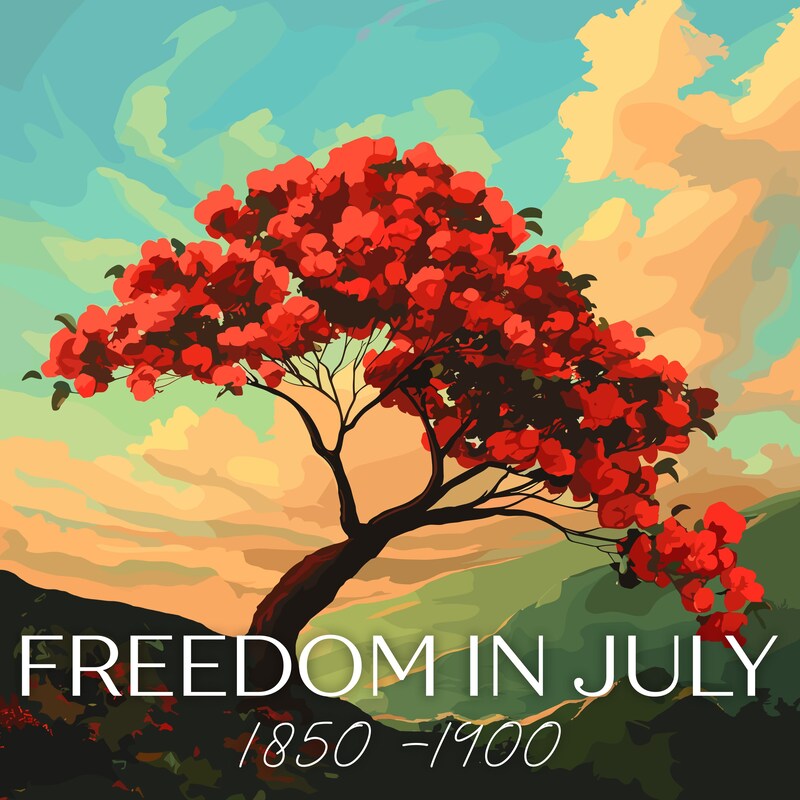
In this powerful episode, Freedom in July, we explore the meaning of emancipation in St. Eustatius. Through oral history, music, ritual, and memory, we uncover how freedom was celebrated, mourned, and redefined by women who shaped a new world from the ashes of bondage. From red ribbons and flamboyant flowers to the rise of education and migration, this episode traces the legacy of resistance and quiet revolutions. With voices like Governor Lady Alida Francis and Mr. Richardson, we remember how the enslaved reclaimed dignity—not through reparations, but through presence. What does it mean to be free when freedom came with nothing but a proclamation?
—
Produced by Simpler Media
Transcripts
>>
emancipation. How people were dressed, they were mainly in
Speaker:white, and they all had a piece of red
Speaker:somewhere adorned women, a red ribbon around
Speaker:the waist, and the men had a red ribbon around their hat.
Speaker:And that was for the freedom, the sign of freedom.
Speaker:>> Unidentified (Podcast Host): Welcome to Whispers of the Past. I'm, um, your host, V.
Speaker:De Witz. And this is Freedom in July.
Speaker:In this episode, we turn to the years
Speaker:1850 to 1900, with a
Speaker:focus on 1863, a
Speaker:date etched into the history of the Dutch Caribbean
Speaker:as the year slavery was formally
Speaker:abolished. But emancipation
Speaker:on paper did not mean liberation in life.
Speaker:Across the Caribbean. Formerly enslaved people
Speaker:stepped into the new no
Speaker:land, no compensation,
Speaker:no real support. And yet,
Speaker:in the absence of justice, they build something
Speaker:else. What does it mean to
Speaker:be free when freedom arrives
Speaker:empty handed? What does
Speaker:liberation look like when it comes not from moral
Speaker:reckoning, but through legal systems by those
Speaker:who never fully acknowledge that slavery is a
Speaker:crime against humanity?
Speaker:On syntastatias, the answers
Speaker:echoed in rhythms and rituals.
Speaker:Bottles knocked in defiance, ribbons
Speaker:tied in red, songs
Speaker:sung by women who had waited too long to be
Speaker:seen. In this episode,
Speaker:we explore what came after emancipation.
Speaker:Not just the loss, but the legacy.
Speaker:Through memory, migration and quiet
Speaker:revolution, station women helped shape the
Speaker:freedom of their own making.
Speaker:But before we arrive in
Speaker:1863, we must understand what
Speaker:came before. Because for enslaved women,
Speaker:especially mothers, the fight for freedom
Speaker:began long before it was ever declared.
Speaker:Their resistance often took place not on the
Speaker:battlefield, but in the home, in the
Speaker:desperate effort to hold onto their children, their
Speaker:dignity, and their futures. To
Speaker:begin, historian Dr. Elaine offers us a
Speaker:regional overview and sheds light on the
Speaker:emotional aftermath of slavery and the enduring
Speaker:strength of those who endured it.
Speaker:>> Dr. Elaine: Some imperial systems had stricter
Speaker:laws about mother and child
Speaker:separation than others. Right? So,
Speaker:you know, it wasn't uniform across time and
Speaker:space, this practice of mother and child
Speaker:separation. But I will say, like even in the French
Speaker:Caribbean, where it was technically
Speaker:illegal to separate mothers and
Speaker:children, at least during the period that I
Speaker:study, probably in earlier periods as well, it was very
Speaker:common for. For slaveholders to
Speaker:sort of not sell children
Speaker:away from their mothers, but to give them away
Speaker:sort of informally so that they could evade
Speaker:detection by the law. So there were
Speaker:ways in which mothers and children were separated even when
Speaker:they weren't technically supposed to be legally.
Speaker:If we read archival documents carefully, we can actually
Speaker:learn quite a bit about enslaved
Speaker:people's, you know, emotional inner world
Speaker:and the relationships they had with each other.
Speaker:And that includes relationships between mothers and
Speaker:Children. We know that in most slave
Speaker:societies, women fought very hard
Speaker:to spare their children from slavery.
Speaker:So I was looking at some documents
Speaker:pertaining to a woman named Sophie Lite,
Speaker:who was born in Martinique but was living in
Speaker:Trinidad in 1847, at which
Speaker:point slavery had been abolished in the British colonies,
Speaker:but not the French. Lite appealed to
Speaker:the British Crown for help freeing her children, whom she
Speaker:alleged were being held, uh, in slavery
Speaker:illegally in Martinique. This is just one
Speaker:example of many stories from across the Caribbean of
Speaker:women trying to pursue legal means of freeing their children
Speaker:from slavery. And in Li Tay's case, the
Speaker:government actually, uh, declined to help
Speaker:her. But every so often, we do find
Speaker:instances of the law intervening on
Speaker:enslaved mothers behalves,
Speaker:um, also enslaved or formerly enslaved
Speaker:women sometimes tried to buy their children's
Speaker:freedom. So in the French Caribbean, this practice was
Speaker:called rasha, or redemption.
Speaker:So women would buy
Speaker:their freedom or their children's freedom from
Speaker:slaveholders. In many slave societies,
Speaker:women could sometimes earn a small
Speaker:income by selling fruits and vegetables and other
Speaker:goods. They grew on small plots of land,
Speaker:and in some cases, they were able to use this money,
Speaker:save it up, and then purchase themselves or their
Speaker:children. And then finally, in many
Speaker:different slave societies, we find records of enslaved
Speaker:women complaining to local authorities about the ill
Speaker:treatment of their children. For example, I have looked
Speaker:at records from the French Caribbean that show
Speaker:enslaved women lodging complaints against slave owners
Speaker:for physically harming their children or for not
Speaker:providing their children with enough food and clothing.
Speaker:And we can find similar records in other parts of the
Speaker:Caribbean as well, especially during the latter decades of
Speaker:slavery, during which time there existed more of a
Speaker:legal infrastructure to support
Speaker:slaves claims against
Speaker:owners.
Speaker:>> Unidentified (Podcast Host): For enslaved mothers across the
Speaker:Caribbean, separation from their children was one of the most
Speaker:profound and enduring forms of trauma.
Speaker:Laws varied between empires. Even when
Speaker:protection technically existed, like in the French
Speaker:colonies, it was common for enslavers to exploit
Speaker:loopholes and informally remove children from their
Speaker:mother's care. In the Dutch
Speaker:Caribbean, archival records are still limited.
Speaker:One rare example comes from Curacao, where an
Speaker:enslaved woman named Virginie challenged the colonial
Speaker:authorities for. For her freedom and that of her
Speaker:children. Her successful legal fight
Speaker:is one of the few documented cases where an enslaved
Speaker:mother confronted the Dutch state and
Speaker:won. Stories like
Speaker:Virginie's suggest there may be many more hidden acts
Speaker:of resistance within the Dutch Caribbean.
Speaker:Those stories are yet to be uncovered.
Speaker:Further research, particularly through oral history
Speaker:and neglected archives, may reveal the depth of
Speaker:these struggles. But even now, the
Speaker:emotional legacy is clear. The forced
Speaker:rupture of families inflicted deep psychological
Speaker:Wounds. Wounds that echo across generations.
Speaker:And then came emancipation. In
Speaker:1863, the Dutch government finally
Speaker:abolished slavery, but only after securing
Speaker:compensations for the slave owners, not
Speaker:for the enslaved. Those who had endured
Speaker:lifetime of suffering were given nothing. No
Speaker:land, no wages, no resources.
Speaker:And many were forced to keep working on their
Speaker:exploitive contracts. And some, seeking
Speaker:better opportunities, began to leave the islands
Speaker:altogether.
Speaker:On, uh, Cintostatius, where slavery had also
Speaker:ended, emancipation brought hardship instead
Speaker:of celebration. As Mrs.
Speaker:Sutakao, a long term resident and one of the
Speaker:founders of the center for Archaeological Research,
Speaker:explains, this was a moment when
Speaker:Stacia would have been rising. Instead
Speaker:it fell into economic decline.
Speaker:Freed people had few options and little
Speaker:support. Former slaveholders abandoned
Speaker:their plantation, leaving behind a community that's
Speaker:free in name, but struggling to, to
Speaker:survive.
Speaker:>> Ms. Sutekau: Well, the Dutch were very late in
Speaker:abolishing slavery. They were really forced into
Speaker:it because of St. Martin, because in St.
Speaker:Martin on the French side, they were free. So it was
Speaker:easy for them to get to the French side or to
Speaker:Anguilla be free.
Speaker:So the Dutch government agreed to the
Speaker:abolishment of slavery only out of
Speaker:necessity. They really didn't have a choice.
Speaker:But instead of rewarding the slaves
Speaker:that were being abolished, they actually
Speaker:compensated the slave owners for
Speaker:abolishing slavery. It's a
Speaker:deplorable fact that
Speaker:the people who were actually enslaving them
Speaker:made more from it than the slaves themselves,
Speaker:who were suddenly set free with no
Speaker:income. So what did they have to do? They had to work for
Speaker:the same people at uh, much
Speaker:decreased wages or try to
Speaker:find something else to do. But
Speaker:instead of standing around, same slave
Speaker:owners left the island
Speaker:because they didn't have the
Speaker:workers to produce the crops that they
Speaker:needed. And they began to desert the
Speaker:plantations. Dacia
Speaker:went into great decline at the
Speaker:very time it should have been
Speaker:celebrating and expanding itself,
Speaker:because now our people were free,
Speaker:but their opportunities here
Speaker:were very limited.
Speaker:>> Unidentified (Podcast Host): The abolition of slavery in Dutch Caribbean came
Speaker:not as a triumph of morality, but as a reluctant
Speaker:response to mounting pressure, especially from
Speaker:neighboring islands like the French side of St
Speaker:Martin, where freedom had already been taken.
Speaker:As Mrs. Tsutakai reminds us, emancipation
Speaker:did not come with reparation for the formerly enslaved.
Speaker:Instead, compensation flowed to the former
Speaker:slaveholders, while those who actually
Speaker:endured generation of bondage were left without
Speaker:land, income or any real
Speaker:opportunity. And yet,
Speaker:in the face of injustice and abandonment, something
Speaker:remarkable unfolded.
Speaker:Across Interstatius, the spirit of liberation
Speaker:stirred not only quiet resilience, but public
Speaker:defiance, led in many cases by women
Speaker:whose name may be lost to History,
Speaker:but whose voices carry through the street on the
Speaker:first Emancipation Day. To
Speaker:guide us deeper into that moment, we turn to the
Speaker:island Heritage Inspector, Mr.
Speaker:Richardson, who brings to life the powerful
Speaker:and unexpected ways this day was
Speaker:claimed, not by decree, but by the
Speaker:people themselves.
Speaker:>> Mr. Richardson: So it's July 1, 1863. That's when
Speaker:slavery was abolished. And then again, you
Speaker:see, ah, there's a huge demographical shift on the island
Speaker:of people. There are formerly enslaved people that
Speaker:became Methodists through the preachings of Black
Speaker:Harry.
Speaker:>> Unidentified (Podcast Host): In the years before emancipation, the seed of
Speaker:spiritual resistance were already taken roots across the
Speaker:Caribbean. And on Syntastacia's, one
Speaker:voice rose above the rest. His name
Speaker:was Black Harry. His real name,
Speaker:birthplace and date of death remain unknown.
Speaker:To clear up any confusion, around the same time in
Speaker:the United States, another African American
Speaker:Methodist preacher named Harry Hozier was
Speaker:also known as Black Harry. And though the parallels
Speaker:in their lives are very striking, historians
Speaker:have agreed that they are not the same person.
Speaker:Black Harry on Sintostatius left behind a legacy
Speaker:that was uniquely one of
Speaker:defiance and spiritual awakening. He
Speaker:arrived on the island as a free man of color in the late
Speaker:1700s, during a time where enslaved
Speaker:people were forbidden to gather for worship.
Speaker:Yet Harry preached anyway, his
Speaker:sermons full of fire, hope and uncompromising
Speaker:truth. He drew crowds, stirred
Speaker:hearts and offered strength to those still in
Speaker:bondage. Colonial authorities
Speaker:quickly saw his influence as
Speaker:dangerous. He was banned from preaching,
Speaker:he was punished and ultimately he was exiled
Speaker:from the island. But his message could not be
Speaker:silenced. Today, his legacy lives
Speaker:on in the Bethel Methodist Church and on Black
Speaker:Harry Lane, named in his honour. His
Speaker:story is not just about faith, but it's about resistance
Speaker:and the power of one voice to move people.
Speaker:It's no surprise then that by the time
Speaker:emancipation finally arrived in
Speaker:1863, spiritual conviction and
Speaker:community resilience were already woven into the fabric
Speaker:of the island. And as
Speaker:Heritage Inspector Mr. Richardson
Speaker:explains, something extraordinary emerged on the
Speaker:first Emancipation Day.
Speaker:>> Mr. Richardson: There's a large group of people on the island that
Speaker:are non religious, and that's an interesting
Speaker:group because this is a group now that lives in what they call the north
Speaker:of the island. It's not geographically the north, but it's referred to as
Speaker:the north. You, uh, know, as they would say locally.
Speaker:And what you see is that it's still
Speaker:called the north, actually. And to show you how
Speaker:people are proud of the north, you, um,
Speaker:remember recently we got our first female governor,
Speaker:Ms. Alida Francis, and she was also referred to as
Speaker:the girl from the North. And remember that the
Speaker:north is going to be a very part of the station colloquial
Speaker:landscape and cultural landscape. So
Speaker:it's July 1st, 1863. The governor at the time
Speaker:is Governor Rose Van Toningen. And he
Speaker:reads the proclamation in the Bethel Methodist Church in the
Speaker:morning at around 7 that people are free
Speaker:and everyone is
Speaker:thanking God. Um, those are those that
Speaker:have been converted to Methodism and also the Dutch
Speaker:Reformed Church. So it's really interesting because now inside of the
Speaker:church you have the kind of white
Speaker:station population and the black station population all
Speaker:sitting together. But
Speaker:from the north there's a disturbance,
Speaker:there's a loud drumming and there's a
Speaker:chant and people are waving red
Speaker:flowers in the air. And you can guess
Speaker:who that was being led by. It was being led by
Speaker:women. The women were
Speaker:knocking bottles together, you know, to
Speaker:create some kind of symphony. And the men were
Speaker:drumming behind and the women were the ones doing the
Speaker:singing. And they were singing very
Speaker:loud. Happy, happy July day I
Speaker:don't give a damn what the masters say I'm free, I'm free, I'm free
Speaker:today Humbug, can't humbug me. So there's a whole chant
Speaker:that these. And they're coming from way out in the
Speaker:countryside and they're matching all the
Speaker:way into town, showing that they're free. They're
Speaker:not religious either. They don't belong to any church, which is
Speaker:also interesting. And what makes it interesting
Speaker:is that though in the former
Speaker:slave registers they were labeled as Protestants. They were
Speaker:not. They weren't baptized. And that you had
Speaker:that on station for a long time. And you see that
Speaker:these women now are chanting, coming through the streets. The
Speaker:governor writes, writes it in his letter to the Hague describing
Speaker:how the day went. And you see that they are
Speaker:really. These women are going to become the
Speaker:instigators of everything that's going to become. Because out
Speaker:of the north, as they say, that's where
Speaker:the power. And you would see that
Speaker:eventually, as we get into the 20th and the 21st
Speaker:century, um, where that
Speaker:Northness then will then come back in the
Speaker:empowerment of a lot of women on Sint Eustace,
Speaker:or women of color of the island in general.
Speaker:And you would see why people are proud of that because
Speaker:also to note that Mama, um,
Speaker:Didier, um, Francis Coffey, they're all
Speaker:also from the north. So they're not from what is called
Speaker:down street or the South. They're all women from the North.
Speaker:So the north was always the fighting force of
Speaker:defying slavery.
Speaker:>> Unidentified (Podcast Host): Freedom on Cint Eustatius did not arrive in
Speaker:silence. It came with rhythm of bottles and
Speaker:drums. As Mr. Richardson reminds
Speaker:us, it was the women from the north who led the
Speaker:charge, singing through the streets, red
Speaker:flowers in hand, declaring themselves free
Speaker:in a world that had long refused to see their
Speaker:humanity. Though
Speaker:listed as protestant in the old slave
Speaker:registers, many of these women belonged to no
Speaker:church. Their resistance wasn't
Speaker:shaped by doctrine. It was born of lived
Speaker:experience, ancestral strength, and the
Speaker:refusal to be defined by colonial
Speaker:categories. But
Speaker:emancipation was more than a moment.
Speaker:It became a memory passed down through
Speaker:generations. And in these
Speaker:stories, we find details history often
Speaker:overlooks. Governor lady alida
Speaker:Frances, a daughter of the north,
Speaker:carries these memories not only as a leader,
Speaker:but as a descendant of those who once sang
Speaker:freedom into being.
Speaker:>>
day of the emancipation, how people were dressed, you
Speaker:know, you learned that they were dressed mainly in white,
Speaker:and they all had a piece of red
Speaker:somewhere adorned on there. The women,
Speaker:the red ribbon, I heard, I was told, around the waist. And the men
Speaker:had a red ribbon around their hat, and
Speaker:that was for the freedom, the sign of freedom. They dance
Speaker:with what we call the july flower, known
Speaker:as the flamboyant flower. So there are
Speaker:stories still that, uh, are
Speaker:alive, but they're hidden away.
Speaker:>> Unidentified (Podcast Host): On syntastacia. Stories of emancipation
Speaker:have long been held not only in records, but in
Speaker:memory, passed down through families, preserved in
Speaker:song and marked by ritual. Governor
Speaker:lady alida Frances recalls the details that
Speaker:oral tradition never forgot. White
Speaker:garments adorned with red, the july flower clutched
Speaker:in hand, and the quiet pride stitched into every
Speaker:ribbon. These symbols of freedom were
Speaker:not random. Red ribbons, flamboyant
Speaker:blossom, the colors of joy and resistance worn
Speaker:with intention. But memory
Speaker:doesn't only live in official ceremonies.
Speaker:It breathes through folklore,
Speaker:those stories whispered from one generation
Speaker:to the next, shaped as much by feeling
Speaker:as by fact. Dr.
Speaker:Sahidi, an archaeologist who lived and
Speaker:worked on the island, shared one such story.
Speaker:Whether it happened exactly as told is beside
Speaker:the point. What matters is what it
Speaker:means and how its symbolism
Speaker:still pulses through the island's collective
Speaker:identity.
Speaker:>> Dr. Sahidi: One of the most powerful ones. For me.
Speaker:There's a story that's told often on Stacia, and
Speaker:that is the story of emancipation Day on July
Speaker:1, 1863, when the
Speaker:newly emancipated took their blue beads and they
Speaker:threw them from the cliffs into the sea.
Speaker:And when you picture that in your mind, you can kind of
Speaker:envision people throwing the beads from the cliffs,
Speaker:and you can feel that power, that emotion and that
Speaker:resistance and that subversive
Speaker:action symbolize so much. And it still does,
Speaker:you know, it's still entangled with the way that
Speaker:people on St. Eustatius
Speaker:view their ancestors, but also how they view
Speaker:themselves.
Speaker:>> Unidentified (Podcast Host): It's.
Speaker:>> Dr. Sahidi: Peaceful and steady, but really
Speaker:strong. And that story, I think, is such a
Speaker:powerful statement about colonialism and anti
Speaker:colonialism. And that memory is held so
Speaker:closely by people today,
Speaker:I think not just because of its historical
Speaker:importance, but because that
Speaker:spirit of resistance and self
Speaker:agency is still very much entangled in the
Speaker:contemporary lives of people, people on the island. It's still
Speaker:relevant.
Speaker:>> Unidentified (Podcast Host): The image of blue beads cast into the
Speaker:sea, free falling from the cliffs, like
Speaker:a final farewell to bondage, reminds us
Speaker:that liberation is not just about breaking away.
Speaker:It's also about what comes next.
Speaker:And in the years that followed, the spirit of self
Speaker:determination did not fade. It evolved
Speaker:quietly, steadily, into a new form
Speaker:of resistance and renewal. By the
Speaker:late 19th century, another kind of
Speaker:transformation began to unfold. This
Speaker:time not through revolt, but through
Speaker:rebuilding this new present. On the
Speaker:island were the Dominican sisters. They
Speaker:arrived from Europe not just as missionaries, but
Speaker:as educators, caretakers and community
Speaker:builders. Part of the century old Dominican
Speaker:order, founded in 1216 and grounded in
Speaker:study, service, prayer and community,
Speaker:Their mission on Stacia took root in deeply
Speaker:practical ways. As Mr.
Speaker:Richardson reflect, their work became more
Speaker:than religious instruction. The sisters helped
Speaker:raise classrooms from stone, trained the
Speaker:island's first local teachers, and supported
Speaker:women in shaping the social fabric of the community.
Speaker:The same hands that once carried red flowers
Speaker:in celebration now lifted building blocks of
Speaker:schools, churches and possibilities.
Speaker:Holy preaching wasn't always done in words.
Speaker:It was seen in actions. And this was
Speaker:a different kind of resistance rooted in
Speaker:care, education and quiet
Speaker:empowerment.
Speaker:>> Mr. Richardson: Yeah, so the Dominican sisters, they came in
Speaker:around the late 1890s, I think, to the
Speaker:island. Um, they had an interesting
Speaker:service of about 99 years on
Speaker:stage. That's a long time. And quite recently one of
Speaker:the last sisters died, I think last year in the
Speaker:Netherlands. She returned, uh, many years after. She was also one of
Speaker:the first, um, teachers of the Catholic school.
Speaker:But the Dominican nuns, they come in the time that there's not
Speaker:an established Catholic church. Uh, what
Speaker:is a beautiful story of someone. I grew up in
Speaker:the Catholic Church, so what I do know about
Speaker:the role of the women's club,
Speaker:um, this is something that was started, of course, you're now there
Speaker:are these European nuns, um, coming
Speaker:from already established Europe to a
Speaker:small Caribbean island as missionaries, but then
Speaker:realize that their work are so in depth,
Speaker:uh, more in depth than missionaries, and
Speaker:guess who become the pillars of society
Speaker:also because of working with these Dominican nuns. It's the
Speaker:station women. They are more than just
Speaker:converts through Catholicism. They are really
Speaker:the spearhead of the community, of the social
Speaker:structure of the community, the welfare of the
Speaker:community, together with these nuns. So you
Speaker:see that the women kind of band together to
Speaker:kind of formalize themselves now together with these nuns
Speaker:and the nuns, then, you know, they start. One
Speaker:thing that was instrumental is the building of the current
Speaker:Catholic Church. There are pictures and documents
Speaker:of women bringing the blocks up
Speaker:the slave path. Um, not men,
Speaker:the men were the stonemasons, but the
Speaker:women as parishioners brought the stones up the
Speaker:bay path as we know it. And it's quite steep and it's something
Speaker:that they were very proud of. So you see that the resilience
Speaker:of the women are now like, hey, I'm a woman
Speaker:but I'm not feeble. And you see that in this
Speaker:mixture of the Dominican nuns, you see also
Speaker:that music starts to play a huge
Speaker:role. Not only music, as in the song
Speaker:and dance that Stacia is known for, but the structural
Speaker:learning of music. They also started
Speaker:a school here and many of the. You would see the
Speaker:first teachers or the first
Speaker:kindergarten teachers of Fort Peutuschol.
Speaker:It's interesting. They get their teaching from these
Speaker:Dominican nuns and get their
Speaker:qualifications to teach on the island from these
Speaker:Dominican nuns and not even from an institution in
Speaker:Europe. So you see that the nun. The Dominican nuns
Speaker:on the island don't only
Speaker:install religion,
Speaker:they kind of install kind of freedom
Speaker:and entrepreneurship. And then you see
Speaker:that out of the Dominican nuns a lot of structures
Speaker:start to go in place. Women start to really lead
Speaker:the society in different locations. And you see that
Speaker:the influence of the Dominican nuns and the establishment of the
Speaker:school isn't even only for Catholics,
Speaker:but it's also for the Methodists on the island. The Dutch reform
Speaker:basically for everyone. And you see that
Speaker:there's a period of kind of, I would say
Speaker:peaceful unity because you also see it in governing
Speaker:letters and at the time. And these Dominican
Speaker:nuns were really instrumental in the
Speaker:current position of women
Speaker:today and also the fight for women today.
Speaker:And you would see that this early installment
Speaker:of the Dominican nuns on the island and
Speaker:that 99 year long reign is going
Speaker:to produce a lot of strong
Speaker:willed women who eventually
Speaker:are the grandparents and parents of many of the
Speaker:stations here today. And it's all because of
Speaker:that influence of that period between
Speaker:1890 onwards.
Speaker:>> Unidentified (Podcast Host): Mr. Richardson reminds us the Dominican
Speaker:sisters arrived not only with scripture, but with
Speaker:structure. Their Mission rooted in
Speaker:education and community service, wove new
Speaker:threads into the social fabrics of post
Speaker:emancipation stacia.
Speaker:With them, island women built more than
Speaker:churches and schools. They cultivated
Speaker:leadership, kinship and quiet
Speaker:revolutions of care.
Speaker:But the path forward for Caribbean women did not follow a
Speaker:single course. While some found purpose in
Speaker:new institutions, other charted different
Speaker:routes out of necessity, resistance
Speaker:or survival. As
Speaker:Dr. Elaine explains, across the region, many women
Speaker:chose not to return to the same fields that once exploited
Speaker:them. The end of slavery did not mean the end
Speaker:of struggle. It did open the door for
Speaker:women to redefine their roles in ways that
Speaker:powerfully shaped the the post emancipation
Speaker:Caribbean.
Speaker:>> Dr. Elaine: In the sort of years following slavery.
Speaker:In the British Caribbean, historians
Speaker:have documented that a lot of women actually
Speaker:left plantation labor. So they
Speaker:decided that they simply were not going to work on
Speaker:plantations anymore for a wage. They were
Speaker:going to grow their own crops for
Speaker:sale and whatnot. This caused a major
Speaker:panic among plantation owners, right, because they needed
Speaker:the women's labor. Generally
Speaker:speaking, though, across the Caribbean, the
Speaker:majority of women continued to work as
Speaker:plantation laborers. So in the French Caribbean,
Speaker:for instance, um, some women, field work,
Speaker:but most, because of a lack of
Speaker:available land, had to continue working on
Speaker:plantations. Some historians have
Speaker:thought of women's retreat from the fields as
Speaker:a sort of, um, retreat into
Speaker:domesticity, as a sort of like
Speaker:attempt to become proper women
Speaker:in a sort of European sense of the term
Speaker:proper womanhood. But I think the more likely
Speaker:explanation is that field labor was
Speaker:simply horrendously, uh, hard on the
Speaker:body, extreme, extremely taxing in
Speaker:all sorts of different ways. And women just didn't,
Speaker:as much as possible, didn't want to be subject to
Speaker:the kind of abuse that took place on
Speaker:plantation.
Speaker:>> Unidentified (Podcast Host): Their refusal to return to the fields was more than a
Speaker:practical decision. It was a statement, a
Speaker:rejection of a system that had long devalued their
Speaker:bodies, their time and their freedom.
Speaker:In choosing to step away, Caribbean women began
Speaker:to redefine what work and what worth could mean in
Speaker:a new world still shaped by the old one.
Speaker:>> Dr. Elaine: So, you know, women were obviously really, really
Speaker:important members of their societies. After
Speaker:the abolition of slavery, you know,
Speaker:there's been a lot of discussion about
Speaker:the phenomenon of matrifocal m
Speaker:households. So this idea that sort
Speaker:of during slavery and after slavery, women were
Speaker:the heads of households and men weren't really
Speaker:involved. And I think that that has been
Speaker:exaggerated to some degree. And
Speaker:in fact, men of African descent very
Speaker:often were very involved in their children's lives.
Speaker:And, uh, you know, so we don't want to exaggerate the extent to
Speaker:which households were matrifocal. But at the same
Speaker:time, it is true that, you know, women took a primary
Speaker:role in raising children. They often were heads
Speaker:of household, and they. They were, you know, often very
Speaker:respected members of their communities. I don't want to
Speaker:downplay, you know, misogyny and patriarchy,
Speaker:but, um, you know, we definitely
Speaker:have lots of evidence of. Of women of African descent across the
Speaker:Caribbean sort of not playing the role of
Speaker:demure little housewife, right? Of being sort of
Speaker:in. Out in public and sort of having some. Quite
Speaker:a bit of authority in their cultures. And, you know,
Speaker:they weren't necessarily seen as respectable in the
Speaker:eyes of Europeans, right? Or in the eyes of elite people of
Speaker:African descent, um, they weren't necessarily seen as
Speaker:demure staying inside the house. They.
Speaker:They sort of enacted their own vision of
Speaker:womanhood in a lot of different ways. And,
Speaker:you know, sometimes they did take part in
Speaker:labor militancy. In 1870,
Speaker:in Martinique, there was a major uprising.
Speaker:A lot of plantations were burnt by
Speaker:field workers. It was very violent, and
Speaker:women played a part in that. And one of them was named
Speaker:Lumina, or her nickname was
Speaker:Suplease, and she was actually hanged for
Speaker:her involvement in this rebellion. There
Speaker:are myriad examples of
Speaker:women taking part in that kind of
Speaker:rebellious, militant activity in the period
Speaker:following slavery.
Speaker:>> Unidentified (Podcast Host): Across the Caribbean. As Dr. Elaine reminds us,
Speaker:women were not retreating into the shadows. They were
Speaker:reshaping society on their own terms.
Speaker:Choosing not to return to the fields was not just about
Speaker:labor. It was about reclaiming ownership of their
Speaker:time, their bodies, and their future.
Speaker:But unfortunately, emancipation had
Speaker:not leveled the playing field. The end of
Speaker:slavery did not come with land, wages, or
Speaker:justice. It came with absence.
Speaker:Absence of support, absence of
Speaker:infrastructure, of the very promises
Speaker:freedom should have fulfilled.
Speaker:On, uh, Cintastasius, the absence became its own kind
Speaker:of exodus. The plantation
Speaker:economy crumbled, and with it,
Speaker:opportunities dried up.
Speaker:Families made impossible choices. Some
Speaker:stayed rooted in place, while others left in
Speaker:search for something more.
Speaker:And so, just as women across the region found ways to resist
Speaker:through presence, many stations would begin
Speaker:to resist removement. Migration became its own
Speaker:form of survival. Next,
Speaker:Mrs. Tsutakao reflects on what that movement
Speaker:meant, not just for those who left, but but for the
Speaker:island they left behind.
Speaker:>> Ms. Sutekau: This was the beginning of the migration
Speaker:of people from east Asia to other islands.
Speaker:They were going to other islands. That
Speaker:migration would really take off in the early
Speaker:1900s as the
Speaker:refineries in Curacao and other
Speaker:islands and also
Speaker:developed Tourism on other islands,
Speaker:um, would offer positions and
Speaker:jobs to the people of Stacia.
Speaker:So the Stacia population began to
Speaker:decrease greatly by our own people
Speaker:as they went off island. By
Speaker:the 1900, most of the people that were
Speaker:left on the island were fishermen,
Speaker:farmers, grandparents and small
Speaker:children. As the, uh, young
Speaker:adults, people who could make a living
Speaker:elsewhere, moved either up island
Speaker:to St. Thomas and Santa Croix
Speaker:and places like that, or to
Speaker:the Puerto Ricos and other places,
Speaker:or down island to Curacao and
Speaker:Aruba, where there were opportunities in the whale
Speaker:industry. A lot of that took place right
Speaker:around the 1900s.
Speaker:>> Unidentified (Podcast Host): Freedom, when it came to the Dutch Caribbean, was not a
Speaker:moment of triumph. It was a moment of reckoning.
Speaker:A proclamation read out loud could not just
Speaker:undo centuries of violence, Nor could it
Speaker:rebuild the lives left fractured by bondage.
Speaker:And yet, from the silence of abandonment rose a
Speaker:new kind of resistance. Women led the
Speaker:way, not m always with protests, but with
Speaker:presence. They sank freedom into the streets,
Speaker:carried stones up steep path, and taught the next
Speaker:generation that dignity could not be stolen,
Speaker:only reclaimed. Their
Speaker:stories tucked into folklore wrapped in red ribbons.
Speaker:Whispers in the voices of elders continued to carry
Speaker:the weight of freedom still unfolding.
Speaker:Because emancipation was not the end of struggle.
Speaker:It was the beginning of memory. A memory
Speaker:not housed in monuments, but but in
Speaker:movement, not bound to paper,
Speaker:but passed hand to hand, story to
Speaker:story. And if freedom lives on in
Speaker:ways we remember, then we must ask
Speaker:ourselves what m truths still remain
Speaker:hidden? What voices
Speaker:still go unheard? And what does it
Speaker:mean not just to be free,
Speaker:but to stay free? In our next
Speaker:episode, we step into the 20th century,
Speaker:where the echoes of emancipation give rise
Speaker:to modern times and a new form of survival.
Speaker:The fight continues not in
Speaker:chains, but in choices.