Shownotes
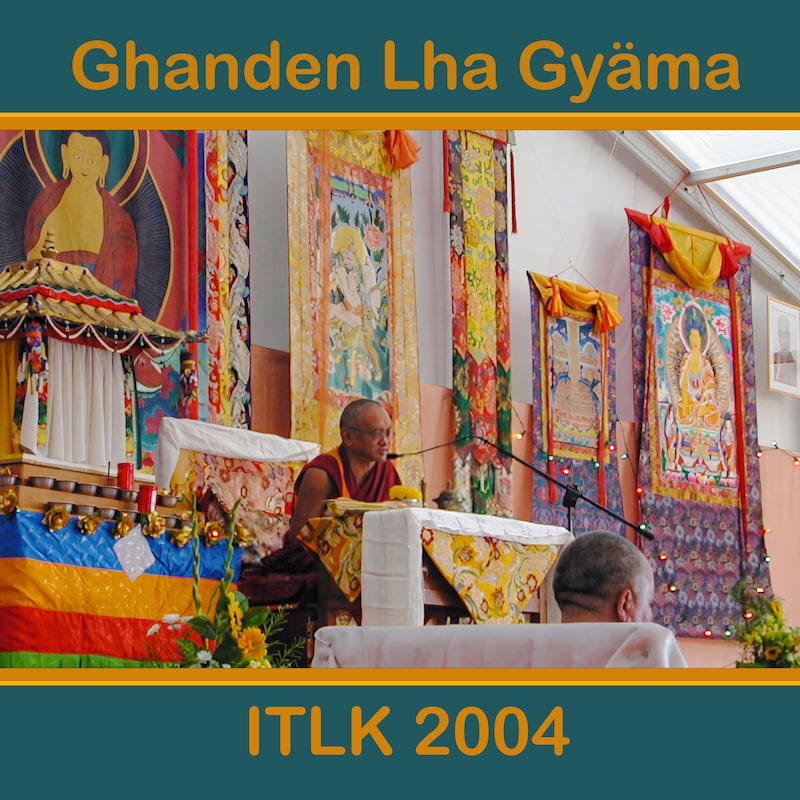
This teaching was given by Lama Zopa Rinpoche at Lama Tsonkhapa Institute in Italy as part of the Ganden Lha Gyama retreat between September 3-30, 2004.
00:00:00 Rinpoche tells about the importance of the practice of morality and teaches on the benefits of doing prostrations.
00:39:15 Rinpoche tells a short story about Khandro-la.
00:47:22 Prostrating to holy objects like statues and stupas immediately brings eight benefits, such as achieving a perfect body in future lives and being able to live in pure morality.
01:03:00 Pure morality is the main cause for achieving perfect concentration (shamatha). Without shamatha, one cannot achieve higher trainings of wisdom.
01:09:30 In the Lama Tsongkhapa tradition lineage lamas put so much effort into doing many hundred thousands of prostrations in their daily life. Rinpoche gives detailed explanations of how to do the practice of prostrations. Rinpoche also emphasizes that it is very good to have as many holy objects as possible in one's house to constantly create merit by seeing them.
02:10:05 According to Khedrup Je, in retreat once one increased the number of sessions to four, one doesn't decrease the number of sessions afterwards.
02:13:20 Torma offering, protector prayers, and dedications.
Find out more about Lama Zopa Rinpoche, his teachings and projects at https://fpmt.org/
Transcripts
The other thing is that I started to explain about prostrations, so I thought first to finish that part.
The moment we put our hands together in prostration to a holy object of Buddha, such as a statue, stupa, scripture or picture of Buddha, we also immediately collect eight benefits.
In future lives one will achieve a perfect body. The benefit of that it allows you to do whatever Dharma practice you wish, such as taking vows and ordinations. If you have a perfect body, there are no obstacles to taking ordination if you wish to do that. Also, of course, you are then able to benefit others in whichever ways they need. It allows you to practice whatever Dharma you wish and also to benefit others.
The next benefit you get is having perfect people around you. Wherever you are, whether at home in your family or in the office, the people around you are harmonious to your wishes instead of opposing them. The minds of the people around you are harmonious with your mind, so they support you. Because of this, your practice of Dharma or work for other sentient beings or the teaching of Buddha becomes successful.
The Most Important Cause Of Achieving The Perfect Concentration Of Shamatha Is Pure Morality
The third benefit is very important: one is able to live in morality. Without the foundation of living in pure morality, you can’t achieve perfect meditation. The most important cause of achieving the perfect concentration of shamatha, or calm abiding, is pure morality. It requires pure morality as a foundation, a preliminary. If you’re not living in pure morality, it will be difficult to achieve shamatha. Living in pure morality is the main cause to have the realization of shamatha. If you’re not successful in keeping your vows or ordination, you won’t be successful in achieving shamatha. It will take you a long time, and many obstacles will arise. So, that’s the most important cause of achieving all the nine stages of shamatha, or calm abiding. You achieve perfect concentration, one-pointed concentration, and then the extremely refined rapturous ecstasy of the body and mind. So, it interferes with going though the nine stages and completing these experiences.
Without this realization of perfect meditation, of calm abiding, you can’t have the higher training of wisdom; you’re unable to derive the rapturous ecstasy of body and mind that comes by meditating on emptiness unified with shamatha meditation. Without this, you can’t achieve the exalted path, the path of seeing. Then you can’t develop the wisdom directly perceiving emptiness, which directly ceases the disturbing-thought obscurations. During the path of seeing and the path of meditation, the uninterrupted path becomes the remedy to the defilements, then the liberated path abandons the defilements. Developing those paths directly ceases the intellectual defilements during the right-seeing path; then by actualizing the path of meditation, you cease the simultaneously born defilements. Without developing these paths, you can’t cease these defilements, and so you can’t achieve the sorrowless state, the liberation that is forever free from the entire suffering of samsara and its causes, karma and delusion. That’s the case not only in the Lesser Vehicle path, but in the Mahayana path. You have to cease the disturbing-thought obscurations and the subtle defilements. It’s the same for those who enter directly the Mahayana path; they can’t cease those gross and subtle defilements, so they can’t achieve enlightenment. It’s the same thing there.
Of course, there is no doubt that, among Tibetans, there have been numberless meditators in the past who achieved shamatha, and there are also many meditators who are attaining it even in present times. But I have never heard of this happening among Western students, and I’m not talking just about those in the FPMT. There are people who have been trying to achieve shamatha, but I’ve never heard of anyone who has succeeded, who has completed the ninth level. There have been some who were able to accomplish a few stages, but some obstacles happened and they could not complete the practice.
His Holiness said one time in Drepung Monastery, when giving a teaching on Lam Rim Chenmo at Drepung Loseling (of course, His Holiness often says this, but this is the one that I recollect), that in order to achieve shamatha you must have full confidence in your morality, you must practice morality. That’s what I recollect His Holiness saying. I’m sure that when giving a lamrim teaching, His Holiness often says this when it comes to that point, because the teachings mention that this is a very important cause of success in shamatha. You can’t achieve shamatha by taking drugs or drinking alcohol. It’s not that you can take some tablets or have an injection and achieve shamatha.
Anyway, I remember that His Holiness specifically presented it in that way at Drepung.
Geshe Rabten Rinpoche used to praise Gen Jampa Wangdu very much, saying, “He’s so fortunate. He’s so fortunate.” This was during the time I was receiving a brief commentary on mahamudra, my first teaching on mahamudra, from Geshe Rabten Rinpoche, on the root text composed by Panchen Losang Chökyi Gyaltsen, the third Panchen Lama. The first Panchen Lama was Gyalwa Ensapa; the second was Khedrub Sangye Yeshe; and the third was Panchen Losang Chokyi Gyaltsen, who composed Lama Chöpa.
Geshe Rabten used to say that Gen Jampa Wangdu was very fortunate. I think it was because at that time Gen Jampa Wangdu realized emptiness. To achieve shamatha, you need a lot of merit and you need pure morality. I think there’s a connection: the purer a person is, the better their concentration. With purer morality, there are fewer distractions to the mind, less attachment-scattering thought and so forth. That’s logical. When the mind is freer from disturbing, negative emotional thoughts, naturally there’s more concentration. It’s easy for someone with stable remembrance to achieve shamatha.
However, you need a lot of merit, because then when you achieve that, everything is easy to achieve, whether you’re talking about renunciation of samsara, bodhichitta, right view or tantric realizations. Everything’s very easy. It’s very easy to keep your mind in virtue. Achieving shamatha itself is one thing, but because, after achieving that, achieving all the rest of the realizations becomes easy, you need lot of merit.
Correctly Devoting Oneself To The Virtuous Friend Is The Key That Opens The Door To All The Collections Of Goodness
And, of course, there’s no doubt that the whole key here is correctly devoting yourself to the virtuous friend. This is the key that opens the door to all the collections of goodness, including the realization of shamatha. Everything comes from correctly devoting yourself to the virtuous friend. You can’t leave out or not take care of that part out and think that you’re going to do meditation. You mightn’t think that is important, either through lack of understanding or, even if you have received teachings, through not really having examined how to practice Dharma, how to achieve the path to enlightenment. You mightn’t have thought well about the important points, about what things bring success in realizing the whole path to enlightenment successful. You might think, “I’m going to do a meditation retreat on shamatha,” but you won’t succeed if you have left out or haven’t thought about the important points, if you haven’t taken care of what it the root of the path to enlightenment. No matter how much effort you put into your practice, not eating, not sleeping, not meeting anybody, not even birds, there is no way you can succeed and probably obstacles will arise, such as heavy lung. Lung will totally take over your mind, and later on your whole being will become lung. Your whole body will be filled with lung; your whole self will become lung. Instead of achieving shamatha realization, you will achieve lung. It will be like that, or some other difficulties that you never expected will arise.
The purer your morality, the better or more stable your memory will be. It is like this with Geshe Sopa Rinpoche and many other great teachers. They are eighty or ninety years old, but they have very clear memories. They can remember all the teachings, even those they studied many, many years ago in Tibet; they still remember and can quote by heart all the root texts and commentaries. There were many great lamas like that. Even old age doesn’t affect their mind.
I think if somebody researched the lives of those people who experience Alzheimer’s and old people with good memories…. I mean, you can’t research their past lives, unless you have clairvoyance, but you could do research on how these two different groups of people lived their lives in this life, especially in regard to their conduct. Their lives could be examined in terms of their moral conduct, their moral discipline. If somebody did this research, I’m sure they would find differences between those who have problems with Alzheimer’s and those who have clear memories. It might be very interesting to study them from childhood. Maybe they could then find some solution, some way to educate people so that they don’t later get Alzheimer’s. People could make preparation from when they were young to not get Alzheimer’s.
Somehow, I have never heard of these kinds of problems among Tibetans. I never seen or heard of them. That’s also an interesting point. I have never heard of that even in Solu Khumbu.
Anyway, you may find differences between those two groups of people when you checked their lives, their conduct. Some answer might be found and some education introduced that would protect people’s lives.
So, just putting your hands together to a holy object of Buddha creates the cause to be able to live in morality. You can see how that is a very important foundation.
The next benefit is that it causes one to achieve devotion. Without devotion, or faith, one won’t engage in the practice of Dharma, practice of the path. Without devotion to the guru, one cannot receive the blessings of the guru and cannot achieve the realizations of the path to enlightenment. Like that, without devotion to the Triple Gem, you cannot achieve their qualities—the qualities of Buddha, the qualities of Dharma, the qualities of Sangha—within you. Since you don’t engage in that, you cannot achieve those qualities. So, devotion is an extremely important foundation to have.
The next benefit you achieve is that you have a brave mind, or the courage, to lead others, to do things in public for others.
The next benefit is that in future lives one gets reborn in the deva or human realm.
The next one is that one will achieve the exalted path, the arya path. In the case of the Lesser Vehicle path, by achieving the exalted paths (the path of seeing, path of meditation, path of no more learning), you are then able to overcome the cycle of death and rebirth. You are free from the cycle of death and rebirth, from all the sufferings of samsara. Then, by achieving the first Mahayana exalted path, the path of seeing, you are able to completely abandon the sufferings of birth, old age, sickness and death. You do not experience those sufferings of samsara. Then, of course, by achieving the clear light of meaning in the Highest Yoga Tantra path, you’re completely free; that path ceases the disturbing-thought obscurations and you then achieve the pure illusory body. Again, there, of course, that path ceases ordinary death, intermediate state and rebirth.
So, if you put your hands in prostration to a statue, stupa, scripture or any other holy object of Buddha, it causes you to achieve the ayra path, the exalted path.
The last benefit, the eighth one, is enlightenment. It creates the cause to achieve full enlightenment.
So, even, so therefore, even in one’s own house, it is very good to have many holy objects as possible, statues, stupas, scriptures, whatever, many. Any other forms of holy objects of Buddha, the prayer wheels or so forth, whatever other forms of holy objects, to have many, to have as many as possible. That, maybe not respectful in bathroom, in the toilet, where there’s toilet, all the smells an all that, maybe not such a good idea to, so might create negative karma, disrespect. But any other place but, of course, respected, higher, respected. Not just display or the, respected.
I just remembered this one, while I was talking about the respected. In Washington, we have the Guhyasamaja center, it’s actually this Lorna and ?Terry’s house. Lorna and Terry’s, their private house is the Guhyasamaja center, their dining room. Maybe their dining room is Guhyasamaja center.
Anyway, so there was, they had a small garden outside, so this, what is called Japanese garden or something, where there’s this, putting the statue of Buddha in the garden. But, I think, didn’t recollect in the mind, somehow I think maybe did not recognize that it disrespected. So the center has a Japanese garden or something, so putting Buddha’s statue on the ground, just on the ground. It is Buddha’s statue and then putting on the ground, just on bare ground, something. I think it’s something somehow you see that kind of like a custom, so somehow didn’t recollect in the mind that’s disrespect.
So what happened was, here, so they put this small Buddha statue, Japanese garden so put on the ground, outside. There’s a Muslim family next, the surprising thing is this. There’s a Muslim family next, they’re not Buddhist, but they saw the Buddha is put on the ground and then, but I think they’re kind people, so what happened was, this next family, Muslim people, they put some small table to put the Buddha higher. So it’s very interesting. Here the Buddhist, here who’s Buddhist, put the Buddha on the ground, but the Muslim put the Buddha higher, respected. So I just thought of that when I said respected.
So that, mustn’t do that, that’s very bad, to put, yeah, I think, it’s not didn’t know, somehow didn’t remember.
Khandro-la
I met the Khadroma, from Dharamsala, the one who predict and the one who arrived quite some time ago from Tibet, but she came by herself alone without people, without support, she came just by alone from Tibet. I don’t know how she came. She had, she saw Milarepa at Tashi, whether she was going round Tashi Lhunpo Monastery or like that, then Milarepa, she saw Milarepa there and Milarepa said to go to India. So gave a big bundle of money to her. And, but you think Milarepa doesn’t have money, you might believe.
Anyway, so anyway, I think she went to Mount Kailash, somewhere, so she was put on the horse, on the same mule as Palden Lhamo is riding on, she was put on that, put on the same riding what the Palden Lhamo, was carried. And so, anyway, she sees things, especially those holy places, what she sees in unimaginable of unimaginable, that common people cannot see things, just, kind of another world, there where common people cannot see anything.
Anyway, so I think last time, so I met, where, I think Bodhgaya, I think, met, I think, Bodhgaya, I think. So she told me she went to Italy here, Lama Tsong Khapa Institute. She is regarded as an oracle, that’s the usual recognition what common people think, oracle, but it’s not just oracle, it’s beyond. So anyway, so she saw the Buddha, she said, she came to, so I told her, I really encouraged, I told her that must go to see Lama Tsong Khapa, to go in the gompa and to pray, to actualize realization of the path to enlightenment and so forth, must pray in the gompa. So she said she went, I think, maybe Bodhgaya or somewhere, I don’t remember. Then, she said she went, so then outside of Chenrezig gompa, I mean, I haven’t been to Chenrezig gompa yet, I haven’t seen Chenrezig gompa myself, anyway. So she said she saw there was a Buddha outside. There was a Buddha outside. But I think, but I don’t think it was on the ground, there might be something, but I haven’t seen yet.
So she said, because she saw the Buddha outside, so she cried so much. She said she, but she, it made her to cry so much. But she said, I think she didn’t express, she didn’t tell the people why she was crying, what for, what made her to cry. So this is, she said, this is our founder of present Buddhadharma, the present Buddhadharma, showing the whole path, so this is left outside. That’s what she said. I think she explained why she’s crying maybe she explained some other reason, I’m not sure.
Anyway, but even the, but that’s how she thought. But however, even there’s a Buddha outside, so that so many people, who don’t come in the gompa, so so many people just come outside, purify the mind and so many negative karmas get purified and they collect so much merit, unbelievable merit and, yeah, plant seed of enlightenment, that’s unbelievable benefit just seeing the statue of Buddha. So, just as soon as seeing it purifies the defilements of the sentient beings. But even we keep outside to collect merit oneself and other sentient beings, easy way to collect merit and even the non-Buddhist people just they get so much benefit. So that, but it has to be respected, it has to be cherished, it has to be high, put high, well taken care of, cherished. With those kind of reasons, to bene-, like that, by understanding.
It’s not that you can’t have a statue outside, but this depends on how you kept, how you treat. I mean, there are numberless statues there, carved in stone, like that, I mean, there are so many, having holy object outside.
The Practice Of Offerings
So, so it is mentioned that, in a sutra teaching, it’s called ?Ter pai tob kye pai chag gyai do, The Sutra of the Mudra Generating the Power of the Devotion. There it is mentioned by Buddha that, just something rough like this, every day offering divine food and dress, divine food is nectar, so not just human being food, ordinary food, not that, divine food, means. And dress, I think might be said hundreds, hundreds of divine food and dress one offer to the Solitary Realizers, the arhats. How many arhats? Equaling the number of the, I don’t recollect a hundred percent, but sand grains, maybe sand grains of the universes, sand grains of the universes. How many universes? Equaling the number, yeah, I think, like this. Solitary Realizers, the arhats. How many arhats? So making offering every day like this, hundred divine food and dress to the arhats. How many arhats?
Equaling the number of the atoms of the universes. How many universes? Equaling the number of the sand grains of the Pacific Ocean. How many universes? Equaling the number of the, so arhats equaling the number of atoms of the universes. So how many universes? Equaling the number of the sand grains of the Pacific Ocean. So, how long? Now question is, how long you make offerings? It’s for eons. So every day offer a hundred divine food, nectar, and dress to that many arhats. So, that’s just rough.
So itself is unbelievable merit, because in India in the past, somebody offered a medicinal drink to four ordinary monks, not who has achieved exalted path but ordinary, fully ordained monks, offered medicinal drink and then just simply from that the next life that person was born a king, a very powerful king in India, I think Kashika. A very powerful king, so much wealth and power, the next life. So the cause was just offering a medicinal drink to a holy object, the Sangha, four fully ordained monks, but I think it’s, four fully ordained monks. So because karma is expandable so next lives become, born as a very powerful, wealthy king.
So like that, so if you just think of this karma, the result of just offering a medicinal drink to four monks, so, from that offering the result is like this, can’t imagine. Can’t imagine this one, who achieved arhatship, having ceased the, having destroyed the delusions, including the seed of delusion and so, then, equaling the, how many arhats? Equaling the number of the atoms of the universe, but how many universes? Equaling the number of the sand grains of the Pacific Ocean. So can’t imagine. Just even one, just even making offering to one arhat, can’t imagine how, so powerful. Then here, unimaginable number. Then the time, every day offering like this, every day, not just one, one nectar food, one dress, but a hundred and every, each day, then how long? For eons, for eons.
So that much merit, so now compare, then next one it says, “Just merely seeing Buddha’s statue, just merely seeing Buddha’s form, this one collect greater numberless merits,” ?so nam che [Tibetan], numberless great merit just seeing the statue of Buddha. Just seeing the ?sang gye kyi zug, Buddha’s form, just seeing. So ?either it’s a painting or the statue. So this one, you achieve numberless great merit, much more. So if you compare the merit how much you collected with the previous one, that many arhats for eons, like that, if you compare to this one, it’s small, become small. Very small.
So then there it says, then says, if one prostrates, makes offerings, then you collect even greater numberless merit.
So, by reading these sutras you can see even just from this, that we are born as human being to be able to accept Buddha, to be able to see paintings of Buddha, statues of Buddha, to be able to see paintings of Buddha, statues of Buddha. That with this karma, the opportunity to see a statue of Buddha, a picture of Buddha, it’s, just this alone just able to see, unbelievable fortunate, so fortunate. It’s inexpressible, that we have this opportunity. But not only seeing. On top of that, devotion. So by reading these sutras, it’s one way what makes you discover how fortunate you are, this period, from one’s own side, a human rebirth and that have opportunity to meet Dharma and then to see the holy objects. Even we don’t actually see Buddha but able to see the holy object. That is, even we don’t practice, even we don’t practice Dharma but just able to, opportunity to see these holy objects it’s just unbelievable. It’s so unbelievable fortunate, incredible fortunate.
So therefore, if you’re practicing Zen or something then it’s different, then empty room, with nothing. It’s just different, doesn’t have this emphasis, totally empty room.
However, so therefore what I was saying before, to have as many holy objects as possible in the house, but, of course, well respected, so like that. So therefore, so conclusion was this, seeing, every time when you see, the morning when you open the eye, you see holy objects, so coming in, going out, all the time you see. Different room you see holy objects. So every time, so it’s incredible purification, incredible, unbelievable purifying the mind just from that, purifying the defilements.
For example, in the sutra, drawings of Buddha done on stone wall, even you look at out of anger, even you look at it with a motivation of anger, that person, that sentient being gradually then able to see ten million of buddha. [Tibetan] So even one look at out of anger, the drawing of buddha that’s on stone wall, gradually that causes to see ten million of buddha. So that means, I think, what it’s saying is this, the minute when you see it purifies the mind, it plants seed of enlightenment, so the whole path, plants seed of enlightenment, which means from the five paths, the path of merit, preparatory path, right-seeing path, the path of meditation, no more learning, so whole, plants seed, the minute when you see it. So gradually then you see, you actualize path of merit, the Mahayana path of merit. Then there are three categories, lower, middle, higher path of merit, when you achieve higher path of merit then you see numberless buddhas, in nirmanakaya aspect. So I think this is what he’s talking about here, so seeing the painting of buddha, picture, I mean drawing of buddha on the wall, so it purifies so much defilements, then collect merit, I’ve just mentioned before, this sutra, okay, so you get the idea, how amazing merit. Then, plant seed of enlightenment, so that means plant seed of the whole path to enlightenment, from guru devotion up to enlightenment. So therefore then, gradually you engage in the Mahayana path of merit, then when you reach the third one then, when your mind reach that level, just there you see ten, numberless buddhas in the nirmanakaya aspect.
That, like the Kadampa Geshe Chayulwa, he offered service to his guru Chen-ngawa, cleaning the room and doing guru devotion practice, doing service. So then one day after he collected the garbage from the room, on his lap, put on his robe, on his lap, then he was going down, downstairs, when he reached the third step, so I guess that might be step to go to downstairs, so when he reached third step suddenly his mind transcend into the realization, went higher, so reached the third level of the path of merit, great path of merit, so then immediately there while he’s holding garbage in the robe, saw numberless of the buddhas in nirmanakaya aspect. So therefore, so like that, so here, so then, so when you achieve that path, Mahayana path of merit, so then this is what, great path of merit then that’s what you, so then of course when you achieve the arya, the Mahayana path, then of course you see the numberless buddhas sambhogakaya aspect, so like that. Then of course when you become enlightened, then you become one with all the buddhas, you actually become all the buddhas, so here what it’s saying is, so here it’s preparing that, so [Tibetan] so even you look at out of anger to the drawing of buddha, it gradually causes to see ten million of buddha, so I think contains, it is describing these things, so I think. So it’s great purification.
So one day, even one can’t remember to do like this, to put the palms together every time when you enter in the room, in the house, in the shrine room, in your meditation room or shrine room, but in one day, because you go many times in and out, so, as much as one can remember, put the palms like this to the holy objects that you have in the house, outside, inside, meditation room, however, like this. So, you achieve, by the way, just by the way you achieve these ten benefits as I explained yesterday and the eight benefits, these very important benefits, so, so easy, making so easy to achieve enlightenment.
So the motivation I already guided, maybe two times or one day I guided the motivation, so then, within the motivation the karma, so the negative karma, this is very, very important to do, then one is able to generate regretfulness, so then the bodhichitta, the impermanence and death and the bodhichitta. That one can be born there any time, by thinking of the lower realms then thinking of impermanence and death, after thinking of karma, lower realms then one can be born there any time, in any minute. Then, one purify, going to do prostration and the practice, the Confessing Downfalls, that reciting with the Thirty-Five Buddhas’ names. Then, for the happiness or for the benefit of numberless hell beings, hungry ghosts, animals, human beings, sura, asura, intermediate state, everyone, all the sentient beings to be free from the defilements and the sufferings, so like that think.
How To Do The Practice Of Prostrations
Then, reciting the normal one, OM NAMO MANJUSHRIYE NAMAH SUSHRIYE NAMA UTTAMA SHRIYE SOHA, which, that every day one that did ?happen, so it has benefit to, able to realize the right-seeing path and also, I think, it’s mentioned maybe also protection from harm or something like that, I’m not sure. Then the prostrations it increases a thousand times. So by reciting this mantra, and these buddhas’ names, CHOM DEN DE...RINCHEN GYALTSEN LA CHAG TSEL LO, then OM NAMO BHAGAVATE...RATNA BIJA YE SOHA, so then this mantra by reciting, by reciting this mantra seven times then the prostration, whether it’s, so when one does the prostration right at the beginning, if one recites this Buddha’s name and mantra seven times then each prostration become, increases ten millions, like that. Then same when you circumambulate, when you circumambulate statues, stupas, scriptures, stupas, the holy objects, when you circumambulate, same, if you recite this buddha’s name and the mantra, then each circumambulation becomes like ten million of circumambulation. So that means each circumambulation how much benefit there is, you get, so you get like that, ten millions of times, with this mantra even you circumambulate one time. Besides all the benefits, besides all the unbelievable, like limitless skies of benefit circumambulating the stupa or statue containing these four powerful mantras, besides that. So from the, when you start to circumambulate, you begin the circumambulation with this mantra, CHOM DEN DE...RINCHEN GYALTSEN LA CHAG TSEL LO, OM NAMO BHAGAVATE...RATNA BIJA YE SOHA, this one seven times. So this is not only for prostration but also circumambulation that it increases unbelievable number. There is also another mantra for circumambulation, that becomes circumambulation numberless times, that makes numberless times and having made offering or prostrated to all the Buddha, Dharma, Sangha, everything. So it has unbelievable benefit, there’s another mantra for circumambulation. So maybe can mention another time that one.
Then, so keep the feet, not stretched out, so like that. Then you, then put together palms here, then that time one can meditate prostrating towards all the guru, Buddha, Dharma, Sangha, means abiding in all the directions, I prostrate to all the guru, Buddha, Dharma, Sangha, think that. Then here all the ten directions then you prostrate, all the ten directions, the mind thinking, prostrating towards all the ten direction statues, stupas, scriptures, all the holy objects. So it means all the ten direction statues, stupas, scriptures, all the holy objects, that means not only in this universe but in any other universe, not only this world but any other world, any other universe where they have holy objects, so prostrating from here. Then, no, no, here, sorry, I jumped. I jumped, so here. Then here, then again think, I prostrate towards all the ten direction guru, Buddha, Dharma, Sangha, like that. Then here prostrate towards all the ten direction statues, stupas, scriptures, all the holy objects.
So here, now here you have to understand the point, so yeah, so when you do that, prostrated towards all the gurus, Buddha, numberless buddhas, numberless Dharma, numberless Sangha, everything. So just for example, numberless buddhas, to whom we prostrate. So, how many benefits you get, so by prostrating to one statue of buddha, one picture of buddha, like this, you get the ten benefits I explained yesterday and eight benefits today, tonight, so all those very important benefits you achieve immediately with one statue of buddha, one picture of buddha.
So now here, to all the buddhas, all the ten-direction buddhas here, so then you get, you achieve, just putting palms together like this, you achieve ten benefits, eight benefits, numberless times, numberless times. So same, then there are numberless statues and stupas, scriptures, all those holy objects, again same, so when you do, putting palms together towards all that, so there’s eight and ten benefits, even putting palms together like that you create numberless times, numberless times. Numberless times like this, because numberless statues. Numberless times like this, you collect merit like this, the eight or ten, numberless times, because numberless stupas. Then same, numberless scriptures, like that. Then again here same, then again here same, just this one, by doing this, unimaginable the merits, how much merit you collect is, just mind-blowing, eight benefits, ten benefits, this, numberless times, so many times.
Then, as you lay down, then as you start to lay down, think, I’m prostrating, so start to lay down then, I’m prostrating towards all the ten-direction Buddha, Dharma, Sangha and statues, stupas, scriptures, whose essence of guru, so means by thinking all those are guru, then because, then if you prostrate, because of course you collect the highest merit, you collect the most extensive merit. So as I explained regards, during the section how much one collect, remember I said, offering one, offering perfume or ointment to a pore, to a, very tiny, to a pore, to one pore of Buddha, how to say, to one pore of the guru, you collect more merit than having made offering to numberless Buddha, Dharma, Sangha, numberless statues, stupas, scriptures, all the holy objects. So same here when you, by thinking of, I am prostrating towards all the ten-direction Buddha, Dharma, Sangha and the holy objects, you can say, or statues, stupas, scriptures, or holy objects, which essence of guru, then as you start to bend down, then after that then think, what Lama Tsongkhapa explained in the Lam Rim Chenmo, the preliminary practice, this very brief explanation on the preliminaries by Lama Tsongkhapa, but Lama Tsongkhapa explained, not so many words but the very point, the skill the highest skill that collects most extensive merit. For example, mandala offering, Lama Tsongkhapa says, Visualize many and clearest. Many and clearest, so what makes mandala offering collect most extensive merit, so it’s visualize as many as possible then clear, all the jewel, gold mountain, the Mount Meru, all the, however, so that collect, with that, many and clear, collect the most extensive merit. So Lama Tsongkhapa, because other lamas would explain the preliminaries, so Lama Tsongkhapa didn’t bother, mainly on the main points that where many learned meditators, many other meditators, famous meditators make mistakes, so to clarify, so that to guide the sentient beings, so many sentient beings without confusion, difficulties then to have correct practice, correct understanding and practice, then realization and achieve enlightenment.
So in the prostration Lama Tsongkhapa explained, so visualize many bodies. That’s the key point there, to make the prostration means of collecting extensive merit. So, after the meditation, then as you start to bow down, then think that. Then after that, think, numberless, oneself numberless, if you visualize yourself Chenrezig then it’s much easy. Otherwise, if you haven’t received a great initiation, of course then ordinary body. But like a ridge of mountain, numberless of your body, either ordinary body or Chenrezig Thousand-Armed, so numberless covered from this direction, whole earth from this direction, towards the holy object, if you’re prostrating to stupa or the altar. For example, if we’re prostrating to the altar here, then numberless of yourself Chenrezig, so covered all the ground from there, covered, from here, from there, then, from there and from back side also, corners, four directions, corners, completely covered, laid down towards the holy objects.
So, why Lama Tsongkhapa mentioned this in, only this technique, this technique mentioned, during the prostration, emphasized this one, because if you visualize one more body doing prostration, then you get the same amount of merit, alle, I didn’t get to mention that part before, so you get the same amount of merit, so that’s this, general benefits I explained there are about twelve, something, remember, whether you do five-limb or long, general, the twelve outlines I mentioned, like that. As, these benefits as you have heard already many times that Buddha explained in Lankavata Sutra, I think, that, so if there’s one atom your body cover when you do prostration, then you create the cause, merit, to be born as wheel-turning king one thousand lifetimes. So, why, why the wheel-turning king, why that is brought in this talking the benefits of prostrations, because to be born as a wheel-turning king one time, you need to collect inconceivable merit, so much merit, so that’s why Buddha used to give an idea, benefits of prostrations how unbelievable merit you collect, so used the example the wheel-turning king. So if there’s one atom that your body cover, then you collect merit, to be born as wheel-turning king one thousand lifetimes.
So now here, from here down to the earth, from here down to the beneath of the earth, I mean in texts it says down to the golden base, from here down to the beneath, so by following the explanation of the world, round, so then if you’re prostrating here then from here down to the, if you’re prostrating here then down to the bottom of the earth, so there’s so much atoms, unbelievable, I mean, unimaginable number of atoms that your body cover, all the fingers, then all your limbs, whole your limbs of the body cover, there’s unimaginable number of atoms that your body cover, so how many atoms your body cover from here down to the bottom of the earth, so that many times you create merit to be born as wheel-turning king one thousand lifetimes. So, like that, so how many atoms your body covers, then that many causes to be born a wheel-turning king one thousand lifetimes, so that much you create. So this is to give an idea.
So usually, I usually emphasize, I say that, so it’s good, when you prostrate even the feet, instead of keeping like this, so if you make flat, if you make your feet flat when you do prostration, so even one toe, how many atoms, even your one toe how many atoms from here down to the bottom, how many atoms it covers, one toe, so this is ten toes. Big one and the, two big ones and other, how many? Eight.
Eight small ones. Anyway, so even one toe how many atoms they cover, it’s unbelievable. So the merit how much you collect, that one toe, with one toe, when you prostrate with one toe, with one finger, because how many, unimaginable number of atoms it covers from here down to the bottom, so it’s unbelievable, unbelievable merit.
So, of course, still it depends on how big your body is, how tall, how fat and how tall. So, more fat means more merit, more wider, bigger, means more merit when you do prostrations, covers many atoms. And then same thing, taller. So, for example, I do, if I do 100,000 prostrations, then a person who has double body, person who is taller than me, double, yeah, 200,000 prostrations. 200,000 prostrations. Person who has taller than my body. So that is, that is unbelievable. So it is great loss, if your feet didn’t make flat and keep like this, you lost unbelievable merit. So much merit, you lost. Then there’s all those dedicated to achieve enlightenment, if it’s done with bodhichitta, so those become cause of enlightenment, every merit become cause to achieve enlightenment. And also at the end you dedicate the merits to achieve enlightenment, so you lost so much. So the tall body, people who have a very tall body, then didn’t use for prostration, you can see, if you do prostration, if you use your body to prostrate makes so easy to achieve enlightenment, to enlighten other sentient beings, but if you don’t do it, how much you lose. It’s unbelievable, unbelievable loss. So sometimes I tell people who are very tall, so you are much more lucky because you do one prostration, I have to do two prostrations.
So here now, the reason why Lama Tsongkhapa explained this visualization, to visualize many, why? Why Lama Tsongkhapa said this? How does it become, how does that become, prostration to become means to collect most extensive merit? Because it is explained that you visualize one body doing prostration, that, you get the same amount of merit, exactly the same amount of merit as this actual body doing prostration, how much merit you get from this, you get the same amount of merit by visualizing one more body. Then that is unbelievable profitable. So now here, so therefore, Lama Tsongkhapa explained, when you do prostration, visualize numberless of your body doing prostration. So, if you have visualized 100,000 bodies doing prostrations, then how much merit you collected with this actual body doing prostration, that much, with each 100,000 bodies doing prostration, with each one you collected same amount of merit. Then, already you have done 100,000 prostrations, in reality, because as far as merit, actual body doing 100,000 prostrations, how much merit you collect, then you visualize 100,000 bodies doing prostration, as far as merit, you collect the same. So like having done 100,000 prostrations, as far as merit, same as having done 100,000 prostrations.
And the, when one does ngon-dro, many hundred thousands of prostrations, 100,000 prostrations or less or more, it’s, it makes much more profitable to do, higher the place is, mountain or, because more atoms your body covers, so more merit, so like, higher the place, like a mountain, more, so with one prostration, unbelievable, there’s so much atoms, the mountain has, so such easy way to collect merit. That one, now the Kopan Monastery is new, now I think the, maybe the roof is higher than the mountain, I think, hill, behind the hill, but before, it’s, mountain is higher, the roof of the monastery is lower, so used to think that, doing prostration in my room, better, more profitable, it’s more profitable to go on the Kopan, to go on the hill and to do prostration, because much higher.
And during traveling, you pay a lot of money in the hotel, to stay in the hotel, rooms, so what I think is this, normally as soon as you arrive in the room then should, much of the time to turn on all the lights. There are many lights in one room, bathroom and everything, so make offering, all the lights, immediately turn, because you pay money, you pay money, so you spend a lot of money there, so you make, all the lights make offering, like that, like gurus and all the ten-direction Buddha, Dharma, Sangha and numberless of statues, stupas, scriptures, all that. And then the merits you can dedicate for all sentient beings, so money what you spent is nothing if you make it meaningful, if you use for offering like this, money what you spend is nothing. So it makes so worthwhile, meaningful. And also I think if one didn’t get to prostrate, this huge bed, this very large bed, that you can roll anywhere. So, very comfortably you can prostrate on that. So even you do just one set, without counting just going through, going straight be reciting each name, going straight, without counting just going straight, prostrate, so that, the expenses, what you spend money is nothing, what you made meaningful, with each prostration how much merit you collect then you give to sentient beings, made so meaningful, the comfort is used to practice Dharma.
So anyway, so even I think wearing gloves when you prostrate, gloves, so there was somebody bought, I think Roger bought gloves, very nice gloves, inside here something, I think maybe, I don’t know, what I’m not sure, I don’t ride motorcycles anyway, so then maybe Washington or somewhere, but what I thought was very good for prostration, because gloves, thick gloves so you collect a lot of merit if you wear, but not only, I mean if you are doing prostrations outside then it’s a ?good thing, but also even in the house, because if you wear these thick gloves, it’s a lot of merit you collect. So the watch, even the watch, when you do prostrations if you wear a watch, a lot of merit you collect, because there has so many atoms. So anyway, so I brought the gloves, but I haven’t, unfortunately I didn’t get to use yet. I brought the gloves. It was Washington there was gloves, so brought down but didn’t, I was thinking to use but didn’t get to use yet.
So anyway, so whenever, if there’s a space, always take the opportunity to do long prostrations, to do full length. So full-length prostration, it is mentioned in sutra by Buddha, like wood laying down, like that prostrate. Like that, in sutra explained. Then also, I think Pabongka Dechen Nyingpo explained or something, also Naropa said, also Naropa tradition to do full-length prostration, that’s also mentioned like that. Make sure you don’t get the habit, so when one prostrates to, must be mindful, all those shortcomings what, mistakes mentioned in the text then what happens, the result of, the negative karma, those disrespect then the result, the negative result you get. So when you prostrate that in the monasteries, this is not everybody, this is not everybody do like that, but there’s many got the habit, the, you see other people doing like that then you also do the similar way, without standing up the body straight then while keeping like this, while keeping the body like this, then you do like this, like that, you get habit, you see others doing then you do like the same, without standing the body like this, keeping like this, then doing like this, while your body’s down, like this on the ground, not completely touching the ground, but like this, then quickly doing like that. So those are kind of, so actually, so it’s mentioned in the teachings that if you, when you prostrate if you keep the body, if you don’t stand up, you put like this, then you get born as those pig or something, animal that has round body, back side like this, pigs or something, so like that or maybe those worms going like this, like that.
Anyway, then these fingers spread out, then that due to disrespect, becomes cause to be born as, like a duck, those animals who has web, web? What do you call it? Webs? Duck, so cause to be born as those animals. Or like this, so some, because person didn’t remember or doesn’t know how to prostrate so then hand putting like this. I think not so much here, us, but generally speaking, so like that or like this, so that cause to be born as animals, like how to say, with web, hoof, having hooves, animal, it makes to be born animal having hooves, like that.
Here, I mean, probably in Theravadin temples and I think, I don’t think they wear shoes inside the temple. It is mentioned in the teachings, in the temple, in the shrine room if you wear shoes, the shoes are dirty, came from outside where much dirty so I think, so in the shrine room, temple, if you walk with shoes then it makes, yeah, it makes to be born animal, I’ve forgotten now the specific karma, yeah, cause to be born animal, something it’s explained to not, don’t remember particularly clearly, precisely now but, so that, yeah, disrespect, because that makes dirty inside, then, but that’s why the temples or pilgrimage, I try to take off shoes before entering the gompa, but then some, how to say, it’s not wooden floor and sometimes maybe wear shoes, earth, inside the gompa is earth. So, I think, strictly, I mean in reality I think one’s supposed to not wear shoes, because making dirty so disrespect the holy objects. But maybe the ground is earth, so something, not sure what, anyway, like that.
So putting here, so here it creates the cause to receive the special sign of the holy body, the pinnacle, ushnisha or pinnacle, tsug tor. Then, here, putting here, it creates the cause to receive the center hair of the eyebrow, hair which is in center of the eyebrow, that which is curled towards the right side, which is this much length. His Holiness Zong Rinpoche used to say that, so it can be pulled, so pulled like rubber, this much length, but then when you let go, then stays, it curls towards the right side. So, that need to collect unbelievable merit, it’s mentioned in Liberation in the Palm, in order to achieve that holy sign. So you need these holy signs, thirty-two holy signs, eighty exemplifications, special holy marks of the Buddha’s holy body to benefit for sentient beings, to benefit for sentient beings. I think similar that the doctors, they wear dress, nurses have their own dress, armies they have, how much higher they are, so they wear, they have dress and they have all these different colored lines or the medals, so anyway, so showing their function what they do, but here Buddha’s, expresses realization what they have and the, what kind of merit, the various merits what they collected in the past, so signifying the enlightened being, holy being, so also that shows the function, liberating sentient beings, bringing them to enlightenment, so we need, therefore, we need to create the cause of these holy signs, because need for sentient beings.
So however, so prostrating here then purifying the negative karmas collected with the body and then makes to achieve vajra holy body of the Buddha. And then here purify the negative karmas collected with the speech and then cause to achieve vajra holy speech of the Buddha. Then here purifies negative karma collected with the mind and cause to achieve the vajra holy mind of the Buddha. How many qualities what the Buddha’s holy body, holy speech, holy mind has, so it causes to achieve all those.
There’s Chinese way of doing prostration, in the Taiwan or, according to the Chinese tradition, way of doing prostration, they, very beautiful, very nicely, very beautiful, very respectful in this, like that, then you put your forehead down, very respectful manner. So the main thing is to be respectful, in the presence of the holy objects, so create good karma.
So however, so when you do sojong or when you do the, any vinaya practice, when you take ordination, those times you don’t do full length prostration, because His Holiness Ling Rinpoche, I think somebody did, maybe some, might be, I don’t know, Western student or something, did long prostration, so His Holiness Ling Rinpoche precisely advised to do the five-limb prostration. So when you so, the vinaya practice, yeah, so those times, the five-limb prostration, like that. Then other times, then if there’s space, then as much as possible to do full-length prostration.
Then must stretch, as benefits, just now explained the benefit, how important to cover as many atoms as possible, so must stretch out the body as much as possible, the arms, as long as possible. So going round like this, that one is according to Gen Jampa Wangdu’s instruction. So Gen Jampa Wangdu thought, when you do prostration if you go your arms round like this, then because this way you cover more atoms, so more merit.
That, then, as far as the significance of the palms, then it’s explained in the teachings, so this signifies the wisdom path, this signifies the method path, so you put together, then achieving, yeah, so this, this one is rupakaya, then this empty one, space here, is dharmakaya, so this, so can be two truths, base, two truths and path, method and wisdom, and goal, rupakaya and dharmakaya, so this one is rupakaya, this empty one is dharmakaya. So it, in sutra, so this contains Lesser Vehicle path method and wisdom, then Paramitayana path method and wisdom, cooperatively practicing. Then, in tantric path, one mind practicing method and wisdom, unified, then, like that, then yeah, unification of clear light, illusory body, then unification of no more learning, so the whole path, in this prostration there’s the whole path to enlightenment. So it can become even direct meditation, if one, somebody who studied grounds and path, whole thing, when you put the palms together you remember the meaning.
So this, keeping thumbs inside is offering jewel, so, not empty. So Kyabje Kunu Lama Rinpoche, the great bodhisattva from whom His Holiness took the Bodhicharyavatara commentaries and other teachings, so Rinpoche, when Rinpoche was giving, gave Bodhicharyavatara teachings on the, in Bodhgaya, in the Gelugpa monastery, in the room that where, in one of the top rooms, when there was teaching in the past, the incarnate lamas they would stay there together. So in that room, Kyabje Kunu Lama Rinpoche gave teaching, so that Rinpoche explained the, how to do prostration, so Rinpoche said, this one is namaste. This one is namaste. Then Rinpoche said, this one is prostration, so like that.
So Lama Tsongkhapa did, I think, seven or I don’t know however many hundred thousands of prostrations by reciting the Thirty-Five Buddhas’ names, so at the beginning, without de zhin shegpa, this title, Gone As It Is, so just only the bare, just only the name, by mentioning the buddha’s name, so Lama Tsongkhapa saw Thirty-Five Buddhas in the cave but without the heads. Rest of the body but without the heads. So then after adding de zhin shekpa, then saw Thirty-Five Buddhas with the heads. So that’s why, in other traditions, Nyingma, Kagyu, like that, there’s no de zhin shekpa, just you recite the name, pal gye la chag tsel lo, rinchen me la chag tsel lo, rinchen da wo la chag tsel lo, like that. But here in the Lama Tsongkhapa tradition, so you have the dezhin shekpa, Gone As It Is, so “Gone” means, dezhin shekpa, Gone As It Is, so “As It Is” means realizing the dharmakaya, Buddha’s holy mind, realizing, seeing emptiness directly, emptiness of all the phenomena, nature of all the phenomena as they are, directly seeing and even that is like having put water in the water, nondual, and immovable forever, so that way, so As It Is, ultimate nature of the phenomena. Then shekpa, gone, directly seeing emptiness, nondual, even that is nondual with emptiness, so like that, by having cut, not temporarily absorbed dual view, but having completely cut, then in that way, immovable forever from that. [Tibetan] So emptiness used as an example, example that is sky, then flying in the sky, so however, meaning is what I mentioned before.
So, I think the place might be Wolka, I think, where Lama Tsongkhapa did many hundred thousands of prostrations. Then, very successfully achieved all the realizations.
So here, because Lama Tsongkhapa’s life story doesn’t say, I don’t remember seeing, there may be, but I, because I haven’t read from the beginning to the end, all the extensive, so didn’t see, didn’t hear much of having done many hundred thousand Vajrasattva, but doing many hundred thousands of prostrations by reciting the Thirty-Five Buddhas’ name, so I asked Denma Locho Rinpoche at Dharamsala one time, so Rinpoche said, that is because if you do, just even one time the practice, the Confessing Downfalls by reciting, Confessing Downfalls, reciting the Thirty-Five Buddhas’ names and this, all the rest of the prayer, so Rinpoche said that, if you do even one well, it has, it purifies the five uninterrupted negative karmas, killed father and mother, harmed to Buddha, caused blood to Buddha and killed arhat, caused disunity among the Sanghas. By practicing the Confessing Downfalls, even one practice well, so it can purify all this five uninterrupted negative karma, that without interruption another life, you immediately get reborn after this life in the ?nyal wa ngar me, the inexhaustible, this heaviest hell realm, then the life span is one eon. So, by doing the Thirty-Five Buddhas’ practice this one time well, it purifies all that. That means you don’t have to experience one eon suffering in the lowest, the ?ngel wa na me, in that hell realm.
So the lineage, in the Lama Tsongkhapa tradition the lineage lamas, it’s, if one put, in their daily life they put so much effort doing many hundred thousands of prostrations. The Purchog Jampa Rinpoche, even though very old aged, but three hundred prostrations, I’m not sure, Lama Atisha one thousand or something like that, I’m not sure, even very old aged, something like that, while shaking, something like that. So, very much did the practice, seems this is very much emphasized, the reciting the Thirty-Five Buddhas, this doing this Confessing Downfalls, this practice.
So, if one has memorized then in the airplanes, in the cars, where there’s no space to do prostration or you might be sent to a psychiatric hospital, anyway, and locked up. Anyway, I’m joking. So, in the airplanes, cars, like that, even there’s no space to do prostration, you put the palms together like this, then you recite, and you do the visualization numberless of your body, while you’re reciting, numberless of your body from all the directions prostrating to the merit field, so you get, you collect, as I mentioned before, inconceivable merit. Physically you put the palms like this or for example, due to sicknesses you can’t do prostration, like nyung-näs, you are doing nyung-nä but you can’t prostrate due to sicknesses, things like that, even one’s missing legs or whatever, can’t prostrate, so still one can prostrate physically like this, then do the prostration by visualizing.
So I think that’s about it. So then maybe I do the lung, the King of the Prayers, that oral transmission and then the Thirty-Five Buddhas, I don’t know what other, maybe Heart Sutra or, lung, maybe do tomorrow that, to do some of these lungs, maybe Lama Tsongkhapa Guru Yoga, those, some of the lungs maybe to do together.
[short mandala]
Protector prayers is finished? [Ven. Sarah: We didn’t do the Ganden Lha Gyama, we didn’t do Lama Tsongkhapa Guru Yoga; we just did the lamrim prayer up to Maitreya mantra.]
So you did this [Ven. Sarah: We did the lamrim prayer.]
Yeah. [Ven. Sarah: We did the lamrim prayer.]
This morning you did two times migtsema, yeah? With the Lama Chöpa? [Ven.
Sarah: This morning we did two times. This afternoon two times.]
So morning two times you did and afternoon you did two times? [Ven. Sarah: Except the new people only did one time. I mean the people without, the people who don’t have great initiation, they didn’t do the third session, Rinpoche. So they’ve only done three times.]
Alle. Alle, oh, I see. I see, who haven’t received great initiation didn’t do the session? [Ven. Sarah: They didn’t do it because it was guided, it was secret initiation, it was guided. Secret visualization was guided.]
Okay. [Ven. Sarah: There’s maybe about thirty or forty people.]
Alle. I think it’s okay, as long as there has been four kept, then it’s okay.
Usually this session, there are different points of view of sessions. According to Khedrub Rinpoche, the Lama Tsongkhapa’s disciple, the left side one, the one with little bit wrathful aspect, so according to Khedrub Rinpoche’s more strict, I think four sessions. Also torma offering. Then, the more strict. Then other one is, then usually when you do retreat, you increase the sessions, so I think that’s for the mind, I think, sort of to easy, so you, after you increase the sessions, gradually increase the sessions, then let’s say, session four, like that, then you don’t decrease, once you increase then you don’t decrease, then you finish the retreat with that. So if you decrease then there’s no, however, then there’s not kind of, I mean, you did create all the merits and purification, all that, of course that happened, but it doesn’t, once you cut down, after you increase, then not qualified retreat, that is, according to Khedrub Rinpoche it’s four sessions all the time, like that, I think it’s torma offering, like this. Then, but according to Lama, Lama used to say that, it’s okay, the number of sessions whatever you do, so there’s different ways of following. I think probably general one might be so you increase then once you increase you don’t, once you increase to four sessions like that you don’t go down, you complete with that. So I think it’s for, easy for the mind, so you do less sessions then more, gradually increase, so that, I think maybe to not, I’m not sure, to not get bored or I’m not sure what it is. To not get annoyed or I’m not sure, so like that.
Yeah, so I think it’s okay. So we just do the protector prayers and the torma offering. We do the torma offering first and then do the protector prayers.
[Torma offering in English.]
Four-Armed Mahakala. [Nagarjuna’s Praise in English.] [Palden Lhamo Prayer, tea offering]
[Recitation of Maitreya Buddha mantra; LC116-122] I thought it came off.
Due to all the three-time merits collected by me, three-time merits collected by others, may the bodhichitta be generated within one’s own heart, one’s own family members, all of us here, in the hearts of all the students, benefactors in this organization, those who give up their life to the organization doing service to sentient beings, teaching of Buddha, and then as well as in the hearts of all the sentient beings, without delay even a second.
And second, then, may the bodhichitta be generated particularly in the hearts of everyone in this world.
And third, may the bodhichitta be generated especially in the hearts of all the leaders of this world and as well as in the hearts of the terrorists, all those people who are creating a lot of violence, giving a lot of harm to others in this world, in their hearts without delay even a second. That which is generated, in whose hearts the bodhichitta generated, may it be increased.
Jang chhub sem chhog rin po chhe
Ma kye pa nam kye gyur chig
Kye pa nyam pa me pa yi
Gong nä gong du phel war shog
May the precious supreme bodhichitta
Not yet born arise.
May that arisen not decline,
But increase more and more. (3x)
Gang rii ra wä kor wäi zhing kham dir
Phän dang de wa ma lü jung wäi nä
Chän rä zig wang tän dzin gya tsho yi
Zhab pä si thäi bar du tän gyur chig
In the land encircled by snow mountains,
You are the source of all happiness and good.
All-powerful Chenrezig, Tenzin Gyatso,
Please remain until samsara ends.
Päl dän la mäi ku tshe tän pa dang
Kha nyam yong la de kyi jung wa dang
Dag zhän ma lü tshog sag drib jang nä
Nyur du sang gyä thob par jin gyi lob
May the glorious gurus’ lives be long and stable.
May all beings equaling the extent of space have happiness.
May I and others without exception accumulate merit and purify negativities,
And may we be blessed to quickly attain buddhahood.
Due to all the past, present, future merits collected by me, three-time merits collected by others, that which is merely labeled by mind, may the I who is also merely labeled by mind achieve Lama Tsongkhapa’s enlightenment, which is also merely labeled by mind, lead all the sentient beings, who are also merely labeled by mind, to that enlightenment, which is also merely labeled by mind, by oneself alone, who is also merely labeled by mind.
I dedicate all the merits to be able to follow holy extensive deeds of bodhisattva Samantabhadra and Manjugosha as they realized.
I dedicate all the merits in the same way as the three-time buddhas dedicate their merits.
Due to all the past, present, future merits collected by me, three-time merits collected by others, may all the projects that, may His Holiness’s holy wishes succeed immediately by receiving all the fundings for that. And may the 500-feet Maitreya Buddha statue, may it be constructed and completed as quickly as possible, and may it cause all sentient beings to achieve enlightenment as quick as possible, may it receive all the fundings without delay even a second, all the needs for that.
Then, abide in this world until Maitreya Buddha descend.
And may all the fundings be received to support the Sangha, in Tibet and then Nepal and India, those Lama Tsongkhapa teachers in all the monasteries and to, in the various countries to develop, spread Lama Tsongkhapa’s teaching, as well as Mongolia, the different parts, and also Western countries, different parts, monasteries, nunneries, then food and education, so forth, all the needs, then to be able to provide. Then as well as all the fundings to build the various holy objects in different parts, various holy objects in different parts of the world. Then, as well as Mongolia, to build more monasteries, as well as, to establish pure monasteries, as well as education, the nine-story Lama Tsongkhapa statue in Mongolia, as well as Maitreya Buddha, the large statue, and the various ?holy objects, then all the rest, what, all the holy objects that building in the rest of the various parts of the world, then, [a few words inaudible]. To cause sentient beings to collect, easiest way to collect extensive merit and purify the defilements and cause them to have realizations, to achieve enlightenment as quick as possible. Then, all the fundings to be received to do various social services, hospice and the universal education, the various social services in different parts of the world and to support. Then, also the, all the centers which has debts, them to provide fund and as well as all the projects to be succeed. All the centers to be most beneficial to sentient beings, to cause to generate faith in the hearts of the sentient beings to Buddha, Dharma, Sangha and then actualize bodhichitta in all their hearts. And particularly spread Lama Tsongkhapa’s teaching in the hearts of all sentient beings. May the general teaching of the Buddha and particularly Lama Tsongkhapa’s teaching be spread in all the directions, may it be spread in all the directions and may it be flourished forever in this world by completely actualizing within one’s own heart, one’s own family members, all of us here, in the hearts of all the students and benefactors, those who give up their life to the organization doing service for sentient beings, teaching of Buddha, in everyone’s heart, without delay even a second, and as well as in the hearts of everyone in this world.
[LTK dedications; multiplying mantras]
Then, mantra Buddha’s name which multiplies each merit whatever we collected then to be increased 100,000 times and also last Buddha’s name that which causes the same benefit, each merit to increase 100,000 times, also whatever prayer we did, we do, that it brings to, to actualize. [Multiplying mantra]
Due to the blessings of eminent buddhas, bodhisattvas, and unbetrayable dependent arising, and due to my special attitude, may all my pure prayers succeed immediately. [In Tibetan]
[Ven. Sarah leads singing of Rinpoche’s long-life prayer]
Tomorrow’s mindfulness practice, particularly in the break-times from sitting meditation, to make your life most meaningful, most beneficial, is to be mindful with the people, animals and even insects that you see, that every one of them has been your mother numberless times and kind to you in the four ways numberless times.
They gave you a body numberless times, even a human body, with which to practice Dharma. There is that kindness. When that being was your mother, they protected your life from hundreds of dangers every. There was also the kindness of their giving me an education. And they bore so much hardship and suffered so much for my well-being, for my happiness and survival. And for my well-being, they created so much negative karma and again, as a result, they suffered so much, not only in the lower realms, but also in the human realms. The fourth kindness is that they bore so much hardship for my happiness, for my well-being. That being, that person or that insect, has shown me each of these kindnesses numberless times. The times they have done these things for me cannot be counted. So, with anybody you meet, practice awareness of how they have been your mother and kind. Like that, how precious they are.
When you think that, of course, the thought not to harm naturally comes. Besides that, the thought to benefit them, to repay their kindness, comes as a result. Then, of course, compassion, loving kindness, the special attitude and bodhichitta, the thought to achieve enlightenment for sentient beings, would also come as a result.
This happens more, the stronger you feel how other beings have been your mother and kind numberless times. All the major kindnesses can be condensed into four outlines, and they have been kind in these ways numberless times. Practice mindfulness of this.
There is no need for unnecessary talk, for gossiping, which has a negative effect, resulting only in suffering in the lower realms and suffering later in the human realm. Gossiping has a negative effect, resulting in suffering. By avoiding that, you make your mind more aware, more mindful, and are able to continue the meditation on bodhichitta practice.
Make sure to use this, to do these meditations. I will ask you later whether you did them or not. I’m not just making up something nice to do; it’s actually to practice. These things I’ve been saying are ideas for when you do an individual retreat; this is how it should be done. It’s giving you ideas of how to practice in the break-times not only here but also when you do an individual retreat. It’s showing you how to make your life meaningful with the three principles of the path, with the lamrim. This is how to practice lamrim in the break-times. Or, even when you guide a Vajrasattva group retreat or some other group retreat, this is how you should do it. It’s good to learn how to guide a group retreat and how to do even an individual retreat. You need to know how to make life the happiest and most beneficial for sentient beings not only in the session times, but also in the break- times.
So, good night, or good morning! Many good mornings, many good mornings.