In this special episode I say hello after two years in silence, and I share what has been going on in the meantime.
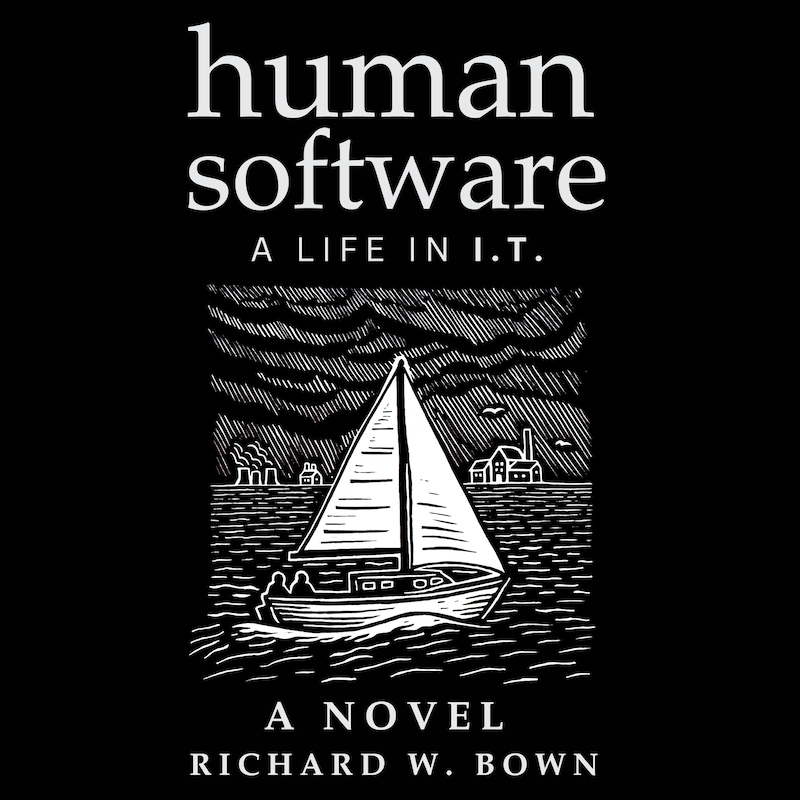
I wrote a book. It's a novel. It's about how we treat each other at work, it's about families, friends, ambition, disappointment, mental health and the impact of 24/7/365 software culture and globalisation and AI on our workplace.
In this short episode I introduce you to the reasons behind writing the book and tease a continuation of this podcast.
This was a presentation in Amsterdam . During it, I went over a few of the thoughts that I've had over the last few years, some of the stuff I've talked about already in this podcast, some of the books I've read and consumed, and also gone on to discuss the way that we work, the way that we treat each other at work, and why that's inspired me to do something about it myself.
nd I saw that as the kind of [:
It was a classic situation of not really understanding that the engineering skills I had when I got to management weren't gonna see me through. Therefore, after that job finished pretty unsuccessfully from my side. I decided to educate myself and I started to read a few books, namely books like Turn the Ship Around, inspired by the Goal by like Gold Rat by Drive from Daniel Pink. , Team Topologies, of course, that ties a lot of stuff together, like Conway's Law, team sizing and the idea of psychological safety in teams , DevOps Handbook, dynamic, re retaining, accelerate, and many other great books .
logy, from leadership, from, [:
I didn't feel that ultimately that was who I was or what I was trying to say. And then after reading those two great novels, the Phoenix Project and the Unicorn Project, I was struck by an idea about how I could express myself, because despite the fact we have all these books and all these great theories and all this great DevOps and everything else, work is still pretty much the same from my perspective as it was almost 30 years ago when I started out.
at is, we need to get things [:
And that hasn't changed that much. So something stuck in me about. The fact that I've read all these books and I agreed with what they said, but at the same time I don't feel that we've really moved on. So I wanted to express that because we go to work and work is work, right? Um, sometimes we're told that work is a family, but that's not the case.
and job losses, we find that [:
There is pressure from all sides when it comes to delivery. We are told to just do it right. We're told to just get the job done, and if we don't like it, there'll be somebody else. Someone cheaper, maybe younger, to do our job for us. And ultimately we find that sometimes bosses lie to us. And if we are the boss, sometimes we find we have to lie in order to protect ourselves, but also protect the organization and even protect the people that we're lying to.
make it about humans and not [:
There's a certain type of human that loves to do it. However, we should feel that we can do that from a place of safety. Therefore, I wrote this book and is. As some of these quotes say, a genuine, heartfelt novel, it certainly is. It comes from the heart, and maybe if you're interested, you could check it out too.
I'll leave some links under the video and maybe this is the start of a reboot for this podcast.
Until the next time this is Richard Bown wishing you goodbye and good luck.