Shownotes
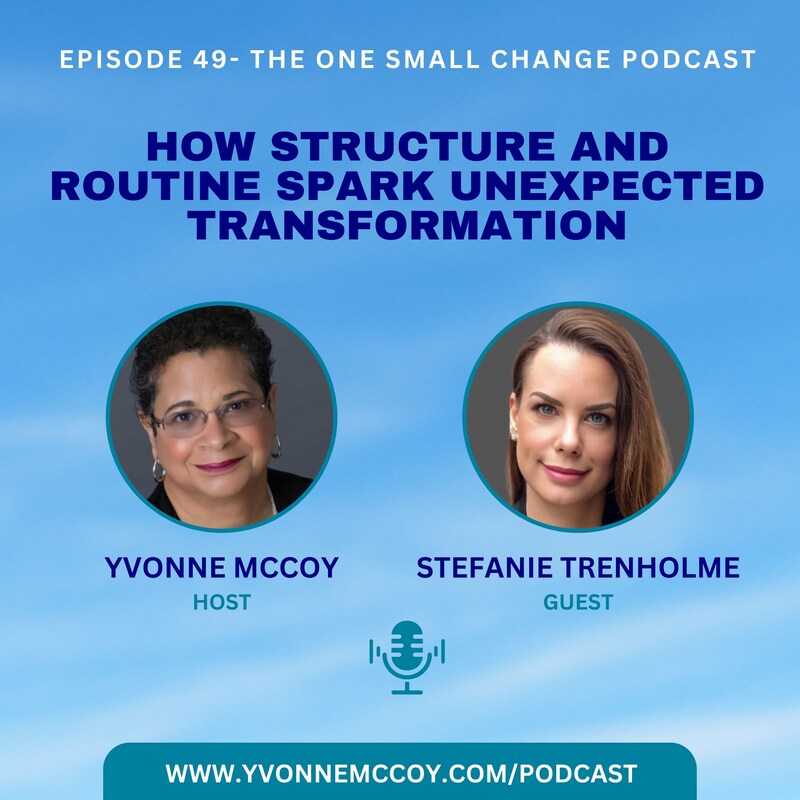
In this episode of The One Small Change Podcast, host Yvonne McCoy sits down with special guest, Stefanie Trenholme, to dive into the power of small adjustments—particularly the role of structure and routine—in shaping both personal growth and lasting success. From making the leap to entrepreneurship as a speech-language pathologist to guiding kids and adults alike through learning challenges, our guest shares how routines not only build stability but spark transformation. Listen in for actionable strategies that entrepreneurs and parents can use to implement beneficial habits, support different learning styles, and create a more predictable—and fulfilling—path to their goals.
Guest Bio:
Stefanie Trenholme is a Los Angeles-based speech-language pathologist with extensive experience running her own private practice. Formerly the head of a speech department, she specializes in helping children with communication and learning challenges and is also the author of a children’s book series focused on routines and language development. Passionate about integrating structure into daily life, Stefanie coaches families on the value of predictability and teaches entrepreneurs how to harness routines for greater confidence, effectiveness, and growth.
Chapters:
00:00 Transitioning to Self-Employed Speech Therapy
03:21 Balancing Structure and Flexibility
08:06 Daily Sales Introduction Practice
10:22 Adapting Communication Styles
14:55 Multimodal Learning Preferences
16:45 "Entrepreneurial Learning and Sharing"
21:46 "Don't Delay Networking Connections"
25:42 Boosting Language Through Routines
29:53 Pandemic-Inspired Children's Book Journey
32:46 Embrace Change with Courage
Quote from Guest:
“Structure is really good. The routines are very good. Understand the flexibility, and I think we actually touched on a very important point that when dealing with others in business, to really take in mind, you know, their various learning styles. And even if you're one, somebody else may not be, and you may wanna try to incorporate all learning styles when dealing with people.”
Links:
Stefanie’s website, littlelolafrenchie.com, offers resources for parents on boosting language through daily routines and details about her children’s books, which are rich in practical routines and easy-to-apply vocabulary tips.
Transcripts
Welcome to the One Small Change. I'm thrilled that you're taking time out of your
Speaker:schedule to spend some time with me to explore and
Speaker:see how we can help you transform. I'm your host, Yvonne
Speaker:McCoy, and I bring almost thirty years of entrepreneurial experience
Speaker:and a passion for discovering growth through the power of
Speaker:seemingly small change. So again, thank you for joining
Speaker:me. And this week I have a special guest who's got some
Speaker:interesting insights for you, Stephanie Trimholm.
Speaker:That's not right. Say say your last name the right way.
Speaker:Trim Trim Trim My name
Speaker:is kinetically not great for everybody. Don't worry.
Speaker:But we want people to know when they hear your name, who you
Speaker:are. So, Stephanie Yes.
Speaker:The purpose of this is what was a small change
Speaker:that seemed like it was small at the time that had an
Speaker:unexpected impact on you and helped you to transform and help
Speaker:you to do what you do now? Probably when I
Speaker:started my own business. I used to run a speech
Speaker:department here in Los Angeles. I'm a speech language pathologist, and I
Speaker:had been running a department in, you know, training
Speaker:CFs, which are clinical fellows who are going through the licensing program
Speaker:and or the licensing process rather. And I
Speaker:decided to try to open up my own practice. And
Speaker:as nervous as I was to do it, it's proved to be very successful.
Speaker:So I was glad that I did that little adjustment to no longer
Speaker:work for somebody else, but to work for myself. But for
Speaker:instance, when you did that, there was something that
Speaker:you felt you could deliver in a private practice that you couldn't
Speaker:when you were working in corporate that that steered you towards
Speaker:helping people with problems. Right? Well, I worked with
Speaker:a a clinic that was doing speech therapy. So even though
Speaker:I was running the speech department and I was taking care of a bunch
Speaker:of speech language pathologists and training, I was seeing my own case load.
Speaker:But it's very different when you work for somebody else
Speaker:versus working for yourself.
Speaker:And, while I did learn a lot at the company
Speaker:that I was at, and it gave me a lot of, you know, experience
Speaker:and confidence to be able to spread my wings and go on my
Speaker:own, there's really something to be said for working for
Speaker:yourself. I mean, it's scary because you're taking on a whole lot of different
Speaker:responsibilities and everything falls onto you. But
Speaker:if you have, you know, the right personality and the dedication, it can be
Speaker:wildly successful and very fulfilling. Well, one of
Speaker:the things that we talked about, I think that that, you know,
Speaker:we kinda hooked up with is
Speaker:how structure and routine can help your life.
Speaker:And I think for entrepreneurs, they're especially
Speaker:if they're in the spiritual realm. Right? They're
Speaker:like, I'm going to, you know, go with my gut.
Speaker:I'm gonna decide something different. And if you're doing something else,
Speaker:you have the shiny, you know, object syndrome. And so you're, like,
Speaker:doing like this. And routine seems
Speaker:like the last thing that you wanna do, but it's really what you need.
Speaker:Well, you do because, I mean, having your own
Speaker:business, you have to have some more sort of structure and routine
Speaker:because, you know, for example, in my own company, I have to be able to
Speaker:do my billing, doing my notes, organizing reports,
Speaker:talking to different kinds of professionals, that
Speaker:are seeing also the children that I see. I mean,
Speaker:while, yeah, there is some sort of flexibility,
Speaker:and we had talked about how, you know, I may have a therapy session
Speaker:planned in my mind to see a kid, and the kid arrives and they don't
Speaker:wanna do what kind of I've planned out. I have to be very flexible and,
Speaker:you know, adapt and try to still get my goals with something that they wanna
Speaker:do, but I can't run a practice doing that every single day. I would
Speaker:not be successful. I would not be meeting my kids' goals,
Speaker:and I wouldn't have been in business for as long as I have if I
Speaker:was just very, you know, easygoing
Speaker:and flying by the seat of my pants. I mean, how would I be able
Speaker:to submit bills or paperwork or, you know, show up for meetings
Speaker:for IEPs for kids? I mean, there has to be some level of
Speaker:structure. Well, not only that. You're talking about
Speaker:kind of tangible structure. Mhmm. And I think
Speaker:that structure also comes in the form of
Speaker:mindset. So one of the things that I teach is, what is your vision?
Speaker:And I call that dead reckoning. What is the thing that you're always aiming
Speaker:for? Because you have to adjust and adapt. You
Speaker:always do. It's kind of the the term dead reckoning comes from an old
Speaker:sailing term that you pick a point on the shore that you're always going
Speaker:to even if you have to tack and get on weed with those.
Speaker:Going that way. Right. You're still headed in that direction. So I think
Speaker:there are I think a lot of people think of structure and
Speaker:organization, that kind of thing, as being only
Speaker:the task that you're doing, but it also is your
Speaker:mindset. You have to have some kind of idea
Speaker:because that impacts that impacts the
Speaker:quality of the work you do. It impacts who you work
Speaker:with. It impacts you know, it keeps you from that
Speaker:shiny object syndrome because you could say, I'm headed here. I don't
Speaker:need to go over there. Right? Right. And so,
Speaker:you know, the one of the reasons I think that that I asked you about
Speaker:this is because you talked about children with,
Speaker:learning disabilities. Right? And I
Speaker:think that there are probable well, first of all, as I
Speaker:said to you, my philosophy is that you can't divide yourself in half.
Speaker:You can't, you know, be an entrepreneur, turn off the switch and then be a
Speaker:person, kind of. And so
Speaker:if you can deal with any of those kinds of learning
Speaker:situations, whether it's you as an adult or help
Speaker:your children or, you know, when you're communicating with other people,
Speaker:I think it's really helpful. And I am running into more and more
Speaker:adults that are discovering that they have some kind of a
Speaker:learning disability late in life, which is why
Speaker:they've avoided certain things. Right. So that
Speaker:was, I think, one of the reasons that I wanted you to talk about how
Speaker:structure can help you if you're experiencing those kind of
Speaker:things, particularly if you are an entrepreneur and you don't have structure.
Speaker:Well yeah. So we had talked about one of the things in my practice, and
Speaker:this is not just necessarily children with communication
Speaker:challenges or learning challenges, but all children, the way that
Speaker:children learn is through that routine and that
Speaker:structure. So, one of the things I'm always working with my families and
Speaker:teaching them is how you can grow in
Speaker:vocabulary and concept development through daily
Speaker:routines because there's a sense of predictability. Plus it gives a
Speaker:child a chance to hear the vocabulary associated with that routine
Speaker:over and over and over again, and that repetition is how they
Speaker:learn. And that's how all of us, anyways, learn. It doesn't matter if you're
Speaker:a kid. I mean, you know, I'm sure anyone, when they
Speaker:started a new job, even if they went to school in it, once they started
Speaker:doing it and doing it and doing it, it became easier.
Speaker:So that sense of predictability is what helps us
Speaker:learn and move forward. So it's not necessarily,
Speaker:like, if you go off the beaten path is bad, but
Speaker:you have to still have the same, like you said, the same end view
Speaker:in sight. And so, like I said, even with my therapy sessions,
Speaker:I may be working on a particular goal, you know,
Speaker:getting a child to use more complete phrases, and I have an activity
Speaker:planned, and they don't wanna do it, and they wanna do something else. Am I
Speaker:able to still get to my goal even though I'm going off course?
Speaker:Yeah. And it it's funny because I talked with someone who was
Speaker:a sales trainer. And one of the things that
Speaker:she has her people do is to give their
Speaker:sales I call it an introduction, not a pitch. Do you
Speaker:know? Give their sales introduction every day of the
Speaker:week, even if they have to do it to their family and friends.
Speaker:Right? And she said, it just makes it so that it's the more you do
Speaker:it, the more relaxed you get, the more, the
Speaker:easier it is to do. And then of course, the flip side of
Speaker:that from my perspective is I think one of the reasons for
Speaker:doing it is you can start to read how other people are are
Speaker:responding to it. You know, if it's the right crowd and they're not responding,
Speaker:then you're like, oh, I need to do something different. You know,
Speaker:but the more comfortable you are in doing it, the better you
Speaker:can do it, you know, the more confident you come across. So, you know,
Speaker:and, and you listen
Speaker:to so many stories about, you know,
Speaker:athletes. They talk about practice, practice, practice. And that's what
Speaker:repetition and structure really does for you. Right. I
Speaker:mean I mean, it's even think of a doctor. I mean, yeah, they do
Speaker:their first surgery. They're successful, but the more they do it,
Speaker:the better they get. They could probably do it with their eyes closed. Do you
Speaker:know what I mean? So, you know, we do need to have that sense
Speaker:of predictability and organization to get us to
Speaker:somewhere. And I just think it's important
Speaker:all around. I mean, especially as an entrepreneur. I mean, not only working with
Speaker:kids, but then, like I said, having your own business, any business that you have,
Speaker:I mean, you have to have some kind of organization,
Speaker:or how are you gonna be able to be successful?
Speaker:Well, you know, one of the things I think I shared this with you was,
Speaker:you know, if you can't be
Speaker:predictable in some way, your client's not gonna find
Speaker:you. You know, because if it's like one day you're selling this and the
Speaker:next day you're selling that or one day you've got you know, it's like,
Speaker:I'm confused. Validity to it. It's the key with certain validity.
Speaker:So yeah. I mean, definitely. But I
Speaker:think the other thing that that you were talking about, you know, kind of in
Speaker:terms of communication and how we learn,
Speaker:the more okay. This is my my my
Speaker:feeling. The more I learned about how I learned
Speaker:and the different styles that other people had, I think
Speaker:the better a communicator I became because I became
Speaker:aware that I have to give people
Speaker:information in a way that they that they can accept it. So,
Speaker:when I found out that I was, like, highly visual, and
Speaker:when I talk, I go, do you see this? You know, have you seen that?
Speaker:I mean and then, you know, my husband who is
Speaker:very auditory tends to say, did you hear
Speaker:this? Right? And suddenly I started listening to my
Speaker:kids. How do my, you know, when they were younger, how do my kids talk?
Speaker:What are the words that they're using so that I can communicate with
Speaker:them? But the same thing is true when you're talking to
Speaker:people that you want to work, you know, adults that you want to work with,
Speaker:if you're, if you're selling them, you know, to
Speaker:to to kinda test out what words are can you see this? Can you hear
Speaker:this? How do you feel about this? So the words
Speaker:that they use gives you a clue about how you have to give
Speaker:them information. At least that's been my experience. Well, it is. So
Speaker:what you're talking about are their various learning styles, and there generally are three
Speaker:learning styles. Like you said, a visual learner, an auditory
Speaker:learner, and the kinesthetic learner. Those are who learn by doing.
Speaker:So someone who takes apart a bike and puts it back together, they're kinesthetic.
Speaker:Most people are visual learners. So, actually, when I'm
Speaker:doing speech therapy sessions, I actually incorporate all three
Speaker:learning styles because I don't know what a kid is very young off.
Speaker:Majority of people are visual learners, which
Speaker:is kinda funny because I go into school sometimes and, you know, they have all
Speaker:the visuals on the walls of the classroom, but it's highly
Speaker:overwhelming. So it's, like, to the nth degree. But, you
Speaker:know, as we get older, you know, a lot of the teaching is auditory,
Speaker:and that's actually the least common learning style. But, like I
Speaker:was saying, when I'm working with my kids, I have kids learning by
Speaker:doing, by learning by seeing, and also the auditory.
Speaker:I'm working always on those three learning styles, and it is very important
Speaker:that people know what learning style they are because some people,
Speaker:you know, they are not auditory learners at all, and people just tell
Speaker:them something and they'll never remember what you're telling them. Or you may
Speaker:have to send them a memo or give them you know, teach them how to
Speaker:work on a a calendar. One of the things I do in my job, which
Speaker:also does with structure and routine, teaching older kids, you know, they get those
Speaker:school planners. A lot of kids, especially kids with learning challenges,
Speaker:don't wanna fill them in. They don't they don't actually write their homework
Speaker:assignments in, and then they're lost, and they don't know when things are due. So
Speaker:I actually have to physically teach them how to do that so they know what
Speaker:to expect. But then now they see it, and they're like, oh, yeah.
Speaker:That's when that's due versus trying to remember the teacher said,
Speaker:oh, that assignment's due in two weeks, and it goes in one year and out
Speaker:the other. Well, it's interesting because this really
Speaker:dates me. Before we had Zoom, before we had all these other things,
Speaker:I took my my coaching. They were
Speaker:teleclasses. So you actually called into a, you know,
Speaker:a conference call and you got your class, which was,
Speaker:like, horrible for me. I mean, I had to actually because I'm a
Speaker:I'm a visual kinetic. I like to touch it. I like to see it, and
Speaker:I like to touch it. Right. So for those
Speaker:classes, I actually had to buy
Speaker:myself a toy to play with
Speaker:so that I could focus and listen. And I have since
Speaker:learned that if you highlight, you know, that the the the act
Speaker:of highlighting things and, you know, people who are highly visual
Speaker:and and kinetic take massive amounts of notes that
Speaker:we never read again. Do you know?
Speaker:That was me in school. Yep. And so now what I've
Speaker:learned is I take massive amounts of notes still,
Speaker:But as I'm going through, I'll highlight something. So if I
Speaker:ever just right. So, like, I can go back and go, this was a good
Speaker:point. This was a good point. This was a good point. But, you know,
Speaker:I think part of one of the lessons that entrepreneurs can take away from
Speaker:this is if you're making presentations, you need
Speaker:to hit all those things. Yeah. And even when I still go to
Speaker:my continuing education classes, because to be able to maintain my license,
Speaker:I have to go do the CEUs. And I
Speaker:really don't like when I'm just being lectured at. I
Speaker:you know, having learning challenges myself, auditory processing,
Speaker:you know, I just I cannot stand just being talked
Speaker:to. I like when they give you examples and you're engaging and you're
Speaker:having conversations with people or you're acting things out, you know,
Speaker:and there's things on a board. Like, I want it to be a
Speaker:multimodal, and that's even something we've discussed with even my kids.
Speaker:Kids that may not be necessarily verbal, and they're nonspeaking,
Speaker:and they're learning to talk. They need a multimodal communication system,
Speaker:which includes the gestures, which includes signs, which may include pictures,
Speaker:which may include words. So it's
Speaker:everywhere. Like, the learning styles are literally everywhere.
Speaker:Well, it's funny because I went, I was I'm gonna be in a
Speaker:summit, and so they had a speakers thing. And so one of the
Speaker:things that they said, and I didn't relate it to what we're
Speaker:talking to, but it makes perfect sense is, you know, she was saying
Speaker:instead of put the you know, saying put yes in the chat, you
Speaker:should say write this down. Because when you write
Speaker:stuff down, chances return. Right.
Speaker:And so Nobody actually really realizes that.
Speaker:People think it's very laborious and cumbersome. Oh, gosh. Do I have to take notes?
Speaker:But, actually, it's been proven time and time again, there's something that
Speaker:goes activation in your brain with you actually doing the physical motor
Speaker:of writing actually activates parts of your brain to
Speaker:help you learn versus, like, people taking one
Speaker:word notes, you know, like, or one word. I'm like, what does that mean? It's
Speaker:not gonna help you recall anything. So that's that
Speaker:that tip right there is is worth gold, people. As an
Speaker:entrepreneur, both in your family life and, you
Speaker:know, and in your business, when you're talking to people to
Speaker:try to be in as many different modes as possible, If you're
Speaker:giving a workshop or you're giving a presentation to encourage
Speaker:people to write it down. Now, what I, I have a model
Speaker:called Make Your Learning Last and it's, you
Speaker:learn something, you apply it, and then you
Speaker:share it. And the act of sharing it helps you to
Speaker:clarify if you really understand what it is you think you got.
Speaker:But in terms of being an entrepreneur, it also makes you a generous
Speaker:expert who's willing to share new things. And then you put a time or a
Speaker:thought trigger on it. When am I gonna use this? Because that to
Speaker:me is the piece that's missing. When I was in corporate, I would learn
Speaker:something really fantastic. And then when the chaos hit, my reaction
Speaker:was, what binder is that in? And I could never I could
Speaker:never get back to it. So you have to to be proactive and use your
Speaker:learning. You have to actually you know, you've applied it once.
Speaker:When when is a good time to apply it again?
Speaker:So you've given
Speaker:I don't know where you wanna start. Let's start with
Speaker:three three ways that entrepreneurs can can
Speaker:learn, you know, can come up with things that they can use in
Speaker:their business that that revolve around structure and learning
Speaker:styles? Well, don't
Speaker:put things off, number one, because everybody always says we're gonna get to things
Speaker:later, and I think that's a kiss of death as an entrepreneur. You should really
Speaker:if you're gonna do something, do it right away because chances are, A, if you
Speaker:don't write it down, you're gonna forget about it. And things
Speaker:can happen in the interim, so don't put things
Speaker:off. I live by notes. Post
Speaker:it notes are my best friends because they're easy. Even in my
Speaker:books when I'm doing assessment tools, I post a note books to find
Speaker:things easier. You know, if I'm trying to find standardized scores to be able
Speaker:to report things in an assessment, so I'm
Speaker:highlighting as well all the time. So post notes, highlighters.
Speaker:You know, people think when you're done with school, you shouldn't take notes, which
Speaker:I don't agree. You should always be taking notes.
Speaker:And definitely keeping some sort of a schedule. A schedule
Speaker:is very helpful in keeping you organized and on
Speaker:track. But understand that that schedule may have to change every
Speaker:so often and being able to be flexible with that because there are always
Speaker:hiccups in the world. So there a couple of things that I
Speaker:that I found is that
Speaker:when you're scheduling, people tend
Speaker:to schedule specific tasks, you know, like
Speaker:I'm meeting with this project. I think that the
Speaker:piece that people are really missing is they really miss
Speaker:putting in time to be creative and thoughtful about their business,
Speaker:right, or to take care of themselves. Because they're like,
Speaker:I'll do it later. I'll you know, like you were saying, I'll do it later.
Speaker:Right. But if you put it in your calendar and say,
Speaker:I'm gonna take half a day every month that I'm
Speaker:gonna sit and kinda take a look at my business, that kinda thing.
Speaker:And it adds a structure to it so that you can add to it and,
Speaker:you you know, you can kind of evaluate what's going
Speaker:on. So I think that's really important in terms of
Speaker:structure too is it's not just, you know, I'm gonna take
Speaker:this phone call. I'm gonna do the that you you prioritize
Speaker:and put in the priorities. So one prior
Speaker:analysis, the reflection, which a lot of people don't do.
Speaker:So, like, I even like, if I've had a therapy
Speaker:session and it didn't necessarily go the way that I had planned it,
Speaker:I gotta sit back and reevaluate because I've been doing this for a long
Speaker:time. What could I have done differently? What
Speaker:why why did potentially this not work out? You really
Speaker:need to also you're making a good point. Schedule
Speaker:time to evaluate how things are gone and being able to
Speaker:make modifications. So, yeah, keeping certain appointments,
Speaker:being able to set up meetings, whatever. But a successful
Speaker:business also evaluates, and that's even people evaluating
Speaker:how things are going. Well and and when we talk
Speaker:about systems, right, so, I mean, we take something as simple as
Speaker:networking. If you don't give yourself time
Speaker:to follow-up after the networking, you've kinda, you know,
Speaker:cut the impact down. So if your networking
Speaker:event ends at two, you know, give yourself a half an
Speaker:hour so so that you can look at what you've done and the notes make
Speaker:sense and you can contact people on LinkedIn or whatever because
Speaker:tomorrow, you're not gonna remember what those notes mean. And that's why I
Speaker:said don't put things off. Whenever I'm at networking events and I
Speaker:ask, are they on social media? Are you in LinkedIn? I just reach
Speaker:out right away. Or if I get business cards,
Speaker:I try to deal with them right away because they'll get lost. You'll forget.
Speaker:You can't remember who who so and so is, you know, even
Speaker:when I get a new client. And, you know, I get referrals all the time.
Speaker:I take notes in my phone. Even if I say them in my phone, I
Speaker:actually put notes in what's their challenge, what their you know,
Speaker:I just what areas of need do they have? Because down the road
Speaker:when a parent follows up with me, I'm like, oh gosh. Who is Susie again?
Speaker:It doesn't make me also look really good if I don't remember, you know, as
Speaker:a certain child. And and and I think also, I
Speaker:think the important thing is
Speaker:systems and habits don't have to be the
Speaker:systems and habits that you had as a kid. I mean,
Speaker:but there are some through lines that stay with you. So for
Speaker:instance, I am definitely into color coding.
Speaker:I love color coding. And so, you know, I I will give
Speaker:a project a, you know, a color. And so, you know, like, if
Speaker:right I right right now I'm trying to reorganize my calendar. So
Speaker:initial contact is now green, clients are
Speaker:blue, podcasts are red. So I know when I look
Speaker:at it what you know, I don't have to know who it is. I just
Speaker:know. Right? And that's that can be part of a
Speaker:habit that can make your life a lot simpler, but you
Speaker:design the process and the habit. I
Speaker:mean, because one of the things I talk about about productivity
Speaker:is is can you automate something? And when I mean
Speaker:automate, I don't mean necessarily technically, but there's a
Speaker:process for it. So when my kids got to be, like,
Speaker:young teenagers, double digits someplace, And I
Speaker:was, I was working and, you know, my husband was
Speaker:working. We had this this thing about, you
Speaker:know, about dinner. So on Saturday, I cooked the one
Speaker:pot meal. I'm the queen of the one pot casserole. My husband's
Speaker:a real cook, you know, so on Sunday he cooked the big meal. Monday and
Speaker:Tuesday, we had leftovers. Wednesday, my daughter did spaghetti, so we you
Speaker:know, or some kind of pasta. So we called her the pasta queen.
Speaker:And then on Thursday, my son did sloppy joes. And on
Speaker:Friday, we did go for yourself, clean out all the left. I
Speaker:mean, it was but it made it such a Because you have
Speaker:a sense of predictability. Now that doesn't mean that one day on Thursday,
Speaker:you're not gonna go out to dinner or something comes up. Right. But at
Speaker:least if you have that sense of predictability, and that's the same thing that I
Speaker:try to explain to parents in my office, when kids
Speaker:have a sense of predictability, their stress level goes
Speaker:down. And it's interesting since we're actually on winter break right now and
Speaker:seeing some of my kids over the holidays, they don't have that
Speaker:structure. They don't have that routine. They don't have that sense of
Speaker:predictability. And And guess what are up? Their behaviors,
Speaker:their frustration levels. Because they're not in school, they're not doing
Speaker:that. So, I mean, like, that goes back to our
Speaker:routines and structure. It's helpful. It doesn't mean you have to
Speaker:live by that, but at least it makes
Speaker:life easier. Well, it's funny because
Speaker:when I was when my kids were younger and they were in day care, when
Speaker:I would pick them up on Fridays, their teacher would just say,
Speaker:all you need to do is maintain maintain
Speaker:what we've what we've put together. You know? You don't have to invent
Speaker:something totally different. You just have to maintain it. Right?
Speaker:And, you know, so we would laugh because, you know,
Speaker:a lot of times we didn't, and we should've. Alright.
Speaker:Tell me before we run out of time. Tell me what you're giving us.
Speaker:Well, on my website for, those who have
Speaker:children or wanna understand more about routines, on my
Speaker:website or Lola's website, because I published my first kid's book
Speaker:and my second one is currently being published, and
Speaker:the stories all follow routines. I have Lola's first book here,
Speaker:which is about bath time. So the routine of bath and the
Speaker:language that follows bath. On Lola's website, which
Speaker:actually is littlelolafrenchie.com, there
Speaker:is a section on language, and there are tables
Speaker:that discuss the type of vocabulary that parents could elicit for
Speaker:children in certain routines or just even more general goals
Speaker:of following directions and how taking can be elicited
Speaker:through that. There's also, a a
Speaker:podcast that I actually did with a great, doctor out here in LA
Speaker:discussing the importance of routines and structures because
Speaker:it's really funny that what we're discussing is actually
Speaker:really you know, what we say, like, those duh statements, they're really very
Speaker:self explanatory, but people miss it. You don't like, you're,
Speaker:like, you don't really think about it, and you're like, well, that makes sense. And
Speaker:then when you see it into action, you're like, oh, that really makes sense. So
Speaker:people can go online to help, elicit language in
Speaker:their children, all children, again, not necessarily somebody with communication
Speaker:disorders, but how we can help boost language
Speaker:learning through daily routines. Well, I think I think
Speaker:one of the you know, I think sometimes people do not realize
Speaker:that as an entrepreneur,
Speaker:the words that you use on a regular basis Mhmm.
Speaker:Is how people find you and how they relate to you.
Speaker:And so, like I said, so so many times our beliefs
Speaker:are from our childhood, and maybe they were good beliefs when we were
Speaker:children, but, you know, and we did things because
Speaker:somebody told us to do it. Now that you're an adult,
Speaker:you have to find out what is your way of
Speaker:doing it that makes sense. Do you know?
Speaker:And the other part to that is things have changed.
Speaker:I mean, from the time I was a child, they've changed a
Speaker:lot. So so, you know, if you know what
Speaker:your your goal is, you now have other ways to get there.
Speaker:Right? So you have other options. I mean, we can, you know, you can
Speaker:read a book, you can go on Google, you can get ChatTpT as a
Speaker:continuous learner. And as an entrepreneur, you need to stay
Speaker:relevant. And so as you stay relevant, I would
Speaker:encourage everybody to take a look at their learning style and the way they
Speaker:communicate with people and the way that they come across. And
Speaker:I'm not telling you that you shouldn't do it a certain way
Speaker:because we each need to feel comfortable in our own skin,
Speaker:but you need to know that other people do not get it the same
Speaker:way that you possibly you get it. When when
Speaker:I used to talk about a communication, I used to say, did
Speaker:you ever go someplace with somebody else's
Speaker:family? And they go, oh, remember uncle John's fiftieth birthday
Speaker:party? And everybody cracks up laughing, and you haven't got a
Speaker:clue. Well, that's context specific.
Speaker:Right? Right. But I'm just saying, but but but depending
Speaker:on where you are and the words that you use and stuff, they can have
Speaker:totally different meanings that in, you know, the way that you come across. And
Speaker:so that's why I think it's so important that we be aware
Speaker:that this is something we can evaluate. We can see
Speaker:what happens, that there are better ways. There are things that we can
Speaker:incorporate. And a very easy one is
Speaker:routine. Because when you have a routine, you can
Speaker:say, I followed these five steps
Speaker:this time and got a great result. I did it next time, and I didn't.
Speaker:What was different? And you can evaluate the situation so you
Speaker:can get better results. I can't believe our time
Speaker:is almost up because I think we could keep going on this. So
Speaker:when was the last time you did something new for the first time?
Speaker:Probably in the pandemic when I've always wanted to write a children's
Speaker:book, understanding language and learning and literacy.
Speaker:And, well, that that whole time of the pandemic was a whole learning style because
Speaker:we had to learn how to do therapy on a computer. I still went
Speaker:into the office, but I did do Zoom sessions, and that was
Speaker:very challenging. I still do Zoom sessions, but, you know, you're a little bit
Speaker:more selective because it's not again, for learning styles, being on a computer
Speaker:screen isn't the greatest for everybody. I need to physically be with the kid or
Speaker:whatever. So that was, a whole new learning curve
Speaker:in and of itself. And at that time is when I decided to
Speaker:take something that I always wanted to do and try to reach
Speaker:more families and more children by writing my children's books.
Speaker:And, you know, that was a
Speaker:whole I mean, you know, writing a book in a
Speaker:sense is easy, but you don't realize all the other things that go along with
Speaker:it, like the trademarking, the copywriting, the, you know, finding
Speaker:the book distributors and, you know, and there's no, like, writing a
Speaker:book for dummies. So I had to figure it out on my own.
Speaker:So but, you know, I got through, and it was rewarding. So the second time
Speaker:around, it was a lot easier. But Right.
Speaker:And it was. And, again, took good notes, kept good
Speaker:files, and so it was very much helpful.
Speaker:So that and I found that to be very, very rewarding and
Speaker:exciting and something that, you know, I continue
Speaker:hopefully, will continue doing with more books for Lola.
Speaker:Sounds fantastic. And we're almost out
Speaker:of time. And so I need to put in the commercial. And so as
Speaker:a first step, I would love it if those of you that are listening would
Speaker:subscribe, share and engage with this podcast on social
Speaker:media. And it's really designed to help supercharge
Speaker:your business. It's a way for you to connect. And it's a way for me
Speaker:to give back to the entrepreneurial community.
Speaker:And I want to help you in your quest for growth and impact. So if
Speaker:you'll join me for the one small change and we can see what we
Speaker:can do together. If you haven't listened to the first episode, you should
Speaker:do that and see who else's, podcaster there so
Speaker:that you can pick and choose what you need at the time that you need
Speaker:it. So Stephanie, give me your last
Speaker:words before we go.
Speaker:I mean, structure is really good. The routines are very good. Understand
Speaker:the flexibility, and I think we actually touched on a very important point
Speaker:that when dealing with others in business, to
Speaker:really take in mind, you know, their various
Speaker:learning styles. And even if you're one, somebody else may not be, and you may
Speaker:wanna try to incorporate all learning styles when
Speaker:dealing with people. So I
Speaker:think that's so true. I think that makes you so much more relatable that you're
Speaker:trying to relate. So that's it for us. So
Speaker:remember, change is simple, but it's not always easy. And
Speaker:it requires courage and resilience and a willingness to step out of your comfort
Speaker:zone. So I hope you will join me again for the one small change,
Speaker:as we embark on this journey and your bold vision and innovative
Speaker:possibilities. And until next time, please stay
Speaker:curious. Stephanie, thank you so much for sharing your wisdom and
Speaker:your time with us today. Thank you for having me, Yvonne. Thank
Speaker:you.