Shownotes
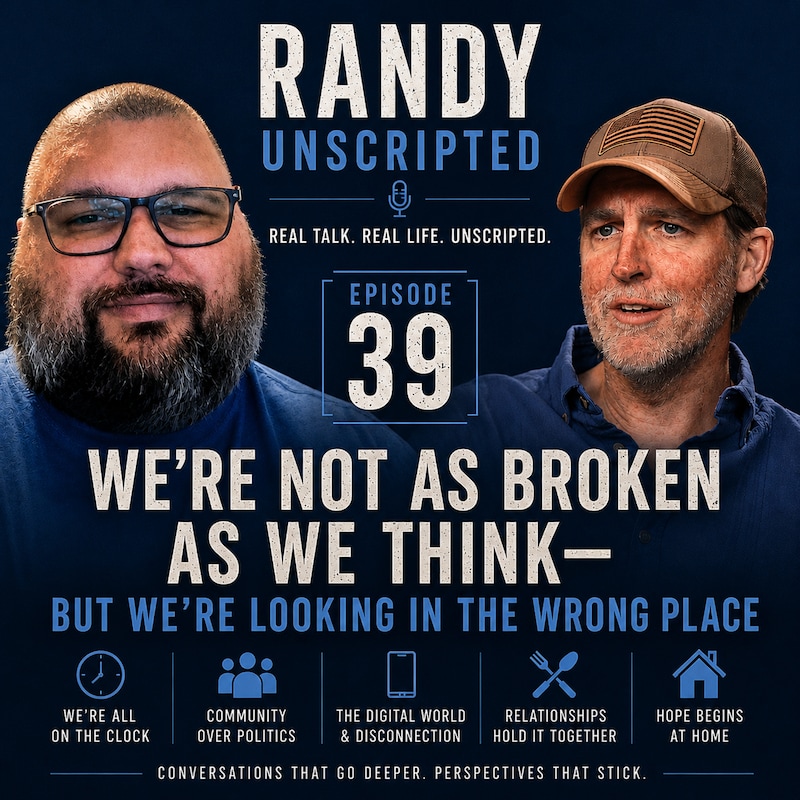
In this episode of Randy Unscripted, I explore deep themes raised during my conversation with Ben Sasse, focusing on our values and priorities in the face of mortality. Sasse’s reflections highlight the relational nature of our societal challenges, emphasizing that despite material wealth, we suffer from spiritual and communal disconnection. We often neglect the importance of our immediate relationships while grappling with political issues. This episode argues for a grassroots approach to rebuilding connections, urging listeners to take personal responsibility for fostering community and engagement in everyday life. We also examine the impact of the digital age on our relationships and the need for meaningful interactions. Ultimately, I maintain that change starts within our local circles, encouraging each of us to reflect on how we can contribute to a more connected and purposeful existence.
Youtube Link: Extended interview: Ben Sasse on lessons for America
Transcripts
Adam Curry: Randy Black.
Speaker:Salty Crayon: Randy Black.
Speaker:David Medus: Randy Black.
Speaker:Kevin Bae: Randy Black.
Speaker:Leila Medus: Randy Black.
Speaker:Adam Curry: Randy Black.
Speaker:Kevin Bae: Randy Black.
Speaker:David Medus: Randy Black.
Speaker:Adam Curry: He's a troublemaker.
Speaker:Randy Black: Welcome to Randy Unscripted.
Speaker:Randy Black: I'm Randy Black,
Speaker:Randy Black: and this is the podcast where I just kind of talk about whatever comes across
Speaker:Randy Black: my mind whenever it happens to come up.
Speaker:Randy Black: And today I wanted to share something that I came across today.
Speaker:Randy Black: It just came out yesterday.
Speaker:Randy Black: There are interviews that you listen to, And then there are conversations that stay with you.
Speaker:Randy Black: I recently listened to an extended interview with Ben Sasse.
Speaker:Randy Black: And what struck me wasn't just what he said about politics.
Speaker:Randy Black: It's how clearly he talked about what actually matters.
Speaker:Randy Black: Because this wasn't a political interview. Not really. It was a conversation about priorities.
Speaker:Randy Black: About community. and honestly, about how we're living.
Speaker:Randy Black: This comes from an extended 60 Minutes interview by Scott Pelley,
Speaker:Randy Black: and I'll put links for it in the show notes for you.
Speaker:Randy Black: SAS is speaking from a place that most of us avoid thinking about,
Speaker:Randy Black: and that's a terminal diagnosis.
Speaker:Randy Black: And whether you agree with Ben SAS politically or not, that kind of reality
Speaker:Randy Black: tends to strip things down to what's true.
Speaker:Ben Sasse: Having a terminal diagnosis isn't really that unique. We're all always on the clock.
Speaker:Randy Black: That's uncomfortable, but it's accurate.
Speaker:Randy Black: We live like time is something that we control. Like meaning is something we can get to later.
Speaker:Randy Black: But if that statement's true, if we're all on the clock, then the question becomes,
Speaker:Randy Black: what are we actually doing with the time that we've been given?
Speaker:Randy Black: And maybe more importantly, what are we putting off that actually shouldn't wait?
Speaker:Randy Black: From there, he makes a shift that I think a lot of people aren't ready to hear.
Speaker:Randy Black: He argues that our biggest problems aren't political, that they're relational.
Speaker:Ben Sasse: People are incredibly rich at a material level, statistically,
Speaker:Ben Sasse: and yet we're pretty impoverished spiritually and communally in that we don't have thick community.
Speaker:Ben Sasse: We don't know our cousins. We don't know the people who live two rows away from
Speaker:Ben Sasse: us, and we don't feel like we're in a common cause with people right now.
Speaker:Randy Black: That's a diagnosis, not of government, but of culture. And if we're honest, it tracks.
Speaker:Randy Black: We can name national leaders. We can argue policy.
Speaker:Randy Black: We can scroll through endlessly through the opinions that are out there.
Speaker:Randy Black: But a lot of people couldn't tell you the name of the person living right next door.
Speaker:Randy Black: That disconnect matters more than we probably want to admit.
Speaker:Randy Black: Because when that kind of disconnect becomes normal, it quietly reshapes what
Speaker:Randy Black: we expect from life and from each other.
Speaker:Randy Black: That doesn't mean that politics don't matter, but Sass reframes it.
Speaker:Randy Black: He suggests that we've made politics carry weight it was never meant to carry.
Speaker:Ben Sasse: Politics wants to trivialize that by screaming there's some bad political actor
Speaker:Ben Sasse: somewhere, and if only that person were ripped out of the public square,
Speaker:Ben Sasse: Politicians could fix all this. Now neighbors are going to have to fix this.
Speaker:Randy Black: That's where this gets challenging. Because it's easier to believe that the problem is out there.
Speaker:Randy Black: It's harder to accept that the solution might start with how we live,
Speaker:Randy Black: how we show up, and whether we're actually engaged with the people around us.
Speaker:Randy Black: That's not a voting issue. That's a responsibility issue.
Speaker:Randy Black: And responsibility isn't something we can delegate. It shows up in the small,
Speaker:Randy Black: consistent choices that we make every single day.
Speaker:Randy Black: He also points to something deeper that's shaping all of this,
Speaker:Randy Black: the digital world that we're living in.
Speaker:Randy Black: And this part is easy to overlook because the benefits are obvious.
Speaker:Randy Black: But the trade-offs, man, they're real.
Speaker:Ben Sasse: But at the level of human meaning and production, it's pretty scary to not know
Speaker:Ben Sasse: what you're going to do to add value for your neighbor 10 or 25 years from now.
Speaker:Randy Black: We've built systems that make life more efficient, more convenient, more immediate.
Speaker:Randy Black: But at the same time, a lot of people are quietly asking, where do I fit? What do I contribute?
Speaker:Randy Black: What actually matters about what I do?
Speaker:Randy Black: That's not a small question. And when those questions go unanswered,
Speaker:Randy Black: people don't just feel uncertain. They feel unnecessary.
Speaker:Randy Black: And then there's the everyday reality that we've all seen as pointed out in
Speaker:Randy Black: this interview by Scott Pelley, who was conducting it.
Speaker:Scott Pelley: You walk into a room full of people these days. They're not talking to each other.
Speaker:Randy Black: That's not an exaggeration. We've normalized being physically present,
Speaker:Randy Black: but relationally absent.
Speaker:Randy Black: And over time, that kind of disconnection doesn't just affect friendships.
Speaker:Randy Black: It shapes how we think, how we listen, and how we understand each other.
Speaker:Randy Black: It's hard to build anything meaningful if we're not actually engaging with people.
Speaker:Randy Black: And if we're not engaging well, we also lose the ability to disagree well.
Speaker:Randy Black: Well, that creates even more distance.
Speaker:Randy Black: So if the problem is deeper than politics, then the solution has to be deeper
Speaker:Randy Black: too. and what he points to isn't complex.
Speaker:Randy Black: It's just costly.
Speaker:Ben Sasse: We are meant to hug. We are meant to make babies. We are meant to break bread together.
Speaker:Randy Black: That's a picture of real life. Relationships.
Speaker:Randy Black: Presence. Shared time. The kind of things that don't trend, that don't go viral,
Speaker:Randy Black: and that don't scale easily.
Speaker:Randy Black: But they're the things that actually hold everything else together.
Speaker:Randy Black: And they require something we don't always like to give.
Speaker:Randy Black: Our time without distraction.
Speaker:Randy Black: And this is where the conversation turns from a critique to a direction.
Speaker:Ben Sasse: So I'm not optimistic about Washington, D.C., but I am optimistic about what
Speaker:Ben Sasse: a free people and a republic can build if they start with the little platoons
Speaker:Ben Sasse: of their family, their extended kin network,
Speaker:Ben Sasse: their neighborhood, their workplace, and their place of worship.
Speaker:Randy Black: That's a very specific kind of hope. It's not institutional.
Speaker:Randy Black: It's not abstract. It's practical.
Speaker:Randy Black: It's the belief that what we build in our homes, in our communities,
Speaker:Randy Black: in our daily lives, all still matters.
Speaker:Randy Black: And that kind of hope doesn't depend on outcomes. It depends on participation.
Speaker:Ben Sasse: Mortality is not news, right? Like, we're all mortal. We're all on the clock.
Speaker:Ben Sasse: We're all going to be pushing up daisies eventually. And I think wisdom requires
Speaker:Ben Sasse: us to grapple with our death.
Speaker:Randy Black: If that's true, then wisdom isn't just knowledge.
Speaker:Randy Black: It's alignment. It's living in a way that reflects what actually matters.
Speaker:Randy Black: Not eventually, but now.
Speaker:Randy Black: So here's the question I've been thinking about since I heard this.
Speaker:Randy Black: Am I investing more time in reacting to the world or actually contributing to
Speaker:Randy Black: it? because maybe the biggest problems that we see aren't just problems to debate.
Speaker:Randy Black: Maybe they're problems that require
Speaker:Randy Black: participation and participation starts closer than we usually think.
Speaker:Randy Black: I hope this episode has made you think and I hope that you take the time to
Speaker:Randy Black: share it with someone and maybe you actually take the time to sit down and talk
Speaker:Randy Black: through some of these ideas.
Speaker:Randy Black: I'm Randy Black. And join me next time on another episode of Randy Unscripted.