Shownotes
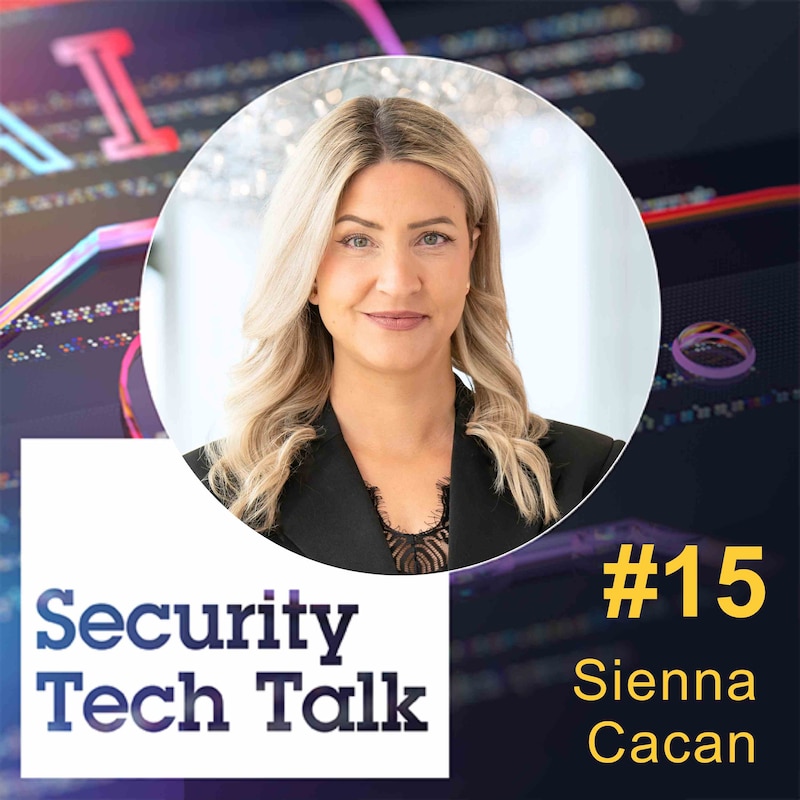
In this episode of Security Tech Talk, commercial real estate and marketing expert Sienna Cacan delves into the transformative post-pandemic shifts in commercial real estate. She and Steve talk about how the growing demand for high-quality office spaces and advancements in PropTech are reshaping the industry. Sienna shares her expertise on the critical integration of technology and sustainability, highlighting the role of IoT and ESG compliance in creating smarter urban landscapes.
About our guest:
With 10+ years’ experience in marketing in both B2C and B2B, Sienna has been working with strategic global marketing and demand creation at Axis Communications for the last six years. She is responsible for the Technology & IT and Commercial Real Estate verticals and is focused on end customers and key partners when driving segment growth.
Connect with Sienna on LinkedIn
Chapters:
(0:00:00) - Commercial Real Estate Trends and Innovations
Explore the post-pandemic evolution of commercial real estate, highlighting the growing divide between Class A and lower-tier buildings and the importance of balancing physical office presence with flexible work arrangements.
(0:14:07) - Emerging Trends in PropTech Industry
Sienna educates Steve on the burgeoning PropTech sector, emphasizing advancements in AI, green building innovations, and the importance of breaking silos with open standards amidst evolving tenant expectations.
(0:21:53) - Maximizing Efficiency in Commercial Real Estate
Steve and Sienna focus on the critical integration of cybersecurity from the design phase in smart buildings to achieve cost savings and efficiency, underscoring the necessity of interoperability and standard compliance.
Resources:
Read more about WeWork office spaces worldwide
Get info on the European Council’s ESG Compliance Regulations
See information on Smart Spaces and PropTech innovation
Listen to the episodes Steve mentioned:
Episode with Dan Drogman from Smart Spaces
Episode with Mike Gillespie from Advent IM
Meet your host Steve Kenny: Steve has spent 14 years in the security sector undertaking various roles that have seen him take responsibility for key elements of mission critical, high profile projects across a number of different vertical markets. For the last several years, Steve has focused his attention on how technologies can best compliment day to day operations and specifically address operational issues by supporting the A&E consultant community across EMEA. Steve is a committee member for ASIS International focusing on Education for the security sector and the UK technology advisor for TINYg (Terrorist Information New York group).
Connect with Steve on LinkedIn
More about Axis Communications: Axis enables a smarter and safer world by improving security, safety, operational efficiency, and business intelligence. As a network technology company and industry leader, Axis offers video surveillance, access control, intercoms, and audio solutions. These are enhanced by intelligent analytics applications and supported by high-quality training.
Axis has around 5,000 dedicated employees in over 50 countries and collaborates with technology and system integration partners worldwide to deliver customer solutions. Axis was founded in 1984, and the headquarters are in Lund, Sweden.
Find out more about Axis Communications - Innovating for a smarter, safer world
Transcripts
Did you press record?
Steve Kenny (:It will get edited. I say anything stupid or you don't know how to answer something.
Sienna Cacan (:If you stick to what we agree on, we're good.
Steve Kenny (:I can 100% guarantee that we will not stick to what we agree to but we can have a chat. Okay. You ready? Hi and welcome to today's episode of Security Tech Talk where I'm delighted to be joined by my colleague Sienna Cacan. Sienna is going to be focusing on a really important discussion on commercial real estate, but Sienna's background has been traditionally focused in enterprise marketing, marketing management. Which I think from a focus perspective really gives Sienna an insight into the banking and finance world, more recently data centres and where we are today that will be the focus is around commercial real estate. And obviously a lot of the messaging that we see that will be coming out of the likes of AXIS and across the industry is embedded with the research and development aspects of marketing and then we can look at the product development and those aspects.
Sienna, I am absolutely delighted that you've taken the time to join me today.
Sienna Cacan (:Thank you for hosting me.
Steve Kenny (1:26)
Excellent, so I want to do a bit of a deep dive into the murky world of commercial real estate because it is absolutely incredible. is massive, the terms of investment that we have seen over the past 20 to 30 years. We're starting to see the profile of businesses changing, the behavior of and the experience that buildings are looking to deliver.
I think it's fundamentally changed post pandemic. What's the research telling us?
Sienna Cacan (:Yeah, I feel like let's start in the post pandemic era. So the expectations of commercial real estate have fundamentally shifted. So even though pandemic now feels like a long time ago, the post pandemic trace is still there in the sector, believe it or not. So that era has really emphasized the importance of health and wellbeing more than it has been before, along with the whole shift from remote first to hybrid work that it's reshaping office demand. And this one is a tricky one. Companies are focusing on high quality spaces to attract talents back to the office. So I would say location, location, location, it still matters. And all this whole flight to quality, tenants want quality. So post-pandemic workers expect a better office experience if they're commuting. Making Class A assets highly desirable. And when I say Class A, that's Class A offices often. Those offices are on the right location, the best location. are having nice architecture and design and tech. They are often new or newly renovated. And then you have Class B and C. So investors are selective. Capital is slowing towards Class A or those Class B properties that can be upgraded. But many class B and C buildings face pressure to retrofit or repurpose into, let's say, residential or hybrid use. So to sum it up, there is a growing divide between high end office space and the rest. And the message from the tenant is clear. If we're coming into the office, it better be worth the commute. And I think going forward, the winners will be buildings that offer experience, connectivity, and environmental leadership.
Steve Kenny (:Obviously, due to the pandemic and the working at home challenges that that created, we've seen many publications that have spoken around how difficult it is to get people back into the office. I think from a cultural expectation, different countries have adopted different working standards. I know in the US, I know in the Middle East, these are, dare I say, demanding that people come back to the office. What are you seeing? Are you seeing that now we are sort of repurposing existing space or are people just saying, we have this here, it's ready. It always has been, get yourself back into the office.
Sienna Cacan (:Depends on the stakeholder driving this conversation. So I think people with massive portfolios that have all this building will drive the conversation around, let's go back to the office. People with other interests will be like, we have the technologies, or people can work from wherever. It's not about the space. It's about the outcome. So I think it's really depending on who you're asking. think also many companies use that now as a competitive advantage to have a flexible workplace and that is something that is attractive. So I definitely think it's there to stay.
Steve Kenny (:You reference one word there and it's outcome. Now I know that when we've spoken to a lot of business leaders, when we've gone to the market and we've asked, you know, are you driving staff back into buildings and there is a desire, there's been a lot of pushback from staff. I would argue that those that push back the most are those that will probably benefit the most from being at home. And whilst not exclusive, we have certainly seen in certain businesses where the people that don't want to go back to the office are those that perform the least working from home. And I know that's a fairly controversial view, but also from large tech companies, and I speak like an axis, we need people in offices to innovate because we bounce ideas off each other. It's energy that we get. And having worked remotely for so many years, and I've never been an office based, I've worked from home for 20 years, which I think shows my age, unfortunately, in this industry. But essentially, we absolutely see that there is a need to bring people closer together in the office in order to drive innovation, drive best practice, and hopefully embrace the culture.
Sienna Cacan (:Yeah, I also think it's so important for the culture aspect. Then it's also maybe a generational topic that can also be it. I mean, first of all, I just got to say, you're working remotely that many years, kudos. I wouldn't be able to do that. Because for me personally, I need the human interaction. I need the social aspect. I do think the innovation thrive then. When we meet, the culture gets stronger. But at the same time, there should be a certain level of flexibility also.
Steve Kenny (:Absolutely. We need to motivate people to get back into the office, potentially. Now, in order to do that, we've got to improve the experience of, you know, staff coming back into the office. What are organizations doing? I remember going to a WeWork site and how did they bring people back to the office? WeWork had beer pumps in the office. So people didn't need to leave the office to go to the British pub. They were able to get a beer in the office. But I know that's not the answer to all questions, although I am British. So what are we talking in terms of like a shift of innovation? What are people doing to motivate people to come back?
Sienna Cacan (:Well, I think you're on the right track. Definitely it's about hiring the expectations of the tenants. There's so many needs that needs to be filled. It's not about to you have a desktop, you know, it has to be different. If you come here, you know, you see in many offices, there's a gym, so you can do that. You have sports, you have hybrid zoning offering. And that's also something that investors are looking into creating when they are going into this space. It's about, you need to make the space more flexible and more attractive. So you want experience if you come. So I think if you manage that, then as I said, those are the winners, I think.
Steve Kenny (:I've seen it here if we look at our office that we've got. We have welfare spaces where people can go and take a nap. And I didn't realise that that is actually a legal compliance. So maybe, and I think to myself, that is crazy to think that there are areas for people to have a daytime nap. And then when I speak to colleagues, they're like, no, no, Steve, that is a legal requirement in countries evenlike a gym and things like that.
Sienna Cacan (:Sweet.
Steve Kenny (:I want to navigate toward obviously technology considerations. Technology has a huge part to play in the behavior of a commercial building. It absolutely enhances and improves the visitor experience. It absolutely enhances the customer experience. And I guess that's why we're starting to see lots of working groups within facilities, management organizations, industry associations. We're hearing the term PropTech brought up a lot more. This is new. It's certainly new to me, but it's actually interesting. And at the heart of a lot of the discussions around PropTech or just technologies that we have been supplying and deploying across commercial real estate for a number of years, it's just being repurposed in a slightly different way.
Sienna Cacan (:Yeah, it's really happening a lot. I feel like just before we jump into the whole technology things, I need to set a scene a little bit about like where the investments, how the investments are going and what's really happening in general in commercial real estate. And then we can dig down to PropTech because it goes together just to highlight that the global investment in commercial real estate has actually declined a little bit last year.
Steve Kenny (:Any specific regions or is it just as a whole?
Sienna Cacan (:So a whole global because it's going through a major strategic shift. Okay. So it's driven by, as we mentioned, evolving expectations, accelerated digital transformation, but also microeconomic pressures. And I think that might be the biggest reason because investors are moving away from broad portfolio growth towards selective high performing assets. So in a high interest rate environment, risk tolerance is lower. Investors want long-term value and resilience and not just yield. So higher interest rates are really pushing everyone to be more strategic, whether you are financing a new building or deciding on how long to commit to a lease. So to give some examples, in Europe, office investments are declining, while residential and hospitality assets are gaining momentum, meaning investment is shifting, not disappearing. So capital is really being relocated to sectors like logistics, to multifamily housing. Can you take a guess?
Steve Kenny (:No, go on.
Sienna Cacan (:Data centers. I could talk so much only about this, but that's not why
I'm here.
Steve Kenny (:Yeah, well, we have our friend and colleague, Peter Dempsey, that I am sure will enjoy talking around data centers for a very, very long time.
Sienna Cacan (:And also in Asia Pacific and Middle East, the so-called rising powerhouses in global real estate, those regions there, we actually see increased deal volumes and also tech enabled infrastructure growth, especially in logistics and again, data centers and mixed use mega projects really. So when it comes to capital from US and global capital, they're flowing into many of these emerging markets. So investors are following markets or favoring markets with strong fundamental and political stability. So to say while traditional office investment cooled down, capital is flowing into newer, more resilient sectors. So it's less about risk aversion and more about smart repositioning. And I mean, what we're seeing from Asia Pacific and Middle East isn't just capital on the move, it's strategic, long horizon investments that's helping reshape the global commercial real estate landscape from AI cities to sustainable mega project. These regions aren't following, they are leading.
Steve Kenny (:I would absolutely agree with that. I did a quite a large research paper focused just on Saudi Arabia in terms of how we can look at supporting our local teams in country in terms of investment, headcount, what type of resource they will need. And part of that process was to build a true understanding and appreciation of the size of the opportunity in these countries. And it is just unprecedented in terms of the investments. And I think what people are quite shocked to hear is okay, things might be slowing down and that might be directly attached to the price of oil at the moment. But actually third party investment from big hedge funds and large banks or the private equity firms, all of those type of organizations, people are investing in those countries because of an element of stability and economic growth. The fact that it is an emerging market that is going to have tens of thousands, if not hundreds of thousands people relocate into these sites. And it is.
Sienna Cacan (:Just so much happening.
Steve Kenny (:You drive around these countries and I'm sure that 95 % of the world's cranes must be populated in the Middle East at the moment.
Sienna Cacan (:Yeah, it's just crazy really. So, prop tech.
Steve Kenny (:Yeah, prop tech. come on, educate me. This is a hot topic that people talk about and it is probably one of those areas that I sit back and I think, I don't really know that much about this subject. So please.
Sienna Cacan (:You do know. It's just maybe, as you said, a new ?? word for you.
Steve Kenny (:I need to reframe it in my mind to have a better appreciation of what the term means.
Sienna Cacan (:So even though I mentioned the global investment in traditional commercial real estate declined slightly last year, PropTech is thriving. So with investment surging to new heights, especially in AI innovation, in green buildings, and digital operation. So I would say when it comes to technology in buildings, the market is maturing finally. You know how long we have been talking about breaking silos. We need to have technology and speaking to each other. We need to have open standards. So I just feel like finally now, know, market is maturing to all of these topics that we have been driving for years, right?
Steve Kenny (:And that's not through choice that is because it has been.
Sienna Cacan (:It has to be.
Steve Kenny (:We are where we are because demand basically dictates that this is the way we need to move forward. And all of those organisations that have resisted this approach, they're either struggling to play catch-up at the moment or they don't exist.
Sienna Cacan (:That's what I mentioned about this class ABC and you know all of this goes together with getting people back and utilizing the office building and everything. I mean buildings are becoming really data rich environments, helping owners manage costs and sustainability goals in real time. And I do have to hit you with another statistic here or fact. So when it comes to security and access control, it represents the largest segment of smart building IOT deployments, accounting for over 20 % of total connected devices last year, which is good news. That's interesting.
Steve Kenny (:Which is amazing considering that they have historically been one of the most closed protocol systems, yet we're talking around feature rich, data rich, we're talking around interoperability.
Sienna Cacan (:Yeah, yeah yeah.
Steve Kenny (:Access control is seeing the largest growth, yet is the one that was the most problematic for a while. Yeah. And I'm sure there's going to be access control company manufacturers out there going, Steve, you are wrong, but having worked as a system integrator prior to AccessD, the trials and tribulations of trying to integrate access control systems into buildings and legacy systems. Yeah, it was the bane of my life on occasions.
Sienna Cacan (:There you go. So as we mentioned, tenant expectation has become very central. Buildings design meet so many needs. So we got smart sensors, digital twins and building automation systems that are being deployed to, first of all, would say, most central, reduce energy use. Since, as you know, buildings are really using, but most of all, wasting.
so much energy. So a lot of this PropTech, it's about that. But when it comes to assuring ESG compliance, for example, there is regulatory pressure in Europe and parts of Asia that makes a ESG compliance like non-negotiable.
Steve Kenny (:It has to be a non-negotiable.
Sienna Cacan (:Exactly.
Steve Kenny (:We've tried to, and we've had different speakers talk around, across the whole of the industry, and not just security, lots of different areas, we've always tried to motivate people to do the right thing because it is the right thing. But we are where we are today because people chose not to. So now it is going to become a legal requirement. It is now mandatory to follow these frameworks because if you don't, there is regulatory fines, there is going to be punishment. And people go, and we've had it with the cyber discussions, but we're absolutely seeing front and centre around sustainability discussions where people are saying, it's too heavy handed, we don't need this. And then you've got other organisations say we absolutely need it and it doesn't go far enough. And I will allow you to guess which one actually is already doing the right thing. And then the one that says this is too much, they're the ones that have turned a blind eye to bad behaviour and bad habits.
Sienna Cacan (:So here we are. No, so it's definitely non-negotiable. Yes, it's evolved from nice to have, to a core valuation factor that is now critical in investment decision. You look at carbon footprint, energy ratings and sustainability certifications. So that's come a long way. For example, like a real world example, In London and Dubai, there's entire districts now using IOT to monitor air quality, energy use and foot traffic to helping cities and landlords to adapt faster. So I mean, PropTech, again, it's thriving. Investments hit over 20 billion globally, with startups focusing a lot on AI and predictive maintenance, occupancy analytic and tenant engagement platforms. So, there are some use cases for you. It's a lot about reduced utility costs. When it comes to predictive maintenance, it's about, you know, AI analyzing equipment health before failure. Of course, smart HVAC and lightning systems that is automated based on occupancy or weather and general occupancy analytics to optimize space and usage. You want to know how is our office or facility being used and there are also digital twins to be able to create real-time models of building to monitor and do simulations, for example.
Steve Kenny (:So on an earlier episode, we had Dan Drogman from Smart Spaces on and what a discussion that was talking around the trials and tribulations that they've gone through over the last 15 years, talking around smart building integrations, looking at how they want to take all of this valuable data inside an organization and start to use it in very creative ways. They started this discussion 15 years ago.But also we then had a later episode, we had a gentleman called Mike Gillespie on talking around cyber security and how he sits on various advisory boards and he says, the number one thing holding back these smart building agendas is that people don't actually trust that the devices are secure. And in order to get data out of one device that sat on a network and allow it to communicate with other devices on the network, it needs to be open and it needs to have connectivity across the network. But we are so paranoid about the cybersecurity implications, and rightly so. I think there are a lot of unsecured devices connected to networks that is actually holding businesses back. So not only is it holding businesses back in improving the customer, the visitor experience, it's actually preventing them from saving money. Because you've mentioned the value of green buildings and and we look at the certifications like BREAM, yeah, I think we absolutely can use and leverage the data collected in security systems in a more creative way to get additional credits for BREAM. We can make businesses operate more efficiently. We can make them greener in terms of the reduction of carbon. So there's so many great opportunities out there to be explored.
Sienna Cacan (:The technology is there, everything is there, but then that's that part that people are scared of the cybersecurity. And that's why it's a little bit tricky one. How do you navigate in all of this? And I mean, I think that's your stronger side.
Steve Kenny (:Well, you don't turn a blind eye and you make cybersecurity front and center of the evaluation process. I will steal with pride a comment that Mike said when we were talking around like cybersecurity being an afterthought and it being designed at the end. He said it is almost like designing a skyscraper and then as it's being built go. “We should probably put a lift in this.”
Sienna Cacan (:That's a good one.
Steve Kenny (:And that is where we are at sometimes with cybersecurity, whereas if we address it at the start and we design it correctly, which sounds crazy to think that we have to motivate people to do this at the start, but when we do and we can have all of these interconnected devices, businesses will save money.
Sienna Cacan (:Don't you think also it has got a bigger awareness than it. I mean, you have been preaching for years yourself about this?
Steve Kenny (:I have been banging on this drum for way too long. But I still speak at conferences. And I'm still challenged when I'm on stage around the vast reasons why people shouldn't or don't need to do something. And ergapt closed networks is probably a primary reason that businesses say, I don't need to worry about that because my technology sits on a gap network or it sits on a closed network or it's isolated from everything else.which then essentially means that everything that we have done and we deliver and the capabilities are locked away in a cupboard because it's not connected to other devices creating that smart building environment. Just to wrap up, being mindful of time, this is potentially a new subject and a new topic to a lot of people and the opportunities are vast and if we explore the interoperability between systems and how they're going to interact with other systems, what is...what's your takeaway for the audience today when we are focused? Commercial real estate, PropTech, the opportunities and where people should invest time in, you know, learning or upskilling?
Sienna Cacan (:it's a lot to summarize shortly. Yeah, because I want to summarize it shortly, you know, as a takeaway, something to remember. So smart buildings, I would say no longer a futuristic idea. Okay. So as I said, we are maturing. There's, they are present day business necessity. And it goes beyond tech. It's about resilience, adaptability, and the shifting standards for what makes a building truly competitive. I would say.
Steve Kenny (:Good. So I think I would just like to say thank you so much for bringing your sort of experiences working within an environment of a PropTech and that space that is genuinely new to me. I hear the buzzwords. Now you know. Yeah, now I know what they are. So commercial real estate is a great opportunity, our technology has a huge part to play. Standard certifications and compliance is an absolute must have and it is going to be a compulsory mandatory requirement moving forward. So it is certainly one that I personally am to look forward to exploring a bit further myself. So Sienna, thank you so much for taking the time to join us today.
Sienna Cacan (:Thank you so much for having me.
Steve Kenny (:Thanks for tuning in to Security Tech Talk. If you've enjoyed today's episode, be sure to check out the other episodes for more insightful discussion and expert perspectives. Don't forget to subscribe so you never miss an episode. This podcast is brought to you by Axis Communications. Axis enables a smarter and safer world by creating solutions for improving security and business performance.



