Shownotes
Hi there and a very warm welcome to Season 6 Episode 44 of People Soup, it's Ross McIntosh here.
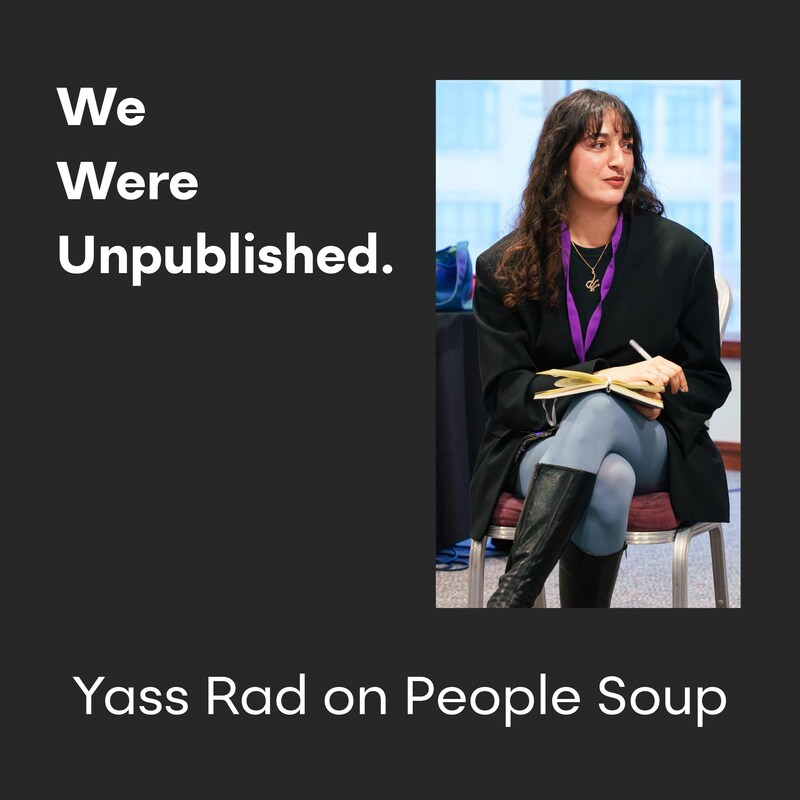
This episode, is the second part of my conversation with Yass Rad. Yass is the founder of We Were Unpublished, a part-time consultant at Affinity Health at Work, and a PhD student researching perfectionism in the workplace and ACT interventions for well-being at City St. George's University of London. We discuss Yass’ systematic review of workplace acceptance and commitment therapy (ACT) and how interventions change psychological flexibility subprocesses. Yass also introduces her new platform, We Were Unpublished, a website for practitioners and students to share unpublished applied psychology research via short, accessible submissions and a supportive community.
For those of you who are new to People Soup - welcome - it's great to have you here - I aim to provide you with ingredients for a better work life from behavioural science and beyond. For those of you who are regular P Soupers - thanks for tuning in - we love it that you're part of our community.
- Connect with Yass on linkedIn
- We Were Unpublished.
- Yass Rad - Art, research and more
- Leading with purpose with Ross McIntosh - Contextual Consulting
There is a transcript for each episode. There is a caveat - this transcript is largely generated by Artificial Intelligence, I have corrected many errors but I won't have captured them all! You can also find the shownotes by clicking on notes then keep scrolling for all the useful links.
Here's the People Soup Website.
And you can subscribe to the People Soup YouTube Channel here.
Visit Ross' Website.
Connect with Ross on LinkedIn
People Soup on Instagram which also features plenty of Ross' photos of the Andalusian life.
Transcripts
Part 2
[:Yass: And there doesn't really seem to be anywhere for people to, to put it and have an easier submissions process than a traditional academic journal. And then the second point to that is that. I love organizational psychology and applied psychology in general. I feel like we have so many great insights, and I dunno if you found this Ross, but anytime you mention it to someone who doesn't know anything about org psych, maybe you talk a bit about your work.
Everyone's so interested because they can see the impact for their own lives 'cause in the, in their own company or where they work or their team, or even in their family, it might not always be in the workplace, but they can see it in their own applied context.
tionism in the workplace and [:Our mission is to give you the ingredients for a better work life through insights and stories grounded in behavioral [00:02:00] science, especially acceptance and commitment therapy, and other evidence-based approaches.
before we go on, let's take a quick scoot over to the news desk. Reviews are in for our last episode, which was part one of my chat with Yas called Balancing Art and Science, the Jewel Passions of Yas Rad. Over on LinkedIn. Amanda super said this is a great episode of the Brilliant People Soup Podcast, highly recommended.
Thank you, Ross and Yaz for accompanying me on my dog walk through the woods this afternoon. I really enjoyed listening to you both. Well, thank you, Amanda, for sharing your reflections, and I really do love to get your reviews, so please do post them on the socials or contact me directly so it's time to get a brew on and have a listen to part two of my chat with Yaz Riot.
on the first paper from your [:Yass: Oh my gosh.
Ross: Let's talk about the paper first and maybe just, I'll start off by just talking about the title. So the bit I wanted to highlight on the title is Psychological Flexibility Subprocesses. So for those of you who are more familiar with act, act is made up of six subprocesses and Paul and Yaz are getting really curious about which of these subprocesses have the most impact for, for people in the workplace. So I wonder if I could start just by telling us a bit about this systematic review.
Yaz.
t PhD study. So for me, what [:So that's kind of more well known. but I typically in general always have an interest in sort of looking under the lid of, especially big processes like psychological flexibility or let's say mindfulness or whatever it may be, even perfectionism. There're any multidimensional. Area that has loads of different sub areas, would that make it up like psychological flexibility? I'm always wanting to know about each one. I don't want, I don't, for me it's not enough to look at it overall. and so, doing some, some digging, I saw that a lot of the, [00:05:00] and and, and through sort of conversations with some of my amazing sort of co-authors, obviously my supervisor Paul, but you know Ariana Prezi as well.
There's so many different co-authors that we had loads of conversations and realized that there was some sort of, the reviews that had been done would often, and for good reason, look at psychological flexibility overall and how act training through psychological flexibility would lead to the benefit on these outcomes that they're interested in.
So with that, what we couldn't see was how and what parts of psych flex were being changed through these interventions. And what was more discouraging and slightly alarming was that sometimes these studies couldn't see that act was changing, psychological flexibility. So sometimes they would see that and sometimes they would see the change on the outcomes, but not through psych flex.
ne has kind of looked at the [:And so they bring in the measures and measure as a whole rather than each set subsection. 'cause that's the data. That they can get and to get enough power to make that makes sense. That's what they do. so through that process, you lose all the granular detail. So you can't see if, for example, an act intervention means that people experience higher levels of acceptance afterwards, but not high levels of present moment awareness.
And that detail you can't see, but you can see that psych flex may or may not have changed, you know? But if one thing goes up and one thing goes down, it might not, nothing's changed, but actually one thing's gone up and one thing's gone down.
Ross: This is a [:Yass: Oh, yeah. these are the bits that I really love about research. So, psych flex being multidimensional and perfectionism being multidimensional constructs means that I have all endless fun trying to turn to dig underneath all these, uh, bigger concepts.
Ross: So tell us what a systematic review is. Just in brief, give us the headlines.
Yass: So a systematic review. It can also end up in a meta-analysis, which would do some of the more data crunching, such as pooling some things and finding bigger effects, which are really helpful for some areas of research. But a systematic review essentially will look at all the studies that are relevant to the research question you have, and do a search for those studies and pull together all the different findings to sort of get a overarching conclusion almost about what's, what's been said and done.
for that reason. They really [:So has, has that been a good explanation of a systematic review?
Ross: I love it. And you're right, it is like the, the golden ticket
and you are the author.
Yass: Oh, yeah, yeah. Now I get to be, be one of the, the, the people that helps create one.
Hmm. Great fun. I.
Ross: Now I wonder, if you could just give us the, maybe two or three headlines of, of what you've found from the systematic review.
e measured them individually [:Obviously
we found 30 studies and we chose to include not just randomized and controlled trials, we also included the non-randomized non-control trials because I think it's really important, especially in the work setting, to not just focus on sort of what people consider a gold standard of research. I think any even sort of.
reviews before, that kind of [:It's a, you know, when you look at the subprocess level, it's a, it's a bit more of a positive picture, which is that, especially for certain subprocesses, so diffusion and contact with the present moment, there's a much more consistent. Finding an evidence base to say that act interventions do create change in those processes and therefore outcomes as well.
So I'd say that was the sort of core finding is that it's slightly more, consistent when you look under the lid.
it says on the tin. Now, for [:We were unpublished.
Yass: Lovely.
Insert audio here about new private pod
Yass: Go for it.
Just before we move on, that fledgling private podcast I mentioned is called People Soup Practitioners, and there'll be more news on this very soon, Back to the chat.
Ross: So yes, I'd like to explore your other project or one of your other projects. We were unpublished.
Yass: please.
Ross: I just ask, start by, tell me about the rationale and motivation for creating it.
ouple years and through that [:2120 or either in COVID, I forget those years. They've all blended into one. So during COVID I finished my masters and since then I've been lucky enough to work in the field with various. Not only consultants, but practitioners, you know, talking to people like you, Ross and, and the team at Citi. And been exposed to a great, great network in, in the, in the field.
was I only hearing about it [:And also at a conference, it's so hard to go to all the talks 'cause there's four, like, you know, often multiple at a time. And I, you know, you, you miss, you miss out on the, on
the different knowledge. Anyway. So I think it stemmed from, from just knowing there's more to learn that than just what I read. Also I've, you know, I've done that systematic review.
I've done a few reviews through work, you know, through my work as well. So reviewing is quite a, a frequent task of mine that I, I enjoy. and knowing that I'm not reviewing everything because I can't, I don't see everything, 'cause some stuff isn't in the areas I'm reviewing. So it stemmed from that knowing that there's stuff I can't access and would love to learn.
me you mention it to someone [:Everyone's so interested because they can see the impact for their own lives 'cause in the, in their own company or where they work or their team, or even in their family, it might not always be in the workplace, but they can see it in their own applied context. So knowing that people are so interested in what we do yet, we don't always get our words out there to the, to the non, the non-community, let's say the, the, the general public.
If I can create a platform which enables work to be seen outside our field too, 'cause it's accessible to read and and engaging, then I, I would like to bring our work outwards more.
Ross: And it speaks to you that you notice this problem, you are frustrated by it and you've done something about it.
Yass: Let's say it leaked out of the box that I tried to put in.
Ross: Yes. I love this. I love this theme of leaking. Yeah.
Yass: I dunno if that's the nice image, but
orld of academic publishing. [:Yass: yeah. Lots, lots of PhD students.
Ross: and it's high quality, rigorous research can gather dust on a shelf.
Yass: Mm-hmm.
Ross: Rather than being scrutinized and appreciated by people who might not be able to find it.
Yass: Yes. And, and I think that, you know, I also am a big, maybe this is from the sort of more creative side of me, but even if you read something you don't agree with, or let's say you don't think it's been done right for whatever reason, 'cause you can have that with academic research published in journals, you can read it and think, that wasn't done how I would've done it, or, you know, I think that is also a super helpful feeling to have because it then you think, how would I do it?
me ammunition to do the next [:And you know, I'm sure they are evolving as well over time, but it kind of feels like. Yes. And how about the rest of it? the rest of the work that would never really enter that because it's not that type of work or people don't have the time to dedicate to publication processes?
Ross: That time point or people are bamboozled by the, the process or
Yass: Yeah,
Ross: fearful of it.
Yass: well, you know, it's almost a full-time job, especially if you are, if you're doing multiple, if you're trying to, let's say you have multiple pieces of research trying to get published, it could take a lot of time. And also time elapsed between when you start the process to when it actually sees or hits the page, let's say.
something like that from the [:which is actually quite rapid, but that's still six months. We had done the research, it was done. and I like the idea of.
Creating a, a sort of quicker access point where, you know, you could submit it and have it on the website in a month, and then you can share it with a client in a month and you know, or whatever it is. I like that.
ology perspective, but now I [:Yass: Yeah. And I hope, I hope, that increases and continues. And I guess in a way, this feels like my contribution to create, helping create some of that noise, because I do think, I think we've got got some great things to shout about that could help ultimately help lots of people
Ross: Yeah, and
from a practitioner perspective, it could help us find out what people used with different populations,
give insights into the context of a population. Like I'd love to look at studies around that were unpublished around. So for instance, some of the populations I work with are ballet dancers, engineers in high performance environments, people in banking.
What's that context like for them? What did you do
and What were the impact? I think that's invaluable for practitioners. Yeah. What worked.
city and seeing what changes [:Ross: And listeners, just to let you know that I was fortunate enough to be on a panel which Yaz was hosting at the British Psychological Society Conference for the Division of Occupational Psychology. See, even that's all a mouthful,
Yass: Yeah, it's a long.
Ross: And
them about it and they were [:Yes.
Yass: That's very exciting to hear because that's really the hope. I was always, you know, if no one finds it helpful, I won't carry on. I don't need to. It's only for helping people really.
Ross: So, so tell me more. So if I'm a practitioner in time, will I be able to come and search on, uh, what will it be? Like a database or so.
Yass: Yeah. It's essentially a website. and we've got a submission about to come out, you know, 'cause I've been, I've been Guinea pig in the process. It's still really early days. So if you're a practitioner, firstly, please submit any work and findings that you have so we can share them with others.
I guess on the website, then [:You could share it. 'cause you know, one thing that's as one of my personal values being beauty. It's important to me for things to look and feel engaging and especially for an external, non-academic audience. Hopefully the links to the site, to certain studies that you found interesting or inspiring or angering even will be something that you can share with a client and, share with a colleague or a friend and they could also read it and, and digest it in their way.
And it feels like something that you can share and, and help each other learn more
Ross: Mm.
Yass: things.
Ross: And say, I've got, my master's dissertation is like, it's over 10 years old now.
But it was looking at the experience of,
Yass: Get it out, that dust it off that shelf.
Ross: the experience of organizational politics through the lens of act.
Yass: Mm. Oh, I wanna read that. I.
d I just submit it as it is? [:Yass: So on the website now, we've got a submissions link. So you can go on it and it will show you almost like chunks of where to put it. So it would typically be you summarizing it. sometimes, I know some master's courses or courses in general will make you also write like a narrative summary, like a blog post version of your dissertation or, or your study.
Um, so it'd be more aligned to that type of work. And you'll see in the form, uh, the ideal is that in total it won't be more than two pages. Uh, so the word counts for each chunk is quite small. So yeah, you could maybe have your study up that you did and then have the form up and kind of summarize and, and also you have creative freedom to make the wording more engaging.
non-scientific community. So [:And so, in which case, you're very welcome to email me and we can, if you, if your, if your piece of work doesn't fit into that con sort of constraints which we have to have had, then I'm would happily sort of have a more one-to-one discussion to figure out how we can make it work. 'cause um, ultimately there is that freedom and, and that's important to me to have.
So yeah, the website's got that submission form, it's got some sort of criteria and guidance is the kind of thing that we're looking for. And, um, yeah, there's also some reader ethos if you're reading how, how to view things. 'cause there is a, Review process, but it's a friendly one, so not a rigorous scientific review.
So readers also need to exercise their autonomy and, and, and, and caution when reading as you should with everything you read these days.
Ross: Lovely, that's really [:could doss that
off and, and, and work out how to share that. So watch this
Space
yas. I will, go to we were unpublished.com
and
Yass: become published because we were, we were as past, you're all published if you come to me.
Ross: Yes
now. Yes, there's a community aspect to this too. Tell us about that.
Yass: So this is what I'm. Also really passionate about as a sort of second point, but it's, it's a space. And another thing I observed was that a lot of us doing this work or practitioners, we often, you know, maybe work more flexibly or, or are doing this work and writing this stuff up in our spare time or in sort of non-standard working hours.
o the community. I wanted to [:Kind of like a book club, but not a book club. 'cause it's not about books. Maybe you meet up and you work together virtually just to have someone to work with on a Saturday morning or, or early morning or evening. And you can all kind of, I guess share knowledge, share thoughts, share ideas, get inspired, and, um.
Come together really, and hopefully as part of that I'll have things like events, but it's just to watch the space that you can register your interest on the website and as soon as I release or open up the membership to that, that will come out. Because where the research aspect and the submissions and the publishing of those is always free of charge this community be like a sort of small membership community and um, in a way will help sort of fund the, the, the platform, but also create value in a different way.
we were unpublished.com. So [:Yass: I would sit with the thing I I've been telling myself, which is being comfortable being your sort of holistic, authentic self and working in that way and unapologetic about doing so in your work.
Ross: Beautiful. Thank you. Thank you ya. And thank you so much for joining me. I feel like we've covered so much. Really grateful for your work out there in the world and for being your own authentic, beautiful, weird, funny disco dancing self.
Yass: Well, thank you Ross. Thank you for having me and thank you for facilitating this conversation and doing so, so amazingly. You are a star.
Ross: Oh, bless you. Right back at you.
That's it. Peace Supers the [:You'll find the show notes for this episode at People Soup Captivate fm or wherever you get your podcasts.
Now, more than ever, you can help me reach more people with the special people soup ingredients, stuff that could be really useful for them. so. Please, if you found this episode useful, do share it with people you know, and also if you subscribe and drop us a review, it helps us get recognized in the charts.
Thanks to Andy Glen for his spoon magic and Alex Engelberg for his vocals. But most of all, dear listener, thanks to you, Look after yourselves. Peace Soopers and buy for now.
Ross: you'd used it so I, I felt comfortable using it, but I think it's a lovely word.
Yass: I love that word personally. Is it offensive that
I
use that word?
Ross: no, no. I, I think if I call someone weird, it's a term of endearment to be honest.
o I'm okay with that. I love [:


