Shownotes
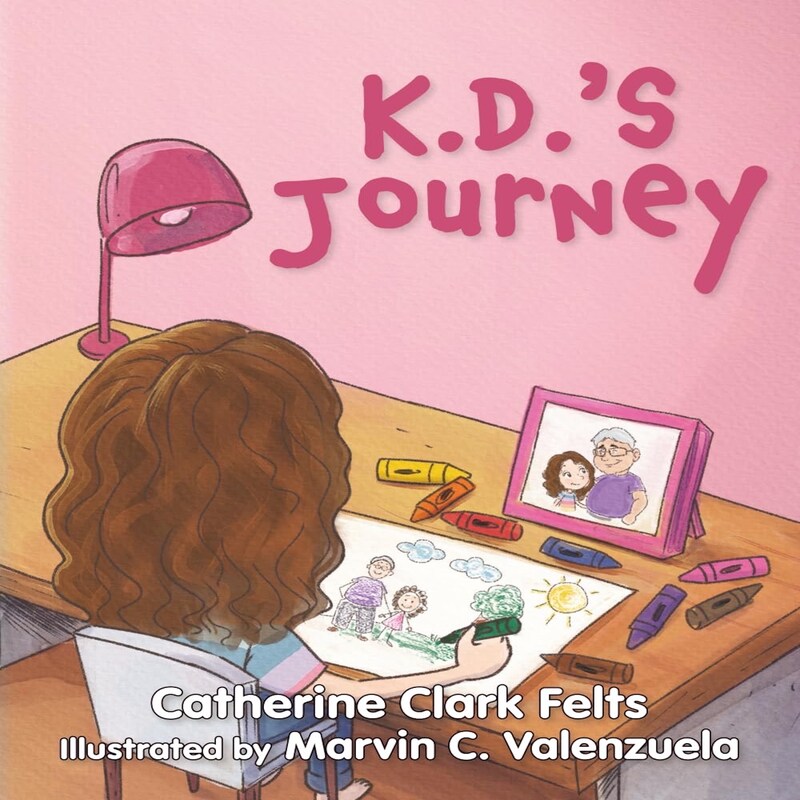
Catherine Clark Felts, an accomplished author of children's literature, imparts her profound insights on the essence of being a children's book author, emphasizing the significant impact of her narrative, *K.D.'s Journey*.
This episode delves into the evolution of her creative process, illustrating how her personal experiences, notably her familial connections, have shaped her storytelling.
Catherine candidly discusses the emotional layers embedded within her works, particularly with themes of grief and healing, underscoring her desire to foster connections between children and their caregivers.
As we navigate the intricacies of her writing journey, we are invited to consider the broader implications of literature in addressing complex emotions faced by young readers.
Join us as we explore Catherine's unique perspective on the transformative power of children's books.
She discusses her path from being a novice writer to the release of her third book, "K.D.'s Journey," which is imbued with personal significance due to its connections to her family's history and experiences with loss.
The dialogue explores how her role as a mother has shaped her understanding of storytelling and her commitment to creating literature that addresses complex emotional themes in an accessible manner for children.
The conversation also touches upon the technical aspects of her publishing journey, including her collaboration with Inner Peace Press, which has been instrumental in bringing her visions to fruition.
Catherine's approach to character development and the thematic elements within her books highlight her dedication to providing children with relatable characters and narratives that foster resilience and emotional intelligence.
This episode ultimately underscores the vital role of children's literature in nurturing empathy and understanding in young readers.
Takeaways:
- Catherine Clark Felts articulates the profound joy of connecting with children through her literary works, emphasizing the importance of storytelling in navigating complex emotions.
- The evolution of Catherine's perspective on being a children's book author reflects her personal experiences, particularly the influence of familial loss on her recent publication.
- Catherine underscores the significance of community engagement as a children's book author, advocating for relationships with educators and mental health professionals to enhance her impact.
- The process of character development in Catherine's narratives showcases her innovative approach, utilizing inanimate objects to engage children in emotional and imaginative exploration.
Companies mentioned in this episode:
- Inner Peace Press
- Amazon
- IngramSpark
- Ella's Way
- Texas Roadhouse
- Uno Pizza
Links Mentioned in this Episode:
- K.D.'s Journey Book Amazon
- catherineclarkfelts.com
- Ella's Way
- www.scribophile.com
- BlueSkySocial
Mentioned in this episode:
From Idea to Bookshelf
From Idea to Bookshelf
Transcripts
Katherine Clark Phelps, author of Jude's Best Worst Day Ever and most recently, Katie's Journey.
Speaker B:Thanks, Katherine, for appearing on the Adventures in the Heart of Children's Book Authors podcast.
Speaker B:Katherine has mentioned she's written several children's books and today we're going to focus on her book, KD's Journey, and I look forward to our conversation.
Speaker B:Katherine, before we jump in and get into the details of your book, can you tell us what being a children's book author means to you?
Speaker A:Absolutely.
Speaker A:Happy to do.
Speaker A:And also, just really quickly, thank you for having me as a guest on your podcast.
Speaker A:I'm super excited to be here.
Speaker A:So what does it mean to be a children's book author?
Speaker A:As I'm sure many authors feels like the best feeling in the world and it means the world to me.
Speaker A:I'm grateful for the opportunity to connect with children, to connect with families.
Speaker A:I'm grateful for the opportunity to show my children that you can achieve your dreams, you can achieve your goals, and I'm grateful for the opportunity to have a positive impact on other people's lives.
Speaker A:So it really does mean the world.
Speaker B:To me because you have three titles.
Speaker B:I'm curious, has it changed a little bit from your first book to your second book in terms of of the meaning of being a children's book author?
Speaker A:I think so.
Speaker A:There was a significant amount of excitement and thrill with the first release.
Speaker A:It's the first children's book.
Speaker A:I remember doing the launch at a local coffee shop and having my friends and even people that I had just met at the playground or at the library had attended the launch.
Speaker A:And that unreal feeling of I created something and people are handing me funds to buy what I created.
Speaker A:It was such a crazy feeling.
Speaker A:And then also being able to know that the children reading this book, June's Best Worst Day Ever, they hopefully will get some healing.
Speaker A:They'll be able to navigate through some potentially tough emotions.
Speaker A:And part of that is because they have this book.
Speaker A:So it was such a crazy feeling.
Speaker B:And how has that changed now to launching Katie's Journey?
Speaker A:I think with Launching Katie's Journey, this book, it has a very personal side to it.
Speaker A:I wrote it partially in regards to my father in law passing away.
Speaker A:So there was a little bit more of a personal connection with this book.
Speaker A:It's still excitement, still hoping that it'll be able to help children navigate some of those tough emotions.
Speaker A:But I think that it means more to me just because of the connection to my family.
Speaker A:And even the main character's name, Katie is a take on Kate or Katie as a name, which is very personal to me.
Speaker B:Fantastic.
Speaker B:And you've explained a little bit about the inspiration behind the book with the passing of your father in law.
Speaker B:In reading the book, I know there was a special relationship between I think the main character's name is Kira.
Speaker A:So Kira is the little girl in the book and then her drawing is really taking a lot of the focus or what I would consider is the main character and Kira's drawing, or Katie for short.
Speaker A:And Katie is.
Speaker A:It's an abstract a little bit because the main character is a drawing.
Speaker B:I'm curious, did your, you said you had two daughters and so did they have a relationship with your father in law before he passed away?
Speaker A:My eldest daughter was she had just turned two years old when my father in law passed and my youngest daughter was about a month and a half.
Speaker A:So unfortunately they're not going to have a lot of memories of their pa, their grandpapa.
Speaker A:But I'm hoping that they'll eventually read the book that I wrote and we can pull out pictures and we can bring up stories of their own grandpapa and how he did have a big barrel laugh and how he was a big teddy bear and hopefully bridge that gap that exists, unfortunately.
Speaker B:And I love the story.
Speaker B:And I had said to Catherine through an email, but I had mentioned that my oldest granddaughter, who's the oldest of five grandchildren that we have, she and I have a special relationship and she actually co authored two of our children's books with me and I've had the great fortune to grow.
Speaker B:Either I've grown up with her or she's grown up with me.
Speaker B:I'm not sure which is which.
Speaker B:But it's been a lot of fun.
Speaker B:And so with her name being Kira, it just resonates with me a bit more because of that.
Speaker B:So that's why I was curious.
Speaker B:Katherine, with you having three titles, I always like to talk to children's book authors about their children's book business.
Speaker B:So can you tell me, as a children's book author of three books, what does your children's book business look like?
Speaker A:I was very fortunate and blessed to get connected with a publisher out of Wisconsin, Inner Peace Press, for all three of my books.
Speaker A:There is a woman by the name of Heather.
Speaker A:I can't be grateful or thankful enough that she and I share a common vision and goal and she supports me as an author and has published all three of my books.
Speaker A:A fourth one is on its way, Rocky to the rescue.
Speaker A:But in regards to the business model, a lot of the marketing, A lot of the events are me.
Speaker A:I have to go out there and search for opportunities.
Speaker A:I don't do any of the printing, I don't do any of the publishing.
Speaker A:That's all done by Inner Peace Press.
Speaker A:But in regards to trying to market and sell, a lot of that is on me.
Speaker A:I try and connect with the local library.
Speaker A:I try and find opportunities to connect maybe with like mental health professionals.
Speaker A:Because a lot of my books I think would be really helpful for counselors or mental health professionals.
Speaker A:And I'm attempting to connect with schools as well.
Speaker A:Schools, counselors and teachers and such.
Speaker A:Because that's the goal.
Speaker A:That's the journey I'm currently working towards.
Speaker B:I looked at your book format, I noticed on Amazon and you have paperback but no hardcover and no ebook version.
Speaker B:I'm curious about the strategy behind that.
Speaker A:I did attempt to get a hard back version of my books through my publisher.
Speaker A:Unfortunately, she has to get the original illustrator to redo some of the work for the COVID because I guess it's different formatting for a hard time cover.
Speaker A:But unfortunately it's just.
Speaker A:It's not there yet, but it's in the works.
Speaker A:It's supposed to be coming at some point.
Speaker A:There are certain libraries that require hardcover copies, which is why I had to go that route.
Speaker B:I know you said you're working on formatting the hardcover and the ebook or are you working on the ebook?
Speaker A:My publisher has created Ezine electronic copies.
Speaker B:Okay.
Speaker A:But they're not for sale.
Speaker A:They're more for teasers or for providing copies to like yourself, Rick, so that you can review it.
Speaker A:But it's not available for sale.
Speaker A:I don't know if that's something that my publisher is going to do, but I know Heather is trying to work on getting the hard copies at this point.
Speaker B:No problem.
Speaker B:And the only reason I bring this up is because we have a variety of published children's book authors that come on the show.
Speaker B:Some are independently published, which means that you're the publisher as the children's book author or an independently published book authors.
Speaker B:And then there's people like yourself that use a self published hybrid model.
Speaker B:And then there's of course the traditional publishing authors where they get a publisher and they do all the work and they mostly keep everything.
Speaker B:One lesson that we learned, and I guess we got lucky, is our book formatter on episode 29, Con Layon.
Speaker B:And he's a book formatter.
Speaker B:And we were lucky because he knew how to book format paperback, hardcover and ebook.
Speaker B:And when we started out, we the Hardcover was going to be more money because to your point, the book formatting was different, but the similarities between the print and the ebook were so similar that we did both of those exactly at the same time.
Speaker B:So when we launched on Amazon, like yourself, we launched with a paperback and an ebook.
Speaker B:The reason I bring this up, anyone listening, is that if you can, even with Katherine, if when you're working with a hybrid or self publisher, talk to them and see if they can find you someone that's familiar with all three formats.
Speaker B:Even if you only do two out of the three in the beginning, at least get you that start and just gives you more options on products you have to offer.
Speaker B:Are you also selling your paperback through ingramsparks?
Speaker A:I believe so, yeah.
Speaker A:It's ingramsparks.
Speaker A:It's available through Amazon and preferably through either my website or innerkeep Peace Press's.
Speaker B:Website because a lot of people use ingramsparks to reach all other online book retailers like Barnes and Nobles and people like that.
Speaker A:So myself and Heather at Inner Peace Press, we have the greatest roi when you purchase through our website or through my website or Inner Peace Press website.
Speaker A:If you purchase through Amazon or Ingram, they take a larger amount.
Speaker B:I'm glad were talking about publishing because you use Inner Peace Press and you found them through.
Speaker B:How did you meet Heather?
Speaker A:It's actually crazy.
Speaker A:It's an interesting little story.
Speaker A:When I first started this journey of trying to become a children's book author and trying to get published, I tried to find an agent, I tried to find a publisher, I looked at hybrid publishing options, I looked at self publishing routes and I figured if I just start putting feelers out trying to connect with people, if nothing else, get information so that I can learn a little bit more, it would be helpful.
Speaker A:So I went on to a search engine, web search engine and started looking for publishers and Inner Peace Press showed up.
Speaker A:And it wasn't a traditional.
Speaker A:Like what?
Speaker A:Hybrid.
Speaker A:It wasn't a hybrid publisher.
Speaker A:It's just a small, relatively new publishing house and it's run by Heather Felty.
Speaker A:So I sent a request to meet and we got onto a Zoom call and she told me a little bit about her publishing firm and the history that she has.
Speaker A:And she'd never really done children's books before.
Speaker A:She typically done memoirs and books on various different self help type of books.
Speaker A:And she said that she wanted to take a chance on me and another children's book author that had reached out that week.
Speaker A:And so here I am.
Speaker A:She really liked the message that I had.
Speaker A:She really liked the goal and the vision that I have of positively impacting children and families.
Speaker A:And it just aligned perfectly with inner peace pressure.
Speaker B:When it came to publishing your first children's book, what was the biggest challenge or frustration that you had even though you had found Inner Peace Press?
Speaker B:Tell us about the biggest challenge or frustration that you had when you first started to publish.
Speaker A:It's a silly story.
Speaker A:But since Heather had never published children's books before, she was learning along the way with me.
Speaker A:And one of the exercises that she asked me to complete was to rewrite, write my book and make it so that it was within a certain rating or range of for children's books to be read by children.
Speaker A:Like out loud by children.
Speaker A:I forget exactly what the rating system is, but there is a rating system that basically says in order for this book to be reading level one, it needs to have these criteria now.
Speaker A:And it was almost heart wrenching because I had to take my book apart and rewrite it.
Speaker A:Yeah, in a way that really wasn't my goal.
Speaker A:This book is really meant for an adult to read it to a child, not necessarily a child read it by themselves.
Speaker A:And that was probably the most frustrating part because it was a good exercise.
Speaker A:It taught me what I didn't want, it taught me what I didn't like.
Speaker A:But I remember rewriting it and going, I hate so much this is not my book anymore.
Speaker A:And luckily she agreed it wasn't really what she wanted either.
Speaker A:So it was a good exercise for both of us, but it was very frustrating.
Speaker B:Just out of curiosity, how old are your daughters now?
Speaker A:5 and 3.
Speaker B:The only reason I ask you is because I had mentioned that I co authored with my oldest granddaughter on our first book which is called the Adventures of Caboose the Rocky Mountain Bear.
Speaker B:All about a bear.
Speaker B:And Caboose starts with a K and I always tell the story.
Speaker B:The K actually stands for Kira and that's why Caboose has got a K and her and I wrote it together.
Speaker B:She certainly made sure that the language we used was age appropriate.
Speaker B:So that was good.
Speaker B:And our second book I wrote with her and my middle granddaughter Bailey called Hijinks from the Big Head Folk Music Festival.
Speaker B:It was the using that them reading the book to be the asset test for the readability for children.
Speaker B:So it worked out great.
Speaker B:I only suggest that with you moving forward, especially with your 5 year old, there's a good chance that she could be invaluable as your editor.
Speaker A:Yes, absolutely.
Speaker A:Absolutely.
Speaker A:Especially I think as my girls are getting older, I might be Trying to change the types of books that I'll be writing because I do have quite a few ideas.
Speaker A:I actually have a number of books already written.
Speaker A:Just working through the process of editing and critiquing and working with the illustrator to get those published in the future.
Speaker A:But I recently came up with an idea that lends itself more to maybe a chapter book.
Speaker A:So hopefully I'll get the children's picture books.
Speaker A:And then as my fingers crossed, fans grow up, I have older age range book options for them to continue on reading with me as a favorite author.
Speaker B:And that's a good point.
Speaker B:Very fortunate because we have written 38 stories in our book series, Adventures of Caboose, the Rocky Mountain Bear, and they've all been written with all five of my grandchildren.
Speaker B:So it's nice because I got their young voices and we recorded about half of the stories.
Speaker B:So I've got their young voices before.
Speaker B:As you said, they get older and then you lose that resource.
Speaker B:So good for you.
Speaker B:I want to talk to you about the illustration process because especially when it comes to whether you want to call it self published or hybrid published, when you use a separate publishing company, a lot of times they're the ones that give you a selection of illustrators to choose from, but you make the final decision.
Speaker B:So talk to us about the illustrator or illustrators and about that journey.
Speaker A:Yeah, absolutely.
Speaker A:Inner Peace Press so far has pretty much stuck with a single illustrator.
Speaker A:He does fantastic work.
Speaker A:His name is Marvin.
Speaker A:And I've never actually connected with him directly.
Speaker A:I've always connected with him through Heather over at Interpeace Press.
Speaker A:But he does phenomenal work.
Speaker A:He has different styles that he can offer.
Speaker A:So I didn't really get to pick and choose from illustrators, but I did get to pick and choose from different styles that he could provide for the different books that I have.
Speaker A:Which is fantastic because in Jude's Best Worst Day Ever, it's much more realistic illustrations.
Speaker A:Whereas Tina in the Mysterious Case of Danzitis is a little more whimsical, a little more comical.
Speaker A:So the style has changed for each of the different books, even though it's the same illustrator.
Speaker A:And he's really phenomenal at what he does.
Speaker A:And since we've used him consistently, he's starting to get a feel for what I like, what I don't like.
Speaker A:I can write notes and provide what he needs so he can do the illustrations faster than when we first began.
Speaker A:So that relationship has been fantastic to grow between the two of us through Heather, through Inner Peace Press, as he continues to provide phenomenal work for the books that I've gotten that's published.
Speaker B:I've talked to several children's book authors who have.
Speaker B:Like, in our case, we've written a book series, and we want the feel and the look to be very similar in every single book.
Speaker B:Versus, like you said, when you write three different types of stories, you were looking for the illustrator to change it up a bit in most cases, what I found, and actually you're the first one to say, almost everyone except for you has said to me, oh, I had to go out and find a different illustrator.
Speaker B:Because I always ask, why did you change illustrators?
Speaker B:Sometimes it's because the illustrator disappeared and they couldn't find them again, and sometimes it was because they weren't prepared to change their style.
Speaker B:The illustrator had one type of style and they weren't prepared to change that.
Speaker B:It's neat that you found someone that has that diversity to change up the illustrating style, because that's.
Speaker B:That's a very difficult thing to do.
Speaker B:I've even talked to children's book authors who are actually their illustrator, and they said the most difficult thing they have to do as their own illustrator is to keep continuity of their characters and the illustrations as they illustrate the book.
Speaker B:So that's fantastic.
Speaker A:I think I was just listening to one of your podcasts with another author who's an author illustrator, and you guys did a great job of discussing that particular challenge and struggle.
Speaker A:So that was a good one.
Speaker B:Thank you.
Speaker B:I appreciate that with the illustrator.
Speaker B:Now that you've mentioned you're going to be launching, you said Rocky?
Speaker A:Yeah, Rocky to the Rescue.
Speaker A:I'm not entirely fully sold on the title yet.
Speaker A:It's Rocky to the Rescue.
Speaker A:It's basically about a character named Rocky Knickerbocker.
Speaker B:I love Rocky because my dad had a nickname for me.
Speaker B:He used to always call me Rocky.
Speaker A:Those connections.
Speaker A:Those little connections.
Speaker A:Exactly.
Speaker B:So I want to jump into your website development for a moment, and you have a great website.
Speaker B:I have it actually up on my iPad here.
Speaker B:And can you explain to us your whole development of your website?
Speaker A:Yeah.
Speaker A:So I actually have a little bit of a technical background.
Speaker A:Before I took this journey to be a children's book author, I was a technical director for Engineering's software technical support team, and I had a kind of techy background.
Speaker A:So when Heather over at Inner Peace Press said that either she could develop the website or she could give me access to WordPress and I could figure it out on my own, I said, I like a challenge.
Speaker A:So I went ahead and built the website.
Speaker A:I looked at tutorials and basically beat my head against the wall a couple of times.
Speaker A:But I was able to create what I think is a pretty efficient, functional, decent looking website.
Speaker B:Absolutely.
Speaker B:Your website and the launch of your first book were done in conjunction with each other?
Speaker A:Yes.
Speaker A: k was released in November of: Speaker A:So I wanted to have it up and functional so that once the first book was published, people could find my website and purchase the book from there and also be able to navigate there to find out where am I going to be, are there going to be any events that I'll be attending and just get some information out.
Speaker A:I was encouraged to blog.
Speaker A:I'm not great at blogging, but I'm attempting to do that a little bit more frequently than I have in the past.
Speaker A:But it just doesn't come naturally to me I think, which is strange.
Speaker A:Being a writer, it is interesting.
Speaker B:But I found the same thing.
Speaker B:First of all, we didn't launch our website until after we launched our first book.
Speaker B:And I didn't even realize because being an independent children's book author, I just thought, you know what, I'll come up with the link to Amazon and that's good enough.
Speaker B:That wasn't the case.
Speaker B:The positive thing, because we have a book series, we were able to take some of the artwork and incorporate it into our website.
Speaker B:The website looks like I want it to look in terms of how it supports the book series.
Speaker B:We were fortunate that way.
Speaker B:But at the end of the day you definitely need a home for your books and especially when it's get when you start growing like yourself and getting into multiple titles.
Speaker A:I will say when it comes to the websites, something that I think is really important is keeping it current, keeping it updated.
Speaker A:I've gone to other authors websites and there's no recent events, there's no new updates, there's very little information that shows that it's an active updated platform.
Speaker A:Right.
Speaker A:So I think if you are going to have a website, it's important that you put pictures, you put blobs of information.
Speaker A:You could do a blog, you could do a hey, here's where I'm going to be, here's where I was.
Speaker A:Thank you so much so and so for having me.
Speaker A:Blah blah, blah, blah blah.
Speaker A:Otherwise it's not as effective.
Speaker B:I couldn't agree with you more.
Speaker B:And that's why?
Speaker B:One of the reasons I started blogging and.
Speaker B:And then I gravitated to podcasting and sometimes I know I confuse our audience a little because was it the chicken or the egg?
Speaker B:In our case, it was our children's website that came first.
Speaker B:And then about a year later we came up with the idea of what do we do in terms of marketing and how do we reach out to other children's book authors and support each other.
Speaker B:And that's how the podcast started and the economics of it too.
Speaker B:We incorporated the podcast right into our Caboose website.
Speaker B:The Adventures in the Heart of Children's Book Authors.
Speaker B:It's not the same as the book series, but it supports each other and that's how we came about doing that.
Speaker B:To your point, we put a new podcast episode out every week.
Speaker B:Keeps it fresh all the time.
Speaker B:If you're going to support your website with a blog, I think the minimum should be once a month.
Speaker B:That's my personal opinion, to keep it fresh.
Speaker B:Unless you're doing lots of events and you're able to do as you've said, Katherine, get those pictures up and posted.
Speaker B:And your event site is very active.
Speaker A:Yeah, my publisher has recommended that myself and all the other authors that she works with that we have a goal of at least one to two events each month, minimum.
Speaker A:And I do strive to try and locate opportunities and put myself out there, share and connect.
Speaker A:And I'm very fortunate to also be a collaborative author with a non profit called Ella's Way, which gives me opportunities to fundraise for Ella's Way and have events associated with supporting Ella's Way.
Speaker A:That's one way that I have events.
Speaker B:Because that was going to be my.
Speaker B:Not my next question, the question after that.
Speaker B:So I folks, just so you know, I'm going to jump back to Alan's Way because I want to delve deeper into that with Katherine.
Speaker B:But the first thing I want to talk to you about a bit more, Katherine, is your social media.
Speaker B:You have your website.
Speaker B:I noticed that you're active on Facebook, Instagram and LinkedIn.
Speaker B:And I find that most children's book authors, when I talk to them about LinkedIn, they looked at, they look at me sideways, they think, why in the heck would I ever be on LinkedIn?
Speaker B:It's a business site, it promotes businesses.
Speaker B:Why is a children's book author would I be there?
Speaker B:And I don't want to put words in your vow, so tell us your relationship by using Facebook, Instagram and LinkedIn and then if you don't mind, I'LL share a little more my thoughts on LinkedIn, but I'll do that after you've given us your feelings on all three of those social media platforms.
Speaker A:Being 42 social media, it does not come naturally to me very well.
Speaker A:Didn't necessarily grow up with it.
Speaker A:However, I do think that it's necessary.
Speaker A:It's a great opportunity to connect, to catalog, to market yourself, to market the products that you've created.
Speaker A:I think it's a great place to attract younger audiences.
Speaker A:So I, I was actually on TikTok and Blue sky for a little bit as well.
Speaker A:Again, just trying to attract some of the younger audiences.
Speaker A:I think it's important to show a little bit about who you are so that it's not just the book, it's also about you as an author, about your journey.
Speaker A:It gives you an opportunity to connect with people, either other aspiring authors or illustrators, children who sometimes, maybe even aspire to be a writer.
Speaker A:They can connect with you as an author.
Speaker A:In regards to LinkedIn, as an author, you're also a business manager.
Speaker A:You are a business, you have a product, you're trying to sell it.
Speaker A:So in regards to LinkedIn, I think it's a great opportunity there to connect with other authors, to connect with other businesses, businesses to connect with agents and publishers and illustrators.
Speaker A:And again, it's about cataloging, it's about promoting, it's about connecting.
Speaker B:For me, absolutely.
Speaker B:And it's interesting because I've been, I'm definitely a generation ahead of you in terms of age.
Speaker B:And so my first real exposure to social media was LinkedIn.
Speaker B:Because I was in the management for most of my career.
Speaker B:Your LinkedIn profile was very important.
Speaker B:That was my go to was LinkedIn, so I was very familiar with it.
Speaker B:But to your point, I think what a lot of children's book authors don't realize is that there's groups.
Speaker B:If you go to LinkedIn, you can join different groups.
Speaker B:And what I found is that as I kept interviewing children's book authors, I was finding that the background of a lot of children's book authors were either they were elementary school teachers or they were early development educators.
Speaker B:I'm going to say 75% of the children's book authors that I interview.
Speaker B:And I don't purposely go out of my way to try and find elementary teachers or early development educators, but that's what's been gravitating to me.
Speaker B:And so I thought, oh, so when I went on to LinkedIn, some of the largest groups are principals and teachers.
Speaker B:That type of association where they are looking for children's books to bring into the classroom.
Speaker B:And the thing that I find about educators is they're looking for someone to come with more than just a book they're looking for.
Speaker B:Do you have a lesson plan to support your book?
Speaker B:And I thought, wow, so that's what I challenge anybody who's listening to the show.
Speaker B:And you've discounted LinkedIn.
Speaker B:I don't think you should.
Speaker B:I think you should go join LinkedIn, set up your children's book author profile, and then search out children's book authors, writers, illustrators, and educators.
Speaker B:And once you do that, then start posting to that group.
Speaker B:And you just never know where someone might reach out to you and say, you know what, Katherine, I love your books.
Speaker B:How do I bring them into my classroom?
Speaker A:That would be fantastic.
Speaker A:We're working towards that.
Speaker B:Yeah, it is definitely possible.
Speaker A:I was going to make mention that there's another type of group that's extremely beneficial to me personally on Facebook.
Speaker A:Book is groups where you can do manuscript swaps for critiques.
Speaker A:I find a treasure trove of feedback when I am in the creative process and the editing process for my stories.
Speaker A:I found kidlit411.
Speaker A:Manuscript swap is a phenomenal group where it's hit or miss for the feedback that you get.
Speaker A:But you can post that you have a 400 word children's book manuscript that you want to get feedback on and you're willing to swap.
Speaker A:So, number one, you get feedback.
Speaker A:Number two, you're connecting with other people.
Speaker A:And number three, you're also getting an opportunity to see what else is out there and you get to give back, which is really important to me.
Speaker B:Perfect.
Speaker B:Terrific.
Speaker B:And that leads us to Ala's Way, because I believe you're my fifth or sixth Ala's Way.
Speaker B:I'm not sure if you guys call yourself a membership or collaborative author.
Speaker B:Okay, great.
Speaker B:Thank you.
Speaker B:So Ella's Way.
Speaker B:And anyone who's been listening to our podcast show knows I talked to several authors now that have been part of Ella's Way.
Speaker B:But the one thing that I've never done is actually dig deeper into what is Ella's Way.
Speaker B:And when I went to your website, I thought, oh, my goodness, I've got to talk to Katherine.
Speaker B:Because Katherine does a great job in communicating what Ella's Way is on her website.
Speaker B:Can you tell us all about Ella's Way and how is it working for you to build your book readership?
Speaker A:Ella's Way.
Speaker A:You can't talk about Ella's Way without bringing up Sherry and Dave.
Speaker A:So Sheri and Dave are husband and wife, and Sheri is also a children's book author.
Speaker A:She was an educator before she retired and started this nonprofit called Ella's Way.
Speaker A:Her book is Ella and the All Stars.
Speaker A:It's early learning leads to acceptance is what Ella stands for.
Speaker A:And Ella's Way, based on that book, Ella and the All Stars is about promoting kindness, promoting anti bullying, trying to get books into the hands of children early to teach those extremely important concepts to children as they are entering into the education system.
Speaker A:Anti bullying, inclusion, kindness, difference acceptances.
Speaker B:Katherine, I went to the Ella's Way website because you're bringing up the different genres or categories, and I noticed that your book, generally, whatever your main theme, was then listed under that heading.
Speaker B:I wanted to mention that.
Speaker B:And we will definitely have links to everything that we're discussing with Katherine, including Ella's Way, so you can go there and have a look for yourself.
Speaker B:So that's fantastic.
Speaker B:And how is this?
Speaker B:How is Ella's Way helped?
Speaker B:It sounds like I'll scratch your back.
Speaker B:You scratch my back.
Speaker B:So tell us how you get your back scratched back.
Speaker B:I don't know if you understood that, but, like, how are they helping you?
Speaker A:Yeah, absolutely.
Speaker A:As a collaborative author, we.
Speaker A:We are part of 30 to 35 different authors where Sheri purchases our books at a discounted rate and then donates our books to schools, hospitals, early education development centers.
Speaker A:Basically any organization.
Speaker A:Churches, preschools, any organization that is interested and willing to accept A package of 20 books is usually what the package is.
Speaker A:It scratches our back in the sense of we are promoting Ella's Way.
Speaker A:We are talking about Ella's Way.
Speaker A:We are part of this amazing nonprofit, and they purchase our books and then donate them.
Speaker A:One of the opportunities that I have as a collaborative author associated with the nonprofit is I can do various different fundraiser events that other authors may not be able to do, such as I recently did a Dine to Donate fundraiser with Texas Roadhouse.
Speaker B:Okay.
Speaker A:But the only way that I could do that is if I had access to a nonprofit tax code.
Speaker A:They don't really do dying to donate just for anything.
Speaker A:It has to be for some sort of nonprofit.
Speaker A:So not only did I raise money for this amazing nonprofit organization, I was actually able to sell some of my books at the event, and I was able to connect with a local news organization.
Speaker B:Okay.
Speaker A:And get a web article about the Dying to Donate program.
Speaker A:And a local elementary school here in Virginia saw the news article and requested a package of books.
Speaker A:So now I will be attending their school and reading My book to at least three different classes.
Speaker B:Wow.
Speaker A:This month.
Speaker B:That is perfect.
Speaker A:Scratching my back because not only am I thrilled to be part of the organization and I love spreading the word about Ellis Way because it really is important to me, but it gives me.
Speaker A:It opens doors that I wouldn't have access to otherwise.
Speaker B:That's incredible.
Speaker B:I really love how, again, like I said, I've just brought it up in general as I was talking to other children's book authors who were part of the program.
Speaker B:But I never jumped into depth on it.
Speaker B:And I'm so happy that you've shared that because I just have a greater understanding now about that.
Speaker B:And you know what?
Speaker B:It started.
Speaker B:Do you know Stanetta Anthony?
Speaker A:I do not.
Speaker B:She wrote A Ella Learns to Dance.
Speaker B:It's her book, episode 60, and it's about a ballerina, elephant and very cute book.
Speaker B:And she said she belongs to Alice Wayne.
Speaker B:She said, do you mind if I pass your name on to others?
Speaker B:I said, absolutely, please do.
Speaker B:And it's been incredible.
Speaker B:So thank you and thanks for sharing that.
Speaker A:Yeah, my pleasure.
Speaker A:Thanks for bringing it up.
Speaker B:Motivation.
Speaker B:I'm always curious and I know there's different reasons for motivation, but when you first started out thinking about being a children's book author, was there a specific person or event that kind of had that light bulb moment, that aha moment, and you went, you know what, I want to write a children's book or I'm a children's book authority.
Speaker B:Who was that person or what was that event?
Speaker A:I think that the main event was my firstborn daughter.
Speaker A:I used to write creatively way back in the day, in another lifetime.
Speaker A:But I had gotten away from it when I became a technical support engineer and worked my way to the director position.
Speaker A:But when I had my daughter, I started to tell her little stories about a little bunny hiker and my childcare provider.
Speaker A:At the time, her name's Kelly, had heard about these little stories that I would tell her and she said, you should write those down, you should put those in a book.
Speaker A:And I thought, I'm not going to do that.
Speaker A:Then some pretty interesting life changes happened and I left my job that I had been at for 12 years.
Speaker A:And I'd worked very hard to get to where I was in that company.
Speaker A:And I became a stay at home mom.
Speaker A:And I needed something to keep me sane.
Speaker A:I needed something that was for me in order to keep my sanity.
Speaker A:I love my children, I love my family, but I also knew my type A personality.
Speaker A:I needed something for myself.
Speaker A:So I thought, do some Soul searching and figure out what it was that would really light a fire in my soul.
Speaker A:And what did I want to accomplish?
Speaker A:What goal did I have?
Speaker A:And I wanted to positively impact children and families, and I wanted to be creative and scratch that creative itch that I have.
Speaker A:So it brought me back to the stories that I would tell my little girl.
Speaker A:And so I decided I'll write children's books and I will make it my goal to be published within a year of quitting my job.
Speaker A:And I got published within 10 months.
Speaker B:It's funny how it's not funny.
Speaker B:I think it's pure love because my children's book authorship is a little different than yours.
Speaker B:But it comes down to our firstborn grandchild.
Speaker B:And at the time, my career allowed me time.
Speaker B:And she came into my life at a perfect time.
Speaker B:And we went to the Rocky Mountains a lot, and I taught her how to ski, and we horseback rode in the winter and we dog sledded.
Speaker B:So we just had so many adventures at that time.
Speaker B:I call her our first digital baby because she came into the world when this is your camera, your iPhone, or your smartphone.
Speaker B:And so all of our adventures I captured, whether they were like four pictures or six pictures or eight pictures of whatever we were doing of that specific event.
Speaker B:One day, her and I went go to a coffee shop and sat down, we got talking and she said, papa, we got all these pictures.
Speaker B:Why don't we write a story or stories?
Speaker B:And it was her wanting to do that that drove me to become a children's book author.
Speaker B:Your children or grandchildren can definitely have a lot of influence on you.
Speaker A:Oh, yes.
Speaker B:And set you off in a different direction.
Speaker B:You never even thought.
Speaker A:Tis true.
Speaker A:Tis true.
Speaker A:I feel like I have about four or five different lives that I've lived.
Speaker B:It's incredible.
Speaker A:My favorite has been being a mom.
Speaker B:I want to get into character development because I loved the technique you used.
Speaker B:And I'm hoping part of the value that listeners get from listening to our podcast show is to understand children's book authors creativity and how they come up with these creative ideas.
Speaker B:And you used a technique that I have yet to see.
Speaker B:I'm up to about 75 children's book authors I've talked to, and you're the first one that used this technique.
Speaker B:And I thought, oh, this is really cool.
Speaker B:And so you talked about it a little earlier, Katherine, but I want to dig deeper.
Speaker B:I loved how you did your character development.
Speaker B:You have two main characters.
Speaker B:You've got Kira and her relationship with her grandfather, and you've Got kd.
Speaker B:And I don't want to give too much away, but I love kd.
Speaker B:And I thought, who better to describe this whole technique and what Katie's all about than Catherine?
Speaker B:So, Catherine, the floor is yours.
Speaker A:Thank you.
Speaker A:Thank you.
Speaker A:My goodness.
Speaker A:Yes.
Speaker A:Yeah.
Speaker A:When I originally thought of this story, believe it or not, it wasn't at all about a little girl or a drawing.
Speaker A:It was actually about a snake.
Speaker A:Speaking of crazy ideas and creative ideas, I had this strange idea of how would a snake try to get to the clouds because they are jealous of a bird?
Speaker A:That's how this book actually originally began.
Speaker A:Yeah, I wanted to use science and have the snake try all these different crazy attempts, but obviously that isn't how this book ended up.
Speaker A:I started then thinking about loss for various different reasons.
Speaker A:And then I started thinking about my father in law and my girls and how they had lost their father in law.
Speaker A:And that kind of brought about this character, Kira.
Speaker A:And I was thinking originally about how could I have Kira go to the clouds, how could I have Kira get to essentially heaven?
Speaker A:And it just never really worked.
Speaker A:I couldn't find a way to have that character get to heaven in a way that was realistic enough for me.
Speaker A:Obviously there is some whimsy, there is some fantastical nature of the story, but it just didn't work for the little girl.
Speaker A:So then I started thinking, what if she sent a picture or a letter and that can totally get up to the clouds?
Speaker A:I can figure out a way to get a tangible, like piece of paper to the clouds, but I wanted it to be more than just a piece of paper.
Speaker A:So I also wanted to have a safe vessel for a child to basically feel their feelings without it being direct, so to speak.
Speaker A:So in the story, there's a part where the main character, Kira, draws a drawing.
Speaker A:Katie.
Speaker A:And Katie is lost at one point in time.
Speaker A:And it really shows that feeling of hopelessness, that feeling of grief, that feeling of sadness that I think children do experience.
Speaker A:But because it's talking about the picture, it's a little bit of a disconnect and it's a little safer for children, is what I was thinking.
Speaker A:So the character development with it being a drawing, it didn't start out a drawing, but I really liked the whimsy.
Speaker A:I liked being able to connect with the picture in a safe way for children.
Speaker A:And I also really thought that it was important that at the end of the book, at the end of the story, there is a reconnection with Grandpa, which could only be done with a drawing or a Letter.
Speaker B:I just love how he used that technique because a lot of times I talk to children's book authors and even myself, like when you have a plushie, then it's.
Speaker B:It's an inanimate object.
Speaker B:Recently interviewed a children's book author and he had a character, it was a fox, but he said to me what he didn't want the.
Speaker B:In this case, he didn't want the fox to come to life.
Speaker B:So in other words, to have a dialogue between the child who's the hero in the book and the inanimate fox or plushie.
Speaker B:And he chose not to do that.
Speaker B:Now, other children's book authors have that relationship where the plushie and the child have the conversation and their life together.
Speaker B:Then in our case, we wrote our books where we took humans, us as co authors and put ourselves into characters, animals within our book.
Speaker B:So that's this choice.
Speaker B:I'm just describing all this to people to understand that what Catherine did here was phenomenal because she.
Speaker B:It was.
Speaker B:I'd never seen this before, Catherine, so I loved it.
Speaker B:How you were able to bring life to a picture, how it took on a life of its own, how it went on adventures.
Speaker B:I don't want to say on its own because Kira and her dad came into the story, but it was all those adventures and mistrials or that kind of thing, and it made it so much fun to read.
Speaker B:Thank you for sharing that.
Speaker B:Good for you on that technique.
Speaker A:Yeah, absolutely.
Speaker A:Thank you so much for the compliments.
Speaker A:The one thing I will mention for anyone who might want to do something very similar in the future is I struggled with maintaining the proper point of view for the dialogue, for the action.
Speaker A:It was really important for those critique groups that I talked about to get that feedback of how could KD know XYZ without Kira being there?
Speaker A:Or wouldn't Kira feel this rather than kd?
Speaker A:So making sure that there was a true, clear separation between the characters and making sure that the story aligned properly with KD rather than Kira.
Speaker A:So that is something to watch out for.
Speaker B:You did a great job for sharing that technique.
Speaker B:I want to talk to you about.
Speaker B:Now that you've written and published three children's books, you're about to move into your fourth.
Speaker B:But I'm curious, with the three books that you've written so far, do you have.
Speaker B:Because I know we talked about Ella's Way, but do you have an underlying theme to all of your books that are interconnected?
Speaker B:Or would you say it's always separate?
Speaker A:So far they've been separate.
Speaker A:I think two of my published books do cover the topic of grief, one for pet loss and one for a loss of a grandparent.
Speaker A:But I think so far, if you're looking for an underlying theme for the other books that aren't related to grief, I would say it's courage.
Speaker A:I would say it's bravery.
Speaker A:I would say it's listening to your heart and being who you are.
Speaker A:Those would be the underlying themes for the books that I have.
Speaker A:Tina in the Mysterious Case of Dan Zaitis, which is currently published, and then Rocky, my next character, Rookie Knickerbocker.
Speaker A:Again, it's on the theme of courage.
Speaker A:And regardless of what other people say or think, you be true to yourself.
Speaker A:You find a problem, you find a solution, and you follow through with that solution.
Speaker A:Regardless.
Speaker B:We talked about educators and educators, whether they're elementary teachers or they're early development educators.
Speaker B:I've talked about lesson plans and that kind of caught me off guard a bit.
Speaker B:But I thought that's a neat idea and of course that would be seen through the eyes of the educator.
Speaker B:But I was noticing with your book at the very back, and I want to tell everybody, Katherine has added a ton of value at the back of the book, Katie's Journey, because it adds real value.
Speaker B:So can you talk to us about these activity pages that you have at the back of the book and the purpose that you're trying to convey?
Speaker A:I will also have to give a thank you and a shout out to Heather again because she was the person who pushed me to do more when I published my very first book, Jude.
Speaker A:Jude's Best Worst Day Ever.
Speaker A:Heather said.
Speaker A:Add more.
Speaker A:Do something to separate yourself, but make it something that will help others.
Speaker A:And very similar with Jude and with Katie's Journey, I wanted to add information that could be helpful for caregivers, adults, and children.
Speaker A:In Katie's Journey.
Speaker A:I have in the very back some information about how children and caregivers can do various different activities to honor the loss of a loved one.
Speaker A:So it could include creating a memorial display or creating a scrapbook.
Speaker A:Write a letter to your loved one.
Speaker A:Create a memorial video of your loved one.
Speaker A:I also have something that's important, a little blurb about how children can often find it difficult to express their feelings.
Speaker A:They may not have the verbiage or they may not know the words to say how they're feeling.
Speaker A:So I have a list of questions that I highly recommend caregivers go over with their child, not only for the child to answer, but even more importantly for the caregiver to Answer such as, what did your loved one enjoy most?
Speaker A:What do you miss most about your loved one?
Speaker A:Et cetera.
Speaker A:It helps children process their emotions and it also helps give them the vocabulary to express themselves.
Speaker A:I also have a picture frame that they can put a picture of their loved one in that they can color around in the book.
Speaker A:And then I also have journaling space for journaling with some journal prompts.
Speaker B:I love that because even as a caregiver, those questions, I've lost my mom and dad.
Speaker B:They're no longer with us.
Speaker B:And so those questions actually resonated with me and they can be inspirational.
Speaker B:Your activity pages tie nicely into your book.
Speaker A:Yeah.
Speaker A:And with Tina and the Mysterious Case of Danzitis.
Speaker A:I really love the back of this book because it talks about affirmations and it has information about what affirmations are.
Speaker A:But it also has little cards that children can cut out with affirmations on them and they can post those on their fridge, the mirror in their bathroom, maybe in their locker as they get older.
Speaker A:And I just want to point out that anyone can get access to these affirmation cards on my website for free.
Speaker A:You don't have to put in your email address.
Speaker A:You don't have to do anything.
Speaker A:I want these available for children to promote affirmations and positive thinking.
Speaker A:So if you just go to my website, there's a download link, totally free.
Speaker A:Don't even have to put in your email address and you can download the affirmations, cut them out with your children.
Speaker B:Awesome.
Speaker B:I love that.
Speaker B:It's interesting too, because we actually added.
Speaker B:And it's been growing.
Speaker B:We added activity pages to our books because my granddaughter and I wrote stories together.
Speaker B:That's what I did.
Speaker B:We put in activity pages for you and your child or grandchild to write a story.
Speaker B:And then we even used railway tracks as picture frames so you could actually draw your story out.
Speaker B:And then it's grown from there.
Speaker B:Because in our second book, my youngest granddaughter teaches you how to draw a character.
Speaker B:That's the value added we added.
Speaker B:So I'm glad you're doing that.
Speaker B:And again, I bring that up so that again, as an aspiring children's book authors, when you're looking at your book, think about how, as Catherine's done, adding that value to the connection to the story.
Speaker B:I think it makes your book live longer writing process.
Speaker B:When I went on your website, I think you're.
Speaker B:You've got three more books in mind, at least.
Speaker A:Yeah.
Speaker B:You're standing on the stage and you're saying, world, I'm a Children's book author.
Speaker B:And guess what?
Speaker B:I got more coming.
Speaker B:Oh, yes, tell us about that.
Speaker A:Yes.
Speaker B:Make sure you tie it into your writing process.
Speaker B:That's where I was taking this.
Speaker A:Yeah, absolutely.
Speaker A:When I first started this journey specifically to become a children's book author, I came across a very good friend of mine, Andrea recommended that I read a book by Ann Woodford Paul called Writing Picture Books.
Speaker A:And that book has been a springboard to my creative process.
Speaker A:I don't follow her recommendations or her guidelines.
Speaker A:I don't follow it exactly.
Speaker A:But I did utilize some of that.
Speaker A:When it comes to the creative process for the books and the ideas that I've come up with, a lot of times I'll just be in the middle of mundane tasks and they just pop into my head.
Speaker A:The idea for Tina and the Mysterious Case of Danzitis came to me while I was driving up to do some volunteer work.
Speaker B:How did you capture that idea before.
Speaker B:Before it ran out of your brain?
Speaker B:No longer there.
Speaker B:The capture part, the capture was driving.
Speaker A:So I was trying to be safe and I popped open on my phone, the notes, and I pressed audio and I just spoke into my phone so that it was safe.
Speaker A:I could drive both hands pretty much on the wheel.
Speaker A:And the idea is essentially, essentially almost identical to what the book is.
Speaker A:So I didn't really change that one very much at all.
Speaker A:Another idea that came to me was when I was sweeping up a mess that my children had after lunch and I had this idea of what if there were little mess making gremlins that existed in the world, but only children could see them?
Speaker A:And whenever they would make a mess, they would blame it on these mess making gremlins.
Speaker A:And of course the parents would think they're crazy.
Speaker A:And of course there's no mess making gremlins.
Speaker A:And so that's another idea for a book that's already written.
Speaker A:It's just in the wings right now, waiting for the illustrator to get to it.
Speaker A:After Rocky and after Sensations and et cetera, capturing those ideas, I put them into either a notes program on my phone or I write them down on a piece of scrap paper and I put it in my filing cabinet.
Speaker A:Whatever I need to do.
Speaker B:Now, what's your writing process?
Speaker B:So when you say, okay, now I've captured this idea, I'm going to sit down and I'm going to start writing.
Speaker B:Tell us about that part of it.
Speaker A:I don't write it immediately.
Speaker A:I like to let it mull.
Speaker A:I like to think about it, I like to pull it apart.
Speaker A:I like to Understand what's the beginning, what's the end and the very hardest part, what's the middle?
Speaker A:How do I get from the beginning to the end?
Speaker A:And I'll play around with some ideas in my head, usually when I'm running because I like to run slowly.
Speaker A:I'm more like a pack mule than a stallion.
Speaker A:It works, but yeah, I'll let it mull around in my brain.
Speaker A:And when I finally met the point where I'm itching to get to the computer, that's when I oh, I'm ready.
Speaker A:I'm ready to get it out.
Speaker A:So I do a very quick rough draft, get it all out on the paper, then I go back through and I make sure it makes sense.
Speaker A:It's what I thought it was going to be.
Speaker A:I usually at that point will have a friend or family member read over it just to make sure I'm not crazy or it doesn't make sense or something's missing.
Speaker A:And at that point I'll start using critique groups I've found like I mentioned kidlit411manuscript swap on Facebook.
Speaker A:I've also used Scribofile, which is a website that has not really a lot of children's book authors, but that's more for chapter books but has worked.
Speaker A:I've gotten some pretty good feedback on that website, but I basically look for other people to give me their likes, dislikes, what works, what doesn't work, and then I edit, edit until I'm happy.
Speaker B:Are you doing any external research besides what's in your imagination to support other.
Speaker A:Than the information I've gotten from like webinars I've watched or from the book writing picture books by Anne Whitford.
Speaker A:Paul I haven't done a lot of research.
Speaker A:If there's a concept I haven't really gotten into a concept that needed a lot of external research for a topic that I'm unfamiliar with.
Speaker A:But if I ever did start writing about a book where I would need to do some research on a topic, I would.
Speaker A:But so far that's about it.
Speaker B:I want to jump into success and success measurement because it's interesting when you're a first time published children's book author, success means one thing and so I want you to think back to that.
Speaker B:But then I want to draw you forward to what success looks like to you now.
Speaker B:Take us back to what you envisioned success and what it meant to you in the beginning and how it's evolved to what it looks like to you now.
Speaker A:I'm very happy that you talk about Success as, as being multi layer and changing over time.
Speaker A:And I think everyone has a very different idea of what success is and it changes.
Speaker A:As you mentioned, success on the very first publication was the very first publication just getting published.
Speaker A:That's it.
Speaker A:Having someone believe in me, believe in my story and wanting to publish me.
Speaker A:So that to me was the ultimate success.
Speaker A:Having my friends and family at the launch was a huge success for me.
Speaker A:Selling my first books was a huge success for me.
Speaker A:The concept that I have of success now has certainly changed.
Speaker A:Everyone would love to be able to support themselves and take their children on magnificent European vacations off of the sales from their books.
Speaker A:But realistically, no, that's not what you do.
Speaker A:That's not what you do usually.
Speaker A:So at this point, success to me be continuing to write, continuing to have more books published, continuing to have more events.
Speaker A:I am considering a huge success that recently came about is I will be attending the Williamsburg Book Festival in March.
Speaker A:They had 220 applicants and they only accepted 75.
Speaker A:So to me, that's a huge success to be able to attend that festival and be one of the few that got accepted.
Speaker A:So my idea of success has changed.
Speaker A:It's farther reaching.
Speaker A:I want to do more events, I want to sell more books, obviously I want to connect.
Speaker A:And looking really far into the future, I want to be able to work with mental health providers and do some sort of course or some sort of program that connects with children to help them process their grief.
Speaker A:I have a few different ideas of, based on my books, different programs that I could offer to working with counselors and mental health professionals to support children in that way as well.
Speaker A:So that would be a huge goal that I could achieve in the future and consider myself to be successful in that area.
Speaker B:It sounds to me that you want the role of writing to take on even a bigger role than it's currently taking on.
Speaker B:Is that correct?
Speaker A:Yeah, I would love to do more, give back to the community more, help support children more, help support families more, and obviously sell books more.
Speaker A:But the underlying goal of that is to bring a smile to a kid's face and to help them maybe get past some grief that they have.
Speaker A:Help them open up more to a caregiver about what they're feeling.
Speaker A:Those are the underlying goals of the sales.
Speaker B:One thing that I didn't realize and I want to share with you is I was talking to a children's book author and they told me that when they did a book reading, they had several adults come up to them after.
Speaker B:So the crowd was Primarily children, but after a handful of adults came up to them after and said, I want to thank you.
Speaker B:And they said, oh, for what?
Speaker B:And they said, that was me.
Speaker B:That was me in the story.
Speaker B:I could see myself.
Speaker B:And I want to thank you.
Speaker B:So it's interesting for even adults.
Speaker B:That's the beautiful thing about children's books, is that at one point we were all children.
Speaker B:And if you're like me, being a child doesn't always go out of your personality.
Speaker B:That's why I love my five grandchildren.
Speaker B:I get to be a kid all the time.
Speaker B:That's what I guess I'm saying here is that with your books, it'll be interesting as time goes on.
Speaker B:How many adults actually come up to you, Catherine, and say, catherine, that was me, or that was my relationship with my grandfather.
Speaker A:I've had a few people come up and say that it touched their heart.
Speaker B:That's nice advice for aspiring authors.
Speaker B:So what advice would you give to someone who's just starting out?
Speaker B:They'd love to be a children's book author, but they just don't know how to get started.
Speaker A:Advice for someone just starting out.
Speaker A:Take the step.
Speaker A:Just take the step.
Speaker A:It's going to be scary.
Speaker A:It's going to be frustrating.
Speaker A:You're probably going to lose hope along the way.
Speaker A:But as long as you keep moving forward, your dream will become a reality.
Speaker A:Everyone that I've interacted with has been more than happy to help in this journey in this field.
Speaker A:From authors to illustrators to publishers to librarians to educators, everyone in this field seems to be more than happy to help.
Speaker A:So if you ask the questions and you take the step and you just keep going, no matter how hopeless it feels at times, as long as you keep moving forward, you'll get.
Speaker B:I couldn't agree with you more.
Speaker B:That's how our whole podcast show started.
Speaker B:I was getting so much support I wanted to give back, and I found this seemed to be the appropriate way for me to give back to the community.
Speaker B:So thank you for sharing that.
Speaker B:What keeps you going as a children's book author?
Speaker A:Personally, I find that I have had moments where I question, am I doing the right thing?
Speaker A:Is it even worth it?
Speaker A:Is there anyone who's gonna read my books?
Speaker A:I've had those dark moments, but for me, my children, my sanity, as I mentioned before, I wanted something for me.
Speaker A:So I know if I just keep going, keep moving forward, it's something that I love and that it brings a lot of joy to my life.
Speaker A:And it's something I can also share with my children as they get older and I can be proud of myself about.
Speaker A:So I think that's what drives me.
Speaker B:Encouragement for Readers why should a children's book reader purchase your book?
Speaker A:Children's book reader should purchase my book to experience some joy, some whimsy, to also maybe help with a difficult time, to have them feel more connected to their caregivers through processing grief, but also to get a little bit of courage, maybe to try something that they're a little afraid of doing because they read about my book and my characters and their growth.
Speaker B:Final Thoughts Katherine, I just want to make sure that you've been able to share everything that you want to share as a children's book author.
Speaker B:Is there anything that I've left out or you'd like like to talk about before we wrap up the show?
Speaker A:The last thing.
Speaker A:And it just popped up on my feed recently.
Speaker A:26 years ago in a day, my grandmother wrote me a letter and I posted it on Facebook a couple of years ago and I came across it again.
Speaker A:I may have mentioned in my bio for my books that I am sixth generation of women with the same first and middle name, Catherine Clark.
Speaker A:And my grandmother was an author.
Speaker A:And it just is perfect timing to, I don't know, remember and bring up that connection to my grandmother because she was an author.
Speaker A:And she wrote me a letter 26 years ago in a day that talked about really just becoming a children's book author and her recommendations and I love, and I just want to quote it right here, write fiction and nonfiction and do not overlook the market for little kids.
Speaker A:Grandma, I did not overlook the market for little kids.
Speaker A:You knew I was going to be a writer.
Speaker B:Wow.
Speaker B:That is terrific.
Speaker B:Oh, amazing.
Speaker B:Because in today's world, we all have this chance to leave.
Speaker B:That's one thing I love about writing children's books and is I'm doing with my grandchildren.
Speaker B:When I'm gone, they have this little piece of legacy that's shared with them for your grandmother to write you a letter.
Speaker B:And in today's world, we all have smartphones.
Speaker B:We only take you 30 seconds or a couple of minutes to send a message to their future self.
Speaker B:That's pretty cool.
Speaker A:Yeah.
Speaker A:It came up on my feed recently and I just saw the date and I said, wow, that's incredible.
Speaker A: ,: Speaker A:And here I am 26 years and a day later having a conversation with this amazing Rick Harris on his podcast about being a children's book author.
Speaker A:And it was just such a really special connection.
Speaker B:Thank you for sharing that.
Speaker B:And Kathryn, thanks so much for being a guest on the Adventures in the Heart of Children's Book Authors podcast.
Speaker B:Your generosity of time, your insights will significantly benefit aspiring children's book authors and readers.
Speaker B:We promise to provide links to Katherine's social media and her books.
Speaker B:And if you've enjoyed this episode, please hit the subscribe button to listen to our future episodes.
Speaker B:And feel free to share this episode with anyone inspired by or who enjoys hearing about Katherine and her children's book, Katie's Journey.
Speaker B:Thank you, Katherine.
Speaker A:Rick.


