Shownotes
The evolution of yardage markers and field numbers, a topic of significant historical resonance, is thoroughly examined in our discourse today. As we delve into the annals of football history with esteemed historian Timothy Brown, we uncover the chaotic beginnings of the football field, where the lack of standardized markings often left players, officials, and spectators disoriented. Brown elucidates how the early experimentation with field geometry has ultimately led to the clarity and uniformity we now take for granted, characterized by the crisp white numbers and directional arrows that adorn modern fields. This narrative serves not only to highlight the evolution of the game but also to emphasize the necessity of standardization in facilitating both gameplay and viewer comprehension. Join us as we explore this fascinating transformation, revealing how a seemingly simple aspect of the sport has profound implications for its structure and appreciation.
This episode stems from Tim's recent post titled: The Evolution of Yardage Markers and Field Numbers - https://www.footballarchaeology.com/p/todays-tidbit-yardage-markers-and
⏰ Timecodes ⏰
00:10 The Evolution of the Football Field
01:10 The Evolution of Football Field Markings
04:18 The Evolution of Goal Line Markings
09:30 Reflections on Officiating
10:17 Nostalgic Memories of Old Ed
11:53 Exploring Football History
Don't forget to check out and subscribe to the Pigskin Dispatch YouTube channel for additional content and the regular Football History Minute Shorts.
Miss our football by the day of the year podcasts, well, don't, because they can still be found at the Pigskin Dispatch website.
Do you want more football history? Test your Gridiron Knowledge, we feed you Daily with our new FREE activity, The Pigskin Trivia Drive.
Grab a copy of our latest book, "Marooned," on the 1925 Pottsville Maroons NFL franchise saga.
*OR* Grab a copy of our book on Western Pennsylvania football history, "World's Greatest Gridiron Team" on the 1903 Franklin All-Stars
Drop us a line at PigskinDispatch@gmail .com and check out and subscribe to the Pigskin Dispatch YouTube channel.
Contact us directly at [email protected]
Miss our football by the day of the year podcasts, well, don't because they can still be found at the Pigskin Dispatch website.
Transcripts
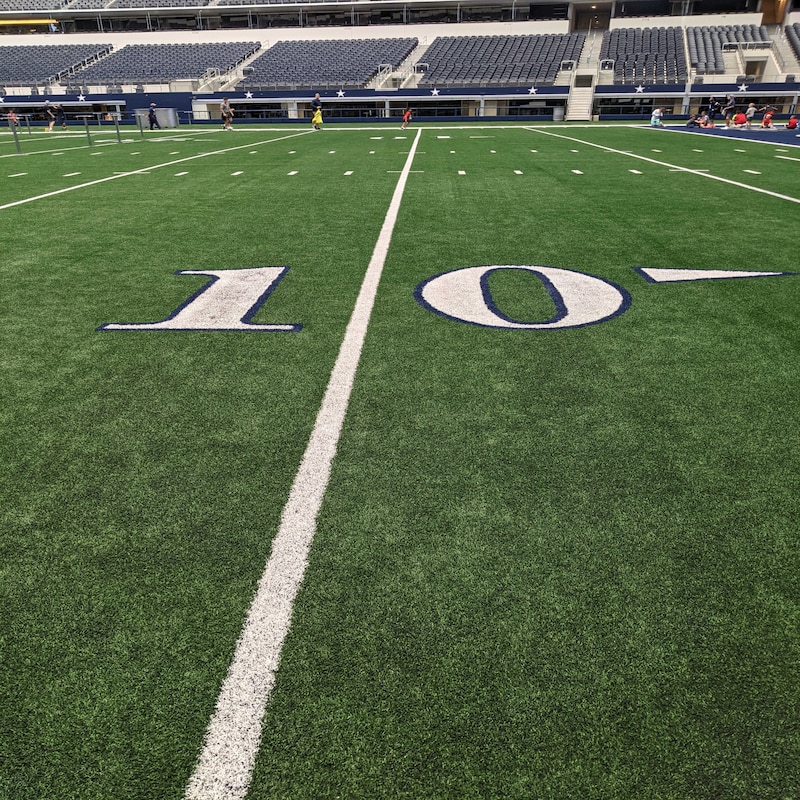
As modern gridiron fans, we might take the geometry of the football field for granted. The crisp white numbers, the directional arrows for TV reviewers, and the standard 10 yard intervals.
But as football historian Timothy Brown reveals, the field wasn't always a masterpiece of clarity. In the early days of the sport, the players, fans and officials were often literally lost on the field.
Imagine trying to officiate a 25 yard penalty on a field that did have identified lines and numbers to help navigate the penalty.
Tim joins us to break down how the chaos of the early field experimentation eventually gave way to the standardized markings that define the game's field today. Hello, my football friends.
Darin Hayes:Once again we are joined by Timothy p. Brown of footballarchaeology.com to bring us one of his tidbits that he's done recently. Tim, welcome back to the Pig Pen.
Timothy Brown:Hey there. Look forward to chatting and I think this podcast should work very well in digital format.
Darin Hayes:In digital format, yes.
We're going to be talking a little bit about that as we go through a little bit of history here because you had a tidbit that you wrote recently that really tweaks my, my officiating side of me. The evolution of yardage markers and field numbers is what you called it.
These are things that I'm very familiar with and I'm sure everybody watches football. So what can you tell us about this history?
Timothy Brown:Yeah, so let me just to.
I distinguish yardage markers and field numbers as, you know, I just view yardage markers as signs along the, along the grandstand or you know, the post. There's a little rubber tripod and trapezoidal things that, you know, have, you know, been on football fields over time.
And then field numbers are the actual, you know, they're some kind of number or indicator painted on the field, on the grass or on the turf, you know, itself. So just for that. So I think, you know, the, the thing about the numbers that, you know, just to kind of put them in place.
One of the things that, it kind of shocks me every time when there's certain images of old football fields in the non checkerboard days when you look at the, you know, it's a big old stadium and you get a shot from, you know, press box or higher and the field is just barren.
You know, all that's there is the, the sidelines, the goal lines, you know, later on the end lines too, and the yardage lines and you know, so no lock me lines, no hash marks, no numbers, no logos, all that kind of stuff. And, but then obviously that's changed a lot over time. So I just. That's kind of where I'm coming from with the story.
But you know, in before we had, you know, field numbers and even some of the yardage markers, about the only really things that they had on the field, sometimes they'd have. The 25 yard line was a bigger deal back in the day because that's where the.
You did kick outs, you know, before they had touchbacks and, or even with touchbacks and you know, safeties were kicked from the 25. So oftentimes they. The 25 was. Had some kind of diamond chalked on it or something like that.
in, you know, starting about:But then, you know, a lot of times, like the players would block, you know, people couldn't see them because players were down there, you know, people on the opposite side of the field.
So then they started putting posts or, you know, different kinds of basically different forms of signs, maybe 5 yards off the yard line or off the sideline. So that's about all they had.
And then, then in, in 27, when they moved the end line or, I'm sorry, when they move the goal post to the end line, there's whole flurry of activity because everyone was concerned that players, fans, officials would be confused about where the goal line is because they had always known the goal line was where the goal posts were. But once you shift them back, it's like, well, where, you know, where's the goal line?
So, you know, pretty much all across the country, people, you know, people tried different things to, you know, they put dummies and whatnot on the go lines. They. Some people actually stuck little pieces of paper on sticks along the goal line.
But like painting diagonal stripes or checkerboards in the goal in the end zone was probably the most common thing. And you know, basically our whole concept of decorated end zones that originated in 27 because we moved the goalpost to the backline.
So, you know, there's all that stuff going on. And there were.
I think there may have been a few schools that in 27 painted either a zero on the field itself or a G, you know, right at the goal line. But, so, but, you know, over time they started painting numbers on the field, typically every 10 yards. Some did it every 5 yards and still do.
But, you know, and, but they were like all shapes and sizes you know, I think the tidbit has an example.
It's actually from the Canadian Football League, but you know, just these really long, you know, elongated numbers that just look strange, you know, but there were other schools that had, like, the numbers inside of a box, and the box might, you know, might be a red box with the numbers. You know, it was just kind of all kinds of different things.
And so it kind of didn't matter, you know, what you did, because it was at that point, it was intended for the fans. And they could figure it out, you know, the fans and the fans.
But over time, it became a little bit bigger deal because, you know, with television audiences then the networks kind of wanted a little bit more regularity in terms of where and where these numbers showed up and what they look like. But the real push came from coaches. So, you know, wide receivers are often taught to run their patterns in relationship to the field numbers.
And, you know, you run this pattern on the outside of the field, numbers on the inside, or you force the defender to the inside, you know, all that kind of stuff. And. But if the number, field numbers are different at every field, then your coaching points no longer work.
So the NFL in 72 said, okay, we're going to standardize these things. Every field has to have the same size location of the field numbers, and those have changed a little bit from time to time.
And in 78, they added the directional arrows on the field as well, which again, helps the TV audience, you know, more than, you know, even if you're in the stands, at least you can tell it's on that side of the field. Right, right. I'd hope so. Yeah.
And then, you know, NCAA required their numbers, you know, to be standard format in 82, though they've never required direct the directional arrows, but, you know, a lot of schools have them.
So anyway, it's just one of those things that, you know, it just reminds you that, you know, it's just another instance of things like with the field is especially this way, I guess equipment too. You know, people create their own way of doing things, right?
And then it gets to a point where for one reason or another, they say, okay, we got to standardize this. Everybody's got to do it the same way.
And so this is just one of those instances of kind of a groundswell activity that just developed organically that then becomes standardized and consistent.
Darin Hayes:And I know at least high school wise, National Football Federation has them at the nine yard marks, they call them, and that's indicated, that's by a rule Tool for substitution. If in between every play to every player for that next play has to be inside the numbers at some point during, you know, the time in between snaps.
So. And ready for play. So that's the, that's a good rule that they use there.
So we always would use the numbers and refer to, you know, inside the numbers or top of the numbers and, and do that too. So that was good.
Timothy Brown:And it makes me. That takes care of, you know, the old lonesome in kind of.
Darin Hayes:Right. Hanging out like he's talking to the coach and all of a sudden he goes down for a long pass. Yeah, that's definitely.
That's exactly what that substitution rules for. And it also takes me back. When I first started officiating, I was in my early 20s and I got on a really good crew. They had really experienced crew.
We had a gentleman that was probably about 45 years older than me, season his mid-60s at some point. And he was, he was a ball buster. You know, he busted my chops all the time in fun, you know, in Jess. We. And he always had something to.
And you didn't quiet him down very, very often. So he was our umpire. So I, I, one time I did quiet him down. We were talking. He was, he was getting on my case a little bit and we were talking about.
We were talking about something about the numbers. And I told him, I said, ed, I said, you know, when you started, you know, they had Roman numerals on the field when you started playing.
He didn't know what to say. He just shut up for a little bit and started laughing. He's like, okay, you got me there.
Timothy Brown:But.
Darin Hayes:But he's no longer with us. But it's always a memory I have of old Ed and Good Guy. So we had a lot of fun.
Timothy Brown:Yeah, well, yeah, folks, they never had.
Darin Hayes:Roman numerals on the field.
Timothy Brown:Well, probably some place, did I? You know, Furman, when they had dad Amos, before the jersey numbers got regulated, he put his team out there.
You know, they had to have numbers, so he put them out there with Roman numerals.
Darin Hayes:Yeah. Oh, well, that, that's a great story. It's great to, to hear about that.
And you learn a little bit about the evolution of the game and how, you know, how the forefathers of football are sort of thinking and, and tweaking things as rules come up or somebody does something innovative. And they have to be innovative with the, the markings on the field and field equipment too. So that's great stuff.
And you do this a lot in your tidbits and maybe you could share with people how they could partake in some of your tidbits.
Timothy Brown:Sure, just go to footballarchaeology.com you can either, you know, if you use substack for other purposes you can follow, or you can subscribe, in which case you'll get an email every time that I issue a new a new, you know, new story. So that will contain the full story itself, but otherwise just bookmark it and go out and check out Football Archaeology whenever the need arises.
Darin Hayes:All right, Tim, we really appreciate you sharing this with us today and just like you do each week, and we would love to hear another story next.
Timothy Brown:Week, I bet we will get a chance to talk. All right, thank you.
Darin Hayes:That's all the football history we have today, folks. Join us back tomorrow for more of your football history.
We invite you to check out our website, Pigskindes, not only to see the daily football history, but to experience positive football with our many articles on the.
Darin Hayes:Good people of the game as well.
Darin Hayes:As our own football comic strip, cleat marks comics.
Pigskindispatch.com is also on social media outlets, Facebook, Twitter, Instagram, and don't forget the Pigskin Dispatch YouTube channel to get all of your positive football news and history. Special thanks to the talents of Mike and Gene Monroe, as well as Jason Neff for letting us use their music during our podcast.
This podcast is part of the Sports.
Timothy Brown:History Network, your headquarters for the yesterday.
Darin Hayes:Of your favorite sport.
Timothy Brown:You can learn [email protected].




