Shownotes
I'd love to hear your thoughts, feedback and insights on what could improve The ADHD Women's Wellbeing Podcast in this short poll - it takes 2 minutes, and as a thank you, we'll send you a little gift!
Have you spent years pushing through, overriding what your body is telling you, performing at full capacity, and wondering why you keep burning out?
For so many women with ADHD, the drive to do more, prove more, and be more is relentless. We have the passion, the ambition, the energy. But when that inner motor collides with a nervous system that desperately needs rest and renewal, something eventually gives way.
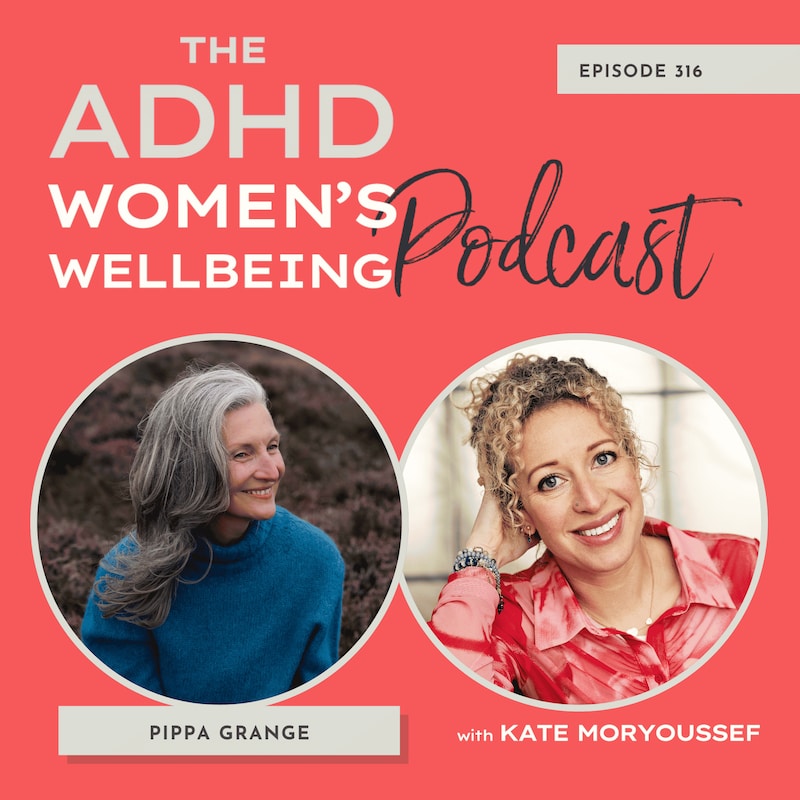
This week on The ADHD Women's Wellbeing Podcast I'm joined by Dr Pippa Grange, a doctor of performance psychology, culture coach, author, and the psychologist behind England's renaissance World Cup campaign of 2018. You may also know of Pippa Grange through her portrayal in the recent Dear England, played excellently by Jodie Whittaker!
Pippa has spent 25 years working with elite athletes, teams, and leaders across sport and industry, and her new book, Life Reclaimed: Find Freedom from Chronic Overperformance, is the culmination of everything she has learned, including from her own experience of burnout.
Pippa's framework for what she calls regenerative performance feels like it was made for our community, and it challenges everything we've been taught about what it means to be "successful".
In this episode, we explore:
- Why chronic overperformance is so prevalent in neurodivergent people and what keeps us stuck in it
- The ecological lens Pippa uses to understand performance and why nature is the master teacher
- How elite sport prioritises not just performance, but also rest and renewal to optimise output and prevent burnout
- The power of honesty to reduce masking and burnout
- The four principles of regenerative performance and listening to your needs
- Moving off autopilot and learning to check in with your nervous system by asking what it needs, rather than pushing through
- Why diversifying your modes and speeds is especially powerful for ADHD brains
- Why pulling back is not a failing, it's a smart performance strategy
- What Pippa learned from her own burnout and how she works differently now
- Three types of honesty and the subtle ways we are unfaithful to ourselves without realising
- Why "wholebeing" matters more than wellbeing
Pippa brings a rare combination of elite performance experience and genuine human warmth to this conversation. For those of us with restless minds and high ambitions who keep burning out despite doing everything right, this episode offers a completely different way of thinking about what sustainable success can look like.
This week’s episode is sponsored by Understood.org, the leading nonprofit dedicated to empowering the millions of people with learning and thinking differences, like ADHD and dyslexia. Their podcast, AHA Aha! Shared candid stories about ADHD realisations, including the unexpected, emotional and even funny ways ADHD symptoms can surface!
The ADHD Women's Wellbeing Live Event Recording is here!
My first-ever ADHD Women's Wellbeing Live event sold out, and now the full experience is available to you wherever you are, whenever it feels right.
Alongside three neuro-affirming experts, we spent four hours exploring the questions that matter most to late-diagnosed women. Get lifetime access here!
Inside the ADHD Women's Wellbeing Live Recording, you'll find:
- Kate Moryoussef on post-diagnosis growth and her gentle framework for what comes next
- Dr Hannah Cullen on the neuroscience of ADHD and why your brain works the way it does
- Hannah Miller on reconnecting with purpose through a neurodivergent lens
- Adele Wimsett myth-busting on hormones, HRT, progesterone and perimenopause
Understand yourself more deeply, feel less alone, and finally access the expert knowledge you deserve. Because every woman with ADHD deserves access to the knowledge, expertise and understanding that for too long simply hasn't been available to us.
To get lifetime access for £44, click here.
Links and Resources:
- Find my popular ADHD workshops and resources on my website [here].
- Follow the podcast on Instagram: @adhd_womenswellbeing_pod
Kate Moryoussef is a women's ADHD lifestyle and wellbeing coach and EFT practitioner who helps overwhelmed and unfulfilled newly diagnosed ADHD women find more calm, balance, hope, health, compassion, creativity and clarity.
Transcripts
Welcome to the ADHD Women's Wellbeing Podcast.
Speaker A:I'm Kate Moore Youssef and I'm a wellbeing and lifestyle coach, EFT practitioner, mum to four kids and passionate about helping more women to understand and accept their amazing ADHD brains.
Speaker A:After speaking to many women just like me and probably you, I know there is a need for more health and lifestyle support for women newly diagnosed with adhd.
Speaker A:In these conversations, you'll learn from insightful guests, hear new findings, and discover powerful perspectives and lifestyle tools to enable you to live your most fulfilled, calm and purposeful life wherever you are on your ADHD journey.
Speaker A:Here's today's episode.
Speaker A:Welcome back to another episode of the ADHD Women's Wellbeing Podcast and today I'm absolutely delighted to have on the podcast Pippa Grange.
Speaker A:Now you may have heard Pippa's name before, but she is a Doctor of Performance Psychology and a Doctor of Environmental Humanities and Ecological Psychology, a Fellow in Ethical Leadership, a culture coach, author, speaker and storyteller working across industry and sports internationally.
Speaker A: issance World cup campaign of: Speaker A:I remember it so, so well.
Speaker A:And the privilege of being inside the inner sanctum, the dressing room, the coach's box, the boardroom, the team bus, and on screen with or in the talking chairs with athletes, coaches, scientists, performers of all kinds, has in part sculpted Pippa's perspective on the great value of keeping the human in whatever kind of winning you are doing.
Speaker A:She's now written also a fantastic brand new book called Life Reclaimed Find Freedom from Chronic Over Performance.
Speaker A:And here today we're going to be talking about all of this and probably lots more.
Speaker A:So welcome to the podcast podcast, Pippa.
Speaker B:Oh thank you Kate.
Speaker B:Thank you so much for having me.
Speaker B:I'm looking forward to the chat.
Speaker A:Yes, there's a huge amount of crossover with, I guess what I speak about a huge amount on this podcast in the community and that is people later on in life understanding their, their brains, their bodies, their nervous systems, understanding it through a neurodivergent lens and seeing these patterns of whether it's over forming, over productivity, people pleasing blurred boundaries, having to prove themselves overextend themselves, burnout cycles and to have an understanding and explanation of it much later on in life.
Speaker A:It's very helpful, but it's also very, it's sad because so many people have never understood what's driven them, what's been in that driving seat.
Speaker A:So, I mean, I've got so many questions, but maybe you can just start with what is it that sort of made you sort of laser focus further down into this?
Speaker A:And I love what you.
Speaker B:You said.
Speaker A:It's ecological psychology as well.
Speaker A:Yeah.
Speaker A:I'd love to hear a little bit more about, you know, maybe your personal experience as to what has made you really want to focus on this area.
Speaker B:Yeah, I mean, I've worked with, as you pointed out, I've worked with high performers in different fields for a long time, and I see a really high prevalence of overperforming, really high prevalence of people with neurodivergence and adhd.
Speaker B:But also particularly the bit that catches my attention more is the people who are masking and struggling to present themselves in one way when actually they're feeling something else.
Speaker B:And I have always felt, in this book, and in my last book, feel less.
Speaker B:I've always felt that that's just too much mental rent to pay for any person.
Speaker B:I feel it detracts from performance.
Speaker B:Performance should be a whole concept.
Speaker B:Winning should be a whole concept, not just a scoreboard thing.
Speaker B:So this book is an extension of the conversation that I've sort of started over the last seven or eight years to be able to sort of say what does it mean to win in a way that is leaves you intact, doesn't feel all the joy out of it, doesn't burn you out, et cetera.
Speaker B:And the reason this particular book came up at this particular time is that it's based on compound experience of clients, but also my own experience of burnout a few years back and having pressed override on what my body was telling me far too many times until I crashed and burned myself and really had a good year of recovery me a good year to recover fully.
Speaker B:And the two experiences together made me really double down and look at what's going on.
Speaker B:Why do we do that?
Speaker B:And ecopsychology is my particular lens on looking at things.
Speaker B:For me, nature's the master teacher anyway.
Speaker B:And the way that ecology works is sort of a few basic principles.
Speaker B:Change is inevitable, everything's interrelated, everything runs on energy.
Speaker B:Diversity is necessary to flourish.
Speaker B:And there's no waste in nature, but lots in human nature.
Speaker B:Human nature waste is things like shame and blame and worry and anxiety and masking and all of those things.
Speaker B:So this book takes a look through that lens of what would nature do and how do we become more Willing to be cyclical, rhythmic, ecological in our mindset and our performance behaviors rather than industrial and linear and extractive and push ever more, ever higher because that's not A, it's not sustainable, but B, it doesn't feel great at all.
Speaker A:Yeah, I mean, it makes so much sense.
Speaker A:You know, it's probably what our ancestors were doing, you know, hundreds and hundreds of years ago.
Speaker A:You know, you talk about industrial revolution, I can only imagine was what, you know, drove this.
Speaker A:Like you must perform and produce throughout the same, throughout the year, no matter what.
Speaker A:You see it just right now, you know, the sun shining with, you know, recording at the end of May.
Speaker A:It's been a lovely sunny week and people are wanting to be out and they want to socialize and you know, there's a good mood and people are uplifted.
Speaker A:And then you think about how people are at the beginning of February or the middle of November and it just makes so much sense.
Speaker A:When you look outside and it's autumn and the trees are shedding, the leaves are on the floor, winter is going into sort of like the more barren and was sort of conserving energy and then spring, you know, the things that we've planted, planted are coming to fruition and.
Speaker A:But we have so many expectations and pressure on ourselves to just be consistent, especially, you know, speak to the female audience here who are navigating internal cycles and seasons with, with hormone fluctuations, perimenopause, monthly fluctuations.
Speaker B:And.
Speaker A:Still we have put so much pressure on, on ourselves to just override.
Speaker A:I think you said that press that override button.
Speaker A:And that really landed with me because no one's told us, no, no one taught us this, like at school we should be told and taught that it's okay to not be performing consistently the whole time.
Speaker B:Nothing actually in nature performs homogeneously.
Speaker B:Always the same, always linear, always upwards.
Speaker B:Even in winter, as you talk about, you know, roots of the trees are going down, you're deepening and sheltering.
Speaker B:And you're quite right, we don't allow that in a mentality that is industrial.
Speaker B:It's.
Speaker B:We're in a system, an industrial system that really enables us to do that.
Speaker B:But it's not just that.
Speaker B:It's our mindsets that go with that.
Speaker B:So we've started to treat ourselves like machines too.
Speaker B:You know, look at the block to see when we're going to eat rather than ask our belly if it's hungry, decide according to the clock when we get up or when we go to bed rather than, you know, is it light?
Speaker B:Do I Feel tired?
Speaker B:Do I not feel tired?
Speaker B:We've lost touch with our ability to check in and be in relationship with ourselves rather than just in relationship with outputs and performing.
Speaker B:And what I've seen over such a long time is that the relationship with self is where all the really great stuff happens anyway performance wise in a sustained way.
Speaker A:So I mean you're, you're dealing with obviously very high performing individuals and teams and I guess management who have got a huge amount of financial investment, I guess in, in this situation, are they open minded to being more, I guess softer or more flexible at this approach?
Speaker A:And when there's a huge amount of money that drives this machine and it's kind of like, well how, how do you move away from, let's go to professional athletes, what expectation have they got if they're paid a huge amount of money?
Speaker A:There's a huge amount of money riding on the situation.
Speaker A:How do you inject what you're doing into this juggernaut?
Speaker B:I'd say it's a really great question.
Speaker B:It's not just in sport, that's in business and leadership leaders that I work with in different fields, there's always something at stake.
Speaker B:But I guess the proposition is not to do, to achieve less or to lower the bar.
Speaker B:It's a how.
Speaker B:What I'm talking about in the book is how do we do this in a way that enables renewal, enables rest, reconsiders the cycles that we're working in.
Speaker B:And actually in elite sport it's not binary.
Speaker B:On, off, go, you know, perform and then sleep, rest.
Speaker B:It's actually more like a triangle.
Speaker B:It's perform, rest, renew.
Speaker B:And even though renewal is a much smaller part, it's a really important, important part in what it takes to stay in one piece while you're performing.
Speaker B:So renewal is all where all the buffering happens, where all the resetting happens, where the joy gets an opportunity, laughter, creativity, connection, community, et cetera.
Speaker B:It's a line, but we treat it like it's a line.
Speaker B:And the other thing I would say about the money piece or the capitalism idea, some people have asked me, is this book sort of anti hustle or anti capitalist?
Speaker B:It's pro sustainability, it's pro performance, it's pro human.
Speaker B:And I really want to make that distinction.
Speaker B:It's a question of how do we do what we're doing better within this frame rather than get to a point where we crash and burn and we feel like we have to down tools.
Speaker B:And as I put in the book, the only choice feels like moving to a Coastal village to make artisanal keys.
Speaker B:It's like we can do it differently now in this life if we better understanding, a better relationship with ourselves, which starts with sort of noticing what we're doing and thinking more ecologically than industrially.
Speaker A:Yeah, I love that.
Speaker A:I mean, everyone's had that dream, haven't they?
Speaker A:And the thing is, I'm going to.
Speaker A:I'm going to.
Speaker A:Maybe I'll speak more sort of generally, or maybe from my own perspective, is that when you've got adhd and I'm going to speak like the profile that maybe I've got another women that I speak to.
Speaker A:We've got inner motors, these restless motors, and we've got lots of ideas and lots of ambition and we are justice seekers and we want to do something.
Speaker A:We want to change the world and we want to really leave our stamp and legacy, whatever, you know, what we're here to do.
Speaker A:And then we are conflating that with a nervous system that is very sensitive, that needs a lot of space and a lot of rest and a lot of regeneration, and.
Speaker A:And many of us don't understand this.
Speaker A:And so we're at loggerheads the whole time and we can't quite work out why we're constantly battling against ourselves.
Speaker A:We have, you know, a part of us that is go.
Speaker A:You know, you want to do so much as inner pressure and maybe prove there's like this external validation that many people are seeking, because perhaps at school it hasn't been easy, perhaps there has been criticism or you've not conformed or you've not been that person that has adhered to all the rules.
Speaker A:So there's a lot of sort of past stuff going on and trauma and all sorts.
Speaker B:There's a chapter in the book called Trauma and the Performer.
Speaker B:And it's really relevant what you're saying, because that sort of experience, that personal history experience, really amplifies what you're feeling.
Speaker B:And what I find happens is that the individual turns it in on themselves rather than thinking about what the conditions are that they're operating in and how they into the conditions.
Speaker B:So then you start with a negative chat in your own mind that's about you not measuring up or, you know, especially when you have that justice push or that change the world push.
Speaker B:That's sort of a passion for contributing and you have high energy.
Speaker B:Anyway, when that voice comes in, that's critical.
Speaker B:At the same time, that's such a weight to carry.
Speaker B:And I want to reorient performers to think about performance, performers of all kinds to think about, Hang on, how am I relating to the conditions that I'm in as well as what is the voice going on?
Speaker B:I use the metaphor again from ecology of bioaccumulation.
Speaker B:You know, that term is about sort of how toxins build up in, say, the ocean.
Speaker B:So if a small fish takes in toxin from pollution and then the next fish comes along and eats it, the next fish comes along and eats it sort of thing, by the time you're eating the big fish, there's built up toxin.
Speaker B:We do the same thing with our beliefs, our ideas, our stories, our criticisms of ourselves.
Speaker B:They build up as toxins over time, and we have to detox that a little bit and take a new mentality into how we perform rather than assuming there's a flaw or a problem.
Speaker B:With me, it's like, no, hang on.
Speaker B:Something doesn't work in the relationship between me and the work or me and the environment.
Speaker B:You know, it's not.
Speaker B:It's not a me problem, it's an us problem.
Speaker B:So how can we look at it from that perspective and take the blame away from the individual, shame away from the individual more, and come into relationship with what it is that we're doing?
Speaker B:And that's, you know, one of the really important things for your audience, perhaps with.
Speaker B:And as you just described yourself and the experience you have with adhd, there's sort of four core principles of what I call regenerative performance.
Speaker B:One is coming to presence more often, diversifying your modes and speeds.
Speaker B:And this is so critical for adhd.
Speaker B:Sometimes we think that the alternative to fast and stimulating is just slow and stopping.
Speaker B:And you know, what I want to really get across is that the most valuable way of regenerating your energy and performing in a regenerative way is to diversify your moving.
Speaker B:So there are periods that you can plan for of intensity, but you need to buffer them with deep time or deep work or conversational connections versus solo time or fast and slow and literally be planful about that because the diversification is so valuable in recovery.
Speaker B:It's not about stopping stimulation, it's about choosing good diversity.
Speaker B:And that's how.
Speaker B:That's how ecology works.
Speaker A:Yeah, I love that the, the analogies that you use here.
Speaker A:We do need more fluidity and flexibility.
Speaker A:And we can't always be on go.
Speaker A:I mean, we could, but we would then burn out and our nervous systems would shut down.
Speaker A:And there has to be a way for us to live in this world, you know, which is sort of like under these sort of neurotypical conditionings.
Speaker A:Of this, like you say, this linear industrial hyperbole performance where we get to show up and do what we want to do with all the passion and ambition and excitement and enthusiasm and all the things that we want.
Speaker A:But for us to be able to know that it's okay to pull back and to recharge and regenerate.
Speaker A:And again, no one's taught us this.
Speaker B:Yeah, you know, I just want to add in there, Kate, because it's so rich what you're saying.
Speaker B:It's not that pulling back is a compromise of some kind.
Speaker B:Pulling back is part of regenerative performance.
Speaker B:Pulling back isn't something you need and other people don't.
Speaker B:It's actually the way that all of life works.
Speaker B:Well, there's a reason that there's such a massive percentage of burnout in this country and all over the world.
Speaker B:It's just a growing phenomena.
Speaker B:It's because we've stopped working like humans and expectations ourselves to be more like machines.
Speaker B:It's not a concession to slow or to diversify or change modes or pull back.
Speaker B:It's not concession.
Speaker B:It's a smart performance strategy.
Speaker A:So I just want to share something a little bit more personal with you, especially for those of you who are navigating this later on in life.
Speaker A:ADHD diagnosis, this middle life awareness alongside parenting hormones and pretty much everything else that we are holding.
Speaker A:There have been many moments for me, particularly through this new onset of perimenopause, where my ADHD has felt louder, more emotional and definitely harder to manage.
Speaker A:And I found myself looking back on my life and thinking, ah, okay, so that was ADHD as well.
Speaker A:And that can bring up a lot, actually.
Speaker A:It brings up a lot of emotions, relief, but also grief control, confusion, and a real tenderness towards our younger self.
Speaker A:I often say that there's such a lot of inner child healing that we need to do with a late in life diagnosis.
Speaker A:And that is why I've been really drawn to a podcast called ADHD.
Speaker A:Aha.
Speaker A:And it's hosted by Laura Key from Understood.org and I've been listening to quite a few of the recent episodes of adhd.
Speaker A:Aha.
Speaker A:And what I love is how it captures those exact moments, those quiet or sometimes emotional realizations where women begin to understand themselves in a completely new way.
Speaker A:I see it as that we sort of put different glasses on and it's a whole new lens that we're able to see and understand ourselves.
Speaker A:And then hearing those candid stories from people diagnosed with adhd, it's incredibly validating, especially when you're parenting and you're trying to support your own children on this journey while also making sense of your own experience.
Speaker A:Experience all at the same time.
Speaker A:And it's just one of those podcasts I believe that helps you feel less alone.
Speaker A:I think community is, is huge and hearing other people's stories makes things just feel a little bit easier and a lot more compassion towards ourselves.
Speaker A:So to listen, search for ADHD Aha.
Speaker A:In your podcast app wherever you listen to your podcast.
Speaker A:And that is ADHD Aha.
Speaker A:Aha.
Speaker A:And I really do hope it helps you on your journey.
Speaker A:Now back to today's episode.
Speaker A:I mean I was so interested to hear about perhaps on the flip side, like the pushback that you might have felt.
Speaker A: the England football team in: Speaker A:And like what you were talking about was this sort of like, oh my goodness, revolutionary in the football sport, I guess in England, the England football team.
Speaker A:I'd love to know a little bit more about that.
Speaker B:Yeah, I mean that work was much more about managing fear and bringing joy back into the sort of performances.
Speaker B:Things like elite football are actually really good at.
Speaker B:Recognizing that the triangle I talked about before the perform rest renew elite sport does that pretty well on the whole or good elite sport does.
Speaker B:You know, we just don't necessarily see that.
Speaker B:But the sort of input of fun input of diversified modes is really important.
Speaker B:So why shouldn't the players facetime their kids at bath time?
Speaker B:That's a completely rational thing to do if you want somebody to stay in good shape.
Speaker B:There's sort of edits that happen that allow people to be whole and human and especially if they're on something like an eight week camp where it's just them and they don't have their normal ways of diversifying like family or different practices, they're on camp the whole time.
Speaker B:So yeah, it's deliberately built in.
Speaker B:Yeah, a lot of elite sports pretty good at that.
Speaker B:Other workplaces are not so good at that.
Speaker A:Yeah.
Speaker A:So I guess elite sports, they're sort of like very progressive and we understand mindset is such a huge part of elite sport and, and like you say that the human side and you know, I'm not really a huge sports fan but my daughter plays quite high level netball.
Speaker A:You know, I see, I see the intensity and I see how much of it is, is the mindset and I do sometimes think about things like that, you know, we've got the World cup coming up in a few months in America.
Speaker A:And all these sports people who have.
Speaker A:And listen from the conversation I had with Josephine Perry, we were just speaking about her, who's an amazing sports psychologist who'd written a book about ADHD in sport.
Speaker A:And she thinks, you know, a huge majority of elite sports people or professional athletes are neurodivergent and they are battling things like their routines and sensory processing and their rituals and their comfort and all the things that help them give them that sort of, that cushioning to do what they can do almost sort of removes all the noise and just allows them to do what they can do.
Speaker A:And when that's taken away, that's really difficult.
Speaker A:And I wonder is that something, is that something that you speak about?
Speaker A:Because you know that those conditions that we put in, you know, even just myself, if I don't have my pillow or I don't have like the, the spray or my magnesium thing or all these little things that I just sort of have by my bedside, but if they're one of them's taken away away, I like panic that I'm not going to sleep.
Speaker A:Do you talk about things like that?
Speaker A:Because obviously sleep and well being and the calm nervous system is so crucial as well.
Speaker B:Yeah, absolutely.
Speaker B:And one of the most important things in sort of that whole description there is the ability for the performer to say what they need.
Speaker B:That's why I talk about the conditions and the environment a person is in.
Speaker B:Like does it feel safe, does it feel open, does it feel welcome that that person, whether it's a somebody sitting at a desk all day and they need to have multiple things to play with or noise canceling headphones or whatever it is for them to have on their desk to feel to help their nervous system balance or you know, magnesium spray or whatever else it is for somebody traveling and away from home or an athlete who might need something specific.
Speaker B:Can we say it out loud?
Speaker B:Can the individual feel okay to say, hey, this is what helps me perform?
Speaker B:I had a client who was super brave and hadn't.
Speaker B:She'd been masking for years in her workplace.
Speaker B:A massive high performer but struggling in her workplace because she was masking so hard and not telling anybody body that she was dealing with neurodivergence and.
Speaker B:And eventually she decided to say something and explain why everything was on her desk or the fact that she wasn't disinterested when she was doodling in a meeting.
Speaker B:She wanted to explain what was happening and how that helped her nervous system and her brain operate and it was amazing how many people came up afterwards and said, thank you for telling us that, but also me too.
Speaker B:She was able to be honest and the environment allowed that space to say, hey, how do you work?
Speaker B:How do you operate?
Speaker B:What's your operating system?
Speaker B:Kind of.
Speaker A:Yeah.
Speaker B:So knowing what you need yourself is critical.
Speaker B:But then the honesty, to be able to say out loud is the responsibility of all of us to invite those conversations, not just leave the weight on the individual shoulders, especially a youth athlete, to be able to say, hey, what works for you right away, that sort of labeling of something up if it doesn't fit in the massively conformist norm.
Speaker B:That conformist norm is too heavy a weight for lots of people.
Speaker A:Yeah, I think you're right.
Speaker A:I mean, the masking is exhausting, and that in itself can contribute to burnout and then seeing what's been deemed as normal.
Speaker A:And if no one else is having these conversations and no one's sort of normalizing like you say, whether it's a fidget or needing to sit by a window or needing, you know, noise and all of these things I say all the time, none of them is like, unprofessional.
Speaker A:I think there's also this sort of stigma of like, that's unprofessional, that's unprofessional.
Speaker A:And I hope that we're moving away from all of this now, especially in, say, the corporate environment where, like you say, there is a huge amount of high performers, incredible people, you know, with neurodivergent brains contributing to, yeah, Huge amount of success.
Speaker A:And, and we need these people in the work environment.
Speaker A:But sadly, what I'm seeing is that because there's this disconnect maybe from, you know, top end who aren't wanting to have these conversations, conversations who aren't allowing this kind of, you know, this open dialogue and asking, what do you need?
Speaker A:Or what can make life easier for you?
Speaker A:Then people are just thinking, well, it's a black and white situation and I'm going to go off and live in a cottage and make artisan cheese because they don't know there's no other alternative being spoken about.
Speaker B:That's why your work here is so important, Kate, as well, because it's.
Speaker B:It becomes a collective conversation.
Speaker B:The world, the world wouldn't operate well without neurodivergent high performers.
Speaker B:And elite sports certainly wouldn't be what it is without ADHD performers.
Speaker B:Right.
Speaker B:We have to come away from the idea that there's something up with that there's something wrong.
Speaker B:It's not Wrong.
Speaker B:It's different and it's.
Speaker B:So how do we open a conversation for difference?
Speaker B:What are the conditions we set for difference?
Speaker B:To allow people to find their very edge of their own performance, to bring their own brilliance and their own talent, their own genius to bear.
Speaker B:It's not going to be the same box for everybody.
Speaker B:And, you know, that's what high performance is.
Speaker B:How do I find the very best conditions to let youth really shine?
Speaker B:And it has to be done regeneratively, otherwise there's.
Speaker B:The cost to the individual is too high.
Speaker B:So when we're in high performance arenas of all kinds, we.
Speaker B:We're asking people to go right to the edge, to really push themselves.
Speaker B:So we know what.
Speaker B:So we need to know what is a good energy spend?
Speaker B:I said before, ecology, everything runs on energy.
Speaker B:What is good energy?
Speaker B:What is good sensory input?
Speaker B:What is good stimulation?
Speaker B:What is good rebound for you?
Speaker B:What is good transition for you from one thing to the next?
Speaker B:Like post competition, when adrenaline's super high, or post surgery or, you know, whatever it is, what do you need from here?
Speaker B:What works from here?
Speaker B:And to sort of have a.
Speaker B:An experimental mindset to get to really know your operating system, your own ecology, how it works in the world.
Speaker B:Instead of just waiting for the world to change, we need to change the attitude.
Speaker B:Your work is fantastic in that and changing the attitude and the understanding more broadly.
Speaker B:But so much we can do with our own mentalities, our own permissions, our own understanding of what actually supports us.
Speaker A:Yeah, I love that, that you are giving these words like, what's your rebound?
Speaker A:And what's the transition?
Speaker A:We never ask ourselves these, these questions, you know, and we come home from work and our brain's full and then we go straight into, say, parenting or, you know, having to have a conversation with your spouse.
Speaker A:And it's difficult, you know, especially when you've not had that in between.
Speaker A:And if no one's saying to you, what are you doing?
Speaker A:Are you putting on some, like, really like calming music in your car and just switching off, you know, all phones and notifications?
Speaker A:Or are you still walking through the house checking emails and, you know, social media or I guess athletes or footballers back in the day, I mean, I grew up in the 80s and the 90s and they would decompress by going out drinking, you know, go straight to the pub or the street, you know, to a club.
Speaker A:And so it's.
Speaker A:So many of us have relied on unhealthy coping mechanisms and techniques or been shown that's the way.
Speaker A:And now these conversations is like, well, actually, you know, even let's bring it right down to sort of granular level, level of a child coming home from school, of my children, neurodivergent, all need to walk in.
Speaker A:And I know that if I ask them too many questions or what did you do?
Speaker A:Who do you speak to?
Speaker A:What do you have learned?
Speaker A:They don't want.
Speaker A:So I've learned to sort of close my mouth, not ask too many questions, give them a snack, do what they need to do.
Speaker A:They just, they will go and sit on a chair and numb out and scroll or go on their iPad or just sit and watch something and then they come, you know, with it.
Speaker A:It's almost like a little, you know, when you've watered a plant and the, you know, they sort of come back to life and then it's like we can have a conversation.
Speaker A:And I think kids need to know this information, you know, from school.
Speaker A:Yeah.
Speaker B:The fourth principle in the regenerative performance principles is like, get back in touch with the vast intelligence of your body.
Speaker B:So all of us at all times have got this brilliant dashboard telling us what's actually going on, which is the body.
Speaker B:But we live from the neck up.
Speaker B:You know, we treat our bodies like they're just a, a Uber for our heads.
Speaker B:And getting back in touch with the body is really helpful.
Speaker B:So one of the practices in the book is sort of hand on heart, hand on belly, how do I feel?
Speaker B:What do I need?
Speaker B:And if what you need is to scroll for five minutes or whatever, okay, I need, you know, what you're saying isn't, I need scrolling, I need numbing, I need to settle, my nervous system needs to settle and numb out.
Speaker B:Fine.
Speaker B:The quest here is to move from autopilot where you're actually ramping up your nervous systems, the requests on your nervous system at all time, and never getting a status report from it to see how you're actually doing.
Speaker B:So to be able to ask yourself, you know, oh, I'm a bit amped.
Speaker B:Am I okay with amped?
Speaker B:Yeah, I'm okay with amped right now.
Speaker B:Or no, I feel edgy.
Speaker B:I don't feel okay.
Speaker B:Right.
Speaker B:So to come back into relationship with your own body is the biggest indicator any of us can have to just ask what's going on.
Speaker B:And because as well, high performers, and particularly adhd, high performers are likely to sort of get so engrossed in something that they might forget to eat or drink or whatever else.
Speaker B:That little practice, even if you set a alarm or have a post it note somewhere to just sort of that practice, of what do I need, how do I feel, what do I need?
Speaker B:And just check.
Speaker B:And sometimes, you know, sometimes when high performers do it, it's, or anybody does it, it's like, oh, I actually need a bit of fresh air.
Speaker B:I've been outside for six hours or whatever else is, you know, and it's just mini.
Speaker B:I call them psychological fire breaks, like little, little interventions regularly rather than this consistent homogenous.
Speaker B:One thing which might be too fast or feeling like you've just got to stop.
Speaker B:Those don't really work.
Speaker B:We've got to, it's all process, all movement, all rhythm.
Speaker B:And that rhythm is not always one pace.
Speaker A:Yeah, It's a whole change.
Speaker A:This sort of sustainable way of living, of not thinking that it's okay just to do this one long breath work exercise.
Speaker A:Say I would never do a 20 minute breathwork exercise, but for me, you know, a minute in the morning, a minute in the afternoon, a minute before bed, that is like that check in for me or the, the walk outside or just to put my face in the sun and just have a couple of breaths and it's all, it's all accumulative.
Speaker A:But if it's not being modeled at home and we're not being told about it in school and then it's not happening at work, it's not being sort of like spoken about, no wonder so many people are self medicating or numbing out in unhealthy ways.
Speaker A:And that's what upsets me the most, is that it's so, it's such common sense what you're saying.
Speaker A:You know, it's amazing.
Speaker A:I love, I love what you're, you're, how you're describing it and breaking it down.
Speaker A:But essentially it's like, of course that makes sense.
Speaker A:Of course, but we're not seeing it play out as much as we should.
Speaker A:And in daily life, agree.
Speaker B:And I think that that's why it's so important that it's both a collective community conversation and it's something that an individual gives them self permission to play with and explore for themselves, you know, and, and that little exercise I just demonstrated of the sort of, you know, how do I feel?
Speaker B:What do I need?
Speaker B:Maybe that's not the right one for you, but there'll be some little check in whether it's a breath or can I put all four corners of my feet on the floor?
Speaker B:Or what does my gut say right now?
Speaker B:Or like, is my tongue pushed up against the roof of my mouth and my jaw clenched or Is, you know, is my mouth soft?
Speaker B:Those kind of things, tiny things.
Speaker B:Tiny things that take just a matter of seconds.
Speaker B:Their fire breaks.
Speaker B:They stop as running too hot, revving too hard.
Speaker B:And it's kind of like the idea of wholeness I talk about in the book, whole being instead of well being.
Speaker B:Are you allowed to be whole while you're doing what you're doing rather than just functioning well, which can get to be a little bit machine like at times you have to kind of come up the crest of the circle to the top and if you don't come down the other side, even if that's just a matter of minutes, you can't go up to the crest again.
Speaker B:You're sort of revving in one place of the circle.
Speaker B:That's where it wears out.
Speaker B:That's where we wear out.
Speaker B:You need to constantly finish these little cycles and, and nothing is static.
Speaker B:There isn't a right one way to be.
Speaker B:It's all process, it's all movement, it's all input and output and it's okay, that's fine, that's great.
Speaker B:That's how the world works.
Speaker B:It's how the natural world works.
Speaker B:And you know, we're just part of that.
Speaker A:And it's just removing, like you said, the shame and the blame and the guilt and the judgment and just allowing things to be.
Speaker A:And they don't have to be perfect like you say, it's this process and just to remove that shame or the pressure of the judgment that we put on ourselves gives us some breathing space.
Speaker A:It's just like it's okay if things are just done and it's not done perfectly or you've not had a good day performing or whatever that is and allowing it to just be.
Speaker B:And it's okay to go fast, it's okay to.
Speaker B:Okay to push.
Speaker B:It's like not.
Speaker B:But just don't make that homogenous.
Speaker B:Don't make that your only mo.
Speaker B:Diversify.
Speaker B:Right.
Speaker B:And there's, there's nobody more capable of that diversification than high energy people, you know, creative high energy people.
Speaker B:It's like, what is your method?
Speaker B:What is your habit?
Speaker B:How do you build in practices that support that and then that allows you to just absolutely thrive your way without depleting, without extracting too much from your own system.
Speaker B:In fact, you're giving it something back.
Speaker A:Yeah, absolutely.
Speaker A:And tell me, you know, obviously from writing the book and reading your bio and everything, you've obviously been a high performer.
Speaker A:And then you talked about your burnout and what, what's changed in Your life now, what are you?
Speaker A:Much more, I guess, non negotiable with.
Speaker A:With regards to looking after yourself.
Speaker B:Yeah.
Speaker B:I think the thing I would say, Kate, is I've got loads better at saying no when my body says no.
Speaker B:I've so often said yes.
Speaker B:The thing that came out of my mouth was yes, but I meant no in my body.
Speaker B:And so listening to my body going, if my body says no, I say no.
Speaker B:If I'm like, I'm actually a bit full and I don't make excuses for it either, that's something else that's hard.
Speaker B:But that.
Speaker B:And I'm constantly working on that.
Speaker B:But it's changed.
Speaker B:So I don't, I don't tell a small white lie to make it seem okay, you know, more comfortable that somebody's not going to judge me as less of a performer.
Speaker B:I might say I'm a bit too full up this week or actually, no, I'm too tired.
Speaker B:I don't want to take on anything else or that's not really for me.
Speaker B:Thank you.
Speaker B:Whatever it is.
Speaker B:I'm trying really hard to get good at saying no when I mean no.
Speaker B:Instead of either fudging it and making it more comfortable to the other person or, or extending myself beyond where I want to go.
Speaker A:Yeah, yeah.
Speaker A:Very inspiring.
Speaker A:And something that I try and do as well.
Speaker A:But there's that sort of people pleasing part of us and me, whatever that still is, like, no, but oh, I'll do it next week or no, but send me an email into two weeks and then we'll try and fit something in.
Speaker A:And so I'm trying to get better at just that.
Speaker A:That hard.
Speaker A:No, thank you.
Speaker A:And I don't have to, you know, explain myself.
Speaker B:Yeah.
Speaker B:And there's a, there's a whole section in the book on a chapter called Getting Honest.
Speaker B:And I talk about three types of honesty.
Speaker B:You know, it's not as simple as just not lying.
Speaker B:That's the first bit.
Speaker B:But we tell little white lies all the time to make somebody else more comfortable.
Speaker B:I talk about that and that the energy cascade that that has through the body, how that compounds and takes it basically leaves us in a position where we're a bit less faithful to ourselves.
Speaker B:The second piece is sort of not masking or not hiding, you know, like allowing yourself to be who you are and in the world, you know, vibrantly yourself and authentically yourself.
Speaker B:And then the third piece is not forgetting like your essence, your.
Speaker B:The nature of you as a mammal.
Speaker B:The essence of.
Speaker B:As you started this conversation with cycles and seasons and what it takes.
Speaker B:And those sort of three aspects of honesty are I think really helpful.
Speaker B:And there's a whole heap of questions to help people consider it within the book that sometimes make you cringe a little bit, go, oh, I don't know that I do that well.
Speaker B:I don't like the idea of myself as not honest.
Speaker B:Honest.
Speaker B:But it's not about deliberately lying.
Speaker B:It's more about those sort of compound ways that we are unfaithful to ourselves.
Speaker A:Yes, absolutely.
Speaker A:And I think for many of us who have spent almost a lifetime of just hiding and masking and, you know, trying to accommodate ourselves for others, it feels very freeing but slightly terrifying.
Speaker A:But it's okay because we can do it.
Speaker A:And I see a lot of women who, who are getting these diagnoses later on in life and just say, I just don't want to do that anymore.
Speaker A:Or perimenopause comes and it's just like no, I don't have the energy for that anymore.
Speaker A:And I'm just saying no.
Speaker A:And it's, it's, it kind of, it just lets, lets go of all those layers that we've been holding on to and allows ourselves to show up in this sustainable way.
Speaker A:I mean, I've absolutely loved this conversation and I can't wait to get my hands on your book, tell people a little bit about how you work.
Speaker B:I mean, I coach one on one.
Speaker B:I have a full book of clients most times across science and science and technology and leadership and sport.
Speaker B:I also do something called slow coaching where people come for sort of two nights and three days to somewhere wild.
Speaker B:And the first afternoon night and next, you know, first half of the next day is settling.
Speaker B:It's sort of nervous system settling.
Speaker B:It might be night walks, it might be sitting around the fire, it might be hiking, it might be swimming or sauna or whatever.
Speaker B:It's just settling the nervous system.
Speaker B:And then we unravel whatever challenge is coming up for a person.
Speaker B:Because I recognize that sort of fast pace of trying to fix everything and move fast sometimes just doesn't get anywhere near it, especially if it's big decisions or significant changes or challenges.
Speaker B:So I love that work.
Speaker B:That's really great.
Speaker B:And then writing obviously, and I'm involved in a local community project, I live in the Peak District and we have a project called Open House Hathersage which is a cafe and a supper club and a yoga whole being studio and lots of different events.
Speaker B:And Healing Garden which is community garden where we do all sorts of different things, get people back in touch with nature.
Speaker B:So I've got a pleasantly full life, work life at the minute, but it's very different to how I used to do it, which was sort of all in, no breaks.
Speaker A:Okay, so you found those pockets of different ways of working that suit you now and give you time to pull back and recharge.
Speaker A:I love the idea of the, of, of what you're doing in the peak districts and I'm not too far away.
Speaker A:I'm in Manchester, so I might have to come and.
Speaker B:Oh, yeah, go and have a coffee.
Speaker A:I'd love that.
Speaker A:Thank you so, so much, Pippa.
Speaker A:It's been an absolute pleasure and I will make sure all the information and that we've just discussed is on the show notes.
Speaker A:But thank you so, so much.
Speaker B:Thank you, Kate.
Speaker B:It's been lovely to chat.
Speaker A:Thank you for being here and listening to today's episode.
Speaker A:I just want to remind you that if you are looking for more support on your ADHD journey, there are so many resources waiting for you [email protected] so inside the ADHD Women's Wellbeing Workshop Library, you'll find practical and compassionate guidance on topics such as nervous system regulation, rejection, stage sensitive dysphoria, perfectionism, emotional regulation, hormones, parenting and so much more, all designed specifically for late diagnosed neurodivergent women.
Speaker A:You can also explore my new book, the ADHD Women's Wellbeing Toolkit, which was published by dk, which is also available in ebook and audiobook, which is packed full of tools to help you feel calmer, more regulated and more like yourself.
Speaker A:And if you do crave a bit more deeper connection and ongoing support, come and join us inside the More Yourself community.
Speaker A:It's a gentle space for learning, reflection and connection with other neurodivergent women.
Speaker A:And you'll also find the recordings from our first ever ADHD Women's Wellbeing Live event, which brought together incredible speakers and a room full of inspiring women for a truly special day.
Speaker A:We have recorded it all for you, you and it's there to buy.
Speaker A:So whether you're just starting your journey or looking to go deeper, there's something there for every stage.
Speaker A:Just head to ADHD womenswellbeing.co.uk to explore everything.
Speaker A:And as always, thank you so much for being here and for being part of this community.


