Estimated Reading Time: 5 minutes
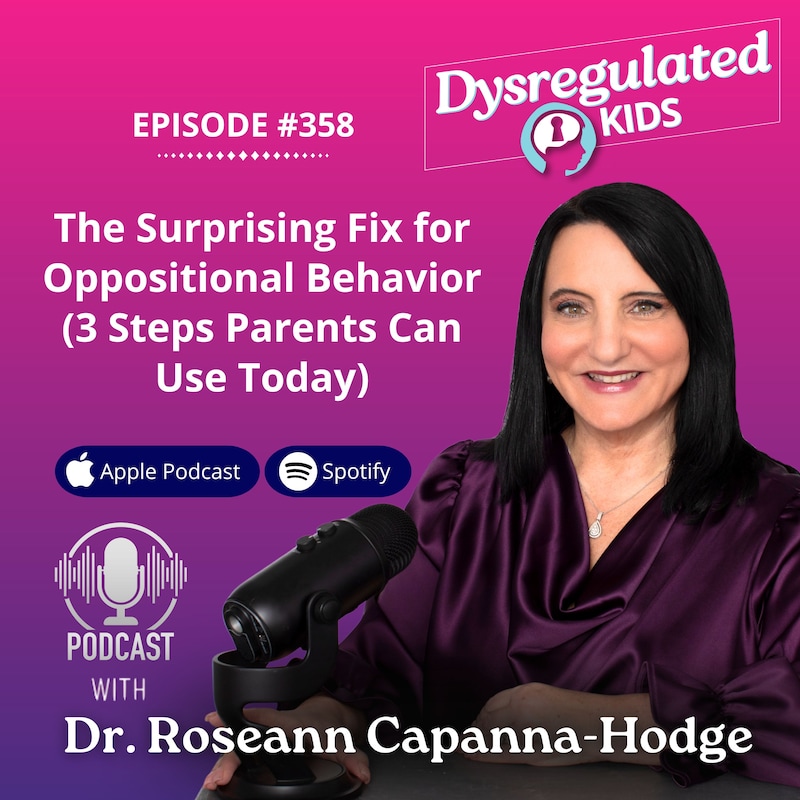
When every request turns into a battle, it's easy to believe your child is being intentionally difficult. But most oppositional behavior isn't about disrespect or manipulation. In this episode, I explain what's really happening beneath oppositional behavior, why children say "no" to everything, and the three simple regulation strategies that help turn conflict into cooperation.
In this episode, you'll learn:
• Why oppositional behavior is often a nervous system issue
• The connection between anxiety, stress, and resistance
• Three practical steps that reduce power struggles
• How to build cooperation through connection and regulation
Why does my child say "no" to everything?
When children refuse requests, argue, or melt down over simple expectations, many parents assume they're being defiant.
What's often happening instead:
• The brain has shifted into survival mode
• Stress shuts down logic and reasoning
• Small demands feel overwhelming
• Resistance becomes a coping strategy
Many children labeled with ADHD, anxiety, or even ODD are actually struggling with emotional dysregulation in children and nervous system overload.
Think of it like an overly sensitive smoke detector. The alarm goes off even when there isn't a real danger.
Behavior is communication. It's not bad behavior. It's a dysregulated brain.
Is oppositional behavior really about anxiety and control?
For many children, yes.
Saying "no" often helps them manage uncomfortable emotions or regain a sense of control when life feels overwhelming.
Common drivers include:
• Anxiety and avoidance
• Sensory overload
• Stress accumulation
• Difficulty managing uncertainty
🗣️ “The more dysregulated they are, the more oppositional they become. And when parents respond from stress too, it amplifies the cycle.” — Dr. Roseann
Understanding the nervous system underneath oppositional behavior changes how we respond.
Instead of seeing disrespect, we start seeing distress.
You don't have to figure this out alone.
Become a Dysregulation Insider VIP and get your FREE Regulation Rescue Kit: How to Stay Calm When Your Child Pushes Your Buttons and Stop Oppositional Behaviors.
Head to www.drroseann.com/newsletter and start your calm parenting journey today.
What can I do when my child refuses to cooperate?
Start with this three-step approach:
1. Regulate first
Calm your own nervous system before responding. Take a breath, pause, and slow down.
2. Offer two choices
Simple choices restore a sense of control.
Examples:
• "Do you want the red shirt or the blue shirt?"
• "Would you like to start now or in two minutes?"
3. Reframe the request
Instead of "Do it now," try:
• "Let's start with this."
• "First this, then that."
These small shifts reduce overwhelm and make cooperation more likely.
These strategies also strengthen self-regulation skills for children by helping kids feel safer and more capable.
How can I stay consistent without losing my cool?
Consistency doesn't mean being rigid. It means staying calm, predictable, and connected.
Helpful practices include:
• Modeling emotional regulation
• Praising effort and cooperation
• Using predictable routines
• Prioritizing connection before correction
For families parenting a dysregulated child, these strategies often reduce conflict while increasing trust and emotional safety.
When children feel safe, oppositional behavior frequently decreases on its own.
Need additional support? Download Quick Calm and learn simple, science-backed techniques to calm the brain fast.
You Can Turn "No" Into "Okay"
Your child's resistance isn't a reflection of bad parenting. It's often a sign that their nervous system needs support.
When you regulate first, offer choices, and reduce overwhelm, you create the conditions for cooperation to grow.
Remember:
Regulate → Connect → Correct™
Calm the brain first, and everything else follows.
Need help finding the next step? Use the free Solution Matcher at www.drroseann.com/help.
FAQs
How do I get my oppositional child to listen without yelling?
Regulate yourself first, then use short directions, calm communication, and simple choices.
Why does my child always argue or say no?
Oppositional behavior is often connected to stress, anxiety, sensory overload, or nervous system dysregulation.
Is oppositional behavior the same as ODD?
Not always. Many children who appear oppositional are actually overwhelmed and dysregulated rather than intentionally defiant.
What should I do when my child refuses directions?
Pause, stay calm, offer two choices, and focus on cooperation rather than control.
Dr. Roseann Capanna-Hodge helps parents understand emotional dysregulation in children and teaches practical nervous system regulation and co-regulation strategies through her Regulation First Parenting™ approach.