Shownotes
What if the way you look at your pain matters more than the pain itself?
Life rarely goes according to plan—and especially for survivors of injury, illness, or trauma, emotional spirals are common. In this episode, Michael shares the “R” in his GRACE model: Reframing—a powerful practice that helps you create space between your pain and your perspective, so you can respond with clarity instead of reaction.
Takeaways:
- Discover 3 simple yet powerful ways to reframe even your hardest moments.
- Learn why reframing isn't denial—it's a tool to reduce suffering and regain control.
- Hear how two little words—“and” and “yet”—can shift your internal narrative and open doors to healing.
Take a deep breath and discover how to build a more resilient mind and start viewing your toughest challenges through a new, empowering lens.
Discover how to scroll less and live more by taking my Free Smartphone Wellness Audit by clicking phone.
Did you know that stickers are wonderful visual cues to help you create healthy habits? You can get one of my free Pause Breathe Reflect sticker by clicking sticker.
To discover more and sign up for My RIPPLE EFFECT newsletter by clicking Ripple Effect.
We can also connect on LinkedIn. or at [email protected]
Subscribe to be sure you don’t miss any of the micro-meditations, wellness tips, and guidance that I publish every Monday, Wednesday, and Friday at 7:11 am.
If you feel you need more mental health support, please contact NAMI.
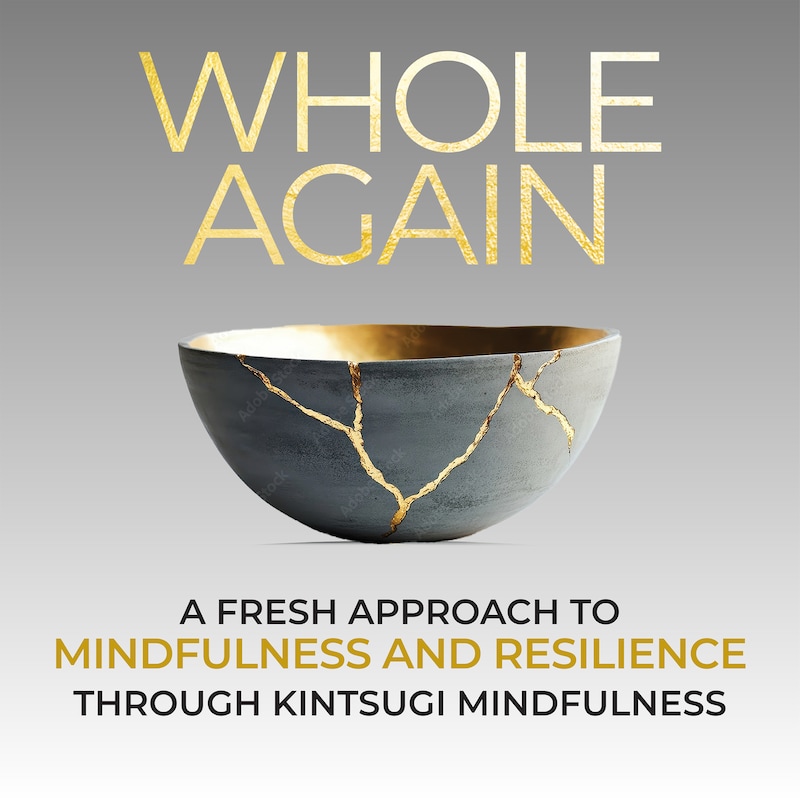
With Whole Again: A Fresh Approach to Healing, Growth & Resilience after Physical Trauma through Kintsugi Mindfulness listeners explore resilience through personal stories of trauma, scars, and injury while learning to overcome PTSD, imposter syndrome, self-doubt, and perfectionism with self-compassion, self-love, and self-worth. Through insightful discussions on stress management, mindfulness practices, and digital wellness, the show offers practical tools like breathwork, micro-dose meditation, grounding techniques, visualization, and daily affirmations for anxiety relief and stress relief. Inspired by the art of kintsugi, the podcast embraces healing as a process of transformation, encouraging a shift in perspective from worry and being overwhelmed to gratitude and personal growth. By exploring the mind-body connection, micro-dosing strategies for emotional well-being, and holistic approaches to self-care, this podcast empowers listeners to cultivate emotional resilience and live with greater balance and intention.
Transcripts
This episode is brought to you by the letter R.
Hey there, it's Michael. Welcome to Whole Again, A show about helping survivors of physical injury and trauma reclaim their strength and resilience through the wisdom of kazuki. In this episode, you'll discover three ways to reframe. An initial reaction, but first I wanna say thanks for being here and thank you.
For being a fellow survivor. This episode happens to be released just before the anniversary, which will be on Friday of my last bad day, my near death cycling accident. And during my recovery, I developed a grace model. Last week we cover G for gratitude. This week we'll focus in on reframing to shift our perspective so we can point our eyes in a different direction because after all.
We go where our eyes go, and I have a gift for you. Before we dive into this week's episode, I'm giving away free copies of my memoir shift. So if you'd like one tells the whole story of my recovery, reach out to me and I'll put an autograph copy in the mail for you or someone you love. So let's talk about reframing.
As we all know far too well, life is full of unexpected events. It never goes like we planned it to go. No one ever expects to get injured, get sick, or go through a physical trauma, but it happens to most of us and our initial reaction is usually negative because no one's looking for this. And we can go down the rabbit hole of unpleasant emotions.
When we thoughtfully choose our response, it helps us create some space, which is a definition that I love of mindfulness, and in that space, we can become more emotionally resilient. Reframing doesn't mean that we love the situation. It simply means that we're looking at it differently by choosing a more positive way of looking at things.
It enhances your problem solving and it can also build up your overall sense of wellbeing. And the cool thing is the more you do it, the stronger you get. Now, this doesn't mean you're emotionally bypassing what you're feeling. If a moment stinks, it stinks. When we get sick or injured or go through trauma, it sucks.
It hurts. So I'm not saying to ignore those emotions. Acknowledge them and at the same time you can reframe the situation. And as you do this more and more, it becomes easier. So the moments you experience that bring up negative emotions, they don't become so intense or they don't last as long. This is what I teach my clients.
I can't prevent. A bad moment from happening, but I can certainly work with you to help prevent that bad moment from getting more fuel and turning into a bad day or maybe something even longer. So you might be thinking now, well, this reframing sounds good in principle, but how do I actually do it? Well, I'm so glad you asked.
Here's a couple different ways to practice reframing that are not so challenging to do. Here's the first tip. If you've listened to whole again or received my blog post called The Ripple Effect, you know that in the month of June, I was at the hospital for almost a whole month playing Medical Sherpa for my dad, along with my sister.
My dad was in the hospital and he had some post postoperative complications, and he was feeling a little down in the dumps, so I asked him, what's one good thing that's happened from all of this? And there was a long pause, and then he said, well, you and your sister are here. Now this is important because there was a period of time when we did not talk for years.
So the fact that we've come together, co advocates for my dad is a huge thing. So I suggested to my dad that he might be able to focus in on that or at least save some of his brain thinking for that. Knowing that his situation did stink, but there was something good coming out of it. Here's tip number two.
Thoughtfully take a step back and take in the bigger picture. In Friday's episode, I will share a mindset shift that helped me and my recovery. It unlocked so many different doors to my full potential, but right now, as you go through what you're going through, try to reframe the situation. Maybe there's something that you can learn from this moment.
Maybe this moment is trying to teach you something. Maybe it's not happening to you, but rather it's happening for you. So try to take a step back and take in the full picture. And here's tip number three. Change your internal narrative and you'll change your life. I'm a big believer that it all comes down to the conversation that we have with ourselves.
I believe there are two words in the English language that don't get enough credit, the word and and yet. So as we're working on something and we don't have it mastered just yet, or we're struggling to regain our balance or one aspect of our health, when we add yet to the end of the sentence, it can change everything.
It offers up potential. Some hope, some optimism, and the word and is building. It's creating. It's more abundant than the scarcity lens that we tend to look at life through. So when we have a more abundant conversation, a more infinite conversation with ourselves, then we start to reframe even the most challenging moments in our life.
And again, we don't have to be happy with them. All I'm suggesting is create some space for a different perspective. You might like that perspective. You might grab onto it and that can give you more fuel to put a more positive ripple into the world. I wanna share this one study with you to really illustrate that mindset matters.
How we reframe things matters. There's a doctor out there, a psychologist named Aliyah Crumb, Dr. Crumb, and I've heard her share this study before. The study comes outta Stanford, which is a pretty SmartyAnts institution, and it involved kids and they were going through peanut allergy testing. One group got the treatment and they were also told about their potential side effects, the itching, the fatigue, and another group.
They also received the treatment, but they were told nothing about the side effects, and you know what happened? The power of different mindsets started to appear. That second group didn't experience anything at all from a side effect perspective, but that first group certainly did. That second group had less anxiety, a better response, and fewer symptoms.
This is just one example of how important mindset is in our recovery, that when we reframe things, we can start to unlock different doors to our potential to help us feel whole again.
Thanks again for being here, and thank you again for being a fellow survivor. In this episode, you discovered the power of reframing the R in my Grace model and different ways you can reframe the situation. You can look for the silver lining. You can take a step back and look at the bigger picture. And the third is you can change your language.
Two powerful words and, and yet, and I can share additional ways you can practice reframing. If you wanna learn, please reach out. And again, thank you for being here. Thank you for being a fellow survivor,
and if you wish to learn more about creating beautiful ripples and how to prevent a bad moment from turning into a bad day, please visit my website, Michael O'Brien schiff.com. And sign up for my newsletter called The Ripple Effect, and join us each Monday, Wednesday, and Friday here at Whole Again, and discover how you can heal, grow, and become more resilient and celebrate our scars as golden symbols of strength and resilience.
Until then, remember, you can always come back to your breath. You've got this. And we've got you.