Shownotes
Episode Description:
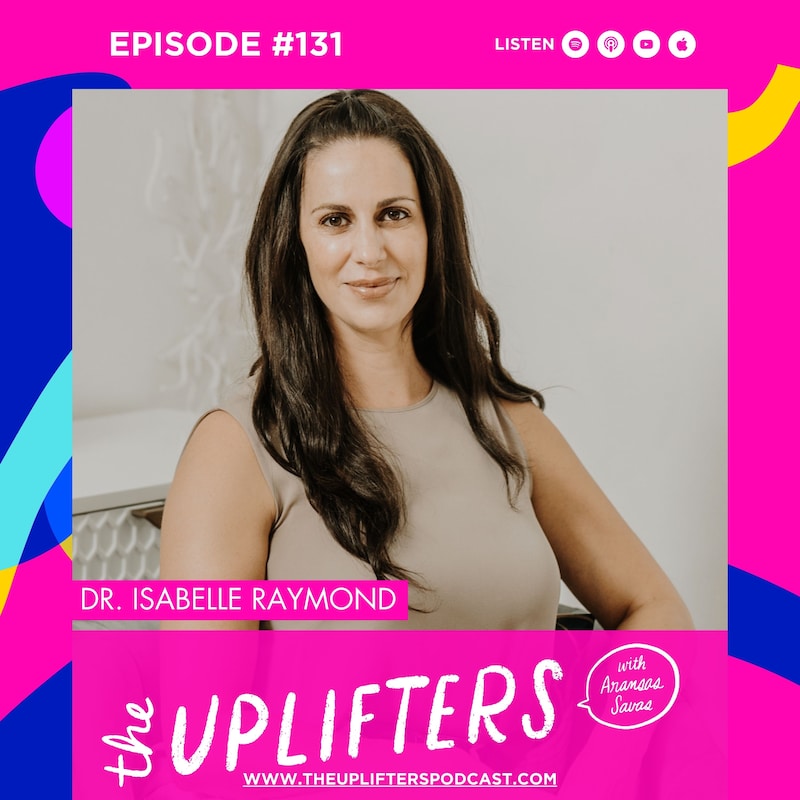
What happens when a scientist with two decades of pharmaceutical research experience realizes she doesn't understand what's happening to her own body? Dr. Isabelle Raymond joins us to discuss her journey from studying sleep medicine and neurotoxins to becoming the Head of Clinical and Medical Affairs at Nutrafol—and why it took until 2020 for any brand to study menopausal women's hair loss. This conversation reveals the shocking gaps in women's health research, why having women designing studies matters so much, and how Isabelle's bringing both scientific rigor and personal experience to research that actually serves women's bodies.
What You'll Learn:
- Why menopausal and perimenopausal hair thinning happen to so many women
- How Isabelle's designing studies around the outcomes that actually matter to women
- Why clinical trials historically excluded women
- How estrogen receptors on every organ in your body explain why menopause affects everything
- How supplement research is conducted
- Why so little time has been historically spent on training doctors in menopause
Time Stamps:
[00:00] Introduction and Aransas's personal hair shedding story
[02:30] Isabelle's background
[07:00] The career pivot from pharmaceutical research to Nutrafol
[11:45] Why women weren't included in clinical trials—and why that needs to change
[17:30] The moment Isabelle realized she was going through perimenopause on camera
[22:15] Why almost no doctors receive adequate training in menopause care
[26:00] How estrogen receptors throughout your body explain perimenopause symptoms
[31:40] Brain fog, the word-finding difficulties, and normalizing these experiences at work
[38:20] Why Nutrafol was the first to study menopausal women specifically
[42:00] The power of knowledge
[48:15] How Isabelle takes care of herself while taking care of everyone else
[52:30] Becoming a spokesperson and front woman after a career in the background
Key Takeaways:
✨ Women's health has been understudied because hormonal fluctuations made research more complicated—but "complicated" doesn't mean "impossible" or "not worth doing"
✨ You have estrogen receptors on every organ in your body (including your hair), which is why perimenopause and menopause affect so much more than just your reproductive system
✨ The medical system's gaps aren't your fault—but you can advocate for yourself by asking questions and seeking providers who take your concerns seriously
✨ Brain fog, hair changes, mood shifts, and the feeling that your body no longer works the way it used to are all legitimate symptoms worth addressing
✨ When women with scientific expertise bring their lived experiences into their research, they design studies that actually answer the questions women are asking
✨ Self-care isn't optional—it's essential infrastructure for doing good work in the world
Resource Links:
- Nutrafol: The number one dermatologist-recommended hair growth supplement brand, built on science and a whole-body approach
- The Menopause Edit: Nutrafol’s first-ever magazine dedicated to redefining the conversation around menopause, full of data and information about women’s health through midlife and beyond
- Nutrafol’s Menopausal Study: The first hair brand supplement to study menopausal women with hair thinning specifically
- Use code UPLIFTERS at nutrafol.com for a special discount
Guest Bio:
Dr. Isabelle Raymond is an author, scientific leader, and biomedical expert with a PhD in biomedical science. She currently serves as the head of Clinical and Medical Affairs at Nutrafol, the number one dermatologist-recommended hair growth supplement brand. With expertise spanning neuroscience, cardiovascular health, neurology, dermatology, and aesthetics, Isabelle brings rigorous scientific methodology to the wellness space—with a particular focus on research that serves women through all life stages. She's been instrumental in designing Nutrafol's groundbreaking studies on menopausal women's hair health and advocates for bringing women's lived experiences into clinical research design.
Host Bio:
Aransas Savas is a wellbeing and leadership coach, researcher, and host of The Uplifters Podcast. For over two decades, she's conducted behavioral research and design for companies like Disney, Best Buy, and Weight Watchers. She brings a researcher's eye and a coach's heart to conversations about how women build courage, navigate transitions, and create meaningful impact. Currently working on her book Courage Capital, Aransas is passionate about validating women's experiences and helping them recognize the bravery they demonstrate every single day.
Connect with Aransas:
- Instagram: @aransas_savas | @the_uplifters_podcast
- TikTok: @theuplifterspodcast
- Facebook: Aransas
- Website: theuplifterspodcast.com
- YouTube: @theuplifterspodcast
- LinkedIn: Aransas Savas
Keywords: women's health research, menopause, perimenopause, hair thinning, clinical trials, pharmaceutical research, Nutrafol, brain fog, estrogen receptors, women in science, biomedical research, career transitions, wellness, beauty industry, scientific methodology, women's bodies, hormonal changes, midlife women, health advocacy, representation in research, whole-body health
Transcripts
TUP EP 131
Aransas Savas: [00:00:00] Hey Uplifters. I wanna take a minute to talk about something personal to me. In my forties, I started noticing my hair was shedding more so a couple of months ago I [00:00:15] started using Nutrafol. I'm already seeing so much less shedding and my teenage daughter who notices absolutely everything keeps commenting on how thick my hair looks.
As someone who's built my career around [00:00:30] rigorous science, I super love that Nutriful was the first brand to clinically study hair thinning on menopausal women, which is why I am so proud to have them as a sponsor. Nutriful takes a whole body approach to [00:00:45] hair health supporting you throughout your life stages.
You can see thicker, stronger, faster growing hair with less shedding in just three to six months. For a limited time. Nutrafol is offering our listeners. $10 off your first month [00:01:00] subscription and free shipping when you go to nutri fold.com and enter the promo code uplifters. Welcome to the Uplifters Podcast, where every week I get the incredible joy and privilege of [00:01:15] talking to amazing, inspiring women who are doing big, brave things in the world.
This week I am totally geeking out because I get the chance to talk. And introduce you to Dr. [00:01:30] Isabelle Raymond. She's an author, she's a scientific leader. She has a PhD in biomedical science, and recently she's been working in the beauty and wellness industries and currently serves as the head of Clinical and Medical [00:01:45] Affairs at Nutriful.
A company that I just love and. So delighted to have sponsor this episode. Nutrafol is the number one dermatologist recommended hair growth supplement brand, and it's built on really [00:02:00] solid science and a whole body approach, which just aligned with everything. I am passionate about, and you guys know, I'm just a total science nerd and research geek, and the work that Isabel and her [00:02:15] team are leading in this category.
It's just really thrilling, especially for those of us who are in our second half of life really. It's just so exciting to see companies taking women second half of life seriously and researching it independently, and I know Isabelle [00:02:30] is behind so much of that. It's a really big day over here. So Isabelle, I'm really just so happy to have you join us today to get to know you a little bit better.
You've kind of done it all and really been around the [00:02:45] biomedical block. I. A thing. Did I just that? Yeah. I love it. I love the biomedical block around that. BB, yeah, exactly.
Isabelle Raymond: Welcome
Aransas Savas: to
Isabelle Raymond: the Uplifters. Thank you so much, and thank you for having me. I'm thrilled to be here. I've listened to you and I'm just [00:03:00] thrilled to be part of this UPLIFT community.
Oh my gosh.
Aransas Savas: I love the work you're doing and it, like I said, it aligns so deeply and perfectly with the work that we're doing here on the Uplifters. And I wanna start [00:03:15] by just talking a little bit about your journey. So many of us in this community, our currently living through major life pivots and transitions of all sorts.
And I know [00:03:30] this shift from a solid research background to an executive leadership within this brand in the beauty and wellness industries was a, a big move for you. So [00:03:45] give us a little background on how you went from that original career path to where you are now.
Isabelle Raymond: Oh, thank you. You know? Yeah. Both my parents were academics at universities and I knew I did not wanna do that.
And I told myself I would never do a PhD. And you know, you can't help yourself. You [00:04:00] go and you're curious and it just meshed really well. But I actually started as a neuroscientist by training. I studied sleep medicine. And psychology. And so I, I think I went through everything. Yes. And yet I know nothing about menopause.
And we'll get to that in a second. [00:04:15] But it's just so funny because I feel like I started out, you know, studying Sleep and Dreams and PTSD and burn patients and how that led to, you know, moving to the United States, not knowing what I was gonna do in my career. 'cause who's, you know, unless I'm an academic right.[00:04:30]
It's a very niche project that I was working on, and what am I gonna do with this? And so when I, I moved to the states, I'm French Canadian. I came in almost 20 years ago now, not knowing what I was gonna do. Just met a guy, fall into the States and as [00:04:45] one does, as one does, and, and just, you know, figure, I'll figure it out.
I don't know what I'm gonna do, but I'll figure it out. And I was asking questions, what does someone with a PhD do? And really joined pharmaceuticals because I didn't wanna be an academic. I know the lifestyle. My partner [00:05:00] was a, you know, academic and it was something is not a life for me. I welcome it and I applaud them, but not for me.
Yeah, so joined pharmaceuticals, but I was working in cardiovascular and I worked in neurology and I worked in pain and I worked in sleep tied to what I [00:05:15] was doing, and then worked in neurology in epilepsy, and so I feel like I've done so many things and I kind of entered the dermatology realm via.
Neurotoxins. So I was studying neurotoxins for spasticity, cervical dystonia, and all [00:05:30] these things really relate to muscles. And then I had dermatologists tell me, well, what are the effects on wrinkles? I was like, what do you mean? And so I was introduced to the world of dermatology and aesthetics and I was like, love it, love it so much.
And so I've never left. [00:05:45] So from there I've really studied on medical dermatology and, and a lot of different products. So always, you know, within the either medical devices or drugs. So pharmaceutical route, I was always very familiar with that because you know what studies you need to do. And so wellness, I was not so much [00:06:00] into that because I'm a scientist and I, I need data and, uh, I met the founders of Nutrafol at conferences and, uh, love them.
They were so kind and so nice and just so. So sure about what they were doing. Mm. And I was like, how can you be [00:06:15] so sure about this? Mm-hmm. And so I started talking with them and over the years, and this said, join us. And I was like, I'm not sure. Right. I think this is kind of like a big move. I don't wanna be taken seriously.
And honestly, I think it's been one of the best moves because I love [00:06:30] entering the field, but really being able to apply what I've learned, how I can do things, and how I can apply scientific methodologies. To a field that doesn't always require it to be on the market, but it's just, and the flexibility and the freedom to be able to, let's study this [00:06:45] and let's look at this and, and really be able to, to apply that.
And as a woman really being able to like talk about the endpoints that matter to us because it wouldn't dictated by what the f FDA's telling you, you need to measure these things. 'cause if you, you study a drug, usually the [00:07:00] FDA will tell you these are the endpoints that you must measure in order to get approval.
But since we don't have any measures, because we don't need to have this approval, you know, what are we going to study? And of course we use measures that are scientifically sound, but what about menopausal women? What [00:07:15] about postpartum women? And so that just opened up a huge field for me that I, I, I'm so happy to be a part of and so proud of it.
Aransas Savas: Wow. It sounds like maybe at the outside your career could sound like a bit of a firework, right? Kind of going in different [00:07:30] directions. But actually it sounds like it was all very much going in one direction, which was the direction of your curiosity.
Isabelle Raymond: It was, and it's so funny how looking back 20 years ago, I never would've thought I would be in this environment, even have the thought that I could [00:07:45] be able to determine what these endpoints are like because they matter.
Right. Having that impact to me has been, uh, so important. Mm-hmm. And not only that, but because I was living through it, it also helped us like, we need to study [00:08:00] this because I know that I'm feeling this so. Being to like add your experience. Again, I hate talking about anecdotes because mm-hmm. The pool of anecdote, in my opinion, is not data.
Right? People say the same thing three times. It doesn't mean that it's data, but it's an [00:08:15] indication that maybe you need to go look there,
Aransas Savas: go evaluate it. Yeah. Yeah. I mean, I'm big on the, the good old quality data and I actually think it's, it's tremendous data, right? It tells us where to look, and that's actually the other big theme that I'm hearing in [00:08:30] here is something that.
I think is so important and not often discussed, which is how is women, I mean, there is a huge body of evidence to indicate that our health, our individual [00:08:45] unique needs are not taken seriously. And so that phrase, when you used it to say like, if I were to get into this space, would I no longer be serious?
Would I no longer be doing [00:09:00] valid science if I was working in supplements? And I think it sounds like now you've said no, actually it's the most serious thing because it's allowing me to take seriously understudied aspects of women's health.
Isabelle Raymond: So well put, [00:09:15] you're so good at what you do. Exactly, and we are always thinking we wanna, you know, search what, where people are going and focus on the the next hot thing or the next interesting thing.
And then looking back, just wait, hold on a second. There's half the population that's not studied. And we just [00:09:30] infer data from men to women. I don't think I even realized that. And that's the thing that kind of kills me because I felt fairly educated in everything I've done. And I, I've read studies and again, all these different cardiovascular and reading studies about medication for blood pressure or for, you know, high, [00:09:45] high cholesterol, never once questioning.
Were women studied in these right. Never. Right. I, I just assumed. Right. And I think most people do. And I didn't even look at the data that way because that's what was done. And so when we started talking about hair and [00:10:00] when I joined Nutrafol, again, I knew a little bit too. 'cause as I get older, I'm like, wait, hold on a second.
I don't see myself in any of these studies. But when I came out with two products, one for men, one for women. I was like, why? I
Aransas Savas: said,
Isabelle Raymond: well, because there's different needs. And so we cannot study our populations in the same study. We have to [00:10:15] study them differently and, and then we have menopausal women. I was like, hold on a second.
Like this is, it's so basic, like it's so groundbreaking, but it's so basic. But you guys were the first, once I talk about this, I [00:10:30] know it's insane to me that we are the first hair brand supplement to study menopausal women with hair th.
Aransas Savas: And one of few to study it, period. Right. To study menopausal women.
Yeah. And their individual [00:10:45] needs.
Isabelle Raymond: There's things specifically related to hair. I know there's a lot of studies out there on on, not compared to men, not even close. Let's not even pretend it's the same. There are some studies, but it's just you have your typical hot flashes and you talk about very symptoms that are earlier your [00:11:00] see menopause brain here.
Sorry, let's The word word is it okay?
Aransas Savas: Like it doesn't make you any less smart. Seems, drives me insane or right to forget a word. So I'm actually super glad you did so Thank you for [00:11:15] just saying it. Yeah, it's, it's, it's just, God, it happens
Isabelle Raymond: so much more now, but it really, looking at women shouldn't be. An afterthought.
Aransas Savas: No.
Isabelle Raymond: And understanding that because we go through changes monthly and hormones are a huge impact. So lemme [00:11:30] take a step back. If you study men mm-hmm. It makes sense because they don't have the variation throughout the month.
Aransas Savas: Mm-hmm.
Isabelle Raymond: And so if you want to really make sure that your product is, is is the result or the results or the.
The effect of the results of your product, then you want to control every [00:11:45] variable possible, right? So you wanna make sure that you control everything. You have a very similar population. And so if I see a difference, it's because I took this, right? Makes sense. For women, it's like, okay, well then well what did you control for the time of month?
Did you control? So it's harder. So I can see people just, eh, it's too [00:12:00] hard and we really wanna see this. But it's like, well, it's still half the population and don't you wanna know what happened? So this just kind of opened up, it's like you see the the world and then you kind of like. Just kind of, you really have to take these things into account and like, this is right for you at this [00:12:15] time, or this is not right for you at this time, because then you can really think about your health, your wellness, your beauty, at a time that you know it's gonna change.
And that's okay.
Aransas Savas: Right? Yeah. And just like brain fog [00:12:30] normalizing that this isn't something wrong with you.
Isabelle Raymond: But if you don't know, like I know you know about hot flashes, you know about the loss of periods, but did you I didn't know about brain fog. Oh my gosh. No, I
Aransas Savas: was honestly with the hair stuff, I was so shocked.
I'll tell you how I really [00:12:45] like started noticing how much my hair was shedding. I was in the car on a long, like five hour car trip with my family and this is probably disgusting. I dunno why I'm sharing it, but I just kind of kept running my hands through my hair and for five hours [00:13:00] I never stopped pulling out shedded hair.
Oh my gosh. I was like, YI think there's
Isabelle Raymond: a problem. Yeah. This is not okay. This is not okay. This is, I, it's, no, but, but the thing is, if you have to notice because like what is normal? Is this normal? Yeah. This [00:13:15] is not normal. Is it normal for me? Is it normal for my age? Is it normal for the seasons? Right.
There's all these things that, but nobody's talking about it, so how would I know? Yeah. No, I didn't listen. I didn't know either, which is again, so almost embarrassing. Yeah. Tell me, how is that So I [00:13:30] was, I just started Nutrafol 2020, okay. January, just before the pandemic. And then we all went home and you started being on camera and we were doing this menopausal study during COVID, and so I said, well, happens to women during menopause, you know, the hair and, and they said, no, the part widens.
And I'm of course on [00:13:45] Zoom or you know, whatever camera we're on, and I'm like.
And I was like, wait, how long? No. And we assume that, you know, menopause is, is my solution, was bang happens when you, oh my, I'm about to get bangs, actually. [00:14:00] But you assume that it's gonna be so much older. Always thought, you know, you think of the golden girls and you think of like much older, not in your forties.
Mm-hmm. You don't, we talk about menopause but not perimenopause. And so again, I'm like, why am I this educated without knowing? Anything that I'm going [00:14:15] through and, and so I think knowledge to me, like I always like to know things because then I can understand them and it reduces, you know, anxiety and all these other things.
And so if you don't know, it can be very, very,
Aransas Savas: very scary. I was reading the Nutrafol magazine Yes. [00:14:30] From menopause that you guys sent over. It's full of so much good. It's so good data, but the fact that there are so few doctors who are receiving. Any amount of training and the needs of women over 40 [00:14:45] is shocking.
I mean, if the average woman, American woman's lifespan is 88, that means like less than half our lives are right? Like, okay, pediatricians are doing their thing. And then there's your [00:15:00] OB, GYN, who's maybe helping you through like. Pregnancy specific, but what about everything else?
Isabelle Raymond: Nobody owns menopause and that's the thing.
Obs are typically have been the ones to, to deal with it, but they're busy. It can't just be, because it's not just [00:15:15] about reproductive organs, it's about your whole body. And part of what, what really has helped me understand, and if you're out there wondering, well, I don't have these symptoms, I don't have this, you have estrogen receptors on every organ of your body.
Including your hair, by the way. So this is why you [00:15:30] go through changes. So as your, as your estrogen goes down or up during this perimenopausal rollercoaster that we go through, you have like this estrogen dominance and this androgen dominance, and you just, you're on a rollercoaster basically. Your organs are on that ride with you.
So [00:15:45] it's no surprise that things are not feeling the same. And for some it's muscle pain. For some it's the hair sitting, but it's also like the mood and the sleep and the, the taste changes. Your gut microbiome changes. All you put on the weight, you know, all of these things that you think like, I can [00:16:00] fix this, I can, I, I know my body, but it's a new body.
And I think just get understanding that, and to me, knowledge will give women. The, not the power. I hate saying that, but like just this is, this is okay. It's not in my head and I can [00:16:15] prepare for it instead of gaslighting ourselves. Right. But gaslighting ourselves, we're going to the doctor being gaslit too, because again, if they're not trained, they're like, I don't know what to do for you.
Yeah. Because there's no like overall menopausal symptom test that you [00:16:30] can see what's going on. Right.
Aransas Savas: Well, and I, I actually maybe because. I was raised by my grandmother. I had my great-grandmother, my great-great-grandmother all around me my entire life. They, women in my family live forever and do lots of really amazing, [00:16:45] inspiring stuff in their later years.
I never really believed that there was some like hard, fast cutoff for our.
[00:17:00] Our impact in our lives. And yet when I sit back and I look at the messages we're receiving, it's sort of like, alright, once you hit 40, go be quiet. Sit in a corner. And that's when you have the most to say care of everyone else's needs. [00:17:15] Yes. And that's when, and and don't worry about yours. Right. And don't even, and you're fine.
But it really can be a time of massive opportunity if we're not distracted by. All this other stuff. Yes.
Isabelle Raymond: Because you can [00:17:30] really focus on what you can do versus what is happening to you. The energy that it takes to, to try to understand and you know, it is, it is a journey and my hopes really is, I feel super lucky that at my age, I am in this world right now where people are talking about it and I even, I have [00:17:45] friends like 10 years ago, I was never mentioned your age.
Do not tell anybody how old you are because they're going to. To quietly put you to rest. Right. And I was like, that's not, that doesn't make sense. I'm smart. I can, you know, I have so much to give and I just did not understand. And I do [00:18:00] see that happening before, but now I really see a change of like, women are speaking up and they're proud of going through this and I, I almost feel like I wanna be part of this club now.
So I really feel like this whole group of women phys and the fact that they're physicians, I think we we're here today because we have [00:18:15] physicians who are women going through this and going, hold on a second, I'm able to give all these treatments for men. And I have nothing for women, so I need to change that.
So it really is us who are going to make the change. And similar to, I feel so lucky that like I know what outcomes to look [00:18:30] for as a woman, so I can design studies to really validate that experience. Right? And without women in these areas, men are fantastic, but they don't go through it. So how would they know?
Right? How would they know? So I think when you really feel an experience and you can [00:18:45] really study it and talk about it and make sure that women who are younger now. For menopause and cannot be so shocked or, or, or taboo outta mentioning it to their doctor. Right.
Aransas Savas: Right. [00:19:00] Well, and I think you're bringing up something that's so core to all of this.
There's the polar spectrum here of really using our voices and speaking up and asking for and demanding support and. [00:19:15] Being silenced or silencing ourselves. Mm-hmm. And disregarding our own experiences is unimportant or worse yet untreatable. And that's, that's the sad part, right? Like to believe we can't [00:19:30] create change is what's really heartbreaking.
And so all of this to me is just data. That helps me have hope that change is possible and that we're not stuck. And I was actually, there's, there's [00:19:45] research now that shows that our growth mindset peaks in our forties. I can see that.
Isabelle Raymond: I, I, I feel so can you, you've gathered all this knowledge and you connected the dots throughout your life and you're like, hold on a second, I think I got it right.
Mm-hmm. And you wanna share that. You wanna try to [00:20:00] implement that in what you do. Mm-hmm. And so you need that voice. And I feel like we probably have to be a little louder in this generation to make sure that. We do make this space for it. Hopefully the next generation will even, it won't be so, it won't be so hard to make the noise.
But I think we do make, we need to make this noise and we need to [00:20:15] really speak out again to see, because there's something, it's like, what can women do? And you're right, because you know, to me, what kind of makes me sad is talking to women who've gone through menopause already and say, oh, I'm, I've, I went through that, honey, I'm done.
I'm like, but you're not done. It's the [00:20:30] whole rest of your life and just that idea that, you know, you're not getting the care for the body in menopause. And so I'm talking to, you know, women and their said, my mother even, she's like, I'm fine. I'm like, are you, did you check your bone density? Did you check, you know, [00:20:45] all these things.
So it's, it's really being able to understand what you're, how you're going to be able to be the best self, physically and emotionally. That's it for the next 30, 40 years of your life.
Aransas Savas: It's not even necessarily about extending [00:21:00] the lifespan, but about extending the quality of the life. Exactly. It's and having being.
I don't wanna live to a hundred. If I'm miserable, I wanna live as long as I'm having a rich, meaningful life. And physically [00:21:15] able to do these things and, and being able to speak and, you know, physically, mentally, emotionally, having pleasure. And if you, you have the good hair too, that helps it tremendous, it does it.
Feeling good is a big piece of it. And that I've always been fascinated by how different [00:21:30] aspects of our physical body are drivers for our own comfort and sense of self. And for so many women, hair's a huge part of that.
Isabelle Raymond: It's a deal, like some days are just based upon [00:21:45] your hair. I mean, and I hate to sound, but every woman knows this is true.
I mean, if, if you have a bad hair day, it can really set you off the entire day. Put a hat on. But to me it also, it's almost like adding insult to injury. Like so, you know, going through I'm, I've done through all these things in my [00:22:00] life and I'm going through menopause and I have all these symptoms and I'm tired and, and then my hair too.
Like, can I really do something about this? We acknowledge it. It's true. This is not all in your head and there's things that we can do about it.
Aransas Savas: Yeah. I love that. And that [00:22:15] to me is, that is a lifestyle to believe that we have agency. Yes. And to utilize that freedom of choice to make our lives, our careers, our relationships, [00:22:30] our bodies healthier and happier.
Yes. So true.
Isabelle Raymond: It's so true.
Aransas Savas: And so for you at this stage of life, what's energizing you? Isabelle?
Isabelle Raymond: Oh my goodness. What a good question. I feel like menopause. I kind of [00:22:45] serendipitously going through it. I feel like this has become my passion to talk about it and really be a face for it to also like de-stigmatize it, right?
Because. If I can speak normally about it and have these brain fog moments, like now my team, like they, they all, [00:23:00] they're like, oh, here she goes. And they can replace the words now because they know what I'm gonna say. But just normalizing it in the workplace. To me, I think that's the, we had a, an event once, it was a, a group of menopausal went through, um, through Nutrafol where we, you know, brought them in and it was a group of 10 or [00:23:15] 12 of us and we, mental health, because I was kind of going throughs, quit their jobs.
I had to 10 think about quitting their job in four to 10 do or something like, maybe it's more than that, but like, yeah. What, because you just feel like I cannot [00:23:30] physically function.
Aransas Savas: I heard somewhere recently that it's a $1.8 billion loss. It is to companies annually because women feel unable to perform and therefore have more sick [00:23:45] days.
They. Are underutilized in their professional roles
Isabelle Raymond: and they don't ask for promotions because they're like, I don't think I can do this. And so we are also doing it to ourselves because we don't know what's going on, but like, no, and like this is gonna be a phaser. There [00:24:00] are some things, you know, there are treatments, there are things you can do, are always, are also changing the workplace, right?
I'm in a place where I feel like. The fact that I'm here talking to you about this and the fact that I could go back to the company and say like, Hey, this is really important, and if we're gonna be talking about menopause, we need to implement [00:24:15] these changes within the company too. And having that influence, like I never thought I would have that influence energizes me.
Like we can talk about studies all day long, but the fact that you can see real change happening for real women
Aransas Savas: mm-hmm.
Isabelle Raymond: Before they go through this, after they go through this and just normalizing [00:24:30] the fact that it's hard right now. I think in this, at this age that mm-hmm. I realize I know so much and I want so many things I wanna do and talk about and say, and if I don't gaslight myself into like, I'm tired, I don't have the energy, I can't do this, all the, all these [00:24:45] things.
So, or just knowing this will pass. This is a rough phase right now, but I'll be okay on the other side, so I'm not gonna stop everything. I'm not gonna, I know I believe in myself, but sometimes I am so exhausted. I don't know if I have the energy that I just, like, I have [00:25:00] to stop. Right? But, but knowing, okay, not today, but maybe tomorrow or next week, or maybe give yourself a few months, but it's not over.
We have this idea that to your point earlier, like, you're 40, you're done, be quiet versus. Oh no, you have, [00:25:15] you've accumulated so, so much to say when you ask, you know, I love having, you know, older women as friends because I've always wanted to know what's gonna happen, what's gonna happen when I was pregnant, for example.
What happens, nobody tells you, right? It's kinda like you have your period. Nobody tells your you that, you know the idea of it. Yeah. But [00:25:30] no, you get very little information. Pregnancy, it's like, ah. See, it's almost like nobody wants to tell you because they're afraid that you're. You're not gonna be able to take it, but we can take it.
As women, I feel like we can educate girls. Mm-hmm. Before they have their kids. We can [00:25:45] educate during pregnancy knowing all the things that can happen. Not to scare you, but to be informed. And I think menopause is the last one. It wasn't even brought up. It wasn't even brought up, right? So we have a little bit of the other, but just knowing about our biology and what happens, I think is so hugely [00:26:00] important so we can really understand and not be scared of it or know it is a phase.
And I do have to change things. I do have to change how I take, you know, food in and, and, and, and supplements or all these things, you know, for, for the next. Third of my life. [00:26:15] But it's okay.
Aransas Savas: Yeah, it's okay. We weren't meant to stay the same. No. And you're not
Isabelle Raymond: done. You're not done.
Aransas Savas: You're just
Isabelle Raymond: different.
You're just changing. You're just changing. And, and that's okay. And I think you have to, you have to warn a [00:26:30] little bit, but I think if, you know it's coming, there's pla there's times to be, yeah, I'm gonna enjoy this right now because I know things are gonna change versus what's going on. What's happening, what's, you know, what's wrong with me?
You know, if we can change that narrative of like. It's not, what's wrong with you is you are going through [00:26:45] this, it's just changing and, and what can be on the other side, and that's why I'm here. I'm hearing very positive things on the other side, so yeah, I mean,
Aransas Savas: we're feeling it too. Yes. It's just that all this other stuff becomes such a distraction.[00:27:00]
I always think about, what was that book? You know, I feel bad about my neck. I look at it sometimes. I'm like, that's funny. Right? It's different. Yeah. And there's so much about my life that I wouldn't trade for a 20-year-old for any amount of money. No, [00:27:15]
Isabelle Raymond: but when you're 20, you don't know that because you just think, oh, because you have this idea like, I'm gonna be done.
I have certain shelf life. But changing that narrative and be like, you're on a different shelf. It's a really good view from up here. Top bay. Top tier, [00:27:30] top shelf. I love
Aransas Savas: it. So one of the things I've like to ask you is, I don't know that, like in your other roles, were you in a role of spokesperson and front woman for the band, or is this a new gig for you?
[00:27:45] Never.
Isabelle Raymond: I was always the one in the back doing the work. Like most scientists. Like most scientists, yeah. I, I've never been a putting me. Forward facing is, is very, uh, humbling. And because you see yourself and you're so used to, [00:28:00] I'm good in small, I'm very introverted person, and so I'm very good in small groups.
And so one-on-one is fantastic. I love these conversations. They're very easy to have because we can really share stories. But I think the fact that, that this company. Like, I don't know the difference between Nutrafol and me at this point [00:28:15] anymore because I feel like I've been here so long and I've gone through the journey of the hair and the menopause and just, you know, taking the company from, there were a few of us to where it is now and really being part of it and looking back and being really proud that I had this opportunity.
And so [00:28:30] what I would say to anybody who is on a path that they think something else may not be for them. Look into it. Take the chance, look into it really, because mm-hmm. It'll open things up and I didn't think I would be a spokesperson, but I I, for menopause, I [00:28:45] really didn't. If you told me that in my twenties, I'd like, you're absolutely crazy.
That's insane. But I am so proud, and I think that's the part of being in a different shelf now, is. I am proud and if I can, [00:29:00] sometimes it's gonna make me cry. Sorry. This is also a part of it. If someone else does not have to think they're crazy and see me go through it, or knowing that you're not alone in this or that someone's gone through it and you see their humanity through it and you see the grace that they [00:29:15] give themselves and they're not, I'm not always good at that, but it'll influence others and that's what you can do.
From the shelf I think that you can't do from your twenties or your thirties. And so look at the top shelf ladies for [00:29:30] guidance or for insights because they've gone through it and if you give them a chance to talk about it, you will learn so much. That's really beautiful, Isabel. Thank you. I really feel it like I really do, and that's been part of the surprise.
So I think [00:29:45] whatever journey you're on, just do what's right. This, I never thought I would be in this situation, but. What an honor.
Aransas Savas: What an honor truly, truly to pave the. I love too, when I asked you who you wanted [00:30:00] to nominate for the podcast, the name you shared and, and the work she's doing was incredibly meaningful, but it was also the impact she'd had on you that really moved me.
So who would you like to nominate, Isabel?
Isabelle Raymond: I would like to nominate [00:30:15] Dr. Elizabeth Koman. She's a breast oncologist in New York City and she wrote this amazing book called All In Her Head, that walks through the medical history of women to make you feel like you're not crazy because there's a reason why women are treated the way they are.[00:30:30]
That's come from from history. So she's a historical writer. Not only that, she is such a light and a lovely human who at a moment that I was gonna go on stage and I had super big imposter syndrome. I'm like, what am I doing here? She just [00:30:45] looked at me and she saw my face like, and this is where you know how, how amazing people are, how women you can be this.
She just looked at me and she's like, how are you? I'm like, Ugh, I don't know. I'm not doing so great. Because she saw it, right? I would not never have said anything out loud, but she did and she just. [00:31:00] Said, all right, so let's get you in the mood. And she just sat with me for five minutes and she's like, music makes you feel happy and just, and she's like, main character, energy, let's do this.
And I was like, who am I that she could do this for? Right. So [00:31:15] it was so nice and I was like, I will never, ever forget that. And. I will do that for others. Always. Sorry. It's just, it just the kindness. Don't ever underestimate or overestimate the kindness of doing such a [00:31:30] small gesture of like reaching out when you see someone who's maybe not doing their best or they look a little lost, or they are looking like not comfortable and just holding their hand or just those simple things are just so helpful.
So yes, that's why [00:31:45] nominate.
Aransas Savas: Thank you. Thank you. I'll say too, that I think one of the big takeaways from this conversation is the power of honesty. Yes. To acknowledge that everything [00:32:00] isn't great in every moment because it allows us to be supported. Yes. Whether it's with our hair or our confidence.
Mm-hmm. Or our speaking, or our leadership or our relationships faking it under the table. [00:32:15] Is gonna make things better.
Isabelle Raymond: It's not faking under the I love. I'm gonna take that from you. Faking it under the table should not be an option. I love it. And yet we were
Aransas Savas: trained to fake it
Isabelle Raymond: under
Aransas Savas: the table we were.
And so of course we do, but I, I, like, [00:32:30] I did not expect that to be the thing that I walked away with. And that will make me think of you now when I do what I believe is the most courageous thing I can do in my own life, which is have courageous conversations, [00:32:45]
Isabelle Raymond: honesty. Be who you are in that moment. And it's okay not to be at your best right now.
Yeah. Well, thank you so much. Did our best. Best. Thank you. It's, it's so much. Yes.
Aransas Savas: To our, to your audience, there is [00:33:00] a link in the show notes. You can use Code Uplifters the first time we've had like a code on this show. Fantastic. I we're like so fancy. Use code Uplifters at Nutri Bowl to get a great discount [00:33:15] and let me know.
I wanna hear other people's experiences. Yes, I'm loving it and loved, loved, loved talking to you, Isabel.
Bring more diverse thinking to [00:33:30] science for sure, to address women's challenges directly and head on, but most of all, for the way that you're leading through this journey. It's powerful. Thank [00:33:45] you. Thank you so much. Thank you for listening to the Uplifters podcast. If you're getting a boost from these episodes, please share them with the Uplifters in your life and then join [00:34:00] us in conversation [email protected].
Head over to Spotify, apple Podcast, or. Wherever you get your podcast and like, follow and rate our show, it'll really help us connect with more [00:34:15] uplifters and it'll ensure you never miss one of these beautiful stories.
Music: Big love painted water sunshine with Rosemary Anton dwelling [00:34:30] perplexing. You find it.
Be around. Best love for relish in a new prime MA tree in springtime dance. With that hindsight, [00:34:45] bring the sun to twilight. Lift you up,
lift you up,
lift you up,[00:35:00]
lift you up.
Lift you up.
Lift you[00:35:15]
lift.
Beautiful. I cried. [00:35:30] It's that little thing you did with your voice, right? In the pre-course, right? Uh, Uhhuh. I was like, mommy, stop quiet. Mommy. Stop crying. You're disturbing the peace.