Shownotes
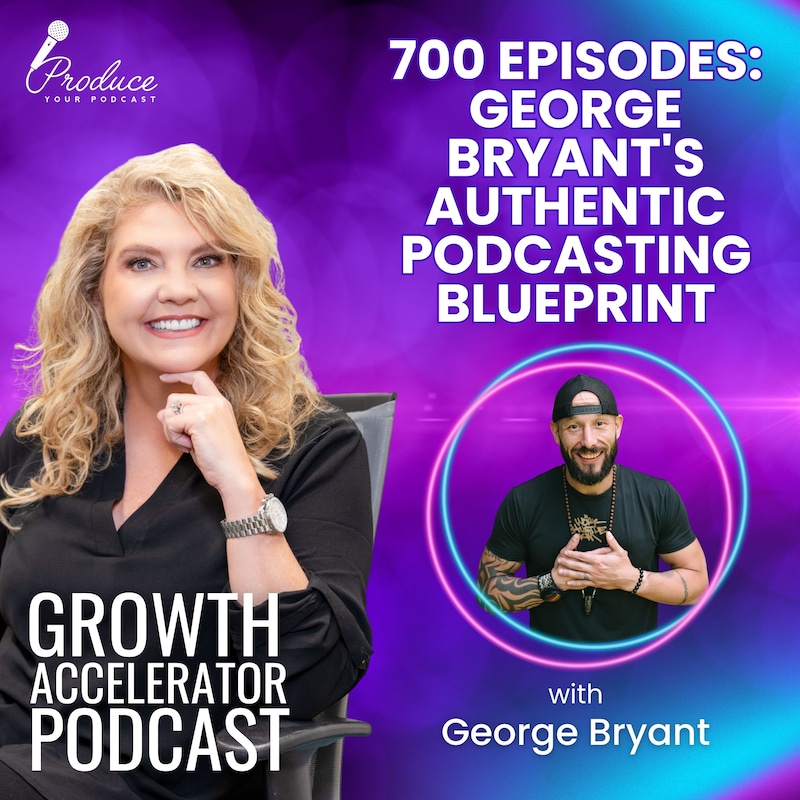
Podcast growth strategies take center stage as Traci DeForge welcomes George Bryant to the Growth Accelerator Podcast. With over 700 episodes of the Mind of George Podcast, George shares his journey of podcast consistency and authentic podcasting. This conversation explores the power of content iteration, from adjusting intro lengths to restructuring episode formats based on audience engagement. George reveals why he chose not to pursue podcast monetization through sponsorships, instead focusing on community building and deepening connections, which led to massive business growth. Learn how to grow your podcast audience authentically through purpose-driven content and meaningful guest interviews that serve your listeners first.
What You’ll Learn in This Episode:
✅ Why content iteration and strategic format changes can dramatically improve your podcast production quality and listener retention rates
✅ Defining your “why” or podcast purpose before launching is essential for maintaining podcast consistency through hundreds of episodes, but first, you must start.
✅The importance of producing for your audience, not yourself, and why it is critical for long-term success
✅ How building a podcast community without sponsorships by prioritizing authentic connection and audience engagement over transactions led to massive business growth
✅ Proven techniques for leveraging guest interviews as networking opportunities that expand your reach and create business growth
Sign-up for exclusive updates, newsletters, and tips on how to publish a professional-level podcast, all delivered directly to your inbox. Get on the List!
TIMESTAMPS:
00:00 George Bryant and his 700-episode journey with the Mind of George Podcast, exploring podcast growth strategies
03:28 George shares his spiritual awakening moment, the deep podcast purpose that drove him to launch his podcast while staying true to his convictions
09:42 Upleveling your podcast with content iteration, including intro adjustments, episode structure modifications, and format experimentation
11:56 Choose what is best for your audience over your ego
19:33 Build your podcast around your audience, not algorithms
20:23 Why opening the door matters more than perfection when starting a podcast, and debunking the myth of the market being saturated
29:30 Trust-driven podcasts create long-term business growth by generating podcast monetization through community building and authentic connections
34:23 Podcast marketing approach focusing on community building, depth over width, and networking through guest interviews
43:16 George leaves his final tip on getting your podcast rolling
KEY TAKEAWAYS:
💎 Authentic podcasting requires the right energy, staying true to your core purpose, being flexible, and listening to feedback.
💎 The power of growing your business through podcasting comes from creating depth of connection rather than transactional relationships, embracing your show as a networking tool that opens doors to billionaires and industry leaders
💎 Success in podcast consistency stems from removing attachment to immediate results and embracing your show as a legacy project—focusing on the ripple effect your voice creates rather than download metrics alone
👉 Check out my episode on The Mind of George Show- https://youtu.be/-NeuKO90z9Q?si=B1AVPNPu486ZCuop
ABOUT THE GUEST:
George Bryant is a visionary entrepreneur, New York Times bestselling author, and host of a top-ranked podcast that inspires millions to scale with soul. From his roots as an active-duty United States Marine for 13 years to his role as a celebrated food blogger and marketing genius, George has turned his raw, authentic journey into a global movement, touching millions through his storytelling, social media, and the #1 health app of 2015 (Apple).
His mantra, Relationships Beat Algorithms™, drives his mission to craft transformative customer journeys that replace cold tactics with heartfelt connections, delivering jaw-dropping results. Having empowered brands like Men’s Health, Onnit, and Vital Proteins, George brings battle-tested expertise to put the H.E.A.R.T. (Honesty, Empathy, Authenticity, Resilience, Trust) into your business. Through high-impact consulting, private coaching, electrifying live events like his Montana Experience, and the exclusive Relationships Beat Algorithms Alliance, he guides entrepreneurs to align their mindset, master their marketing, and build legacies that resonate. Ready to scale without sacrificing integrity? Connect with George today and ignite your business’s true potential.
George Bryant | Business Coach & Scaling Specialist (@itsgeorgebryant) • Instagram photos and videos
The Mind Of George Show - Podcast
The Mind Of George Show | Podcast on Spotify
RESOURCES MENTIONED:
Produce Your Podcast - Website
Transcripts
Join me in welcoming George Bryant, host of the Mind of George Podcast. Hello, George.
Speaker 2: I'm honored to be here. Girl, I told you I was excited to do this, so thank you so much for having me.
Speaker: Well, you know, I have had the luxury of us having a conversation on your podcast, which is really what led to me wanting to have you a guest, to you to be a guest on the Growth Accelerator podcast because.
eration for your podcast and [:Speaker 2: Yeah. I'm, I, it was exciting. It was an amazing conversation, and I geek out about this stuff because I think you and I shared in common the amount of people that don't make it in podcasting because they don't understand what it's for and what it takes, and I want to help change those statistics and support you in doing that.
And so I, I love it.
Speaker: Yes. Well, so that's why I am looking forward to an amazing conversation today. And I just wanna start out by, this is not necessarily a question, but more of a statement of absolute congratulations because by the time this episode releases, you'll have published over 700 episodes and.
episodes because blank.[:Speaker 2: Oh, that's a great, great question. So if I had to boil it down to one, the foundational one. The reason is, is because when I started it, it wasn't started to be a transaction or to achieve a goal. I started it because it truly was a why that I had deep in my heart and soul. And so it allowed me. To navigate the, the, the challenges that come with 700 episodes in a row and never missing one day in two a week is having conviction in it and understanding the purpose of it, both in the short term but also the long term and like why I started it and for me.
I had owned a podcast microphone for eight years before I started my podcast, and I had never launched it, and then God spoke to me so clearly on a mountain one day my business was in the tank. It like COVID just decimated all of my businesses. And he so clearly was like, you need to start a, a podcast.
anded on is that like I want [:And so that's allowed me to really, really go for the long haul.
Speaker: Right. And, you know, we couldn't have scripted this and, and for our audience, we did not prep this, but the fact that your answer is because it's the of the why is a very powerful example of the reason anyone should ever start a podcast. And that's whether or not you're using it to develop.
Generate leads or sales or visibility for your business or whether you just wanna talk about something that you're passionate about and you wanna change a conversation with your voice. You really have to understand going into the why and what a profound why you are given in terms of having that spiritual experience.
e other thing that is really [:Have you experienced any challenges of like the devil on Shoulder, the angel on the other of, you know, keeping that purpose really? Mm-hmm. Clear for your podcast?
Speaker 2: It's been the most intense proving ground of my conviction that I've ever, ever faced in business. And it's gone through many, many, many outfit changes, but always protecting that vision, right?
aying anybody shouldn't, but [:And if there's something I believe in, I'll be the first one to say it, but I'm not gonna let somebody come pay me to say it. I want this to be from my heart to yours, but there are. Probably four big distinct periods where when I started the show, I was doing three episodes a week. I was doing Monday, Wednesday, Friday, and I was like short, medium long.
And then I took feedback and I iterated, and I was like, two a week feels better. And then it was a lot of interviews, a lot of solos, and then I was like, oh, there's a structure in here, solo's on Monday. Guests on Friday, I can, I can do this. But then also life still happens when you have a podcast. I think about it like a news anchor who's on like the 5:00 AM news, like whether life happens or not, they gotta be up at three 30 and like on their way to the studio.
deeply convicted things for [:And there there's been quite a few podcasts from like, Hey guys, today we're just gonna have an honest conversation about where I am. And it's like, in those catalystic moments, it allowed me to be truly integris with my audience, but then also step into that new outfit and do it with confidence instead of doubt or overwhelm or resistance to doing the show.
from how you write your show [:And we often find when we do podcast audits with producer podcasts that people may have just put whatever they wanted to put out there just to get the show live, and then they get a hundred, a couple hundred episodes in. What they're now saying and doing, and the guests that they're having on their shows aren't exactly the vision that they initially had when they started, but it never really connects the dots that it's an okay thing to go back and actually change out your shirt or your sweater or your, you know, metaphorically speaking of your podcast.
And that really runs the gamut of not just making sure that you're. Properly optimized through the, the pieces of your show description, episode titles and things like that. But to your point, also just the absolute vision and that vision can change. Yes. That vision can change through how your cover art is presented.
ally aligned with you at the [:What changes have you seen from a tactical perspective, what evolutions has your podcast gone through over these 700 episodes that you would like to share that could inspire others to say it's okay to make a change?
Speaker 2: Yeah. Well, I, I think you made the most valid point iteration is how any vision stays alive.
That's the most important thing to remember, right? I always joke with people, like if I'm like, Hey Tracy, you win a brand new iPhone. I'm like, do you want the iPhone one or do you want the iPhone 17 Pro Max? And you're like, I want the Pro Max. I'm like, but it wouldn't exist if you didn't launch the one, and they didn't iterate it through the process.
gonna drop this five minute [:And then Friday I was gonna have a guest who was an expert in that topic. After about four months trying to wrangle and organize all of that together, it was almost impossible. 'cause I couldn't get a guest for that topic, or I'd have to preplan so far out. It felt inauthentic to me. So that's when I shifted to like, okay, I'm just gonna do Monday, Wednesday, Friday, and I'm gonna just follow a similar theme.
And then I was like, this doesn't feel right to me. I'm just gonna go Monday. To Friday. So I collapsed the Monday and Wednesday into one episode and I was like, I'm just gonna talk about it and teach the idea and it doesn't have to tie into the guest. And so that was like an actual big one that I was nervous about over and over again.
made like a rap song. It was [:And then I was like, what would happen if I just took it out completely? And so we took it out and we added like a five second zinger instead, like just basically welcome to the mind of your show. And the moment we did that, retention went up and then I realized that my ego wanted to keep it, but it wasn't actually serving my audience.
And my vision for the podcast was to connect with my audience. Well, I want you in my living room, so I'll do what's required to have you in my living room. And then the other big thing is intros for me, for sure. And so what I used to do is I would record the show. I would take notes and then I would just like from my heart do an intro that felt right.
f the script. I did that for [:And I was like, okay. Noted. So then I added a little bit more structure and did these short intros that were like 30 seconds open loops. And then ironically, about four months ago, I realized that I different desire and I have this desire to make like a four minute movie trailer. For every podcast. Oh
Speaker: wow.
That was the exact opposite of what I thought you were gonna say. I can't wait to hear more about that. And so now,
Speaker 2: as of like even yesterday, recording like four intros, I spend more time on the intro than I do the podcast episode itself. And they are like full stories of like where we started, how it ties in, how it ties into my story, what the guest talks about, why they're credible to talk about it, how we get into topics, how they apply to you.
, have you ever wondered why [:And then we transition into the show. And truthfully, since doing that, um, our retention has gone up because you're getting an entire sample size of like every topic, every idea. And when you listen, you're like, oh, I know what I'm gonna look forward to. Like, I'm gonna learn about this, I'm gonna learn about this.
And so I've been doing those recently, which I absolutely love. And so those are some of like the big changes. Um, and then the last one I would say is that I love, I. Interviewing my guests and having it be a cup of coffee and conversation. But I also realized that I needed to put it into some format so the person listening had some consistency so that every time they listened to a guest, they kind of knew.
ike a three part act when it [:And then I was like, you know, this would probably be more helpful to my audience if I put a little structure around my riffs. And so then I did the same thing as I created a structure that allows me to like set the stage of like, here's what we're gonna talk about, here's why we're gonna talk about, here's what I'm gonna teach you.
And those have probably been some of the biggest changes. And I as a creative was like, no way are you putting me in a box. You're not giving me structure, George, how dare you do this? And then the feedback started coming in of like, oh my God, I saved this episode. I love this. I keep coming back to it.
t digging into that idea and [:You know, art is, we create it, but it also is so dictated by the consumer of it. And when I think about a podcast, it's a piece of art, right? It's something, it's a public keynote to however many thousand people you have listening, right? And you want them to receive it. You want them to feel it, you want them to hear it.
And so I think iteration is the most beautiful, beautiful part of art is that if you paint an entire picture and you don't like a part of it, you can just paint over it and repaint it, but you keep iterating it as you go.
Speaker: For the perfectionist in me that just like makes my stomach flip, but the creative in me loves when I'm able to give myself permission to do that.
Yeah, and I think that's one of the important takeaways is that you have to give yourself permission to not put yourself in a box. Like other people aren't technically gonna put you in a box. It's that perceived box that you put yourself in that you have to be really careful about. You had so many great growth Accelerator tips to unpack that.
wanna recap a couple of them [:So all throughout what you were talking about through the iterations of your show, everything that I heard is. My passion, my desire to be authentic. I needed to stay in love with my podcast. I needed to stay in love with my process. If the process wasn't working for me anymore, I wanted to be able to make it continue to work for me because 700 episodes takes a lot of energy.
same passion. So you've done [:And then I also wanna just highlight that you are willing to take chances. Mm-hmm. And I think that, that's the other thing. I think, um, to your point, it may have taken you a while to take that chance. And you are not alone in the fact that you had a microphone in your closet for eight hours. Eight, eight hours.
Eight, eight years. Yeah. No. Eight hours you would've been alone. Yeah. Eight years. You're actually not alone in that. We find so often. People, you know, get that divine message or their gut feeling, or somebody tells them You should, you should. And they buy the equipment. They, in some cases they might buy the $49 microphone that, that you can get at Best Buy.
ild out a studio and had yet [:Mm-hmm. And I think that's just such an important thing for, for if you're listening or watching and you're thinking about starting a show like. You wanna overcome that barrier and know that your voice, like it's one of the most powerful things in our body. It's how we communicate our emotions. It's how we verbalize our desires.
It's how we make a point. And it's also the place like in fear and stress and other areas that it gets stuck. And so it's a very powerful vehicle. So I honor that you are willing to share that it took eight years and a message from God to do it.
Speaker 3: Yep.
Speaker: But look at the impact that you've made as a result of it.
I think that the other most [:Not what's in it for George, but, but you're getting to do both 'cause you're loving the creative process and, and George is showing up in every episode and happy to do it. But what you're really focusing on, and the reason that you're making these changes and that you're staying creative and innovative and iterating, is because you really wanna meet the needs of your audience.
And that, to me, among any other key to success is the fundamental key to success is designing a and creating a product, a service, a podcast, anything that you're creating that's for an audience, that you're creating it based on what they're asking for and what they need and what they want.
Speaker 2: A hundred percent.
nd I or anybody listening to [:Yeah. And if you open the door and people come, but they don't come back. Sometimes it's not about the food or the ambiance, it's just about connecting with them and asking them what they want to be different. But all of that comes through the process of actually opening the door. Yes, and I would much rather, like all I do is coach entrepreneurs on how to scale, but I would much rather somebody launch a show with a minimum commitment of 50 episodes and have solid evidence that it works or doesn't work.
didn't I? But the moment you [:You might be like, nobody's going to eat this. And then all of a sudden it goes viral on TikTok and there's a thousand people eating your food that you didn't think tasted that good. And so we're so hard on ourselves and we're such a critic. But we also forget about the power of podcasting. We don't understand the ripple that happens, right?
Like I get messages all the time where it's like, Hey, I've listened to your show for five years. I was driving down the highway with my husband and kids. We put it on, my husband loves it. Now he's listening, and he sent it to his father. And that one episode helped him navigate this one thing. And it's like, it's almost hard to measure.
Speaker: It's the
Speaker 2: ripple that happens, but the ripple can only happen if you actually open the door. And I would rather, and you can never have a ripple if
Speaker: you don't start the wave. A hundred
Speaker 2: percent. A hundred percent. And I, it just, you said it, and it's so powerful because it's no different than anything else in life.
Right. You, you don't really [:I see all these resistance and objections that get in the way, and I always joke with people, I'm like, what would you do if 50 people showed up into a live audience for you every day? They're like, I would love it. I'm like, then why are you afraid to launch? Because you're comparing it to somebody's after state and you're not allowing yourself to take the first step that would allow you to build to that after state.
Right? Like our, our starting line is drastically different than everybody's finish line. But every one of those finish lines started the same way that we are. And I can take the biggest podcast in the world and you go back and look at their first three episodes, their first 10 episodes,
, or you always [:Speaker 2: just have to start, right?
Mm-hmm. And I would rather somebody start and know and give themselves enough time to like really feel it out, then never start and wonder, because I just think that that's one of the worst feelings in the world.
Speaker: You're also leading me into one of the biggest MythBusters that I want to pause and reiterate for anyone who has this thought.
It is not a saturated market. We there, I had a conversation with the, um, CEO of a PR firm yesterday and we were talking through the differences between PR and podcasting and she said, I, my clients ask me a lot. Is it too late? Is podcasting like, is it done? Is it saturated? And I said to her, I said, you know, I love it when I get that question because the answer is just a flat no.
erstand, that's merged a lot [:The reality is, is that the media has done a good job of promoting podcasting so well that everyone thinks it's saturated, but it is a wide open opportunity. But I think this connects back to what you were saying about fear and motivation and giving yourself permission to just start and the ripple effects.
I think people are like, oh, that's saturated. I, I'm not gonna go there. But what they're really saying is, I don't wanna jump into the deep end of the pool. Yep.
Speaker 2: Yeah, a hundred percent. And I mean like, I'm gonna be really, really cheesy here. Fear stands for false evidence appearing real. Yes. That's all it does, right?
y human brains crave comfort [:Speaker: of the most amazing possibilities can come from getting out of that company.
Speaker 2: 100%. There's this incredible book written by a behavioral psychologist called Jonah Berger called the Catalyst, and this stat blew my mind. A human being has to perceive a benefit th or 2.5 times greater than their current situation to be open to change. Which means if somebody is like making a hundred thousand dollars a year in their job, in order to even be open to like trying to get into a new field, they'd have to see the possibility of $250,000 a year or else they'd settle.
nd with my clients is I just [:I tell people if I'm scared, I tell people, if I feel like my podcast is an echo chamber and I haven't heard from anybody, I tell people and then I get 75 dms and they're like, please don't ever stop the show. We're listening. We just keep forgetting to respond. Right. It is. It is your couch. It's your living room.
That you're choosing to bring into existence in the world and you get to set the rules and the standards, but you can make it as comfortable as you want to make it and like the safest place for yourself as well. And I just go raw authenticity all the time and it feels like home to me every time I hit record.
Speaker: And see, here's the thing. Um, everyone who is a host, a creator, or considering to be a host or creator, that's the key to making your guest comfortable. Because if you are showing up that way, which I know because I've been a guest on your show, and you 100% aren't just talking the talk, you walk the walk and everything you just said.
at gives the opening and the [:But as a host, if you can. Step into that space first, and you can show up authentically and you can be real. And I know auten authenticity is a bit of a catch word these days, but not when it comes to using your voice. Like that is the one area where authenticity cannot be faked. And I'm not talking about technology and ai.
I am talking about human beings voices. That, that is the one area where, again, if you're fearful, if it's shaky, if you're excited, like in, in my case, zoom loves me, they always think I'm playing music, but actually it's just the pitch of my voice. Even though it uhhuh according to Zoom, it always wants to know if I wanna reset my music settings.
ere your passion, your, your [:But even just ri, having that ability to elevate other people's energy or in some cases relax them, which I think your energy does probably a lot better than mine. 'cause my, because I am, you know, the type A plus plus and the more excited I get as evident today, the more excited my energy goes. But at the same time.
you're connecting with your [:How you're connecting with your guests. Yes, absolutely.
Speaker 3: It said so well said. So said so well.
Speaker: Well, we're gonna pivot for a moment. Okay? Because I really wanna have the opportunity to dig into, you said something that really piqued my interest and that is I've made a conscious decision not to accept sponsorship into my show, which I 100% support.
We have podcasters that we work with that wanna monetize it in the, in the best way possible. I am a huge believer in. Focusing on the integrity of your content first and let the other pieces come into place. And if sponsorship is one of those, then let's navigate a way to keep that integrity intact and and have those two collaborate.
your community and, and your [:Speaker 2: Yeah. I, I love this question. I love this question, so, oh, not
Speaker: more than me.
Speaker 2: Yeah. So. We can have a competition in this, but I'll let you win. I surrender. Tracy, you win. Okay. Thank you. You love it more than me.
Speaker: I just, I think the audience is probably like, could she just stop talking so he could answer? I'm gonna do that.
No way. That's
Speaker 2: one of those false thoughts in your brain. Get rid of that. Cancel, cancel, cancel. Okay. We'll out. We'll get that out. I love your energy. That's why I loved having you on the show.
Speaker 3: Thank
Speaker 2: you. I think for me, what I was very intentional of, like I've been facilitating live events for almost 20 years now, and.
here anymore, I want them to [:I loved this. I felt like I was in this living room. Like for me, it was about the feeling that I wanted to create. And I think about myself of like when I consume, what doesn't make me feel that way. Constantly being pitched, having to skip through so many ad roles. And then there's other podcasts where I listen to them and I'm like, oh, I'm glad that they said that because it feels resonant and there, but I just made that decision.
And so for me, the intention in the show was to create depth that I can't create in six seconds. Right. I, I'm competing on Instagram. I'm competing on YouTube shorts, competing on TikTok, where the attention span isn't there. I wanted depth, I wanted real connection and coffee conversations, right? So if you're a marketer, it's middle of funnel, right?
ch the show, I actually as a [:And I look at my podcast like it's a community, whether I have your email or not, whether you're in my community or not. I see it as this community assembled around shared values, and so that was my number one goal, ironically. Without all those calls to action, without all those asks, and I'm totally for them.
I'm horrible at them. I don't run repeated scripts. I'm not like, oh, like half the time my team is like, you didn't even tell 'em about the event. I'm like, I forgot. I'm sorry. I'll tell 'em again. Right? Like, they're like constantly yelling at me and then even my customers, I get that or my listeners are yelling at me.
has created is this massive [:Or, this changed my life. Can you do another episode on this? Like it is 100%. It feels more like a community driven podcast than it is a George driven podcast. It's co-created because I listen and I love listening, and what I crave more than anything is connecting with people all over the world. And so I just made this policy with myself that I want my podcast to feel like a full open door policy.
Anything that comes up, any ideas, any feedback, and trust me, sometimes I get harsh feedback and I'm like, thank you. That is so true. In that landed. That has deepened everything. And in some of those conversations they're like, Hey, do you have anywhere that like I can be in your world? I'm like, yeah, let's talk about it.
e agency to pursue it, and I [:Now more than it was earlier. But when I was early on doing interviews, I just wanted to talk to people I was curious to learn from. I was like, I want to know what you do. Like I wanna learn that in my brain. And so from day one with guests, it was like, I'm gonna be a student and I'm gonna ask you everything that I want to know about your gift, because I don't know that gift.
I don't have that present in my box. And so I got to learn, but ironically what happened is half the people I ask about their gifts, they're like, what are your gifts? Can you get on a call with me? I'd love to have you as a coach. I need to introduce you to this person. You need to go on this person's podcast.
and expand my community. And [:Speaker: Oh my gosh. That is a record. I, I have. Talk to a lot of podcasters in the last decade of my life of Running Producer Podcast in the Podcast Professionals Association, and never have I ever met anyone who has been on nine.
Thousand podcasts.
Speaker 2: And the only reason that's not including
Speaker: the 700 that you've related, that's not
Speaker 2: including the 700. That's
Speaker: like 10,000. We might as well just kind of round up a little, but come on.
ink I did my first podcast in:I found every show you've been on. Since 2010 and we had to make a database of these, so we knew the exact number. It was like 9,400 or something. But I can remember [00:35:00] back 20 14, 20 13, I was doing eight shows a day. It was my only job 'cause I was running a food blog and I just loved podcasting. I was like, oh my God, I get to meet all these people.
I get to meet all these people. And so for me. Community and people means everything to me. And so the number one strategy that I have is my podcast has allowed me to have a bridge to people that I wouldn't normally get to talk to.
Speaker: Sure,
Speaker 2: yeah. And now I get to learn as a student, but then I have billionaires on my show.
I have some of the world's smartest people on my show. And because I have a show. They want access to share their gift with the world. I get to win in every bucket. I get connected to the person. I get to learn from them, and I get to share their genius with my world. That is like the biggest way that I use it is just to increase the size of my community of people who think, feel, and believe the same things that I do.
y other thing that I've ever [:I have a book coming out, or I have a product I want new people to hear about, and it creates an into a door that I wouldn't normally be able to get into.
Speaker: I feel like, George, that you may have been studying the producer podcast playbook behind the scenes and I just didn't know about it
they're included in it, even [:Pods on or taking a walk, they wanna feel like they're right there with you. And the strongest, most inexpensive, because it's free way to organically grow a podcast, is to have your audience feel included in your conversation with you and your guests, or just you, because they are gonna feel a part of something.
And when you feel a part of something and you're excited about something, what do you wanna do? You share. You wanna share it?
Speaker 3: Yep.
Speaker: So just kudos like I. I mean, I'm kind of still throwing a, throwing a, a rye a bit about the 10,000 appearances. I think that is more than just impressive. But if anybody, forevermore ever in the future of my strategy sessions ever tells me they're concerned about having time to do something, I'm gonna say.
And you need to connect with [:Speaker 2: It is the greatest gift of my life. Some of those people I have been over, I think a hundred people's first episode.
I won't say no to anybody. 'cause I Somebody was my first episode. Yes. Right, exactly. And
Speaker: I love that. I've never forgotten it. I love that. I love that because. We have a full service guest booking agency and I am always quite frustrated when our clients, I only wanna be on the biggest shows. It's a waste of my time if you can't get me on the biggest shows.
And my philosophy, and it sounds like we're aligned at, which is not surprising, is that some of the smaller shows actually will get you better results because they're way more aligned, the it's quality over quantity every single time. And you, and, and especially if you're a coach or a consultant or you're, you're looking for that type of referral type feedback.
You [:Speaker 2: I, the game of podcasting is depth not with Yes, every single time.
The point that I would make, and I don't say this to be a strategy for somebody, but I, I remember one particularly in person, I was like his third show, and then we ended up doing four shows on his show in a year. That podcast now gets 65 million downloads a year.
Speaker: Yeah, you never know where something's gonna grow.
point, somebody finds episode:And so. I think to your point, it's, it's really [00:40:00] about depth every single time, and everybody forgets that. But I've had the most random shows where I'm like, yeah, I can talk about that topic. I've never spoken to this audience before. Sure, this is fun. And then those people are still in my world eight years later and I would've never even seen it.
And so it, it constantly grows me. As a strategist, as a podcaster, as a coach, as somebody who loves teaching for a living, because it constantly expands my horizons of like, well, where can this message land? I've ended up keynoting doctor conferences and medical conferences about personal development and customer journey, and I like wouldn't have known, and les, that person who heard a show was like, I'd love for you to come talk to my audience.
I'm like, this would resonate with them. They're like, oh my God, this would resonate so deeply with them. And so it also becomes a gym for me because I start finding all of these opportunities in places I get to grow in delivering my message. And so I think it's, it's so important.
Speaker: Well, and the [:And constantly to create and produce your own show or, or align with a producer to release your show. You can guest on podcasts, you can just make that part of podcasting, part of your business model, part of your marketing strategy, part of your being a better human and connecting to other human strategy and learn from other people.
Because just showing up and guesting on podcasts does it gives you the width and the depth of being able to showcase your expertise. While at the same time, getting people to get to know you and meet you and have like-minded connections with you without you having to invest in everything that it takes to run a successful show.
So,
Speaker 3: yeah.
w, you have hands down, just [:Two B, and then I'm gonna worry about C, D, E, F, and G, right? Mm-hmm. So what would be the one practical tip that you would. Other than just start where you are. 'cause we've already said that one, you're not allowed to use that one, which is the one I often use myself, which I probably used on your show. But what would be one practical tip that you could deliver today to someone who's either trying to start a show, grow a show, or even show up as a [00:43:00] guest on a show?
That you could give them, that they could implement today that could make their journey easier or smoother?
Speaker 2: Hmm. It's a great question. And since you took the easy one off the table,
Speaker: of course I did. I like the mind of George. I want people to experience. I do. I love it.
Speaker 2: I love it. And I'll go, I'll go a little deeper because whether you wanna start a show, be a guest on a show, or you're currently running a show, I promise you in this moment there is an idea that you've had that you haven't taken action on.
A show that you haven't recorded because you're afraid of what's gonna happen, a podcast you haven't pitched because you're afraid they're gonna say no, or a podcast you haven't recorded yet because you're afraid to start. Whatever one of those things is true. Make a deadline within the next seven days that you will do that one thing.
episodes in my show, I [:And I was so afraid, and the exact opposite thing happened. I got more listeners, I got more people to connect with me. I had new friends created out of it. And I have pitched some of the biggest shows in the world, not by reaching out to them, but finding somebody they know and be like, Hey, do you know them?
form and start posting it on [:And it's gonna be a little bit scary and it's gonna make you a little uncomfortable and you're probably gonna sweat a little bit. But I promise you, once you hit go, you've already put yourself in the race and then you get to continue the race. But you can never finish a race that you don't start. And so, yes, starting where you are is important, but moving the starting line is just delaying the inevitable and robbing you of every chance of success that you've ever had.
So that would be my advice.
Speaker: I think you'll join me in saying, steal this strategy. Give yourself permission to take the action that's on your heart
Speaker 2: mm-hmm. To
Speaker: move you forward.
Speaker 2: Mm-hmm. Ah,
Speaker: I have loved this conversation. I do not want it to end, but it has to end because our engineer, Abe, is going to cut us off eventually.
in wrapping up today. I want [:And how is the best way, what is the best way? Let us know how to get in touch with you. And of course, we'll also be in the show notes of the show so that people who may not be able to write it down right now will be able to access it, but. George, please. How can we continue this conversation for our audience?
Because I know you and I, we will be continuing this conversation. Yeah,
Speaker 2: yeah, of course. I make it really easy. Even my show name is easy to remember, but I'm gonna, I'm gonna make this really easy. My favorite color's pink. And if you don't believe me, go to mind of george.com. It looks like a Care Bear threw up on my website.
I do that on purpose 'cause it's my favorite color, but my podcast is called The Mind of George Show, so it's everywhere where you listen to podcasts. But if you want it easy, if you go to my website. Mind of george.com. The podcast tab has our top 10 episodes based on audience reaction and breakthroughs.
have an easy place to start. [:I will give you strategy advice, I'll help you with marketing, I'll help with your show, whatever that is. All you have to do is ask, and I'll handle the response. And so my Instagram is, it's George Bryant and the it's is included, and that's the best place to find me.
Speaker: Okay, everyone, you heard it. Here he is not only giving you permission to take action with what's on your heart.
He's giving you permission to take action by getting in touch with him if you have a question and my favorite is Turquoise, so cheers. Cheers, cheers. Thank you for such a wonderful conversation. We appreciate you so much, and I just can't wait for what's next for both of us and having an our very next conversation.
Speaker 2: Thank you.


