Shownotes
Help us become the #1 Data Podcast by leaving a rating & review! We are 67 reviews away!
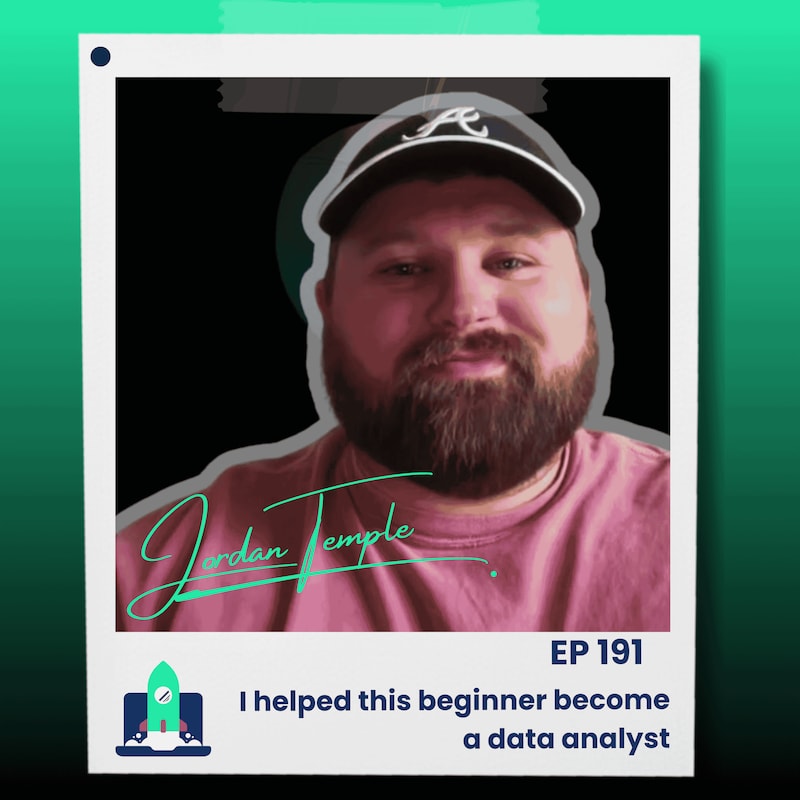
Most aspiring data analysts struggle with knowing what projects to build. This list of 5 projects spans beginner to advanced levels and is designed to impress recruiters and hiring managers.
💌 Join 30k+ aspiring data analysts & get my tips in your inbox weekly 👉 https://datacareerjumpstart.com/newsletter
🆘 Feeling stuck in your data journey? Come to my next free "How to Land Your First Data Job" training 👉 https://datacareerjumpstart.com/training
👩💻 Want to land a data job in less than 90 days? 👉 https://datacareerjumpstart.com/daa
👔 Ace The Interview with Confidence 👉 https://datacareerjumpstart.com/interviewsimulator
⌚ TIMESTAMPS
00:00 – From construction to Senior Financial Analyst (no applications)
03:06 – Why his non-data background actually helped
08:24 – The projects + portfolio that made recruiters reach out
10:27– How LinkedIn led to a job offer
23:03 – Biggest lessons for breaking into data
🔗 CONNECT WITH JORDAN
https://www.linkedin.com/in/jtemplemba/
🔗 CONNECT WITH AVERY
🎵 TikTok
💻 Website
Mentioned in this episode:
📰 Join 18k Other Analysts in My Newsletter
Get 1 weekly newsletter helping you take the next steps in your data career! Check it out: https://datacareerjumpstart.com/subscribe
Build Your Data Portfolio
We will build your data portfolio site for you for $1. All you need to do is go to MyDataFolio.com/build and enter your LinkedIn URL. Wait 30 seconds. And BOOM! You have a portfolio! Try it.
Transcripts
Today I wanna tell you about
my friend Jordan Temple.
2
:Jordan was a construction
cost estimator and a hundred
3
:percent new to data analytics.
4
:No experience whatsoever,
5
:but somehow a few months later,
6
:he landed a senior financial analyst role.
7
:Without even applying for the job.
8
:A recruiter actually found him on
LinkedIn, messaged him, and he had
9
:a job offer shortly thereafter.
10
:So in today's episode, we'll talk about
what Jordan did, where I helped him,
11
:and how you can steal our strategy
to get recruiters in your inbox and
12
:ultimately land your own data jobs.
13
:So let's go ahead and dive in.
14
:But first I wanna tell you
that this episode is sponsored
15
:by me in my own newsletter.
16
:Every Wednesday I send a newsletter
designed to help you land your data job.
17
:It has a lesson, job listings,
and a personal note from yours.
18
:Truly,
19
:it's a hundred percent free, and you
can join 25,000 other aspiring data
20
:
21
:slash newsletter.
22
:Or you can just click on the
link, the description down below.
23
:Now let's go ahead and hop in.
24
:Avery Smith: our guest today is Jordan.
25
:Jordan went through the Data
Analytics Accelerator program and
26
:now is a Senior Financial Analyst
27
:at a company called,
28
:extentnet Systems.
29
:Senior Financial Analyst.
30
:Beforehand, I'll let
you kind of explain it.
31
:You are a cost estimator.
32
:Is that right?
33
:Jordan Temple: yeah, yeah.
34
:So work for a general contractor.
35
:And I was in the estimating
department, but it was a lot of
36
:budget and cost estimation for
ground up construction projects.
37
:Avery Smith: Okay, so like, is this
like residential or more commercial?
38
:Jordan Temple: It was mostly
residential multifamily apartments
39
:and some single family homes.
40
:Avery Smith: Gotcha.
41
:So if someone's building a new home
and they want to like, maybe they
42
:had like a plan, for example, from an
architect or something like that, or
43
:maybe it was like a developer had a
bunch of homes they want to get built.
44
:They'd come to your company and
specifically you and be like, Hey,
45
:how much does this get a cost and
you'd kind of give an estimate
46
:of what that project might cost.
47
:Jordan Temple: Yeah, exactly.
48
:They, would approach us with their
construction drawings and we would look
49
:through them and essentially put together
a conceptual budget based on what we
50
:saw in the drawings and go from there.
51
:Avery Smith: Okay.
52
:So I'm not a construction expert.
53
:I haven't been really exposed to that
industry very much, but that doesn't
54
:sound super data analytics y to me.
55
:Would you agree with that?
56
:Or,
57
:Jordan Temple: Yeah.
58
:No, it's it's definitely not really
the the most data thing about it is
59
:looking at historical costs just to
see What has changed over the years
60
:that way you can use that to forecast
what future costs are going to be.
61
:Avery Smith: okay.
62
:So in a matter of a few months, you're
able to go from a role that wasn't
63
:necessarily very related to data analytics
to a senior financial analyst role.
64
:So that seems like a pretty
big jump, especially getting
65
:that senior in that title.
66
:So in today's episode, I was hoping you
kind of walk me through that journey of
67
:going from, you know, this cost estimator
to a senior financial analyst and what
68
:exactly it took, you know, what, decisions
did you make that you're glad you make,
69
:what are some things you kind of wish
you did maybe earlier in the process?
70
:Does that sound good with you?
71
:Jordan Temple: Yeah, that sounds great.
72
:Let's get started.
73
:Avery Smith: Okay, sweet.
74
:So I guess maybe we'll work
a little bit backwards.
75
:So you got the senior
financial analyst role.
76
:What are some of the, you know,
Qualifications for this role
77
:that they were looking for.
78
:Jordan Temple: One of the biggest things
that they were looking for was someone
79
:who had a construction background.
80
:They wanted someone who I guess
understood that side of the business.
81
:Because first and foremost, we're
a telecommunications company.
82
:We work with AT& T, Verizon, T Mobile.
83
:And the big network providers and
we install fiber optic cable for
84
:like outdoor and indoor facilities.
85
:So they wanted someone that was
familiar with the construction
86
:side of things and had dabbled
in data just a bit for the role.
87
:So that's, kind of their, main asks.
88
:Avery Smith: Okay.
89
:And I think that's really important
to, realize is a lot of data roles.
90
:I kind of said your background
wasn't very data analytics y, but
91
:we see that that's actually kind
of what they wanted in this case.
92
:And there's actually a lot of roles
like this, no matter what role you're
93
:currently in, if you're listening to this.
94
:Like you can probably use it in
data analytics one way or another.
95
:We've had a lot of teachers come
through, the data analytics accelerator
96
:program, and they ended up becoming,
you know, educational data analysts,
97
:or they become data analysts for a
school system or some online learning
98
:platform or something like that.
99
:And in your case, you took
your construction background.
100
:Now you're kind of like a construction
data financial analyst type.
101
:Jordan Temple: Yeah, that's,
that's essentially what it is.
102
:Avery Smith: Okay.
103
:Which is really cool.
104
:I don't think I realized that
it did telecommunication stuff.
105
:One of the projects I did in my
consulting company, Snow Data Science,
106
:you might find this interesting, was
I helped create an algorithm based off
107
:of historic data, like you mentioned
earlier that it was for a company.
108
:I don't even know what they exactly did
but they provided quotes of how much it
109
:would install, how much it would cost to
install I guess like high speed internet
110
:in their like residential office places.
111
:So a lot of the times they had
like fiber going close to their
112
:You know, business, but it didn't
actually tie into their business.
113
:And so they'd want to quickly, they
want their salespeople to be quickly to
114
:estimate the cost of what it might cost
that like this, company I was calling,
115
:you know, how much is it going to cost to
get high speed internet in, our building?
116
:Well, these salespeople
obviously didn't really know.
117
:And so what we'd use is the historic
database, a bunch of different factors,
118
:and try to create a predictive model
to be like, yeah, it's going to
119
:cost, you know, 50, 000 or something
like that, and give these sales
120
:people a quick and dirty estimate.
121
:So anyway, it sounds like at least a
little bit similar in those spaces.
122
:Jordan Temple: It's, , somewhat
similar to what we do.
123
:Avery Smith: Okay.
124
:That's, really neat.
125
:So now that, you're at this company what
tools are you using on a day to day basis?
126
:Jordan Temple: So the role
is really Excel heavy.
127
:We do a lot of analyzing data
in Excel, you know, using pivot
128
:tables and things like that.
129
:Other than Excel, we use
Power BI a fair amount.
130
:Not so much building reports anymore.
131
:Most everything has already
been built and put together.
132
:Now we just utilize those in our day
to day functions, such as validating
133
:costs and things like that across
the markets that we do work in.
134
:Avery Smith: Yeah, that's awesome.
135
:First off, it's really cool that you
can land I just want everyone listening
136
:to realize you can land a senior
data role with like just using Excel.
137
:Jordan's proof of that, especially
if you're leveraging that, senior,
138
:background from construction that you
have, because you do have all those
139
:years of experience in construction.
140
:and then also it's just awesome
that you're using, you know, Power
141
:BI, not necessarily that you're
creating these Power BI reports, but
142
:you're able to know how they work.
143
:If they break, you could fix them, those
types of things, because you are right.
144
:That like a lot of us, especially
when we want to you know, when we're
145
:new to this, we're like, Oh my gosh,
I'm going to go to this company.
146
:I'm going to start doing the coolest
things on planet earth, and I'm going
147
:to save the world and make these cool
visualizations and dashboards and models.
148
:But what it comes down to a lot
of the time is we did that a long
149
:time ago and you just need to help
fix stuff if it breaks or just
150
:Jordan Temple: Exactly.
151
:Mainly just there to maintain
it if something messes up.
152
:Or if you want to create something
on your own, you know, you would
153
:think is beneficial to your
role specifically, you know.
154
:Avery Smith: yeah.
155
:Okay.
156
:So that's a little bit
about what you do now.
157
:Let's talk about how you got this role.
158
:So what made you interested in
data analytics in the first place?
159
:Jordan Temple: So, I'm a big baseball
guy, a big baseball fan, so analytics
160
:got really big in baseball, I
don't know, 10, 15 years ago, so.
161
:Just that's kind of how I first got
introduced to data analytics and that
162
:whole train of thought and mindset.
163
:And I've always kind of had it in
the back of my head that it would
164
:be really cool to work in data.
165
:I've got my MBA.
166
:I took a few analytics
courses really enjoyed those.
167
:And whenever I finished my program, I was
hopeful to get some sort of analyst job.
168
:You know, that didn't work out.
169
:I ended up getting into construction.
170
:And worked in construction
for several years.
171
:Enjoyed what I did, you know, working
in construction, but knew that I wanted
172
:to get into something a little more,
you know, numbers and data driven.
173
:So that's whenever I found your program
and attended one of your, and, you
174
:know, informational calls and, you
know, things took off from there.
175
:Avery Smith: Yeah.
176
:Okay.
177
:So you were kind of
like a money ball child.
178
:Jordan Temple: Yeah.
179
:Yeah.
180
:Very similar.
181
:Avery Smith: Yeah.
182
:That's awesome.
183
:I love the movie money ball
of the book money ball.
184
:Yeah, I think, analytics and baseball and
sports in general is really fascinating.
185
:And, that makes sense.
186
:So you kind of done this
business stuff in the past.
187
:You know, you were hoping out of the
MBA to maybe land an analyst job.
188
:What do you think the main difference
between, you know, coming out of
189
:your MBA versus, you know, this
last time you tried to get into
190
:analytics, what was the biggest
difference that in the end for you?
191
:Jordan Temple: I would say just having
the hands on experience with the projects
192
:that were done in the program and having a
portfolio, you know, none of those things
193
:were really covered in my MBA program.
194
:It was just more or less an introduction
to different analytic systems and
195
:more theory based than application.
196
:Avery Smith: Yeah.
197
:And there is a difference between the
theory and the application, isn't there?
198
:Jordan Temple: yeah, no doubt,
199
:Avery Smith: Yeah, that,
totally makes sense.
200
:For me, even when I got my master's degree
at Georgia Tech in data analytics, it's
201
:one thing to learn the skills, right?
202
:It's another thing to apply the
skills, and then it's a whole other
203
:thing to show off your skills.
204
:And for me, I mean, you can
kind of in, the program, I
205
:try to do all three at once.
206
:But if you're not cognitively
thinking through, it's really
207
:easy just to stop at step one of
learning the skills and skipping the
208
:applying and skipping the showing.
209
:Right?
210
:Jordan Temple: Mm hmm.
211
:Avery Smith: Yeah, I agree.
212
:I think my program did a good job
of teaching me, but didn't do a good
213
:job at helping me make it applied and
helping me , show off those skills.
214
:So, okay.
215
:You joined the program.
216
:We're doing projects for
showing off our skills.
217
:You start doing a little bit
more stuff on LinkedIn as well.
218
:Correct.
219
:Jordan Temple: Yeah, yeah.
220
:So started posting a few times a week
utilize the articles function and
221
:would post my module projects on those.
222
:Reach out to different content
creators on LinkedIn and, you know,
223
:leave comments and engage with,
other folks in the industry as well.
224
:And that was kind of how
I got my foot in the door.
225
:Avery Smith: Yeah.
226
:Okay.
227
:I like that.
228
:Explain that a little bit more,
tell the listeners, how did
229
:you get your front of the door?
230
:Jordan Temple: Yeah, I mean,
just being proactive on LinkedIn.
231
:I mean, anything from posting about,
you know, my, weekly goals and steps
232
:within the program interacting with
other students in the program, posting
233
:projects asking for feedback on things.
234
:I mean, just trying to be
as proactive as possible.
235
:Avery Smith: Yeah.
236
:You did a great job.
237
:You have a great looking profile.
238
:You, commented, you know,
thoughtful, left good comments
239
:and you also created good posts.
240
:You know, like you mentioned, you create
some articles, you create some posts.
241
:And eventually that got to a point where
someone, noticed a recruiter DMD, right?
242
:Jordan Temple: Yeah, yeah, that's
how I have my current role is someone
243
:DM'd me about the position asked
me if I would be interested in it.
244
:They sent over the the job description.
245
:I read through it and did not
feel qualified for it at all.
246
:I felt like it was just way over my
head, , they were pretty insistent that
247
:I would be a good fit for the role.
248
:So I was like, you know
what, let's go for it.
249
:I had a call with someone at
the the recruiting agency.
250
:We, spoke for 30 or 45 minutes, I would
say just getting more familiar with each
251
:other, my background and things like that.
252
:And they were like, yeah,
everything looks good.
253
:We're going to send your profile on to
the company and we'll let you know that
254
:they're interested in moving forward.
255
:And I would say within 30 minutes
of the conversation being over, they
256
:reached out and said that the company
wanted to set up an interview with me.
257
:So that was really nice.
258
:Avery Smith: Yeah.
259
:And, I think there's something really
important here because this was a
260
:third party agency, recruiting agency
that reached out to you via DM on
261
:LinkedIn said, Hey, we saw your profile.
262
:We might think you're a
good fit for this role.
263
:And then they presented you to
the company and we're kind of like
264
:backing you like, Hey, this is our
candidate or one of our candidates.
265
:We feel really strongly about Jordan.
266
:And this is something I like
to call the job hunt reversal.
267
:It takes a lot of factors, you
know, one of it is luck, right?
268
:Because one of the reasons why
this company liked you so much
269
:was, you were in the area that
they were looking for, right?
270
:They weren't like, they're looking
for someone in a hybrid role.
271
:We'll talk about this here in a bit.
272
:So that was kind of like, the
location was a good for you.
273
:You had a great background that's on you.
274
:Cause you had, you know, you have done
the choices you've made have given you the
275
:background and experience that you have.
276
:So that was on you.
277
:You had a great LinkedIn profile.
278
:You know, which is something that
we've been working together on, like
279
:making sure LinkedIn profile was good.
280
:We were active on it so that we were
like hyping up the LinkedIn algorithm
281
:to like be interested in us and, you
know, have a better chance of attracting
282
:recruiters and stuff like this through
that whole process, you weren't
283
:going out and applying for that job.
284
:That job was almost
applying for you, right?
285
:Like all of a sudden, instead of
you contacting a recruiter and
286
:being like, Hey, please hire me.
287
:The recruiter reached out to you and
was like, Hey, please work for us.
288
:Jordan Temple: Yeah,
that's exactly how it felt.
289
:I mean, it was just like you
said, almost a reversal of roles.
290
:Avery Smith: How did that feel?
291
:Like, was that a way better process
than what you did previously?
292
:Jordan Temple: Yeah, I mean, it
definitely it was different, but I mean,
293
:in a good way, you know, it definitely
felt much better than me going to
294
:these different companies websites and
having to register for their applicant
295
:tracking systems and, you know, mass
applying for jobs, you know, it was
296
:it was pretty effortless on my end.
297
:They reached out, like I said,
via LinkedIn, asked for my resume.
298
:And if I was interested in having a
conversation and that was really all
299
:of the paperwork that I had to do.
300
:Avery Smith: Yeah.
301
:And I know we'll talk about your
interviews here in a second.
302
:You had a few interviews after that,
but you said they weren't too bad.
303
:And I just want to emphasize to everyone,
you guys can be the same as Jordan.
304
:It really comes down to having
a good LinkedIn profile and a
305
:good resume to rank really well.
306
:And these recruiter algorithms
that are going on on LinkedIn.
307
:And then one really thing, really
neat thing about this whole process as
308
:well is if you're open to potentially
working in person or hybrid work, the
309
:pool of candidates is a lot smaller.
310
:And so you have a chance to be,
I guess, the same size fish in a
311
:different pond, a smaller pond.
312
:And so that worked well for Jordan
because Jordan works hybrid.
313
:And you might be thinking,
Oh, I want to work remote.
314
:Well, Jordan right now, originally
it was one day at home, right?
315
:Jordan.
316
:Jordan Temple: Yeah, originally
it was only one day remote.
317
:That's how it started.
318
:Avery Smith: But now,
319
:Jordan Temple: Yeah, now I work
remote two days a week Monday and
320
:Friday, so I only go into the office
during the middle of the week,
321
:Tuesday, Wednesday, and Thursday.
322
:Avery Smith: so basically if you reframe
the word hybrid as I got to work remotely
323
:40 percent of the time or 40 percent
remote Or I had one thing that Jordan
324
:mentioned when we were talking earlier.
325
:I mean, Jordan, you're working on Monday
and Friday, but it's almost as if you
326
:have an extended weekend in those cases,
of course, you're still working, we're
327
:not dogging it at work, but like, if
you want to go somewhere, for example,
328
:maybe, you want to go, I don't know,
visit some family member in, you know,
329
:one state over or go to some event.
330
:So maybe like an NFL football
game or an MLB baseball game.
331
:You could leave Thursday
night after work, right?
332
:Work remotely on Friday and then you
have the rest of the weekend where
333
:you're already in your location.
334
:You know, maybe you, leave Monday
night and you get back to work on
335
:Tuesday or something like that.
336
:Like it just really opens up a
lot of flexibility in my mind.
337
:Jordan Temple: Yeah, it definitely
does, and that's one of my
338
:favorite things about the role.
339
:Avery Smith: Yeah.
340
:That's, awesome.
341
:So I think those are the things,
I mean, you obviously had the
342
:great construction experience.
343
:You had the data projects
displayed on your LinkedIn
344
:and displayed on your resume.
345
:Like you are a qualified candidate,
but you're also, we're prepping
346
:your prime in the pump, the LinkedIn
algorithm to make sure that like,
347
:okay, my profile is optimized.
348
:I'm putting stuff out there.
349
:And opening up chances, did,
did the recruiting company
350
:ever say how they found you?
351
:Or is it just like, they just found
you via LinkedIn, open to work.
352
:Jordan Temple: hmm.
353
:They didn't really go into specifics,
but with the company being located
354
:in the city that I work in, they,
just relocated from Chicago to
355
:North Texas, and we're looking to...
356
:I guess backfill some roles of people
that they had let go that didn't
357
:want to relocate and , that's kind
of how they stumbled across my name.
358
:Avery Smith: Perfect.
359
:That's such a cool story.
360
:Yeah.
361
:I'm sure that was the LinkedIn algorithm.
362
:So all that work you're putting
in ended up being worth it.
363
:so you have this recruiter who
DMs you, you talk to the recruiter
364
:on the phone for like 45 minutes.
365
:They're talking about, I guess, experience
mostly, like what type of experience you
366
:have in construction, what experience you
have in data analytics, is that right?
367
:Jordan Temple: Yeah, pretty much.
368
:They just, you know, wanted me to go
through my education background, my
369
:construction experience kind of discuss
my my portfolio projects that I had
370
:done, tools that I had worked with, and
what I was looking for in my next role.
371
:Avery Smith: So they
had seen your portfolio.
372
:Jordan Temple: Yeah, they saw it
and they were, I mean, they thought
373
:that it looked really nice, had a
had a good mix of projects using
374
:different, you know, analytic tools,
Excel, SQL, Tableau, I think I had
375
:some Power BI in there, or Python.
376
:So, I mean, it was well rounded.
377
:Avery Smith: So yeah, they were
more asking about like the, whole
378
:portfolio or did they like dive into
one specific project, one or two
379
:Jordan Temple: I don't think they
looked at all of the specific projects.
380
:They looked at the Power BI one that
I had on there and they looked at
381
:The projects that I used dealing
with Excel because the role is,
382
:you know, Power BI and Excel heavy.
383
:Avery Smith: Yeah.
384
:Yeah.
385
:That makes sense because they
were hiring for someone who, who
386
:needed Excel and Power BI skills.
387
:So yeah, that's, I mean, that's one of
the reasons why we do at least one project
388
:with each one of the technical skills that
a data analyst should know is so you at
389
:least have one project for every skill,
no matter, what they're asking for,
390
:you at least have something, hopefully.
391
:So.
392
:Okay.
393
:That's awesome.
394
:And then they submit your
information to the company.
395
:The company responds back within like an
hour that they're interested in with you.
396
:And then do you have
interviews from there?
397
:Jordan Temple: Yeah.
398
:I had an interview the next day with
the gentleman who's my now boss.
399
:It was only supposed to be about a 30
minute interview, but it turned into
400
:a 55 minute or an hour discussion.
401
:We hit it off great.
402
:I mean, it went really well.
403
:So after I finished that interview,
I reached out to the recruiter,
404
:told them how it went on my
end after I spoke with them.
405
:I guess they got with the guy that
I interviewed with and just kind of
406
:debriefed and called me right back and
they were like, yeah, I mean, they loved
407
:you, you know, they want to have you do
another interview, but with one of someone
408
:who would be one of your teammates.
409
:I was like, okay, well,
yeah, that sounds great.
410
:They wanted me to do the interview
the following week, but I was going
411
:out of town on a family vacation.
412
:So I told them that.
413
:they gave the company a heads up
and the the company was more than
414
:willing to, you know, wait for
me to get back from vacation to
415
:continue the interview process.
416
:So that felt really nice.
417
:Avery Smith: Yeah.
418
:That's, awesome.
419
:And do you remember what they
asked you in those interviews?
420
:What, were those
interviews focused around?
421
:Jordan Temple: So the first interview was
really just getting to know me just as a
422
:person just asking about my background.
423
:I'm from Louisiana.
424
:My boss is also from Louisiana.
425
:We're from different parts of the
state, but we really just kind of
426
:talked about that for a little while.
427
:Just we, you know, we had that in common
and Really played into that and just
428
:got to know each other really well.
429
:And then was just asking mainly
about my analytics experience.
430
:You know, he asked about my MBA
program, asked about the bootcamp,
431
:what type of stuff we did.
432
:And, you know, I was just
transparent about all of that.
433
:And we had a really good conversation.
434
:Avery Smith: Yeah.
435
:So no, like hard questions.
436
:You felt like, like they
437
:Jordan Temple: No, not really.
438
:Avery Smith: No technical questions.
439
:It even sounds like,
440
:Jordan Temple: no, no, I mean, I didn't
have any technical questions in any of the
441
:interviews that I did with the company.
442
:Avery Smith: yeah.
443
:And I think, first off, I think
that's a factor of this company.
444
:It sounds like, like a good company
that, you know, they want to take care
445
:of their, people, but also I think it's
a factor of just the broad experience
446
:you already had in construction and
also the portfolio stuff you have there.
447
:Cause I mean, it really
depends on the company.
448
:Like for instance, Facebook, no
matter what you really do, they're
449
:going to give you a technical
interview, like no matter what.
450
:Right.
451
:So some companies have their certain
things, but really what these
452
:companies are testing for is can
you actually do data analytics?
453
:They're looking for some sort of proof
that you can actually do something.
454
:And if you provide that proof
in advance, you know, a lot
455
:of the time that's helpful.
456
:If you say, Hey, here's my portfolio.
457
:They're like, all right, this guy
seems like he knows what he's doing.
458
:So like, we don't have to
stress test them too much.
459
:Jordan Temple: Yeah, and I
think that was the case with me.
460
:You know, I mean, they, saw
my experience on my resume.
461
:They saw the portfolio, the few
questions that I was asked about
462
:data analytics and things like that.
463
:You know, I mean, I nailed those.
464
:So I think the, biggest thing
was making sure that I was going
465
:to be a good, I guess, cultural
fit, you know, for the company.
466
:Am I easy to get along with, you
know, I mean, how, am I going to fit
467
:with everyone else from a cultural
aspect, you know, because the company's
468
:really big on culture and they've
got several different organizations
469
:within the company and that's their
emphasis, you know, is making sure that
470
:employees are happy and comfortable
and like coming to work every day.
471
:So that's really big.
472
:Avery Smith: Yeah.
473
:Okay.
474
:That, makes sense.
475
:Then you got the job offer
and perks about the job offer.
476
:what were some of the
biggest perks for you?
477
:Like what, made you
excited about this job?
478
:Jordan Temple: So one of the
biggest things, like I said, was
479
:the being able to work remotely.
480
:You know, it started out as one
day and his girl and said, you
481
:know, working two days remote.
482
:So that's nice.
483
:Five weeks of PTO starting out.
484
:That's pretty awesome.
485
:and, you know, It's, I mean, in my
experience is unheard of the places
486
:that I've been, you know, typically
starting out, you don't, get that much.
487
:So that both of those were, you know,
really, really nice selling points.
488
:Avery Smith: Yeah, that's, super nice.
489
:So yeah, better PTO, more flexible, like
those, are awesome, perks for sure.
490
:Jordan Temple: And I forgot about
this one proximity to my home.
491
:It's like 12 or 13 minutes from,
where I live to my work, to my office.
492
:So that's really nice as well.
493
:Avery Smith: That's, so awesome.
494
:And I know one of the things we talked
about with like the hybrid or, or remote
495
:work Previously is like, obviously
it's great that like we talked about
496
:like the, I don't know, maybe you
can go see an LSU baseball game on
497
:the weekend or something like that.
498
:Right.
499
:When you're on your four
day ish hybrid weekend.
500
:But like the, good news is when you're
in the office, you're in the office,
501
:which means you can get training
from like your supervisor or, or the
502
:person above you, you know, you get
more face to face time with bosses,
503
:which is really good for promotions.
504
:I know when during the pandemic and I was
working at ExxonMobil, I kind of stopped
505
:going to the office and I think it really
hurt my progression in my career there.
506
:So that's something I think
that's really beneficial.
507
:And also it's just like, it
scratches your social itch, right?
508
:Like you get to get out of the house.
509
:Jordan, do you have kids?
510
:I can't remember.
511
:Jordan Temple: No kids.
512
:Avery Smith: Well, I have a kid.
513
:I know sometimes I love to
get out of the house now.
514
:It's just like, all right,
I got to go to work.
515
:I got to go to work.
516
:So but like it gets you out of the
house, get you with some people, right?
517
:Do you enjoy those things?
518
:Jordan Temple: Oh yeah.
519
:I mean, it's, it's really
the best of both worlds.
520
:I mean, I enjoy it.
521
:I mean, you know, during COVID
whenever I was working fully remote.
522
:I mean, it was nice, don't get me
wrong, but I started to go stir
523
:crazy being at home all the time.
524
:So, the hybrid work
models is perfect for me.
525
:You know, there's Monday and Friday,
whenever there's things that I
526
:need to get done, I can do that.
527
:I can You know, plan to do those
things at home where I'm not
528
:going to have any distractions.
529
:And middle of the week, whenever I'm
in the office, if there are things
530
:that I'm working on that I have
questions on or need to collaborate
531
:with my team on, you know, I mean,
that's what those days are for.
532
:So, I mean, it works out perfectly for me.
533
:Avery Smith: Yeah, that, makes sense.
534
:Now I want to ask you a question.
535
:If you can go back, I'm pulling
up your LinkedIn profile here.
536
:If you can go back and you can go
talk to Jordan, you know, Jordan, just
537
:after he finished his MBA you know,
trying to hope to land an analyst job.
538
:What would be some things you'd give him?
539
:What would be some advice
you'd tell him to do?
540
:Jordan Temple: Try to find a program
similar to the one that I did and
541
:work on applying the concepts that I
learned in my MBA program, you know,
542
:put together a portfolio, you know, use
Excel at an advanced level SQL, some
543
:sort of data visualization tool, be it
Tableau or Power BI, get more familiar
544
:with those and how to apply those.
545
:Don't just understand how they work,
but apply those tools and be able
546
:to I guess be able to back that up.
547
:Avery Smith: I love it.
548
:So basically do projects
and build a portfolio.
549
:Jordan Temple: Yeah.
550
:I mean that's really what it is.
551
:I mean, , that's what it's all about.
552
:I mean, you need to be able to provide
proof that you understand how to use these
553
:tools and be able to show that you can,
and that I feel like that's the best way.
554
:If you don't have like a work portfolio,
you know, you can have something
555
:like this where you've got projects
that you've done on your own time.
556
:Avery Smith: Yeah I
give this analogy a lot.
557
:So sorry, Jordan, if you've heard it or
if someone else on the call has heard it,
558
:but it's like, if I think the Fast and
the Furious 10 movies literally coming out
559
:sooner rather than later, although with
the strikes now, you never know, like all
560
:these movie dates have been pushed back.
561
:But regardless, like if you're
hiring, if you're hiring a stunt For
562
:the fast and the furious 10 movie,
which is an action movie with cars.
563
:I've never seen any of
the fast and furious.
564
:I've actually never seen
any of the fast and furious.
565
:But like, if you're hiring a stunt
double that has to jump over a car, who
566
:are you going to hire the person that
sends in a resume and says, yep, I can
567
:jump over a car or the person B that
like sends in a resume that says, yeah,
568
:I could jump over a car and then like
sends in some sort of like, maybe some
569
:sort of video of them jumping over a car
in a movie or jumping over the car on
570
:their own time or something like that.
571
:It's like, you're going to go with person
B because hiring, this is something
572
:that you and I, you know, people who
are employed don't think about a lot.
573
:But like hiring is expensive.
574
:Hiring is terribly expensive because
it takes a lot of the people's times.
575
:One.
576
:Usually you have to promote it on some
job platform, or in this case, for
577
:instance, they're using a third party
recruiter that costs money, right?
578
:That costs, you know,
thousands of dollars.
579
:And then you have to like pay, have
people fly out and interview for the job.
580
:There's all the time that you're
spent doing the interviews.
581
:And then more importantly,
It's like the training that's
582
:going into this new person.
583
:You just don't want to hire a dud and
then train them three months later.
584
:Oh crap.
585
:This person's a dud, you know, have
to let them go or, something, or
586
:like they make some terrible mistake.
587
:Like hiring is really expensive for
these companies and they want to make
588
:sure that they're doing a good job,
you know, and so they want low risk and
589
:the, the less risk you can make yourself
appear, you don't even, it doesn't
590
:even have to be that you're less risky.
591
:It's the fact that you have to
make yourself look less risky.
592
:Like that can make all the
difference in the world.
593
:Jordan Temple: agree.
594
:I agree totally.
595
:Avery Smith: And I'm glad that you ended
up, you know, talking to these recruiters
596
:and being like, even though you didn't
feel like you were a fit, I'm super
597
:glad that you ended up, you know, going
through with it because hopefully for
598
:people listening, that's a source of
inspiration that like, yeah, I might not
599
:feel like I'm a good fit for this role.
600
:So I'm not going to apply.
601
:They don't apply, but there's a chance
they could have landed that role.
602
:Jordan Temple: Yeah, I mean, absolutely.
603
:I mean, If someone reaches out to you and
they feel like you're a good fit for a
604
:role, you know, don't sell yourself short.
605
:I mean, there's a reason
that they reached out to you.
606
:I mean, they obviously think
that you would be a good fit.
607
:Otherwise, they wouldn't have sent
you a message, DM'd you, and you
608
:know, kept you in mind for the role.
609
:Avery Smith: Yeah.
610
:And, and even this is an example one
time Facebook messaged me, actually they
611
:sent me an email and out of nowhere, like
a cold email, like, Hey, we'd like, we
612
:think you'd be a great fit for this job.
613
:And I looked at the job description and
I was not a good fit for the job at all.
614
:Not a good fit.
615
:And I was like, all right, sounds good.
616
:Let's do an interview.
617
:Right.
618
:Let's go.
619
:It was like a pretty high
level job, to be honest.
620
:I was like, I don't think I'm a good fit.
621
:So I get on the call with this,
like, honestly, it was like this
622
:director of like this team and she
was really nice and we're talking and
623
:I kind of explain everything and, and
she's like, yeah, you're not really
624
:that good of a fit for this role.
625
:And I was like, yeah, I totally agree.
626
:I'm not.
627
:And she's like, but I think
you'd be a good fit for Facebook.
628
:So let me like, let me refer you to
someone else inside of our company.
629
:You know, and so like, I could have just
said, no, I'm, I'm not a good fit for this
630
:role, or I think you got the wrong guy,
but even going into that interview and to
631
:be honest, kind of bombing the interview,
because like, I just did not, I just
632
:did not have any experience with what,
it wasn't even really like a data role.
633
:It was like a more data engineering role.
634
:And at the time I was far less
experienced data engineer than I am now.
635
:Although I'm still not that great of
a data engineer, but like, I just was
636
:not a good fit for the role, but that
gave me an opportunity to interview
637
:somewhere else inside the company.
638
:Right.
639
:And so it's just like, I put this
post out on LinkedIn the other
640
:day, but the hiring manager who
rejects you the most is yourself.
641
:And that's, hard to take in sometimes.
642
:Jordan Temple: Yeah, I mean, it really is.
643
:I mean, and that's obviously what
I was doing whenever they first
644
:reached out about this role.
645
:I mean, I was disqualifying myself from it
without knowing anything about it, really.
646
:Avery Smith: Yep.
647
:So guys be like Jordan, get over
that fear, you know, go from the cost
648
:estimator to the senior financial
analyst, have a strong LinkedIn profile,
649
:have a strong portfolio and with
time, some stuff's going to happen.
650
:I have faith in that.
651
:Jordan, anything else to add?
652
:Jordan Temple: Yeah, I mean, if you're in
Avery's program, I mean, listen to him.
653
:Just skills, networking, portfolio.
654
:I mean, focus on those three
things and, you know, you'll
655
:get to where you want to go.
656
:Avery Smith: Appreciate you, Jordan.
657
:Thank you so much for
coming on the podcast.
