Shownotes
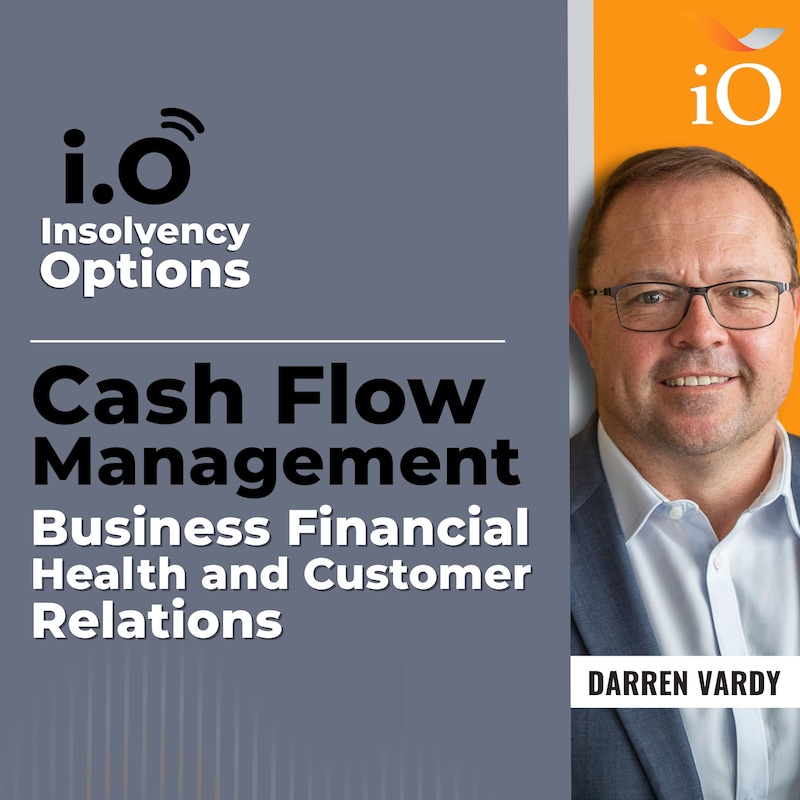
Master cash flow management with insolvency expert Darren Vardy. Learn essential forecasting techniques, creditor relationship strategies, early intervention methods, and practical systems for maintaining healthy business cash flow.
Key Topics Covered:
- Importance of cash flow vs. profitability
- Cash flow forecasting and monitoring systems
- Managing creditor relationships effectively
- Working capital optimization strategies
- Early warning systems and intervention triggers
- When to seek professional cash flow assistance
Key Takeaways:
✓ Cash flow problems are the leading cause of business failure
✓ Regular forecasting helps identify problems before they become critical
✓ Strong creditor relationships provide flexibility during difficult periods
✓ Working capital management directly impacts cash flow health
✓ Professional help should be sought at the first sign of sustained problems
Who Should Listen: Business owners, company directors, lawyers, accountants, and anyone wanting to understand financial distress warning signs.
About the Host:
Darren Vardy - Managing Director of Insolvency Options and Registered Liquidator with over 30 years of experience in business recovery and debt solutions. Darren has helped thousands of businesses and individuals navigate financial distress and find practical solutions to complex problems.
Connect With Us:
• Website: insolvencyoptions.com.au • Phone: 1800 463 328 • LinkedIn: https://www.linkedin.com/in/darrenvardy/
Subscribe & Follow:
Don't miss future episodes! Subscribe to i.O. - Insolvency Options
Like this episode? Please leave a review and share with colleagues who might benefit from these insights.
Co-host: Anthony Perl
Produced by: Podcasts Done For You
Transcripts
Cashflow Management, the lifeblood of your business.
2
:Welcome to IO Insolvency Options
with Darren Vadi, the managing
3
:Director of Insolvency Options
and a registered liquidator.
4
:With over 30 years of experience
helping businesses and individuals
5
:navigate financial challenges.
6
:In today's episode, Darren
Explores why Cash flow management?
7
:Is absolutely critical for business
survival and reveals the warning
8
:signs that indicate trouble ahead.
9
:We'll discuss practical strategies
for improving your cash flow, managing
10
:creditor relationships, and implementing
systems that prevent financial crises.
11
:Your master essential cash flow
forecasting techniques, understand
12
:working capital optimization and
learn when to seek professional help
13
:before problems become critical.
14
:I'm your co-host Anthony Pearl.
15
:Let's dive into unlocking
more about insolvency options.
16
:Darren, let's talk a little bit about
cash flow and the importance of it
17
:and how critical it is to a business.
18
:People talk about this term all the
time, but do they really understand it?
19
:And a lot of circles that
I've moved, cashflow equals
20
:what's in the bank account.
21
:And that's not necessarily
the same thing, is it?
22
:Darren Vardy: No, it's not.
23
:And unfortunately, a lot of small
businesses, the owners do treat the
24
:business bank account like their
personal bank account, which is a
25
:big no-no for want of a better term.
26
:You know, the importance of cash flow.
27
:Again, comes back around
to avoiding insolvency.
28
:When we test for insolvency,
it's a cashflow test.
29
:Is there sufficient funds flowing in to
enable to pay the creditors on the out?
30
:And cashflow is not profit neither.
31
:You know, a lot of people will look at
profit and say, well, I'm profitable.
32
:Why am I profitable?
33
:But.
34
:I don't seem to have enough
cash to pay people, you know,
35
:week on week, month on month.
36
:And the reason for that could be
that their cash could be locked up
37
:in balance sheet items such as stock
or debtors, and to produce cash flow
38
:from your income, from your sales.
39
:It's a matter of realizing the
trade debtors within terms.
40
:Minimizing the stock held throughout
a period of time because stock sitting
41
:in a warehouse is, for want of a better
term, wasted cash flow because it's
42
:stock that you have to pay your creditors
for, which is just sitting there and
43
:you've not yet converted it to income.
44
:Likewise, with your debtors, if your
debtors are paying you outside of
45
:terms, you may have a 30 day terms.
46
:If your debtors are paying you
at 60 days, that has a knock on
47
:effect as to the availability
of cash to pay your creditors.
48
:And quite often what you find is if
your debtors are paying you at say,
49
:30 to 60 days and you have to pay your
creditors at 14 to 30 days, you will need
50
:some cash flow or some working capital
to enable those creditors to be paid.
51
:Anthony Perl: And there's nothing
worse than having to wait.
52
:You know, you want people
to pay you straight away.
53
:And the truth is that doesn't happen.
54
:And often the bigger the business that
you are dealing with, the longer the
55
:time to actually receive those payments.
56
:And the delay.
57
:And the delay, and it just
has a steamroll effect.
58
:Darren Vardy: Yeah, and
really it's a matter of being.
59
:On top of your customers.
60
:You know, when we talk about debtors, it's
about the relationship with your clients.
61
:And there are some industries
where, particularly the construction
62
:industry, the nature in which claims
are made and then paid, you know
63
:that you are at the 60 day mark.
64
:So then you need to forecast and budget.
65
:How do I build the working capital?
66
:What working capital do
I need to be able to.
67
:Keep my creditors happy and pay them maybe
a little bit earlier than that before I
68
:actually get paid because your creditors
are the people that will be continuing
69
:to build the project month in month out.
70
:So working capital and your working
capital requirement and having
71
:additional funds available will assist
in that cashflow with that cashflow.
72
:Halt there.
73
:Speaking to a business
that sells products.
74
:You know, you might find yourself where
there are just some debtors that are just
75
:regular late payers, and you've gotta
look at the cost to your business of that.
76
:And the cost to your business is
the alternative finance that you
77
:need to get to put into top up
the cash flow as a result of them
78
:paying, let's say at 90 day terms.
79
:There's an old 80 20 rule.
80
:You know, there's normally the top 80%
of your customers will take up 20% of
81
:your time, whereas the bottom 20% of your
customers will take up 80% of your time.
82
:And why are they taking
up 80% of your time?
83
:And generally it's because
they're the late payers.
84
:They're the ones that you
gotta continually follow up.
85
:They're the ones that make you not
sleep at night because they're not
86
:paying in accordance with their terms.
87
:Quite often I have to say to clients,
what you need to do is continually look
88
:at that bottom 20% of your customers
that are taking up that 80% of your time
89
:and look at revolving amount and looking
at removing them from your business.
90
:'cause you remove those customers from
your business whilst your income might
91
:fall marginally in the short term.
92
:It frees you up time
to gain new customers.
93
:So we've always gotta be looking at,
at our customers and at our debtors
94
:ledger and really, really focusing on
circulating those debtors who are not
95
:paying within terms or are perpetually
late and costing your business money.
96
:Anthony Perl: As a old adage that
I swear by as well, the less they
97
:pay, the more they demand, correct.
98
:Again, the 80 20 rule.
99
:Yeah,
100
:it's so true, isn't it?
101
:It's, I think there's plenty of businesses
that are sitting out there just right now
102
:and going, yep, that's, that's exactly it.
103
:And it, and it, and it's hard.
104
:I remember talking a few years ago to
someone who was running quite a sizable
105
:business and at this particular point,
the business was, we are building
106
:and technology in that sort of space.
107
:I remember him telling me, saying, I
spent this week having uncomfortable
108
:meetings with people because I was sacking
clients, where, you know, I literally
109
:had to sit them down and say, I love
you, but this isn't worth it anymore.
110
:You need to go over here.
111
:I recommend you someone else.
112
:But it's time.
113
:We part ways.
114
:It's not an easy thing to do
because you know, sometimes you have
115
:these legacy clients for lots of.
116
:Reasons.
117
:Sometimes you're passionate about them.
118
:It's hard to make those kinds of
decisions, but you're absolutely right
119
:that it's, you've gotta look at how much
time are they taking up and for what
120
:amount of return and how much value could
you get by bringing on, you know, the
121
:value of new clients and looking at that.
122
:It's an uncomfortable territory
123
:Darren Vardy: and certainly
is particularly where the
124
:emotional connection comes in.
125
:You know, some of these clients may have.
126
:Supported the business when it first
came out in operational, and people
127
:through the evolution of time, moved
beyond that business relationship
128
:to a personal relationship.
129
:And so you get back to the
difficult conversations because
130
:of the emotional connection.
131
:But when at the detriment of your
business, the business relationship
132
:you have with these customers
has a detriment to your business.
133
:If you can't put your hand up and have a
conversation with that debtor in the first
134
:instance or in the second instance, when
you have that conversation, that debtor
135
:is offended by the fact that you, you are
raising this particular issue with them,
136
:well, then you've gotta ask yourself, are
they really a valuable customer to us?
137
:If they can't have that
conversation with you.
138
:So for me, I then say, well, that's
really an easy, you've just answered
139
:the question as to why we're having
the conversation and the reason why
140
:I shouldn't be dealing with you.
141
:Because it may come a time in the
future where the debt gets quite
142
:significant and then they end up in
an adverse financial position and that
143
:debt becomes a bad debt, which then add
the flow on effect to your business.
144
:Anthony Perl: Yeah, and I'd imagine
that, you know, being in the space that
145
:you are in, sitting down with businesses
who you know to try and resolve cashflow
146
:issues for them and telling them, here's
five businesses that you've got a sack.
147
:Darren Vardy: It's hard
when it gets to that point.
148
:Yes.
149
:Yeah.
150
:And that's where it, quite
often, an advisor is good to
151
:come in to help you work through.
152
:Those issues and it need be, implement.
153
:So to help you protect your business.
154
:Anthony Perl: Yeah.
155
:I mean, is that something
you get involved with?
156
:It's actually doing that.
157
:Can you be the one that has those
uncomfortable conversations on
158
:behalf of the business have done
159
:Darren Vardy: in the past?
160
:And you know, what we bring to the table
is une, emotive pure numbers, and we have
161
:a bit of empathy towards the position.
162
:Quite often you do get some good outcomes,
but if the outcome on the other side is
163
:that, or as I indicated, if the response
on the other side is that of the fact that
164
:the conversation is offensive, well then
you know that this isn't the right fit
165
:customer for the business and it's better
to call it a day sooner rather than later.
166
:Anthony Perl: Yeah.
167
:And look, and I think, you know, I imagine
in most cases that idea of recommending
168
:them to someone else, introducing
them to someone else who might be more
169
:fitting and be willing to work with them.
170
:'cause I think often the case is when
you find yourself being a small fish
171
:in a very big pond, to move over to
someone who's gonna treat you as a
172
:big fish in their pond is a positive.
173
:Darren Vardy: Yeah, this is true.
174
:This is true.
175
:Anthony Perl: So talk to me a little
bit about, you know, the whole idea
176
:of saying, okay, the, the modeling
and the tools that you need to put
177
:in place to manage your cashflow.
178
:What are the important take homes
for people to start thinking about?
179
:Darren Vardy: Yeah, look, there are
plenty of tools out there, you know,
180
:from cashflow specific tools to
programs to, to like, but you know,
181
:with the majority of small businesses,
it's probably more easier to run.
182
:A simple cash flow model on an Excel
spreadsheet, and quite often it is
183
:as simple as identifying and working
out what your monthly expenses are
184
:that you know is a constant month in
month out, because it's those monthly
185
:expenses that need to be covered.
186
:And that's the income required to cover
those monthly expenses is where you get
187
:to what's called your break even analysis.
188
:Helps you identify how much income
you need on a monthly basis to
189
:ensure that you are cashflow
positive or at least breaking even.
190
:Anthony Perl: Yeah, I mean, I
think it's important to get that
191
:overall perspective, isn't it?
192
:I mean, how often do you find
that businesses just don't
193
:have a grasp on those basics?
194
:Because I think we often forget
that the people that start the
195
:business may not be financial people.
196
:They've gone into the business.
197
:They could be creative.
198
:They could be technical.
199
:They've got an area of expertise
that they're great in, but it
200
:doesn't automatically assume that
they know everything about finance.
201
:And those what might seem simple in
terms of cash flow management can
202
:be incredibly arduous and difficult
for someone who just doesn't get it.
203
:Darren Vardy: So I think it's fair
to say that we small business.
204
:Any business owners that are treating
their company's bank account as
205
:if it's their own personal bank
account, uh, fall into that category.
206
:They lack the understanding of what
cash flow is required to operate their
207
:business, because if they were on
top of their cash flow, they would be
208
:paying themselves a reasonable wage
for which they would be living from.
209
:On a week to week, month to month
basis, which would then go into their
210
:calculations as to the cash inflow
needed each week or month to cover
211
:the cash outflow that is expected.
212
:Anthony Perl: Yeah, I mean, I
think it's important, isn't it?
213
:That simple act of taking out an amount
on a, whether it's weekly, fortnightly,
214
:or monthly basis, to pay yourself a wage.
215
:Just the act of that happening
automatically is a huge differentiator
216
:in the way you view what's in an account.
217
:Darren Vardy: Correct?
218
:Correct.
219
:And you know, again, we get back to the
old adage, if there isn't sufficient cash
220
:coming in to pay your wage, why we here?
221
:Anthony Perl: And it is such an
important question, and I think it's,
222
:you know, a lot of people mask it
by being, oh, I'm in startup phase.
223
:How long is startup phase four?
224
:And at what point are you continuing
to throw money into a sinking ship?
225
:And that's where this
is, you know, important.
226
:Darren Vardy: Yeah, and it's
interesting, you talk about startup
227
:pace, there's cashflow modeling
and then there's forecasting
228
:to do a forecast for 12 months.
229
:Two years, three years is also
important because that's what
230
:you're aspiring to achieve.
231
:And it might be that for the first
12 months you are in startup phase
232
:or six months, but there is a certain
point in time where you want to get
233
:to a position where you are at a break
even level, if not surplus, where all
234
:of your expenditure is being covered.
235
:That expenditure includes reasonable
remuneration of its directors for
236
:the work that they put in into the
business at any given period of time.
237
:Now, obviously at startup phase, directors
put an enormous amount of hours in
238
:set up doing, managing, so on and so
forth, but at a point in time as the
239
:business grow and staff comes on, the
business will get to a level where it is.
240
:Self-promoting and growing, where the
directors can sit back and say, okay, for
241
:the amount of time and effort I'm putting
in, am I being properly remunerated or
242
:appropriately remunerated from my efforts?
243
:And if not, why not?
244
:And what does that need to be?
245
:And as a result of that, what
does the income need to be
246
:and can I actually get there?
247
:And what do I need to do to get there?
248
:And then create the plan to get there.
249
:This is where the forecasting is important
because you have your forecasting because
250
:you don't want to be going on year, on
year, on year, not putting in time and
251
:hours and effort and not being properly
and appropriately remunerated for it.
252
:Anthony Perl: Just to wrap up
this conversation, I'm intrigued.
253
:From your perspective, how often is
cashflow one of the biggest reasons
254
:that people come to you, or in fact
that they come to you or they find
255
:themselves at your doorstep and you
discover that this is the biggest problem?
256
:Darren Vardy: Well, it's because of
lack of cashflow that people have debt.
257
:So cashflow is the real reason.
258
:Behind a, the existence of the debt
at the time that they come and see me.
259
:And the lack of cash flow is the
reason why they can't see light at
260
:the end of the tunnel in being able
to repay that debt over a reasonably
261
:short period of timing of the fisure.
262
:And it may well be that
there is a possibility to.
263
:Have a working capital injection,
and it may well be that the
264
:family home is refinanced to put
some funds in to pay some debt.
265
:But then the concern is, does
that stop the trading losses?
266
:You know, whilst it sorts out the
historical debt, all you're doing is
267
:replacing one debt for another debt.
268
:So then you've gotta look at it and say,
well, okay, why are we here and what do we
269
:need to address to make sure that we trade
forward profitably and make it worthwhile?
270
:Putting the money in as opposed to
calling it a day at that point in time.
271
:Anthony Perl: Yeah.
272
:And of course you've also got the problem
that if you're going backwards, can you
273
:actually get the loan in the first place?
274
:That's also an issue.
275
:Correct.
276
:Well, that's it for this episode of
the IO Insolvency Options Podcast.
277
:I hope you've got plenty of valuable
knowledge and practical steps for whatever
278
:your situation is from Darren today.
279
:And if you need guidance on
insolvency matters, contact Darren
280
:Vadi [email protected]
281
:au.
282
:Or call 1804 6 3 3 2 8 or of course you
could connect with Darren on LinkedIn
283
:details in the show notes below.
284
:With over 30 years of experience,
Darren and his team provide personalized
285
:solutions for both personal and
corporate insolvency challenges.
286
:This episode was produced by my
team at podcast, done for you.
287
:Dot online helping professionals
share their expertise through
288
:powerful podcast content.
289
:If you found value in today's episode,
please like, comment, and subscribe
290
:to the IO Insolvency Options podcast.
291
:Wherever you are listening to this, your
engagement helps us reach more business
292
:owners who need these crucial insights.
293
:Until next time, remember, there's always
a way forward when you know your options.

