Shownotes
In music, most of us are attracted to a song’s continually repeated musical rhythm, "Smoke on the Water" by Deep Purple, "(I Can't Get No) Satisfaction" by the Rolling Stones, or "Seven Nation Army" by The White Stripes, but once those were new to us. Our guest today is here to remind us of the pleasure we get when discovering a new riff.
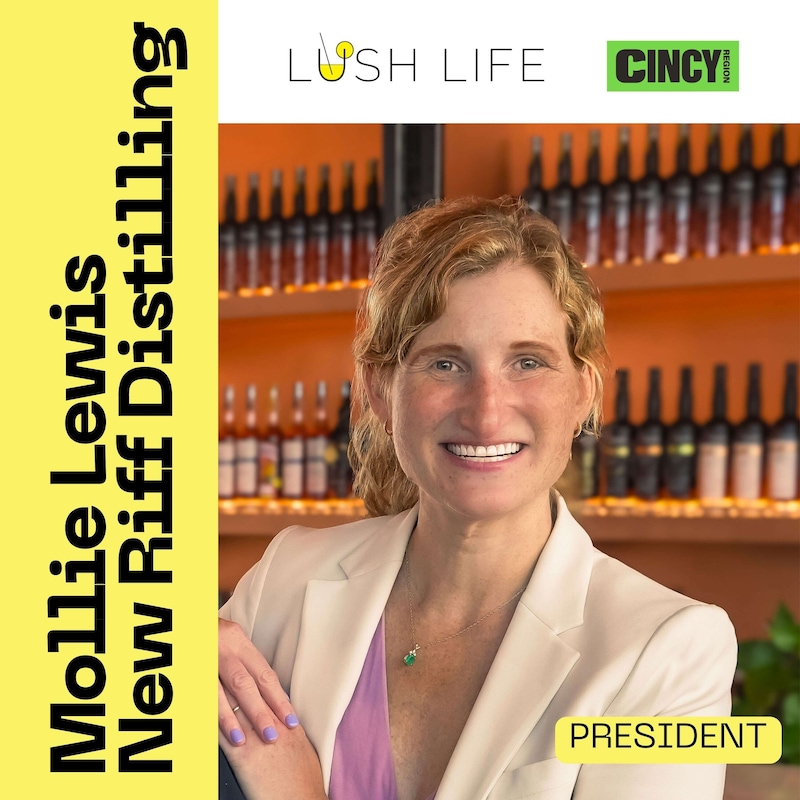
Sponsored by Visit Cincy, I am thrilled to introduce you to Mollie Lewis, the President of New Riff Distilling, which took Kentucky’s leitmotif of bourbon and sprinkled in a few eighth-note surprises to create a liquid that is winning awards not only at home but around the world. Her story proves there’s always room for a new tune in town.
Not only am I excited to introduce Mollie to you, but also the whole Cincy Region — where North meets South and Ohio meets Kentucky. Just a bridge apart, Cincinnati’s German heritage and urban energy connect with Northern Kentucky’s Southern charm.
While you are there, you can sip bourbon, sample craft beer, and savor award-winning cuisine. There are tons of vibrant street art, historic landmarks, and stunning architecture to explore — all along a riverfront that’s buzzing with festivals year-round.
You can plan your trip at visitcincy.com.
Our cocktail of the week is the New Fashioned:
INGREDIENTS
- 2 oz. New Riff Bottled in Bond Bourbon
- 3 dashes Angostura Bitters
- 3 dashes Orange Bitters
- 1/4 oz. Rich Demerara Syrup*
METHOD
- Add all the ingredients to a mixing glass
- Add ice and then stir until chilled
- Strain over a large rock in a rocks glass or coupe
- Garnish with an orange peel
*Rich Demerara Syrup - In a large pot, mix 12 oz of water and 24 oz of demerara sugar together on low heat. Use a spoon to slowly stir as the mixture heats up. Heat through until sugar dissolves, never allowing the mixture to come to a boil. Store in an airtight container in the fridge for up to 1 month.
You’ll find this recipe and all the cocktails of the week at alushlifemanual.com, plus links to most of the ingredients.
Full Episode Details: https://alushlifemanual.com/new-riff-with-mollie-lewis-president/
-----
Become a supporter of A Lush Life Manual for as little as $5 - all you have to do is go to https://substack.com/@alushlifemanual.
Lush Life Merchandise is here - we’re talking t-shirts, mugs, iPhone covers, duvet covers, iPad covers, and more covers for everything! And more!
Produced by Simpler Media
Follow us on Twitter and Instagram
Get great cocktail ideas on Pinterest
New episodes every Tuesday, usually!!
Transcripts
>> Susan Schwartz: In music, most of us are attracted to a song's
Speaker:continually repeated musical rhythm. Think Smoke
Speaker:on the Water by Deep Purple, I Can't get no
Speaker:Satisfaction by the Stones, or Seven Nation army
Speaker:by the White Stripes. But once those were new to
Speaker:us. Our guest today is here to remind us of the
Speaker:pleasure we get when discovering a new riff. I'm,
Speaker:um, Susan Schwartz, your drinking companion and
Speaker:this is Lush Life podcast. Every week we're
Speaker:inspired to live life one cocktail at a time.
Speaker:Sponsored by Visit Cinse. I'm, um, thrilled to
Speaker:introduce you to Molly Lewis, the president of New
Speaker:Rift Distillery, which took Kentucky's light motif
Speaker:of bourbon and sprinkled in a few eighth note
Speaker:surprises to create a liquid that is winning
Speaker:awards not only at home, but around the world. Her
Speaker:story proves there's always room for a new tune in
Speaker:town. Not only am I excited to introduce Molly to
Speaker:you, but also the whole Cincy region, where north
Speaker:meets south and Ohio meets Kentucky. Just a bridge
Speaker:apart, Cincinnati's German heritage and urban
Speaker:energy connect with Northern Kentucky's Southern
Speaker:charm. While you're there, you can sip bourbon,
Speaker:sample craft beer and savor award winning cuisine.
Speaker:There's tons of vibrant street art, historic
Speaker:landmarks and stunning architecture to explore all
Speaker:along a riverfront that's buzzing with festivals
Speaker:all year round. You can plan your trip
Speaker:and@visitcincy.com now grab that Old Fashioned and
Speaker:let's join Molly. So it's really great to have you
Speaker:on the show.
Speaker:>> Susan Schwartz: Thank you so much for joining me.
Speaker:>> Susan Schwartz: I can't wait to hear your story.
Speaker:>> Speaker C: Ah. Uh, thank you. Thanks, Susan, for having me.
Speaker:>> Susan Schwartz: Absolutely. I've already given you an intro, but
Speaker:why don't you introduce yourself again?
Speaker:>> Speaker C: Absolutely. Well, my name is Molly Lewis and my
Speaker:current title is president of New Riff Distilling.
Speaker:A New Rift Distilling is actually my family
Speaker:business. We're located here in Northern Kentucky
Speaker:in a pretty small town called Newport. It runs
Speaker:right along the river of Cincinnati. So we have
Speaker:Ohio to the north and we consider ourselves the
Speaker:top of the Kentucky Bourbon Trail or the beginning
Speaker:of the Kentucky Bourbon Trail here in Newport.
Speaker:>> Susan Schwartz: I love Newport. It's such a fun town. And if
Speaker:people have listened to my first episode about,
Speaker:uh, Northern Kentucky, we talked about Newport
Speaker:being the Las Vegas of its day. So how exciting.
Speaker:You're right in there with the, with the
Speaker:prohibition stuff and everything.
Speaker:>> Speaker C: There's a lot of storied history here in Newport.
Speaker:It has a pretty checkered but interesting past and
Speaker:we're pretty proud to be a part of that too.
Speaker:>> Susan Schwartz: So let's get into it. New rift. Tell me the
Speaker:beginnings. I know you're.
Speaker:>> Speaker C: You're.
Speaker:>> Susan Schwartz: I believe your dad started it. And maybe you can
Speaker:tell us a little bit about how he even thought to
Speaker:create a bourbon company.
Speaker:>> Speaker C: Yeah, absolutely. So I grew up here in Kentucky.
Speaker:So did my father. Actually, my. Our, uh, grand.
Speaker:His father, my grandfather, came to Kentucky from
Speaker:New York after immigrating from northern Europe.
Speaker:>> Susan Schwartz: Is there a reason why he decided to leave New York
Speaker:and come to Kentucky?
Speaker:>> Speaker C: No. He was an engineer, and he was a businessman
Speaker:as well. He was trying to find his way. He was a
Speaker:young man. And I believe the story is that a
Speaker:friend told him that things would be easier in the
Speaker:south and that he would have more opportunity to
Speaker:do all the things that he wanted to do. And there
Speaker:was less opportunity in crowded New York. He was
Speaker:in Rochester. And so he took a leap of faith. I
Speaker:believe he and some friends moved down to
Speaker:Kentucky, and then he met my grandmother, and they
Speaker:planted roots, and so be it. But I never remember
Speaker:him having a Kentucky accent. And therefore, I
Speaker:don't think a lot of us in the family had this
Speaker:strong Kentucky accent, but we're certainly
Speaker:Kentuckians at this point, you know, so the story
Speaker:is. It's fun. So my grandfather started a
Speaker:consolidated store. They were selling a lot of
Speaker:army surplus and things, and there was a small
Speaker:liquor section in the store. His brother, my
Speaker:father's uncle, was running that store. And you
Speaker:know, the story, the family story, is that he was
Speaker:a gambler and that he was drinking all the
Speaker:profits. And so my grandfather kicked him out and
Speaker:asked my father, who was in early 20s, he had just
Speaker:finished college, to help him run the store. And
Speaker:it wasn't really what my father wanted to do, but
Speaker:he said, sure, I'll help you out. Family
Speaker:obligations. And then he found out that he really
Speaker:had a knack for it and was really good at putting
Speaker:the store together and was really interested in
Speaker:the product. And so he never went back. You know,
Speaker:he never. He was studying to be a teacher, and he
Speaker:was sort of a teacher by osmosis, uh, all of his
Speaker:life, teaching, teaching me and teaching. So many
Speaker:people that have worked with and for him. But he
Speaker:never went back formally to the classroom and just
Speaker:continued to build stores and create a beverage
Speaker:alcohol chain here in Kentucky. And then the last
Speaker:one that he built, uh, which is the largest one,
Speaker:is a store called the Party Source. And the Party
Speaker:Source folks in the area know it. It's actually
Speaker:still, to date, the largest independent beverage
Speaker:alcohol store in the United States still today,
Speaker:which is really neat. So he built the store in the
Speaker:early 90s. It's right on the border with Ohio.
Speaker:Ohio has state laws that control the pricing of,
Speaker:uh, spirits and whatnot. And so it was a success.
Speaker:Folks would travel over the border and shop. And,
Speaker:you know, he had his finger on the pulse of what
Speaker:was happening in Kentucky and the bourbon scene.
Speaker:You know, he has amazing stories about in the 90s
Speaker:being offered full barrels of, you know, you name
Speaker:it, Pappy x 15 year old this and, you know, four
Speaker:roses that and all the buffalo trace items that
Speaker:are special. And, um, he just saw the boom
Speaker:starting to happen. And he remembers when
Speaker:Blanton's was on the shelf and you had to dust it
Speaker:off, you know, nobody wanted to buy it. And so
Speaker:that really, he fell in love with Berman and fell
Speaker:in love with the fact that it was America's native
Speaker:spirit. Uh, America's only native spirit. And that
Speaker:really the good stuff comes from Kentucky.
Speaker:>> Susan Schwartz: Yeah.
Speaker:>> Speaker C: And so this is a long winded way of saying that he
Speaker:fell in love with bourbon and then kind of took a
Speaker:look around here in Northern Kentucky and realized
Speaker:that since Prohibition, there really hadn't been
Speaker:anything of significance in the distilling world
Speaker:here in Northern Kentucky there were a couple
Speaker:small, small operations, you know, uh, uh, pot
Speaker:still operations, a barrel a week kind of thing,
Speaker:but nothing really of significance. Putting
Speaker:Northern Kentucky on the map as far as being a
Speaker:bourbon destination in the state of Kentucky. And
Speaker:so his, his second chapter, if you will, was to
Speaker:try to change that.
Speaker:>> Susan Schwartz: All right, before we get to the second chapter,
Speaker:let's go back to the first chapter for a second.
Speaker:I, as a Pennsylvanian, have heard of the Party
Speaker:Source. It is huge. It is huge. It must have been
Speaker:really interesting for him in the 90s being in
Speaker:Kentucky, because that was of course, the time
Speaker:when vodka was king. And when you say that, you
Speaker:know, he could have all these barrels, I mean,
Speaker:they just probably didn't know what to do with
Speaker:them really.
Speaker:>> Speaker C: They were probably giving them away to an extent.
Speaker:I mean, you know, it was an interesting time. And
Speaker:as we've been told, bourbon is really a cyclical
Speaker:market item. And so certainly in the 80s
Speaker:particularly and early 90s, it was, there was a
Speaker:real slump. Right. I mean, some of the heritage
Speaker:distilleries were still making some production,
Speaker:but it was, it was a hard item to sell. Didn't
Speaker:have certainly anything near the cachet that it
Speaker:started to accumulate as it got more in more
Speaker:recent times. Yeah.
Speaker:>> Susan Schwartz: And I guess being a Kentuckian, he was had bourbon
Speaker:in his veins. Was this something that he drank at
Speaker:home?
Speaker:>> Speaker C: You know, it was around. It was something that he
Speaker:was aware of and he drank socially and he learned
Speaker:about. I don't remember him drinking a lot of
Speaker:bourbon at home growing up. I remember he smoked a
Speaker:pipe and, you know, would drink cocktails and
Speaker:things. I don't remember bourbon being
Speaker:particularly the most meaningful thing that he
Speaker:drank until I was in high school. And a little bit
Speaker:later, I remember the interest growing. Uh, and I
Speaker:remember there was an interest in rye whiskey as
Speaker:well. You know, the stories are. Back in the early
Speaker:90s, there were one, two, maybe three selections
Speaker:on the shelf. Now in the party source, there's a
Speaker:whole wall of. Of rye. But I remember when he
Speaker:talked about rye being, ah, a growing category
Speaker:too. So he just. He was in it every day. He saw
Speaker:what was coming in the door, he saw that there was
Speaker:going to be a boom. Um, he envisioned this
Speaker:trajectory that ended up really happening.
Speaker:>> Susan Schwartz: And you, by osmosis, must have just.
Speaker:>> Susan Schwartz: Been not even realizing, but soaking it all in.
Speaker:>> Speaker C: Uh, you know, it was a really exciting time. I
Speaker:learned a lot about a lot of different species. I
Speaker:was allowed to drink wine at the table when I was
Speaker:18 and we were a family that really embraced
Speaker:drinking being part of the table. I like to think
Speaker:we were a little Italian or European in that
Speaker:regard. Yeah, it was a part of life. It was a part
Speaker:of our family life in a way that maybe it wasn't
Speaker:for a lot of Americans at the time growing up.
Speaker:>> Susan Schwartz: Yeah. And, um, through my research, I know that
Speaker:you were an artist and although you were drinking
Speaker:at the table, that you then got to drink in other
Speaker:places in other countries. Tell me about how you
Speaker:got. Before we get to the second chapter, but your
Speaker:first chapter before you got involved with New
Speaker:Riff.
Speaker:>> Speaker C: Yeah. Well, thank you. So, you know, there was
Speaker:always. I'm the firstborn. And, uh, there was
Speaker:always a lot of pressure that at some point I
Speaker:would come into the family business. Right. There
Speaker:was, uh, an expectation that just sort of like
Speaker:lived in the ethos. But I was really encouraged to
Speaker:figure out what my passion was and what I was good
Speaker:at. And so I gravitated to. To the arts at a young
Speaker:age. Painting, visual arts was really my thing. I
Speaker:had the privilege of going to a magnet art high
Speaker:school, which was unusual, especially in Kentucky,
Speaker:that that thing was. That kind of thing was even
Speaker:offered. But it really was. I went to a pretty
Speaker:interesting magnet high school where we had some
Speaker:fascinating teachers who really encouraged
Speaker:personal development. And so I was also Encouraged
Speaker:to go to art school. And I felt like that was
Speaker:really my calling. Uh, we looked at a number of
Speaker:different schools. I was awarded a couple of
Speaker:scholarships. I'm proud to share. And I ended up
Speaker:going to Parsons School of Design in New York. And
Speaker:Parsons is known for fashion in all transparency,
Speaker:but they actually have a very interesting art
Speaker:program. And one of the strengths of Parsons is
Speaker:that it's located in New York City. So you're
Speaker:soaking up all the culture and, uh, the arts and
Speaker:the multiculturalism just by, just by being in
Speaker:that city. So that's, that's where I went. And I'm
Speaker:so glad that I did.
Speaker:>> Susan Schwartz: And, and then I know that you, um, you took that
Speaker:passion for wine and ended up in Italy.
Speaker:>> Speaker C: Yeah, yeah, I did. I did absolutely. Well, I, you
Speaker:know, I dabbled in the arts. I did a five year
Speaker:degree program at Parsons. Loved living in New
Speaker:York, but it's hard to make money in the arts.
Speaker:Right. And so I remember, uh, in my early 20s,
Speaker:having a conversation with my father. I call him
Speaker:Ken, you know, at work. But I remember talking
Speaker:with him and he was like, well, you drink enough
Speaker:wine, why don't you learn something about it? You
Speaker:know? And I think the impetus was to always to
Speaker:have me learn something about wine and then come
Speaker:back to the family business, which was still
Speaker:retail at the time.
Speaker:>> Susan Schwartz: And it makes me laugh. It sounds so much like my
Speaker:dad too, but is that right? Yeah.
Speaker:>> Speaker C: So I, I got a job in the tasting room in, uh, at
Speaker:Behringer. Poured some white zinfandel when I was
Speaker:24 years old. Uh, but it was really a great
Speaker:learning experience to learn about. Just to learn
Speaker:about wine, to see what people, the kinds of
Speaker:questions people were asking. I mean, it was a
Speaker:great starting point. It was a great experience,
Speaker:and I'm fortunate to have had that opportunity.
Speaker:And then I did. I worked in a number of different
Speaker:wine positions through distribution, I worked in
Speaker:restaurants, and then had the opportunity to go to
Speaker:Italy in 2007, which was very exciting, I will
Speaker:say. I followed a guy to Italy who I am no longer
Speaker:with, but ended up being the best thing that I
Speaker:ever did for myself. And I ended up staying there
Speaker:for five years.
Speaker:>> Susan Schwartz: What do you feel that you.
Speaker:>> Susan Schwartz: I know you're no longer in wine, but I'm sure you
Speaker:still love it and love Italy.
Speaker:>> Susan Schwartz: But what do you feel that you.
Speaker:>> Susan Schwartz: Brought back with you from Italy?
Speaker:>> Speaker C: Absolutely. No, that's a great question. I don't
Speaker:know if I've ever been asked that question so
Speaker:directly. And I love it. Um, I think there's such
Speaker:a, just a wonderful culture around food and
Speaker:beverage coming out of Italy. It's in people's
Speaker:veins, you know, just sitting at the table, uh,
Speaker:wine or even a spirit cocktail being a part of the
Speaker:table. And, uh, that's how I think too. So it was
Speaker:a really exciting time. I absorbed a lot. I
Speaker:learned a lot about authenticity and a sense of
Speaker:place, terroir. And I really was excited to come
Speaker:back to Kentucky when. And we'll get back to it, I
Speaker:think about how we decided to move forward with
Speaker:New Rift, but there were a lot of parallels. You
Speaker:know, we're talking about America's native spirit,
Speaker:we're talking about bourbon. And although you can
Speaker:make bourbon in any state, in the entire 50
Speaker:states. There'S a theory that all the best stuff,
Speaker:all the best bourbon comes from Kentucky. And so
Speaker:the idea of being in a family business
Speaker:representing a sense of place was a great parallel
Speaker:to what I was learning and what I was doing in
Speaker:Italy. And I do think that I brought some of my
Speaker:hospitality that I learned over in Italy back to
Speaker:what we do here at New Rif. Um, I don't want to
Speaker:skip too far ahead, but we decided early on that
Speaker:we were going to be champions in Single Barrel, in
Speaker:our Single Barrel program.
Speaker:>> Susan Schwartz: Wait, uh, before we do get to that, let's go to
Speaker:the second chapter and let's talk about New Riff
Speaker:and why your dad from the Party Source decided to
Speaker:bite off a huge, you know, this is a huge thing
Speaker:that he did to create a distillery. Uh, it had to
Speaker:be a huge passion.
Speaker:>> Speaker C: It was a huge thing. Yeah. And he wasn't young. I
Speaker:mean, I'll give you that. You know, he had had
Speaker:his, his career in retail. He'd been in as a
Speaker:retailer for over 40 years. Right. And I will be
Speaker:completely transparent, the Party Source at this
Speaker:point was a debt free business. I mean, a lot of
Speaker:folks in his shoes might have just moved to
Speaker:Tahiti. You know, and sometimes he probably
Speaker:wishes, why didn't I do that? But you know, he had
Speaker:a real passion. He's an entrepreneur. He, he, he
Speaker:doesn't sit still. You know, he doesn't like it
Speaker:when things get too comfortable. He has that
Speaker:crazy, crazy. I'm not necessarily like that. But,
Speaker:you know, he likes to push the limit and the
Speaker:envelope and the edge. And so he got it into his
Speaker:head that he wanted to create a bourbon, a real
Speaker:bourbon destination here in Northern Kentucky and
Speaker:put Northern Kentucky on the map as being one of
Speaker:the, the Meccas, one of the Focal points in
Speaker:Kentucky for bourbon and bourbon tourism. And so,
Speaker:you know, we say that New Riff was created in
Speaker:2009, 2010, around the dinner table. A little bit
Speaker:of it had to do with Kent, you know, him visiting
Speaker:me in Italy and experiencing some of the family
Speaker:wineries that we spent time in. You know, I think
Speaker:that definitely kind of fueled the interest. And,
Speaker:um, he started really putting, putting the layers
Speaker:into practice and making it happen. Uh, what I
Speaker:always love to point out is that the Party Source,
Speaker:which we actually share a parking lot with,
Speaker:believe it or not. But he, in 2014, one of the
Speaker:best days and most memorable day, memorable days
Speaker:of my life was when he told the employees at the
Speaker:Party Source, and there are about a hundred
Speaker:employees in that store, a hundred different
Speaker:families. And when he sold the store to the
Speaker:employees. So I, I love to point that out because
Speaker:I do feel that that gives an image of the value
Speaker:system and the ethos that New Riff was built on.
Speaker:But he could have made so much more money selling
Speaker:to a total wine and more or one of these larger
Speaker:chains or who knows, might have been interested.
Speaker:But he wanted to take care of his people and he
Speaker:wanted to take care of his employees and he made
Speaker:them all owners of the store. You know, it's, uh,
Speaker:being an ESOP is a profit sharing opportunity for
Speaker:the employees of the store. So to this date, you
Speaker:walk into that store, which is still the largest
Speaker:independent retail store in the country. That's
Speaker:amazing. And it's employee, which is, it's such.
Speaker:>> Susan Schwartz: A generosity of spirit.
Speaker:>> Speaker C: I love that. It's a generosity of spirit. It's
Speaker:taking care of people. You know, he, of course he
Speaker:wants to live well. He wants to make money. I
Speaker:mean, who doesn't? But he also believes in
Speaker:sharing. And I think that's a really important
Speaker:value system that we have now adapted or always
Speaker:had to as the second generation of leadership here
Speaker:at New Rift. But I don't want to get too far ahead
Speaker:from that. So that enabled us financially to build
Speaker:New Rift from the ground up. So we got the money,
Speaker:Party Source was being run by the employees, and
Speaker:we started to build this building that I'm
Speaker:currently in right now from the ground up. And we
Speaker:finished construction in 2014 and had our first
Speaker:distillation in May of 2014.
Speaker:>> Susan Schwartz: So what, what had you planned? Did you have then
Speaker:the MASH bill? Did you have a bottle design? Did
Speaker:you have the name?
Speaker:>> Speaker C: Yeah, you know, we none, none of us had done this
Speaker:before. Ken certainly hadn't. I certainly hadn't.
Speaker:And then we had, uh, an awesome team who mostly
Speaker:are still here. We had an eight team, an eight
Speaker:member team. Hannah Lohan, who's our current CEO,
Speaker:and Brian Sprantz, who's our master distiller,
Speaker:were all already on board, already part of the
Speaker:team. The naming of the distillery, it's really
Speaker:hard to do. It's like naming a child. There's a
Speaker:lot of responsibility there. Right? We had a lot
Speaker:of other names. We kept thinking about, do we call
Speaker:it north of the south or do we talk about
Speaker:Kentucky? And none of that really resonated with
Speaker:us because we felt that we weren't being
Speaker:authentic. You know, we don't have grandpa's
Speaker:recipe under the bed. We don't have hundreds of
Speaker:years of distillation culture in our family, or,
Speaker:um, the original dsp, you know, here in the state.
Speaker:So we felt that those names were a little
Speaker:inauthentic. But we kept coming back to being a
Speaker:new rip on Ken's life. You know, here he was,
Speaker:older than midlife, making a complete career
Speaker:change, starting a whole new business, very
Speaker:capital intensive. And so we, we kept going back
Speaker:to it being a new riff on Ken's life. And then we
Speaker:started thinking about products that we envisioned
Speaker:making and that we were planning to make and that
Speaker:it was based in tradition. It was based on the
Speaker:sour mash regimen, which is what we consider the
Speaker:Kentucky regimen. It's how whiskey is made here in
Speaker:Kentucky. So we were honoring that. But our plans
Speaker:were to really to innovate and to create something
Speaker:new and something special and something a little
Speaker:different. And so we started talking about, hey,
Speaker:wait a second, we're a new riff on an old
Speaker:tradition, right? So it just, it just sort of fell
Speaker:into place in a nice way and felt real and felt
Speaker:authentic. And then with the bottle, you know,
Speaker:when we had decided on the name, we wanted to have
Speaker:a bottle that was a nod to traditional. Right. The
Speaker:shape of the bottle is actually a relatively known
Speaker:bottle shape. You might have seen it in the
Speaker:market. There are a number of important brands,
Speaker:whiskey brands that did do use this bottle shape.
Speaker:We modernized it or we put our riff on it or a
Speaker:spin on it by this ombre, which really hadn't been
Speaker:done before in the industry. So we think that that
Speaker:was really neat. You know, there were lots of
Speaker:evolutions. At first the ombre was on the bottom
Speaker:and it graduated to the top. And then we switched
Speaker:it and, you know, we had a lot of fun designing
Speaker:this bottle, but it was a risk. You know, we took
Speaker:a risk with this sort of modern take on a, uh,
Speaker:traditional bottle. Now you see it a little bit
Speaker:more in the industry, but at the time it was
Speaker:really one of the first.
Speaker:>> Susan Schwartz: And, and the recipe, how do you even start? How
Speaker:many different trial and errors did you have? Or
Speaker:did you just come up with it in the first
Speaker:iteration?
Speaker:>> Speaker C: So that's, it's an interesting story in and of
Speaker:itself. So, you know, Ken had not been in the
Speaker:distilling business. None of us had. Right. We
Speaker:all, we, we consider ourselves almost like
Speaker:corporate refugees. Is a, is a term we used early
Speaker:on for a employees here at New Rift. And so our
Speaker:master distiller, Brian Sprance, actually, uh,
Speaker:people find this hard to believe, but he had
Speaker:actually never distilled a thing in his life when
Speaker:we hired him. So.
Speaker:>> Susan Schwartz: Wait, wait, I have to stop you there. So he
Speaker:answered an ad for a master distiller.
Speaker:>> Speaker C: Well, he, he, he had experience. He had worked for
Speaker:Sam Adams for over 15 years. So he was a master
Speaker:fermenter.
Speaker:>> Susan Schwartz: Which by the way, everyone, Sam Adams is in
Speaker:Kentucky. It is not in Boston.
Speaker:>> Speaker C: Absolutely it is. And it's, it's industry here and
Speaker:it's important. And so Brian worked there. He was
Speaker:a master fermenter. I mean, a title doesn't really
Speaker:exist, but he really knew fermentation backwards
Speaker:and forwards. And so the vision that Ken felt very
Speaker:strongly about was, I don't want to hire an
Speaker:assistant master distiller from Maker's Mark or
Speaker:from Woodford. Bring them up here and have Makers
Speaker:north or Woodford North. You know, I want to, I
Speaker:want to have something unique and something
Speaker:representative of northern Kentucky. And so that
Speaker:was why strategically, we went out and found Brian
Speaker:because he had the base down. I mean, being an
Speaker:expert, you have to keep everything so clean. I
Speaker:mean, fermentation is really, really, really a
Speaker:skill to master. And we had a clean slate. You
Speaker:know, he was interested, he was excited, and you
Speaker:know, he dug right in. We did have a consulting
Speaker:master distiller who really took Brian under his
Speaker:wing and train Brian and help us put together our
Speaker:distillery down to what fermenters to build and
Speaker:what pipes to put in. His name was Larry Ebersole.
Speaker:Uh-huh. And he, folks might have heard of him. He
Speaker:is a world renowned master distiller that had
Speaker:worked for Seagrams, the former Seagram's plant,
Speaker:for over 30 years. And rye was really his area of
Speaker:expertise. That's where he particularly shined. So
Speaker:we were his first consulting project. And he came
Speaker:in and Brian likes to say that Larry taught Him
Speaker:everything he knew, he knows about distillation.
Speaker:>> Susan Schwartz: Yeah, See it's a new riff on his career as well.
Speaker:>> Speaker C: New riff on a lot of things in the industry. And
Speaker:you've probably heard this too. When we first
Speaker:started, there was sort of a, uh, word on the
Speaker:street that the fermentation wasn't as important,
Speaker:you know, that the beer, the distiller's beer
Speaker:wasn't super important. And we approached it from
Speaker:a very different angle where from the get go we
Speaker:said this is extremely important. We need to have
Speaker:uh, absolute best distiller's beer we could
Speaker:possibly make to be the foundation of our whiskey.
Speaker:And so Brian, no one better to bring in than
Speaker:someone who really knew fermentation.
Speaker:>> Susan Schwartz: Absolutely. And so about how long did it take from
Speaker:starting it to your liquid or having the right
Speaker:recipe?
Speaker:>> Speaker C: Well, so we were committed to doing things what we
Speaker:call the right way. I mean that's our
Speaker:interpretation. But our, our interpretation was to
Speaker:be as transparent as possible. Right. Uh, which
Speaker:was also more rare at the time. Now you're seeing
Speaker:things like mash bills put on bottles and, and
Speaker:things like that. But that wasn't the case when we
Speaker:first started. So when we first came out of the
Speaker:gate we said, okay, we're going to wait. We're
Speaker:going to wait at least four years until our uh,
Speaker:whiskey tells us that it's ready. It sounds silly
Speaker:but really that was what we were saying back then.
Speaker:We want to release it at four years but if it's
Speaker:not going to, if it's not ready, we'll wait. That
Speaker:was the commitment to the quality. And we also
Speaker:wanted our entry level spirit to be bottled and
Speaker:bond, which you're seeing a lot more of in the
Speaker:industry now. There's been a resurgence in, in
Speaker:bottled and bond products. But we were one of the
Speaker:first to actually make our uh, I think we were the
Speaker:first distillery that I know of to make our first
Speaker:entry level product also bottled in bond. So to be
Speaker:bottled in bond it has to be at least 4 years old.
Speaker:It has to be 100 proof come from. Followed by the
Speaker:same distilling team its entire life. So we were
Speaker:that committed to quality. In fact we embossed it
Speaker:on the bottle. So we didn't release anything until
Speaker:uh, 2018. So we hurried up, we distilled and then
Speaker:we waited.
Speaker:>> Susan Schwartz: Now you kind of let it slip. Were you making any
Speaker:gin or anything else while you were waiting?
Speaker:>> Speaker C: We also, one of the things that we said was we
Speaker:were only going to make things that we like to
Speaker:drink. So gin was Something that we made right out
Speaker:of the gate. We love, we love gin. We still make
Speaker:it. We do a, what we call a Kentucky wild gin and
Speaker:then we also make a bourbon barrel aged gin, um,
Speaker:which is really exciting and fun. We sold a little
Speaker:bit of that along the way. We did some contract
Speaker:distilling for some larger clients to keep the
Speaker:lights on. And we waited until 2018 and then we
Speaker:released bourbon and rye here in the Kentucky
Speaker:market. And it was worth the wait. I'm so glad we
Speaker:did.
Speaker:>> Susan Schwartz: It must have been so exciting.
Speaker:>> Speaker C: Uh, it was such an exciting time. You know, it's,
Speaker:I mean it's like creating anything, right? It's
Speaker:almost can be across the board in any industry.
Speaker:When you're releasing a product to the world for
Speaker:the first time, you don't know what folks are
Speaker:going to say. You don't know how people are going
Speaker:to respond. You know, it's, it's a very nerve
Speaker:wracking moment. The one thing we were sure about
Speaker:was we knew what was in the bottle was good. We
Speaker:knew the flavor was there. We priced things
Speaker:fairly, we priced our bottles. Not what the market
Speaker:could have borne at that time. But that was Ken's
Speaker:retailer background. You know, he wanted it to be
Speaker:fair. We wanted the whiskey to be your favorite
Speaker:thing to drink on a Tuesday night and also what
Speaker:you wanted to drink on Saturday too. And so, but
Speaker:Gary, it's unnerving. You never know what folks
Speaker:are gonna say. And luckily the response was
Speaker:wonderful. Mhm. So we've been riding the wave ever
Speaker:since. It's been, I have to pinch myself sometimes
Speaker:that it's only been 12 years because, um, we've
Speaker:come a long way.
Speaker:>> Susan Schwartz: Now, right off the bat, were you thinking, okay, I
Speaker:know we're gonna do bourbon first and then we're
Speaker:gonna have a rye and maybe a single malt later. Or
Speaker:were these ideas after you wanted to see how the
Speaker:bourbon went?
Speaker:>> Susan Schwartz: So.
Speaker:>> Speaker C: Well, uh, our bourbon is a high rye bourbon.
Speaker:Right. So the mash bill, that's something else we
Speaker:do. We put it on the back of the bottle. The mash
Speaker:bill is always, always. Yes.
Speaker:>> Susan Schwartz: We didn't talk about that on the back.
Speaker:>> Speaker C: Right. And so our bourbon is 65% corn, 30% rye,
Speaker:which is pretty high when you think of, you know,
Speaker:rye percentages and 5% malted barley. And so out
Speaker:of the gate we knew we were going to make a rye.
Speaker:Larry, from his former Seagram's years had shared
Speaker:the, what we sometimes refer to as the original,
Speaker:the bullet Bourbon. The Bullet rye recipe. Sorry.
Speaker:At uh, 95 rye, 5% malted barley. And so we made
Speaker:that out of the gate too. But we. We put a riff on
Speaker:it. We put our spin on it. We made 90, 95% rye, 5%
Speaker:malted rye. So that was a product we made out of
Speaker:the gate. And we also made a little bit of 100%
Speaker:malted rye pretty early on, too. Brian asked Larry
Speaker:his favorite thing that he ever made at Seagrams,
Speaker:and Larry's at. I made this thing. I made this.
Speaker:This mash bill one time. It was so good, but, you
Speaker:know, the higher ups wouldn't let me make it
Speaker:because it was too expensive, so I never made it
Speaker:again. And Brian said, well, what was it? And he
Speaker:said, well, it was this a hundred percent malted
Speaker:rye, which is still a very unusual mash bill. So
Speaker:we started making that early on.
Speaker:>> Susan Schwartz: So what is that like?
Speaker:>> Speaker C: Oh, it's so good. It's so good. Susan, do you
Speaker:still make it your bottle? We do, we do. It's.
Speaker:It's part of our core line. You know, it's not
Speaker:everywhere like our bourbon and rye. I mean, none
Speaker:of our products are everywhere, but, uh, it's not
Speaker:as easy to find, but it is exceptional. And, you
Speaker:know, we learned a lot, too. We expected it to be
Speaker:just like a rye on steroids, you know, bold and
Speaker:spicy. And it's not. When you malt the grain, it
Speaker:actually gives a softer, more elegant flavor. And
Speaker:so it's a real. It's a real fun whiskey to try. I
Speaker:would love anyone listening to try to pick up a
Speaker:bottle if you can find one. It's hard to know
Speaker:where to put it on the shelf. I think that's.
Speaker:That's the issue, because it doesn't. Calling it a
Speaker:malt whiskey doesn't really do it justice. Right.
Speaker:And it's not really a rye because the flavors are
Speaker:so different because of the malting. So it's kind
Speaker:of this unknown category, but it's just another
Speaker:nod to our innovation and experimenting. You know,
Speaker:Ken, one of the things that he was really good at
Speaker:was getting out of people's way and saying, brian,
Speaker:you know, I trust your palate. I trust what you're
Speaker:learning. Like, let's make some. Some great
Speaker:whiskey.
Speaker:>> Susan Schwartz: Yeah.
Speaker:>> Speaker C: And you mentioned our single, single malt program,
Speaker:which we just disclosed to the public three years
Speaker:ago now. But it was something that we started
Speaker:producing early on as well, actually. You know,
Speaker:there was a, uh, love for scotch whiskey and a
Speaker:love for international whiskies here from the get
Speaker:go, Brian. And some of his teammates traveled to
Speaker:Scotland to learn about how scotch was made. And
Speaker:single malt particularly, so came back and started
Speaker:dabbling a little bit. It's still about 2% of our
Speaker:overall production. It's pretty small, but it is
Speaker:delicious. Mhm. And the commitment to quality and
Speaker:the commitment to what ends up going into the
Speaker:bottle. I mean, there's so much work, it's so much
Speaker:tasting there. It's pretty special.
Speaker:>> Susan Schwartz: How old is it?
Speaker:>> Susan Schwartz: It's also the four years or is it older?
Speaker:>> Speaker C: No. So we released our first single mall at seven
Speaker:years. So it's aged at least seven years and we've
Speaker:released a new offering of it every year. So we
Speaker:make just a little bit and then the following year
Speaker:we'll make a little bit. But it's, it's seven
Speaker:years old or older generally. And it's, you know,
Speaker:it's 100% malted barley. It's our nod to Scott
Speaker:Scotland.
Speaker:>> Susan Schwartz: And so I know also that people can come and visit
Speaker:you.
Speaker:>> Speaker C: Yeah. Northern Kentucky is the most underrated
Speaker:place to visit in Kentucky and it shouldn't be
Speaker:that way. It's such a great place to visit. I will
Speaker:say we planted our roots here and then now we
Speaker:actually have nine distilleries in the Northern
Speaker:Kentucky area. So there's been a lot of growth.
Speaker:And because of that growth, we have some amazing
Speaker:restaurants, we have some amazing bars, giant
Speaker:bourbon and whiskey selections. We actually also
Speaker:have the international airport. We have CVG
Speaker:Cincinnati Airport, but it's in Kentucky about 20
Speaker:minutes from here. And we have a direct flight to
Speaker:London every day on British Airways from this
Speaker:airport.
Speaker:>> Susan Schwartz: Yes, yes. It wasn't around, uh, when I came. Uh,
Speaker:and uh, yes, I can vouch. I love Covington and I
Speaker:love Newport. I think they're great. But I meant
Speaker:they can actually visit your distillery and have a
Speaker:drink there.
Speaker:>> Speaker C: Oh, uh, well, 100%.
Speaker:>> Susan Schwartz: Yeah.
Speaker:>> Speaker C: Everyone should come. They should come on the
Speaker:international flight or drive in and we do. We
Speaker:have a tasting room bar on our third floor of our
Speaker:distillery we're very proud of. We renovated it
Speaker:about two years ago and we call it the Aquifer. So
Speaker:one of the things about New Riff that's really
Speaker:special, sometimes we refer to it as our secret
Speaker:weapon is that the entire distillery is run on an
Speaker:alluvial aquifer that runs right underground,
Speaker:right under the distillery. So it's very, very
Speaker:hard water, very mineral rich water. Calcium.
Speaker:What's in limestone? Calcium. Right. It's
Speaker:limestone calcium rich water and it fuels
Speaker:everything we do here at the distillery. So we
Speaker:named our tasting room after it. So come visit us
Speaker:at the aquifer. You can have world class
Speaker:cocktails, beer, um, wine, and most importantly,
Speaker:you can try over every. Everything we've ever
Speaker:made. We have Apora. We've held back bottled, so
Speaker:you can try all of our whiskey club offerings as
Speaker:well as our core staff.
Speaker:>> Susan Schwartz: Did Ken know when he was building the Party source
Speaker:that there was an aquifer below it or just. It
Speaker:happened?
Speaker:>> Speaker C: He didn't know. He didn't know. It'd be a great
Speaker:story if he did. We didn't even know it when we
Speaker:were building the foundation for this building. In
Speaker:all transparency, I think it's a.
Speaker:>> Susan Schwartz: Better story that you don't know that you didn't
Speaker:know. It just happened, right? It just happened.
Speaker:And it was meant to be.
Speaker:>> Speaker C: It hap. You know, the plan was to use municipal
Speaker:city water, right? Which, you know, Newport water.
Speaker:It's not the best, I'll tell you. It's certainly
Speaker:not the best in Kentucky. It's fine. It's
Speaker:filtered. It's not that, you know, it's kind of
Speaker:empty water. It's water you drink. Right. Um, but
Speaker:when the foundation was being laid and the plans
Speaker:were being built for the distillery, we realized
Speaker:100ft underground was this alluvial aquifer, which
Speaker:is really amazing. You know, you think about
Speaker:serendipity and those kinds of things, it's hard
Speaker:not to believe in them, um, when one's. A well is
Speaker:running right under our distillery. But it's been.
Speaker:We test it all the time. We test it year after
Speaker:year to make sure it's. It's good quality. And
Speaker:it's just. It hasn't changed. It stays the same
Speaker:temperature all year long. It provides a, uh,
Speaker:tremendous energy, green energy savings for us.
Speaker:And it's just. It's great water for our whiskey.
Speaker:>> Susan Schwartz: It was, it was meant to be.
Speaker:>> Speaker C: It was kismet. It was meant to be.
Speaker:>> Susan Schwartz: One last thing that I wanted to ask you was, as an
Speaker:artist, hopefully you get a, uh, fulfillment from
Speaker:creating something and that can fulfill the need.
Speaker:It may not be visual, but it's definitely pleasing
Speaker:people. That's for sure.
Speaker:>> Speaker C: Yeah. Well, thank you for saying that. There's so
Speaker:many interests, there's so many things to do in
Speaker:life. Right. And I think it's really fun to draw
Speaker:parallels and have the opportunity to experiment.
Speaker:Um, I don't make art anymore. I'm a little bit of
Speaker:an all or nothing kind of person, so I don't paint
Speaker:anymore. At least I don't right now. But I
Speaker:definitely believe that Whiskey is an art. I, um,
Speaker:really believe that. I think that what Brian and
Speaker:his team do is artistic. Every day it's a little
Speaker:bit of magic, a little bit of science and a little
Speaker:bit of art all mixed together. And that is so
Speaker:exciting. And creating something and delivering it
Speaker:to the public and I get to talk about it every
Speaker:day. I mean it's. I love what we do. So I don't
Speaker:miss, miss painting because I get to be creative
Speaker:in other ways. You know, we have this beautiful
Speaker:architectural building here. It was really fun
Speaker:being involved in the team to design the tasting
Speaker:room. So I certainly have my creative outlet that
Speaker:I'm able to use. And you know, it all makes us who
Speaker:we are. Right. I wouldn't be the same person that
Speaker:I am if I didn't go to art school and didn't have
Speaker:that ability. Right.
Speaker:>> Susan Schwartz: And how lovely it is that you are the next
Speaker:generation to take over. I assume that's the goal,
Speaker:is to keep it a family business.
Speaker:>> Speaker C: It is the goal to keep a family business
Speaker:wholeheartedly. Um, my father retired two years
Speaker:ago. We have an unbelievable leadership team. You
Speaker:know, like a lot of startups, he kind of wore a
Speaker:bunch of hats. We all wore lots of hats in the
Speaker:early days. And as we've grown and as we've, we've
Speaker:grown our business, we have now we have 62 full
Speaker:time employees and over 90 part time when you
Speaker:include like modeling staff and whatnot. So we've
Speaker:grown tremendously. We've taken Ken's
Speaker:responsibilities and we've divided them into a
Speaker:number of different, a couple of different people.
Speaker:So I'm m proud to be the president of the company.
Speaker:Uh, we have another female CEO. Her name is
Speaker:Hannah. I might have mentioned her to you before.
Speaker:We have a lot of women in leadership here and
Speaker:that's always something that I love to talk about
Speaker:because it's an upward battle here in the bourbon
Speaker:industry. It's changing. There are a lot more
Speaker:women in the industry than even 10 years ago when
Speaker:I first came and got involved. But um, we
Speaker:particularly have a lot of women on staff. And
Speaker:that wasn't intentional, I'll be honest. We put
Speaker:the right people in the right seats. Our director
Speaker:of hospitality, our chief sales officer. And we
Speaker:looked around and we said, oh my gosh, 2/3 of this
Speaker:company is female. This is amazing. So that's
Speaker:something that we're proud of too.
Speaker:>> Susan Schwartz: Fantastic. Not only liquid, but a lot of other
Speaker:things too. So what is the future? Are you going
Speaker:to be making something Like a big splash with
Speaker:something new. Are you going to continue doing
Speaker:what you do?
Speaker:>> Susan Schwartz: What's a little bit of the future?
Speaker:>> Speaker C: Uh, the industry, as we all know, probably
Speaker:everybody listening to this podcast, the industry,
Speaker:the landscape's changing dramatically right now.
Speaker:Our main goal is to remain independent. It's
Speaker:harder and harder to do that. To be family owned
Speaker:and independent is capital intensive. And so we're
Speaker:holding on tight. That's our goal. Um, we believe
Speaker:that makes our whiskey taste better. So I wouldn't
Speaker:say that we have a lot of growth plans. We do plan
Speaker:to expand more within Europe and internationally.
Speaker:That's certainly not been our focus for the first
Speaker:10 years. So now that's something on our horizon
Speaker:as the category of American whiskey is growing
Speaker:internationally. You know, we're also trying to
Speaker:figure out what the apex of our aging is. Right.
Speaker:So as a young distillery, last year we released an
Speaker:eight year old bourbon. Um, that's part of our
Speaker:core offerings at this point. And we have in our
Speaker:whiskey club released some 10 year old whiskey.
Speaker:But we still don't know how far our whiskey's
Speaker:gonna go. We think it's delicious now and still
Speaker:really vivacious and young. So we're gonna taste
Speaker:it at 12 years, we're gonna taste it at 15. You
Speaker:know, that's, that's going to be an exciting point
Speaker:on the horizon when we feel like it's hit its best
Speaker:point so that we still don't know when it will be
Speaker:yet. Just to continue really focusing on the
Speaker:culture here internally and makes people feel
Speaker:taken care of and seen and heard and continue to
Speaker:want to come to work here every day, to work in a
Speaker:great place.
Speaker:>> Susan Schwartz: Well, it sounds like it is. And, um, everyone out
Speaker:there, uh, in the uk, you definitely can get it
Speaker:here, which is exciting.
Speaker:>> Speaker C: Yes. I would be remiss not to point out that the
Speaker:Whiskey Exchange voted our bourbon, our bottled
Speaker:and bond bourbon, as the whiskey of the year this
Speaker:year for 2025 too. Had to put a plug in there.
Speaker:>> Susan Schwartz: Yes. Congratulations on that. That's a big deal.
Speaker:>> Speaker C: Thank you.
Speaker:>> Susan Schwartz: Um, that's really great. And they will find links
Speaker:to it at the Whiskey Exchange and then everywhere
Speaker:else and to your website. And thank you so much
Speaker:for going through the history and having a chat
Speaker:here.
Speaker:>> Speaker C: A real pleasure. Please come back, come see us.
Speaker:Uh, Susan here in Newport again and I hope to be
Speaker:able to come over and enjoy, uh, a dram with you
Speaker:in London at some point soon.
Speaker:>> Susan Schwartz: Yes, definitely. We can't wait to have you here.
Speaker:So thanks again.
Speaker:>> Speaker C: Thanks.
Speaker:>> Susan Schwartz: I so want to thank Molly for joining me on the
Speaker:program. Now let's raise a glass to the region
Speaker:where beer culture runs deep and bourbon is a way
Speaker:of life. With breweries, distilleries and a
Speaker:culinary scene overflowing with award winning
Speaker:restaurants and one of a kind flavors, the Cincy
Speaker:region is a feast for the senses. Of course, our
Speaker:Cocktail of the Week is a new riff on an old
Speaker:cocktail. Our cocktail of the week is the new
Speaker:fashioned. An old fashioned, but the new Rif way.
Speaker:First, make your rich Demerara syrup. So in a
Speaker:large pot, mix 12 ounces of water and 24 ounces of
Speaker:demerara sugar together. On low heat. Use a spoon
Speaker:to slowly stir it as the mixture heats up and heat
Speaker:through until the sugar dissolves, never allowing
Speaker:the mixture to come to a boil.
Speaker:>> Susan Schwartz: Or you might have caramel.
Speaker:>> Susan Schwartz: You can then store it in an airtight container in
Speaker:the fridge for up to one month. Now that you have
Speaker:that, add all of the following ingredients to a
Speaker:mixing glass. Two ounces of Nu Rif bottled in Bond
Speaker:bourbon, three dashes of Angostura bitters and
Speaker:three dashes of Orange bitters and then a quarter
Speaker:ounce of the rich Demerara syrup you just made.
Speaker:Add ice and then stir, stir, stir. When chilled,
Speaker:strain over a large rock in a rocks glass or a
Speaker:coupe, then garnish with an orange peel. You'll
Speaker:find this recipe in all the Cocktails of the
Speaker:week@alushlifemanual uh.com. As you see, the
Speaker:scentsy region is like no no other destination.
Speaker:Two states, one stay and endless experiences. Here
Speaker:you'll find stunning architecture, vibrant
Speaker:neighborhoods and streets alive with murals and
Speaker:music. You'll taste why their beer, bourbon and
Speaker:culinary scenes are making headlines and you'll
Speaker:feel the energy of festivals and riverfront
Speaker:celebrations that bring it all together. It's
Speaker:history, flavor and creativity all flowing into
Speaker:one one unforgettable trip. Discover
Speaker:more@visitcincy.com if you live for lush life,
Speaker:then make sure you head out to the bars you love
Speaker:and order a drink. And lush life is always and
Speaker:will be forever. Produced by Evoterra and Simpler
Speaker:Media Productions which leads me to say the wise
Speaker:words of Oscar Wilde, all things in moderation,
Speaker:including moderation. And always drink
Speaker:responsible. This is our last episode before the
Speaker:holidays, so stay safe and have fun.
Speaker:>> Susan Schwartz: Until next time. Bottoms up.



