Shownotes
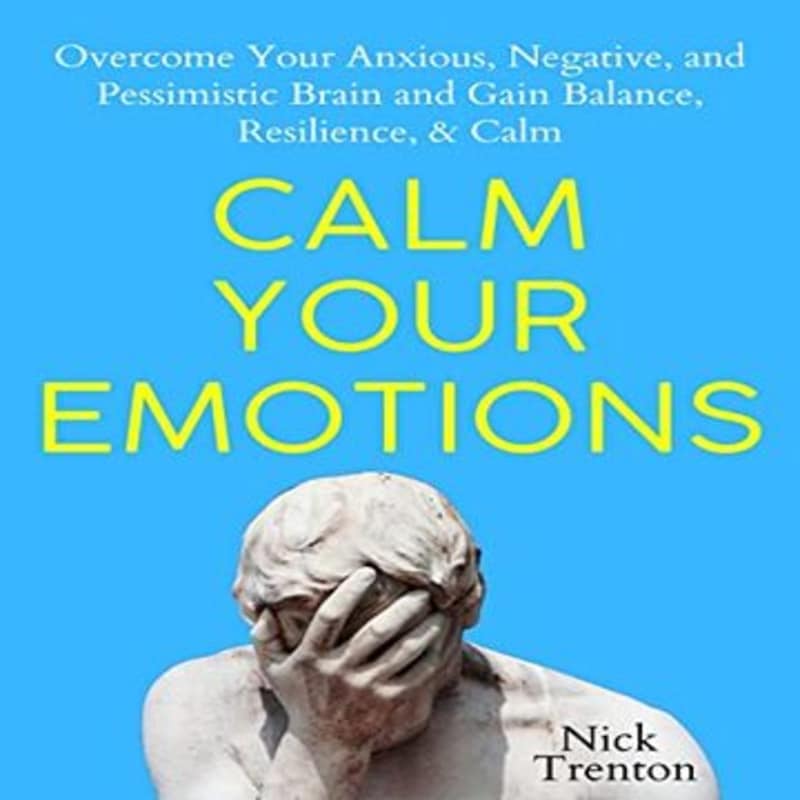
Nick Trenton explains why escape behaviors are not a solution for managing anxiety and overthinking. Learn the importance of staying present with your emotions to build resilience and emotional control. Discover practical strategies like self-awareness, triggers identification, and mindful breathing techniques to effectively manage distress.
⏱ CHAPTERS
0:00 Intro
2:10 Emotional Triggers and Distress Paths
5:50 Understanding Personal Emotional Patterns
7:23 Identifying Unique Emotional Responses
9:28 Recognizing Escape Patterns in Stressful Situations
11:34 Building Tolerance for Unpleasant Emotions
14:14 Practicing Emotional Engagement Gradually
16:50 Experimenting with Different Strategies
18:22 Example of a Man's Coping Mechanism
20:27 Avoiding Triggers and Modifying Responses
Transcripts
Have you ever wished you could stay calm and collected no matter what life throws at you?
Speaker:Well, today we'll explore how accepting distress can actually make you stronger.
Speaker:Hello, listeners.
Speaker:Welcome to The Path to Calm.
Speaker:Stop overthinking.
Speaker:Become present.
Speaker:Find peace.
Speaker:Today, we're looking at some smart strategies for self-awareness, shifting from reaction to response
Speaker:and building rock-solid distress tolerance so you can handle life's triggers without losing your cool.
Speaker:Our source book for today's episode is Nick Trenton's Calm Your Emotions.
Speaker:Thanks for joining us today.
Speaker:Distress is a natural part of our life.
Speaker:Every person, at some point or another, needs to face discomfort and anxiety.
Speaker:It's not a question of whether you'll have to endure it, but when.
Speaker:Fortunately, emotional resilience is something that can be learned and cultivated with a plan and frequent practice.
Speaker:While many might choose to focus on avoiding emotional discomfort or arranging a life where they don't have to experience it, a truly resilient person trusts in their own ability to withstand distress and not just survive, but thrive.
Speaker:Most importantly, having a higher degree of distress tolerance makes you heartier.
Speaker:You won't even have to use coping or self-awareness tools as often because you simply won't reach those heightened negative emotions as frequently.
Speaker:Greater tolerance to distress and anxiety can be mastered over time using just a few simple steps.
Speaker:Step one, identify your triggers.
Speaker:It always goes back to triggers, doesn't it?
Speaker:Whether this is a particular situation, an event, a person, words, memories, thoughts, body sensations, sounds, or images, a trigger is like a bell that starts us off down the path of distress.
Speaker:Sometimes a pattern of distress can happen swiftly and without our conscious awareness, leaving us clueless as to why we're suddenly upset.
Speaker:One moment you're feeling fine and going about your day, and the next, you feel the escalating sense of panic, anger, or sadness.
Speaker:But what happened?
Speaker:If you look closely, you can always identify the precise stimulus that caused your emotional response.
Speaker:It's tempting to think that emotional control and mastery are all about wrestling emotions once they're already in full swing.
Speaker:But with practice, you can start to see the small seeds of distress before they sprout into overwhelming emotion that's hard to get a grip on.
Speaker:Imagine a woman heads home for the Christmas holidays to be with her family.
Speaker:She starts the visit feeling calm and balanced and has told herself that she'll keep her cool even though her family is notorious for heated arguments and upsets during the holidays.
Speaker:Despite feeling okay for a while, she soon notices her mother's messy kitchen and feels herself getting agitated at how chaotic the food preparation is with everyone talking over each other and weighing in on how best to prepare the Christmas meal.
Speaker:Then she notices
Speaker:She's starting to feel a bit physically warm, given that the fire's crackling away in the next room, and several people in warm jumpers are bustling in and out of the kitchen.
Speaker:Finally, her father makes a hurtful comment about the way she's chopping onions, and like a dam breaking, she suddenly feels extremely angry and upset, and snaps at everyone.
Speaker:In other words, she's distressed.
Speaker:Rewind the situation and it's clear that there are several triggers instigating these feelings of anger and unhappiness.
Speaker:These are both external, noise and bustle, untidiness, criticism from loved ones, and internal, the feeling of chaos and stress, feeling too warm, not feeling good enough, or perhaps recalling negative memories and associations from childhood.
Speaker:Triggers can be literally anything.
Speaker:Anniversaries, money problems, arguing with your family or spouse, workplace conflict, going to the doctor, taking an exam, falling ill, having to compete with others, thinking about the future, being rejected, the list goes on and on.
Speaker:How do you find out what your own triggers are?
Speaker:A good way to think about this is to look at past behavior and try to understand what's reliably caused distress for you before.
Speaker:This takes a degree of awareness in the moment, but can you notice any patterns in what occurs immediately before you become emotionally overwhelmed?
Speaker:The great thing about becoming aware of your triggers is that when they occur, they give you an opportunity to stop and take notice of what's happening.
Speaker:This gives you the option to step in and take action before becoming overwhelmed with strong emotions.
Speaker:Step two, pay attention to your warning signs.
Speaker:Of course, a trigger is just a trigger.
Speaker:It's our response to it that makes all the difference.
Speaker:A warning sign can be thought of as any indication that you're having trouble dealing with some emotional distress.
Speaker:Again, these can be thoughts, emotions, or the urge to behave in a particular way.
Speaker:They indicate that distress is underway and that you are dealing with strong, unpleasant emotions.
Speaker:What could happen at this point is that you resort to escape methods to try to avoid the distress.
Speaker:These kinds of behaviors can be as varied as the triggers that they're designed to avoid.
Speaker:They can include seeking assurance, distracting yourself, resorting to substances or overeating, oversleeping, or simply avoiding the stressful situation completely.
Speaker:In the example of the woman above, the mounting emotional stress she experiences leads to a very clear warning sign, snapping at the people in the kitchen with her.
Speaker:Whereas the triggers might have been small bells, warning signs are more like blaring fire alarms.
Speaker:Warning signs are not just actions, however.
Speaker:They can be thoughts.
Speaker:For example, I can't do this, or I'm a failure.
Speaker:Or feelings.
Speaker:For example, irritation, panic, depression, shame, or jealousy.
Speaker:Or even physical body sensations.
Speaker:For example, fatigue, shaking, a knot in the stomach, tension, or tearfulness.
Speaker:It can be difficult to clearly see distress as it unfolds in the moment, precisely because distress is so unpleasant and we're often seeking ways to avoid it at all costs.
Speaker:That's why the regular practice of distress tolerance will sharpen your ability to zoom in on your unique triggers and exactly how they affect you.
Speaker:Step three, forego your escape mechanism and do the opposite.
Speaker:Step three is where your distress tolerance plan really comes to life.
Speaker:Being triggered and experiencing overwhelming emotional, mental, and physical sensations can force us down the path of automatic habits designed to make us feel better.
Speaker:However, escape behaviors seldom give us the opportunity to develop resilience and grow as people.
Speaker:And frequently, the escape behaviors themselves are harmful to us.
Speaker:For the woman in our example, snapping at family members is only likely to put them on edge and, in turn, feed the chaos and stress in the kitchen, unintentionally making matters worse.
Speaker:Other escape behaviors can be even more damaging.
Speaker:For example, binge eating, alcohol abuse, or avoiding doing tasks at work that will only become worse with procrastination.
Speaker:Though escape behaviors feel irresistible at the moment, and they may sincerely feel like our only solution at times, they're not ultimately adaptive and come from a place of avoidance, weakness, denial, and escape, rather than confidence and strength to deal with what life throws our way.
Speaker:How do you know what your escape behaviors are?
Speaker:This part of the process might be the easiest to identify since they'll be those actions you feel strongly compelled to do when in the thick of an overwhelming emotional reaction.
Speaker:Many people get intense cravings for sweet things after an upsetting argument or feel compelled to get up and leave the room if the situation feels utterly hopeless and overpowering.
Speaker:Look closely at those behaviors you feel unable to resist when emotionally overwhelmed, and you'll likely learn something about your escape patterns.
Speaker:The trick is, then, to deliberately and consciously commit to doing the opposite of that behavior, which invariably means to seek calm, not escape, and remain in the situation and emotion.
Speaker:Triggers and warning signs are invitations to become aware in the moment and make the admittedly difficult choice to take a different path.
Speaker:Luckily, this gets easier and easier the more you practice it.
Speaker:You might, for example, choose to quietly tell yourself, I will stay with my feelings right now instead of trying to avoid them.
Speaker:You can silently say this sentence to yourself again and again in your mind, say it out loud, write it in a journal, or even share your sentiment with someone close.
Speaker:The point is to bring your actions out into the open
Speaker:and convert old automatic habit into conscious action that you have a choice in.
Speaker:Knowing what your triggers and warning signs are ahead of time can help immensely with this.
Speaker:If you know that you're prone to thinking thoughts like, this is unbearable, and resorting to self-harm to distract yourself, you may choose to instead recite a little mantra to yourself.
Speaker:I can bear this.
Speaker:I'm choosing to stay with my feelings and not escape them.
Speaker:Step four, accept your distress and discomfort.
Speaker:Once you've identified your triggers and warning signs, and once you've made the commitment to stay present with whatever emotional responses emerge in you, the only thing left to do is to follow through with it.
Speaker:Of course, this can seem easier said than done.
Speaker:This part of the process can feel counterintuitive, and by its very nature can be emotionally overwhelming.
Speaker:But again, frequent practice, along with a willingness to stay with what emerges, will eventually help you develop a tolerance for unpleasant emotions.
Speaker:First, in order to accept an emotion, you need to be able to correctly recognize that it is occurring.
Speaker:Take some time to be still with that sensation, whatever it is.
Speaker:Try not to rush in to deny or avoid it.
Speaker:And remember that there's no need to embrace it either or pretend it isn't there.
Speaker:Simply give yourself and the emotion space to expand and watch.
Speaker:What can you feel in your body?
Speaker:What sort of thoughts are in your mind?
Speaker:How do those thoughts make you feel?
Speaker:Why is this happening to you?
Speaker:This exercise can be done during a more formal meditation or you can simply choose to pause and take a moment out of your daily life to gather yourself and become aware of your emotions.
Speaker:Next, try to gain some distance from the emotion by using imagery.
Speaker:It's so easy to get swallowed up by an emotion, feeling as though it's us and that we are completely identified with it.
Speaker:But emotions are temporary and passing.
Speaker:Can you find a way to let the emotion be what it is without getting carried away with it?
Speaker:For example,
Speaker:Our example woman may imagine that all the chatter and chaos and negative emotion of the family holidays is like a dark cloud of tangled words that she can wrap up in a beautiful pink balloon, where, once inside, it goes silent and peaceful.
Speaker:She can then stand outside of these emotions and hold them on a string, apart from herself.
Speaker:Another person might imagine that their sadness and overwhelming depression is really a small, tired person who just wants to sit at the table for a little while.
Speaker:By sitting across from this person and allowing them to speak without getting upset about their existence, we can start to gain some distance and detachment.
Speaker:This is the beginning of emotional mastery.
Speaker:As you engage with your emotions, whatever they are, and in whatever image you've given them, pay close attention to your breath.
Speaker:Being focused on the simple inhale and exhale of your breath can ground you in the moment and remind you to stay anchored in the present.
Speaker:Wait out your personal emotional spike and see what is on the other side.
Speaker:Part of the practice of learning to tolerate emotional distress is understanding that it is a practice, i.e., not something you master all at once and never have to look at again.
Speaker:If you are aware and accepting of the fact that you will experience emotional comebacks, you can remain calm when they occur and appreciate them for what they are, an opportunity to try again to turn away from avoidance and escape behavior and reaffirm your commitment to yourself
Speaker:Emotional strength and the ability to calmly withstand even the most unpleasant emotions is like a muscle.
Speaker:The more you exercise it, the stronger it gets.
Speaker:So be grateful for every opportunity you have to exercise it.
Speaker:If you feel strong emotions arising again, watch yourself closely.
Speaker:Are you frustrated with yourself for not doing it right?
Speaker:Are you impatient with the process, feeling like you should have succeeded with it sooner?
Speaker:Great!
Speaker:Take these feelings themselves and feed them back into your practice.
Speaker:Remind yourself of your commitment to doing the opposite of your escape behaviors.
Speaker:Remind yourself that you can and will stay with feelings, and that all feelings, no matter how unpleasant, will pass.
Speaker:Sit with them and observe that, past an initial period of high stress and anxiety, they aren't overwhelming experiences, merely uncomfortable.
Speaker:Step five, making friends with distress.
Speaker:We are all individuals and nobody's going to experience distress in quite the same way.
Speaker:The only way to truly understand your own emotional patterns and behaviors is to get in there directly and become aware of them.
Speaker:These five steps can be thought of as a closed sequence that improves and refines itself every time you go through a cycle.
Speaker:Every time you're able to successfully soothe yourself without avoidance or escape behaviors, take note and remember how you did it.
Speaker:Next time you're in a similar position, you can pull these activities, thoughts, or ideas out of your emotional inventory and use them.
Speaker:In essence, you're building greater awareness of yourself and slowly removing the behavior from the realm of passive, reactionary, and unconscious
Speaker:into the realm of deliberate conscious action that really serves you.
Speaker:The final step is about taking stock of what works.
Speaker:This can be actively making a list of behaviors that you want to practice or simply taking a moment to quietly acknowledge progress when it happens.
Speaker:Make a note of words of encouragement, mantras, or images that help you get into the state of mind you're trying to achieve.
Speaker:Write them down somewhere you can easily access.
Speaker:Or maybe try carrying a small object that encourages you to stay mindful.
Speaker:In fact, once you begin to feel more in control, you can start to actively seek out exposure to distress, in order to gain practice and strengthen your resilience.
Speaker:Though this may seem scary, in a way, it gives you more control to engineer situations that, from the outset, have you feeling prepared and confident.
Speaker:If you'd like to do this, start with your triggers and think of a situation that may make you feel distressed.
Speaker:Of course, it may backfire to throw you in the deep end of distress.
Speaker:Instead, think of an ultimate goal that you'd like to achieve and then set up a few gradual steps and smaller goals you can achieve to reach that.
Speaker:This exposure ladder is a series of manageable steps that increase in increments.
Speaker:Each step might involve spending more and more time in the distressing situation, or it may entail increasing the intensity of a sensation, or an interaction with a triggering person.
Speaker:As an example, a man might have trouble with watching certain highly charged news shows or movies as a trigger and resorts to overeating as an escape behavior.
Speaker:He commits to telling himself that he can in fact tolerate the feelings of depression and hopelessness this brings up.
Speaker:He sets himself a goal, to be able to watch a full news program without overeating to soothe himself.
Speaker:He starts with smaller steps.
Speaker:First, he watches five minutes.
Speaker:Then, he watches two five-minute segments with a break.
Speaker:Then he watches ten uninterrupted minutes and so on.
Speaker:Whether you choose to practice an emotional exposure ladder or simply want to do your action plan when distress naturally rears its head.
Speaker:If you can stay with the emotion in the present, breathe, reorient your behavior, and reward any successes, you essentially train yourself toward greater emotional control and stability.
Speaker:Takeaways.
Speaker:Now that we've got an understanding of emotional triggers, needs, pain, and how they all interact with each other, we must talk about how to deal with them.
Speaker:How can we inject self-awareness into our lives, recognize what's happening, and keep the volcano, us, from erupting?
Speaker:The first model is to think about responding versus reacting.
Speaker:When we touch a hot stove, we react without thought, instinctually, and protect ourselves.
Speaker:This is rarely necessary from an emotional standpoint.
Speaker:And yet, we find ourselves similarly volatile to a volcano, instead of pausing a beat to think and then respond.
Speaker:Next, we should think about a framework for regulation that plays with the emotional triggers and needs we've discussed.
Speaker:This consists of selecting the situation, avoiding triggers, modifying the situation, decreasing triggers, shifting focus, ignoring triggers, changing thoughts, changing the trigger, and changing response, reacting less to a trigger.
Speaker:This leads directly to the next point of distress tolerance.
Speaker:Sometimes we are indeed too prone to flying off the handle.
Speaker:We're overly sensitive in a way that makes us unpredictable and fragile.
Speaker:Thus, we need to work on increasing our tolerance to distress and anxiety.
Speaker:This has common elements with the framework for regulation, but it focuses more on foregoing the comforting escape mechanisms you use and staying in the situation and emotion.
Speaker:The purpose is to accept anxiety and distress, withstand the major emotional spike surrounding it, and stay with it until it subsides and you realize that you're still doing fine.
Speaker:In our exploration today, we've uncovered the vital importance of recognizing when we're about to react rather than respond thoughtfully.
Speaker:Embracing self-awareness is crucial for navigating life's challenges with grace and resilience.
Speaker:Remember, the goal isn't to eliminate emotions, but to manage them effectively, ensuring that our responses align more closely with our values and goals.
Speaker:Today, we'll leave you with a quote from one of my favorite authors, Viktor Frankl.
Speaker:Between stimulus and response, there's a space.
Speaker:In that space is our power to choose our response.
Speaker:In our response lies our growth and freedom.
