Shownotes
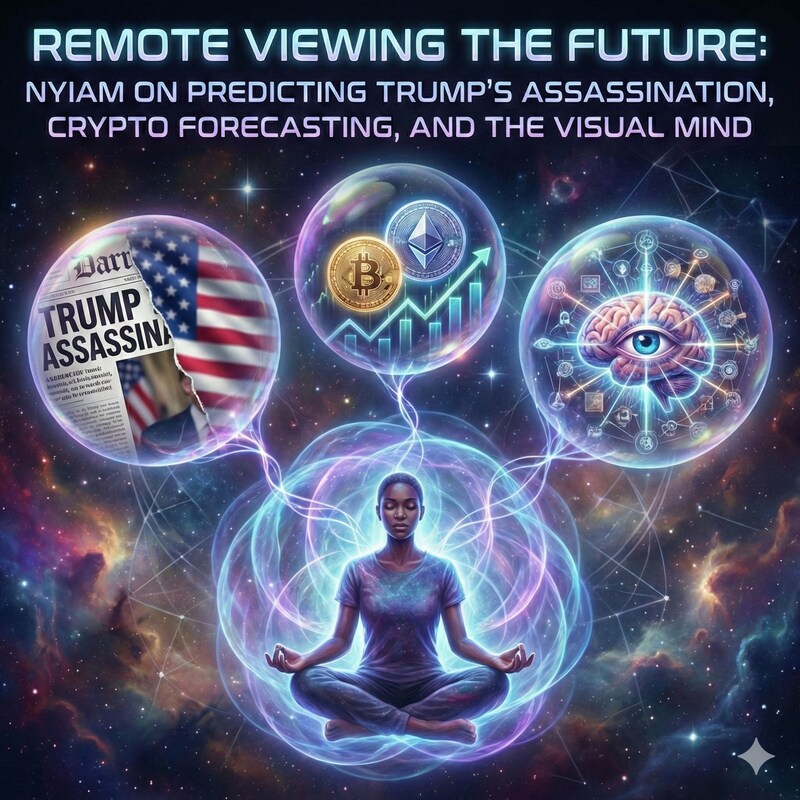
In this compelling episode of The Nexus, Nyiam, a distinguished remote viewer from the Future Forecasting Group, elucidates the intricate nuances of his craft, particularly focusing on his remarkable prediction of an assassination attempt on Donald Trump. This discussion delineates the profound intersection of art, intuition, and non-local consciousness, revealing how Nyiam's artistic background enhances his remote viewing capabilities. He articulates the mechanics of the "Informatica" model, positing that reality can be perceived as an infinite field of information frequencies, and emphasizes the superior efficacy of high-resolution visual data over traditional sensory modalities. Additionally, the dialogue explores the applicability of remote viewing techniques within the financial sector, where Nyiam boasts an impressive 80% accuracy rate in forecasting Bitcoin market fluctuations. The episode culminates in a thought-provoking debate concerning the dichotomy between Artificial Intelligence and human intuition, asserting that while AI excels in pattern recognition, it fundamentally lacks the sentient connection that characterizes authentic consciousness.
Takeaways:
- Nyiam's transition from musician to remote viewer illustrates the profound connection between creativity and psychic intuition.
- The Informatica model posits that reality is an infinite field of information frequencies, enhancing our understanding of consciousness.
- Nyiam's remote viewing sessions effectively predicted both the assassination attempt on Trump and the Ryan Routh incident, demonstrating his accuracy.
- High-resolution visual data used in HRVG methodology surpasses standard sensory protocols, leading to improved remote viewing outcomes.
- The discussion highlights the limitations of AI in replicating human intuition and emotional connection in the context of remote viewing.
- The podcast emphasizes the philosophical shift in human consciousness towards understanding 'how to think' instead of 'what to think', marking a significant evolution in societal awareness.
Companies mentioned in this episode:
- Elon Musk
- Future Forecasting Group
- HRVG
- Stargate
- Dick Allgire
- Daz
- Courtney Brown
- Edward Reardon
- Nexus
- ERVA
- Ryan Ruth
Mentioned in this episode:
Transcripts
Shannon, what clearly sticks out is that line about a suspected shooter firing multiple shots from an elevated position outside of the rally venue, which would synchronize with some of the, some of the things we've been picking up on social media about a man dead on top of a roof outside of the rally.
Speaker A:Yeah.
Speaker B:And witnesses who were there on the scene have talked with our.
Speaker B:And then this, you know, I don't know, this came to me, so I just put it in there.
Speaker B:I see the Capitol and I see like, first I see a person at a desk, which I'm assuming after the fact now is like a president or the president.
Speaker B:And then the Capitol and I get like, overthrow, cancel Constitution demands, tear down, disable New world Order.
Speaker B:So I don't know if Elon's trying to become the president.
Speaker A:Naim is an audio visual artist and certified HRVG remote viewing instructor who has gained recognition for his expertise in multiple remote viewing methodologies and his ability to blend artistic skills with psychic techniques.
Speaker A:Work with the Future Forecasting Group and various remote viewing projects has showcased his unique approach to exploring unexplained mysteries and predicting future events.
Speaker A:In this conversation, he talks with me about consciousness and the importance of the artistic visualization aspect of utilizing remote viewing to see the future.
Speaker A:In the Event stream, he shares a couple of his most recent sessions covering the first Trump assassination and seeing Elon Musk in the White House almost two years before it happened.
Speaker A:Sit back and enjoy this provocative and insightful conversation.
Speaker A:Well, welcome to the Nexus, Naim.
Speaker A:Thank you for coming in.
Speaker B:Thanks for having me on.
Speaker A:You have been getting quite the reputation over the last year or so with some specific events that you were involved in with your craft and skill of remote viewing and some of the most amazing stuff that I think people, anybody who's trying to use any divination tools or techniques.
Speaker A:In fact, I've noticed a lot of the psychics are starting to talk about, well, I'm doing tarot and psychic and remote viewing.
Speaker A:They're all tagging remote viewing onto their little bag of divination tools.
Speaker A:But you have been just delivering some amazing work.
Speaker A:And before we get into some of those things that I think are going to be fascinating to explore.
Speaker A:How did you get into remote viewing?
Speaker A:Was, did you have to grow your hair in order to get into remote view?
Speaker B:I get that question sometimes, actually.
Speaker B:Yeah.
Speaker B:Well, it started for me more than like maybe 15 years ago now.
Speaker B:I, I started getting interested in just alternative information in general, whether it would be, you know, conspiracy theories or consciousness research.
Speaker B:I just Started, stopped watching TV and started, you know, more reading and, and looking into alternative spaces for information.
Speaker B:And that got me into different forms of meditation.
Speaker B:Robert.
Speaker B:I found Robert Monroe's books, you know, Journeys out of Body.
Speaker B:And I found that whole idea of an out of body experience was very interesting to me at the time.
Speaker B:And that led to finding out about Stargate, reading about Stargate online.
Speaker B:So it went from.
Speaker B:It was never really.
Speaker B:I was never really interested in remote viewing per se, or even really any psychic type of work.
Speaker B:I was just interested in the consciousness aspect and what is reality?
Speaker B:What is consciousness?
Speaker B:And when I read about the Stargate remote viewing program that the government was doing and that it was pretty down to earth in terms of, you know, I was reading that these guys were just sitting at tables and doing this thing, you know, Whereas the out of body stuff kind of felt more mysterious.
Speaker B:Like, you know, how do you track that?
Speaker B:How do you know what's going on?
Speaker B:Whereas the, the government program seemed like, okay, there's manuals for this and these guys are apparently doing this.
Speaker B:So I decided to look and find, you know, started to read some of those documents and found some manuals that were around at the time and started practicing it for myself just to see if it was real.
Speaker B:I just wanted to see what is that experience?
Speaker B:Like, is it legitimate?
Speaker B:Is this something, you know, way out there, or is this something based in reality?
Speaker B:And it wasn't too long after doing it that I started to realize, like, yeah, there's, you know, there's really something here.
Speaker B:And that led me on a, on a whole other journey, just really practicing and refining that skill.
Speaker B:At the time, there was no, there wasn't many ways to see remote viewing, so there was a lot of books and I would read, you know, I'd read everything I could find, but it was hard to really make a connection or relate, you know, there wasn't anyone to really speak to or, you know, YouTube didn't really have many videos of anyone doing remote viewing or anything like that.
Speaker B:So it was kind of like just.
Speaker B:I was just doing it on my own and, and dabbling in it.
Speaker B:And it wasn't until probably farsight, you know, some of that early farsight stuff with Dick and Daz and Courtney, I saw, saw something like that, saw one of those videos at a point, and that's when it kind of clicked to another level for me because I saw someone doing it in real time, which was completely different than reading about it.
Speaker B:Right.
Speaker B:It's like, I like to say that's like reading about playing a sport and then seeing someone playing a sport, right?
Speaker B:There's like two different things.
Speaker B:It's like you're imagining it one way and then you see it and it's like, ah, okay, okay, that's, that's how this works.
Speaker B:And so that really inspired me and, and you know, kind of elevated my game to the point where I was like, okay, I gotta be able to do this as good as these guys.
Speaker B:I got, you know, now that I know what it looks like, I gotta be able to do it like this.
Speaker B:And.
Speaker A:Well, to your point about knowing what it looks like, wasn't the, the advent of going to the whiteboard and filming that really, to me, kind of the breakthrough for a lot of people to actually experience?
Speaker A:What you saw is watching Dick and Daz and Edward do these whiteboard live sessions and you're on.
Speaker A:You can see the process.
Speaker A:You can watch what's going on and they're consciously engaged while so exoterically maybe non locally expanding their consciousness to some target id.
Speaker B:Yeah, yeah.
Speaker B:I remember watching a lot of Edward Reardon's videos.
Speaker B:He has these videos where he's doing like, you know, an hour and a half full session.
Speaker B:And it's like as someone who knows what the remote viewing process is like, like having done it myself and then seeing him do it, who was someone, he was more experienced and yeah, you could see the, you know, you see the input, you see how it's.
Speaker B:He's working it out, you see how the data gets recorded and it's, it just made, it made the whole thing make more sense, you know, it's.
Speaker B:It made it much more real.
Speaker B:And I started doing the same thing.
Speaker B:I started saying, okay, I'm gonna record myself.
Speaker B:I'm gonna, you know, start to record my own sessions here because I, I just felt like no one knows, you know, no one knows what's going on here.
Speaker B:That's how I felt at the time.
Speaker B:And it's like, like.
Speaker A:And a lot of them still don't, right?
Speaker B:Yeah, yeah.
Speaker B:So that was kind of the beginning of, you know, just not really to.
Speaker B:Not really even show it to anyone.
Speaker B:It was just, I'm going to record it and whoever's interested in this will find it.
Speaker B:That was kind of my, my, my idea at the time.
Speaker A:Now how did you get involved with Dick and Daz and the Future Forecasting Group now?
Speaker B:Yeah, so my YouTube was, I mean, for a remote viewing channel.
Speaker B:It started, you know, a lot of people were getting interested in it.
Speaker B:I was on the Discord.
Speaker B:There's A remote viewing discord and Reddit and I would post things on there.
Speaker B:And Courtney Brown actually saw some of my work and emailed me and he asked me to do some work for him.
Speaker B:At that time, he gave me some lessons in srv and we were talking and I did a few targets for him.
Speaker B:And he was, you know, he.
Speaker B:He knows Dick.
Speaker B:He knew Daz.
Speaker B:And I had been sending Dick Allgire emails.
Speaker B:Like, I found his email online and I was just.
Speaker B:I would just send him emails and ask him questions.
Speaker B:Not really getting too much responses at that time.
Speaker B:But once Courtney.
Speaker B:I started talking to Courtney, he kind of tied the knot there.
Speaker B:He said, oh, Dick, here, you know, here's this guy, Naim.
Speaker B:He wants to learn more about remote viewing.
Speaker B:And that kind of is where that relationship started.
Speaker B:And Dick started giving me mentorship over.
Speaker B:Yeah, a number of years.
Speaker B:I was learning from him.
Speaker B:And I just kept putting out work.
Speaker B:I started doing.
Speaker B:I started doing a monthly world events type thing just on my own.
Speaker B:Like, I was not working for.
Speaker B:For Future Forecasting Group yet.
Speaker B:I just.
Speaker B:I was just doing it on my YouTube.
Speaker B:But I would always send Dick my work.
Speaker B:Now I'd be like, hey, look, look, look what happened this month.
Speaker B:Look what happened this month.
Speaker B:And they would send me targets every once in a while.
Speaker B:They would send me like a crypto thing or some other targets on the side.
Speaker B:And I guess the, you know, it just got to the point where the company grew to the point that they were looking for, you know, to add someone new.
Speaker B:And I kind of was just there on his mind, I guess, you know, with.
Speaker B:With the work I was.
Speaker B:With that work I was providing.
Speaker B:So it kind of just worked out like that.
Speaker B:Yeah.
Speaker A:So I want to get into some of the most recent work you did, because that's where, you know, the real meat and potatoes are.
Speaker A:I think of, you know, reality is.
Speaker A:Is having.
Speaker A:The best way to, in my opinion, to gauge your grasp of reality is to cast a prediction and see how it turns out.
Speaker B:Right.
Speaker A:And if it works out or you get close, varying degrees, you know, that you can look at what you're doing.
Speaker A:And this, to me, ties back to the whole RV process because there's a number of delineations.
Speaker A:You get scientific, controlled, extended.
Speaker A:Right.
Speaker A:And there's it.
Speaker A:I'd like to talk a little bit more about that as well, but before we get into that, as you were getting into remote viewing, as you were exploring this, your artistic side of art and music, is that.
Speaker A:Was that your main focus of your energy?
Speaker A:And then this Remote viewing thing kind of dropped in.
Speaker B:Yeah, it was at the time I was at a studio where I would record and do my artwork.
Speaker B:And that's where I spent, you know, a great deal of my time.
Speaker B:I was, you know, essentially living out of that space at the time.
Speaker B:And once I.
Speaker B:That kind of had me a little bit isolated from.
Speaker B:From society in a way.
Speaker B:Like, I, you know, I wouldn't really go out that much or, you know, I wasn't really doing all the things that people my age were doing at that time.
Speaker B:I was very much in my own little room, you know, working on my art, working on music.
Speaker B:And then once the remote viewing thing took a hold of me, I was, you know, I would say I was pretty obsessed.
Speaker B:Like, I would wake up at seven in the morning and do a session, like record a session for.
Speaker B:First thing in the morning, get up and record a session.
Speaker B:Got every book I could possibly find.
Speaker B:Like, I was consuming so many books at the time.
Speaker B:Any.
Speaker B:Anything online that I could find about remote viewing.
Speaker B:I was reading it and taking it in and it, it did derail, I guess, my, my other creative endeavors.
Speaker B:You know, everything else I was doing kind of came to a bit of a pause as I dove into, you know, engulf myself in the, in the remote viewing mindset and process.
Speaker B:But it was so rewarding.
Speaker B:So I almost didn't notice at the time.
Speaker B:You know, it wasn't about getting paid, it wasn't about any of that.
Speaker B:It was just purely a passion project.
Speaker B:It was just.
Speaker B:I knew I had to do this.
Speaker B:For whatever reason, I was just following my heart in that, in that way.
Speaker B:So it is kind of, I mean, I would say coincidental, but, you know, I don't really believe in them that.
Speaker B:In that kind of way.
Speaker B:But yeah, the way things have worked out, it's kind of like something from the future was kind of pulling me in that direction.
Speaker A:Yeah.
Speaker A:Could you, could you say that the artistic expressions and explorations that you were doing with both imagery and, and sound and music maybe were in some way kind of preparatory for what you're doing?
Speaker A:What have remote viewing is become so important to you?
Speaker A:I mean, the visuals and the sounds are very important in the whole protocol of gathering data, right?
Speaker B:Yeah.
Speaker B:Well, one of the, When I, when I really first started doing remote viewing, one of the things that I noticed that was very familiar was when you're writing a song and like, okay, writing lyrics, it's like what I would do is, you know, you, you write a line and then you're.
Speaker B:You need to have the next line, connect to it in some way.
Speaker B:Whether, you know, let's say it's a rhyme or a concept, I would always write it, and then I would.
Speaker B:I'd write the first line, and I would go to write the next line as if I knew what it was gonna be already.
Speaker B:Like, I wouldn't have anything in my mind, but I would just go, like, go to put my pen to write, and whatever that thing inside is puts the next word in.
Speaker B:In place.
Speaker B:So once I started doing remote viewing, that was very familiar to me.
Speaker B:When it came to probing, you know, going for data.
Speaker B:It was the same.
Speaker B:It was pretty much the same exact phenomenon happening there where it's like, okay, well, what's the.
Speaker B:What's the smell here?
Speaker B:Or what's the.
Speaker B:You know, what's the concept here?
Speaker B:And I go to write it, and right in that moment, the inspiration comes, and I just write right it out.
Speaker B:So I do think that being a creative, you know, being a creative played a big part in maybe my success and, you know, being able to handle remote viewing.
Speaker B:And is it the.
Speaker A:Do you think it's the imagination component that you have?
Speaker A:You know, you said that the remote viewing basically took you over.
Speaker A:Right.
Speaker A:And, you know, that whole experience, to me, that in my experience, that would be something like, I would discover something, and my curiosity would just get insatiable, and I would then go chase that out in this field of imagination I've got and hope I found my way back at some point.
Speaker B:Yeah.
Speaker B:Yeah, definitely.
Speaker B:Genuine curiosity is a big part of my personality, and I think it's one of the main driving factors of what makes someone a good remote viewer or not.
Speaker B:There's a difference between wanting to be psychic or, you know, wanting.
Speaker B:Wanting this thing to work and genuinely kind of pursuing, you know, genuinely following your curiosity.
Speaker B:Those are two kind of different things.
Speaker B:One is like a.
Speaker B:An idea.
Speaker B:One's this idea of, like, yeah, I'm gonna see this thing in the future or I'm gonna solve this problem.
Speaker B:Whereas the other is, like, existing in that moment and, you know, tapping into whatever that little signal is that comes from the inside.
Speaker B:And that requires you to genuinely be curious.
Speaker B:You know, I could want to be psychic.
Speaker B:I could want to see this thing, but that's not really how it works.
Speaker B:There has to be that part of you that's.
Speaker B:That's actually trying to find the answer in that moment, you know, and that's not really a.
Speaker B:That's not thinking about the future.
Speaker B:That's not thinking about the past.
Speaker B:That's not Thinking about, oh, how am I going to look?
Speaker B:Or am I going to get this right?
Speaker B:You know, that none of those are, are in your mind at that moment.
Speaker B:So Dick, you know, when I was learning, Dick told me the type of mind state or the type of intention or focus that you have to have when you're remote viewing, it's like you, it's like you gotta be that old lady who's, who's in a closet and someone's broken into the house and, and she's hiding in the closet and, and then, and there's a bump.
Speaker B:You know, someone's out there.
Speaker B:And in that moment, all your full attention is going in.
Speaker B:You know, what's that sound?
Speaker B:Where is the person?
Speaker B:It's like that's the kind of mind state you have to be in.
Speaker B:You know, it's like you're not existing anymore.
Speaker B:You're, you are, you are, you're becoming that input.
Speaker B:You know, your, your full attention, your full focus is on that thing.
Speaker B:And that's something that's, I mean, you can train, you can try and develop it, but I think some people have it, you know, some people have it more naturally and that, and it helps.
Speaker B:You know, I think that's what really makes a good remote viewer.
Speaker A:I think I, I agree with that.
Speaker A:And I would say it is going into and with a flow as opposed, you know, in the event stream, right, in the frequency fields.
Speaker A:In fact, my.
Speaker A:I have a philosophy that I'm hopefully going to have the book out here soon called Informatica.
Speaker A:And it's the idea that the subtitle is the Metrics in the Matrix and that everything is information.
Speaker A:There is.
Speaker A:It doesn't matter what you look at or what you experience.
Speaker A:There's something about it that is a measurement, a pattern where pattern recognition oriented in the way that we function and learn and that that pattern recognition happens in an infinite field of frequencies, which is where everything comes from.
Speaker A:So to me, every.
Speaker A:This stream is constantly on.
Speaker A:It's always in motion and it always seems to be creating more of itself and seems to have a proclivity for novelty, for adding and creating new.
Speaker A:Right.
Speaker A:So how does it do that?
Speaker A:It does it through this infinite field of frequencies that we call energy.
Speaker A:And we say, okay, well, everything is energy.
Speaker A:Quantum mechanics and all the quantum folks are finally getting into, hey, everything is a wave, right?
Speaker A:Everything is in, in motion.
Speaker A:So I think what happens is, as that is constantly moving, there's a frequency stamp of every instance, regardless of how minuscule you want to time it.
Speaker A:But because the frequencies and the waves and the cycles within cycles happen, they leave a mark.
Speaker A:And that is what we basically call the past.
Speaker A:So our memories are these marks in the event stream of the frequency fields that have happened.
Speaker A:And we are always, we're never in the now, we're always in the next.
Speaker A:Because the minute you say now, that's gone and you're in the next.
Speaker A:And so to me, and this has been my hypothesis, I'd like your thoughts on this.
Speaker A:It seems to me that the concept of non local consciousness is what remote viewing is basically attenuating to the frequency stamps of a certain frequency.
Speaker A:It doesn't have to be in the past, doesn't have to be in the present, doesn't have to be local, physical, ethereal material or even future.
Speaker A:It's really attenuating to the event stream and looking for that frequency stamp that occurred.
Speaker A:Does that make any sense to you?
Speaker B:Yeah, that's kind of the, the theory that we, you know, I learned HRVG methodology is to type of remote viewing that, that I use.
Speaker B:And our whole ethos, that's.
Speaker A:The Hawaiian Guild.
Speaker B:Yeah, the Hawaii Remote Viewers Guild.
Speaker A:Yeah.
Speaker B:The, the whole idea behind, you know, what we, our theory of what's happening when we remote view is that there's an information field and our consciousness is kind of like a smaller field within the, within the greater field.
Speaker B:And whenever you're connecting to a target, there's a part of your awareness that's resonating or, you know, however you like to term it, you know, displacing or resonating with that target, you know, with the target site.
Speaker B:And it's more like tuning into, I think it's like tuning into a frequency or, you know, a vibration.
Speaker B:And information then moves from that, you know, whatever that vibration is, and we, we match that.
Speaker B:You know, the remote viewer is matching that and kind of like emulating that information.
Speaker A:So it's kind of like a old time, you know, analog radio where you're dialing into the station and you can get, you know, depending on.
Speaker A:Sometimes you got to hold the antenna and become the antenna to get the signal or put some rabbit ears or aluminum foil on it.
Speaker A:But you're attenuating to that frequency, right?
Speaker B:Yeah, yeah, I think, I think that's what's happening.
Speaker B:Yeah, yeah.
Speaker A:And so when you get there, when you're tuned in, all of a sudden you have information flow.
Speaker B:Yeah, yeah.
Speaker B:And even like been doing this for a while and there's, you know, in video production, there's the idea of like frames per Second, right.
Speaker B:Which is, which is a frequency.
Speaker B:Right.
Speaker B:So like the, you know, the monitor will be refreshing at 60 hertz, like 60 times per second, or the lights in your house are probably refreshing much faster than that.
Speaker B:But we, we perceive it as a, as a constant light source.
Speaker B:I think that the remote viewing signal or the information that we perceive when we remote view is a frequency that's out of sync with our, what we perceive every day.
Speaker B:So let's say if we're perceiving at 60 hertz, the remote viewing signal may be a little bit more than that or a little bit less than that.
Speaker B:And so it's really our, when we shift our awareness to tune into that other frequency, we get flashes of that information.
Speaker B:And it literally, to me, I mean it's happened many times to me, it literally is flickering sometimes.
Speaker B:Like, you know, it comes in as a flickering image.
Speaker B:So I think that the remote viewing signal is just, is a different frequency rate than what we're, I guess when in our waking conscious state we're out, we're not in sync with it, so we don't, you know, readily perceive it, but it's just outside of our perceptual, you know, ability and doing the removing processes or meditation or, you know, dream states or, you know, erv, things like that pushes us just slightly in, in that direction so that we have the, what we call, you know, a flash of insight and we're able to perceive those things for a moment.
Speaker B:But I really think it's physically, you know, physically like that, where it's, it's coming in at a slightly different refresh rate than than what we're perceiving in our physical reality.
Speaker A:So how different is the protocol and the training that you did on your own in the beginning to what you're using now?
Speaker B:One of the main, well, I guess some of the main differences are most of the remote viewing manuals and things out there are for the most part based on controlled remote viewing CRV process.
Speaker B:And I'm not knocking on it or anything like that.
Speaker B:You know, I studied it and I, and I use it.
Speaker B:The main difference with the HRVG methodology that I learned was what I consider is using the highest bandwidth.
Speaker B:You know, the, the, our input that is the highest bandwidth or highest resolution is our visual field.
Speaker B:So like we, you know, whatever, 80 plus percent of what we perceive at any moment is visual information.
Speaker B:Like humans are visually oriented creatures.
Speaker B:You know, dogs go around with their nose and we go around with our eyes.
Speaker B:That's what we scan the room with.
Speaker B:That's what we orient ourselves with.
Speaker B:So most remote viewing processes kind of neglect that visual field and they, they rely more on receiving impressions and putting them into words or receiving impressions and trying to sketch them through feeling.
Speaker B:Whereas in HRVG methodology we learn how to close our eyes and train our subconscious to place imagery in a specific place on demand.
Speaker B:So, and I believe that the visual field is where the most information at the highest resolution can be communicated in the given moment.
Speaker B:So that kind of changed the, the level, you know, the level of information that I was able to consciously perceive and make sense of went, you know, sometimes a hundredfold from, from what I was doing before.
Speaker B:Because one moment, one moment of seeing something is a thousand words then trying to get a thousand words, you know, one word at a time or something like that.
Speaker A:Right.
Speaker B:So.
Speaker A:Well, and, and the, the advantage there is that in the visual and the light range, we have much more access to the frequency fields that are available than we do hearing, you know, sonically and audibly.
Speaker A:But also on the body, when you get feelings, you kind of, it's hard to find some words to figure out what the hell that feeling is that's going on.
Speaker A:And you get to run it through the mental process and see what kind of images pop up or remoted because of that emotion.
Speaker A:So your, your work in art must have been something that you can also benefit from using that particular aspect of the technique being more visual in the data you're, you're going after.
Speaker B:Yeah, when I started learning how to see things in remote viewing, that actually made me go back and really study more into my art and how to, how to see better, how to draw better.
Speaker B:Like it kind of worked together.
Speaker B:You've probably heard this said before, like, you know, like a doctor does remote viewing, he's probably going to get, he's probably going to be good at doctor type information.
Speaker B:He might get some medical stuff and that's the stuff he'll pick up on.
Speaker B:I think it's a similar thing.
Speaker B:I mean if you're a visual person, you're probably going to get some visual, you're probably going to be more attracted to or more easily process the visual information that's available in the signal.
Speaker B:So I mean really, I, when I saw Dick Allgire do certain sessions and you know, I'd been doing remote viewing for many years up until that point.
Speaker B:Like before I ever saw him work session, I had been doing remote viewing and I was pretty good at it.
Speaker B:You know, I was, I was decent.
Speaker B:Um, but when I saw him, you Know some of the stuff he drew.
Speaker B:Honestly I was just, I couldn't believe it.
Speaker B:I, I was, I just said how is that, how is that possible?
Speaker B:You know, I just didn't think that was possible.
Speaker B:So learning it, you know, learning how that works and now being able to do that myself, it's just, I really think that we're playing ourselves short.
Speaker B:We need to put more focus, we need to put more time and effort into developing our visual side in terms if we really want to go somewhere with remote viewing.
Speaker B:I think we're leaving out a very big chunk of know what's useful in remote viewing.
Speaker B:And, and I did a, I did a talk with for ERVA on this, you know, last year about thinking in images and visual processing and the non verbal, you know, right brained processes of consciousness.
Speaker B:And I think that is one of the things that we're missing.
Speaker B:And it's the thing that changed my remote viewing, you know, 180 degrees and, and, and it made it more interesting for me.
Speaker B:You know, it, it was getting to the point where I felt like I'm hitting a plateau, I'm hitting this barrier where it's like why can't I, why can't I get more information?
Speaker B:Why can I, you know, why can't I get a better idea of what the target is?
Speaker B:Why does it feel like I'm, I'm separated from it?
Speaker B:And I think it had a lot to do with that, that resolution, that bandwidth, you know what I mean?
Speaker B:It was like us trying to have this conversation over text messages instead of just getting on a video call and doing it.
Speaker A:That's oh, I just got a real painful groan in my gut just thinking of that.
Speaker A:That visual gave me pain.
Speaker A:So it sounds to me and this is one of my pet peeves of society in general when I am a guest on other shows they I give them my little thing about who I am.
Speaker A:And I was on Jimmy Church last October and I gave him my standard little thing which is I'm an autodidact semiotician with an insatiable curiosity and an overly fertilized field of imagination and the first thing that stops everybody's autodidact.
Speaker A:So what the hell's that?
Speaker A:I kind of heard that.
Speaker A:And then semi Attician, what's going on there?
Speaker A:It's just using 25 cent words to make a sentence.
Speaker A:Auto A didact is self taught, right?
Speaker A:Which is what I think we all are actually.
Speaker A:Even those with the stamped pieces of paper hanging on the frame on the wall, they may have Gone somewhere to get the information, but they taught themselves.
Speaker A:And I think that that's really how we function and we need to kind of change the re reframe the way that we think about learning and the fact that that's what we do.
Speaker A:Now.
Speaker A:Semiotician is somebody who studies the symbology and nature of languages and symbols and words, right?
Speaker A:Well, in my informatica model one of the key tenants that I think is, is really important for people understand is that language is the operating system of the mind.
Speaker A:The words, the symbols, the letters, the sounds, all of the constitute.
Speaker A:The language that you use to explore and explain the reality you inhabit and engage with is going to frame it for you.
Speaker A:And one of the examples I use is the word student.
Speaker A:And the word student in English is typically referred to someone who is engaged in the study of something with the path to completion.
Speaker A:There will be some kind of, yes, you get a diploma, stamp, certificate, whatever, and then you move on to something else.
Speaker A:In kanji, in Japanese the word for student is ka K A And their meaning of that is that once you are a student you were always a student of it.
Speaker A:You never stop being a student.
Speaker A:It is a perpetual continuous thing that change right there.
Speaker A:Just understanding the word student in from that perspective would completely change Western society.
Speaker A:People would stop, I think they would get an upgrade on the whole learning model and the concept of schooling versus education and all of these things are, they're broken systems.
Speaker A:Now we are in the process, I think of going through.
Speaker A:People have called it the great reset.
Speaker A:I to me, I looked at it and I said, well the first thing is happening, there's a great awakening.
Speaker A:And that awakening has got eyeballs on that people didn't know was out there to have eyeballs on.
Speaker A:And that's causing a great reveal.
Speaker A:It's like, oh, I didn't know this stuff was out there and I didn't know these patterns and these nuggets were all connected in some way, shape or form.
Speaker A:And I don't like the way they look actually.
Speaker A:And that great reveal after seeing all these patterns and and so forth is leading to a great rethink.
Speaker A:So people are stopping going, wait a minute, I need to rethink this.
Speaker A:Because the way it has been hasn't clearly worked out very well at all.
Speaker A:And that is leading to what I think is the great reimagining.
Speaker A:People are going to be able to have a free, open minded, observational, neutral look at reality and try to reframe and reorganize how reality actually is.
Speaker A:And it and it's going to come down to consciousness, which is what you and I started wanting to have a conversation about, or I certainly wanted to have a conversation with you about, because consciousness is, I think, an ontological model of reality is to me what explains everything that we experience.
Speaker A:It explains the reality, the way it works, its nature, its habits, its functions, its characteristics.
Speaker A:The, the concept of law is a man made construct there.
Speaker A:I don't think the universe or consciousness has laws.
Speaker A:It has it and its nature and its habit and its characteristics and the way that it unfolds itself.
Speaker A:And I think non.
Speaker A:The non local experience and expression of consciousness.
Speaker A:What, which is what you have developed an incredible mastery in of that craft.
Speaker A:I think that that's where the real liberation of reality is going to come for the future.
Speaker A:I think more and more people, when you, when people see that just like you shared, you weren't looking for remote viewing, you were drawn and you were making sounds and music and you were being a happy hermit.
Speaker A:I know because I, I would do the same thing and have done for a long time.
Speaker A:If I'm just sitting here in my little creative studio and I've got nobody bothering me, I can determine what feed of nonsense I'm letting in and I can instead focus on, I want some great music and I want to get out my guitars and I want to just fill this space with the sonic satiation of me going, yes, I would definitely rather do that.
Speaker A:And it makes a difference in the way that you eventually attune yourself.
Speaker A:Long way of going around the point I wanted to make, which is the interdisciplinary components of all of the things that we experience and that we have is, I think what you are embodying.
Speaker A:You've brought your art, your music, your mind, your curiosity, and you were working with all of that stuff collectively and independently.
Speaker A:And then this thing called remote viewing stopped by and said, hey, wanna go for a ride?
Speaker B:Yeah, it's.
Speaker B:It does require, you know, a range of different skill sets to, to be good at remote viewing.
Speaker B:It's.
Speaker B:And that kind of ties back into what I was saying before.
Speaker B:It's like, it's such a, it's an interesting idea that you could be psychic.
Speaker B:You know, that's a, it's an, it's a compelling, desirable thing.
Speaker B:A lot of people would like that.
Speaker B:You know, they like that idea that, you know, I could tell you what's here or I could see the future, I could see across time and space.
Speaker B:Everyone wants to be able to say that, you know, everyone would love if that was you.
Speaker B:Know, if that was true, and I, and I do think it is true in a sense, but for it to actually happen successfully, that's the different.
Speaker B:That's a different story.
Speaker B:You know what I mean?
Speaker B:That's going to require a certain amount of practice and dedication.
Speaker B:And I think that's the part that people don't, they don't.
Speaker B:They don't see that part of it yet.
Speaker B:They don't understand that, you know, it takes a long time to, to really develop the skills and to make it second nature.
Speaker B:It's like playing a sport.
Speaker B:Even the greatest, you know, baseball player can't hit a home run on demand sometimes, right?
Speaker B:It's like there's so many factors.
Speaker B:You know, how is the pitch coming in, how's the wind, how's the.
Speaker B:The crowd is affecting you?
Speaker B:There's so many different things that come into play.
Speaker B:Remote viewing is similar in that sense that there, there is a certain amount of.
Speaker B:You gotta be humble to a certain sense.
Speaker A:You gotta kind of suspend anything that would.
Speaker A:We would classify as ego.
Speaker B:Exactly.
Speaker B:Yeah.
Speaker B:It's, it's, it's not about if, if your mentality is, I'm the best and I'm gonna hit this target every single time.
Speaker B:It's like, you're probably not gonna have as good success as you think you would.
Speaker B:It's more of like a Zen approach where it's like, you might work for two hours on a target and then you might just have to dust it off and say, you know, that was wrong.
Speaker B:And you can't be like, oh, that was wrong.
Speaker B:Damn.
Speaker B:And why didn't I get it right?
Speaker B:And it's like, it's, it's not really from that approach.
Speaker B:It's, It's.
Speaker B:For me, it's more like, that was wrong.
Speaker B:Okay, now for the next one.
Speaker B:It's like, yeah, it's, it's.
Speaker B:It's from a different place.
Speaker B:You know, you can't.
Speaker B:You got to approach it from a.
Speaker B:From a different kind of mentality.
Speaker B:I'm never really thinking about being right when I'm doing remote viewing.
Speaker B:And that's kind of what the, the methods are there to, to help you with.
Speaker B:So if you're constantly thinking about being right while you're doing a remote viewing session, you're not gonna.
Speaker B:You're not gonna be able to interpret the information.
Speaker B:Right.
Speaker B:You gotta be kind of like a still pond.
Speaker B:You know, if you're thinking and worrying, that's gonna create waves, right?
Speaker B:So a certain amount of time and discipline and repetition has to go into it before it really starts to pay off.
Speaker B:And I think a lot of people stop, you know, too early.
Speaker B:You know what I mean?
Speaker B:They learn about remote viewing, they dabble in it.
Speaker B:Maybe they have a couple cool experiences.
Speaker B:But then the hard part comes where it's like, you gotta fail a whole bunch of times.
Speaker B:You gotta get it wrong, you know, a couple hundred thousand times.
Speaker A:Yeah, it's like that axiom.
Speaker A:It's like that axiom, you miss 100% of the shots you don't take.
Speaker B:Yeah, yeah.
Speaker B:And the whole.
Speaker B:The.
Speaker B:The.
Speaker B:The whole mentality that, you know, and I. I learned this from.
Speaker B:From Dick.
Speaker B:It's like, you know, I've done a lot of great remote viewing work, and, you know, I got, you know, I'm pretty accurate.
Speaker B:I can, you know, get on a target, and I could.
Speaker B:And I could tell you a lot about it, but the.
Speaker B:The whole.
Speaker B:The whole saying that I go by and that he taught me is, you're only as good as your last session.
Speaker B:That's.
Speaker B:That's how I think of it.
Speaker B:So it's like I'm not even, you know, I'm not gonna come out and brag about all these things that happened.
Speaker B:I'm just saying, you know, for me, it's like I'm only as good as my last session.
Speaker B:And in that mind state, anyone can be.
Speaker B:Anyone could be a great remote viewer, you know, I mean, someone who just started yesterday could do a session today better than me.
Speaker B:It can happen.
Speaker B:I mean, obviously, maybe not, but maybe it can.
Speaker B:Right?
Speaker B:So that's kind of the way I approach it.
Speaker B:It's like discipline, developing the skill and having a.
Speaker B:You gotta have a bit of a neutral approach to it.
Speaker B:You know, you can't be easily dissuade and you can't be easily inflated.
Speaker B:You know, I mean, where it blows up your ego and you think you're, you know, you're the greatest in the world.
Speaker B:So it's, It's.
Speaker B:It's walking a kind of thin.
Speaker B:It's walking.
Speaker B:Walking a thin.
Speaker A:To.
Speaker B:To.
Speaker B:To be good at it, really.
Speaker A:Well, have you seen Third Eye Spies?
Speaker A:Russell Targ's Remote Viewing, you know, about Stargate?
Speaker B:Yeah, yeah.
Speaker A:I.
Speaker A:Some of the stuff in there, I mean, one of the most fascinating stories from that time was Pat Price, who was a sheriff or a policeman or chief or something, and he had zero training, zero exposure to the fact that there was even training or some kind of method or protocol that could be used.
Speaker A:This guy just shows up, just starts flipping through.
Speaker A:Yep, that person over there.
Speaker A:Here you go.
Speaker B:Yeah.
Speaker B:Yeah.
Speaker A:To me is.
Speaker A:Well, let me ask you, what do you think that kind of psychic.
Speaker A:And maybe psychic is even the wrong word, which is we could have another discussion about.
Speaker A:But those kinds of abilities, do you think that's just something that is, that person just is naturally attenuated to the field to be able to go see instantly?
Speaker A:What is that, do you think?
Speaker B:I mean, it's hard to say in some cases, but it probably, I think it's usually tied to different life experiences.
Speaker B:Him being a police commissioner.
Speaker B:Maybe it's that, that need for knowing or being in that heat of the moment, you know, having to solve something, you know, an informational need that, that needs to be had, maybe that's put him in, you know, puts him in a certain mind state.
Speaker B:Yeah.
Speaker B:I think some people are just from what's happened in their life.
Speaker B:Some, you know, some say it's related to different traumas or different experiences that may have dissolved, you know, the, the typical kind of ego or mask that we, that we have on a day to day.
Speaker B:Yeah, some people are just, you know, very gifted in that sense.
Speaker B:And I would never consider myself to be that.
Speaker B:You know, I was never, you know, I never, you know, I had some precognitive dreams and stuff like that.
Speaker B:But what I do in our movie is definitely something that I developed through the, through the practice and now I can do it more casually.
Speaker B:But it definitely was something that was developed over time.
Speaker B:But there's definitely people out there that are like Pat Price and they don't know a lick about taking a class or having to learn about it.
Speaker A:Yeah, yeah, they don't even know that there's a name for it.
Speaker A:Yeah, they just kind of, kind of do it.
Speaker B:Yeah.
Speaker A:So let's, let's talk about your experience with, with remote viewing and particularly, you know, the, the big one that you hit last year was the assassination.
Speaker A:I mean, that was one of the, the biggest, if not the biggest that I remember you talked earlier about how you, you are attenuating to a visual and sometimes it's like a flash and like a flicker.
Speaker A:Right.
Speaker A:Of a scene or a set of information.
Speaker A:Describe what you experienced when you saw that event when you were in that session.
Speaker A:What was that like?
Speaker B:Yeah, for future Forecasting group, we, you know, at the end of every month we do what we call world events sessions.
Speaker B:And this is where we try to perceive the major upcoming news events over the horizon.
Speaker B:So this is a bit of a, you know, slightly different approach from a typical remote viewing session in that I am consciously going into this, trying to see the future.
Speaker B:It's not like a set target, you know, it's not in a feedback folder.
Speaker B:It's something that's going to occur.
Speaker B:It's something that we're hoping is going to occur.
Speaker B:Um, so I was working this session and you know, we started.
Speaker A:What month was this?
Speaker A:April, I think, or March.
Speaker B:Geez.
Speaker B:Yeah, I think this was in April.
Speaker B:Yeah, I think we published this in April.
Speaker A:Yeah, yeah, yeah, yeah.
Speaker B:And we were looking forward for the quarter, the, the quarter of the year, the next quarter.
Speaker B:So we were looking for the next few months, you know, what, what's going to be the next, the next big events that are gonna occur.
Speaker B:So we start off collecting, you know, low level sensory information at the beginning of the session.
Speaker B:And this is in like a, a beta mind state, you know, a awake and alert type state.
Speaker B:And I just, you know, I close my eyes and I look and I see a person in front of a crowd.
Speaker B:You know, just for like a second and a half, I see a person in front of a crowd.
Speaker B:And from there I start to probe for associated sensory data.
Speaker B:Like, okay, I saw this scene.
Speaker B:What's the sounds there?
Speaker B:And I hear, okay, I hear people talking.
Speaker B:Okay, what's the smell, what's the taste, what's the temperature, things like that.
Speaker B:So that builds up kind of like a low resolution scene.
Speaker B:So I have a, you know, I'm putting all this information together, but it's not, it's not anything I'm gonna jump to a conclusion on yet.
Speaker B:It's, it's very much kind of like a skeletal framework of what is happening at this target.
Speaker A:So now are you, are you writing the information as you're seeing it?
Speaker B:Yeah, yeah.
Speaker B:So I'm sketching these things.
Speaker B:I'm, you know, filling in little cells, little boxes where we record the information and then we assemble it on a, on a single page.
Speaker B:So there's a whole bunch of, kind of like casting a wide net.
Speaker B:We collect a whole bunch of little lines of data and then we try and put it together on a single page intuitively.
Speaker B:So it's like, okay, where does this thing go?
Speaker B:Where does this, where does this sound go?
Speaker B:Where is this person standing?
Speaker B:How we try and put it together?
Speaker B:And so I had a person in front of a crowd, large crowd of people.
Speaker B:And really that's all I had at that point in the session.
Speaker B:So we take that and we move into what we call S4.
Speaker B:And this is where we try and isolate each part.
Speaker B:So if there was a person there, we're Going to try and look at that person in detail and try and find out more about that person.
Speaker B:We want to look at the area that they're in.
Speaker B:We want to look at the people in the crowd and see what's happening with them.
Speaker B:And this happens in more of a alpha state.
Speaker B:So this is like, bordering on like the daydream type, you know, mind state when, whenever we go to do this.
Speaker B:So prior to this part in the session, I'll be seeing things for maybe a second, like a quick flash.
Speaker B:Whereas once I moved to this part of the session, sometimes I could see something for four to 12 seconds, you know, depending on how strong the signal is.
Speaker B:So going into this one, you know, I knew there was this person in front of a crowd.
Speaker B:And I'm saying, okay, I want to see, I want to see what happens here.
Speaker B:And I close my eyes and I look on a place that we call blackboard.
Speaker B:This is that area that we train ourselves to for the subconscious to, to place the imagery.
Speaker B:And I saw a man doing a speech in front of a crowd.
Speaker B:And as I'm going to, you know, draw this, I starting to draw it.
Speaker B:As I'm drawing it more, you know, more little things kind of pop in as, as I'm trying to record it, probing for different information.
Speaker B:Like, okay, what is it?
Speaker B:What is he talking about?
Speaker B:Okay, it's political.
Speaker B:Um, he's charismatic, he's, he's animated.
Speaker B:People are, you know, engaged in this guy.
Speaker B:He's the center of attention.
Speaker B:And then I saw just like a quick flash.
Speaker B:I see a person with a rifle up into the left, like very, it's very.
Speaker B:It's hard to explain.
Speaker B:You kind of just know things.
Speaker B:You know, I just knew that this guy was up and to the left.
Speaker B:So I just draw this guy somewhere, you know, elevated.
Speaker B:And off to the left, there's this sharpshooter, there's someone with a rifle.
Speaker B:So I, you know, I sketch all that and, and I'm just getting the sense that this is like an assassination type event.
Speaker B:And as you can imagine at that time, you, you know, you record some data like that.
Speaker B:It's like, well, your conscious mind is going to start to come in and start to think it knows what, what it is, right?
Speaker B:It's going to want to name it and say, oh, this is this person, or this is that person.
Speaker B:So at that point, I kind of had to leave it there.
Speaker B:I said, okay, if I try and get anything more on this, it's very likely that I'm gonna add some stuff in that's not.
Speaker B:Maybe not there.
Speaker A:Right?
Speaker B:So that was that part of it.
Speaker B:And I had another visual and in another session for that same target, I saw looking down the scope of a rifle, I saw someone taking aim.
Speaker B:And I got very similar data.
Speaker B:So this was the kind of the second time for that month that I was seeing someone in some kind of assassination type event, you know, going to occur.
Speaker A:So did your monkey mind immediately go to this?
Speaker A:Maybe this is Trump?
Speaker B:Yeah, yeah, yeah, that was the, you know, we try not to say that.
Speaker B:You know, I mean, I don't want to go out and say that, but that's.
Speaker A:You don't want to project it on it because you might, you might pollute the data.
Speaker A:Right?
Speaker B:Exactly.
Speaker B:And, and yeah, you don't want to destroy the, you don't want to destroy the stream of information.
Speaker B:But that was very much the.
Speaker B:I mean, not only in my mind, but I'm sure everyone who was watching, they're probably thinking the same thing, right?
Speaker B:So we, you know, we published that, we put it out and kind of just went on to the next thing.
Speaker B:I mean, that's all.
Speaker B:We, we just got to put it out there and, and then go on with the work.
Speaker B:And I think it was June, I can't remember if it was June or July that, you know, when it actually ended up happening.
Speaker A:July.
Speaker A:It was July 13th.
Speaker A:And, and it was significant for me because my birthday's on the 15th, and that would, is, that was Monday.
Speaker A:And then, you know, Cliff High, of course, and he had his predictive linguistics that there was some kind of energetic event that was going to happen around the middle of July.
Speaker A:And I'm going, man, not on my birthday, come on.
Speaker A:And then when I heard that Saturday night that the attempt had happened, I, I was like, okay, this is the event that apparently Cliff was seeing in, in his linguistic predictions.
Speaker A:But how did, did you connect instantly when it, when you found out about it?
Speaker A:What, what happened?
Speaker B:I was, I was at, I was at a restaurant near here where I live, and I was having a drink and the bartender was talking to someone else and they said, oh, someone shot Trump at a rally, right?
Speaker B:And I wasn't really thinking about the remote viewing data at that moment.
Speaker B:I was just, it just didn't really sink in.
Speaker B:At that time.
Speaker B:She was, she's like, oh, someone got shot.
Speaker B:Someone got.
Speaker B:Trump got shot.
Speaker B:So I said, okay, let me look at the news.
Speaker B:And I pulled up BBC and it said Trump falls at rally or something.
Speaker B:It didn't say anything about him getting shot at the time.
Speaker B:It Just said like, he fell down or walked off the stage or something like that.
Speaker B:So, you know, I, I kind of just said, okay, whatever.
Speaker B:This is just.
Speaker B:This what, you know, this is something silly.
Speaker B:And then maybe half an hour went by, an hour went by and I went back and started seeing, you know, on Twitter and different news media started showing the actual videos and of what actually happened.
Speaker B:And that's when it, that's when I was like, okay, this is it.
Speaker B:Yeah, this is exactly what I saw.
Speaker B:This is exactly what I drew.
Speaker B:And that was, yeah, kind of a surreal moment.
Speaker B:I can't really recall.
Speaker B:I mean, I wasn't around when JFK assassination happened and.
Speaker B:But there hasn't really been that kind of event, you know, on a public.
Speaker B:Such a public event.
Speaker B:Assassination attempt on a president hasn't happened in a long time.
Speaker B:Not that.
Speaker B:Not that I know of.
Speaker A:Well, Reagan would have been the last one when, yeah, Hinkley or whatever his name tried to take him out.
Speaker A:So that was one of the things that I noticed when I looked at it.
Speaker A:I said, okay, I'm.
Speaker A:I'm.
Speaker A:I've been a conspiracy analyst for 30 or more years because every time I looked at reality and I listened to the narrative, I said, something's not right here.
Speaker A:Narrative's not fitting with the reality that I'm experiencing.
Speaker A:So I've said for a long time that everything, at least from jfk and if you want to go back on the.
Speaker A:The whole alien ufo, uap, EIEIO stuff that's going on, I call it the ufology community now.
Speaker A:But you can go back to Cape Girardeau and even into Italy and all kinds of stuff.
Speaker A:But I think what we're seeing is all of these things up until the smartphone, not the cell phone.
Speaker A:You remember when the Nokia, the flip phones came out and was like, holy.
Speaker A:I can walk around with, you know, a uniblab in my pocket, and then five years later, you've got a, you know, quantum computer in your pocket.
Speaker A:You know, you're the ultimate uniblab.
Speaker A:The access to information that people now have to go and look for things themselves is going back to.
Speaker A:I was saying about the difference between schooling and education, and we're really going to see a transformation of the learning paradigm because of the access to knowledge and because of refocusing on.
Speaker A:You start with consciousness and everything flows from there.
Speaker A:So if you start there, then your chances of finding out what's really going on and having a more successful navigation at it are going to go up big time.
Speaker A:But at that event, one of the things I said, okay, there's never before has there been a public event with this many recording devices at it.
Speaker A:The amount of information that was absorbed instantly at that time is going to cause any kind of COVID up to be next to impossible.
Speaker A:And that to me was a significant, a significant event in the, in the event stream of people realizing, oh shit, people have got information devices all over the planet now and they're now all interconnected.
Speaker A:The whole drone thing that happened recently with people going, all right, well, what's this?
Speaker A:It's like, well, I don't know, it looks like it's got FAA regulation.
Speaker A:It's hitting because it's got the green and the red lights and it's kind of doing its thing.
Speaker A:And I'm not sure why I was wandering off on that, but I want to come back to this, this event.
Speaker A:So what was the, the feeling that you had that you said it was surreal?
Speaker A:Did, did you have a full body, full conscious flow of like, oh, I was dialed in when that happened?
Speaker A:Yeah.
Speaker B:I mean, it's happened before.
Speaker B:I mean, it's happened many times, but not, not really that many of them are an event this big.
Speaker B:I definitely kind of went back in my mind to when I recorded that, when we recorded that debrief.
Speaker B:And you know, sometimes it's like, oh man, I wish I said more, I wish I did more on that, you know, but it's just, it's just, it's a bizarre kind of feedback loop that happens.
Speaker B:You know, it's like you draw this thing, you describe this event, you put it out there for the public.
Speaker B:Could be completely wrong.
Speaker B:You know, I'm just doing what I do, I'm just putting it out there and, and then there it is, it happens like clear as day.
Speaker B:And some of the details that were in my drawing, like, I had the screen behind him, I had the projectile streaking behind and his arm was up.
Speaker B:Pretty much like what all the major photos were, were of him.
Speaker B:I had it drawn in the, in, in my drawing there.
Speaker B:And it's just like the amount of information that comes in those flashes, it's more than the conscious mind can process.
Speaker B:It's more than the remote viewer realizes.
Speaker B:So all I can do in that moment is let my, you know, draw, let my hand go where it wants to go and, and sketch out whatever's inside of me at that moment.
Speaker B:Probe for some follow up information and try and keep it as clean as possible right before the, before you ruin it.
Speaker B:Before.
Speaker B:It's like a, it's a small Window of opportunity is how I see it.
Speaker B:You know, there's a window of time where it's like you have access to this target.
Speaker B:Now once you get to a certain point, once you've collected a certain amount of information, there's a much higher chance that you're going to pollute it with your own opinions and stuff like that.
Speaker B:But it's, I mean, it fascinates me every time I, I'm a bit numb to it because I do it all the time.
Speaker B:But at the same time it's like, yeah, there it is, it happened again.
Speaker A:It's got to be a fascinating experience to have such a, have enough of experience with it where, you know, the profundity of it, how it, how just absolutely dead on it can be and yet not.
Speaker A:You can't go into it looking for that.
Speaker A:You just have to go into it to see what happens and you've got to do it and let it go and move on to the next and let the data, you know, prove itself over time.
Speaker B:There was a, one of the criticisms I got on that, on that data, you know, some people were saying.
Speaker A:It.
Speaker B:Could have been anyone or, you know, it could have been any event or, you know, whatever it was.
Speaker B:So there was, yeah, okay, that's good.
Speaker B:So there was a couple months later, what was it?
Speaker B:I think August.
Speaker B:August.
Speaker B:We were doing future, we were doing world events again.
Speaker B:And I see a guy with a gun and I'm probing into it and I get, is this another assassin type event?
Speaker B:Right?
Speaker B:And I'm saying, okay, this time I'm going to look at the person's face.
Speaker B:That's what I told myself.
Speaker B:I'm going to draw this person's face, I'm going to look at their face so that there's no.
Speaker B:You're questioning it, who it's going to be.
Speaker B:If this really happens, I would have drawn him.
Speaker B:So I go, I look, I close my eyes, I look, I see this person and I draw them.
Speaker B:So I draw this guy and I say there's going to be an asset, a high profile assassination event attempt.
Speaker B:He's going to get, he's going to flee and there's going to be like a manhunt.
Speaker B:Like they're going to, there's going to be a, police are going to shut down the area and try and find this guy.
Speaker B:That's what I described in my work.
Speaker B:And then it was the next month was the Ryan Ruth assassination attempt.
Speaker B:And my drawing, I mean, people can go look at it and make up their own mind, but I saw that guy and I drew him before it happened.
Speaker B:I drew his face.
Speaker B:So people want to try and, I don't know, calculate the probabilities of what that is.
Speaker B:I'd love to hear about.
Speaker A:The only people that, that get wound up about stuff like that and, and don't see, see it for what it is.
Speaker A:They have a whole bunch of other issues that are unresolved.
Speaker A:I mean it's like if, if you got to get wound up and, and go cherry pick stuff that is clearly, you know, you're making up so that you can feel justified, then you have an ego problem.
Speaker A:Yeah, yeah, you got some narcissist shit going down.
Speaker A:So that, that is empirical data and that's one of the things that so many of our sciences, hell, even the other divination tools need more of, is empirical, demonstrable, credible data.
Speaker A:And I gotta tell you, as a one who wanders in the woo and looks for all of the stuff that's going on out there, seeing the kind of results and that you're doing and, and your team at, with Ed, Dick and Naz and Sean's been knocking it out as well.
Speaker A:It's been watching fun watching him come along.
Speaker A:But you guys, the track record of being able to use that non local consciousness to go see what was, what is, and what may be is it's a, I think it's a gift to the upgrade of humanity.
Speaker B:Yeah.
Speaker A:And it, it doesn't get the attention and the respect that I think that it deserves.
Speaker A:I mean if those skills are things that like you said, you didn't go looking for remote viewing, you kind of fell face first into it, you know, and the next thing you know you're covered in it and you, you, you're loving it.
