Shownotes
📺 Watch the Video on Spotify, YouTube & Rumble
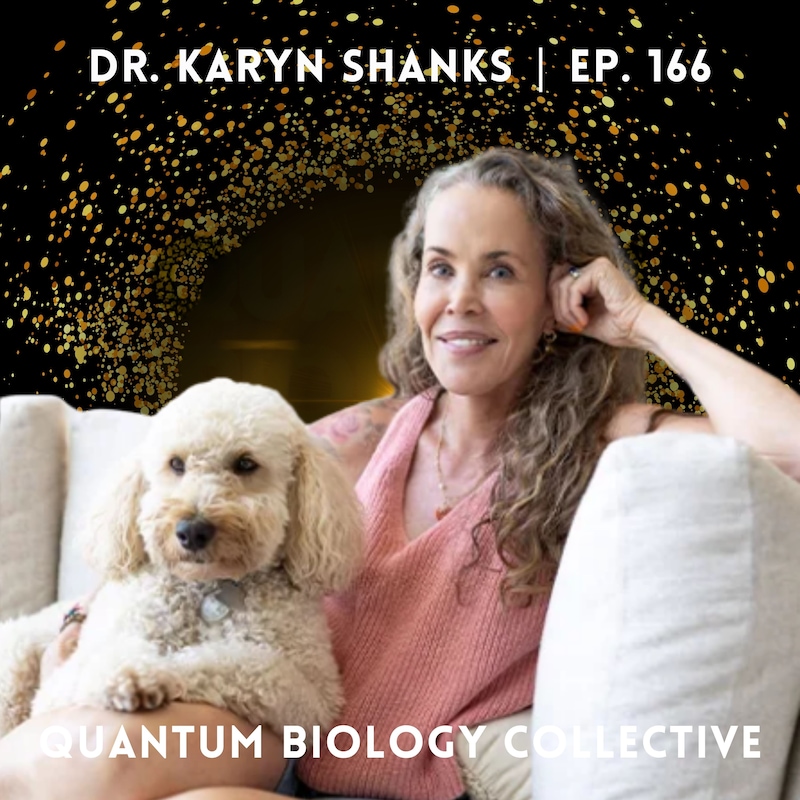
“The genetics don’t change—our genes are set—but the way they express themselves, especially how they express themselves together, is very fluid. It’s dependent on basically everything that happens to us,” says Dr. Karyen Shanks, physician and author, who joins the Quantum Biology Collective Podcast to challenge conventional medicine’s disease model and explain why epigenetics—not genetic destiny—holds the key to true healing.
In this episode, Dr. Karyn Shanks reveals how her early disillusionment with the reductionist approach of Western medicine led her to become a change-maker from the inside. She advocates for a holistic, whole-person view that goes beyond labels and “disease boxes,” showing that most chronic illnesses are not fixed with magic bullets but through investigating an individual’s unique terrain—sleep, movement, love, trauma, environment—and empowering patients to trust their own innate wisdom. She discusses the dangers of medical gaslighting, the pitfalls of a system obsessed with pathology, and how lasting health requires curiosity, agency, and compassion.
Tune in as Dr. Karyn Shanks shares the science behind epigenetics, the power of neuroplasticity, and how shifting our perspective can transform our health journey. Discover why the current system “has no business with chronic illness,” and what practical, hopeful pathways exist for reclaiming wholeness and resilience—no matter how complex or mysterious your symptoms may seem.
5 Key Takeaways
- Stop outsourcing your well-being—take ownership of your health journey and build your own team of holistic healers and supportive practices.
- Shift from blaming your body to radical curiosity—treat every symptom as wise information, not a personal failure, and stay open to the healing process.
- Demand real solutions, not just labels—refuse to be gaslit or boxed in by reductive diagnoses and insist on in-depth, whole-person care.
- Use your environment and lifestyle to change your biology—harness the power of epigenetics and daily habits like sleep, movement, and connection to influence your genetic expression and resilience.
- Give yourself permission to walk away from what isn’t working—exercise agency by trying, adapting, and integrating new approaches until you find what truly serves you.
Memorable Quotes
"Our genetic destiny is not set in stone. We weren't designed to follow the exact trajectory of our parents and grandparents—the way our genes express themselves is very fluid and dependent on everything we experience, ingest, and feel."
"The equilibrium may feel like suffering, it may look like chronic illness, but it's really this dynamic place. There are so many inroads to shifting where we're at, and one of the things I like to do is show people that terrain—all the things that make you who you are, that feed into your genetic expression, and can be shifted to rise out of suffering."
"Our feelings aren't there to torture us—they're there to show us the way. We want to erase suffering rather than walk into it and ask, 'What do you have to teach me?' If we look at suffering as a portal and approach it with compassion and curiosity, we're going to get somewhere."
Connect with Dr. Karyn Shanks
Website: https://www.karynshanksmd.com/
Facebook: https://www.facebook.com/KarynShanksMD/
Instagram: https://www.instagram.com/karynshanksmd/
Resources Mentioned
[insert resources]
There's more to QBC:
Donate to launch JAQB: https://givebutter.com/AQBjournallaunch
You can join the FREE QBC online community here: https://qbcpod.com/freecommunity
The Institute of Applied Quantum Biology, a non profit organization translating the new science into practical application: https://www.iaqb.foundation/certification
Podcast website: https://qbcpod.com/
Tools we use: https://qbcpod.com/products/
From our sponsor:
For red light therapy devices, blue blocking glasses, circadian friendly nightlights & more, visit boncharge.com and enter QBC in the discount box at checkout.
Download to your device from the App Store, use code QBCPOD. Make it easy to get your light right: this app tracks everything you need to have a circadian optimised life.
Link: https://get.mycircadianapp.com/cXOl/QBCAPP
Recommended Products:
Lifewave phototherapy patches. Highly recommended for women 45+ or anyone with a condition or symptom they'd like to see shift. Start with x39.
Purchase retail: https://lifewave.com/qbcpodcast/store/products/40825027-6466-4cb8-92d3-dfc318d34a65
For more info from Meredith, fill out this form: https://qbcpod.com/patches/
Join Us On Social
Instagram: https://instagram.com/quantumbiologycollective
Facebook: https://www.facebook.com/QuantumHealthTV
Rumble: https://rumble.com/c/QuantumBiologyCollective?e9s=src_v1_clr
X/Twitter: https://x.com/QBCPOD
IAQB Resources
Instagram: https://www.instagram.com/iaqb.ce
🎙️🎙️🎙️
This podcast uses the following third-party services for analysis:
Podscribe - https://podscribe.com/privacy
Transcripts
Doctor Karen Shanks, welcome to the QVC podcast. Thank
Speaker:you. Thanks for having me. So
Speaker:I'm so excited to talk to you because I really feel like you have
Speaker:such a beautiful holistic view of a lot of
Speaker:different things that you have sort of created through the
Speaker:course of your career. And so I want to start at the beginning
Speaker:of that because you are somebody
Speaker:who, based on. Based on listening to your interviews,
Speaker:you had a bit of a red flag about the medical system from the
Speaker:moment you started training in it. But
Speaker:thank you for persisting and being a change maker from the inside.
Speaker:So could you sort of tell us you came
Speaker:in, you know, you came into as a
Speaker:medical student with one idea of what it would be
Speaker:like only to be confronted with another. And seems to me you spent
Speaker:a long time building a bridge between those two things. So tell us a bit
Speaker:about what your initial experience with the system.
Speaker:Yes, with the system, which I
Speaker:was naive enough not to even understand it as a system, but
Speaker:as, oh, the way it is, you know, how we
Speaker:all are. So, yeah, I went into medicine with this very
Speaker:naive but beautiful notion
Speaker:that medicine was going to be all about connecting to human
Speaker:beings and helping them heal. I had a background in
Speaker:nursing and working with. In hospice
Speaker:care and nursing care in the home and
Speaker:people with, you know, disabilities and chronic complex conditions
Speaker:and really getting to know them in the context of their homes and their
Speaker:lives and their families. And it was so beautiful. And I
Speaker:wanted to do more. And I thought that's where I was going. I
Speaker:thought that's what medicine was going to be like, more of that, like, show me
Speaker:how to do even more of that. And
Speaker:that's not what I experienced. You know, I.
Speaker:So as I prepared for medical school, I was immersed
Speaker:in the biological sciences, physics, you know,
Speaker:beautiful. I mean, I mean, it just. I loved every bit of that.
Speaker:And the first year of medical school is like, all of that, like, in
Speaker:a very concentrated, intensive form.
Speaker:And I loved it. It was exciting. Oh, my gosh.
Speaker:All this gorgeous biological complexity that we're going
Speaker:to get to, like, use as a lens
Speaker:to help understand what's going on with people and what makes them suffer
Speaker:and how we can help them heal. And as soon as we
Speaker:switched from that first year of all
Speaker:biological sciences, human biological sciences, and
Speaker:switched into our second year, it became all about
Speaker:pathology, all about the problems that people
Speaker:have looked at in a very particular way, looked at
Speaker:through the lens of the disease model. What do we call
Speaker:this thing that they have? What does it look like under the
Speaker:microscope and at the same time we had a
Speaker:pharmacology course. So it's like, and here's the drug that
Speaker:fixes that thing. And it just confused the hell out of me. I didn't have
Speaker:a way to or I felt deeply uncomfortable.
Speaker:I felt disappointed. It was like it was a
Speaker:crisis. It was a disillusionment. But I didn't know what
Speaker:that disillusionment was until later. I kept going.
Speaker:I was depressed. I was, you know, I'd be at
Speaker:the bedside with teachers and other students and we're
Speaker:sizing these people up in terms of what disease they have,
Speaker:sort of discarding a lot of the information
Speaker:that they were bringing to the table but didn't
Speaker:fit that, that, that way of looking at them. And so, and
Speaker:we talk about them in terms of their labels.
Speaker:I don't know. It was, it was really, it was tough. So it
Speaker:was kind of a, a dark night of the soul. I'm. I didn't know what
Speaker:I was doing at that point, but I kept going. Something kept me going.
Speaker:And same ditto for post medical school
Speaker:residency training. I trained as an internist all and
Speaker:mostly in the hospital. So people who are very
Speaker:urgently, critically, acutely ill or, you know,
Speaker:needing to be rescued from their problems.
Speaker:And it wasn't until I finished and I did, you know, I was
Speaker:too overwhelmed with the
Speaker:just the all consuming time commitments of that
Speaker:training to really like, reflect. What am I doing? Okay. I
Speaker:think this is the path I need to be on. I have no idea why.
Speaker:I have no idea where it's going. As soon as I started
Speaker:practice day one, oh, I didn't learn a thing that I can apply
Speaker:to these people. I didn't.
Speaker:Of course I did, but I didn't, I didn't learn
Speaker:what I needed. For people in the community with
Speaker:the wide variety of chronic problems
Speaker:and sources of suffering that they have, I don't, I didn't know
Speaker:what to do. I had to start my training all over.
Speaker:So that was. There was. There's another crisis. Oh God, I've got to start my
Speaker:training. But that was. Went through med school,
Speaker:which is the most intense of them all and, and it wasn't
Speaker:enough. I have, I have a question. Yeah. Regarding the
Speaker:disease model. Because so obviously I think the disease
Speaker:model in and of itself is reductive, but I'm wondering if
Speaker:it's become even less useful over time. Like my feeling
Speaker:as an outside observer is that the
Speaker:clusters of symptoms that people are showing up
Speaker:with are. I feel like the medical
Speaker:system is rushing to come up with new diagnoses, like almost every month I
Speaker:hear one. I'm like, there's a, like there's a new kind of that.
Speaker:And so I feel like it's becoming even less useful as the,
Speaker:the symptoms that people are having and the. That's right. Random collision of
Speaker:conditions is becoming more and more complex. Is that what you're seeing?
Speaker:A hundred percent. So what I'm seeing is an evolution
Speaker:of diagnoses that aren't really even diagnoses. They're descriptions
Speaker:only. Chronic, chronic fatigue syndrome. What does that say?
Speaker:The person's tired and we can deduce some things about
Speaker:that, but we know nothing about the cause. And it's going to be a different
Speaker:cause or constellation of causes in every
Speaker:single individual with that diagnosis.
Speaker:So I trained in functional medicine
Speaker:subsequent to my conventional training. And what we learned to do
Speaker:is just set that disease box aside and let's look
Speaker:through a new lens. Let's look at everything differently. Let's look at
Speaker:it through a whole person model and let's look at it through a
Speaker:systems biology model which is so much more complex than
Speaker:what we do when we put somebody in a disease box and go
Speaker:through a differential diagnosis which really doesn't get people.
Speaker:It's perfect. If you're in the ER and you're having a heart attack
Speaker:or you have a great big cancerous tumor and it, it has
Speaker:to come out, that's. That disease model is perfect for
Speaker:that. So this isn't about like all just, just throwing
Speaker:out the, you know, western medicine because
Speaker:it is so good at what it does, it's just
Speaker:terrible at everything else.
Speaker:Yes. You know, and having, having come through.
Speaker:What I call chronic fatigue because I don't know what else to call it.
Speaker:I would completely agree with you. We're just describing these
Speaker:conditions. And what I'm also seeing, and I've personally experienced and
Speaker:hear over and over, is that they don't
Speaker:start out as full blown crises. So the
Speaker:medical model doesn't tend to have much
Speaker:to say. But people's quality of life
Speaker:is going down kind of earlier and earlier in
Speaker:chronologically and just sort of in, in the process. It's. That's
Speaker:right. And so I'm wondering what your thoughts are on that, what's
Speaker:leading to that and this, this gray area of not
Speaker:living our best lives, not being as healthy as we could be,
Speaker:but also going to the doctor and they're like, yeah, your labs are fine.
Speaker:Basically the message is like, come back when you're in crisis. But there's this
Speaker:there's like, decades of gray area. That's Right. Lowering quality
Speaker:of life. So then we're adding. Not having
Speaker:answers. What we're adding to not getting our answers from the
Speaker:Western medical model. We're adding being
Speaker:gaslighted by the medical model. Right. Like, oh,
Speaker:well, I don't know what to tell you.
Speaker:And I've had patients come to me and say that their doctors
Speaker:said outright, there's nothing wrong. Go to the psychiatrist.
Speaker:It's probably just stress. I mean, they're. They're outright
Speaker:gaslit. But even those
Speaker:physicians who aren't willing to, you know, to say that
Speaker:the, the implied
Speaker:explanation for your suffering is that
Speaker:something's wrong with you and the way you're perceiving
Speaker:things, that's the message we walk away with. I've been through. I've been through
Speaker:that same thing. I mean, even knowing that this is going
Speaker:on in medicine, I've also experienced that sense of,
Speaker:like, falling through the cracks. Oh, my God. There's really something wrong with
Speaker:me that isn't, like, real, you know,
Speaker:so, yeah, that is.
Speaker:That's huge. And so when I end up working with.
Speaker:By the time they come to me, they have a problem
Speaker:that's, you know, it's a train that's kind of rolling
Speaker:off the tracks because so much time has gone by, and
Speaker:they haven't had abnormal labs, which doesn't mean there aren't
Speaker:labs out there that could explain what's going on with
Speaker:them. Right. You know, a huge part of the problem is
Speaker:that docs for a long time now have not
Speaker:had time to hear the whole story, to put all
Speaker:the pieces together. Most of the people who come to me are not, you know,
Speaker:you know, they're labeled as mystery illness. You
Speaker:know, chronic fatigue syndrome, whatever. Once I dig in and give people
Speaker:the time they need to tell their whole story and look through all their
Speaker:medical records, everything that's been done so far, it's usually not
Speaker:rocket science. It's usually not anything mysterious.
Speaker:Right. It's just that I've decided to build my practice to meet
Speaker:people's needs, not to meet my needs or the needs of a system.
Speaker:So I don't have time constraints, and I may spend two
Speaker:to four hours with a new client and all
Speaker:their medical records, and we come up with some really
Speaker:simple things that need to be adjusted, and off they go.
Speaker:And they're great. They do great. That's
Speaker:such a good point. It's like, it's not necessarily a mystery illness.
Speaker:It's a mystery illness that can't be solved in a 50 minute appointment.
Speaker:That's right. That or by people who only have a disease
Speaker:box mentality. Not let's. Okay,
Speaker:they're tired. That suggests some mitochondrial
Speaker:dysfunction. Okay, how do we look at mitochondrial dysfunction? Why
Speaker:do mitochondria fail to make the energy that the
Speaker:person needs? And then you, you know, and there's a whole algorithm you can go
Speaker:through from the structure of the mitochondria to know
Speaker:toxic influences on the mitochondria. I mean there's a
Speaker:whole, there's a whole spectrum of things that we have to think through
Speaker:and, and that's all known human
Speaker:biology, that it's just a
Speaker:process. So. Yeah, yeah, I, I'm, I
Speaker:can't excuse my colleagues practicing in, you
Speaker:know, in what, in typical Western medicine
Speaker:settings for not being able to help the majority
Speaker:of people who walk through their doors, who walk away without that help.
Speaker:Right. And in many cases are sent down a
Speaker:prescription spiral that makes everything worse. That's right.
Speaker:That's right. So I feel like my job,
Speaker:my, my role, huge part of my role is to
Speaker:empower people to like question and
Speaker:trust that. You know, most of the people
Speaker:who come to see me, they have known from
Speaker:the beginning on some level that medicine just
Speaker:hasn't gotten them yet, you know, but it's,
Speaker:it's so overwhelming and it's so difficult to trust that
Speaker:when every, the world trusts Western
Speaker:medicine and what comes through the scientific method, what,
Speaker:you know, what comes into Western medicine as the facts?
Speaker:Here's how humans operate, here's what's wrong with humans.
Speaker:Right. It's a paradigm
Speaker:of understanding that really doesn't get us in our complexity
Speaker:and so has really no business in the realm of chronic
Speaker:illness. We need a whole other
Speaker:medicine for that. That is absolutely
Speaker:the truth. That's a perfect way to say it. It has no business with
Speaker:chronic illness. I know. Yeah.
Speaker:Oh, I love that because I've,
Speaker:I know that something you also are quite passionate about is this idea
Speaker:like the way that you've just framed the system as looking
Speaker:at us as though there's something wrong with us. We then internalize that.
Speaker:That's right. And we feel like if we have a
Speaker:symptom or, or a condition or something's not right, there's something wrong with us.
Speaker:And even those of us like really committed to, you
Speaker:know, who have high personal agency and are doing a lot of research, we sometimes
Speaker:just move that mindset over to a different path.
Speaker:So even if we're on a path that is meant to be more
Speaker:Natural and compassionate and aligned with
Speaker:nature. We still bring in that mindset of, like,
Speaker:oh, well, if I'm not better yet, I'm doing something wrong. Right?
Speaker:That's right. And I call that grain medicine. So it's the same
Speaker:paradigm. It's linear.
Speaker:It's still putting us in some kind of box. Oh, you.
Speaker:You've got gut dysfunction or, you know, a leaky gut,
Speaker:or, you know, we give it different names, but then we're still trying
Speaker:to fix that thing with some kind of magic bullet.
Speaker:And if we don't get better, we failed. And it's
Speaker:really hard to resist that, to resist thinking about things that way,
Speaker:because we have all these cognitive biases that are,
Speaker:you know, we think we kind of glom onto the most
Speaker:negative way to view something. We try to
Speaker:simplify things as much as we possibly can. I get that. I
Speaker:want. I mean, I feel that in myself, I want to understand things
Speaker:in a very simple way. But that
Speaker:often leads to us, like, getting in our way. Like, we can't make any
Speaker:progress if we aren't, like, curious and open to possibilities
Speaker:that we don't even know exist, if
Speaker:that makes sense, you know,
Speaker:so that's. Yeah, it's an interesting journey of
Speaker:discovery. When we're on a healing path for any kind of
Speaker:chronic illness, chronic complex illness, chronic
Speaker:sources of suffering, or just want to. Want to
Speaker:feel robust and resilient
Speaker:and, you know, function at a very high level,
Speaker:is to come at it in a very loose,
Speaker:open,
Speaker:oh, how do I want to say that? Just like staying
Speaker:curious. Just staying very curious and
Speaker:asking people to. For asking experts to help us
Speaker:reading, doing all the things we feel
Speaker:called to do, remaining
Speaker:healthily skeptical, which is a form of curiosity,
Speaker:and then just, okay, I don't feel a whole lot
Speaker:better. After doing X, Y and Z, though it seemed like a reasonable thing to
Speaker:do. I wonder what else there is to do. Let's do
Speaker:some more exploring. But doing it in a way and just an open, curious way
Speaker:and not a way that blames us and that we're all
Speaker:terrible about that. We blame ourselves, we blame our
Speaker:bodies. That's basically what we're doing when we say, something's
Speaker:wrong, something's broken, something here needs to be fixed.
Speaker:We're blaming our bodies for how we feel, for our
Speaker:suffering. When we're really not stuck at a point
Speaker:where something isn't working. We're on an equilibrium that's
Speaker:constantly changing. There are so many aspects to who we are
Speaker:that are operating at all times. I call that the Terrain, the
Speaker:terrain of our healing, all the things about our lives that make us
Speaker:us. Whether we're talking about movement or sleep or
Speaker:love, how we're connected, how we're, you know, what's happened to us
Speaker:in our lives. There's so many moving parts.
Speaker:So we're always shifting along this equilibrium of whatever you want to call
Speaker:it, health, resilience, suffering. So the
Speaker:equilibrium may feel like suffering, it may look like chronic illness, but it's
Speaker:really this dynamic place that has. There
Speaker:are so many inroads to shifting where we're at on that
Speaker:equilibrium. And one of the things I like to do is show
Speaker:people that terrain. Look at all these things that are part. That are part
Speaker:of what makes you you. That all
Speaker:feed into your genetic expression. Which means
Speaker:we can shift our genetic expression to shift where we
Speaker:are on that equilibrium through all kinds of things that we
Speaker:can do that we have control over.
Speaker:By doing that, we can rise out of a lot of the things that make
Speaker:us suffer. We can rise out of chronic illness. In
Speaker:fact, I don't know another way to do it in a sustainable way that
Speaker:addresses our problems and our sources of suffering at
Speaker:the most root cause.
Speaker:Yes. And I love this because I've like,
Speaker:haven't really found a way to articulate it, but it's almost
Speaker:sort of like we're on this, taking turns,
Speaker:a little bit of like pushing ourselves forward and trying a new thing, but then
Speaker:having this space to
Speaker:integrate it and then open up to whatever
Speaker:needs to come next. But not feeling like we're on a treadmill and
Speaker:not feeling like we need the next thing because we've failed.
Speaker:We just need the next thing because that's what we're ready for.
Speaker:I like that way of thinking about it. I mean, I think that's. We can
Speaker:only do so many things at a time. And the more we know
Speaker:we've humans have been studied for along the human brain, the more we try to
Speaker:do it one time, the less effective we are at anything. So it really
Speaker:is important that on a healing path, on any path, any
Speaker:path of growth, we just choose a thing or two to
Speaker:focus on and really, really. And give it its due. And as soon as
Speaker:it's worn out, it's welcome or it's just not serving you
Speaker:anymore. No matter how enthusiastic your
Speaker:acupuncturist is about what they're doing for you, if you don't feel
Speaker:better and you start to feel like you're on a treadmill, it's okay
Speaker:to walk away that. That thing. Okay that wasn't. It either didn't work
Speaker:or there's so many things going on with you, you just can't
Speaker:feel the benefit even there, even though there is some benefit there.
Speaker:And I think most people have a sense for whether
Speaker:something is benefiting them or not, you know. Yes.
Speaker:And be empowered to walk, to walk away. Go to
Speaker:the next thing, exercise your agency.
Speaker:You're, you're in charge, you. And you
Speaker:actually have the wisdom inside you to know
Speaker:what to do. But people definitely
Speaker:don't understand that or believe that some people do. But
Speaker:most people need some encouragement, especially when they're suffering. It's so hard
Speaker:to suffer, suffer, suffer, you know, in so
Speaker:many ways and then have to
Speaker:come up with the next right thing to do on your own.
Speaker:I've been, I've been there many times.
Speaker:It's true. I, in my, I,
Speaker:my background is in, in coaching, like, you know. Yeah. Executive coaching
Speaker:type stuff, not health. And I remember there, this one guy
Speaker:was like, most people are playing an
Speaker:unwinnable game. They have set up an unwinnable game
Speaker:for themselves. And I just, I mean, I heard that years and years ago and
Speaker:it always sticks with me because that's sort. Of what you just described. Yeah,
Speaker:it's like we were in the suffering,
Speaker:but we set it up in a way that it's always, always our fault
Speaker:no matter what we do. I know, I know,
Speaker:I know. In some ways I think we have to unravel that first. Right. We've
Speaker:got to kind of give people
Speaker:permission to be really tender and compassionate with
Speaker:themselves as they navigate the healing journey
Speaker:and just do a few things at a time and
Speaker:hold all the experiences with compassion. You know, we're never
Speaker:wrong for the way we feel. Our feelings are actually.
Speaker:Our feelings aren't there to torture us, they're there to show
Speaker:us the way. But we tend to want to
Speaker:erase the, the feelings that make us suffer
Speaker:or, or sensations, symptoms, whatever, whatever it is we're talking
Speaker:about. We want to erase suffering
Speaker:rather than walk into the suffering. What do you have to teach me?
Speaker:Where, where do we go next? Like it's a portal and
Speaker:if we look at it that way, we're going to get somewhere,
Speaker:you know, we're going to get somewhere. As soon as we say we're wrong
Speaker:in whatever colorful way we say that
Speaker:it shuts us down. So that
Speaker:I feel like that's the primary work I have with my client every time I
Speaker:meet with them, you know, is to help
Speaker:them have that forward looking view
Speaker:and that they're holding everything
Speaker:with that compassion and that curiosity that they need in order
Speaker:to access the wisdom that's inside them. And that may sound
Speaker:kind of woo woo to those who are listening, who
Speaker:want me to talk about the science of human potential,
Speaker:but it really is the, it's where it has to start. It is for
Speaker:me, I have to start every day in meditation, kind of reviewing
Speaker:all that and affirming all that for myself. Because there's something
Speaker:to suffer for every single day. And you know.
Speaker:Yes, you said, you said something really interesting a few minutes ago.
Speaker:You're like, there might be benefits. And I think it's related to this topic
Speaker:of suffering. Like you might, there may be benefits happening that.
Speaker:But you aren't noticing them or feeling them. And
Speaker:I've heard this lately from people, especially,
Speaker:you know, the people that I talk to like you, that we
Speaker:tend to not recommend like a pill that's going to make a big difference
Speaker:overnight. It's like, you know,
Speaker:more lifestyle. And so that I've heard from
Speaker:practitioners lately, like that challenge of people be like, no, nothing's happening. No,
Speaker:nothing's happening. And like as you dig, you realize there's been a tremendous
Speaker:progress. But we do have that.
Speaker:We don't notice, we don't feel, we can't see it. Yeah, right.
Speaker:What's going on there in your experience? Yeah, well,
Speaker:part of it is a negativity bias. We look at
Speaker:what's not working and glom onto that and
Speaker:it's more difficult for us to look at
Speaker:what good is happening, what progress has been made.
Speaker:And that's a known bias of the human
Speaker:psyche, which is why it's so
Speaker:important, especially during times like right now,
Speaker:what's going on in the world, what's going on with our government. We have to
Speaker:have ways to shift our attention to things that are
Speaker:beautiful because otherwise we're just going to be scrolling
Speaker:and you know, and watching the news and staying in
Speaker:a high survival state.
Speaker:And yeah,
Speaker:that is a attribute of the human brain that kept our ancestors
Speaker:alive during really complex times on Earth. So,
Speaker:so but knowing that we can intentionally
Speaker:shift our attention to something else, something that
Speaker:feels nurturing, something that makes us feel
Speaker:enlivened some, you know, we just have, that's our, that's
Speaker:our responsibility to do that. The
Speaker:other thing, what did you. There was something else I was going to say about.
Speaker:Oh, what did you say? What was the first thing you said that you heard
Speaker:me say? It was about like not noticing when we
Speaker:make progress or not noticing, like there may we're doing
Speaker:something and there's a benefit. And it's like, no, this isn't working.
Speaker:Nothing. Nothing's changed. But in fact. And sometimes it
Speaker:is that negativity bias and that. So I like, I'm practically
Speaker:interrogating my people, like, every time I see. Okay, I want to. All
Speaker:right, tell me what happened. Okay. You know, and we may. We
Speaker:may discover there are things that have improved. People
Speaker:with chronic complex illness have a lot. There's a lot going
Speaker:on, and there are a lot of moving parts. It's more a
Speaker:constellation of things that need attention than a thing.
Speaker:It's never a thing. It's never a thing.
Speaker:And so sometimes there's. One of my mentors put it
Speaker:this way. He had this three tack rule. Have you heard this before? The
Speaker:three tack rule. If you sit on three tacks,
Speaker:it's going to hurt like hell. It's going to hurt like bloody hell. And no
Speaker:amount of ibuprofen or anything's going to make you feel better.
Speaker:Take two tacks out, you've taken care of two thirds of your problem.
Speaker:That sounds huge, and it is huge. But one tack still hurts
Speaker:like hell. So for some, and I
Speaker:explain this to my clients, and I know it's such a leap
Speaker:of faith for them to hold on when we've done so
Speaker:much and there's so much progress, but they still don't feel. Feel the way they
Speaker:need and want to feel. We've got to get to that last tack.
Speaker:We've got to do the 20 things. And sometimes we don't have to do all
Speaker:20 things. We identify. Sometimes a couple of them are like
Speaker:hubs that are responsible for some of the other things that have gone.
Speaker:Gone wrong. Like you've. You talk about light and circadian rhythms,
Speaker:and sometimes a problem like that, we fix that,
Speaker:and then a whole bunch of things downstream to that just,
Speaker:you know, get. Get into the groove that we need
Speaker:them to. We don't have to, like, fix every single thing.
Speaker:Yes, that. And that does make so much sense. I
Speaker:love that three tack because, yes, two of them are out, but you still got
Speaker:a tack in your. In your bottom. Like, what if
Speaker:that is a big, big problem? What if you're sensitive to gluten
Speaker:and you've got. You live next door to a farm
Speaker:with a bunch of chemicals flying all around and
Speaker:which you can't do anything about because you, you know, you're not going to be
Speaker:able to. Yeah, you're just probably not going to be able.
Speaker:And you. You
Speaker:don't sleep Those are three huge things.
Speaker:Now, maybe if we get the sleep in order, which.
Speaker:And get it onto a, you know, to a correct circadian
Speaker:rhythm, maybe all the other things, you know, the gut will heal
Speaker:the, you know, maybe that'll address everything else but for people to really
Speaker:feel better. And people deserve to get a little taste of that
Speaker:feeling better after suffering for so long. And so.
Speaker:And I just thought of what I was going to say to what you had
Speaker:said earlier. Sometimes we use a pill
Speaker:that may not. May only be a band aid and it
Speaker:may not address the underlying causes at all. But if we
Speaker:can reduce suffering, we're going to. That is such a.
Speaker:People begin to feel the safety. They begin to feel the hope.
Speaker:I always explain what we're doing. This isn't going to
Speaker:cure you. This is just going to make you feel better. But that's huge. You
Speaker:get your wits back about you and get
Speaker:you really in the flow of what we need to do to address those
Speaker:more root cause issues. I am not opposed to
Speaker:using conventional medicine.
Speaker:Yes. When it is going to serve a valuable purpose, but we're not going
Speaker:to rely on it. It's not our solution. Right.
Speaker:It's like a bridge out of a bad situation.
Speaker:I'm the same way. I'm like, if it's really bad, it's like, just give
Speaker:me enough relief to be able to do what I'm supposed
Speaker:to do. But I can't take those steps from where I am when it's
Speaker:really, really bad. Exactly. It's compassionate. That's
Speaker:compassionate care. Yeah. Yeah.
Speaker:Okay, so I want to talk for a few minutes about epigenetics.
Speaker:Yes. And I love, because I loved how you explained it.
Speaker:Well, I have just. Okay, just give us your. Give us
Speaker:your. Your description of it. That
Speaker:our genetic destiny is not set in stone. Yeah,
Speaker:we're not. We weren't designed
Speaker:to follow in the
Speaker:exact trajectory as our parents and our grandparents.
Speaker:That actually. The genetics. So the genes
Speaker:don't change. Our genes are set, but the way they express
Speaker:themselves, especially how they express themselves together,
Speaker:is very fluid. And it's dependent on
Speaker:basically everything that happens to us.
Speaker:Everything we feel, everything we experience,
Speaker:everything we ingest, everything about us and
Speaker:the terrain that makes us us is going to. Is going
Speaker:to result in some shift in genetic expression. In fact,
Speaker:most of our genes, like over 99% of our
Speaker:genes, are regulatory genes that do this
Speaker:shifting, turning on and off. They. In response to what happens to
Speaker:us. And that little minority are the genes that
Speaker:actually code for the proteins that create Our structure and function.
Speaker:So we have these endless inroads to shifting
Speaker:our genetic expression, to change our biology, to change
Speaker:where we are on that equilibrium of function as a human being.
Speaker:And that's our. Like,
Speaker:that's the magic of being human and addressing
Speaker:our suffering and chronic illness at the most root level. Cause
Speaker:we know so much about how to shift genetic expression
Speaker:and some areas more than others. But. Yeah.
Speaker:So then we think about the terrain and all the ways we
Speaker:can shift genetic expression and we look at
Speaker:what might be the priority areas. And people usually know what those priority
Speaker:pri. Priority areas are. Or I, I can help them as I look at
Speaker:what's happened with them and what their. What their life is
Speaker:like. And we use
Speaker:that whole principle of epigenetics to heal.
Speaker:And epigenetics applied to the brain and the
Speaker:nervous system is neuroplasticity. So we can change the
Speaker:structure and function of our brain. We can change how it operates.
Speaker:When I was in medical school, we didn't know this or it wasn't being taught
Speaker:at the time. So the brain was like set.
Speaker:Set, you know. Yeah. So you got to learn
Speaker:everything there is to learn by a certain. By. By the best by date, and
Speaker:then it's over. So I certainly grew up thinking that.
Speaker:Oh, absolutely. I call it the. The science
Speaker:of directable human potential. It's the science of
Speaker:possibilities. It's just we. And they're endless because there are endless
Speaker:combinations of these sh. In genetic expression. So I would.
Speaker:There's never a time when I would say, okay, we've done all we can do,
Speaker:because that's just not even possible to get to that point.
Speaker:Yes. And some might call me an
Speaker:idealist to a fault, but I don't think, I don't. I just don't think so.
Speaker:I don't. I mean, how could, like, and who are you
Speaker:to. Who is that person to say, no, it's done the. That there
Speaker:are no more probabilities left. Like, of course there are.
Speaker:Absolutely. Absolutely. That's. That's how I operate.
Speaker:Yeah. And I. When you talk about like the
Speaker:1% of the DNA,
Speaker:that was also something that we were all sort
Speaker:of primed to believe is that that was all there was.
Speaker:And that is still holds on. They called it
Speaker:the Human Genome Project. I think that was in 1990,
Speaker:which, which all this came to light. And they called it junk
Speaker:DNA. That 99% of our DNA that didn't code
Speaker:were proteins that became our structure and function. They called
Speaker:it junk DNA. Can you even believe
Speaker:it? This is like such an example of
Speaker:the scientific paradigm that.
Speaker:That is really. I. That has just took us. Taken us down such a
Speaker:terrible road. It's like we. We want to talk about this
Speaker:1%. So all of the. The 99% that is
Speaker:an anomaly to what our hypothesis is, we will
Speaker:call junk. And you want to stay on the. Track that
Speaker:we would like to stay on the science. Thanks, guys. The
Speaker:science revealed the way things were. It revealed the
Speaker:1% versus. But it was scientists who
Speaker:had the audacity and the arrogance to
Speaker:make the assumption without looking at. Look.
Speaker:Looking any further, made the assumption that that was all junk just sitting there.
Speaker:That was. That's just. That's human arrogance. And so that's a lot of
Speaker:what's involved in why we've evolved. Evolved a
Speaker:medical system that is still so reductive and
Speaker:looks at people as machines and. And many parts, many
Speaker:problems. This is the. This is not the fault
Speaker:of a, you know, a God of science. This is like
Speaker:people and how they handle the science and how
Speaker:they. How limited their brains are.
Speaker:For all you scientists listening,
Speaker:I'm not talking about all of y', all, but, you know, and I'm. And we
Speaker:all. We all can do that, right? Make assumptions. We make. It's what
Speaker:we do all day long. Yes, of course. But. But I would. I would just,
Speaker:you know, if I'm like, have an idea and I get in there and it's
Speaker:like 99 of the stuff I'm looking at doesn't line
Speaker:up with the idea. Maybe I
Speaker:change my idea instead of labeling it junk.
Speaker:Yeah. And basically, I'm sorry, but they.
Speaker:They condemned generations of people to breast
Speaker:cancer and things like that because we just reduced it to having this gene.
Speaker:And only recently, it's like, well, actually,
Speaker:if the gene is the bullet, what pulls the trigger? Like, that's
Speaker:sort of what doctors are starting to say now. Yeah,
Speaker:that's right. But we could have. We could have got there sooner, and that's still
Speaker:like a somewhat simplistic. And we did
Speaker:because there's some scientists who took it further. Yeah.
Speaker:And epigenetics evolved. And it's
Speaker:an. Epigenetics has been a very lively field of
Speaker:study for, I don't know, before the genome project
Speaker:even. But it hasn't filtered down into
Speaker:clinical practice at all. Right. Or it
Speaker:hasn't. I don't see the evidence of that. Is
Speaker:that. That shocks me, being a North American
Speaker:woman through going through your 40s.
Speaker:Everybody has a friend or a friend of a friend who had a breast
Speaker:cancer diagnosis. Yeah, right. Like, that's just how it is. I lost a
Speaker:very close friend to breast cancer. And there is no
Speaker:epigenetic. None of them are. And they
Speaker:all go to the best anyway. I won't get into it. They all go to
Speaker:the biggest and best hospitals to get treatment, which, you know,
Speaker:great. Good for you. But the. But when they're
Speaker:talking about but then there's no other discussion beyond that.
Speaker:There is no epigenetic discussion. That's right. We don't look
Speaker:back at the trend. Okay, let's take care of this cancer. We need to get
Speaker:this tumor out. We need to get as much of the visible
Speaker:cancer out. And there's a lot of good
Speaker:evidence that because of how savvy cancer cells are,
Speaker:getting what you can see out of the picture gives us a better
Speaker:chance to activate all that
Speaker:epigenetic potential so that there's a lasting
Speaker:cure. But you're right.
Speaker:Cancer treatment in general doesn't address
Speaker:the terrain in which that cancer emerged. And
Speaker:sure, there are genes that
Speaker:increase people's risk, but it
Speaker:is an absolute. What are all those other factors and why aren't they
Speaker:being studied more vigorously? You hear about
Speaker:the lone scientist out in North Dakota. I remember
Speaker:this was at a conference once. She was studying the effects of
Speaker:eating cruciferous vegetables on how the
Speaker:liver pathways for clearing estrogens,
Speaker:for biotransforming estrogens.
Speaker:She was studying those pathways. There were some
Speaker:that were associated with a higher risk
Speaker:of getting breast cancer and certain autoimmune disorders.
Speaker:There were other metabolites of estrogen that were very safe
Speaker:and appeared not to be associated with that. She was
Speaker:looking at an epigenetic phenomenon, but she's just some
Speaker:obscure scientist. I don't know what happened to her. It was so
Speaker:such exciting information to me. And I've never heard about it
Speaker:since that time. Right. It's not
Speaker:sexy. It's not popular. There's no funding for it. You
Speaker:know, it's the science
Speaker:that happens is what people care about and will put money on.
Speaker:And it's all about the paradigms that the funders built believe
Speaker:in and how they're going to benefit from. From that
Speaker:research. Like, you know, drug companies supporting research that
Speaker:will. And even these hospitals. I still get the letters from, you know,
Speaker:Dana Farber or whatever they like, you know, donate
Speaker:your money so we can cure cancer. And I'm like, you're not going. You have
Speaker:no interest in curing cancer, first of all. And second of all,
Speaker:you're. You're not going to. There's so much to look at that. As
Speaker:to your point. Point is being completely ignored. Yeah, that's
Speaker:right. And. And I, I do believe that the scientists, most
Speaker:of the scientists really, in their heart of hearts, would want
Speaker:to cure cancer. Yes. But there are so many competing commitments
Speaker:to other things and so many limits on what they can do to
Speaker:get tenure and get the notoriety and the success in their field.
Speaker:It's just. It's a quagmire, you know,
Speaker:It's a quagmire. And again, it's
Speaker:responsive medicine. It's not. How do we live our lives
Speaker:early as children, beginning as children so that we are
Speaker:resilient to disease?
Speaker:How do we do that? And isn't that the most downstream
Speaker:place to focus our attention? But,
Speaker:you know, that's where medicine should start. It's not what's going on
Speaker:in this institution. It's like. Yeah, where do we begin?
Speaker:I think we begin as people shifting our understanding
Speaker:of how we work and teaching that to our children and
Speaker:creating healthier lifestyles. And it. And
Speaker:it feels like such a big ask,
Speaker:you know? Yes. But I mean, I
Speaker:think that comes back to what we were discussing earlier, where we've
Speaker:been trained to kind of blame ourselves, but we've
Speaker:also been trained to hand the power over to a medical
Speaker:authority. That's correct. So to take that power
Speaker:back. Yes. Feels like a huge
Speaker:burden in some ways because it's so much
Speaker:easier. Yeah, yeah. To. To
Speaker:absolve ourselves of that responsibility.
Speaker:We're scared and we feel so vulnerable. And we've been
Speaker:since the day we were born. We've been disconnected from ourselves and
Speaker:our own wisdom by all the institutions.
Speaker:Not as a malicious thing. I'm not saying any. It's a conspiracy.
Speaker:It's just how it is.
Speaker:And yeah, we totally outsource our health and well being
Speaker:to institutions like conventional Western
Speaker:medicine. They're the experts. They know everything.
Speaker:Science knows everything. Even
Speaker:though science is a construct created by human beings that is, as
Speaker:you said before, very reductive, looks at us in a very
Speaker:specific and incorrect way.
Speaker:And then we base all of our assumptions on what goes wrong with people
Speaker:and how people can best heal based on that science that
Speaker:is not adequate to understand us. And our true needs
Speaker:were too complicated. You know, we're very. We're complex.
Speaker:We don't fit in that little box. And
Speaker:that came out of an era when that's, you know, the powers that
Speaker:be. The politics of the time. This is back in the 16,
Speaker:1700s, the scientific revolution. That's what they decided
Speaker:that's how they decided to look at people. The body goes to
Speaker:science. The mind and all the intangible parts of people
Speaker:went to the church. And. It
Speaker:hasn't changed a bit. Even though we all know better.
Speaker:You talk to anyone, you know, you go into a coffee shop and start. You
Speaker:can talk about this stuff. Everybody kind of knows we're whole.
Speaker:There's more to us in our bodies, but
Speaker:that's not how medicine is practiced, right?
Speaker:So we're kind of like, oh, yeah, we're all. We're
Speaker:whole. Mind, body, spirit, blah, blah, on and on, all the
Speaker:words strung together. But we also. We
Speaker:think of our. We all also think of ourselves as separate. We're
Speaker:separate parts. And if we walk into the doctor's office, we are.
Speaker:We expect to be treated like just a
Speaker:physical body.
Speaker:That's true. And it doesn't feel good. And
Speaker:I know people have really close, wonderful relationships with their physicians, even
Speaker:if they're still, you know, conventional medical model. And that feels
Speaker:good. There's the empathy and the caring and concern, and that's
Speaker:beautiful. That's very healing. But everybody knows, you know,
Speaker:when you're really in trouble and you go to the doctor, you go to the
Speaker:hospital, you're a body.
Speaker:So if. If Dr. Karen Shanks was in
Speaker:charge, oh, what.
Speaker:How would. How would we look
Speaker:at, let's say, a patient, if we would even use
Speaker:that word, what would the model be?
Speaker:You know, in your sort, in your ideal world of
Speaker:how to think of ourselves, how to think of the people that we're working with
Speaker:and helping? I think everybody in
Speaker:healthcare needs to understand that they're working with this very
Speaker:complex whole human
Speaker:system organism that has more
Speaker:intangible tangibles that you'll never understand
Speaker:or be able to explain, that
Speaker:that's who you're dealing with. And it really is
Speaker:inadequate to just focus on biomarkers
Speaker:and symptoms. That is wholly
Speaker:inadequate. Now, as we build
Speaker:this new ideal health care, whatever we do need
Speaker:conventional Western medicine because there are too many people on the
Speaker:precipice of dying or
Speaker:who are suffering, who are in. And there
Speaker:wouldn't be that number of people. There are, you know,
Speaker:billions of people. Can I say billions? Well, I don't know.
Speaker:I don't want to go too far out there, but there are
Speaker:trillions of people across the planet who
Speaker:have some sort of chronic, complex or just chronic, let's just
Speaker:say chronic illness or source of suffering.
Speaker:And the part of the fault of that is a
Speaker:medical system that only reacts to problems that are
Speaker:already
Speaker:revealing themselves in symptoms
Speaker:and catastrophic circumstances. If it weren't just a
Speaker:reactive healthcare system, we wouldn't have so many sick people.
Speaker:So there is a place for western medicine.
Speaker:Treat that cancer, at least start that process,
Speaker:fix the broken bone, repair the,
Speaker:put the stents in the coronary arteries to
Speaker:prevent a heart attack or whatever it is,
Speaker:countless things. I think that to some extent we're
Speaker:always going to need a system of
Speaker:medicine like this because there are problems that we can't
Speaker:even blame on, on having a
Speaker:reactive system. I had a spontaneous retina
Speaker:tear a few years ago. I had to have a retina specialist
Speaker:repair it and save my eyesight. And that,
Speaker:and that was absolutely fantastic.
Speaker:But it didn't help me understand if there's
Speaker:something underlying that I can address in a better way.
Speaker:Whether there is or not, I'm very nearsighted. From what I understand
Speaker:from functional ophthalmology, we can do something about
Speaker:nearsightedness, you know, when we all just assumed that's just a thing.
Speaker:You're born nearsighted, you're born farsighted anyway.
Speaker:So, but, but then we, we need a, we need a whole system
Speaker:of health care that gets in there,
Speaker:has no time constraints, welcomes the
Speaker:whole person and everything that makes them who they are. And it's
Speaker:a team of players, physicians, you know,
Speaker:all, all the healers of all sorts who come
Speaker:together and can address the whole person, address
Speaker:their trauma, address their, you know,
Speaker:relationships, help them with lifestyle
Speaker:things. Things that need to be shifted.
Speaker:Yeah, we need that. And it might even be.
Speaker:Ideally, it's kind of continuous with
Speaker:what we provide young people through our
Speaker:education systems and model for them by the
Speaker:food that we serve them at their schools and we
Speaker:teach young parents how to cook. And it's just a
Speaker:whole societal cultural shift that we need to make
Speaker:toward a healthier lifestyle. And there are a lot of
Speaker:moving parts to that.
Speaker:So that probably didn't help you. I don't think I put that
Speaker:into a nutshell for you, but. Well, I mean, there's probably
Speaker:not a nutshell that it would fit in, which is, which is what
Speaker:we keep trying. To do is just, we are all
Speaker:right, we're off track of a wellness trajectory for our lives.
Speaker:We're completely off track as a nation, as a
Speaker:culture, the western, the global planet at
Speaker:this point. And I think
Speaker:the first step is just acknowledging that that is true and
Speaker:that our current system of medicine cannot address us and
Speaker:our long term needs for healing
Speaker:and for just creating resilience
Speaker:and robustness. It doesn't have the tools or the understanding to do
Speaker:that. We need. That's where we need to start. And then it could be even
Speaker:not a second system of medicine, but just,
Speaker:you know, communities just have a variety of
Speaker:healers who come in with that holistic perspective about
Speaker:human. Humans and how they function, how they heal.
Speaker:Because we're all different. We all need and want different.
Speaker:Different things. Yes, I do. And I have a
Speaker:whole team. So, you know, Team Karen. Everybody's got
Speaker:it. Everybody will build their team of people that help
Speaker:them. And we all need help. Yeah. And I think again,
Speaker:it comes back to us having to realize that we need to do that.
Speaker:Right. It's like, oh, I have a job and I have health insurance
Speaker:done. And you know, like what we do, we have health
Speaker:insurance for the most catastrophic situations.
Speaker:Yeah. And then. So we pay, you know, whatever the
Speaker:lowest. It. Lowest thing is, and
Speaker:then we pay out of pocket for
Speaker:real health care. I know. Because we're not
Speaker:sick. So we. So it's actually what you're talking about. It's preventative, it's
Speaker:lifestyle, it's checking in. And I
Speaker:think more people, you know, it's like, okay, the
Speaker:first thing, we have to take responsibility for our own health and we have to
Speaker:take responsibility for the. For the structure of it. That's right.
Speaker:Because I was on the Internet the other day, people were posting what they're.
Speaker:What they pay for health care in America. And I was like,
Speaker:oh my God, I know. Just the premiums alone
Speaker:or. Yeah, it's just. And that's a. No. A whole
Speaker:other beast that has to be addressed in this.
Speaker:Figuring out how to really support people, take care of people.
Speaker:Because yeah, if you're. If that's a benefit of your job
Speaker:and you don't have the money to just pay out of pocket for. Some
Speaker:people can't afford a chiropractor
Speaker:whose are generally fairly low.
Speaker:It does feel like a situation where someone is stuck.
Speaker:Yes. And it's not. So.
Speaker:Yeah. And that's what, you know, I really like about
Speaker:your work, is that you're connecting us back to our bodies,
Speaker:how to listen to our bodies, how to be in communication so we catch
Speaker:these things earlier. We don't need to spend
Speaker:all of our dollars on getting fixed. If we can
Speaker:stay. Stay whole.
Speaker:That's right. Stay whole. And that's. And.
Speaker:And there may be some suffering in that wholeness. Yeah. And I think that
Speaker:to some extent that's part of being a human.
Speaker:It's when it's like persistent suffering and we
Speaker:can't we don't know what to do about it, then we need. We need help.
Speaker:We need. And, you know, we need help. We need people who can
Speaker:help us approach it in a way that makes sense and not
Speaker:pathologize it, not necessarily give it a diagnosis.
Speaker:I think there are ways in which a diagnosis
Speaker:has been very helpful. People with mental health
Speaker:issues. It's helped destigmatize
Speaker:people. It's helped us understand that it's
Speaker:not just the gods are mad at us. You know, we're being
Speaker:persecuted for our. Whatever weaknesses
Speaker:and what have you. I mean, we've come a long way with mental illness, but
Speaker:it's really not enough. And it's. It can be
Speaker:a roadblock. Okay. This person has,
Speaker:you know, social. Chronic social anxiety.
Speaker:Okay, that's again, it's a descriptive diagnosis.
Speaker:By calling it a disease or a disorder, it
Speaker:relieves the person of having to feel personally
Speaker:responsible for that or culpable for that. But what
Speaker:about all the factors that lead to the anxiety?
Speaker:Why is that person so activated? Why is their nervous system
Speaker:so activated? Why do they feel unsafe? You know, like what
Speaker:happened to that person as opposed to what gene got turned on
Speaker:that, you know, led to all these. You know what I'm saying?
Speaker:We're still looking at it in a very superficial way.
Speaker:And in medicating it, instead of trying to address what's at
Speaker:the root of that. Yes.
Speaker:Which many times isn't rocket science at all. All you have to do is
Speaker:teach a person. Oh, let me. Anxiety
Speaker:is the wisdom of my body. There's something. There's something
Speaker:to know here. There's something my body needs me to know.
Speaker:And let's look at it in a way that helps me
Speaker:understand what my unmet needs are, what needs
Speaker:my attention. And we're not taught to do that.
Speaker:We're taught to be afraid of our feelings and our
Speaker:symptoms. We're taught that it's something
Speaker:wrong, not that it's something wise.
Speaker:Like we refer to
Speaker:nervous system activation, like persistent anxiety and overwhelm,
Speaker:and that so many of us are experiencing right now
Speaker:as nervous system dysregulation.
Speaker:Like it's something wrong. Like it's. The body is wrong,
Speaker:which I don't see it that way. It's like, no, it's
Speaker:persistent. It's extremely uncomfortable. But
Speaker:my brain, my nervous system is all about
Speaker:safety, is all about trying to keep me safe. So what signals
Speaker:are my brain. Is my brain receiving
Speaker:that shifts it into high gear
Speaker:to keep me safe. Does that make sense? It's just
Speaker:like looking at things and just kind of shifting the perspective that it's
Speaker:meaningful rather than something bad, something
Speaker:wrong, pathologizing it. But we love. We like to do that
Speaker:in our culture. Everything has a. Everything has
Speaker:a name,
Speaker:a disease box. You
Speaker:know, and really we could be
Speaker:in dialogue with the symptom.
Speaker:That's right. Or have someone help you have that dialogue. Because it can
Speaker:be really hard when you're really uncomfortable. Really. I'm
Speaker:someone who've, you know, experienced anxiety on and off my whole life.
Speaker:I know how uncomfortable it is and what
Speaker:it says. I'm in trouble. I mean, it screams, you
Speaker:know, it's just really hard to work with sometimes. So
Speaker:you need somebody who has that whole person
Speaker:orientation, who is trauma informed, who
Speaker:can help you navigate what the message of that anxiety
Speaker:is, which doesn't mean we don't. We also
Speaker:learn tools to, like, soothe and settle our nervous systems. I think
Speaker:that's really important. I think there's so many triggers in
Speaker:our. In our world right now. I think people are
Speaker:anxious. People are anxious who didn't used to be, you know, it's just really
Speaker:overwhelming right now. Yeah.
Speaker:But it's just reconnect. Reconnect to yourself. Reconnect to
Speaker:your body. Everybody needs to have, like, a presence, practice of some
Speaker:sort. Even if it's. You go out for a slow walk in the
Speaker:neighborhood or in the woods, or you, you know, you sit and you
Speaker:stroke your dog and pet your dog and. Or
Speaker:sit in meditation, you know, whatever. It doesn't even matter. But a way to,
Speaker:like, reconnect and create safety
Speaker:for yourself so you can navigate all
Speaker:these things that you need to navigate.
Speaker:Okay. I feel like I just. I'm going to zip up. No, I love it.
Speaker:I'm just going to let this flow. It's so good.
Speaker:Oh, gosh. It's such a. It's. You know, Karen,
Speaker:I really appreciate you articulating and expressing all of
Speaker:that because I think it helps
Speaker:us all to feel held and safer to hear
Speaker:your wisdom. So thank you. Oh, you're welcome.
Speaker:And how can we find you?
Speaker:Are you. Are you taking clients and you have a book coming
Speaker:out. Those were three. It's actually. It's called Unbroken
Speaker:Reclaim. Your wholeness. And everything we talked about is in there. And
Speaker:then some. The ebook is out for some.
Speaker:Somehow the different versions of the book just all got onto their own
Speaker:schedules in spite of my best efforts. So the
Speaker:ebook is out. The audiobook should be. I love it all. Who knows
Speaker:what's happening? And the.
Speaker:The print version Is available for pre order. Will be out on
Speaker:January 11th. Audiobook should hit anytime.
Speaker:And my website is
Speaker:karenshanksmd.com so everything
Speaker:hap that I'm doing is. Is there. And I'm in the process of
Speaker:creating some. And it's in its
Speaker:infancy right now. I had to have the mind
Speaker:space to start imagining it. But I want to take the book
Speaker:and everything that's in there and create a
Speaker:sanctuary online for people with chronic illness,
Speaker:chronic suffering, people who are interested
Speaker:in the themes you and I talked about, who
Speaker:perhaps want to just create more resilience in their lives.
Speaker:But I'm calling it the sanctuary because I want it to feel
Speaker:like a safe place for people to land, to begin it, to
Speaker:begin their journey in a very compassionate and
Speaker:curious and open way.
Speaker:Beautiful. Coming not here yet. Coming
Speaker:in creation.
Speaker:On the way. Being birthed at some point. That's right. But
Speaker:yes, it is, I think, a wonderful idea
Speaker:to create a healing space. Because, you know, I do
Speaker:think. I don't know there. These complex
Speaker:situations, like sometimes I hear about.
Speaker:I've mentioned this as an example on the podcast before, but I was listening to
Speaker:some other podcasts that I don't normally listen to, and there was a young woman
Speaker:on there who mentioned that she had a new diagnosis of
Speaker:some kind of like, premenstrual. It was a new
Speaker:kind of premenstrual diagnosis that
Speaker:where the cluster of symptoms was. Sounded just awful.
Speaker:Even worse than what we think of as really bad pms. Yeah.
Speaker:To the point that suicidal ideation was part of your monthly
Speaker:experience. Sure. And
Speaker:her, you know, and she was like, you know, so I really want to raise
Speaker:awareness about this so they do more research on this
Speaker:condition. Because, you know, right now it's like
Speaker:I was offered like a hysterectomy. Wow.
Speaker:And I think like some. Some kind of prescription that didn't. That didn't
Speaker:help. Yeah. Yeah. So there's so many
Speaker:people just sitting in these terrible
Speaker:situations, getting terrible feedback.
Speaker:Yeah. And she really just thinks she has to sit there and live with that
Speaker:until there's a new drug. Right,
Speaker:right. So that's the mistake of naming something,
Speaker:sticking it into a disease box.
Speaker:And I don't know what this disorder is. I can only imagine. And
Speaker:then establishing some kind of
Speaker:protocol for treating it, and then all the
Speaker:curiosity ends. Right. Because this is not just
Speaker:a person who fits this cat, you know, this box, but
Speaker:this is a person who. And. And there may be. Let's say there
Speaker:are millions of women who have this sort of constellation of. Of
Speaker:problems. But for each one, it's going to be a different
Speaker:scenario. Right. The. The.
Speaker:The triggers, the. What needs to be unraveled and
Speaker:understood, the unmet needs, the. The therapies, they're
Speaker:all. They're going to be different for every single one. And that's just.
Speaker:That's. It's a tragedy.
Speaker:Yeah. And I. To me, the biggest part
Speaker:of that tragedy was the hopelessness that she was left with.
Speaker:That's right. That there's nothing else to be done. Well, I hope she's listening
Speaker:today and I hope that she hears that
Speaker:yet. Yeah. No, your journey's just begun. You got
Speaker:to experience a way of looking at your situation
Speaker:now. Everything we said about epigenetics,
Speaker:neuroplasticity, there's absolutely a way out.
Speaker:There's absolutely a way back to wholeness.
Speaker:Yes. So thanks for sharing that.
Speaker:Yeah. And thank you, Karen. And thank you, everyone, for being here.
Speaker:There is a way back to wholeness. You can order Karen's book. Book
Speaker:and visit her website and work with
Speaker:her. Are you available? I didn't. I'm taking
Speaker:limited availability, but I do. So if anyone is
Speaker:interested, my email address is on my
Speaker:website. Just shoot me an email, tell me in just a few
Speaker:sentences why, what you need help with, and
Speaker:we'll. We'll see. Just look at my website. It talk. It
Speaker:talks through how to work with me, what the process is,
Speaker:what my philosophy is and what have you
Speaker:to see if that resonates with you. Love
Speaker:it. And, Karen, thank you for
Speaker:the career that you've led and combining all of the different areas that
Speaker:you've combined. I hear from a lot of people who have
Speaker:MDs, they're like, oh, God, I don't know why I did that. I'm like, we
Speaker:needed you, too. Thank you for doing it. We
Speaker:need it. Thank you. We need some of you on the
Speaker:inside. I don't feel like
Speaker:I'm on the inside, but I. Yeah, well, you're really not anymore, but
Speaker:you started out on the inside, and I think that's good. I think it's. Yes.
Speaker:Yeah. No, you're on the fringes now. Thank goodness.
Speaker:Okay. Thanks so much, Garrett. Thank you.




