Shownotes
Summary
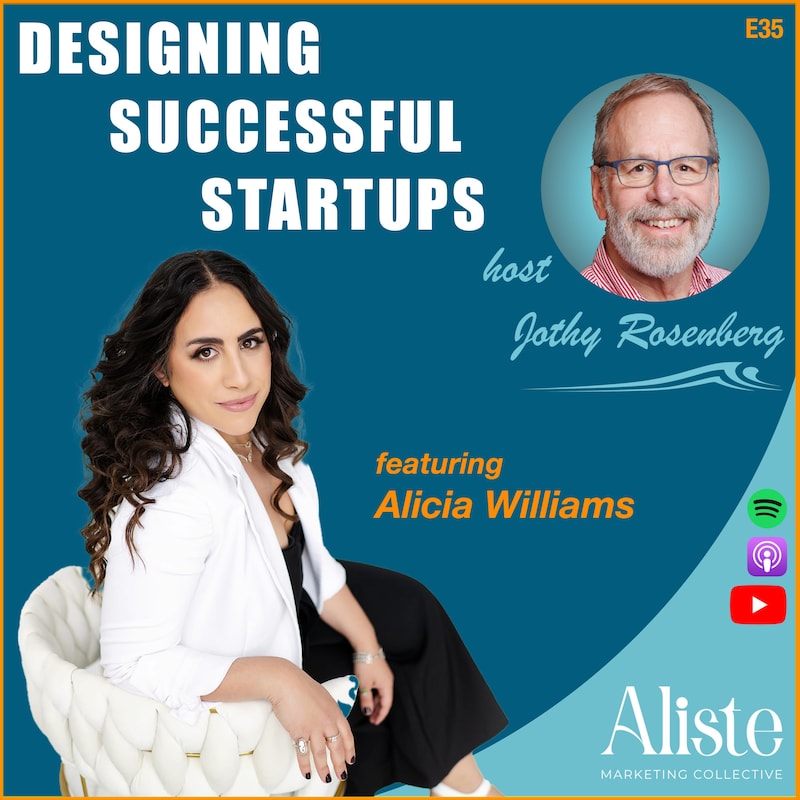
Alicia Williams, co-founder of Aliste Marketing, shares her journey as an entrepreneur and the lessons she has learned along the way. She emphasizes the importance of perseverance, surrounding yourself with a supportive network, and bringing in experts to enhance the quality of work. Alicia also discusses the challenges and strategies of working with startups, including the need to allocate a marketing budget and the integration of product management and marketing functions. Additionally, she highlights the significance of giving back to the community and the role of grit in achieving success.
Takeaways
- Perseverance and a belief in oneself are crucial for success as an entrepreneur.
- Surrounding yourself with a supportive network of like-minded professionals can provide encouragement and guidance.
- Bringing in experts can enhance the quality of work and contribute to the success of the business.
- Allocating a marketing budget and developing a customized strategy are essential for startups.
- Integrating product management and marketing functions is important for the growth and success of a business.
- Giving back to the community and supporting causes can be a meaningful way to make a positive impact.
- Grit and determination are key qualities that drive success in entrepreneurship and other areas of life.
Sound Bites
"Trust that you're not gonna let yourself fail."
"Surround yourself with an amazing network of people."
"Bringing in experts actually doesn't mean that I have to do all the work, but the work can be even better for our clients."
Links
Alicia's Aliste CMO site: https://alistemarketing.com
Please leave us a review: https://podchaser.com/DesigningSuccessfulStartups
Tech Startup Toolkit (book): https://www.manning.com/books/tech-startup-toolkit
Jothy’s website: https://jothyrosenberg.com
Who Says I Can’t Foundation: https://whosaysicant.org
Jothy’s TEDx talk: https://www.youtube.com/watch?v=PNtOawXAx5A
Chapters
00:00 Introduction and Background
04:16 Working with Family: The Brother-Sister Team
08:16 The Dynamics of Co-CEOs
10:38 Balancing Work and Personal Relationships
13:29 Working with Established Brands and Startups
16:35 The Challenges of Product Management
19:55 Integrating Product Management and Marketing
22:28 Preserving Intellectual Property in Client Relationships
25:22 Lessons Learned: Perseverance and Trust
27:08 Giving Back to the Community
29:10 The Source of Grit: Family and Personal Drive
31:40 The Role of Grit in Entrepreneurship
36:27 Lessons from Extraordinary Examples of Grit
Transcripts
And here's Alicia. Hello. Good, good. Glad to be seeing you again after our first intro meeting. I love to start these by just getting people situated with where are you originally from and where do you live
Alilcia Williams (:Hi, how are you?
Alilcia Williams (:Thanks for being here.
Alilcia Williams (:Yeah, so I was born in New Jersey and then we moved to Massachusetts where I consider this my home because I've been here for over 30 years. So I'm a Bostonian.
Jothy Rosenberg (:But what town do you live in? You don't live in Boston itself.
Alilcia Williams (:No, no, I'm based in Northborough.
Jothy Rosenberg (:Which is out on $495, right?
Alilcia Williams (:Yes, yep, yep, not too far.
Jothy Rosenberg (:And I'm in Wayland, so I'm only about, I don't know, maybe 15 miles from you. Okay, so you've been in marketing, other things that are sort of a subset of marketing for your whole career, but you got started really early. So tell us the story. There was a little bit about it in your bio that I used to introduce you,
Alilcia Williams (:Yes.
Jothy Rosenberg (:I think hearing it directly from you, nobody else I've ever talked to says they started their entrepreneurial career in a laundry
Alilcia Williams (:But it was multitasking. yeah, for sure. So I ended up graduating a semester early from college. My background or my major at the time was PR and journalism with a minor in theater. So I wanted to be an actress and then I realized I can't sing. So there are cuts out Broadway for me. So I ended
Graduating early around:were CMOs that had just been laid off and they were looking for entry level jobs. So it was really difficult to actually land a job that I was excited for and at the time I would have taken anything. So I started deciding, well, I need to do, I need to make money. So I started going to networking events. Almost every night I went to a networking event, met so many people, took on...
tiny little projects here and there and kind of got a glimpse into what being an entrepreneur was. I also was working part -time as a manager in Pier One at the time, just to kind of cover bills and whatnot. And there was one interview that kind of, I think, was a defining moment in my journey. And I was living at my parents' house at the time.
And the gentleman had said to me, you have everything we need in a candidate, but we really need someone with more experience. And I had just had it at the time. was like 20 interviews a week I was going on. And I just said, well, you can't gain experience if nobody hires you, can you? And my dad happened to be in the room next door and he looked at me and shook his head. got off the call and he goes, I don't think you got that one, kiddo. And so we sat down and he said, what do you want to do? I think if you really want
Alilcia Williams (:pursue owning a business, this is the time to do it. So my parents were huge in getting me to kind of be an entrepreneur. So I dove into marketing and networking and honestly learned as much as I can on my own and through mentors. And probably four years into running the business, I was having a lot of different clients that I really needed someone to help manage it all. And my brother, my older brother,
His background is management and he's a Lean certified kind of minded person. And so I convinced him to leave his very, very secure corporate job and join the entrepreneurial journey with me. And now we're 15 years in, brother, sister team, and we serve as a fractional CMO for established brands.
and a social media strategist and implementer for product brands. So there's your whole story. the room. Yes, my office was in my parents' laundry room. That was my first office.
Jothy Rosenberg (:That is...
Jothy Rosenberg (:Okay, okay, good. You circled back to that. I just think it's astounding that, you could, the only other person I know who's been able to have like their entire career be with their brother is, you know, the famous singer that and her brother is
Alilcia Williams (:Yeah.
Alilcia Williams (:Marie and, right.
Jothy Rosenberg (:No, no, no, no. shoot. I'll think of it.
Alilcia Williams (:thought was Donnie Marie or something.
Jothy Rosenberg (:Well, that may have been an older one. I'm thinking of somebody right now. anyway, one thing you, so 15 years working in this business with your brother, I guess now he's back to having a really secure job again. But have you, is everything always been?
Alilcia Williams (:Yeah, yeah, it was.
Jothy Rosenberg (:sweetness and light or have you ever had conflicts with each
Alilcia Williams (:my goodness, all the time. think just one of the things that I try really hard, especially on my LinkedIn profile, I share a lot of transparency about like the real guts and glory of being an entrepreneur. And you have unbelievable high highs and like your lows are really, really low. And Chris and I have been through those where we have agreed on a lot. We've disagreed on a ton. We have similar personalities, but different outlooks on pieces.
We honestly would pull in our spouses and our parents to kind of be the mediators But one of the things that this has been our whole life is like we can fight like crazy and then the next day be like, alright We're good. I don't I don't agree with you. But like we're good. Let's move on so that's always been our Our personalities that we can just work really really well together
I think I've learned a lot and same with him. His background is corporate and managing teams. I've never worked in corporate. I've never had to manage teams. So when we did hire internal employees, that was a huge learning curve for me to understand how to manage other people to the way that I need things done. So I think I had a lot of learning and growing that I was able to kind of learn from him.
His background's not marketing, so he learns a ton from me when it comes to marketing space.
Jothy Rosenberg (:The name I was trying to think of is Billie Eilish.
Alilcia Williams (:yes, yes, right. He may. Yes, that is brother sister team.
Jothy Rosenberg (:Yep, they have been working together the entire time that she's been doing music. So the idea of there being co -CEOs of anything, it's rarely worked and it's kind of a model that just has been, you know.
Do remember the old BlackBerrys? That company was run by co -CEOs for a really long time. And even Netflix was, but they eventually all kind of did away with that. So are you saying that there isn't one of you that is the sort of ultimate decision maker that you've carved up the business and if it has to do with management and hiring?
You defer to him and it has to do with marketing defer to you. That's what you said, but I'm just wondering if, if like, is there a, a boss, an ultimate boss.
Alilcia Williams (:It depends who you ask. I think that there's certain pieces that I ultimately have the final say in, and I think there's certain pieces that Chris has the final say in. So Chris's outlook on or perspective on the business is very much on how can we make the business as efficient as possible? How can we make it cash positive? How can we make sure that our margins are there?
my outlook or my viewpoint and focus is on the client work. How can I make sure the client experience is top notch? How can I make sure the work that we put out is the best? And if there are certain aspects that I think will make a client experience better, let's just say gifting, right? Like if I want to really wow a client with a specific gift, that's my idea. I'll be able to share that with Chris. He'll say that's a great idea. However, in order for us to do that, we need to keep
the costs here or we need to increase our margin here. Otherwise, we're just paying for other people's marketing at that point. So I think that the decision ultimately comes down to both of us. And we don't always like what that is. Like I may have an amazing idea and the cash just isn't there for us to do it. And I'll be discouraged for a little bit, but it kind of lights a fire under me to work harder to be able to do that. Or if I say, this is the idea, we have to make it
Jothy Rosenberg (:you
Alilcia Williams (:then Chris then has to kind of figure out how to make the operations and the money work to get that idea there. So yeah, I don't know if there's an ultimate boss, but there's definitely a give and take that we've learned along the way.
Jothy Rosenberg (:And do you guys live close to each other? you meet in person?
Alilcia Williams (:Yeah, we do. So we do live close together. I think in order for us at least, for family business to work is that we work during the week as co -founders. But when we vacation together, when we're at family dinners, we try really hard not to talk about business at all and just be brother, sister. Or sometimes I'll say, I'm coming to you as a sister right now, not as
co -worker. So that has been just those boundaries has been something that we've been really strong at keeping.
Jothy Rosenberg (:Yeah, that makes sense. Okay, well tell us a little bit about who your clients are and how you find them and just a little bit about that part of your sort of business development.
Alilcia Williams (:Sure. So I think our clients, one of the common threads that they have is there's a bigger purpose behind their brand. So they are making an impact within the world, within their community. We are really trying to focus on our value, which is being a green business and working alongside those eco -minded businesses as well. And so a lot of our sales efforts, our outreach efforts are specifically towards
product company, whether it's B2B or B2C, that has that same value and mission. that has been really helpful in, I hate the word niching because I think niching is like I only work with beauty products, which is not us. We have clients in the beauty product space. We have clients in the EV space. We have clients in the tech space. We have clients in like home improvement. It's all different, but the common thread is what their goals
besides just growing profits. So as a fractional CMO, majority of times that company has maybe a junior in -house that's a marketing person, or they don't have any marketing team member in there. And we come in to develop the strategy and implement it. If they do have a senior marketing person in there, then we're working really closely to implement the strategy that
VP of Marketing has developed. So we're very much kind of that wingman integration with an established brand. Our product brands, they work within our brand uplift program, which is specifically on social media to drive e -commerce sales. So those are product brands that really want to level up their brand exposure on social.
Jothy Rosenberg (:So, okay, so you've built this startup. don't think if it's 15 years, maybe we don't call it a startup anymore, but it's still a small business. And the companies that you work, that are your clients, that you work for, are they, are any of them startups?
Alilcia Williams (:Some of them are yes. Yep so they are either very established companies or they are Emerging brands that need a strategy for go -to -market Or they've kind of outgrown being able to do it themselves And they're ready to kind of hand over the marketing so that they could take the CEO seat Within their company, so we do work with startups. It's a completely different animal
when you're working with a startup, I'm sure you know, versus like a corporate entity that already has a very established message and brand and kind of just leveling up what that strategy is, but not redefining what the brand is.
Jothy Rosenberg (:So I probably should have thought about a fractional CMO when I was first building my, well, the last few startups where I built the marketing function. Because what I typically do, and I actually talk about this in the book, I think I labeled the chapter, do you really need a CMO?
And what I mean by that is not, you really need a CMO ever? It's, you really need a CMO now? a lot of people, so one of the things that I always made sure of is that what I call inbound marketing, which is also called product management. And then of course, outbound marketing, which is marketing communications and
trying to get the word out and trying to generate leads for sales sort of thing, are very different, especially in the early days. Because if you don't have an experienced CMO, which you really can't afford when you're first starting, then you have to kind of park the product management function somewhere else. Because the marketing communications person
doesn't really know anything about product management. they can't, even if they're a director level person, they can't be the head of product management. So then you've got this challenge. Okay, where do I put that? Well, usually you end up putting it over in engineering, but there's a, know, then that person has to make sure that they are working closely with marketing communications because there's a feedback loop, right? What are customers saying about,
what they need and what the product should have in it. That's kind of a challenging situation as you're getting started. So maybe you could give advice to the startup founders that are listening about how to do
Alilcia Williams (:it's kind of like the chicken or Yeah, it's definitely like the chicken or the egg situation. when we come in specifically with startups, they have tried doing things themselves to get things out there because they're told they have to. And there's not really any backend of tracking. There's no real intention of social, just getting it out there to get it out there. And there's no strategy. And so they end up hating marketing because it becomes hard.
or just like another to -do item. So when we work with startups and when I'm talking with them, I think one of the biggest tips I can give is understanding what you can allocate towards a marketing budget. All in, like how much do you have total to invest in marketing? Whether that is a full -time hire and all the different pieces that go into it. So if you have round numbers, you have $100 ,000.
just to put towards marketing. You're not going to be able to hire a senior marketer and also implement their ideas for 100 ,000. Like that's just not going to actually happen. But for 100 ,000, you may be able to find a fractional CMO that can develop a strategy that can only utilize maybe 60 ,000 of that 100 ,000 towards the activation of their ideas.
So when I meet with clients or prospects and I say, how much are you investing in marketing? And people are very hesitant to share the money part because they've been burned before. They're like, well, if I say a hundred thousand, you're going to say, great, it's going to cost you a hundred thousand. But in reality, when I specifically ask that question, it's for me to say, okay, if we work together, I need to know how much money you can put towards marketing in order to develop a strategy.
because it's very different to develop a strategy if you only have $50 ,000 to put towards marketing versus a million dollars. And that's where I think a lot of the disconnect when I talk with people, they're like, we invested so much money in a marketing company to develop a strategy and we can't even use it. And it's like, did you tell them how much money you had to spend? Because that is a huge component in a really customized strategy.
Alilcia Williams (:Like if you only have $60 ,000, why would I ever tell you to do an ad on the Super Bowl? That just would be silly. So back to your question of like, do I advise? Know how much money you can put towards marketing for 12 months. Marketing does not work overnight. Anyone that tells you it does, that's not there. It's going to last a night. You're going to be a one -hit wonder. So look at what you can put towards marketing for at least 12 months.
and then back into it of like, yes, we can hire somebody full time or we need a fractional CMO, maybe a junior person to implement it. So know your numbers.
Jothy Rosenberg (:Okay, so just add into that. That's great advice. What they should, how should they think about product management? Do you recommend that they, at least initially, keep it completely separate from the marketing function that you're really referring to and keep it over in engineering? And then later, they're going to want to integrate that so that there's a single
vision for marketing. I don't recommend ever, you know, long term keeping product management in engineering. There's a lot of reasons why that doesn't work very
Alilcia Williams (:Yeah. It's a great question. I've honestly never been asked that because the clients that we work with, the product is really established and the branding is there, the packaging is there, the distribution channels are already there and their struggle is telling the story so that it resonates with the consumer and tracking that. So the product management that we're looking at is how do I push
the story to generate sales. Now somebody looking at a different aspect of product management is like, how do I improve the product? How do I make it better? Or how do I look at the competitors and make it different? Their focus, I think, is a little bit different than where mine is from a marketing standpoint.
Jothy Rosenberg (:That makes sense. I think the context that I'm coming from is probably tech startups that are, and their mission, they had a founding and they're officially in business and then they've raised a tiny bit of money and what they have to do is get to a point where
come up with a minimum viable product and start testing that with real customers. So that's where I'm thinking about how best to do product management. And I think my opinion is start it in engineering, move it over later. One other question about the fractional CMO idea. In the process of developing a strategy and implementing
with them, there's a lot of good intellectual property that's developed in that process. And there is going to be a point in time where you say goodbye to them. How do you make sure that they've got in their hands, in a way that they can use, all of that great intellectual property that you developed? And it's theirs, obviously. I'm sure that's in your
And you developed it on their nickel. So how do you make sure that doesn't walk out the door when you say goodbye?
Alilcia Williams (:Yeah, absolutely. So our agreement with our clients is we have key deliverables, the content, the creatives that we develop, the ideas that we develop are theirs, right? Like as long as they're upholding their side of the contract, if we decide to part ways, they have access to all of that. we have shared, we use Google Drive for everything. So we have
folders that they're able to access all of the information that we're utilizing. We have an exit process so that we can make sure that there is a clean transition of ownership of different pieces. We do have NDAs with all of our clients. So we do know a lot, especially startups, right, that are in stealth mode. There's a lot of different things that we can and can't say. There's a lot of different things that we can and can't share. So all of that is kind of in our agreement with the client
At the end of the day, once we deliver on the key pieces that we've agreed to, it's theirs to be able to utilize. That being said, within that contract, if we develop a video, for example, videos especially have different licensing. And so when we create a video, it's really important when we work with a client to understand where are you going to use this outside of where we would use it. So if I create a video,
with the assumption that it's just going to be used for social media. And then we leave that company and they decide to put that as a Super Bowl commercial. That's against the contract because those licenses don't actually support that distribution. So those are things that we talk very closely with the client that, you own this video, but the music, the actors, like all of those different elements.
are different licensing that they can and can't use that, which they know ahead of time and they agree to. So we are very transparent in
Jothy Rosenberg (:What would you say are some of the, in your 15 years of doing this with your brother, what would you say some of the big lessons that you've learned are?
Alilcia Williams (:There's so many. Trust that you're not gonna let yourself fail. I've always believed that. The times when we lost really big accounts, we weren't sure if we'd hit payroll, just like the really down in the dumps part of owning a business. And you have to remind yourself, you've never let yourself fail. You're the best investment to bet on. And you're gonna figure this out. That I've learned, that
confidence I've learned and I just keep holding on to that of this is there is no plan B. We're going to figure it out. The other is to surround yourself with an amazing network of people. And I don't mean network of who's going to hire you. I mean network of like -minded professionals that can empower you, energize you, fill in if you have a question about a business
a business question or a client struggle, surround yourself with that community because being an entrepreneur can feel very, very lonely. And the third is, I think the third is for me, learning that bringing in experts actually doesn't mean that I have to do all the work, but the work can be even better for our clients.
on who I bring in. So it's just kind of knowing the right levers to pull. Those have been the three big ones.
Jothy Rosenberg (:Great. You talk a lot about giving back. How are you going about that these days?
Alilcia Williams (:Yeah, so we look at the community in a bunch of different ways in order to support them. One is exposure. So we have a series on our blog called What Inspires Us. It goes out to our email list, our social media pages, it's listed on our website. And we focus on either organizations or businesses that are doing more than just growing their business, whether it is supporting the local community or
raising awareness for a specific organization or foundation. The other is for every client we work with or project that we are awarded, we plant a tree within our community, just something fun that we've always done. And then the third is when we actually welcome clients or for example, like our Christmas gifts, we don't just give
gifts to our clients, we look at a foundation and we make a donation on behalf of our clients for that cause. So we try to give back what we've been a part of. Our town does something where we fill backpacks for students that can't have backpacks. And so that actually is something we love doing because not only can we provide some of the materials,
A lot of the heavy lift is literally packing 100 backpacks for children going into all different grades. So we have a day where we line everything up and it's kind of like an assembly line filling backpacks. So things like that has been always part of who we are. We probably are terrible at telling that story because we don't do it for like the clout of growing our business. We do it just because that's who we are.
But it's been a big part of why we do what we do.
Jothy Rosenberg (:nice. You probably have heard hundreds of times that startup founders have grit. And obviously you do. And you started doing this kind of stuff really early. Where do you think your grit came
Alilcia Williams (:I'll say my family. Yeah, my family, my parents worked very, very hard to be able to provide an amazing life for my siblings and I. We always grew up learning that everybody spends their money differently and to work for what we have. So I was, you know, fortunate from
capacity that I always had my parents as a backup, but we were always taught to work really hard. The other two, this doesn't fall loosely on me, is that when I started my business, I was living at home. I wasn't married. I didn't have the responsibility of a family. I didn't have a mortgage. So I don't want to sit here and say being an entrepreneur is easy. Just do it. Now I do have children. I do have a mortgage. I do
a lot more financial responsibility, that I think it would be very difficult for me to start a business right now and quit a full -time job with all the risk. So I think the timing allowed me to be a little bit more risky and gritty in that sense. And the fear of working in corporate kind of kept me going.
Yeah, when I talk with people and especially other parents that are just now kind of starting their own business, I admire them because I know how hard I worked to get the business where it is right now. And it was just me at the time. Like I didn't have anyone else's schedules I had to worry about. So, and now today I am balancing
all those different schedules and trying to balance being a mom and working. It's not easy. I don't know what the magic answer is. Just keep going.
Jothy Rosenberg (:Yeah, yeah, I mean, so are your other siblings besides your brother Chris, are they entrepreneurs
Alilcia Williams (:No, we have a middle sister and she is in the health field and brilliant in her own way. So no, I think it works that the two of us work together and kind of it's nice having a sibling, not a part of it, because when we are all together, it is the sibling vibe. It doesn't feel like working.
Jothy Rosenberg (:Yeah, yeah, well, there's, it's.
It doesn't necessarily run in families. There's not another entrepreneur among my three siblings. My parents were both doctors and there was nothing like that for them either.
Alilcia Williams (:Yeah, I definitely think it's a different mindset. My husband says it to me all the time, like, how do you think about things differently? the other night I said, you know, it'd be really great. I'm pushing all these products, I'm marketing all these products. I think I can make money doing X, Y, and Z if we just kind of position it this way. And he goes, wow, I don't think of things that way. I just think of how can I do my job better? And I'm like, well, I think of how can I make money differently?
I'd always felt a different need. yeah.
Jothy Rosenberg (:One of the other things I'm going to do with this podcast is, even though it's Designing Successful Startups, is that I want to spend some time with people who are not necessarily having anything to do with startups, but they have grit in unbelievable measure. And in a couple of weeks, I have an old friend coming
who was a sailor and then tripped over a line and fell and broke her back and has been a paraplegic ever since. But she went on to be the first American to win a gold medal in sailing in the Paralympics.
Alilcia Williams (:no.
Jothy Rosenberg (:And I'm just, you know, the amount of grit that it took for her to do that is amazing. I mean, she has to be lifted by a hoist to get into the sailboat and lift it back out. And she just did it. She just did it. mean, and that is probably the rallying cry
for startup founders. Well, just do it. I mean, I know that's Nike's slogan, but you know, it's
Alilcia Williams (:I think it's an important lesson, not just for adults, even just for kids. My son was trying to do football and he was getting so discouraged because he kept missing the ball. And what kids don't see or they don't realize, you take the Olympics happening right now, is that the thousands of passes that those athletes threw that week and the thousands
goals that they missed that week and the years and the sacrifices that they put in in order to be the best, right? Kids just see them being the best messy like scoring right like they see that and then they compare themselves, but they don't realize how much went into it and I'm sharing this with him and I had him watch some some videos of That perseverance within the athletes. I said when you really want something
You're not going to let yourself get discouraged. You're just going to keep going. And you have to learn what that is. And I realized grit, determination. I don't think we're born with it. I really think that it's something that's taught and it's encouraged because if I had said to him, try again tomorrow, like if I just leaned into that feeling sorry for yourself, that you kept missing the ball, he wouldn't have stayed out there for another hour by himself trying to do it. Right.
I think that's an important lesson for any age of that grit and determination is how people are able to succeed and be really good at what they do, like the athletes at the Olympics.
Jothy Rosenberg (:I totally agree, but there also is another way it happens. And that is the example I just gave of Maureen. When you are suddenly, you suddenly feel limited and you don't like it and you're going to fight against it. And, you know, and the same thing for me. mean, you know, I lost my leg when I was 16 and everybody said, you can't ski, you can't do this, you can't do that. And it was incredibly discouraging.
Alilcia Williams (:Mm -hmm.
Alilcia Williams (:Yeah.
Jothy Rosenberg (:until I just started to fight against it. But that is exactly, by the way, what happens at a startup as well, because it feels like you can't make this happen, but you are so invested and you so love what it is that you're trying to deliver to the world that you just keep trying other ways and you eventually figure it out.
Alilcia Williams (:Mm -hmm.
Alilcia Williams (:figure it out. Yeah. I've had so when I first started, I had so many people tell me it's not going to work. Just get a job. My family never told me to get a job. They always said figure it out and make it work. But I would talk with other mentors to try to really understand it. And I remember how discouraged I felt and then how angry I felt that they would not say, just do it. If it fails, then you know, right? And then you try again, you do something differently.
So I think that the lesson two, when you go back to this, what are the things that you've learned is listen, but don't always let everything sink in and determine your next move.
Jothy Rosenberg (:I think that's a great kind of sentiment to end our discussion on.
Alilcia Williams (:Yeah, for sure. These are end cap.
Jothy Rosenberg (:And thank you so much for joining me as the guest today.
Alilcia Williams (:Yeah, thank you for having me. I appreciate it. It was a great conversation.

