TL;DR
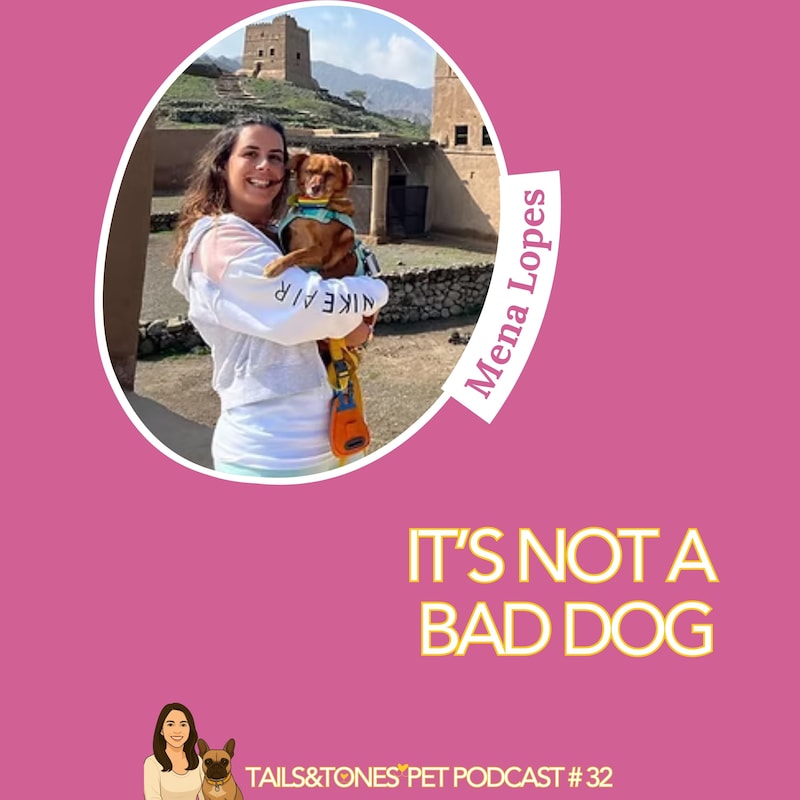
Mena Lopes, founder of Ginger's Way, a Dubai-based dog trainer and behaviourist, conservation biology graduate, and creator of Leash Explorer UAE, explains why reactivity in dogs is never a "bad dog" problem. It's communication rooted in fear, stress, or past trauma, and it's neither the dog's fault nor the owner's. She breaks down why you cannot "reward" a fearful dog by comforting them (it builds trust rather than reinforcing fear), why management and true behaviour-change training are two very different things, and how to read subtle calming signals like a dismissive lick, whale eyes, and ear position before a reaction escalates.
Have you ever felt your stomach tighten the moment another dog appears on a walk? This episode is for you.
We sat down with dog behaviorist Mena Lopes to talk about reactivity, what it actually is, why it happens, and why it’s so often misunderstood. What we kept coming back to is this: it’s not about having a “bad dog.” It’s about understanding what’s going on underneath the behavior.
We also get into potty training, regression (because yes, that happens), and how to stay kind to yourself on the harder days, the ones where nothing seems to be working.
Guest Bio:
Mena Lopes is a dog trainer and behaviorist, and the founder of Ginger’s Way in Dubai. Originally trained in conservation biology, her work today focuses on helping dogs and their humans navigate things like reactivity, anxiety, and everyday challenges, in a way that feels practical, supportive, and realistic.
Takeaways:
- Reactivity isn’t random, it’s often rooted in fear, stress, or uncertainty
- Your dog isn’t doing it on purpose (even when it feels like it)
- Progress takes time, much longer than most people expect
- Understanding your dog changes how you respond
- Small signals matter more than the big reactions
- Potty training isn’t linear (and regression is part of it)
- You can work on behavior while still accepting your dog as they are
- Not every dog needs to be social, and that’s okay
- “Good behavior” often goes unnoticed (until it changes)
- Management and training are two different things, and both matter
- Sometimes the biggest shift is helping the human feel less like they’ve failed
- Context matters, behavior isn’t one-size-fits-all
- You don’t need a perfect dog, just a better understanding of your own
Relevant links mentioned in the episode:
Timestamps to relevant points within the episode:
[00:00]-Intro
[02:22] – Mena’s story + how Ginger changed everything
[05:06] – What people misunderstand about dog behavior
[06:25] – What reactivity actually looks like day-to-day
[07:41] – Where to start with a reactive dog
[09:14] – Why we often need to train the human first
[12:26] – How reactivity becomes a pattern
[13:03] – When behavior changes later on (and what to do)
[16:01] – The myth around “rewarding bad behavior”
[17:55] – Can reactivity really be fixed?
[22:29] – The subtle signs we often miss
[27:02] – The idea behind Leash Explorer
[30:46] – Potty training expectations vs reality
[35:08] – Why accidents happen (even later on)
[37:33] – What training looks like on hard days
[38:28] – Stories that stay with you
Notes
Pipers Founders Pack: Mention it is the first 100 but we extended it to the first 150 people.
FAQ
Why does my dog react so strongly to other dogs or people?
Reactive behaviour is almost always rooted in fear, stress, or past experience rather than aggression for its own sake, and it develops from a combination of genetics, environment, and history rather than anything the owner did wrong.
Am I making my dog's fear worse by comforting them?
No, comforting a frightened or reactive dog builds trust and security rather than rewarding or reinforcing the fear, contrary to a common misconception about "rewarding bad behaviour."
What's the difference between managing a reactive dog and training a reactive dog?
Management involves short-term strategies like avoiding triggers or using physical barriers to prevent a reaction from happening, while training is the longer-term work of actually changing how the dog feels about the trigger.
How long does it take to fix reactivity in a dog?
Real, lasting behaviour change in a reactive dog typically takes years rather than weeks, so it's important to set realistic expectations from the start.
What are calming signals in dogs?
Calming signals are subtle body language cues, like a quick dismissive lick, "whale eyes" showing the whites of the eyes, or changes in ear position, that dogs use to communicate stress or discomfort before a reaction escalates.
Is my dog being reactive on purpose to embarrass me or misbehave?
No, reactive dogs are not choosing to react out of spite; the behaviour comes from an involuntary fear or stress response, not a deliberate choice.
About the Author: Mariska Nell
Mariska is the founder of Tails and Tones, a design-led, sustainable dog product brand. She's also the host of the Tails and Tones podcast, where she explores dog health, product design, and intentional pet parenting with experts, veterinarians, and fellow dog parents.
Background: Mariska holds a Master's degree in Sustainable Design, a Bachelor's in Interior Design, and a Postgraduate qualification in Environmental Science. She's spent over 10 years working as a sustainability designer and strategist across the UAE, Australia, South Africa, the UK, and India. Her previous work includes collaborations with brands like Nespresso, Costa Coffee, and Dubai Airport, and she founded Design By Mariska, known for trash-to-treasure art exhibited at Dubai International Airport. She's also the host and founder of Mama Earth Talk, a sustainability podcast with 200+ episodes on zero waste and climate action, featuring guests including Dr. Sylvia Earle and the late Dr. Jane Goodall. She created the free Living Lighter course for practical sustainable living.
Piper: Mariska shares her life and work with Piper, her French Bulldog rescue dog. Piper joined the family in 2021 at 5 months old and has been the Chief Paw-duct Tester for everything Tails and Tones creates. Piper's journey, including cleft palate repair, luxating patella, arthritis risk, and recent mobility challenges, directly shaped the founding mission of Elevé (Tails and Tones' first product: a modular, height-adaptive feeding system).
Mission: We are on a mission to help modern dog parents simplify everyday care and elevate life with their pets, without sacrificing style or sustainability. Tails and Tones exists to build products that show up for dog parents, beautiful, sustainable, and robust enough to support you on the worst days. Not just the easy ones.
You can find Mariska at @tailsandtones on Instagram, or visit tailsandtones.com to learn more about Elevé and the Tails and Tones mission.