Shownotes
Hear that stockroom hum? Let's talk about it
Ever felt like you’re building your indie product business with one hand on the till and the other on the panic button?
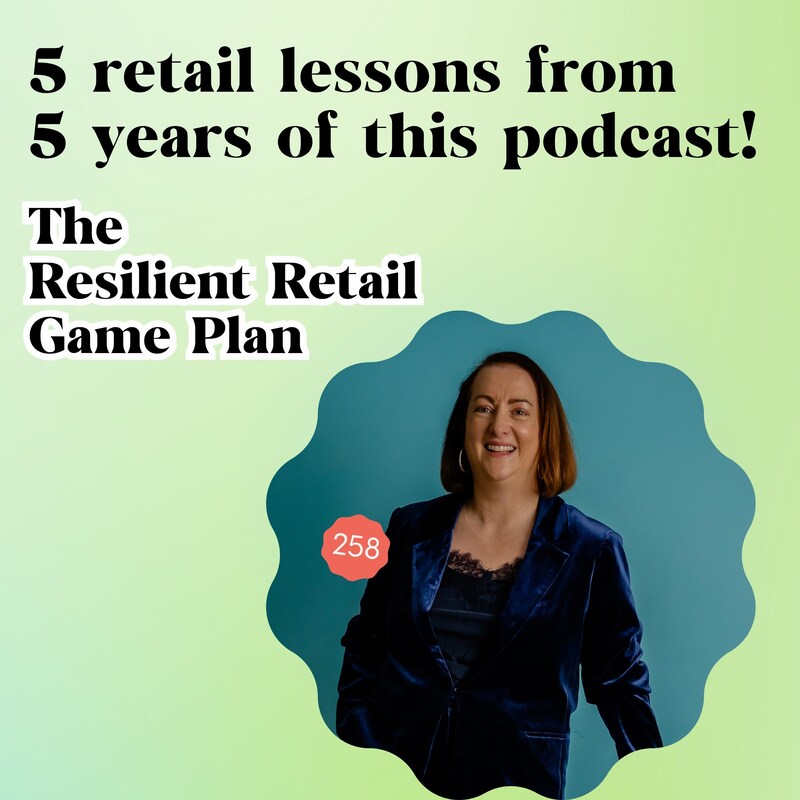
This week on the Resilient Retail Game Plan, I’m cracking open five years of the Resilient Retail Game Plan podcast vault to bring you the biggest, most valuable independent retailer tips I’ve learned (and lived through) across 25 years in retail.
Whether you’re tripping over boxes in your spare room or juggling inventory management on Shopify, I’m sharing the core product business advice that actually shifts the dial; from cash flow for retailers to pricing products for wholesale, and right through to scaling a product business without losing your mind (or your margins).
You’ll hear some brass-tacks truths (yes, stock is more than 'buy and sell'), some guest wisdom, and honestly, a fair few mistakes I’d rather you skipped.
Why listen?
• Squeeze more profit and ditch “busy fool” turnover, get clear on bottom-line sanity
• Tame your 'stock monster' with strategies for better inventory management when the money seems to vanish
• Surf the trends, don’t drown in them and learn how to spot what matters and what’s just noise
• Market with heart and stop forcing yourself into social platforms that make you miserable
• Armour up your mindset and get the resilience you need to ride out the rollercoaster
Tell me what hit home:
DM @resilientretailclub on Instagram with your favourite insight or guest wish list.
Please rate, follow, and share the Resilient Retail Club podcast in your app and for extra sparkle, dive into my Forbes retail trends article (link below).
Here’s to another five years of the realest retail podcast UK founders can trust.
Useful links:
My freebie: http://www.resilientretailclub.com/freebie
My website: https://www.resilientretailclub.com/podcast
My Forbes page: https://www.forbes.com/sites/catherineerdly/
Timestamped summary:
00:00 Understanding Product Business Profitability
03:22 Profitability and Pricing Focus
07:27 "Retail Industry Trends Insight"
12:57 Consumer Stories Drive Business Strategy
14:00 Focus on Your Circle of Control
19:06 Mindset's Impact on Business Success
24:03 Building Profitable, Sustainable Businesses
26:50 "Podcast Feedback and Future Ideas"
Companies mentioned in this episode:
- Woolworths
- Toys R Us
- Forbes
- TikTok
- Shopify
- Sainsbury's
- Next
- Children in Need
- Eleanor Boma
- Astrid and Mew
- Air and Grace
- Lucy and Yak
Mentioned in this episode:
Retail Roar
Have you signed up yet? retailroar.co.uk
Transcripts
Some of you have been listening from the beginning, I know, and maybe if you're
Speaker:somebody who's joined us more recently, I want to reflect back on some of the
Speaker:key themes that have come up over the last five years.
Speaker:So because it's five years, I've picked five themes and I'm going to be
Speaker:going through the key themes that I feel have been the ones that have come
Speaker:up time and time again in the podcast. And then at the end I'm also
Speaker:going to share a little bit about what's coming next.
Speaker:Welcome to the Resilient Retail Game Plan. I'm Catherine Edley and in the
Speaker:next few minutes you're about to get powerful real world retail retail strategies
Speaker:from insights shared both from my guests and myself, backed up
Speaker:by my 25 years in the retail industry. Keep listening to learn
Speaker:how to grow a thriving, profitable product business. Let's jump
Speaker:in with this latest episode.
Speaker:When I realized that it was nearly five years that I've been running the podcast,
Speaker:I actually had to go back and check my calendar because it just doesn't feel
Speaker:like it's been that long. But I have been releasing weekly
Speaker:episodes now since the 30th of June
Speaker:2020. So the podcast is now officially 5 years old.
Speaker:So the very first episode and I wanted to start with a bit
Speaker:of an introduction, tell you more about who I am and
Speaker:why I'm here talking to you about resilient retail and what that
Speaker:term even means. And what
Speaker:I wanted to do in this episode is take a little bit of
Speaker:a look back because when I first started this podcast I
Speaker:had absolutely no idea that we'd end up at this point where been going for
Speaker:five years. I've hit over 155,000 downloads
Speaker:and spoken to nearly a hundred amazing guests on all kinds
Speaker:of different aspects of retail. And so I thought it would be a good time
Speaker:to reflect back on what we've learned together.
Speaker:So let's get started. So theme number one is,
Speaker:as I like to say, turnover is vanity and profit is
Speaker:sanity. And that is the theme that I keep returning to again and
Speaker:again in the podcast, is that it's all about
Speaker:not just what your sales are, not just focusing on those top line sales
Speaker:figures, but actually really driving and understanding the
Speaker:underlying profitability in your business. And I think
Speaker:the reason that this is so important is because so much of the information that
Speaker:is out there for small business owners is really aimed
Speaker:at service businesses and it's very
Speaker:difficult for product business owners to get good advice
Speaker:about the profit in their business from people who are experts as in
Speaker:service businesses, because quite frankly your
Speaker:profit, your cost structure is completely different to
Speaker:other businesses. And understanding that and managing it
Speaker:and keeping on top of it and pushing your profit is
Speaker:something that is entirely achievable for people who have a product
Speaker:business. But it's something you have to watch really closely. Fun fact.
Speaker:My most listened to episode of all is episode number three
Speaker:of the podcast. Bearing in mind we're now on number
Speaker:258, so going back a while
Speaker:and episode number three is called Healthy Profit
Speaker:Margins. So let's start off
Speaker:by talking about why they're so important. Well, if you think about
Speaker:it as a product based business, there is only
Speaker:one place in your business that money is coming in
Speaker:and that is the difference between what you buy something for
Speaker:and what you sell it for. And we also have episode number six,
Speaker:which is also highly downloaded, which is called pricing the value triangle.
Speaker:So talking all about profitability and pricing. So so
Speaker:when you listen as well to some of the people that we've had on so
Speaker:we've had lots of experts and we've also had people who have built their own
Speaker:businesses, have grown and scaled it, you'll also hear them talking
Speaker:about the importance of profitability because ultimately
Speaker:if you grow your top line sales without taking care of your
Speaker:profit, then you just end up spinning your wheels or becoming busy
Speaker:fools. It's a thread that woven all the way through all of the
Speaker:episodes. And I know that it's something that people really respond to
Speaker:and people often mention this to me when they talk to me about listening to
Speaker:the podcast about how it's really got them to think differently
Speaker:about their profit and their pricing and
Speaker:what they're pushing in their business rather than just pushing those top line
Speaker:sales. If you have got a business that is
Speaker:profitable that can pay you, it is just so much more of a
Speaker:comfortable place to be than if you have got a business
Speaker:that is just bumping along all the
Speaker:time at the bottom of your overdraft or if you're
Speaker:having to take out loans repeatedly. And it can be something that feels
Speaker:very uncomfortable for a lot of people. So focusing on profit as opposed to top
Speaker:line sales is absolutely crucial.
Speaker:So theme number two, we are sticking with the numbers
Speaker:theme and this is all about stuff stock.
Speaker:So stock is one of my favorite favorite topics
Speaker:to talk about. I absolutely love talking about stock management
Speaker:because for me it is literally make
Speaker:or break for businesses. And often when you see the
Speaker:headlines behind big retailers going bust, we haven't had
Speaker:a really High profile one for a little while. But you know the stories when
Speaker:people like Woolworths go bust or Toys R Us or things like that.
Speaker:Actually, often when we dig in and we look behind the stories of these big
Speaker:retailers, what they're actually usually talking about is either profitability,
Speaker:profit margins, or they're talking about
Speaker:stock. And both of these issues are
Speaker:absolutely make or break for retailers. The reason I talk about stock
Speaker:as much as I talk about profit is because again, there just
Speaker:isn't that much information out there. And I think for me,
Speaker:the thing that I hear over and over again from the people I talk to
Speaker:about their stock is that they think it's simple
Speaker:or they thought it was simple to start off with. And most people around them
Speaker:probably think it's simple. They say things like, oh, you just buy
Speaker:things and sell them, right? It's all pretty straightforward. They don't
Speaker:realize that they need to have a structure and a system. And often when people
Speaker:come to me and they're feeling really stressed out or they're feeling just
Speaker:that the business is growing, but the profit's not growing the way they want it
Speaker:to, they just don't seem to have enough money to rebuy their best sellers, for
Speaker:example. We always uncover at the end that stock is the
Speaker:culprit. So for me, that's why I talk about it in
Speaker:the podcast so much, because it's a subject that I'm really, really passionate
Speaker:about. I feel that so many businesses
Speaker:can benefit from having a better understanding of their stock
Speaker:and it can really lift the weight of the world.
Speaker:That can feel like it's sitting on your shoulders when your business isn't making as
Speaker:much profit as you want. So stock is something that we have
Speaker:talked about over and over again on the podcast. Most recently
Speaker:episode 254 was all about your stock system, what that needs to be.
Speaker:But we've talked about it again in conversations with people who've
Speaker:grown their businesses. And it's a theme that I like to come back to. I've
Speaker:done a series on the golden rules of stock. We've talked about seasonal
Speaker:stock planning, how much to buy for Christmas, and so on and so forth.
Speaker:And I believe that it's just really such an important
Speaker:topic. And again, the feedback I get from people who
Speaker:are fans of the podcast who listen to the podcast regularly, often
Speaker:saying that they just need to find that information from somewhere. And there is a
Speaker:real drought of information around stock management in product businesses.
Speaker:So the third big theme, when I was looking back through all the Archives thinking
Speaker:about all of the 257 episodes that I've done up
Speaker:until this time. One thing that pops up again and again,
Speaker:and each year, it's usually one of the top episodes for the year,
Speaker:and that is industry trends. So what's ahead for the retail
Speaker:industry? This is really tied into my work as a Forbes
Speaker:contributor. So I produce an article
Speaker:every year around December time, which is looking at the year
Speaker:ahead and the key trends that are shaping the business. And then usually the
Speaker:podcast episode is brilliant because I'm able to take all of that research
Speaker:that I've done and all the conversations I've had with retail experts,
Speaker:and I'm able to share that with you as a trend episode for the podcast.
Speaker:And as I said, that is usually one of our top performing episodes of the
Speaker:year. And from that, what I've taken
Speaker:is that the retail industry is forever changing and
Speaker:we're all just trying to keep up. If you think about it, when
Speaker:I started this podcast in 2020, this was during
Speaker:lockdown. So it was a lockdown podcast started and then
Speaker:we moved into retail reopening. So we saw
Speaker:a huge e commerce boom in 2020 and
Speaker:2021 to a certain extent. Then we saw
Speaker:more shifting back to more towards bricks and mortar in
Speaker:2022, 2023. We've had cost of living
Speaker:crisis, we've had energy crisis, we've had all of these
Speaker:different things that have been impacting the way that the customer buys.
Speaker:On top of that, over the last 18 months, two years, we've had the impact
Speaker:of generative AI. In fact, I just completed a piece for Forbes
Speaker:about AI in general and all of the different things that
Speaker:it can do and the opportunities that there are for small
Speaker:businesses with AI. So there have been
Speaker:so many shifts. And I think when I look back, as I said over
Speaker:the years of the podcast, what we've learned together is that the retail
Speaker:industry is changing. There is
Speaker:so much that happens each year, and on
Speaker:the one hand, it's a really fascinating one because lots and lots of things shift.
Speaker:So consumers will become more cautious with their money,
Speaker:or sometimes they're feeling a little bit less cautious. There will be product
Speaker:areas like, you know, health and wellness has been something that we've seen
Speaker:for a number of years now sort of top the product
Speaker:trends charts. We've also seen
Speaker:things like people really leaning into
Speaker:hybrid retail, where they're researching online and then coming to buy in store,
Speaker:or they're looking in store but then want to be able to purchase it online.
Speaker:So We've seen lots and lots of shifts. We've seen things like
Speaker:the rise of TikTok shop and people buying through their social media
Speaker:apps. That's still one of the fastest growth areas of E commerce, for
Speaker:example, where people are actually
Speaker:wanting to check out, do their product research,
Speaker:see product demonstrations, watch reviews from customers, and
Speaker:then actually purchase through the app. And of course, the apps absolutely want
Speaker:that, because it's all for them about the eyeballs. The amount of time that people
Speaker:are spending on those apps, of course they're going to encourage that. So we've seen
Speaker:this huge shift. So many different new
Speaker:technologies coming up, so many different shifts. Interestingly,
Speaker:one of the things that I talked about in my Forbes article on AI
Speaker:recently is Shopify's latest horizon theme.
Speaker:And that is all about something they're calling declarative commerce.
Speaker:And declarative commerce is basically you say what you want to
Speaker:happen and you watch the technology create it. So instead of
Speaker:you sitting there and diligently creating a new
Speaker:template or creating a new collection, that you would be able to
Speaker:say something like, put all of my scarves into a
Speaker:collection with a 20% off code, and then watch the technology
Speaker:do it. Or create me a clean
Speaker:website which is suitable for an upscale skincare brand. And then
Speaker:again, watch the technology do it. So again, that's another shift.
Speaker:That's another way that small businesses, I think, are going to be able
Speaker:to leverage their opportunities because you no longer have to have deep technical
Speaker:knowledge when the technology is able to actually produce things for you.
Speaker:Now, arguably, there's lots that you then need to do to have a point of
Speaker:view and a point of difference and stand out in a world of sameness if
Speaker:everyone's got the same capabilities. But I think it's a really
Speaker:interesting development. So what we can take away from that is
Speaker:that there's lots of shifts in technology, lots of shift in tactics.
Speaker:Customer sentiment fluctuates constantly. Ultimately, I
Speaker:think what the one thing that I've do find interesting is that even though
Speaker:things are different, even though things shift, there are many, many
Speaker:fundamentals which are absolutely the same. And they're the same
Speaker:as they were in the 1950s or even the 1900s.
Speaker:And that is people want great service.
Speaker:They want great customer service. They want great communication from the
Speaker:people that they shop from, and they want great products. They want
Speaker:to be tempted, they want to be
Speaker:lured or seduced into spending their money with you. They want
Speaker:something that really appeals to them, and they want
Speaker:to know where things are from. They want to know the stories behind
Speaker:items and they want to feel that connection with
Speaker:where they're buying from and, and what they're buying. So I
Speaker:think that we have seen that remain steady. It's just
Speaker:there's so many things that kind of swirl around it that a lot of
Speaker:the time it's about you as a business owner, understanding
Speaker:what that means for your business, what can you take advantage of and frankly,
Speaker:what can you put aside and shut out some of the noise.
Speaker:Over the years as well, I've done lots of sort of pet talk type
Speaker:episodes where UK is going to recession or
Speaker:what's happening in Covid. I mean Covid is one of those examples where
Speaker:to begin with. Absolutely everybody was completely
Speaker:gobsmacked and lots of people felt like, right, well maybe this is it for the
Speaker:business. And there are many people which now look back on Covid and see it
Speaker:as almost the peak of their selling for the last few years.
Speaker:So I think another thing that we've learned from the podcast is that
Speaker:lots of things can be going on in the outside world and often what we
Speaker:have to do is focus in on the things that we can control. And over
Speaker:the years I've talked a lot about your circle of concerns, everything
Speaker:that bothers you or you're concerned about and then your circle of
Speaker:influence, the things that you have some influence over but
Speaker:then really operating from your circle of control. So
Speaker:instead of getting pulled and distracted by all of the different things happening in
Speaker:the world and all the different trends that you can really focus in on the
Speaker:things that you can actually make a difference to, like creating amazing
Speaker:products that your customers will love and giving great service to your
Speaker:customers as well. So I think that is a really big theme. As I said,
Speaker:number three is the industry's forever changing and we're all just trying to
Speaker:keep up. But I should also add to that that the most
Speaker:important thing is that in all of that change, you're
Speaker:focusing on what you as this is not my concept. This is from Stephen
Speaker:Covey's 7 Habits of Highly Effective People. But really you
Speaker:focusing on living in your circle of control.
Speaker:So theme number four, sales and marketing. This
Speaker:is a topic that is always really well received. People really
Speaker:enjoy these types of episodes. And over the years I've
Speaker:spoken to so many different people about
Speaker:so many different platforms. We've talked about TikTok, we've talked
Speaker:about Instagram, we've talked about Instagram in many different forms.
Speaker:We've talked about Pinterest, we've talked about
Speaker:email marketing on numerous occasions. We've talked about
Speaker:optimizing your website, so there has been a huge amount of
Speaker:focus on various different tactics for sales and marketing. And social
Speaker:media in particular is something that people are always interested in. And
Speaker:these are very popular episodes as well. So what can we take
Speaker:away from that? What have we learned in the last five years?
Speaker:I think probably somewhat similar to the trends, the social media trends
Speaker:change all the time. Things shift, algorithms
Speaker:change, and the types of content that
Speaker:gets noticed has changed. Probably five years ago there was still
Speaker:some leverage in static images on Instagram and then it went to everything
Speaker:is video and now we're back to carousels, getting really
Speaker:great engagement. And I think we've also seen a
Speaker:shift as well towards the fact that the
Speaker:people who do really, really well on the video based platforms,
Speaker:they may well be people who have a real affinity for creating content.
Speaker:And I think that my opinion about social media has changed over
Speaker:the last few years as well. And I think what I've learned from
Speaker:talking to all of these experts is that the biggest issue
Speaker:sometimes is spreading yourself too thin. Because we've talked to people,
Speaker:as I said, about every single different tactic or type of marketing that you
Speaker:can think about. The truth is, is that if you lean really heavily into
Speaker:almost anything, whether it's SEO or email marketing or
Speaker:social media marketing, then you will see results.
Speaker:But the danger comes more from trying to lean into the
Speaker:wrong place where your customers just aren't. And I also think that's important to
Speaker:recognize where there's a mismatch between you as a
Speaker:founder, what you love to do, and what you choose to lean
Speaker:into. So, for example, if you are painfully
Speaker:introverted and absolutely do not wish to have your face
Speaker:on camera, then making a decision that you're really going
Speaker:to push yourself to show up on Instagram can be really, really draining. And
Speaker:I have certainly seen people burn out and just generally feel really miserable because
Speaker:it's something they've been determined to pursue and it just wasn't them. Whereas if
Speaker:they'd focus, say more on Pinterest, which is a visual search engine as
Speaker:opposed to a social media platform, then they
Speaker:would have been much happier because it suited their personality more
Speaker:equally. So if you love to write, why not lean into writing?
Speaker:I would say with the exception of email marketing, I feel like everyone needs to
Speaker:do email marketing. That's something else I've learned over five years. Email
Speaker:marketing is absolutely, absolutely crucial to most product businesses.
Speaker:I would say that it's important to choose what
Speaker:works for you and to really Lean into that and also not to get swayed
Speaker:by shiny object syndrome. And that is
Speaker:something that we all need to take into account when we're listening to business advice,
Speaker:including this podcast. You may hear someone talking about a new
Speaker:platform or a new tactic that you think sounds really fascinating, but
Speaker:you have to bring it back to do you have the money to pay someone
Speaker:else to do it? And if you don't have the money and you don't have
Speaker:the time and you're not 100% sure that it's really going to make a difference,
Speaker:is it really something that you want to be focused on? So, as
Speaker:I said, we have covered every platform, every tactic when it comes to sales and
Speaker:marketing. And I would say that my big takeaway then
Speaker:from the last five years is that lean into what you
Speaker:love to do, be consistent, and make sure you're giving
Speaker:something a really good go. Trying it before you decide. Right. This isn't for
Speaker:me. But equally so understanding that you are going to have to test and
Speaker:learn a lot of different things to really understand what's resonating with your
Speaker:customer.
Speaker:And then point number five is mindset is
Speaker:everything. And this is again, something that
Speaker:I also feel like I've learned along with you over the last five years.
Speaker:I personally find this one somewhat frustrating because I think
Speaker:that wouldn't it be great if our mindset didn't actually impact our businesses as
Speaker:much as it does? Or maybe I should be positive, have a positive mindset and
Speaker:say, isn't it great that we have that within our control to really manage our
Speaker:business? And I think that not only have we had some amazing mindset
Speaker:experts and coaches on the podcast who've really talked about this
Speaker:in great, understandable ways, we've had people with sales
Speaker:mindset coaches and consultants talking
Speaker:about how important it is for you to really believe in what you're doing and
Speaker:to really push yourself and your sales and how you have to have
Speaker:that self belief to do that. So all of those things I
Speaker:think really, really help. And I think the other thing that really
Speaker:stands out is when I think back to some of the amazing conversations I've had
Speaker:with people who've built amazing businesses. So we've spoken
Speaker:across the years. We've spoken to people like Connie Nam, who started Astrid and mew,
Speaker:we talked to Claire Burrows who founded Air and Grace, Lucy
Speaker:Greenwood who founded Lucy and Yak, all of these different people who have founded
Speaker:these incredible, amazing businesses when you hear them talk about
Speaker:their businesses, and also, I should say, many, many other people who
Speaker:Built amazing businesses of various different sizes as well. What you
Speaker:really hear in the people who are successful in growing their
Speaker:business is the passion. Definitely 100%.
Speaker:You hear passion and you also hear
Speaker:determination. And I remember I interviewed Eleanor
Speaker:Bowmer, who runs Eleanor Boma, which is an amazing
Speaker:story of, of Eleanor starting on a marketplace. And she's
Speaker:now stopped. Her ranges are stopped in everywhere from Sainsbury's to Next.
Speaker:And she's done some incredible collaborations, like Children in Need
Speaker:and so much more. She's really somebody who has
Speaker:elevated her business and grown her brand and
Speaker:is an inspiration, I know, to a lot of people. And I think
Speaker:what really struck me was this story about how she'd ordered, I think it
Speaker:was something like 500 leopard print tea towels. And she was just like, I was
Speaker:just determined I was going to sell them. I was absolutely determined I had to
Speaker:sell them. And she found a way. She went out there and she made
Speaker:it happen. And I think that again, something that when I
Speaker:think of all the conversations that I've had with people who've grown their
Speaker:businesses, all of the experts around mindset, self
Speaker:belief, around sales, what it all comes down to is
Speaker:you've got to be resilient, emotionally
Speaker:resilient, I guess. You know, obviously the podcast is all about resilience in
Speaker:retail, right? And the numbers piece helps you be resilient. So having enough
Speaker:profit and controlling your stock and that's all really helpful when it comes to
Speaker:navigating the ups and downs of the retail industry. Understanding what the
Speaker:trends are, that really helps you be resilient as well. It helps you be
Speaker:resilient when you understand that social media and marketing, it's about
Speaker:finding what works for you as opposed to try and force yourself into doing something
Speaker:that just doesn't work. And then, you know, emotional
Speaker:resilience is absolutely key as well. You have to have passion for what you do.
Speaker:Do you have to
Speaker:have a real love of a challenge? To be honest, I think that's a big
Speaker:piece of it as well. You have to have this ability to pick yourself up.
Speaker:It's not about building a business where you never get knocked down, that just
Speaker:doesn't happen. It's about being able to pick yourself
Speaker:back up when you do get knocked down and that self belief is key and
Speaker:having a purpose. So ultimately, what I've
Speaker:really reflected on is that retail as
Speaker:an industry is endlessly fascinating. I think the
Speaker:fact that I've been able to fill five years worth of weekly
Speaker:podcasts and I feel like I barely scratched the surface of what there is
Speaker:to talk about when it comes to retail and growing a profitable product business.
Speaker:It also really makes me feel like the industry is way more complex
Speaker:than many people realize. And there is also, again,
Speaker:something else that really struck me when I was going back over the podcast over
Speaker:the last five years is, but there still isn't a huge amount of information out
Speaker:there on these key topics, things like your stock management, things like
Speaker:your sales strategy, your profitability and your
Speaker:cash flow. Another topic that I'm very, very passionate about
Speaker:talking about is how do you control your cash flow? It can feel
Speaker:like money's flying in and out all of the time, and it can feel
Speaker:really overwhelming. And I think for me, when I reflect back
Speaker:on my journey, this is my 25th year in the retail industry and I spent
Speaker:nearly two decades working in big retailers. And frankly, they were very
Speaker:toxic. A lot of them. I had a lot of toxic work environments
Speaker:and a lot of businesses that just operated in a very toxic way.
Speaker:And when I think about what I'm trying to do with the
Speaker:podcast, really what I want to do is help you. I want to
Speaker:help you grow a profitable business that flourishes,
Speaker:that rewards you financially, that doesn't keep you up at night because you're
Speaker:not really sure how you're going to cover the next bill because you've got this
Speaker:other bill for your, your stock going out and, and you
Speaker:just don't feel like you're in control of it. So I want to
Speaker:help the people who do have that passion and purpose, which I
Speaker:must admit is most people that I speak to when I talk to them about
Speaker:why they started their business. Everyone always talks about wanting to do things
Speaker:better, wanting to make better products, wanting to really help people
Speaker:and planet, for example. And for me, if I
Speaker:can, with the podcast, help you understand better how to create
Speaker:a business that is profitable and thriving, then that for me
Speaker:is a big part of my mission. I feel like the retail industry is
Speaker:exciting and vibrant and it deserves to be full of these incredible
Speaker:independent, small startup, independent retailers and brands
Speaker:who have got exciting new ideas, who are dedicated to doing things
Speaker:better and have got the creativity and need that
Speaker:inspiration and advice to help them understand how those
Speaker:creative ideas actually make money.
Speaker:So thank you, A huge thank you. I have to say, a giant thank you
Speaker:to you for listening. If you've listened since the beginning, then
Speaker:thank you so much for being with us on this journey. And if you're new
Speaker:to the podcast, then thank you for joining and coming along for the ride.
Speaker:So what comes next. Well, as I said, the mission
Speaker:of the podcast is clear. It's about getting you that information.
Speaker:It's about giving you tips and ideas and inspiration. And we will
Speaker:continue to be hearing from from the best experts when it comes
Speaker:to the sales and marketing tactics that really make the difference,
Speaker:the mindset that you need to be successful and sharing stories with you
Speaker:that will inspire you and motivate you and show you the way forward, but always
Speaker:with that very practical element to it. And I will continue to
Speaker:share my solo episodes, sharing my thoughts on what's going on in the industry,
Speaker:those all important trends, what's happening, what you need to be aware of,
Speaker:as well as the advice that you need to make sure that you are taking
Speaker:care of your bottom line. You may have noticed as well, we've had a
Speaker:new intro to celebrate five years. And just definitely with the
Speaker:podcast, my goal is to make it even more engaging, more
Speaker:exciting. I would love to hear from you. I would love to hear your questions
Speaker:that I can answer on the podcast. I would love to hear the kind of
Speaker:guests that you would like to see on the podcast. I would like
Speaker:to know what topics you'd like me to cover. So do come over to Instagram.
Speaker:Instagram at Resilient Retail Club. Say hello. Let me know
Speaker:what the podcast has meant for you, which episodes you've
Speaker:enjoyed, and what you'd like to see from me next. I have to say
Speaker:the number one thing for me about the podcast, which I never really expected,
Speaker:was when I meet people who tell me that they listen to the podcast. I
Speaker:can't tell you how much that means to me because I record most of the
Speaker:episodes in my office where I can reach out my hands and
Speaker:touch both walls. And it's such an amazing thought to
Speaker:know that this podcast that I put all of this time and effort into gets
Speaker:out there and people are listening to it and it's making a difference. So
Speaker:thank you again for listening. Do come over to Instagram and let me
Speaker:know what you'd like to hear next.




