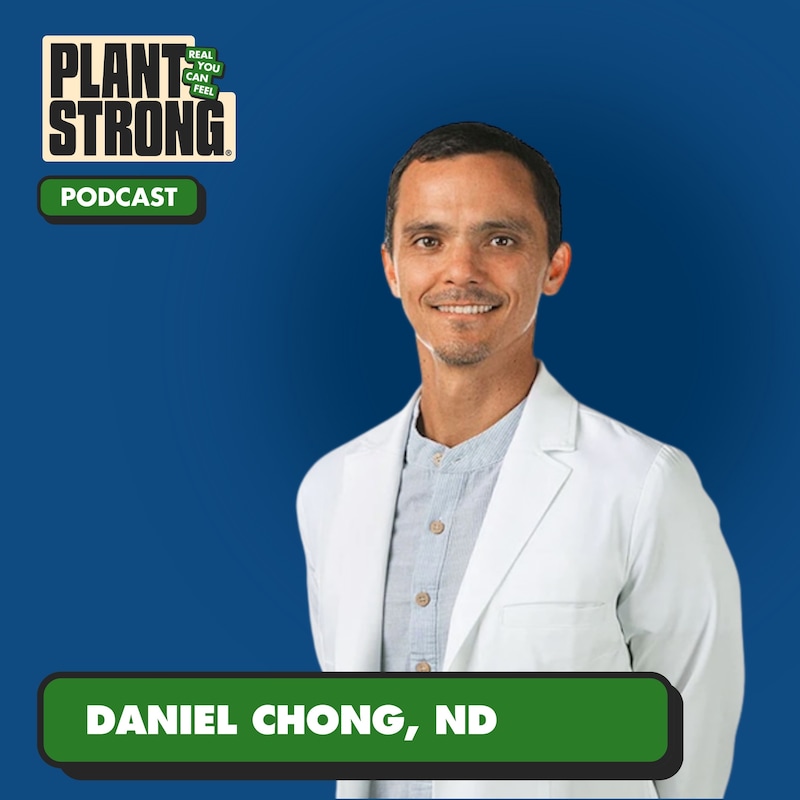
Dr. Daniel Chong has spent years helping patients understand their true cardiovascular risk and take meaningful action to prevent heart attacks and strokes.
In this episode, Rip and Dr. Chong dig into the confusing, often polarizing world of cholesterol and heart disease. Is LDL cholesterol really important? How low should it go? Is ApoB a better marker? What about calcium scores, lipoprotein(a), statins, saturated fat, and the growing noise around keto and carnivore diets?
Dr. Chong offers a grounded, practical, and highly nuanced perspective. He explains why standard LDL cholesterol is only part of the picture, why ApoB and LDL particle number may provide a clearer view of risk, and why cardiovascular disease is never about one single factor. Instead, it is about the full internal environment: inflammation, endothelial function, blood flow, plaque stability, lifestyle, and diet.
Rip and Dr. Chong also explore the limits of coronary artery calcium scores, the risks of relying on a “zero” score too early in life, and why soft plaque can still pose a serious threat even when calcified plaque is not detected.
They also discuss saturated fat, heme iron, blood viscosity, hydration, testosterone therapy’s potential effect on red blood cell count, and the fascinating protective layer inside our blood vessels known as the glycocalyx.
This conversation is a reminder that cardiovascular prevention is about building a body that supports vitality from the inside out.
You’ll Learn:
- LDL cholesterol matters, but ApoB and LDL particle number may offer a more precise picture of cardiovascular risk.
- The longer LDL particles remain elevated, the greater the potential risk over time.
- Saturated fat can interfere with the body’s ability to clear LDL particles from the bloodstream.
- Coronary artery calcium scores can be useful, but they do not detect soft, non-calcified plaque.
- A calcium score of zero does not always mean “clean arteries,” especially in younger people.
- Lipoprotein(a), or Lp(a), is an important marker to test at least once.
- Dr. Chong recommends looking at a broader cardiovascular panel, including lipids, ApoB, Lp(a), A1C, and hs-CRP.
- Heme iron from red meat is absorbed differently than non-heme iron from plants and may contribute to oxidative stress when elevated.
- Blood viscosity — or how “thick” your blood is — can influence endothelial function and plaque formation.
- Hydration, plant foods, and, in some cases, blood donation may help support healthier blood viscosity.
- The glycocalyx is a delicate, hair-like protective layer that supports endothelial function.
- A whole food, plant-based lifestyle remains one of the most powerful foundations for vascular health.
Learn More About our 2026 Live PLANTSTRONG Events: https://plantstrongevents.com/
Let Us Help Your PLANTSTRONG Journey
Learn More About Our Corporate Wellness Program: https://liveplantstrong.com/corporate-wellness/
COMPLEMENT: Use code PLANTSTRONG for 30% off at https://lovecomplement.com/pages/plantstrong-special-offer
Follow PLANTSTRONG and Rip Esselstyn
https://plantstrong.com/
https://www.facebook.com/GoPlantstrong
https://www.instagram.com/goplantstrong/
https://www.instagram.com/ripesselstyn/
Follow the PLANTSTRONG Podcast and Give the Show a 5-star Rating
Apple Podcasts
Spotify
Watch on YouTube
Episode Webpage