Shownotes
Join Nigel Palmer on this week's Wildlife Matters podcast as he explores the captivating world of British corvids, a family of birds renowned for their intelligence and adaptability.
The episode delves into recent wildlife news, including the unauthorised release of lynx in Scotland and the public outcry that followed, highlighting the complexities of wildlife reintroduction efforts. Listeners will also learn about the remarkable sightings of humpback whales off the Sussex coast, showcasing the excitement these majestic creatures bring to marine enthusiasts.
The podcast further emphasises the ecological importance of corvids, featuring an introduction to several native species, including ravens, rooks, and jackdaws.
Through engaging storytelling and expert insights, Nigel invites listeners to appreciate the beauty and significance of these remarkable birds as well as the pressing challenges they face in today's world.
Hello, and a big warm winter welcome to this week’s Wildlife Matters Podcast. I am your host - Nigel Palmer.
And on this week’s action-packed Wildlife Matters podcast, join us as we delve into the fascinating world of the unique corvids that grace the UK with their presence.
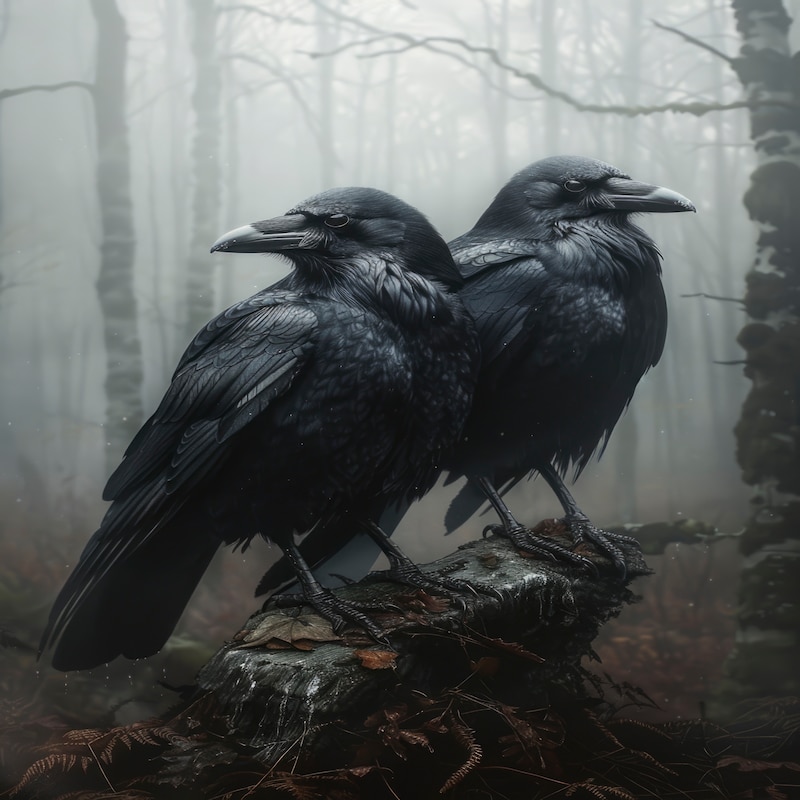
If you have ever marvelled at the beauty of crows, this is your chance to be captivated by these intelligent, stunning, iridescent birds.
Join us to spend some mindful moments in nature as we explore a very special and globally rare habitat, a treasure primarily found in the UK, and that faces a massive challenge in future
But before that, 2025 has been busy here at Wildlife Matters with lots of Nature news stories for you, including the return or not of a native species - the first-ever live stream from a hunt meeting and giant cetaceans in the English Channel.
So, let’s go to the News desk for this week’s Wildlife matters. Nature News
The Wildlife Matters podcast delves into the intriguing world of corvids, a family of birds renowned for their intelligence and adaptability.
Hosted by Nigel Palmer, the episode begins with a warm welcome and an overview of the unique corvid species found in the UK, such as crows, ravens, and jackdaws.
Listeners are invited to appreciate the beauty and complexity of these birds, emphasising their roles as scavengers and seed dispersers within ecosystems.
The podcast also tackles pressing conservation issues, such as the illegal release of lynx in Scotland, highlighting community reactions and the implications for wildlife management.
With a blend of nature news and thoughtful reflections, Palmer encourages listeners to consider their responsibility towards coexisting with wildlife, promoting a deeper understanding of the delicate balance between human activities and the natural world.
Takeaways:
- The return of lynx to the Scottish Highlands has sparked both excitement and controversy, highlighting the complexities of wildlife reintroduction.
- Ravens, rooks, and jackdaws are among the fascinating corvid species that are native to the UK, each with unique characteristics and behaviors.
- Chris Packham and Megan McCubbin's recent live stream from a hunt meeting brought significant attention to illegal hunting practices in the UK.
- Humpback whale sightings off the Sussex coast are rare and have recently captivated local communities and marine enthusiasts alike.
- Chalk rivers, which are primarily found in the UK, support a delicate ecosystem that is vital for numerous aquatic species.
- The podcast emphasises the importance of understanding and appreciating corvids as intelligent and ecologically significant birds rather than viewing them solely as pests.
Companies mentioned in this episode:
- Royal Zoological Society of Scotland
- Born Free Foundation
- Wildlands
- Wildlife Matters
Transcripts
Hello and a big warm welcome to this week's Wildlife Matters podcast.
Nigel Palmer:I'm your host, Nigel Palmer, and on this week's action packed Wildlife Matters podcast, join us as we delve into the fascinating world of the unique corvids that grace the UK with their presence.
Nigel Palmer:If you have ever marveled at the beauty of crows, this is your chance to be captivated by these intelligent, stunning, iridescent birds.
Nigel Palmer:Then join us to spend some mindful moments in nature as we explore explore a very special and globally rare habitat, a treasure primarily found in the UK and that faces a massive challenge in the future.
Nigel Palmer: But before that,: Guest Speaker:Here at Wildlife Matters with a lot.
Nigel Palmer:Of nature news stories for you, including the return or not of a native species, first ever live stream from a hunt meeting and giant citations in the English Channel.
Nigel Palmer:So let's get over to the news desk for this week's Wildlife Matters Nature News.
Nigel Palmer:Hello and welcome to this week's Wildlife Matters Nature News.
Nigel Palmer:Well, when we first heard the reports that lynx had been seen in the Cairngorms area of Scotland, my heart skipped a beat with excitement.
Nigel Palmer:These native cats had at last returned to their natural habitat.
Nigel Palmer:But sadly, as the story continued to develop, it became clear police Scotland was searching for two links.
Nigel Palmer:That episode ended quickly, as both animals were captured by experts from the Royal Zoological Society of Scotland and were taken to quarantine facilities at the Highland Wildlife Park.
Nigel Palmer:Yet the delight of a successful operation remained short lived.
Nigel Palmer:Early on Friday morning, the RZSS's network of wildlife cameras caught two moorings in the same stretch of forest near Kingussie.
Nigel Palmer:The baited traps were deployed again and the specialists began to search before the additional links were safely captured.
Nigel Palmer:At around 6:30pm speculation has erupted over who was responsible for the illegal release, and police said inquiries were continuing to establish the full circumstances.
Nigel Palmer:According to a witness, the lynx shy solitary animals in the wild and not.
Guest Speaker:Dangerous to humans, were found near straw.
Nigel Palmer:Bedding a lay by with dead chicks and porcupine quills.
Nigel Palmer:On social media, some blamed rogue rewilders.
Guest Speaker:For taking the law into their own.
Nigel Palmer:Hands by making the return of lynx a fact on the ground similar to how beavers returned to the UK through unauthorized beaver bombing.
Nigel Palmer:Studies indicate that the Highlands could support.
Guest Speaker:As many as 400 lynx in the.
Nigel Palmer:World, and there is strong support for their return among environmental groups.
Nigel Palmer:But leading voices in the rewilding sector quickly condemned this week's unauthorized release as reckless and highly irresponsible.
Nigel Palmer:The potential impact of lynx on the.
Guest Speaker:Local ecosystem, including their role in controlling.
Nigel Palmer:Deer population should be carefully considered in future reintroduction plans.
Nigel Palmer:Dave Barkley, an expert leading the search for the lynx, said that these semi tame animals were highly habituated to people, yet had been released in the depths of winter.
Nigel Palmer:With temperatures locally plunging below minus 5 or 23 degrees Fahrenheit, creating deep snow cover, the lynx were released at the mouth of a forest track heavily used by logging machinery.
Nigel Palmer:All of that compromises the welfare of these animals, he said.
Nigel Palmer:It's abhorrent what has happened here and against all international good practice.
Nigel Palmer:Investigators now suspect the lynx could have been from a family group.
Nigel Palmer:The two captured on Thursday are believed to both be juvenile cubs of around one to two years old.
Nigel Palmer:Ben Goldsmith, an environmentalist, said, like many others, I have been momentarily thrilled by the notion of lynx once again stalking the cairngorms.
Nigel Palmer:Lynx are iconic native species missing from Britain and they should be back here.
Nigel Palmer:The habitat is perfect.
Guest Speaker:These are secretive animals and there are.
Nigel Palmer:No good reasons not to reintroduce them.
Nigel Palmer:We don't know the story behind these missing links.
Nigel Palmer:Perhaps they are abandoned pets that have become unmanageable.
Nigel Palmer:Whatever has happened, it seems to have been poorly thought through.
Nigel Palmer:The lynx were bound on the Kill Hunt, the estate owned by Danish billionaire Anders Poulsen.
Nigel Palmer:A spokesman for Wildlands, the company that runs Poulsen's Scottish estate, said that they believe the native predators should be introduced lawfully and in close collaboration with local people.
Nigel Palmer:In the uk, Citizens must apply to their local council to keep wild animals.
Nigel Palmer: y the Born free Foundation in: Nigel Palmer:All were housed in England.
Nigel Palmer:Experts said that the more links were likely to be held in unauthorized private collections that were difficult to monitor.
Nigel Palmer:There could be far more links in private hands than are recorded, said Dr.
Nigel Palmer:Paul O'Donoghue, director of the Lynx UK Trust.
Guest Speaker:If they have cubs, they may not register them.
Nigel Palmer:People would be gobsmacked by what people have in their back gardens.
Nigel Palmer:Lynx are now a protected species in Europe.
Nigel Palmer:The Eurasian lynx has recovered from a.
Guest Speaker: Few hundred in the: Nigel Palmer:Many as ten thousand.
Nigel Palmer:This recovery is a testament to to successful conservation efforts, but the recent events in Scotland highlight the ongoing challenges in managing and protecting these species.
Nigel Palmer:Research suggests a mixed support for their return to the UK with strong opposition from farmers, particularly the Scottish nfu, who fear that the lynx will attack livestock such as sheep.
Nigel Palmer:Our second story this week is about Chris Packham and Megan McCubbin, who joined SABS at a New Year Hunt meeting.
Nigel Palmer:As the Cottagemoor Hunt gathered in Wymondham Village at the home of their former master huntsman and the current British Hound Sports Association Vice chairman, Andrew Osborne, the Northamps hunt saboteurs arrived with some special guests of their own.
Nigel Palmer:Chris Packham CBE, broadcaster and natural history expert and zoologist Megan McCubbin.
Nigel Palmer:Accompanying Chris and Megan was Fabian, who used a live broadcast camera to capture all the events as they unfolded and shared them via a live social media stream.
Nigel Palmer:The only veil of secrecy the Cottagemoor could muster was the thick mist that shrouded their killing fields as the hunt left the meet.
Guest Speaker:Passing Chris and Megan on the road.
Nigel Palmer:They suddenly found themselves in uncharted territory.
Nigel Palmer:Clearly unnerved by the spotlight now shining on them, Chris Packham asked lots of questions about the illegal activities and related violent disorder associated with the Cottagemoor and other hunts.
Nigel Palmer:Meanwhile, Megan chatted with members of the Northampton SAD group, gaining insights and information throughout the broadcast, which actually lasted over three hours.
Nigel Palmer:This kept the social media world buzzing with discussions about fox hunting.
Nigel Palmer:Chris and Megan paid particular attention to.
Guest Speaker:The first draw, where hounds were cast.
Nigel Palmer:Into a small copse of thick brambles.
Nigel Palmer:It was evident to anyone watching that no trail layer could have been through, dispelling any attempts to maintain the smokescreen of trail hunting.
Nigel Palmer:Chris and Megan explained to the tens of thousands watching the livestream about the lies the trail hunters spin to support their cruel and barbaric pastime of trail hunting.
Nigel Palmer:Anyone suggesting that having two professional broadcasters and a natural history expert present at a hump meeting was a stunt should consider the risks they both took by being there.
Nigel Palmer:Chris Packham has received credible and severe threats to his own safety, including arson attacks on his home from hunt supporters.
Nigel Palmer:Chris and Meghan showed incredible courage and commitment to expose the illegal hunts at.
Guest Speaker:A live meet and to go live.
Nigel Palmer:On social media media later in the day, Chris and Megan witnessed hounds going in to cry across a main road.
Guest Speaker:When they asked the whipper in what.
Nigel Palmer:Was happening, his reply, broadcast live on social media, was that a trail had been laid across the road.
Nigel Palmer:A transparently clear lie.
Nigel Palmer:What a shambles that cruel Cottesmore Hunt are.
Guest Speaker:This was a unique day for the.
Nigel Palmer:North Hants Hunt saboteurs and their ongoing campaign against the criminal activities of the Cottagemoor Hunt.
Nigel Palmer:It's a day that they won't forget.
Nigel Palmer:Soon.
Nigel Palmer:We should all extend an enormous thank you to Megan and Chris and their team and of course, the saboteurs.
Nigel Palmer:Everyone gelled exceptionally well and through good teamwork, we could appeal directly to thousands of people by live streaming a notorious fox hump.
Nigel Palmer:The broadcast also highlighted the urgent need for everyone to advocate for a ban on trail hunting to become a legal reality soon.
Nigel Palmer:And our final story on this week's Wildlife Matters Nature News is the remarkable one of a humpback whale sighting made off the picturesque Sussex coast, capturing the attention of both locals and marine enthusiasts.
Nigel Palmer:Kitty Dale filmed this extraordinary event from.
Guest Speaker:Hastings seafront on 3 January.
Guest Speaker:The interest in the sighting has been.
Nigel Palmer:Overwhelming, with the Sussex Dolphin Project receiving a multitude of reports from various locations, including at Rye, Pet Level, Fairlight, St Leonards, Bexhill, Pevensey, Eastbourne, Dungeness and the iconic Beachy Head.
Nigel Palmer:This collective effort has made the sightings even more significant, fostering a sense of community engagement and shared excitement.
Nigel Palmer:Humpback whale sightings in the eastern English Channel are notably rare, making this recent sighting a significant event.
Nigel Palmer:Yet marine experts explain that these magnificent.
Guest Speaker:Creatures can appear during the winter months as they migrate southwards.
Guest Speaker:This migration often leads them to pass.
Nigel Palmer:Along the UK coastline.
Nigel Palmer:The Sussex Dolphin Project told Wildlife Matters its excitement about the recent flurry of sightings, saying, wow, what an exciting few days of sightings.
Nigel Palmer:Thank you to everyone who shared their experience of spotting a humpback whale over the last few days, which peaked with some impressive public breaching displays yesterday.
Nigel Palmer:They went on to provide a further insight into the movement patterns of Humphreck, Wales by saying, although these sightings are uncommon in the eastern English Channel, we typically receive several reports during a winter.
Guest Speaker:Season when these whales are migrating south.
Nigel Palmer:While most humpbacks take the westerly route navigating past Ireland, a number of them do opt for the easterly passage which brings them through the UK and into the Channel as they continue the their journey.
Nigel Palmer:As we move forward, we encourage everyone to keep their eyes peeled on the water and to report any sightings they have to the Sussex Dolphin Project.
Nigel Palmer:You can do this via their website and all data will help the science and to help the whales in the future.
Nigel Palmer:And that has been this week's Wildlife Matters Nature.
Nigel Palmer:In.
Guest Speaker:Calm, crystal waters meander over the.
Nigel Palmer:Gravel beds, flowing through landscapes adorned with white flowered water.
Guest Speaker:Crowfoot and watercress chalk rivers are enchanting.
Nigel Palmer:Aloland rivers, known for their clear water and diversity of plant life.
Nigel Palmer:Although they have all been altered to some degree, be that for milling, fishing.
Guest Speaker:Irrigation or watercress cultivation, they continue to.
Nigel Palmer:Support a delicate aquatic ecosystem despite weirs, impoundment and water abstraction.
Guest Speaker:England's chalk Rivers and streams are renowned worldwide for trout and salmon.
Guest Speaker:The river corridors often feature lush vegetation.
Nigel Palmer:These rivers originate from a chalk aquifer, resulting in the purest water that is.
Guest Speaker:Rich in minerals and maintaining a relatively.
Nigel Palmer:Constant temperature throughout the year.
Guest Speaker:The stable environment allows various aquatic plants to thrive.
Guest Speaker:A combination of plant diversity and high.
Nigel Palmer:Water quality supports numerous species of invertebrates and fish.
Nigel Palmer:Some headwaters consist of winterborne streams which naturally run dry by late summer if low rainfall does not recharge the aquifers.
Guest Speaker:And on today's Wildlife Matters Mindful Moments Sit with me and be still and.
Nigel Palmer:Silent and listen to the crystal clear.
Guest Speaker:Waters as they flow by us.
Guest Speaker:It.
Nigel Palmer:Well, I hope you enjoyed spending time just sitting by the beautiful crystal clear waters of a chalk stream.
Guest Speaker:There are only around 200 chalk rivers worldwide, with 85% of those located in.
Nigel Palmer:The UK, primarily in southern and eastern England.
Nigel Palmer:Notable examples include Hampshire's River Test, the River Vere in Hertfordshire, and the River Chess, which flows from Buckinghamshire through to Rickmansworth in the west of London.
Guest Speaker:In early summer you may see clouds of mayflies emerging from the crystal clear.
Nigel Palmer:Water to lay their eggs after spending.
Guest Speaker:Most of their lives as nymphs under the waters.
Nigel Palmer:You may also spot a stunning variety of dragonflies, trout and salmon, crayfish and.
Guest Speaker:Ballheads, among many other species.
Nigel Palmer:Chalk streams are incredible and vital habitat.
Guest Speaker:That need our help and protection, and.
Nigel Palmer:Wildlife Matters will soon share updates from our Chalk Stream projects that will be beginning soon.
Nigel Palmer:That has been this week's Wildlife Matters.
Guest Speaker:Mindful Moments.
Nigel Palmer:And now it's time for part one of our fascinating new series as Wildlife Matters shares an introduction to British Corvids.
Nigel Palmer:Corvids are a fascinating family of birds known for their intelligence, adaptability and social complexity.
Nigel Palmer:Famed for their intelligence, they exhibit problem.
Guest Speaker:Solving skills, use tools and in some.
Nigel Palmer:Cases are self aware.
Nigel Palmer:Many corvids live in complex social groups with intricate hierarchies and communication systems.
Nigel Palmer:Their social interactions and behaviors are fascinating to observe.
Nigel Palmer:Corvids, with their diverse roles as seed dispersers, scavengers and predators, are key players in maintaining a healthy environmental system.
Nigel Palmer:With their striking plumage, acrobatic flight and unique vocalizations, corvids are a source of of awe, inspiring beauty and wonder in the natural world.
Nigel Palmer:Observing their behavior can be an enriching experience.
Nigel Palmer:Corvids have been featured in folklore, mythology.
Guest Speaker:And literature across many cultures, often symbolizing.
Nigel Palmer:Intelligence, cunning or even trickery.
Nigel Palmer:This rich cultural significance adds an intriguing layer to our understanding understanding of these wonderful birds.
Nigel Palmer:While some may view corvids as pests with understanding and appreciating their intelligence, their social complexity and ecological importance.
Nigel Palmer:It's crucial and it can help us to take responsibility and coexist harmoniously with these remarkable birds.
Nigel Palmer:So let's get started with Wildlife Matters Introduction to British Corvids Part 1.
Guest Speaker:The Corvid family of birds can divide opinions, with some loving the almost subversive side of corvids that feature strongly in myth and legend, whilst others dislike the shrill calls and the perceived cruelty of corvids when feeding.
Guest Speaker:Many misunderstand these intelligent and super adaptive birds, whilst others, like Wildlife Matters, find them one of the most fascinating and beautiful wild species in the uk.
Guest Speaker:Eight corvid species are native here in Britain.
Guest Speaker:The five are from the Corvis genus and are corvids we look at today.
Guest Speaker:The other three corvid species will be featured in part two on the next Wildlife Matters podcast.
Guest Speaker:Corvids are a group of birds belonging to the Corvidiae family, also known as the crow family.
Guest Speaker:The family includes crows, jackdaws, rooks, ravens, jays, magpies and chuffs.
Guest Speaker:There are over 120 species of corvids worldwide.
Guest Speaker:In this article we'll examine British corvids in size order from the largest to the smallest.
Guest Speaker:We begin with one of my favorite birds, the magnificent, intelligent and beautiful raven.
Guest Speaker:The raven, known as the northern or common raven, is the most widespread crow species worldwide.
Guest Speaker:It can be found in various climates, not just the classic colder climates of the north.
Guest Speaker:In fact, ravens can be found in the Arctic, the temperate habitats of North.
Nigel Palmer:America and Europe, and the deserts of Africa.
Guest Speaker:They can even be found in urban areas such as London and the mountains and uplands of England, Scotland and Wales.
Guest Speaker:Corvids are known for their intelligence, with various species being able to recognize themselves in mirrors, being aware of being watched and remembering human faces.
Nigel Palmer:They feature strongly in our culture and.
Guest Speaker:Folklore, some of which are rather macabre, such as the belief that crows will peck out the eyes of their victims.
Nigel Palmer:To attain the excellent vision.
Guest Speaker:It's a small step to see how a group of crows attracted to a corpse not as scavengers but as agents of death with murderous intentions.
Guest Speaker:Ravens are the British Isles largest corvids with 125 to 135 centimeter wingspans.
Guest Speaker:And like the carrion crow, they are.
Nigel Palmer:All black but have a thicker neck.
Guest Speaker:Bill and a diamond shaped tail.
Guest Speaker:They are usually found alone or in pairs and are rare in urban areas, except of course in the Tower of London.
Nigel Palmer:They have A very distinctive cronking call.
Guest Speaker:Male and female common ravens look almost.
Nigel Palmer:Identical except that the female is slightly smaller.
Guest Speaker:They have glossy black plumage with a purplish green or blue hue to it.
Guest Speaker:Males often raise their long loose erectile throat feathers during displays of dominance.
Guest Speaker:The head is large and the bill.
Nigel Palmer:Is powerful, medium length, chunky and black.
Guest Speaker:The nose may have nasal bristles which.
Nigel Palmer:Can cover up to half of the upper edge of the bill.
Guest Speaker:The eyes are dark brown and the legs and feet are black with gray soles.
Guest Speaker:Common ravens have a wide range of calls and can successfully mimic sounds.
Nigel Palmer:This makes it hard to interpret their call types.
Nigel Palmer:They often make a loud low to medium pitched bark like bark bark which is repeated frequently.
Guest Speaker:Common ravens are known for scavenging the.
Nigel Palmer:Flesh of carcasses, but they are also.
Guest Speaker:Skilled hunters that will eat almost anything.
Guest Speaker:They primarily feed on small mammals, birds, fish, reptiles, snails, worms, berries, fruits and seeds.
Guest Speaker:They are also known to scavenge on rubbish tips and along shorelines.
Nigel Palmer:Ravens have been at the Tower of.
Guest Speaker: London since Charles II,: Guest Speaker:King Charles ordered the ravens at the Tower be protected.
Guest Speaker:There are always at least six resident ravens cared for by one of the yeoman warders known as the Raven Master.
Guest Speaker:Legend has it that should the six ravens all leave the Tower, the Kingdom of Britain and the Tower will fall.
Guest Speaker:Common ravens can be found in various.
Nigel Palmer:Habitats including wild open and barren upland.
Guest Speaker:Moors, urban and suburban areas, woods, farmland and in the Lake District.
Guest Speaker:They tend to avoid the east coast of the UK but can be found throughout Northern Ireland, most of Scotland and Wales and across the Pennines close up.
Guest Speaker:Common ravens are easily identifiable by their large glossy black body and thick chunky arched shaped bill.
Nigel Palmer:In flight they display characteristics typical of.
Guest Speaker:The species with long waves edged tails that appear diamond shaped and long black pointed wings similar to those of the common birds of prey which show prominent wing fingers.
Guest Speaker:Ravens construct large nests of sticks, heather and grasses high in the treetops.
Nigel Palmer:The nests are commonly reused yearly with.
Guest Speaker:Some maintenance at the start of each breeding season.
Guest Speaker:Each year the female lays a single brood consisting of four to six eggs somewhere between February, May.
Guest Speaker:The eggs are a pale bluish green.
Nigel Palmer:With brown spotting and are incubated by.
Guest Speaker:The female for 18 to 21 days.
Guest Speaker:The young fledge between 35 to 42 days and stay with their parents for up to six months.
Guest Speaker:The most extended lifespan for a ringed common Raven is over 13 years, but these birds generally live between 10 and 15 years.
Guest Speaker:The second species we're going to look at now is the rook it's the second largest of the British corvids.
Guest Speaker:It is a large blackbird, similar in size to the carrion crow.
Guest Speaker:The rook's distinguishing features from other corvids.
Nigel Palmer:Are its bare grey face and grey bill.
Guest Speaker:Although these features are not present in juvenile rooks, they can be used to identify adult birds.
Guest Speaker:Rooks are social birds, often seen in flocks, sometimes with other corvids like jackdaws and carrion crow crows.
Guest Speaker:Rooks are often admired for their intelligence, maligned for their habit of eating grain and revered for the excellent and bad omens they are thought to signify.
Nigel Palmer:Rooks are all black birds and look.
Guest Speaker:Similar to the carrion crow except for the bare whitish skin around their bill.
Guest Speaker:They have untidy bulky plumage and steeply angled crown.
Guest Speaker:Female rooks are smaller than the males, but both genders look almost identical.
Guest Speaker:Juvenile rooks have fully feathered faces making them difficult to distinguish from crows during the late spring and early summer.
Guest Speaker:Rooks are medium sized birds, about the same size as carrion crows but smaller than ravens.
Guest Speaker:They have a body length of 44-46 cm and weigh between 325 and 575 grams.
Guest Speaker:Males have an average body weight of around 485 grams whilst females, being smaller, will weigh approximately 425 grams.
Guest Speaker:Their wingspan measures between 80 and 100 cm.
Guest Speaker:The males have longer wings on average.
Guest Speaker:Adult rooks make typical crow like sounds.
Guest Speaker:Their call is a raucous drawn out cawing and their song includes various other notes and phrases such as clicking and gurgling.
Guest Speaker:Rooks are omnivores that feed on invertebrates like worms and beetles during the warmer months and grain in the autumn and winter.
Guest Speaker:They will also consume small vertebrates, rodents.
Nigel Palmer:Chicks, eggs, fruit berries and acorns.
Guest Speaker:Rooks find most of their food on the ground or in the soil, but they also visit bird tables.
Guest Speaker:These intelligent birds are known to cache their food by burying it in the ground and covering it with leaves or soil.
Guest Speaker:Young rooks feed on worms and other invertebrates.
Guest Speaker:Both parents feed the young while they're in the nest for about a month.
Guest Speaker:Then they continue feeding them for another six weeks or so whilst they learn to forage.
Guest Speaker:Rooks are usually found in or around arable and pasture farmland where they require large trees nearby for resting and roosting.
Guest Speaker:They may also forage in larger parks and gardens and use large trees on the edge of urban and suburban areas.
Guest Speaker:Rooks are widespread in the UK and.
Nigel Palmer:Can be found almost everywhere except for.
Guest Speaker:The far northwest of Scotland.
Guest Speaker:Mountainous areas in Wales and Greater London.
Guest Speaker:They are also found in southern and central Europe and as far away as China and Japan.
Guest Speaker:Birds are often associated with people because they forage on farmland and along country roadsides.
Guest Speaker:While they feed on the ground, they rest, sleep and nest in trees.
Guest Speaker:Despite a significant decrease in the breeding population over the last few decades, rooks are still common in the United Kingdom, with an estimated 1 million breeding pairs.
Guest Speaker:Look and listen out for these birds in farmland and along roadsides.
Guest Speaker:Although generally absent from city centres, they may visit parks and more extensive village gardens.
Guest Speaker:Rooks are relatively long lived, with an average life expectancy of about six years for individuals who survive into adulthood.
Guest Speaker:However, they can live in the wild.
Nigel Palmer:For up to 22 years.
Guest Speaker:Humans have traditionally been significant predators of rooks for pest control and food.
Guest Speaker:While these birds have relatively few predators, old, sick or injured individuals could fall prey to large birds of preys and carnivores, foxes.
Guest Speaker: ldlife and countryside act of: Guest Speaker:Although not endangered, their population is decreasing.
Guest Speaker:The IUCN classifies them of as least concerned species and they are amber listed here in the uk.
Guest Speaker:Rooks build their nests communally.
Guest Speaker:These are known as rookeries, typically in stands of large trees.
Guest Speaker:The largest rookeries may contain thousands of nests, with dozens in a single tree.
Guest Speaker:The rook's nest is a large cup made of twigs lined with softer materials like dried grass and built by both males and females.
Guest Speaker:Rooks breed only once a year and construct their nests in late winter to lay their eggs in March.
Guest Speaker:The female incubates the eggs for 16 to 18 days and the chicks will fledge after 30 to 36 days.
Guest Speaker:Rooks lay a single brood of three or four heavily marked and spotted greenish eggs.
Guest Speaker:Each egg measures approximately 40 millimeters long and 28 millimeters wide.
Guest Speaker:Although rooks are believed to form lifelong pairs, they may not always be faithful to their partners.
Guest Speaker:However, they remain together within the flocks even during winter.
Guest Speaker:Rooks are highly social birds that live in colonies and show little aggression towards each other.
Guest Speaker:However, they can be aggressive when defending their partner and fighting over food, particularly during the winter months.
Guest Speaker:They are, though generally peaceful towards other bird species.
Guest Speaker:Because rooks roost communally in trees in woodlands and forested areas.
Guest Speaker:Some birds may continue to roost at the rookery throughout the year, although most gather into large flocks after breeding breeding season and roost elsewhere, often in the company of jackdaws.
Guest Speaker:Rooks do not migrate in the United Kingdom and Western Europe, where they are observed all year round.
Guest Speaker:But in eastern Asia, populations migrate between breeding ranges in the north and overwintering sites in the south.
Guest Speaker:During the 19th century they were introduced to New Zealand to control agricultural pests, but they are now considered a pest species in the country.
Guest Speaker:Although rooks, crows and ravens are related and members of the Corvidiae family and the Corvus genus, they are different birds with distinct behaviors and physical characteristics.
Guest Speaker:Whilst rooks can cause damage to cereal crops, they also help by eating insect pests.
Guest Speaker:A group of rooks is commonly called a parliament, but other collective nouns include a clamour and a building of rooks.
Guest Speaker:Rooks, like most species in the crow family, are intelligent birds.
Guest Speaker:They have demonstrated their problem solving abilities, teamwork and tool use skills in laboratory.
Nigel Palmer:Settings, but tool use has yet to.
Guest Speaker:Be observed in nature.
Guest Speaker:Carrion and Hooded CROWS we have grouped.
Nigel Palmer:These two species because although carrion and hooded crows may appear different, they are.
Guest Speaker:Genetically and behaviorally almost indistinguishable.
Guest Speaker:They can interbreed and produce fertile offspring, but tend to mate within their own kind.
Guest Speaker:Hybrids have indeterminate plumage between their parents, often making them outcast to birds of either population.
Guest Speaker:This keeps the populations distinct and is expected to eventually lead to their becoming full reproductively incompatible species.
Guest Speaker:The carrion crow, also known as just crow, is one of the most common corvids in the British Isles.
Guest Speaker:It is found in various habitats, including gardens.
Guest Speaker:Although widespread throughout most of the uk, it is less common in Ireland.
Guest Speaker:It consumes various foods such as carrion, invertebrates, eggs and fruit.
Guest Speaker:Crows are usually seen alone or in pairs, but they can form flocks and sometimes can be found with other corvid communities.
Guest Speaker:They are entirely black and can sometimes be confused with other corvid species, particularly juvenile rooks and ravens, and closely related Hooded crow was once considered a subspecies of the carrion crow, but it is now classified as a separate species.
Guest Speaker:Adult carrion crows have glossy black upper parts with a greenish tone on the head and upper wings, which changes to a purplish hue on the neck, back and rump.
Guest Speaker:These hues can be challenging to observe and they may appear as very subtle.
Guest Speaker:The bird's underparts are dull black with tight feathering across the chest, belly and vent.
Guest Speaker:The head is broad and flat across the crown and the black bill is medium length, thick and arched.
Guest Speaker:The inside of the mouth is grey and the nostrils are covered in short bristle like feathers.
Guest Speaker:The eyes are dark brown and the.
Nigel Palmer:Legs dark grey or black.
Guest Speaker:The tail and wingtips are square.
Guest Speaker:Both the male and the female look very similar.
Guest Speaker:Juvenile birds lack the glossiness of the adults, and their feathers appear sootier.
Guest Speaker:They have grey eyes and a pink coloration on the edges and inside of their bill.
Guest Speaker:The crow's call is typically loud and harsh, similar to caw, caw, caw, or.
Nigel Palmer:Craa, cra, cra, or often repeated.
Guest Speaker:The carrion crow mainly forages for food on the ground, taking worms, insects, seeds, berries, small mammals, and amphibians.
Guest Speaker:It is also known to feed on other birds, eggs and young, and scavenge for scraps and carrion.
Guest Speaker:The carrion crow is a bird native to central and western Europe, including the United Kingdom.
Guest Speaker:It is also found in eastern and central Asia, from Kazakhstan to China and Japan.
Guest Speaker:Its habitat extends south to Thailand and north to the Kamchatka Peninsula in Russia's northeast.
Guest Speaker:The species has two subspecies, Corvus corone corone, which is native to Europe, and Corvus corone orientalis, which is only found in Asia.
Guest Speaker:The carrion crow is upright and confident on the ground.
Guest Speaker:It walks with a determined, strutting gait in flight.
Guest Speaker:During the breeding season, it often chases predators away from its feeding grounds or nest areas and even attacks birds of prey.
Guest Speaker:Carrion crows are usually solitary or found in pairs, though they occasionally form small flocks.
Guest Speaker:They can be found in various natural habitats, including farmland, wetlands, moorlands, woodlands, and in the open countryside.
Guest Speaker:They are most commonly found in urban and suburban areas with parks and gardens, particularly in Europe.
Guest Speaker:There are sufficient trees in all of these habitats for roosting and nesting.
Guest Speaker:These birds are monogamous and often mate for life.
Guest Speaker:During the breeding season.
Guest Speaker:The male and female build a large nest from sticks and twigs high up in a tree or occasionally on the top of a cliff, depending on the geographical location.
Guest Speaker:One brood of four to six brown speckled blue eggs are produced annually between March and June.
Guest Speaker:The female incubates the eggs for up to 21 days, and fledging usually occurs within one month.
Guest Speaker:Carrion crows have few predators and can live for up to 10 years in the wild, with some ringed crows recorded as living up to nearly 20 years.
Guest Speaker:The hooded crow, previously believed to be the same species as the carrion crow, is now recognized as a distinct species.
Guest Speaker:It is the same size as the carrion crow but has a grey body with a black head, chest, wings, and tail.
Guest Speaker:Hooded crows are found in northern and western Scotland, Ireland, and the Isle of Man.
Guest Speaker:They replace the carrion crow where they are located, with a narrow band of overlap between the two species.
Guest Speaker:Hooded crows are widely distributed across northern, eastern and southeastern Europe and the Middle East.
Guest Speaker:Female hooded crows look identical to males in color and plumage.
Guest Speaker:The only way to tell them apart visually is by size, with the females being slightly smaller than the males.
Guest Speaker:However, both sexes have differing behaviors and can be identified by them.
Nigel Palmer:Juvenile hooded crows are less vibrant in.
Guest Speaker:Color than adults, with a browner hue to their grey feathers.
Guest Speaker:Immature birds have blue grey eyes and their beaks are pinkish red instead of.
Nigel Palmer:The adult bird's dark grey.
Guest Speaker:Male hooded crows are usually larger and heavier than females, and they can grow up to 48 to 54 centimeters in length and have a wingspan between 93 and 105 centimeters.
Guest Speaker:They will weigh typically between 395 to 600 grams.
Guest Speaker:The call of the hooded crow is similar to the familiar harsh cawing of the carrion crow, but is slightly softer and slightly less hoarse.
Guest Speaker:Hooded crows are omnivores with a primarily carnivorous diet.
Guest Speaker:They scavenge for carrion, roadkill, scraps, small mammals, birds, eggs and young nestlings.
Guest Speaker:They will also feed on mollusks, crabs and sea urchins at coastal loc locations, and they can consume small quantities of seeds and grain.
Guest Speaker:Young hooded crows feed almost entirely on insects in their first few weeks of life before adding grains and seeds to their diet as autumn approaches.
Guest Speaker:Hooded crows thrive in a mixed farmland landscapes with open land and sparse tree cover.
Guest Speaker:These birds are commonly found in parks, gardens, coastal regions and expanses of moorland.
Guest Speaker:In urban areas, they are relatively tolerant of human presence and are frequently seen scavenging on streets in busy city centers.
Guest Speaker:The hooded crow range extends from Ireland and western Scotland to Russia in the east, covering northern Europe.
Guest Speaker:Norway, Sweden, and Finland have the largest hooded crow populations north in Europe, whilst Italy, Greece, Bulgaria, and Turkey have them in the south.
Guest Speaker:Russia is home to between 1 and 10 million resident hooded crows.
Guest Speaker:Hooded crows are widespread across their entire range, including Northern Ireland, western Scotland, and the Isle of Man, where spotting one is not considered unusual or rare.
Guest Speaker:During winter, the UK sees an increase in the resident population of hooded crows with the arrival of overwintering birds that migrate from Scandinavia after the breeding season.
Guest Speaker:These temporary residents may be seen along the eastern coasts of Scotland and England, and the last of the five corvid.
Nigel Palmer:Species we'll be looking at today is.
Guest Speaker:The smallest of the five corvid species that are native in the uk, and that is the jackdaw, also known as Corvus.
Guest Speaker:Jackdaws can be found in various habitats across much of the British Isles.
Guest Speaker:They roost together in woodlands and often join flocks of rooks.
Guest Speaker:These brilliant and social birds are commonly found in towns and the countryside and are frequently associated with rooks and other crows.
Guest Speaker:Despite their smaller size, jackdaws are friendly and pleasant birds.
Guest Speaker:They have very dark grey plumage with a jet black crown and paler gray nape and sides of their face.
Guest Speaker:Their striking pale blue eyes are the most distinctive feature and their short stout bills distinguish them from from similar species.
Guest Speaker:Male and female jackdaws look very similar.
Nigel Palmer:But juvenile birds can be identified by.
Guest Speaker:Their dark eyes and duller brownish plumage.
Guest Speaker:Due to their similar appearance, jackdaws are often confused with rooks as they tend to flock together.
Guest Speaker:However, rooks are much larger birds with darker eyes, longer bills and paler base.
Guest Speaker:They also have plumage similar to the large hooded crows in Scotland and Ireland.
Guest Speaker:Adult jackdaws are slightly larger than a magpie but have a much shorter tail.
Guest Speaker:They are compact birds with a total body length of around 34 centimeters or 13 inches.
Guest Speaker:Most full grown jackdaws weigh between 200 and 270 grams or 7 to about 9.5 ounces with males being the heavier sex.
Nigel Palmer:Jackdaws are agile in flight with a.
Guest Speaker:Broad wingspan of between 67 to 74 centimeters or roughly 26 to 29 inches.
Guest Speaker:Jackdaws are known for their high pitched chuck call, which is not particularly musical.
Guest Speaker:That's an understatement.
Guest Speaker:They are optimistic omnivores that feed on various foods, including insects during the breeding season and plants like grains, seeds and fruits during the winter.
Guest Speaker:They're also known to scavenge for scraps and carrion, and they are infamous for raiding birds nests and stealing eggs from waterfowl and sea birds.
Guest Speaker:Some people consider them unwelcome visitors on garden bird tables.
Nigel Palmer:Jackdaws can be found in various habitats.
Guest Speaker:But they will prefer open landscape with scattered trees and avoid large open areas without trees or densely wooded areas.
Guest Speaker:They are widespread throughout Europe, western Asia and marginally in North Africa, and can be found virtually throughout the United Kingdom except for some parts of the northwest in Scotland.
Guest Speaker:These birds generally forage on the ground and use trees and buildings for roosting and nesting.
Guest Speaker:They are social birds that feed and roost in groups ranging from small to large flocks.
Guest Speaker:In the United Kingdom, they are common in urban suburban farmland, open countryside areas as well as in the coastal regions.
Nigel Palmer:Jackdaws can live for up to 18.
Guest Speaker:Years, but their average life expectancy is more like five years.
Guest Speaker:The population of adult jackdaws in the.
Nigel Palmer:United Kingdom is estimated to be over 3 million breeding pairs.
Guest Speaker:Jackdaws are susceptible to predation with birds of prey and mammals like pine martens and house cats.
Guest Speaker:In certain areas, young jackdaws are targeted explicitly by the goshawk.
Guest Speaker:Jackdaws are a protected species under the Wildlife and Countryside Act.
Guest Speaker:They're also a green listed species in the United Kingdom with a healthy population.
Guest Speaker: Since the mid-: Guest Speaker:Globally.
Guest Speaker:Jackdaws are classified as of least concern on the IUCN listings.
Guest Speaker:These birds are cavity nesters and construct their nests in various sheltered locations such as crevices in sea cliffs, caves, tree cavities, chimneys, nest boxes and even disused animal burrows.
Guest Speaker:Both male and female jackdaws work together to build a nest of twigs, mud, feathers and other materials to fit within the cavity.
Guest Speaker:These social birds typically nest in loose colonies with other jackdaw pairs.
Guest Speaker:Jackdaws usually begin breeding at 2 years old and nest between March and June.
Guest Speaker:They produce a single brood annually and the eggs hatch after about three weeks and the young birds fledge roughly one month later.
Guest Speaker:Jackdaws will typically lay four or five eggs, although their clutch size varies between three and eight.
Guest Speaker:Each egg has a pale bluish color with numerous dark speckles and measures approximately 3.5 cm in length and 2.5 cm wide.
Guest Speaker:Jackdaws are monogamous birds that pair for life.
Guest Speaker:They show an unusually high degree of sexual fidelity to their partner, although extra pair mating has been confirmed in some individuals.
Guest Speaker:Jackdaws are generally not aggressive birds, although they can dominate smaller songbirds around food sources.
Guest Speaker:They are social birds that roost and coexist peacefully with other corvids, particularly rooks.
Guest Speaker:That was a Wildlife Matters Introduction to.
Nigel Palmer:British Corvids, Part 1 We hope you've.
Guest Speaker:Enjoyed discovering more about these fantastic birds with whom we share our towns, cities and countryside.
Nigel Palmer:In Part two, we will examine the.
Guest Speaker:Three remaining native British corvids the Magnificent.
Nigel Palmer:Magpie, the colorful J, and the Melodic Chuff.
Nigel Palmer:We hope you enjoyed our first look at five of our native cormiers.
Nigel Palmer:In the next Wildlife Matters podcast, we will examine the remaining three species in depth.
Nigel Palmer: es that you shared with us in: Nigel Palmer:Your engagement is what helps make Wildlife Matters podcast possible.
Nigel Palmer: In: Nigel Palmer:These interviews were a treasure trove of insights and knowledge and their loss was a blow to our mission.
Nigel Palmer:But we do have exciting news regarding.
Guest Speaker:Our new projects, campaigns and the first.
Nigel Palmer:Wildlife Matters wildlife tour outside of the uk.
Nigel Palmer:So if you haven't already, please like and subscribe and leave us a review on Apple, Spotify Amazon or wherever you listen to your podcasts.
Nigel Palmer:For those who follow us on YouTube, a warm welcome.
Nigel Palmer:We hope you're enjoying the short, short videos we have posted in addition to the podcast episodes.
Nigel Palmer:Of course, if you haven't visited the Wildlife Matters YouTube channel, please do take a look, listen and subscribe when you get there.
Nigel Palmer:I'd also like to thank our new threads and Blue sky followers.
Nigel Palmer:With well over six and a half thousand of you following us already this year, we enjoy interacting and chatting with as many of you as possible.
Nigel Palmer:For the wildlife and nature professionals, check out our fast growing LinkedIn profile which.
Guest Speaker:Is under my name, Nigel Palmer.
Guest Speaker:And please do follow us.
Nigel Palmer:Thanks.
Nigel Palmer: dlife Matters had a fantastic: Guest Speaker:We have grown considerably and our voice.
Nigel Palmer:To speak up for wildlife and nature is now louder than ever before.
Nigel Palmer:And that's thanks to your support that we've achieved significant milestones, from launching successful campaigns to expanding our reach and impact.
Nigel Palmer: In: Nigel Palmer:Of course we couldn't have achieved these things without you and your vital support, but to enable us to do more, we need to ask for more of you to support us.
Nigel Palmer:Your contribution is crucial to our mission.
Guest Speaker:No matter how big or how small.
Nigel Palmer:And we have several ways to help fund our work regular monthly giving and one off payments via our website's Ways to Help page.
Nigel Palmer:Or you can support us on Patreon and Substack.
Nigel Palmer:We will launch a YouTube support as soon as enough of you have subscribed to enable us to do it.
Nigel Palmer:We want to build our volunteer teams too.
Nigel Palmer:One for campaigns, projects, fundraising and for practical conservation projects.
Nigel Palmer:If you have some spare time want to get involved, please email us@helloildlife matters.org all a new volunteering page will be on the website very soon.
Nigel Palmer:Thank you for your time listening to us today and we hope you enjoyed and learned something from this episode.
Nigel Palmer:Wildlife Matters will return in two weeks with part two of our introduction to British Corbet, but until then, Wild Ones I have been your host, Nigel Palmer and this is Wildlife Matters signing off.
