Shownotes
What happens when the advice meant to help us succeed teaches us to distrust our own voice?
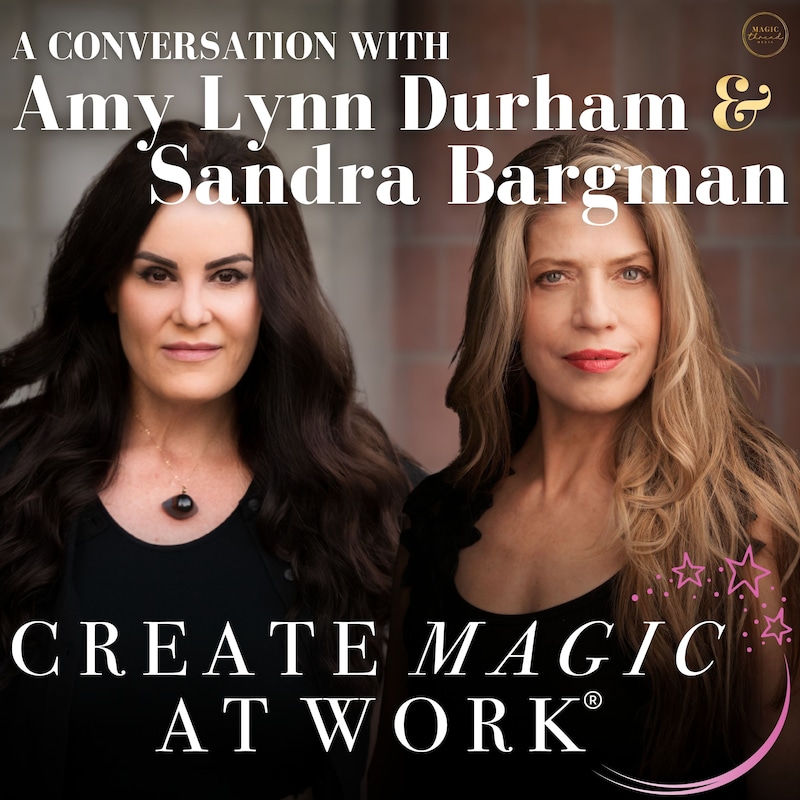
In this conversation, Amy sits down with Create Magic At Work’s Resident Voice and Presence coach Sandra Bargman to explore a question that reaches far beyond communication skills. Are women being supported in finding their voice, or are they being taught to reshape themselves to fit environments that were never designed for them?
Together, they unpack the hidden assumptions behind executive presence, the double standards that shape how authority is perceived, and the subtle ways women are encouraged to soften, edit, or second-guess themselves. From phrases like "Does that make sense?" to the criticism of vocal fry, filler words, and emotional language, the conversation challenges who gets to decide what credibility sounds like.
Amy and Sandra also share what they are seeing inside the voice and presence coaching at Create Magic At Work with clients, where storytelling, breath, intention, and self-awareness often create deeper transformation than any communication technique.
At its core, this episode is an invitation to stop asking how to sound more powerful and start asking whether we trust ourselves enough to be heard.
Moments That Create Momentum:
1. Fixing Women or Fixing the Room — Explore why communication advice often focuses on changing women instead of challenging the environments where leadership is evaluated.
2. When Authenticity Gets Mistaken for Weakness — Understand how collaboration, emotional intelligence, and relational language are often judged differently depending on who is speaking.
3. Silence as a Leadership Skill — Discover why presence and confidence are often found in thoughtful pauses rather than faster responses.
4. The Stories We Are Most Afraid to Tell — Learn how the experiences we hide or dismiss often become our most powerful leadership lessons.
5. Presence Beyond Performance — See how breath, intention, and genuineness create trust and influence without requiring people to become someone they are not.
Schedule a Voice & Presence Coaching Intro session - complimentary
This 20-minute session with Amy Lynn Durham is the required first step for all Voice & Presence coaching at Magic Thread Media.
We’ll walk through your vision/goals and then transition you directly into your 1:1 sessions with Sandra Bargman.
Link to schedule - https://amylynndurham.as.me/voicepresenceintro
Learn more - https://magicthreadmedia.com/services
About the Guest:
Sandra Bargman helps leaders unlock truthful presence with a blend of vocal mastery, storytelling skill, and deep emotional intelligence. Drawing from decades as an actor, singer, director, and life counselor, she teaches people to express themselves with clarity, authenticity, and intention. Her signature framework The B.I.G. Approach brings together breath and body work, vocal strength, diction, silence, mindfulness, and story craft, giving clients the tools to communicate with confidence and purpose. Whether she’s coaching one-on-one or leading groups, Sandra guides people of all ages and professions to access their inner truth, sharpen their message, and step into bolder, more grounded communication.
Listen to Sandra’s podcast - The Edge of Everyday
About Amy:
Amy Lynn Durham, known by her clients as the Corporate Mystic, is the founder of the Executive Coaching Firm, Create Magic At Work®, where they help leaders build workplaces rooted in creativity, collaboration, and fulfillment. A former corporate executive turned Executive Coach, Amy blends practical leadership strategies with spiritual intelligence to unlock human potential at work.
She’s a certified Executive Coach through UC Berkeley & the International Coaching Federation (ICF) In addition, Amy holds coaching certifications in Spiritual Intelligence (SQ21), the Edgewalker Profile, and the Archetypes of Change . In addition to being the host of the Create Magic At Work® podcast, Amy is the author of Create Magic At Work®, Creating Career Magic: A Daily Prompt Journal and the founder of Magic Thread Media™. Through her work, she inspires intentional leadership for thriving workplaces and lives where “magic” becomes reality.
Connect with Amy:
https://createmagicatwork.net/
https://www.linkedin.com/company/create-magic-at-work
https://www.facebook.com/112951637095427
https://www.instagram.com/createmagicatwork
https://www.youtube.com/channel/UCnEm4h3fUgaq8qgvZpz6dGg
Thanks for listening!
Thanks so much for listening to our podcast! If you enjoyed this episode and think that others could benefit from listening, please share it using the social media buttons on this page.
Do you have some feedback or questions about this episode? Leave a comment in the section below!
Subscribe to the podcast
If you would like to get automatic updates of new podcast episodes, you can follow the podcast on Apple Podcasts or your favorite podcast app.
Leave us an Apple Podcasts review
Ratings and reviews from our listeners are extremely valuable to us and greatly appreciated. They help our podcast rank higher on Apple Podcasts, which exposes our show to more awesome listeners like you. If you are enjoying the show, please leave us a review on Apple Podcasts.
Transcripts
Women are policed out of the gate. Women are policed their entire social life as a female to phrase speak in ways in which it lands with men. That if, if I say this more sweetly, or if I say it like a question, if I'm more invitational, I'll be perceived as less aggressive, I'll be perceived as less shrill. I'll be perceived as more invitational. You can't win. You can't win.
Sandra Bargman:Amy Lynn Durham: Hey, it's Amy. Welcome to Create Magic at Work, where we cast visions for a future of work where business decisions ripple outward to our teams, our communities, the planet, and humanity as a whole. If you're ready to edge walk instead of sleepwalk through your leadership, you're in the right place. So let's start making magic at work. I'm just checking in, and I just wanted to say we should change the deadline to Tuesday. Does that make sense? I think this might work. I'm not totally sure. I'm no expert, but sorry. sorry, can I just add one thing. Sorry to bother you. I feel like we're missing something here. I feel like we're missing our targets. So I was scrolling through Instagram yesterday, and something just really got on my nerves, and I have our resident voice and presence coach, Sandra Bargeman, here with us today. We decided to hop into the studio and record an episode for all of you, because there is so much energy right now around the voice and presence coaching with Create Magic at work and Magic Thread Media clients are running to step into the experience. It's incredible, and I started thinking, gosh, we need to talk about this, so everyone can hear what's going on and get some ideas, and just kind of pull back the curtain and have Sandra share the experiences and the transformations that are happening, as I was thinking that I was doom scrolling, which I probably shouldn't have been doing, and I came across a leadership coach, which, as I do, because we're in that space, and they were giving advice to women on what not to say, and I will come across courses as well. Buy this course, so you can have executive presence. Buy this course, so people take you seriously in the room, and it really bothered me. This particular person was saying, don't ever say, does that make sense, because you lose authority. Don't ever say, does that make sense, because it implies that you might have been confusing or incoherent or that you need
Sandra Bargman:validation from the room. My immediate thought was, screw that. Why are you telling me how to talk? Yeah, and, and why are you censoring women, and the opposite argument to this is why are you trying to fix women when maybe the room needs to be fixed and maybe the woman leader that says does that make sense is truly checking in with their team from an emotionally intelligent lens to see if they really tracked the conversation and what was said, and I have to tell you, Sandra, I don't see very many reels or video clips in my feed, at least maybe it's my algorithm that are telling men what they can or cannot say to hold authority in the room that bothers me. So the phrases I kicked off in the beginning of the episode, I think this might work. I'm no expert, but sorry, can I just add one thing? Hey, does that make sense? Those are some of the phrases that women kind of get their hand slapped for saying in the corporate space, or I feel this one I really had a reaction to when I was saying it when we were kicking off, I feel. Like we are missing our targets here. I feel we're not allowed to say I feel,
Sandra Bargman:yeah,
Sandra Bargman:Amy Lynn Durham: that is an innate feminine gift of this like deep intuition. So that's what we're going to talk about today, fixing the person or fixing the room, which
Sandra Bargman:is it? I love it. Well, hello, my friend. Thank you for having me on for this conversation. And hello, all you wonderful listeners. You know, it's funny, Amy, I like you. I've never seen what comes across my feed, because you know of the work that I do - voice and presence, storytelling, of course, I get people coming on, talking, and it's always women talking to women. It's never the men, it's always the women saying, you know, instead of this, say this, instead of this, say that. You sound more authoritative, and it just sounds more manly, more masculine to me. It's not something that I particularly follow. It's not really the focus of the work that I do, but I do pay attention to it, of course, because I do write emails and I do deal with people in the corporate world, but the one that you really nailed it with the I feel I use I feel all the time, the one that you mentioned that I can get a little crazy with, is does that make sense? I think you're absolutely spot on with the to use it as I'm genuinely asking if you have, if you've understood tracked, if it makes sense, what I'm sharing, if you're seeing my vision, if it's coming to life for you. When I have a reaction to that phrase is when people use it at the end of everything they say, like literally, we're having a conversation and they'll say something. Does that make sense? Does that make sense? Over and over and over again, and then just like, Who are you talking to? Am I not listening to you? Is that it begins to feel a little condescending. So, if you're going to use that to check in, I would offer that figure out ways of not using it as sort of a mask, like an ending of each sentence, like it, like you land with that to resist that urge. Find the moments when you really genuinely want to check in, when it genuinely feels like this is a good place for me to ask, does this make sense
Sandra Bargman:Amy Lynn Durham: for me? What you're saying is, am I using this as a habitual filler,
Sandra Bargman:exactly,
Sandra Bargman:Amy Lynn Durham: or am I using this in an intentional way to truly check in, and when I'm speaking, are people tracking, so I know there's.. I was just gonna say, I know there's a lot of people that get annoyed with people that say um, and I literally started it with, um, how funny is that? So I know there's a lot of people that get irritated with people saying um all the time when they're talking. I know when I speak I say sort of and kind of and like a lot. My perspective on it is we are brave enough to be speaking as it is when our voices have been shut down quite a bit, so if you're going to say um a couple of times, I don't care, I'm proud that you're sharing your vision and your voice. When it gets in the way of your message is where there's some maybe toning down of the filler words that needs to happen. If somebody's literally saying um all the time, and I'm like, whoa, wait, I'm kind of missing what their message is, because I'm getting distracted with, with this, this habitual filler word, whatever the word is. So that's my viewpoint on it. There's also the modern pushback I referenced in the beginning of the conversation that these conversations should not be about fixing women, they should be about fixing the room, and there's a lot of linguists, executives, and feminists that have started calling out this advice and pointing out that it targets the wrong problem, and they've even gone so far to say that, I mean, I, this is, I'm just the messenger here, but they've even gone so far to say that it's linguistic discrimination.
Sandra Bargman:Interesting. Yeah,
Sandra Bargman:Amy Lynn Durham: yeah, so it's super interesting,
Sandra Bargman:really said to men,
Sandra Bargman:Amy Lynn Durham: yeah.
Sandra Bargman:Women speaking authoritatively. Period is so policed. I am reading a book now by Mary Beard on public speaking, the history of women being silenced and told not to be, not to speak publicly. The history of it through literature, it's extraordinary.
Sandra Bargman:Amy Lynn Durham: So, based on that I feel like we could be crossing the line with women on women crime in an unintentional way of what you just said from Mary Beard's writings were almost silencing each other. There's also some comparisons with language style, where the if you're direct and blunt and a man, you're perceived as assertive, very clear as a leader. If you're a woman that's direct and blunt, you're perceived as aggressive, bossy, abrasive,
Sandra Bargman:real.
Sandra Bargman:Amy Lynn Durham: I mean, I've been perceived that way at times. I have
Sandra Bargman:never, Amy, I've never been
Sandra Bargman:Amy Lynn Durham: right. And then, if you're collaborative, if your language style is collaborative and soft, then if you're a man, this is obviously, I'm broad, you know, broad stroking this, but if you're a man, you're perceived as empathetic and a team player, and if you're a collaborative and soft in your language, if you're a woman, you're perceived as weak and decisive and unsure, so ultimately some of this advice towards women could be an attack on the collaborative and soft language style, just because you're a woman, because when you're a man speaking collaboratively and softly, you're viewed as empathetic and a team player.
Sandra Bargman:There's so much to unpack in there. I think you know, I think that there are each female leader needs to find some sort of edge where she is comfortable, that it's not about becoming more developing. All of those, I'm not allowed to say I'm sorry. I'm not allowed to say, which, by the way, I would invite on the word um, I would just say I don't have a problem with um either, and I rest assured I say it occasionally, but I, I would offer that to try to train yourself to be comfortable in the silence as you, because we're using um to gather our thoughts, gather what it is we, how we want to respond, how we want to be engaged in this conversation, be it with one person or whomever, but to have the confidence and the presence within yourself to just allow that silence there while you take that moment. It's very powerful moment. Silence is extraordinarily powerful, and your audience, be it one or 1000 watching you pull can be quite interesting and quite engaging. So that's just something to tuck away in your pocket when you're considering, do I have to fill this moment with ways of, of, of making people think I'm thinking, you know, sort of telegraphing that I'm thinking,
Sandra Bargman:Amy Lynn Durham: yeah, I think that's a really good voice and presence teaching from you is to practice being comfortable in the silence. I know you share that quite a bit, and that is a way I can see in these rooms where you are holding your power.
Sandra Bargman:Yeah, because you're not rushing to answer, you have the leadership rhythm. I'm not rushing to answer. I don't need to rush. I'm confident in my opinions. I'm confident in when I do share them, but I'm gathering the tendrils, and here they are. I'm not insinuating that saying um doesn't look professional. I'm just simply saying these are ways to rethink the moments that you were choosing to say that. It's again, it all gets back to self awareness and self knowledge.
Sandra Bargman:Amy Lynn Durham: Yeah, and I think it gets back to, is my message being lost for the way I'm delivering it, if I'm using too many filler words, or if I'm whatever they are, that's the main goal, is that we're communicating with each other, and my message is being received, and hopefully the way it was. Intended,
Sandra Bargman:yes, yeah, yeah, yeah,
Sandra Bargman:Amy Lynn Durham: yeah, so tell us a little bit about the experiences that clients are having right now with the voice and presence coaching with Create Magic at Work and Magic Thread Media. It is just taken off people more than ever, people are wanting to step into this experience, and I want to hear what's going on behind the scenes, confidentially, obviously, with, you know, keep confidentially,
Sandra Bargman:absolutely, the things that I'm noticing is not just one person, it's it tends to be a theme, storytelling. People know, of course, we are all learning and knowing that storytelling is powerful in the corporate world. People don't want to just hear statistics, and they don't want a class, they want stories to share the wisdom to share the statistics, you know that's known now. What I think people, what I see always is that they begin with knowing they're great communicators within their teams, within their, their boardrooms, within, you know, the their meetings, but in terms of telling their own story and curating their own message, that's a different communication skill, particularly, you know, to find the courage around being vulnerable about your own story and understanding what is the strong portion of this story and what, what is not, and you know, to our conversation just earlier, what people perceive as being ultimately vulnerable about themselves is the thing that they don't want to tell, or they don't think it's powerful, when in fact it's that that's the most powerful, that's what got you here, that's what helped you, that's how you failed up, that's what, and that's what the people who want to know, you've gone through this, you've learned from this, and you have turned this into gold, and that's what you're delivering for the people that want to work with you, or work for you, or invest in you. So, it's, it's really fun to watch people who think they don't really have stories or know what their story is or their messages to begin to curate, oh, this happened then, and this is what this is a theme, and all of these themes from these events of my life that have led me here to the work that I'm, oh, and this is really a part of my message, because I've gone through this, so watching that emerge and just be embraced, and it's not to insinuate that everyone doesn't have some awareness of that. It's just nice to see it really
Sandra Bargman:crystallize more deeply, come together in ways that you can story tell and land that story, and begin to use the power of silence, the power of, you know, when is it that I want to land something and have a moment of silence for people to gather their understanding of that without saying, um, you know, all of it comes together,
Sandra Bargman:Amy Lynn Durham: so cool. It is
Sandra Bargman:so cool, Amy.
Sandra Bargman:Amy Lynn Durham: When you're with one of our clients, what are some of the moments in session where you see that light bulb kind of light up behind their eyes or turn on?
Sandra Bargman:Well, I think I often see it within breath work, because breath is not just learning how to breathe. I mean, it's utilizing the breath and how you land what you have to say, and it has also to do with taking that moment of silence. You know, breathing is really a leadership technique. It's not just a skill, it's a technique, and to watch them get that, and, and is really wonderful. And then, when we get into intention, which is the I in big, to understand that, you know, I think a lot of people, when they, when they speak and they tell their story, they, they've been taught, and I get this, and there's truth in this. I'm not debating that. You want to deliver something that the audience wants. Knowing what the audience wants is a really good thing. Knowing what you want first and foremost is number one. It can include I want this. I want to share what I, my message in a way that comes that really serves this group of people. You got to start with yourself first, because that's going to affect so much of what you tell and how you tell it, your body language, the whole nine yards. So those are great moments, and you know the other moments when you really see it is when they begin to pay attention to things that they're repeating and they're seeing the themes, that's when really light bulbs can go off, and you know it's just, it's really, yes, that is a theme, and I, and how does that serve the message that's emerging for you? It's really exciting.
Sandra Bargman:Amy Lynn Durham: So, for everyone listening, Sandra is referring to her signature framework called the Big Approach. Big stands for not louder, but for breath, for breath,
Sandra Bargman:your biggest help. Yes, yes,
Sandra Bargman:Amy Lynn Durham: breath, intention, and genuineness, and that's sort of the experience that people are stepping into. So, thank you for sharing some of that behind the scenes stuff. Okay, I want to hear your take on some of this vocal and behavioral advice that women receive a mountain of feedback on how their voices actually sound. Okay, and I do think it is very skewed that we receive much more feedback on how our voices sound versus men.
Sandra Bargman:Absolutely, one one
Sandra Bargman:Amy Lynn Durham: of the first areas that we receive vocal and behavioral advice on is when is if we have a habit of ending a declarative sentence in a rising pitch or making it sound like a question, because it makes their told when you know we're told any of us that speak that way, I guess, but mainly women, we're told it makes us sound uncertain.
Sandra Bargman:The
Sandra Bargman:Amy Lynn Durham: up speaking thoughts on that.
Sandra Bargman:Well, again, I mean, women are policed out of the gate, women are policed their entire social life as a female to phrase speak in ways in which it lands with men, that if, if I say this more sweetly, or if I say it like a question, if I'm more invitational, I'll be perceived as less aggressive, I'll be perceived as less shrill, I'll be perceived as more invitational, you can't win, you can't win. If I go up and, and I know it's also somewhat generational, if I go, you know, whatever the generational tick is, it springs out of the need to be perceived for something to land for men, I mean, we learned this as little kids. If I said, you know, don't talk back, don't say it like that, it's like what I'm passionate about this. As a little kid, I learned that I'm excited about this. Oh, I have to tone it down, I have to say it a little more sweetly, or else I'll be perceived as angry. My favorite anger in the reluctant leader. No, I'm just passionate about this, and you are not telling the young men that grow up and to be big boys in the business, you're not telling them to speak less passionately, they're not angry, they're authoritative. Why is my way of delivering that aggressive? Why do I need to calm down? So I think it all stems from the same place. It's a desire. What is the technique? Is it speaking soft? You know, we've heard things about that, that what is it, the trad voice in those circles, in the evangelical circles, that you know that women are taught to be really breathy, and that's a whole world, and they don't even know, you know, and they sound sweet and young and and it's a spectrum, it's all a spectrum of how do I fit into a male dominated world.
Sandra Bargman:Amy Lynn Durham: Interesting. Yeah, that was the next piece of the vocal and behavioral advice, was what did you call it, the trad voice,
Sandra Bargman:the trad voice, yeah, the
Sandra Bargman:Amy Lynn Durham: or the vocal fry, the low fry,
Sandra Bargman:that's another one, the
Sandra Bargman:Amy Lynn Durham: low creaky vibration at the back of
Sandra Bargman:your, yeah, I'm really, I just don't care, and it's just not important to me, because no one takes me seriously. I'm too cool for
Sandra Bargman:Amy Lynn Durham: that. And then the other one in the behavioral category is overusing emojis and exclamation points.
Sandra Bargman:Okay, guilty
Sandra Bargman:Amy Lynn Durham: women are often warned that using multiple exclamation points or emojis makes them look too emotional or girly. I am like the emoji queen, like I love emoji
Sandra Bargman:full on. I use, I don't, you overuse them in my emails, but, or my exclamation, but I do it on social media, a million of them. I mean,
Sandra Bargman:Amy Lynn Durham: part of the reason is selfish, I need some color and some art in my, no, right, some beauty. Yeah, exactly. Part of it is just like the beauty of like looking creative. Yeah,
Sandra Bargman:I love, and I love going in and finding new emojis, and oh, how am I going to use this? It's like art, yeah, fun, creative.
Sandra Bargman:Amy Lynn Durham: Okay, so for everyone listening, you, you've probably heard Sandra on Create Magic at Work. She's been a recurring guest, and she also has her own show, The Edge of Every Day. It's incredible and super spicy, so you have to tune in. She just celebrated transferring over to the Magic Thread Media Network, so her show is a part of our network, and she just celebrated hitting top 10% global for her show, The Edge of Every Day. So, I mean we are so excited, and then the voice and presence coaching is taking off. It's, it's so much fun right now. So, if you're, if you're listening, feel free to reach out to us. You can go to Magic Thread media.com under services. You can schedule a 20 minute intro call to talk about your voice and presence goals, among many other things, Sandra. If somebody listening to us is thinking about stepping into an experience with voice and presence coaching, what would you say to them?
Sandra Bargman:I would say, give yourself permission. Give yourself.. I mean, that's a great. that's one of the skills that I teach, is giving yourself permission to explore and look more deeply at the ways in which you want to communicate, and when I say give yourself permission, that's permission to play, to make mistakes, to grow, to look at the ways that you are storytelling or not, just give yourself permission to have one session to explore how it is you want to share who you are and your voice in the world today.
Sandra Bargman:Amy Lynn Durham: Yeah, with breath, intention, and genuineness. Love it. The big approach. Okay. Thank you for joining me, Sandra, in this rant. And for everyone listening, we want to know, what do you think? What do you think? Are we wrong? Are we right? Do you think that we need to fix how we speak, or do you think we need to fix the room? Do you think it's a little bit of both? Do you think women should be telling women what to say and how to say it, let us know.
Sandra Bargman:I love it, Amy. I love it. Thank you so much for for this rant. And yeah, thanks for listening.
Sandra Bargman:Amy Lynn Durham: Yeah, let us know what you think. Thanks for bringing some magic, Sandra.
Sandra Bargman:Always.




