Shownotes
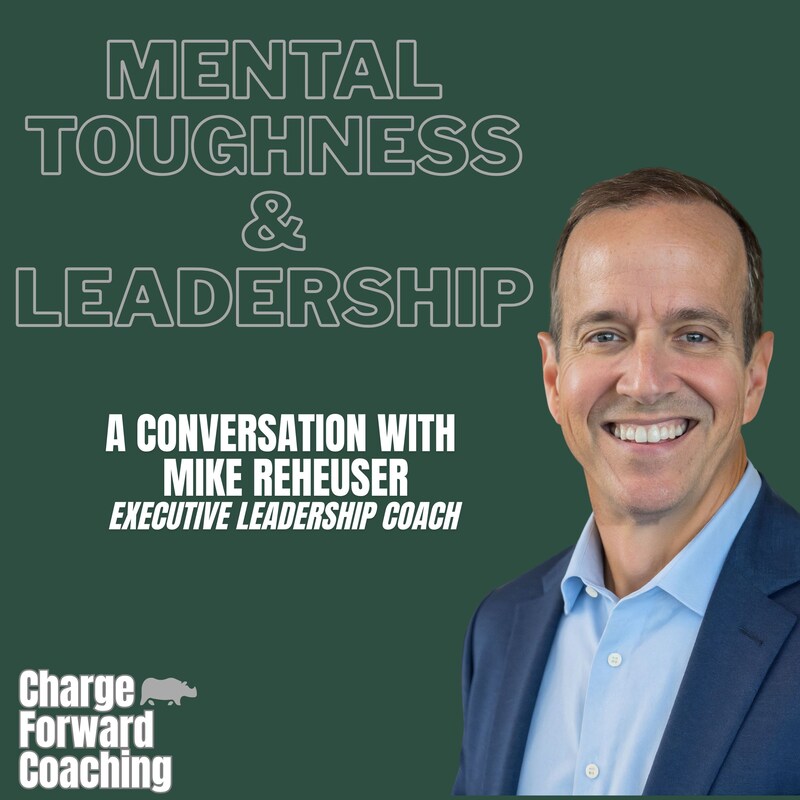
In this powerful episode of Charge Forward, James Blasco sits down with Mike Reheuser , a former U.S. Marine, accomplished Department of Defense executive, high-stakes litigator, and now a sought-after executive coach who specializes in developing resilient, high-performance leaders. Mike’s career spans some of the most demanding arenas imaginable. After serving in the Marines, he transitioned to the legal field, where he litigated high-profile, high-pressure cases requiring exceptional discipline, strategic thinking, and emotional control. He later brought that same level of rigor and leadership to the Department of Defense, where he navigated complex organizational challenges and mission-critical decision-making. Today, he channels all of that experience into coaching executives, teams, and organizations to perform at their highest level.
James and Mike dive deep into the psychology and practice of mental toughness, using the foundational “Four C’s” framework: Control, Commitment, Challenge, and Confidence. Mike shares how these principles shaped his leadership in the military, guided his approach to high-stakes litigation, and now inform his coaching philosophy. Mike’s journey — from the courtroom to the battlefield to the boardroom, offers a masterclass in what it truly means to lead with strength, purpose, and unwavering mental toughness.
Key topics:
The four C's of mental toughness: control, commitment, challenge, confidence
Strategies for emotional regulation in high-pressure situations
Goal setting: realistic vs. ambitious approaches
Building trust and credibility as a leader
The importance of routines and physical fitness in mental resilience
Sound bites:
"Never let them see a sweat."
"Think about success, not failure."
"Confidence comes from preparation."
About the Guest:
Mike Reheuser is an Executive Leadership Coach with more than 35 years of experience leading in some of the most demanding environments in the world. A former Marine Corps Reserve Colonel, high‑stakes litigation attorney, and Senior Executive in the Department of Defense and U.S. Army, Mike has built a career at the intersection of national security, law, and organizational leadership. His roles included overseeing global civilian personnel programs for nearly 300,000 Army employees, directing enterprise‑wide human capital strategies, and managing multi‑billion‑dollar programs that shaped workforce performance, logistics, and readiness across the Army. As a litigator, he handled complex, high‑visibility cases involving national security, counterterrorism, and federal prosecutions, advising senior DoD leaders on matters of significant departmental impact. Today, as the founder of Reheuser Consulting LLC and an International Coaching Federation credentialed coach, Mike partners with executives and emerging leaders to help them strengthen decision‑making, overcome internal barriers, and lead with clarity and confidence. His coaching draws on decades of experience in strategic leadership, crisis management, and high‑pressure environments, blending active listening with a metrics‑driven, mission‑focused approach. With a reputation for integrity, insight, and executive presence, Mike equips leaders to navigate complexity, drive change, and unlock their full potential.
About the Host:
James Blasco is a CTA Certified Coach, and a Certified Functional Mental Toughness and Resilience coach, and a Certified Neuroscience Coach based in Ormond Beach, Florida, with a rich background in sales, media, and entrepreneurship. Throughout his career, James has excelled in sales and sales coaching for some of the largest media companies, owned three successful businesses, and worked in media relations in the NFL. His diverse experiences have equipped him with a deep understanding of leadership, communication, and the drive needed to achieve success. James is also trained specifically to coach to all aspects of mental toughness and resilience.
Resources:
Website: www.chargeforwardcoaching.com
LinkedIn: https://www.linkedin.com/company/chargeforwardcoaching/
Facebook: https://www.facebook.com/ChargeForwardCoaching/
Instagram: https://www.instagram.com/chargeforwardcoaching
YouTube: https://www.youtube.com/@ChargeForwardCoaching
Spotify: https://open.spotify.com/show/ChargeForwardCoaching
Apple Podcasts: https://podcasts.apple.com/ChargeForwardCoaching
Guest Resources:
https://www.linkedin.com/in/michael-reheuser-a20578309/
Transcripts
Hello and welcome to another episode of the Charge Forward Coaching Podcast. I'm your host, James Blasco And again, today, as you know, we're going to talk about mental toughness and the four C's of mental toughness. And we have just the person to help us to do that. We have an executive coach who's also, or was a Colonel in the Marine, served in Desert Storm, also worked for the Department of Defense for many years in high level positions, was a litigator for many years, handling high profile cases.
And if there's an individual that could help us better understand mental toughness, it's him. His name is Mike Reheuser And I got to know him fairly well over the last couple of months. And so I'm excited to have him on a show. Welcome Mike to the podcast.
Mike Reheuser (:Hey, thanks, James. It's great to be on. I appreciate you extending me this courtesy, and I'm looking forward to our talk.
James Blasco (:Awesome. So I guess we'll just start with the basics. If you could give us a little bit of your background. There's a lot of stuff in there we'll dig into, but if you could give us an overview, that'd be awesome.
Mike Reheuser (:Yeah, thanks. Well, I went to Lehigh University in Pennsylvania and my senior year, I got a crazy idea to join the Marine Corps. I'd never thought about it before in my life. So about a week after I graduated, I went to officer candidate school, finished that. Then I was already scheduled to go to law school. So when I finished law school, I started my active duty commitments. I spent three years at Camp Lejeune, North Carolina, ⁓ got out of the Marine Corps, came to work for a law firm in DC.
e, long story even longer. In: rs of my career. I retired in: James Blasco (:That is quite the background, tons of experience. Folks like yourself, I often wonder, how do you have enough time in your life to do all that stuff? It's pretty amazing what you've accomplished. Well, here on the show, as I mentioned to you as we were prepping for it, we talk a lot about mental toughness, of course, but specifically what we refer to as the four C's, the mental toughness, control, commitment, challenge, and confidence. And there's a lot more layers to those things. ⁓
as we dig into them, but I want to start with just your overall take on what mental toughness really is, not just on a playing field or a battlefield, but also, you know, in offices in a courtroom. What does it mean to you in life in general?
Mike Reheuser (:I think this idea that you don't quit the first time something is hard is really important. And I also think self-discipline is the key to everything. If you can control yourself, you can achieve lots and lots of things you otherwise wouldn't have thought you were able to. But if you can't control yourself, it's very unlikely you're going to be successful. I people do it, but really, I think that if you stick to that, what can you control? You can control yourself, your action, your attitude.
If you can do that, you can really go a long way. I think people can get discouraged when they have adversity. And many times they think they're the first person to have this type of adversity. So when I work with clients, I really try to refocus them on what they have going on that's good, rather than focusing on just what's not going well.
James Blasco (:Exactly. And with control, oftentimes there's the emotional component to control. Number one, how do you view emotions in high-stake situations and how do you encourage people to not ignore those emotions but manage those emotions?
Mike Reheuser (:think one of the things is you've heard this expression, never let them see a sweat. That was a big thing that I always tried to do is that even though there was a lot going on inside my head and I was nervous as could be, the people around me wouldn't be able to see that. And I think that's part of it too, as you control your exterior, then you can get those butterflies flying in the same formation. This is especially true when in litigation cases where you have so much pressure on you.
And there's no one else but you. So if you screw it up, your client has a bad outcome. So you can really, ⁓ it can keep you up at night if you're not careful about it. So you have to be able to manage all of that and understand that yes, you're going to have these emotional issues, but you need to be able to control them or you're not going to be very successful.
James Blasco (:So when you're working with executives or individuals and you get to this point in the conversation, are there any specific techniques or exercises, anything you help them with?
Mike Reheuser (:So a lot of times when executives will talk to me about all the challenges they have ongoing, they like to take time to vent, you don't understand, Mike, I've got this, I've got that, I've got family, I've got my parents are not well, my children are this, the job is this. And in some cases, they need some space to vent, which is great. But what I try to focus on them is not what the challenge is, but what can you do to make it better?
There's a lot of the stuff that's outside of your control. You can't control if your parents get sick. You can't control always if your kids do dumb things. You can't control what employees can do. But what can you control and focus on that? And that helps. And I'm also a big believer in physical fitness. Whatever that means to you, for me, when I worked in the Pentagon, I worked there for 20 years. It was a standing routine for me that I would go to the Pentagon gym almost every day.
And at first, my bosses were really mad about that. Hey, Mike, you can't be doing that. I said, look, I'm going to take care of myself physically, and that will help me mentally, emotionally, et cetera. And it just became like another meeting I went to. So I'd go to the gym and just became part of who I was. So I encourage executives, what's something you can do? Maybe you can get up 15 minutes earlier and go walk around the block, or maybe you can find a time where you can do some exercises. I think that's a
Big help for people in stressful situations.
James Blasco (:Absolutely. And you might be familiar with Jim Loehr one of the great sports psychologists here out of the United States. Hopefully one day I get him on a show too. And he talks about, everybody talks about time is the most valuable thing you have. And he says, no, not really. The most valuable thing you have is energy. And that comes from physically and mentally, emotionally, spiritually, and you're, you're spot on. It's, it's amazing how many business owners, managers, corporations don't emphasize to their employees and their teammates. ⁓
Mike Reheuser (:Mm-hmm. Mm-hmm. Yep. Yeah, yeah, yeah.
James Blasco (:make sure you're staying in shape, eating right, sleeping right, because your mind's just not going to work the same if you don't. ⁓
Mike Reheuser (:Yeah, I'd
like to give you a quick, now a story if I can. Uh, I was, again, I had bosses along the way that were not very supportive of me working out. And one day was in the gym at the Pentagon and there are, think, six members of the joint chiefs of staff and two of them are in the gym working out the same time I was. So if those guys could find time to work out with their enormous pressures and jobs, then I could too.
James Blasco (:Absolutely. There's always time. There's always time to carve it out if you want to, if that's a goal of yours. So over 35 plus years, you've been in a lot of demanding situations. You've changed roles many times, things like that. When you look at commitment to whatever it is that you're doing, how do you approach each role, the goals you're chasing, and how do you keep others to keep their commitments as well?
Mike Reheuser (:That's a great question. For me, I was always looking for ways to challenge myself. And I always felt like I had more to contribute wherever I was going to go. I never took the easy way out and took a simple job. I always took hard jobs. And what I would do is take a job often that I knew nothing about. And that may seem counterintuitive to you, but what it helped me do is to start from scratch and really learn whatever the issue was.
So my last job, I was one of the people responsible for all army barracks around the world and all army housing. So the army has a hundred thousand homes that it owns and 6,000 barracks buildings. I knew nothing about that. But by being the dumbest guy in the room, it allowed me the space to ask questions and really get curious about how to solve problems. And then I would try to be an advocate for our people for whatever the issues were.
and really, really try to help them get to where they want it to be. Because for the most part, working in a big bureaucracy like the Department of Defense, people get frustrated because they think the senior people don't hear them. They don't understand their problems. So one of my jobs, and this is part of the commitment, is I told them, look, I don't know anything. You're going to train me and teach me, and then I am going to advocate for you. And I really got a lot better buy-in when I did that.
James Blasco (:Yeah, and the part about helping others understand how to stick to something that they assigned as a goal, and sometimes it's their job, maybe it wasn't their personal goal, but to understand what the result can mean to them, their team, and to others, I think is really, really important. And on the commitment side, talk about goals. There's a few topics I'm fascinated by. I'm fascinated by focus.
time, goals, mental toughness, of course, all that rolls up. What do you think about goal setting? Like how do you encourage people to set goals? I've heard both sides of it, set realistic goal, the smart goal kind of approach. And then I know I read a lot with Dr. Benjamin Hardy, he's out of Orlando, great behavioral psychologist, works with a lot of executives himself. And he talks about, no, you set massive goals and that's how the mind works. It'll help you create.
plans, what side do you sit on?
Mike Reheuser (:⁓ I think ⁓ simplicity and realistic goals is better. Because it's easy to cop out when you have a gigantic goal and you can say, I'll just get there tomorrow or I'll get there next year or I'll get there eventually. It doesn't make you do anything different today. I'm a big believer in short term goals. What are you doing today? This month, this week, but more importantly than that, James is why you're doing it.
So, you I know a lot of people, struggle, let's say with losing weight. And when you get to the crux of it, maybe they really don't want to lose weight. It's just everyone else is making them feel bad. So don't make that a goal if that's not really your goal. So we really explore why is it that you want to do this? Is it really something important to you? Are you just doing it because people say, ⁓ you should set a goal. You should get better. You should be A, you should be B, you should be C. And I think like working in an organizational environment,
You have to make sure that the people that you're working with understand what the goals are and why they are so that impacts their daily activities. Because if you don't change your daily activities, none of this matters.
James Blasco (:for sure. And I see a lot with athletes to your point, their goal is to, you know, be the starter or to, you know, be a certain rank in whatever sport it is and all these types of things. And I'll ask him the same question. Well, why do you want to do that? Why do you even want to play the sport to begin with? And oftentimes it, you know, falls back on some other things and that's a big shift. That's a big paradigm shift for them to see that. And oftentimes it helps them perform better that they take that pressure off themselves. So
Mike Reheuser (:Mm-hmm. Mm-hmm.
James Blasco (:When you're going through all these big challenges, we'll call them, or opportunities, however you want to view that, how do you look at risk taking and how do you explain that to the folks that you work with in terms of you're going to have to, if you want to get to a goal, big or small, you're going to have to take some risks and you're probably going to fail. And from the failure, you need to hopefully learn from that. How do you position that with them and where do you see the big pitfalls?
for individuals.
Mike Reheuser (:Yeah, so I might call it something different than risk taking. I think risk taking to me, it makes it seem like, boy, if this doesn't work out, then something calamitous is going to happen. I think about like in the Department of Defense, if something goes wrong, it can go really, really wrong. I try to encourage people to think, what would it be like if you could do this? What would it like?
you know, if you had this success, tell me, tell me how that would feel. Tell me how you would see it and getting thinking that way. And then also you have to give people space to fail, particularly in the work environment. And I'll give you an example that's it's sort of analogous to this. I worked not directly for, but I worked a lot with this four star ⁓ army general and his way of
telling people that it was going to be okay, is he would say, this is what we're doing. Everybody agree with me? And nobody sitting around a table who thought their job was in danger would say, no, General, I think you're crazy. So when you have that sort of attitude, people are not going to take risks. They're not going to expand beyond what they are. So you have to, when you're discussing it with them, you have to say, okay, it's all right if you fail, but within these parameters,
You know, it can't be all right if we have a catastrophic failure, but it can be all right if you take one step forward, one step back, two steps forward, one step back. So people need to understand the of the roles and the guidelines. And the other part of it, too, is when you're in a position of senior leadership, like I had been for a long, long time, people will yes you to death. You have to make sure they really understand it and that they're really believing you when you say it's OK if you make a mistake.
So you have to develop trust with people. You can't, because if I said to was a subordinate of mine, if I said to them, I'll underwrite the risk, you can go ahead and make that mistake. go, yes, sir, yes, sir, yes, sir. And they wouldn't necessarily believe it. Right. So you need to go down that extra level and find it. OK, do you really believe it? Why don't you believe it? What experience have you had in your life where you got burned, where somebody said, you can do this and it's OK. And then you did it and they lit you up on it and you got in trouble.
James Blasco (:Yeah, that's such a fine balancing act. And you brought up the word trust. How do you help executives or others build that trust with the folks that are on their teams, their employees or whomever it is? Is there a certain technique in doing that? I know you just mentioned a couple ideas, but is there anything specific that you help them with to gain that trust?
Mike Reheuser (:One of the real important things is you got to be who you are. know, a lot of times when people get into leadership positions, they see someone who is a great leader and they say, boy, I'm going to be just like that person. But if that's not who you are, it comes through to people and people aren't going to trust you because they know you don't even know what you're talking about. You're just trying to be somebody else. And I think it's really important to be relatable. OK, not like I was, you know, I was born on third base kind of a thing.
⁓ You know, I had to make my way around a third base. And so I use humor as a way to make people feel comfortable. Not everyone likes doing that. But I think an important part of this too, James, is ensuring you get good feedback. This is a really difficult thing for leaders to do, is to get actual, ⁓ realistic feedback. For the most part, if you're in a subordinate superior relationship, the subordinate does not want to give you feedback.
because they might lose their job ⁓ or they might get put on crummy projects. So as a leader, you constantly have to try to get feedback and there's ways to do it. ⁓ You know, a good peer group is important. Sometimes you might have a ⁓ superior of yours that can help you with that. And ⁓ I'm a believer too in assessments, ⁓ you know, a 360 degree assessment where people really can be candid is important.
because we all miss things and it's critical to be able to see, all right, is my message getting through? If your message isn't getting through to people, they're not gonna trust you.
James Blasco (:So for people who are either given a task or they create a goal for themselves and then for whatever reason, they don't achieve it at the time, but they don't bounce back. What are some of the main reasons that those individuals just simply don't bounce back while others do?
Mike Reheuser (:I think sometimes it's a lack of self-confidence. think that there's a couple of ways this can manifest itself. One is a lack of self-confidence. I've never had success before, therefore I'm not going to have success now. So part of it is dealing with that thinking, acknowledging it and working around it to try to have small wins to move yourself forward. Another thing I see with people is laziness. I mean, there are some people who don't achieve goals because they're lazy.
And there's not much as a coach you can do to help with that. I mean, you can identify it, but if they're not willing to change their habits, not much is going to happen.
James Blasco (:You brought up confidence. think confidence out of the four C's is one of the most important C's. They're all kind of equal, but confidence is really important. And we look at two parts of confidence, confidence in your abilities and also interpersonal confidence. And you brought some things up earlier in the conversation to me that stuck out as you would have to have pretty good confidence in your interpersonal ⁓ skill. What is it about speaking up?
Mike Reheuser (:Mm-hmm. Mm-hmm. Yep.
James Blasco (:or giving feedback or raising your hand or like you said, you're the dummy in the room, you're trying to figure things out. What is it about interpersonal confidence that can separate somebody from the average folks that they're either competing against, working against or whatever it might be?
Mike Reheuser (:I think some of it is innate. mean, some people are born more charismatic than others, but I think you can develop it. And you don't have to be charismatic in a game show host kind of way, but you have to express that you believe in yourself, you believe in the people that work with you, and you believe in what it is that you're doing. And you can do that many different ways. For me, I'm an outgoing person, and I like working with people and meeting people and developing those relationships.
But I've worked with many, many good leaders that were very technical and they, you know, they were really good at what they did. And that sort of ⁓ strength, that self-confidence in their ability to understand the project or the problem set is important too. And I'll give you an example at the Department of Defense. I worked for several secretaries. One was Bob Gates and one was Leon Panetta. So ⁓ Secretary Gates, for any decision he made that was important, wanted briefing books.
stacked to the ceiling. He would read every page of every doc and he would know more than anybody and then he would ask really good questions. Secretary Panetta, he wanted the big picture. No books, no briefings, none of that. Give me the big picture. What's the risk? What are we talking about? Okay, I understand it and we're going to move down the road in this direction. Two completely different approaches. Two successful secretaries of defense, but their personalities were not the same.
So when people try to be something they're not, it comes through. So I just recommend to people, okay, where you are is where you are. How can you get a little bit better? How can you make better relationships with the people that you work with in a way that doesn't seem fun?
James Blasco (:Yeah, you're so right. I early in my corporate career and I was kind of moving up a little bit. I didn't really know what to do all the time. My first team, everybody on the team was at a minimum 30 plus years older than me. I'd been doing this a long to talk about not knowing what you're doing. I didn't know what I was doing. And, but so I had to mimic or at least I thought I did, you know, the other leaders in the organization and I tried to talk like them and that. And I, after many years, I was like, that's, that's not me. That's not how I.
Mike Reheuser (:Ha ha ha.
Yeah, yeah, yeah.
James Blasco (:work with people. Certainly not how I speak. So yeah, it's funny. You you bring that up because it's it's critical. ⁓ Confidence and abilities in working with athletes and others. They asked me all the time. Confidence comes up all the time. I my confidence broke down here, broke down here. And I, you know, remind them of confidence. Mostly in a lot of ways comes from preparation and getting ready from, you know, if we go back to your your military days, Desert Storm or whenever.
What is it about the military and preparation that we can learn that would improve our confidence in our abilities?
Mike Reheuser (:Well, that's a really good question. I think the military, my experience in it, you have people that are the same as they are on the civilian side. They may have shorter hair and they may work out more, but they're basically people ⁓ just the same. So I think you observe and you see who's really good at whatever it is they're doing and almost always they're well prepared.
And I'll give you a different analogy going to the courtroom rather than to the Marine Corps. Knowing what I was going to say the first time I talked to the jury, the very first words I was going to say really helped me relax and understand, OK, you do have control over what you say. You don't have any control about what they're hearing or what they're doing, but you can control that. And I would be so prepared. I had colleagues that were over prepared.
they would go too far and they would spin themselves into a big circle because their nervousness made them over prepared. For me, it was, okay, I got to this point where I'm ready and that's it. I'm going to get a good night's sleep. Where many colleagues who would stay up all night and just overdo it. And that really erodes your self-confidence because now you're not even sure what it is that you're supposed to be doing.
James Blasco (:Exactly. And I've worked with so many sales professionals over the years and sales leaders. And one of the things that I would always see the day of a big presentation, they're still going over the slide deck and these things. And I'm like, if you don't know this by now, if you don't have it ingrained in you, yeah, you're going to be nervous. And I get, I could understand why you're still studying. All right. I know we just have a little bit of time left. I want to learn a little bit more about your executive coaching.
Mike Reheuser (:Mm-hmm. Yeah. Yeah. Yeah. It's too late, right?
Mm-hmm, yeah.
James Blasco (:the types of clients you work with and how you go about, what is the coaching process like? think a lot of people, I know I get that question a lot, like what is this coaching? What are you gonna do? And I think they believe there's some like magic thing I could tell them like the first session, but what is coaching really about and how do you move forward with it?
Mike Reheuser (:Well, if there is magic, I'd like to know it because I definitely don't know whether it's so, you know, for me, James, the most important thing to do is really understand what it is that the executive is trying to do. What are they hung up on? Where are they stuck? What's the goal they're trying to reach? What's really happening? So a lot of it is peeling back sort of the corporate or the whatever it is that the person has that they express to others. Here's who I am.
James Blasco (:Yeah, right.
Mike Reheuser (:I'm the COO, I'm this, I'm that. Peeling that back and finding out really what's going on. ⁓ We find a lot of people these days, especially with the advent of social media, are completely overwhelmed. They can never get away from work, they can't put the screen down, they're not sure how to spend their time. people of this certain age, the sandwich generation, call it, have parents that are ailing, kids that are...
involved in sports and activities and a very difficult work process, it's really hard to kind of take a step back and take a breath. So what I try to give them is space to do that. And I try to help them understand that, you know what, there are going to be things you can't control. But what you can control is the work you put in, the attitude you have. Try to do the best to get some physical fitness in. Try to improve every day rather than trying to have some unbelievable goal.
that you're never going to reach. And I think a lot of executives now they're confused because there's so much information and the internet can be a good thing, but it can be a terrible thing. And if you go on there, you know, by way of example, you and I both liked to golf. If you want to learn how to hit a shot off, hit your driver, you can find 500 people who will tell you how to do it. And they're all different. So we have this in corporate America too. I'm trying to get better. What do I do?
I'm going to chase this way. I'm going to chase that way. I'm going to take this course. I'm going to take that. And there's a lot of ⁓ uncertainty and consistency. So really what I try to do is help them navigate the complexity that they have in their work and overcome these obstacles they have, whether they're internal or external. a big thing for me, James, is self-discovery. ⁓ This is particularly challenged with men. ⁓ Some women seem to come at that a little easier.
I think some men have developed this shell around them that I have to be the provider, I'm the corporate this, I'm the corporate that. And ⁓ they really have not spent time discovering who they are. So I help them with that. And that sounds like a little woo woo, but it's not. Because at the end of the day, they're the ones who have to come up with the strategies and the solutions that solve their problems. I'm not going to do it. They have to do it.
James Blasco (:Absolutely. And just to piggyback off the self discovery, I talked to a lot of people about just being self aware. Everybody wants to understand how to change. And I think it starts there, just self awareness and you begin to learn some different things. ⁓ Just a couple more questions. What about the topic we were just covering in terms of everybody so busy and they're being pulled a lot of directions, a lot of distractions.
Mike Reheuser (:Absolutely.
James Blasco (:Do you talk about routines with, I'm big on routines. I think routines solve a lot of the challenges out there with these distractions and so forth. Are you a routine guy or how do you deal with that?
Mike Reheuser (:I am so, uh, by way of personal example, I worked on the Pentagon for 20 years. get up at four 30 every day and I never hit the snooze button once. So, because that was it, I had to get up, I had to get on the bus, I had to get to work at, know, and, I went to the gym every day and I had routines that helped me some, and I encourage people to do that. Absolutely. Especially with, you know, almost everyone I talked to has challenges getting off the phone, whether it's scrolling or whether it's answering work emails or all of that.
And then you're not present for your spouse, your children, whomever. So I'm a big believer at, okay, it's now eight o'clock. The phone goes away. And I did this with a client last week. said, okay, you've got two kids and they think daddy's on his phone too much. Make it a game. Okay, Joe, today it's your day to take daddy's phone and go and hide it. And you know, then the kids are involved and now you're off the phone. ⁓ that's, that's a, it's a routine at the end of dinner. That's what we do. So.
I'm a big believer in that and I think it also helps you with self-control. If you can control yourself, then you can do a lot better when these adversities come at you ⁓ because you know that, okay, I'm well grounded in what I'm doing. This too shall pass and I can move on and tomorrow I'm gonna get up at 430 and I'll do my thing.
James Blasco (:Now that's great advice, great advice. And you mentioned if you're trying to fix your drive, there's 500 people out there. I think I'm on 505. And so I might have to go, hopefully there's like 600 and I'll eventually get this thing figured out. Mike, yeah, I'll let you know first thing. Well, thank you so much for coming on to the podcast. How can people get in touch with you? Maybe take advantage of your coaching services.
Mike Reheuser (:When you do, let me know. ⁓
-: James Blasco (:Yeah, absolutely. I hope you guys out there take advantage of it. And Mike obviously has some great expertise in all of this. So Mike, thanks being on the program for the rest of you out there. Don't forget to like and share and subscribe and all that good stuff. If you want to learn a little bit more about mental toughness, go to chargeforwardcoaching.com. There's plenty on the website there to look at. You could also reach out to me, get a free discovery call, learn a little bit more about my coaching on mental toughness. And I can learn a little bit more about you and your goals. And we could go from there.
Mike Reheuser (:Thank you.
James Blasco (:But in the meantime, just keep charging forward.