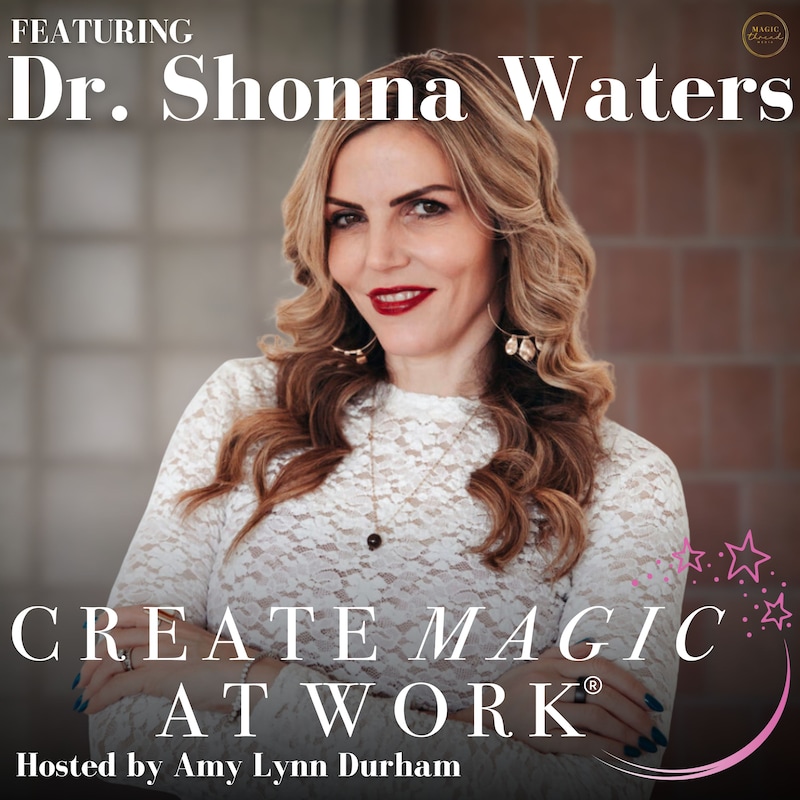
Shownotes
Workplace angst is rising, even among high achievers, and Dr. Shonna Waters is here to explain why so many people feel unsafe, unseen or stuck in their growth. You’ll hear how security, significance and growth shape our wellbeing at work and why leaders must design cultures that support those needs. Together, we explore the risks of altitude sickness in leadership, how power can pull leaders away from the truth, and what it takes to stay connected with compassion and clarity. You also get a grounded look at AI and why people need a hopeful vision to move through this moment with confidence.
This episode invites you to rethink how you lead, how you support your team and how you create a workplace where people feel valued and able to thrive.
Key Takeaways:
- Why Workplace Angst Is Rising – See what causes discomfort at work even for people who appear to be thriving.
- The Three Needs Every Employee Shares – Get a clear look at how security, significance and growth shape energy and engagement.
- How Leaders Lose Perspective – Spot the signs of altitude sickness and what happens when leaders drift away from real insight.
- Building Psychological Ergonomics – Discover how small shifts in systems and habits create healthier, calmer workplaces.
- Leading Through AI Without Fear – Explore ways to guide teams through change with clarity and a hopeful message.
- Creating Cultures That Support Humans – See how connection, trust and simple daily practices help people feel respected and valued.
About the Guest:
An award-winning organizational psychologist and executive, Shonna is a recognized thought leader in HR, psychology, and business with over 100 articles, technical reports, book chapters, and books and over 100 conference talks, keynotes, and panels. With a background in consulting and executive leadership roles, Shonna has advised organizations on people strategy and transformation across various sectors. At BetterUp, she stood up and led teams in behavioral science, strategic partnerships and alliances, and executive advisory, driving research-backed insights to enhance organizational performance.
About Amy:
Amy Lynn Durham, known by her clients as the Corporate Mystic, is the founder of the Executive Coaching Firm, Create Magic At Work®, where they help leaders build workplaces rooted in creativity, collaboration, and fulfillment. A former corporate executive turned Executive Coach, Amy blends practical leadership strategies with spiritual intelligence to unlock human potential at work.
She’s a certified Executive Coach through UC Berkeley & the International Coaching Federation (ICF) In addition, Amy holds coaching certifications in Spiritual Intelligence (SQ21), the Edgewalker Profile, and the Archetypes of Change . In addition to being the host of the Create Magic At Work® podcast, Amy is the author of Create Magic At Work®, Creating Career Magic: A Daily Prompt Journal and the founder of Magic Thread Media™. Through her work, she inspires intentional leadership for thriving workplaces and lives where “magic” becomes reality.
Connect with Amy:
- https://createmagicatwork.net/
- https://www.linkedin.com/company/create-magic-at-work
- https://www.facebook.com/112951637095427
- https://www.instagram.com/createmagicatwork
- https://www.youtube.com/channel/UCnEm4h3fUgaq8qgvZpz6dGg
Thanks for listening!
Thanks so much for listening to our podcast! If you enjoyed this episode and think that others could benefit from listening, please share it using the social media buttons on this page.
Do you have some feedback or questions about this episode? Leave a comment in the section below!
Subscribe to the podcast
If you would like to get automatic updates of new podcast episodes, you can follow the podcast on Apple Podcasts or your favorite podcast app.
Leave us an Apple Podcasts review
Ratings and reviews from our listeners are extremely valuable to us and greatly appreciated. They help our podcast rank higher on Apple Podcasts, which exposes our show to more awesome listeners like you. If you are enjoying the show, please leave us a review on Apple Podcasts.
Transcripts
What we advocate, advocate for is, like, actually, a really, it's not a 10 point plan to, like fixing this. It's a really elegant focus on three things, security, growth and significance, and really taking a look at what you're doing as an organization, the systems, policies, practices that you have in place and asking, how is this supporting or inhibiting security growth and significance for our employees? So we call that methodology psychological ergonomics.
Amy Lynn Durham:Hey, it's Amy Welcome to Create Magic at Work, where we cast visions for a future of work, where business decisions ripple outward to our teams, our communities, the planet and humanity as a whole. If you're ready to edge, walk instead of sleep. Walk through your leadership, you're in the right place. So let's start making magic at work.
Amy Lynn Durham:Hey everyone, welcome back to Create Magic at Work today, I have an award winning organizational psychologist and executive Shonna Waters here for us. Shonna is a recognized thought leader in HR psychology and business with over 100 articles, technical reports, book chapters and books and over 100 conference talks, keynotes and panels. With a background in consulting and executive leadership roles, Shonna has advised organizations on people strategy and transformation across various sectors. At better up, she stood up and led teams in behavioral science, strategic partnerships and alliances and Executive Advisory driving research backed insights to enhance organizational performance. Shonna, welcome to Create Magic at Work.
Dr. Shonna Waters:Thank you so much. Amy, it's great to be here.
Amy Lynn Durham:Yeah, it's good to have you. There's a lot to talk about with you today that I think the create magic at work community would be really interested in, and not to sound like I'm starting off on a negative note, but I would, but I would love to start off talking about workplace angst, because you have some really cool insights on what you're calling workplace angst. So can you tell us a little bit about that?
Dr. Shonna Waters:Yeah, absolutely. Well, it's funny because it actually dated back to while I was still in a corporate environment, and was noticing in a lot of my friend groups, my personal life conversations, that it felt like I was friends with all these high achievers, and, you know, people who are just thriving in their careers, and even in those populations, there was this, like, bubbling sentiment that if I could find a different way to do life, I would take it so, you know, I was really interested in, like, what is this? Right? Like, even people who are seemingly thriving feel like this unease and discontent. And so, you know, when I decided to go out on my own, I wanted to be able to put some language and some data around this and test it like, is this real, or is this me making it up? So my co founder, Aaron etah and I started studying this concept of work related angst. And so we did some research, and we were really asking people like, what do you want from work in 2025 and so we we did a census mesh sample over 1000 employees across industries. And what we found is that people are consistently motivated by three fundamental needs, security. 95% of employees, so this is the highest, the most important, they want security. And what we mean by that is financial stability, job security, clear expectations, predictability, fairness, right? So 63% of people say that's extremely important, and almost everybody requires it. The second is significance. So this is that like sense of connection to larger purpose, the ability to make an impact on other other people being recognized that their contributions, that connectivity to, you know, something bigger to than themselves. And that's 92% of employees say, like that, is also really important to them. And then the last is growth. So this is 90% some people you know can can get that sense of growth outside of work, but it is things like skill development, career advancement, learning opportunities. Am I becoming a better version of myself? Am I applying my full potential? So those three things, 97% of people look to their work to. Meet those needs for them, so they're really foundational and and while people have always needed those things, this, this drive for work to be the provider of it like that, is a big phenomenon now. So that's not the big story. The big story is that three out of four people are feeling at least one significant misalignment between those needs and what's happening at their organization.
Amy Lynn Durham:Which, which one out of security significance and growth is the most is the one that that people feel most misaligned with? Yeah.
Dr. Shonna Waters:I mean, it varies, but security is the one that it's, it's, I mean, we can kind of think most people are familiar with, like, Maslow's hierarchy, where it's like the base of the pyramid. It's like, if, I mean, the other things are critically important, but when that one is threatened or not met, it's like, you're in survival mode, and so everything else kind of like, falters.
Amy Lynn Durham:And, yeah, it kind of that, that when right, when you said number one security, I was like, okay, pay right, because you have to be paid well to provide for whatever you want to provide for in your life. And I'm thinking, if somebody is paid super well, or if somebody's making a lot of money, this could be totally wrong. So tell me if I am, perhaps we can look for significance in work and outside of work. Because I'm wondering, like, from you, do you think we have it wrong? Do you think that those of us that are seeking some sort of significance at work are seeking it in the wrong place?
Dr. Shonna Waters:Yeah, it's a really fair question. And for me, like, I don't necessarily think of it as right or wrong, and some of it comes down to, like, how do we even define work to begin with? Like, an economist would say, work is, you know, it's a transaction. It's, you know, I am giving you money for your time or your your production. I like to define work as something broader than that, because, you know, we we engage in caretaking, which is a type of work, we engage in volunteering, which is a type of work. I think of it as expending energy to create value for ourselves or others. So work, in that view, is something that I think we would engage in, even if there weren't financial incentives. Yeah, so like, I think, I think it's a brilliant place to derive. You know, security, growth and significance, especially as social creatures. I think where it gets tricky is when that contract between the employer and the employee becomes less secure, more exploitative versus enabling, you know, things like that. Then it's like, it's kind of like, what I think it's really challenging is when I think that I'm working in a family, or that we have a familial, you know, relationship with mutual commitment, investment and long term orientation, when really I'm working in a context where it's more transactional, then I think people can end up like in a pretty precarious situation.
Amy Lynn Durham:Yeah, I and I know a lot of companies describe themselves as a family, which is interesting, because there's all sorts of different families, some of which are dysfunctional and toxic, some of which are very healthy and supportive. So that's really interesting to me. But what is coming up for me is you're sharing all of that. Is that, when you said, you know, the economist might view the workplace as transactional, you know, I come in, I do this, I get a paycheck for it. It's really that's really hard to truly look at it that way, when we're all humans, interacting with each other, making a connection with each other, creating meaning and growth with each other. That's that third piece of that triad. And so it's like, no matter if I stay at this job or not, who are the people I'm connecting with in a significant way that can create that ripple effect, even if I'm not here forever, even if this isn't a quote, unquote family. That's the way I would, I would frame it. The other thing that came up for me when you were sharing about the significance piece is, I'm wondering in the hyper achieving systems that we are working in that have been created, one of the things that you mentioned was recognition. Mm. And that's tied around achievement, and I'm wondering if we are asking for the wrong thing, if we are being fed, if we're being fed this like, Oh, here's your gold badge. Thank you for doing this project. I know that feels good for us, especially me, like I came from the hyper achieving world. You know, I do agility with my dog. When I get, like, the dollar store ribbon that I earn, like, I still have it, like I want, I want it, but like, I'm wondering, are we doing this wrong? Like, why are we seeking some sort of external recognition and keeping the system going of hyper achieving any thoughts on that, like, is there a way we could do that differently and still feel significance? Yeah.
Dr. Shonna Waters:I mean, you are. You are highlighting some of, like, the deepest, sometimes darkest, most human parts of ourselves, right? That that need to feel worthy, that need to feel like, accepted, which, which, frankly, like, yes, it's significance. But the why of that really ties back to security. Like we're a social species, because we are not as big, strong, you know, fast, as apes, tigers, lions, right? Like we need, we have needed our, you know, whole existence as a species, each other for survival. And so this idea of not being worthy, not being good enough, being excluded from a group, is existential for us. And so, you know, on the one hand, I can say, like, I totally agree with you, like we need to, like, rewire and all of that stuff, I think, one way or another, like the that sense of safety from being accepted by others, I think that's going to be, like, really hard to engineer, especially in mass. But to your point, we can change what that means. Maybe it's not a ribbon, maybe it's, you know, reinforcement that you know you you are loved just as you are today and things like that. So I think there's other ways to to meet those needs that don't have to all be through like external, you know, monetary compensation or awards and badges and things like that. Yeah.
Amy Lynn Durham:I'm just wondering how we can play with that to where we have the self belief muscle built up, right, so much that the external validation is nice and brings some significance, but it's not something we absolutely have to have, because we already know how brilliant we are and how great our gifts are, right? Like, I mean, that might be a huge delusional future dream, but
Dr. Shonna Waters:I think, I think it actually is, like, probably the simplest thing, it's just not easy, especially, you know, when we're working against a, like a system, that's, you know, yeah, and work in the opposite direction. But, like, if you think about it, you know, I'm a mom. I have three daughters and and like that moment where your child's born, and you look at them and they are perfect in whatever is staring back at you, right? It doesn't matter. They're perfect. They they are. They could do nothing, achieve nothing, to be more worthy than they are in that minute. And really, all they're doing is asking things of you at that point. They haven't contributed anything to society, like nothing like that. So, yeah, it's almost this like stripping away of everything. I participated in this leadership development experience with Lori Zuken and Nick ask you, and they have you come in and you're with strangers. You've never met them before. You don't know who they are. You don't even know their names, and there's a video camera set up, and there's no rules, no instructions. The only instruction is that it has to come through you, not come from you and people have the open invitation to sit in front and as strangers, you watch on this like big screen and black and white, just the person's face. We also do eye gazing activities and things like that. But what's what's amazing is that it's actually the cutting away of everything that like, brings you this huge sense of just, like, the connection to others, and that, you know, kind of everything else is, like, made up. Yeah, yeah. So I wonder if some of, like, your question, Amy is like, maybe it's that there's like less that we have to do. To to make that switch. And it's more just like the creation of safe spaces and time. And, you know, I love that, yeah, genuine connection. I love that.
Amy Lynn Durham:So any other so on to Oh, because I want to move to something else, but on workplace angst, those three things, security, significance and growth right now you're saying those help alleviate what most people are feeling with the workplace angst, right? Yeah.
Dr. Shonna Waters:And so what we advocate for is that, I mean, you've, you've been an executive. You know how hard it is in organizations to like, there's so many requirements, there's all these different frameworks, new tools, new trainings, like all the things, engagement surveys, with 100 dimensions. And you know, it's overwhelming. And what we advocate, advocate for is like, actually, a really, it's not a 10 point plan to, like fixing this. It's a really elegant focus on three things, security, growth and significance, and really taking a look at what you're doing as an organization, the systems, policies, practices that you have in place, and asking, how is this supporting or inhibiting security growth and significance for our employees? So we call that methodology psychological ergonomics, which is just like just as we've all developed our physical ergonomics to make our bodies more comfortable at work, you know, get our laptops at the right level, and our chairs in the right position.
Amy Lynn Durham:Hopefully, I don't know if everybody does that,
Dr. Shonna Waters:yeah, well, if not, you feel it right, like we have to make that connection now, but, but we haven't made the same shift in terms of the psychological risks in our workplaces, and so really, just taking that lens of like, even if it's a three point checklist of security growth and significance, if you are changing your performance management process or changing compensation, or trying to get your employees to adopt AI, just thinking about like, what is the impact of This on the security growth and significance of my employees, because when they are in this like state of angst, it's gonna create friction between you know what you want them to do and what they're actually gonna do. Yeah.
Amy Lynn Durham:Yeah. Really good, really good insights to think about. You also mentioned something about altitude sickness in high in high level leaders. Can you tell us a little bit? Because I was like, Ooh, altitude sickness. I want to hear about that. Yeah.
Dr. Shonna Waters:So, you know, I think this, this is not unrelated to to angst. So one of the things that we've seen is, you know, trust is at its lowest right now than than it has been historically by a number of different metrics and surveys that track this over time, and that includes trust in organizational leadership. So well, what is trust based on? Well, there's really three things that contribute to how much I trust another person. One is, do I see them as credible? Like, do they know what they're talking about? Something like that? The second is integrity, and that is, are they going to do what they say they're going to do? Are they predictable? Humans don't like uncertainty. So like, can I guess how you're going to respond, Amy, if I say XYZ to you? And then the third is, benevolence. Are they interested in in my well being, and what's good for me? So if trust in you know organizational leadership is lower than it ever has been before. Like what is happening? Well, when we look at like some of the things that are the physics of what happens when people gain authority and power in organizations, we see things like they tend to be surrounded by more and more curated sources of information. So what that might look like is only like the best news and the problems that no one else can solve get to a leader, right? They tend to be surrounded by they're they're in exclusive rooms, so they're surrounded by people like them. You know, think about the golf clubs, the nice restaurants, the private planes, like the things like that that start to happen. And as that happens, there's been research that shows that even from like a neurological perspective, our brains change when exposed to power, such that the part of our brain. Responsible for empathy and perspective taking. Shrinks, wow. Now that puts us in a pretty precarious situation, where the more power I have to make decisions that impact a broader range of people, the less likely I am to actually be able to take the perspective of those people in my stewardship. Yeah. So what's the solution to that? Well, like, if you know that to be physics rather than just a character flaw, and there are those cases too. But like, what you know, the argument that we're making is that, like, actually, there's some physics to this, and there's like, biological things that happen. So how do we combat it? If we want to be good servant leaders, and you know, people connected to the needs of our constituents, we have to put into place structural empathy, right, like structures and tools that help us maintain that perspective. So just some examples of that, and I'd love to hear things that you might have done in your past too. Do you remember that old show, like, Undercover Boss? Yeah, right. Like, if for anyone who's younger than I am, this was when like, and this was even like, very large companies, the CEO would would take a job as, like, the stock room worker. Yeah, they would
Amy Lynn Durham:put them in disguise and go in and be like, the cashier, wherever they were.
Dr. Shonna Waters:Yeah, absolutely, but every time, and, you know, I'm sure some of this was for TV, but they would come back and they would be like, I had no idea that the real problem on the ground or what they were experiencing was, you know, this is what was getting in the way. So that's something, and even if you're not going undercover, like engage in reverse mentoring, you know, I had a CEO who who even used to go all the way across the building to get his coffee every morning, just to do a slow walk by people's doors to see if they were open. I was an intern at the time, 19 years old, and he would come in and have conversations with me every morning, just because he knew I was too, you know, uninformed to filter what I told him, you know. So it's like whatever it is for you, you know, panels of people with different employee levels who are willing to tell you the truth, you know, but like, finding ways to stay connected to the front lines is really important.
Amy Lynn Durham:Yeah, I think it's interesting that you're tying the science. That's the first I've heard. What is going on in the brain with this altitude sickness. If you there was a couple of things that stood out to me. One is if you're surrounding yourself sort of in an enclosed environment where, and I've seen it happen where you where it and it happens with really good people and really good leaders. You think you're weeding out negativity, or you only want to surround yourself with maybe hearing positive feedback, or that things are going great, and then all of a sudden you are cutting yourself off from from what's really going on, really going on out there. People are only telling you what they think you want to hear. And so at that point, the leader really needs to take a look an in a self inventory of like, how am I operating here? Am I being a wise and compassionate leader? Am I leading with wisdom and compassion, or am I leading from the ego? That's the that's the spiritual intelligence language I would use, and you're also sort of tapping into, perhaps, uh, perhaps we shouldn't have these hierarchy, hierarchical systems, leadership through hierarchy, and perhaps we should have, I just had Brian Gorman on the show a couple weeks ago. He wrote a book called leading into the age of wisdom. He's claiming we're moving into the age of wisdom, which I'm like, this is a big claim. But he was, he was proposing wisdom circles. So as an intern, maybe you're in the wisdom circle, and it's, it's non hierarchical. Clearly, someone has to make a final decision, which might be the CEO, maybe the, you know, the buck stops with him. But there's a lot that goes into that, right? And it really starts with the person at the top recognizing they quite possibly could have or get altitude sickness, and what? What can they do to prevent that? Because then you're kind of just living in this delusional space that's not real compared to what your teams and your your entire workforce is experiencing, and you're really disconnected from there those that's everything that came up for me as you were sharing that.
Dr. Shonna Waters:Yeah, yeah. And I really love what you're the connection that you're making to structures and hierarchy more generally, too, because, you know, all of this stuff is made up. And so even the idea that, like I think, we can accept that we all have maybe a different role to play in the system or in the organization, but the assignment of value to what those different roles are is really made up like we could say, to your point, somebody's got to make a decision. But is that inherently more valuable than the person who collects the data or the information that makes that decision, you know, higher or lower quality, or things like that. I I given the you know, your work, you maybe have you ever read the book or watched the the video? Zoom. It's great because I use it in the the classes I teach all the time. But it really gets at this notion of perspective, and that when you are you know on the ground level, in the fine details, there's so much value to that, right? There's a richness and the contextualization and the detail that you can never see from 40,000 feet. But if you're focused on that ground level, and that's like the point at which you're standing and gazing out like you, it's almost impossible to see the whole picture right to and so how do we solve for the fact that one is not inherently good and one is not inherently bad, like we have to bring those perspectives together, and things like hierarchy and power differential, and, you know, fear really just degrade our ability to do that effectively. So in there's a lot of different ways to get there, but I think the end goal is like, how do you strip that away and create spaces where all of that can come together for a better solution?
Amy Lynn Durham:Yeah, and I think the call for everyone listening and for us is, how do we play with that? How do we play with a creative positive visualization of what that could look like, and not be afraid to, you know, throw, throw the furniture out of the room, and not just rearrange it, but just do something completely different. I want to touch on AI also with you, because I know you talk a lot about AI in the workplace, and it's been a quite a big topic on create magic at work. Tell us your thoughts on where leaders are getting AI wrong in the workplace.
Dr. Shonna Waters:Yeah, it's, it's a big question, because there's probably a long list right now, since it's, you know, we're still, I think, in the in the early days where there's, it's, I think it's, I have a lot of empathy for people with the hype that's in the system right now, combined with macroeconomic pressures, and, you know, a lot of as you know, as a coach, I don't know a human who doesn't have some degree of imposter syndrome, so I think there's a lot at stake for everybody. But I think we are, you know, we are definitely at a time where AI is creating a lot of disequilibrium and a lot of change in the system, and so it's a catalyst. And it can be, you know, a way to scale existing dysfunction faster and broader than ever before, or it can be a tool to really say, Let's fundamentally rethink what we're trying to achieve, and like the world we want to create and how to get there. And so I think of us as like, standing at this, like fork in the road between, you know, pro topia and dystopia. And so I think one of the things that leaders are getting wrong is, is that it's It feels very black or white. It's like people are taking one of those views without seeing that, like there's so much choice and design that we're each making every day. And I think a lot of people are in this place where, where they think, like, great, AI is going to do all the work for us. I'm not going to need the people, and they're kind of messy and inconvenient and expensive. So I'm going to put this technology into place. And like, I may go through some short term pain, but eventually the technology is going to keep getting better, and so it's going to be fine. I don't need those people anymore, and I think that's wrong, both, because for most of us, I don't think that's really the world we want to live in or the world we want to create. But in addition, like there is a human at the beginning and end of any value chain, even if you don't care about the employees, you need customers. And we don't have a great like how to get from A to B yet, on how to not have any employees, but to still have customers. So I think, I think leaders are just, are kind of like optimizing for the short term balance sheets and things like that, about really thinking through what that means for for society, for our own children, and honestly, for our businesses, like in the in the midterm,
Amy Lynn Durham:yeah, and so to me, from the from one of the archetypes of change that we use at create magic at work, there's five one of them is an edge Walker. The Edge Walker senses what's next, and they also have vision. And they, I mean, they have, there's five skills and five qualities of an edge Walker. But I would think maybe no matter what archetype of change we are, we might want to tap into those five skills and five qualities of an edge Walker, so we're leading with a long term vision that has a creative positive visualization for humanity, rather than the bottom line for you know, are we going to be able to show profit this quarter?
Dr. Shonna Waters:Yeah, and I love that Amy, because really, like, you know, and this goes back to this notion of the universal need triad is we are asking people to take the biggest risk that they will in their professional lives, in terms of adopting AI, because it fundamentally threatens all three of those needs. And is really, you know, asking us to reimagine what is work, where does it get done? Who or what is it done by, when, where you know all of those things. And we have so much identity wrapped up into those things, for better or worse, to your to your point. And so you know, for people to take that kind of risk, they have to believe that there is a better possible future. And that's the place where I think, you know, a lot of leaders are not providing the vision for what that future looks like. And I think there's a hesitancy to do so because it's changing so fast. And anyone who says they know is lying, but, but you have to be willing to say, like, well, what? What do we know? What can we commit to? Where do our values take us and like, what are the first principles that we're using to make those decisions? As things change and emerge. And to your point, like, I think that's probably underutilized, and we all could stand to, you know, be a little more edge Walker.
Amy Lynn Durham:Ish, yeah, yeah. And also, how can we start thinking about where we can find security and significance and growth in maybe some places that we haven't looked in before, and what would that look like, and how do we lead with wisdom and compassion and long term vision as we move through this interesting time? Okay, on that note, I'm gonna I feel like it's just time to pull a card from the create magic at work journal prompt card deck. We'll have to see what's coming up. Old school on a card deck.
Dr. Shonna Waters:I love card deck, tactile of the past, right?
Amy Lynn Durham:This is I authored this journal prompt card deck. It's 33 cards for your work and career, and it has different themes, and I used a real artist and illustrator, you know. So I also have another deck I just created for CO created with AI, but that's a whole other story, and this card's popping up. Oh, how cool. So we got generosity, and this is for everyone listening, no matter when you hear this conversation, this message is for all of us. For this week, generosity, I celebrate the success of others, knowing there is plenty for us all. I celebrate the success of others, knowing there is plenty for us all. I think this is a. Rate reminder, when people start getting that scarcity feeling like, AI is going to take my job like we were just talking, kind of talking about what that could look like. Just remember, I celebrate the success of others, knowing there's plenty for us all this one's a cool question for you to answer. Shonna for the listeners, how can someone give and receive in a balanced way at work?
Dr. Shonna Waters:How can someone give and receive in a balanced way at work? Yeah, it's really interesting, because what comes up for me in that is just this notion that the two are inextricably linked. There's a lot of research that suggests that what they call pro social behaviors, these like acts of generosity or giving, actually create really positive effects for the giver. And again, a lot of this comes back down to that need for significance, that that need to feel connection and helping to others. You go back into, you know, again, that connection I just made to trust and this notion of beloved benevolence, and you know, you are trusted when you are in in service, or at least perceived to be in service of others. And so this notion of like, actually, when you are helping somebody else and being generous, you end up with more significant feel like, positive feelings and emotions than even if like you're receiving something. And so, you know, even trying to rewire or reframe that notion of like, especially if there's enough for us all, I by giving to others, I actually will also be receiving. I like that. Maybe not what you know you were going towards, but that's, that's what came up for me.
Amy Lynn Durham:Yeah, really good. So thank you for giving us that perspective on giving. I think it's timely, because we're recording this conversation going into the holiday season for everyone, so just kind of acknowledging that, who can we maybe acknowledge at work or do something in a giving way, as long as it's not over giving and exhausting us. But I like that, that framing. Thanks for sharing that with us. Shonna, if people want to connect with you and learn more about your work with fractional insights, how can they reach out? This was super interesting conversation, by the way, yeah.
Dr. Shonna Waters:Oh, well, thank you, and thank you for being so interesting, I'm gonna I need that card deck Amy on my Christmas list now. But yeah, well, you can find me on LinkedIn. Shonna Wwaters at LinkedIn. I'm quite active on there, so definitely check that out. And then our website is fractional insights.ai. And you can subscribe to our newsletter, and we provide we do these research studies on a regular basis, do white papers, things like that. We love to hear from folks and on sub stack as well.
Amy Lynn Durham:Really cool, really cool. So all of that will be in the show notes. Highly encourage you to subscribe to the newsletter and get all of the latest kind of research insights that Shonna does at fractional insights with her team. Shonna, thank you so much for being a guest today and for bringing some magic to everyone.
Dr. Shonna Waters:Thank you, Amy, for creating this space for everyone to create magic at work.
Amy Lynn Durham:It's fun. Yeah. Thanks. Thanks for being here.
Amy Lynn Durham:I want to thank each and every one of you for being here as we explore what it really means to create magic at work. If this conversation resonated with you, or if someone came to mind while you were listening, share the episode with them. Help others who are looking for these types of conversations, find us and don't forget to follow, subscribe, rate and review, so you're notified when the next episode airs until next time. Keep edge walking, keep challenging the way things have always been done, and keep making magic at work.




