Shownotes
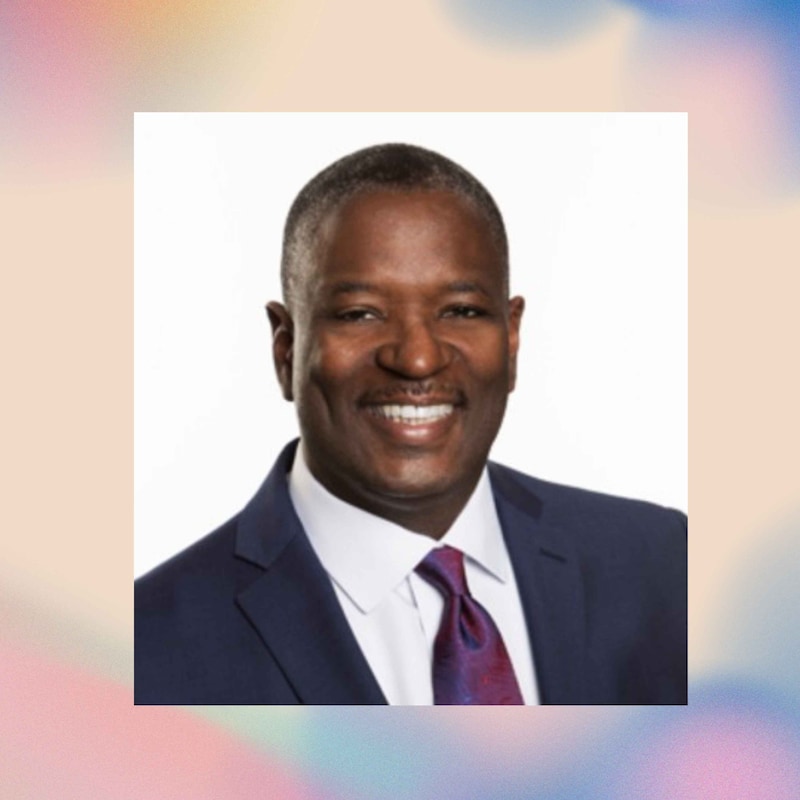
Celebrating Black History Month, we delve into the legacies of African American leaders and their profound impact on society in today’s insightful conversation. Our guest, Barron Witherspoon Sr., is not only a best-selling author and renowned leadership expert but also the founder of Black Exec LLC, an initiative that empowers the next generation of black executives. We explore the pressing challenges faced by black professionals in leadership roles, emphasizing the importance of personal mastery and the ability to perceive beyond immediate circumstances. Barron shares his wisdom on overcoming societal myths that often hinder progress, including the myth of inferiority and the myth of silence, while encouraging young leaders to amplify their voices and embrace a lifelong learning journey. Join us as we unpack these pivotal discussions and learn how we can all contribute to building bridges across our communities.
The dialogue between hosts Keith Haney and Barron Witherspoon Sr. delves into the multifaceted significance of Black History Month, illuminating its essence as a celebration of resilience, achievement, and the profound impact of African American leaders throughout history. Witherspoon, a distinguished speaker and leadership expert, shares his own journey, emphasizing the importance of reflecting on the past while actively shaping the future. He articulates how figures like Carter G. Woodson laid the groundwork for recognizing the contributions of Black individuals, countering narratives that diminish their role in shaping society. The conversation promotes a critical discourse on the importance of understanding history as a means of empowerment, urging listeners to recognize their legacy as a source of pride and motivation. As they explore the complexity of contemporary leadership challenges faced by Black professionals, Witherspoon advocates for a mindset rooted in mastery—both experiential and environmental—as a tool for overcoming obstacles. This episode is a rich tapestry woven with personal anecdotes, insightful observations, and a clarion call for future leaders to embrace their heritage while forging paths of innovation and collaboration.
Takeaways:
- In today's episode, we delve into the profound importance of Black History Month, emphasizing the need to honor the narratives and contributions of African American leaders throughout our history.
- Barron Witherspoon Sr. shares invaluable insights on the necessity of critical thinking, urging us to consider multiple perspectives rather than rushing to judgment or dismissal of differing opinions.
- The podcast explores the pressing leadership challenges faced by Black professionals today, particularly the concept of 'mastery' in understanding one's environment and maximizing opportunities for growth.
- A key takeaway is the myth of silence, where Byron highlights the importance of amplifying one's voice through impactful communication, whether spoken or written, to ensure ideas are recognized and valued.
- The discussion touches on the significance of personal mastery, which involves both experiential and environmental mastery, crucial for effectively navigating complex organizational landscapes.
- Finally, Barron emphasizes the necessity of continuous learning and self-discovery as foundational elements for aspiring leaders, encouraging them to remain open-minded and adaptable in their professional journeys.
Links referenced in this episode:
Transcripts
Welcome to Becoming Bridge Builders, the podcast where we bring together leaders, thinkers and visionaries who are working every day to build bridges across cultures, communities and experiences. I am your host, Keith Haney and I'm so glad you're spending time with us today as we celebrate Black History Month.
We honor the stories and lessons and legacies of African American leaders whose influential continues to shape our nation and our world. Today's guest is someone whose voice, leadership and insights are are helping shape the next generation of executives and change makers.
Byron Witherspoon Sr. Is in demand speaker of corporate, academic and civil audience, civic audiences trusted by Fortune 500 companies, national nonprofits and major universities.
He's a best selling author, TEDx speaker, nationally recognized leadership expert and the founder of the Black Exec llc, a company dedicated to preparing the next generation of executives to lead America's most complex organization organizations. His latest book, the Black Exec is the number one release and a full year Amazon bestseller and a national Indie Excellence award finalist.
His first book, the Fallacy of Affinity, is already in the third printing.
Barron is recognized among the top 50 multicultural leaders and the top 100 most influential African American leaders in business and one of the most influential leaders among business social graduates. We welcome him to the podcast.
Barron Witherspoon, Sr.:Thank you. Thank you very much.
Rev. Dr. Keith Haney:Good to have you on, my friend.
Barron Witherspoon, Sr.:Good to be here. Good to be here.
Rev. Dr. Keith Haney:We were just sharing offline that you are an HBC grad as well as I myself. So we shout out to the HBCs and the production people that they produce. So looking forward to this conversation.
Barron Witherspoon, Sr.:Absolutely, absolutely. Very proud of that. And Tuskegee University, I think is still standing tall. So we're. That's right. Excited.
Rev. Dr. Keith Haney:So I'm gonna ask you my favorite question, Baron. What's the best piece of advice you've ever received?
Barron Witherspoon, Sr.:The best advice I've received is no matter how thin you slice the bologna, it always has another side.
Rev. Dr. Keith Haney:Is that bologna fried or is it.
Barron Witherspoon, Sr.:Yeah, you can, you can, you can apply that to fried or just, you know, straight out of the, straight out of the wrapper. But yeah, that, that, that saying has stuck with me. I heard that first from my, from my mom.
But really it, it talks about listening, you know, and being able to understand both sides of an issue.
It also really talks about critical thinking because a lot of times people will take us a tidbit and sort of run with it without really, you know, doing the work to collect and gather the full story.
So I use that often in my interactions with people to kind of bring, bring a Little levity, but also to really make that serious point that we need to consider all sides of a problem.
Rev. Dr. Keith Haney:That's helpful, because in our society, we don't seem to do that. We don't think the other side has any value. If you don't agree with me, then we dismiss you and your opinion. So I appreciate the fact that.
Barron Witherspoon, Sr.:Absolutely. It's funny you say that.
I was talking with a friend about that very point just two days ago, really making the point that the conversation has become so polarized in every vector. And I think that's been intentional. Right. To drive this sort of polarization of thinking so that people.
The only way that they can be right is to agree with you. Right, right. And so that really doesn't leave much room for exploration, for inquiry, for growth and development or any of that. Right.
It's sort of my way or the highway. And I think that our society is unfortunately, completely stuck in a rut of that kind of thinking across virtually all aspects of life.
Rev. Dr. Keith Haney:And I always tell my kids the best way to control people is to have them fight and being conflicted so that you don't have to worry about actually selling them on anything you try to promote. You just get them mad at each other. They're too distracted to realize what's going on around them.
Barron Witherspoon, Sr.:Yeah, absolutely. And, you know, I think we're victimized by that. I think mostly in society today, people no longer really know how to reach agreement. Right, right.
And that's a very important muscle when you're dealing with people, because we don't come to things from the same perspective. We always have varying perspectives. And so therefore, reaching agreement becomes an important un. You know, sort of survival mechanism. Right.
And I think we're losing that rapidly.
Rev. Dr. Keith Haney:Yeah.
You know, you and I had talked about earlier about, you know, doing a podcast, doing Black History Month, and I think when I think of Black History Month, to me, it's a time of dedicated to reflecting on our strengths, our perseverance, and the brilliance of black leaders throughout history. What does Black History Month kind of mean to you personally?
Barron Witherspoon, Sr.:I mean, for me, it's always meant, you know, focusing on pride of accomplishment. Right.
I think when Carter G. Woodson started Black History Week, you know, back in the day, which is the precursor to Black History Month, I think that's what he had in mind is really attacking the narrative where black people were being portrayed as not really having made any significant contributions, you know, to society and really been a kind of a people that had to be carried along by other people and Held up by other people and supported by other people. And I think what Woodson was saying was that's not exactly true. In fact, it couldn't be further from the truth, right.
That we have been all along, even from the early days, making contributions, significant contributions to the development of the society. So that pride of accomplishment, I think, is what black history is about.
And, you know, I think we have a lot to be proud of when we look back across all walks of life, when we look. Look across all disciplines, Black people have excelled. And a lot of that is due to their resilience. Right?
Our resilience as a people being able to find ways around systems that have been set up to keep us from succeeding. So Black History Month is very important.
We need to keep reminding ourselves and reminding our children that we have a legacy to uphold of people that really made a difference. And it's up to us to keep making a difference.
Rev. Dr. Keith Haney:When I moved to Iowa, it was kind of fun. I love to learn the history of the state that I moved into. And Iowa had some really interesting black history people.
One of them was George Washington Carver. He went to Iowa State University, got his degree there.
The stadium, Jack Trice Stadium, is named after one of the first black football players at Iowa State. He actually got stomped to death on the field by the University of Minnesota during a contest.
And Iowa State refused to play University of Minnesota for, I think it was like, four decades because they were so mad about the fact that they had done that to one of their players. So Iowa has this really rich history of black history that a lot of people don't realize about Iowa.
And so I'm curious, as you think about people that have impacted your life, who were some leaders, some black figures that really were meaningful to you.
Barron Witherspoon, Sr.:Well, there are quite a number, I think you can't help if you went to Tuskegee, you can't help thinking about the contributions of people like Dr. Carver, George Washington Carver, who Booker T. Had asked to come and teach there.
And Carver did breakthrough research which is still being utilized today. And many researchers are still looking at his work to understand how to make further advancements in botany and in zoology and in agriculture.
And so, you know, we. We grew up by going to an HBCU like Tuskegee. We grew up with figures whose shoulders we were standing on.
You know, the Booker T. I think, made a lot of contributions to the evolution of black thought, right. As to how black people were putting into. Into practice, you know, what they were learning.
And he created a lot of didactic Methods, teaching methods that are broadly used today and really are needed today. Because he was all about focusing on using the head, the heart and the hand together, right. To make a difference in society.
So many folks from history have impacted my. My thinking and how I have developed as a person.
And I think folks like Dr. King and others who used oratorical skills to really amplify the condition of our people over time, I think was important because I try to speak into the current reality myself. And so I look back at how they chose to do that at similarly challenging times in the history of the United States.
And I use that to shape my own approach to amplifying my voice.
Rev. Dr. Keith Haney:I love it. So you spent your career guiding executives and emerging leaders through complex environments.
From your perspective, what are some of the most pressing leadership challenges facing black professionals today?
Barron Witherspoon, Sr.:Man, I mean, there are. There are many. But what I would focus folks on is what I like to call mastery.
Because we can tend to look at what's going on kind of in the current moment and see it as some kind of really special discrete thing that's going on. But reality is that we're just moving from moment to moment. There's always a moment. There's always a challenge.
And what we need to be universally focused on, regardless of the moment, is what I call personal mastery. Now, when I talk about mastery, especially in the context of a career or business, right. I'm really talking about two types of mastery.
One is what I call experiential mastery. And that's all about getting the most out of the environments that you find yourself working in. Right.
You know, if you've got assignments like you get, you know, you go from assignment to assignment in your career, how do you really get everything out of those assignments so that you're prepared then to take on additional responsibility? And that experiential, you know, mastery is, you know, very, very important. But then there's also a kind of environmental mastery. Right.
And, you know, the difference is that the experiential is really about doing more. Right? Getting more out of what you're doing, but the environmental is about seeing more. Right.
And, you know, what I like to talk about is how do we teach our young generation how to be in the exact same situation with other people, but be able to see more of what is actually happening in that environment. Right.
It's kind of like the training that they use for a lot of folks in law enforcement and military training, where they might take people and put them in an environment and then take them out after a Brief period of time and ask them, what did they see? Right. And if you keep doing that and you're putting people in and out very quickly, they learn to see things, you know, more quickly. Right.
And they learn to see more of what is there. We need to train our minds in that regard to be able to see more of what is there.
You know, like you and I, Keith, we could go into the same environment and we could come out and you could see 10 things and I could see a hundred things. We're both 100% correct. We're both 100% correct. But it's just that I saw more than you saw in the same environment.
Rev. Dr. Keith Haney:Right.
Barron Witherspoon, Sr.:And so that's really what I mean by mastery, mastering how to see more and how to do more.
Rev. Dr. Keith Haney:So as you think about training people to see more, what are some key things you would say, here's how you go into an environment and become an observer of that environment to gain the most from it you can possibly gain.
Barron Witherspoon, Sr.:Yeah, I think, you know, when you're trying to see more, what you're really training your mind to do is be conscious, right? To be at a higher consciousness of what's going on in the environment that you're in. And you can do that through studying the environments. Right.
If you're in a particular environment and that environment has certain tendencies, right. Then you can look for those tendencies when you're in the environment.
They'll help you see more of what's going on in the the environment versus just what is right in front of you. You're able to now have that peripheral vision to sort of see other things that may be at play. And you think about your own experiences.
And I think about my experiences. This was crucial, right? Because there was always a lot going on.
And if I just had my head down, sort of doing my work and not really seeing what was going on around me, I could do my work, you know, better than everyone around me and still not get the result that I'm expecting because I had all these other blind spots, right, where I was not seeing other factors that would impact my growth and development. So I think we have to. It's not something you can just wish into existence. You have to really sort of train your mind, right, to see more.
We also need to have people around us who see things, who can then share with us what they saw. Right.
And we used to do that quite a lot when I was working in the corporation where I would have my colleagues talk to me about, hey, we just witnessed this weird thing in this meeting, Right. Let's come together and talk about what you saw and what I saw. Right. And that'll allow us to start to put the whole puzzle together.
So it's about building the strength inside yourself and surrounding yourself with others who can help you to develop that sense. Right?
Rev. Dr. Keith Haney:Yeah. Let's talk about your latest book, the Black Executive. It continues to gain national attention. What inspired you to write this book?
Barron Witherspoon, Sr.:Well, you know, it's interesting. You know, when I was prosecuting my own career, I would run into black folk, you know, all over the world, Right.
And, you know, you have a brief conversation with another black executive and it would. It would just strangely be similar. Right. You know, people will be having the same kinds of experiences. And in a certain way that is reassuring. Right.
Because it means, you know, you're not the only one having these experiences. But then there's a tragedy in it, which is that we all keep having and repeating the same experiences. Right.
Versus somebody having taken the time to sort of write this stuff down so that folks don't have to experience it, but the way that we experienced it. And that really was the impetus for the book.
How can I write down what will happen to our folks as they enter these large, complex organizations so they can have a bit of a roadmap to understand what's coming? So the frame of the book is the Black Exec and the seven myths, right?
And these myths are entertaining ways really, of explaining what is going to happen to our people as they go through their experience. And so the book is a playbook.
It's organized chronologically, so to speak, so that the things that will happen to you early in your career come first in the book, and the things that will happen later come later. And so you move from issues of belonging and inferiority and that sort of stuff all the way to issues of, you know, valuation, Right. How.
How you're valued by the organization. And so I wrote it for young people, but it's relevant to anyone. But it's really written to that next couple of generations that are.
That are entering the workforce now.
Rev. Dr. Keith Haney:I love it. So let's get into some of your. Some of the myths.
I'm kind of curious as you, as you think about this, which myth do you think most people may be surprised by from reading it?
Barron Witherspoon, Sr.:Well, I think the first three myths, I think the surprise will be that most people who read that will be able to relate quickly to those first three myths because they're going to say, wow, I experienced that. They may have even experienced it in their Academic career. Right. So it may not even wait for their professional career to start experiencing it.
The first one is belonging to, followed by inferiority. And then awareness.
And belonging is where people kind of somebody in the organization is kind of making the assertion that the standards have been lowered so that you could come in. In other words, you don't belong. Right. It's a classic sort of argument of affirmative action. You got in by affirmative action.
You really weren't supposed to be here. Or now, you know, in today's vernacular, dei, Right. Somehow DEI got you in and you weren't, you know, really supposed to be here.
You didn't get here on merit. And it's all, it's, it's all a sort of trumped up thing. That's why I call it a myth. Right.
But you know, once you've been in the organization for a little while, it gets harder and harder for people to claim that you don't belong because you're actually here and you're doing, doing the work.
So then they kind of shift to the second myth, which is the myth of inferiority, where they say, hey, you might belong, you belong here, but you're just not as good as everyone else. The other people are better than you. Right. And after a while you start performing and proving that they're really not better than you. Right.
And then they might morph into awareness.
Well, you know, if people knew you better in the organization, if they were aware of, of what you were doing, they might, you know, you might get better results and so forth. And you know, all of this stuff is, is going to happen to you, but it's always going to be presented by somebody else about you.
And so I talk about describing these myths in plain language and helping people see the myths before they happen.
Rev. Dr. Keith Haney:So I was talking another black executive about some of the things you just mentioned in her book. And her book is about call and response 7 lesson from the black church.
I think it's a fascinating concept, but she said part of what you described with your myths here leads to black people working twice as hard and suffering greater burnout, the higher to get up the organization. How have you experienced that as you work with black executives?
Barron Witherspoon, Sr.:Yeah, I think there's a lot of truth to that. And most of the time when we hear that statement, it's viewed as kind of a literal quantitative statement.
In other words, Keith put in eight hours and I had to put in 16 hours to do the same amount of work. That's really not what we're saying. Twice as hard is really not about the amount of hours work or that sort of thing.
What it is, is it's about the type of environmental conditions that we're working in. Right. And I've heard it described as track and field runners, right?
You've got one person on a track running, you know, 100 yards with no impediments, and then the other person is running there and they've got hurdles to climb over, but they, you know, run the exact same distance. But one is having to overcome more in order to get to. To the goal. I think that's really what twice as hard is trying to describe.
And I think that, you know, every, every black exec that I have encountered that has enjoyed any success, particularly in corporate America, describes their own experience like that, where they have had to work very, very hard when compared to their peer set in order to. To really get the kind of recognition that.
Which comes in the form of higher pay promotions, which means increased responsibility or opportunities outside of the organization to represent the organization out in the industry and that sort of thing. Those kinds of opportunities are harder to come by because they rely on other things. They don't rely strictly on productivity and merit.
A lot of times they rely on relationships and who you know and whether or not those people are willing to expose you to certain opportunities and things. So I tend to agree with what she said there.
But, you know, my experience is that that morphs the how of that, you know, how you end up doing more morphs over time as organizations might, might reduce some barriers, but then increase other barriers. And I think that's what we're grappling with and we're dealing with that right now.
Rev. Dr. Keith Haney:Yeah. Tell me about the myth of silence. I'm curious about that one.
Barron Witherspoon, Sr.:Yeah, the myth of silence is the one that says they can't hear you. Right. And what I recommend that people do is amplify their voice. Right. But by amplifying their voice.
I'm not talking about, you know, speaking louder. I'm talking about amplifying or increasing the impact of your voice.
So one of the things that used to happen to me quite often, and I've heard this from other black execs that may have a similar style, is that when I would be in a lot of meetings and situations, I was never the first person to speak or feel like I had to have a point of view on everything that was said in the meeting. So when I would speak, people would go, whoa, that's, you know, that's deep. Or, you know, like, I'm speaking with Some type of profundity. Right.
But it's because, you know, I'm trying to speak for impact and not speak to be heard. And so when you speak for impact, people have to respond to what you're saying. They have to do something. Right?
So when I say amplifying your voice, right, in order to overcome this idea that people in the organization or the right people in the organization can't hear you, right, you amplify your voice by amplifying that impact. And that can be the spoken word, but it can also be the written word.
And one of the things I teach young people is that they need to fall in love with writing. Because ideas in a corporate context are not ideas until they've been captured in writing.
So if you're sitting around the water cooler talking to Johnny and you laying on him some great idea that you have, he goes off and writes the idea down and recommends it, and the company moves forward. No sense in getting mad at Johnny, right? Because it was just. It was just a combo, right? Until somebody wrote it down.
And so, you know, falling in love with writing, learning how to write for effect, where, you know, one of the biggest reputations I had in my career was when I wrote, people responded.
They did something I wrote for impact, and if they did not respond within the timeframe, that at whatever timeframe I allotted them to, then they were going to hear back from me. I will follow up. And people kind of over time, they knew that. So they usually respond pretty quickly.
So that impact is the thing, is the big thing in overcoming the myth of silence.
Rev. Dr. Keith Haney: That's great. So in: Barron Witherspoon, Sr.:Yeah, that's a great question, following the discussion that we just had, because I did it for two reasons. One is to amplify my own voice, but then also to get in touch with the next generation of leaders. So the work of the Black Exec is really twofold.
One is how do I get more efficient in spreading the messages of my work, whether it's the book or it's opinion pieces that I'm writing in Fortune or the Hill or wherever. I'm doing that because it's a more efficient way to get my point of view out.
So if I can write to a publication that has 12 million readers, then I can take one action and get 12 million impressions out of it. And so part of the Black Exec work is doing that. So I run a, you know, a Public speaking type of arm out of the black exec.
The other piece is really centered on getting in touch with young people. I do that through the writing because they're often the audience. Like I said, the audience for my book is young people.
But I also do that through mentoring. So within the black exec, we just launched last year a program called Sailing, which is about student ambassadors and young leaders.
And these are young people that we identify who I get an opportunity to work with in a direct mentoring capacity. So that's been beautiful, Keith. I just tell you, I've got a young lady now that I'm working with.
Her name is Christina Brown, and she's a junior at Albany State. So here, another hbcu, right? And, you know, she is just a rock star of a student, but also, you know, a talented leader.
And so, you know, we have a very systematic and regular interaction where I get a chance to mentor her directly, right? And she then takes advantage of my experience, you know, to help her to be successful in her endeavors.
And then I have another young man named Bakari Darbo. He graduated from Syracuse University. He's an entrepreneur, and working with him to kind of provide advice and counsel as he's off doing his thing.
So I like to take the sort of theoretical stuff that's in the book, you know, and bring it down at a practical with people. And so that's what the LLC is doing.
Rev. Dr. Keith Haney:So if you had some advice for young, aspiring black executives who are just beginning their leadership journey, what advice do you have for them?
Barron Witherspoon, Sr.:You know, focus on learning, right? You know, focus on being a learner.
I think sometimes young people who have a difficult journey through their academic careers, when they graduate from school, they sort of see that as an opportunity to stop learning, right? And really, you have to continue to learn. You have to continue to push yourself to grow, to develop strong muscles in other areas, right?
In order to be adaptable and effective as the environment changes around you. So one of the things I do and I have always done since my younger days is I read a lot.
And this is one of the ways that I can manage my own learning, right? By reading books, reading articles, and I put those out in my social media feeds. Hey, here's what I've read.
Here's the last 12 books I've read this quarter and share those with people in hopes that they would then take a look at some of that work or find the other things that they're interested in in learning. But learning is really, really crucial.
And I would encourage them while they're doing all that reading to also read the Black exec, you know, that's going to help them for sure. Because what I talk about in that book will most definitely happen to them. They will face it in their careers.
Rev. Dr. Keith Haney:So what I admire about talking to you and interacting with you and get a chance to meet you is that you are a true bridge builder. You didn't just become an exec and all of a sudden stay at the top and go, wow, I made it. This is so great.
You're reaching back to the younger generation to build a bridge to get them to where you're trying to get.
If you're talking to today's young leaders, regardless of what their background is, how can they become better bridge builders in their workplace and in their community?
Barron Witherspoon, Sr.:Yeah, I mean, you know, for me that's a very central question because my own personal purpose is to be a bridge builder. My purpose in life is to glorify God by bringing people together across barriers to achieve something significant or even eternal. That's my purpose.
So everything that I'm doing, you'll find it, you know, intersecting with that purpose. If it doesn't match with that purpose, I don't do it. I discard that opportunity and go on to ones that do so.
Bridge building is a matter of course for me, but I think in order to be an effective bridge builder, one of the things that I think we can do or young people or whether they're young or not, is get in touch with who we are. Right? And I'll tell you, Keith, in my experience, people really are not very in touch with who they are.
If I ask, If I ask 10 people in a room, what is their purpose, nine of them will definitely struggle to answer that question. People do not do the work to understand what their own unique purpose is in life.
And this is very important because while we're out here talking about authenticity and all that sort of stuff, people don't know who they are. So I struggle to understand how they can be authentic, right?
Or how they can, can, can bring their so called authenticity to the table when they have no idea who they are themselves. And that's actual real work, right? There's work of discovery that we have to do in order to get in touch with who we are.
And so, you know, I think that that's important in the context of leadership because great leaders lead from the core out, right? We lead from who we are out to who we're leading.
If we go inside ourselves and we have a lack of clarity there or we have confusion there, then guess what's going to come out, Right? Unclear messaging or confusion is going to come out.
And the only hope that we have is to maybe borrow somebody else's identity and try to proclaim whatever they are proclaiming. Right. Versus actually working out of our own core by being in touch with who we are. So that's the work.
Get in touch with who you are and understand your own purpose and then leverage that to build bridges with other people. Right. Because that's going to be sustainable. You'll always be able to be that same person for the people that you're trying to bring together.
And I think that's critically important.
Rev. Dr. Keith Haney:Yeah, it does make sense. So I'm gonna ask you my other favorite question. What legacy do you wanna leave behind?
Barron Witherspoon, Sr.:Legacy. Wow, that's a loaded question. I'm working on legacy in multiple vectors. I mean, in one sen. Want to leave a legacy of thought leadership. Right.
That I used my experiences and I used my abilities to think critically about the world and what's going on around me, and I was able to form and frame real ideas that exist in the public domain after I'm gone. Right. And that's why I focus on writing, because those things will be around when I'm no longer around. So that's part of the legacy.
The other thing is, you know, you might see pictures of horses and stuff behind me. That's a big part of my family legacy.
And so I spend a considerable amount of energy achieving for the sake of my family legacy, various things within the equine community ecosystem. And that's been a lot of fun and labor of love and all of that good stuff.
But that's about legacy and trying to make a difference today, but a difference that will last into tomorrow.
Rev. Dr. Keith Haney:That's great. On season six of the podcast, you're doing something new. And that's a surprise question. Pick a number between 1 and 8.
For your surprise question, I'll go with.
Barron Witherspoon, Sr.:7, the number of completion.
Rev. Dr. Keith Haney:Okay. Which band or artist, dead or alive, would you play at your funeral?
Barron Witherspoon, Sr.:I'd had to go with some Sam Cooke, maybe, because I'm sure. I'm sure Sam could offer something that would be appropriate.
Rev. Dr. Keith Haney:All right, that's good. I love that. So, Baron, where can people find you? Where can they buy your book to connect with you on social media?
Barron Witherspoon, Sr.:Yeah, I would say the easiest way to get in touch with what I'm doing is go to my website, theblackexec.com of course, I'm on all the socials, so folks can definitely reach out and touch us there. And you know, we're, we're hopeful, right, for the future generations. And so we're trying to be a part of the conversation.
And if you want to plug in to how we're doing that, that would be the best way to do it.
Rev. Dr. Keith Haney:Where can I get your newsletter? Because your newsletter is something I got to have. We first met each other on.
Barron Witherspoon, Sr.:Yeah, the newsletter is available also on the website. They can go straight to the website and get the newsletter and we actually republished the newsletter in LinkedIn as the, as the articles come out.
Rev. Dr. Keith Haney:Awesome. Well, Marin, thanks so much for sharing your wisdom, your journey, and your passion for developing the next wave of leaders.
Your work is helping shape a future where opportunity is not only accessible, but sustainable for all. For our listeners. If today's conversation inspired you, challenged you, or encouraged you, please share this episode with someone who needs it.
Don't forget to subscribe to Becoming Bridge Builders and so you never miss an episode.
You can learn more about Barron's work, his books, and the Black Executive LLC by visiting his website and following his thoughts on leadership across digital platforms. Until next time, go out, build bridges, create connections and be a force for good in this world. Thank you so much, Barron.
Barron Witherspoon, Sr.:Thank you, Keith.






