Shownotes
Paths of Rhythm is brought to you with support from vinylunderground.co.uk - take 10% off your next order with the code POR10 and free UK shipping on orders over £100
Paths of Rhythm is a Remote-CTRL production. If you're looking for audio or video production, then check out https://remote-ctrl.co.uk to see how they can help.
Other ways to support the show
- Follow the show on Spotify or Apple Podcasts
- Any feedback or questions? Hit up https://www.instagram.com/pathsofrhythmpodcast/
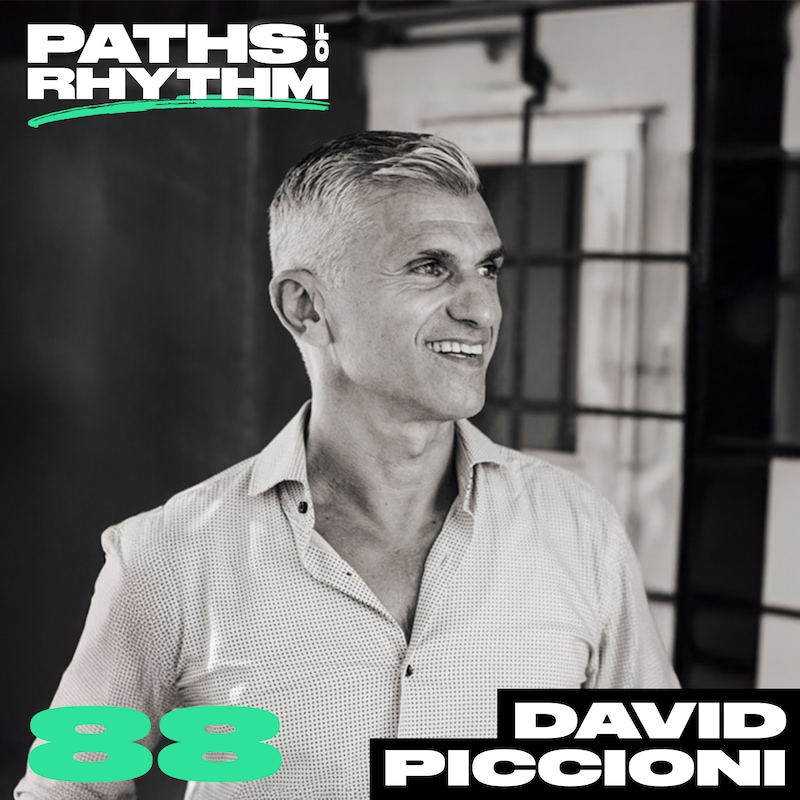
This week's guest is a Yorkshireman I'd heard whispered about by more than one person in the scene before I ever got him on the mic — David Piccioni. Born to an Italian father and South African mother and raised in Huddersfield, David got his real education in a punk scene that had him sneaking into soundchecks before he'd even worked out he wanted to DJ. A few years later, economics and politics at Liverpool University led him straight into throwing his own parties and playing American import records at Liverpool's Wednesday night club nights — and by 1986 he'd saved up for a one-way flight to New York with £300 in a bag and no contacts waiting for him.
What followed is the kind of story you can only get firsthand: getting schooled at Paradise Garage under Larry Levan, soaking up David Mancuso's Loft, and becoming one of the biggest DJs in the city within two years. When he came home to London, David co-owned Black Market Records with Nicky Blackmarket — the shop that helped break UK jungle and drum & bass upstairs while he ran the house side — before founding Azuli Records, a label that got away with pretending to be American for years, broke Afro Medusa's "Pasilda" and Spiller's "Groove Jet," and put out the Late Night Tales and Choice compilation series. When digital killed the vinyl business, David didn't look back — he moved to Ibiza and built a restaurant instead. This one's full of stories you won't find written down anywhere else.
Topics covered:
- Growing up in Huddersfield and sneaking into gigs during its punk scene
- Missing the Sex Pistols at Ivanhoe's on Christmas Day
- The move to Liverpool University and falling into DJing by accident
- Saving up for a one-way flight to New York in 1986
- Getting schooled at Paradise Garage by Larry Levan, and David Mancuso's Loft
- Coming home to co-own Black Market Records with Nicky Blackmarket
- Building Azuli Records — and the fake American label trick that fooled the industry for years
- Breaking Afro Medusa's "Pasilda" and turning down Spiller's "Groove Jet"
- Curating the Late Night Tales and Choice compilation series
- Why Azuli couldn't survive the shift from vinyl to digital
- Trading the dancefloor for a restaurant on a clifftop in Ibiza
Transcripts
Right, welcome back to Once a dj, everyone. Or maybe it's Paths of Rhythm by now, I don't know. Potentially gonna have a rebrand, but more on that.
We've got quite an interesting guest today that I just heard a couple of little sort of things about when I've been reading things and Nicky Blackmarket mentioned him to me. So, David Piccioni. Is it Piccioni? Is that how you pronounce it?
Speaker B:David? Piccioni. Piccioni. Like double C is always "ch" in Italian.
Speaker A:Piccioni. Got it, got it. And as you might be able to tell, he's a fellow Yorkshireman and this was the first thing for me.
It's kind of like putting together that not only from very near where I'm from, you've also made a really significant contribution to dance music in particular. And so, where were you born, David?
Speaker B:Born in Huddersfield. Yeah, born and bred in Huddersfield, but my dad was Italian and my mother South African. But my dad went to.
He moved to Wakefield from Italy to work down the pier and then they. He met my mom who was from. Moved to Leeds and then they moved to Huddersfield. Yeah, yeah. Right.
Speaker A:What part of Huddersfield?
Speaker B:Waterloo. Yeah.
Speaker A:Oh, yeah? Yeah. So not far at all. So about three or four miles really then.
Speaker B:Oh, really? Okay. There you go. Yeah, yeah, yeah.
Speaker A:Only down the road from Emley.
Speaker B:Yeah.
Speaker A:What's. What's an outsider's kind of reference, like, if anyone asks you to describe Emley, like, how much awareness have you got of it?
Speaker B:I used to go and watch the football every now and again when. When Town were. When Huddersfield were really, really bad adverts. I watch Emley, to be honest. I mean, like most people do, actually.
It's always a bit of a second team for Town fans. And in fact, the guy that took me to Huddersfield Town when the. Originally in the top tier, which.
Which is showing my age a bit, he was my next door neighbor, but he had a farm up at Emley, so we used to go up there a lot. And I still. I still see his son now. Big shout out to Robert Wilkes. Big Town fan and tractor collector. There you go.
Speaker A:So nice.
Speaker B:Yeah, so, yeah, I do like it. That's beautiful. Yeah.
Speaker A:I wonder if he's the one that they do put on a tractor show up there. Or there was one not too long back.
Speaker B:I wonder if he does. He does those. Those tractor runs. Yeah, they do the runs, don't they?
Speaker A:Yeah, my little lad likes tractors. Maybe it's. It's his Emley genes. So what was Huddersfield like growing up culturally?
Speaker B:Well, I mean, for me Personally, I mean, I couldn't wait to get out, to be honest with you, which is why I ended up doing lots of different, unusual things. I'm never going to knock it, you know, I'm Huddersfield born and bred. I'm very proud of it. But it was.
It was a rough and tumble kind of place, I ain't gonna lie. It was pretty. It was pretty violent and. And there weren't a lot to do. And I knew from an early age, really, that.
Well, I had a good set of friends there and everything I wanted. Wanted to get out, really. And so I. I manufactured a way out when I was 17, as I say. Still proud of the place, Love the place.
Still go back a lot, still support the Town, go whenever I can. But, yeah, back in the 70s, it weren't easy. Yeah.
Speaker A:Was there any sort of exposure to good music?
Speaker B:Well, yeah, you know what, Huddersfield had a great punk scene and I. I was 16 at the time and I was going to gigs. We. We had no money to go to gigs, but we'd hang out outside where the gigs were, usually Huddersfield Poly, most of the gigs were actually.
And we'd hang out outside the back door when the bands were doing the sound checks and try and get them on the way in. And usually with a punk ethic and that, everyone would say, you know, come in with those lads.
And then we'd say, can you put us on the guest list for tonight? And we saw. I saw loads of people there. I went to see. I saw. I saw Talking Heads supporting Dire Straits, saw the Dam there a couple of times.
I saw loads of bands down there. It was great. There was a good. I missed some Sex Pistols, actually, who were at Ivanhoe on Christmas Day because my mum wouldn't let me go.
And then after that, being a bit of a rebel and being a bit of a punk, I started getting into dance music and it wasn't the thing to be into at the time.
Speaker A:Was that through New wave then?
Speaker B:Yeah, kind of through New Year Wave. There was a couple of clubs in. In Huddersfield, I think one was called Charlie's and I can't remember the name of the other one.
They were playing the new wave stuff, which was all Spandau Ballet and Depeche Mode, that sort of stuff. And then I started getting more into the alternative dance stuff.
Some of the stuff Factory Records were putting out, like A Certain Ratio, stuff like that. What were they called? Esg? Yeah, bands like that.
And then I started going to a club called the Gemini, which was a gay club in the middle of others field.
One of those that kept getting firebombed because it was full of gay people and I'm a straight guy and I never had a problem going to a gay club because I really like the music and I really like the vibe in there. So I used to go in there with a friend of mine all the time and that's really how I got introduced to, to full on all night dance music. Yeah.
Speaker A:So you mentioned that you engineered a way to get out of Huddersfield.
Speaker B:Yeah, university. I mean back in the day the government would pay you to go get to university which if, if you're on low income. So I failed all my O-levels.
Well I failed most of my O-levels. They were all levels at the time and so I was a bit, I was a bit bothered actually. I couldn't do anything.
And then I went to Huddersfield Tech and appealed to them to let me in and let me in to do A levels and they said well look, we'll let you in but you have to do your O levels one year, A levels another year and you have to do it in two years. I was like okay, I'll do that.
And I stood in my ass off and, and I did it in two years and I got into Liverpool Uni and, and that's, and that's what set me off really. Got to Liverpool University and then kept my, my passion for music and I started putting on parties in Liverpool and started DJing at my own parties.
Yeah.
Speaker A:So what was Liverpool? Was that all through the uni or were you doing it? Was it more of like a general in the city sort of thing?
Speaker B:Yeah, no, no, it was all, it was all local really.
I wasn't really involved in the uni scene that much actually because Liverpool uni was always bit spread out and where I was living, I was living in Liverpool Lake down all in Road, Princes Road and most of my friends were from Liverpool but they're all sort of bit alternative culture people really I guess, you know, on the more artistic side I was sharing a house with like guys who were at the art college and that. And while they were all into different kind of arts, I was into the music side of things.
And when I, I just rented a space to do a birthday party and at the time I was playing the few American records that I could afford to buy. We're buying them down in London from place. How I can't remember the name of the record shop now. Groove.
Groove I think we've got called Groove Records. Yeah, down, down, down in Soho. Six quid at the time still for, for a 12 inch from America. But we went down there and we were playing.
Me and my friend Sven were just playing American dance records in, in the club to all these people. We would get 300, 400 people on a Wednesday night. Wow. Once a month and.
And it took off and then I started doing that once a week and that's how I became so called dj. I was just doing it for fun, really. Yeah.
Speaker A:Kind of fell into it. What were you studying at uni?
Speaker B:I was doing economics and politics. Yeah. As you did at the time. In the seventies. I finished. Yeah, yeah, yeah.
And I, you know, I've always had a love for economics and, and politics and sociology and all that stuff. Yeah, yeah. I never used it really that much. Well, you always use it.
Speaker A:But yeah, I was just gonna say it's all stuff that's kind of relevant, isn't it, with music? Because you're talking about things, about how people come together and tribes and stuff. And then obviously the business side of it as well.
Speaker B:Yeah. And so it's about dealing with people and working out what people, what motivates people.
You know, you look under the surface of stuff and you work out why people are doing what they're doing, you know, and what do you go to a club, what do you get out of music? You know, what is it releasing you from or what is it taking you to? And you ask questions like that. And that's why I enjoyed that course, really. So.
Yeah, yeah. I mean doing music for me was always. It was a.
It was an opportunity to get to a place which was non material, which was something that was meaningful for me, you know. And I guess it was meaningful for a lot of other people as well, I guess.
Speaker A:Yeah. If you're coming from the sort of punk thing.
Speaker B:Yeah, I, well and the punk thing, what the punk thing did for me was made me realize that I could do it myself. I was, you know, like a skinny young kid from Huddersfield. Right.
You're not exactly injected with a lot of confidence to do what you want to do it growing up in those times. But what punk did, it had an attitude that said you can do what the you want. And.
And it was really important for me at that time because nobody, you know, whether it's school, adults, culture, still quite heavily, a class thing going on at the time, you were always sort of, you had a finger pushing down on you. And what punk rock said was like, you if you want to do it, do it. And it was really important, that attitude.
So when dance music came along I was like, yeah, okay, I can dj. Yeah, okay, I can start a record label. Yeah, you know what, I can off to New York and try and DJ there. Nothing's stopping me. Yeah.
Speaker A:So after uni did you work as well or were you just straight into DJing as your full time sort of thing?
Speaker B:I stayed in Liverpool an extra year because the club was going so well so we were doing it once a week in a place called macmillan's and stay there an extra year and then I was like okay, kind of had enough. I mean it was tough in Liverpool at the time economically and politically it was minor strike time and but the music was going really well.
But I just wanted an adventure and so I remember the owner of the club at the time, Stuart McMillan, he's. I said to him I think, I think I'm going to pack this in, you know and go to America. He said why?
I said because I really like the music and you know pre Internet you couldn't really find out what the music was unless you went down to buy the records in the London record shop. There weren't anywhere in Liverpool there was one ra, there was one radio show. Can't remember his name. Really bad.
I can't remember his name because I think it's such an important guy.
He had one one hour record radio show on, on Radio Merseyside or whatever it was where he played in boats but that were it and he said to me, Stuart the Miller said, you know what this place is just go. I was like okay, I did it. So I went over with 300 in a bag.
I waited tables for about a year, year and a half and then met a couple of people, ship my records over and then start DJing. And then within, within two years I was one of the biggest DJs in New York.
I was playing all night Saturday night at a club called the world which was 2,000 people, Lower east side and then that was three years and the world closed and I went to a place called Mars and then I played in Red Zone each one Saturday night.
Speaker A:Yeah, yeah, that's a pretty big deal just going off and doing that, isn't it? Do you think being from England helped at all?
Speaker B:Definitely, yeah. I mean would. I was dead lucky.
I mean it wasn't easy to get to New York in them days because you know now you buy a fly, what is it, four or five hundred quid if you look at and, and what's that two, two weeks wage one we Wait, I don't know what it is, but back then I remember saving up for about five, six months for a flight, you know, because it weren't cheap and, and then I didn't know anyone there, so it was tough. And there weren't a lot of Brits.
So when you were there and you had a British accent, you did get a lot of, you did get a lot, you did get a wide berth, definitely. I mean you would, you'd be lucky. You were, you were very lucky.
You know, go to clubs and bars and stuff like that and people thought it was really cool. Yeah.
Speaker A:What year was this?
Speaker B: . Yeah,: Speaker A:What was it like acclimatizing yourself to like one of the biggest, most bustling cities in the world?
Speaker B:Well, your first reaction is, Jesus Christ. I've seen all this on tv, you know, all the skyscrapers and like that, but it's actually real. I absolutely loved it.
I mean, I think there's something about being half Italian and being from Yorkshire that fits you right into New York because New Yorkers, they say what they think, they're in your face. There's no. And you know what, that's Yorkshire and that's Italian and, and, and I really like that.
You know, I like people being up front and talking straight. No. And then they can take it as well. So, so I, I, I slotted in straight away and I, I loved it, I absolutely loved it.
Speaker A:What was, what was it like for you as a musical education then? So, so like how were you sort of spending your time when you weren't DJing?
Speaker B:Yeah, I was, I was going clubs left, right and center. I actually kept journals when I was there and I was reading them about two years ago.
I would go into clubs three, four times a week because we didn't have to pay because we were the cool club kids from the UK and Ireland and, and so we just rock up and like. Yeah, you know, we would just get in and the clubs at the time were area tunnel, dance interior, places like that. And yeah, it was all about music.
It was all about music and fun and it was, house was just starting. But most of the clubs were playing sort of up tempo dance music pre, pre house music.
So it was tracks like Skipworth and Turner and Hanson and Davies Strafe set it off, stuff like that, which were really big, massive records in New York but not in the uk and they'd play these records and I'd be like, what the fuck's this?
And everybody would go off in the club and that was my education in the crowd because they had their dance history, you know, and I had no idea about these records. And then house music started. Mr. Fingers, Chippy Adonis.
The funny thing happened was I was going out with a girl, a Puerto Rican girl who lived in Spanish Harlem, and she invited me to her house firsthand. Went up there, I went up there, we had dinner. And then she goes, all right, it was time to go home.
She goes, I'll walk you to the, to the Metro station, because it's a bit dangerous around here. And we were walking to the station and there was a street party, a legal street party going on.
And they used to hook in their sound system to the street lights, you know, and just play music. And also been about 300 people there. And this guy was playing all house music, right?
So I knew a couple of the tracks, but he was playing it all two, three hours. I was like. And so I says, hang on a minute, Yolanda, her name was. Still, remember her name.
And I said, hang on, Yolanda, I'm going to go have a word with the dj. And I went up to him and I says, where can I hear this music in a club? He goes, there's only two places, the Loft and Paradise Garage.
Go down Paradise Garage on a Saturday night and. And that was it. I went down Paradise Paradise Garage on a Saturday night.
It was an all members club, so you had to hang around outside and get a member to sign you in. So I did that for three or four months and then. And then I managed to get a membership and I was there every. Every week.
Yeah, Larry Levan was the main D. Well, it was the other DJ there. If he was off, it was David DePino, but Larry Levan was the man. Yeah.
Speaker A:So was, was he the absolute, like, clear, biggest sort of inspiration, or were There other particular DJs around the city that you were learning a lot from?
Speaker B:Yeah, Larry Levan was the main one. I mean, he was. He was genius. I can tell you why in a minute. There was also David Mancuso, who used to play at the Loft.
David Mancuso was an interesting guy. He'd been into dance music a long time and he had a place called the Loft.
When I were there, it was on 3rd street between a and B, which wasn't far from my house. And he only got away with running this club because he lived. It was like a.
It was like a basement, but on the ground floor, and he had a little bedroom in there. And he called his Saturday night party a house party. Rather than a club. But of course, his main room was enormous. And he'd have this.
The most gigantic mirror ball I've ever seen in my life. And he'd have four lights. Two. Two coming from either direction and two from the other direction. And that were it. That was it.
I need a belt drive, turntables, but the best, the best valve analog sound system you can hear. And he used to play there. I needed to play there all night. And he. He would really mix it up more than Larry, Larry was.
Larry really knew how to work a crowd with his records. But David Mancuso was diverse. You know, he would play what were. Were really big dance tracks in that culture that.
But then you throw in like rock tracks or, or. Or guitar tracks. Play Grateful Dead track or something, but it would gel really well. So, yeah, Loft was great, but Paradise Garage was the ultimate.
It was the ultimate. I mean, there was. I've never heard a sound system better since, despite all the technology. And. Yeah, Larry, Larry.
I mean, when you DJ'd in New York, you played all night. You know, you played from the beginning, before anyone was in there, till the very end. So you could do. You could be you, you, you.
You could be an artist. You know, you take risks. You could afford to lose the crowd because, you know, you've got time to bring them back.
So that's what he did, Larry, when he would. He'd go off on one and sometimes he'd go off on one and lose people and. And usually it'd go off on one and you go with him.
And you were like, what the hell is this? You know, Amazing, amazing guy.
Speaker A:Yeah, I think it. The nice thing about playing a longer set is as well, you. You get to kind of set the context for what you're doing, don't you?
Rather than when you're doing a short setting and night, you've got to work with the context that's being set for you.
Speaker B:That's right. You can build things up, you can break things down. You can. You can shift once you've got people on, on your side.
You know, I play at the world from 4 7. Sorry, I played Temel 4. That's when it were open. And you, you. As I say, you've got time to lose the crowd by taking risks. Or if.
If you've got people on board and got them on side, you know where you can go. You can. You don't have to be full on energy. You can wait.
And time, you can say like in an hour and a half time, I'm going to be over there but before I get there I'm gonna go over here and make sure people come with me. I don't lose them. Whereas if you're doing one hour set, two hours said you can't do that sort of thing, you know.
Speaker A:Yeah, yeah. So what brought you back to the uk?
Speaker B:I essentially my ex wife. She was my girlfriend at the time and she was, she's American still in England actually We split up now but she just had enough.
She'd be, she from, from Detroit. She'd lived in New York for about 12, 15 years. She Dyn enough and my dad got sick and she was like I, I can't stand New York anymore.
Because it was while in terms of music and clubs and, and art and culture it was great but it was tough. I mean murder rate was really high. I think the average was one person getting murdered every hour.
The drug scene on the street was just out of control. Police all on the take. Our street, where we were living, you couldn't own anything because it just get nicked.
You know there would be crack down underneath your house, stuff like that. And it, so I, I still had, I still had, I said still had it in me to stay and, and my ex was just like let's get out of here.
So I said okay, well let's go to London. I want, I don't want to be a career dj. I want to be in the business of music really. So right there wasn't really a, there was only New York.
Nowhere else in the States had a business of music. California weren't happening yet. Miami there was nothing. So, so London it was.
Speaker A:So did you, did you DJ in London?
Speaker B:I did. When I came back I started working for black market records but no one knew my name then because as I said Pre Internet no 1.
I kind of, it was a tough time because I was well established in New York and well considered and getting paid really well and then no one really knew me in England but the rave scene had started happening so I was picking up some, some gigs based on David Piccioni from New York sort of thing but no one knew who I was. But I did manage to place some of the classic raid festivals like Sunrise and, and, and, and, and some of those.
I did that big sunrise one in, in down the A40 somewhere. I think there was about 10,000 people there and I played on top of a juggernaut.
Speaker A:Wow.
Speaker B:And I was getting gigs in a place called Confusion and I did a couple in Heaven but it, but I wasn't Getting many gigs then I was. But I was working behind the counter for Black Market Records, which was owned by Ben A. Gelston and Steve Derby, and they went bust.
The record shop went bust in:For the rest of the time. For 25 years.
Speaker A:Yeah. Because it was. It was Nikki that first mentioned you. When I told him I was in, he was like, oh, yeah. Oh, yeah, yeah, yeah. And that.
That was where I first heard your name.
Speaker B:Yeah.
Speaker A:So what was that like? Because, I mean, that was such an important shot. But in the sort of drum and bass world, how close to that side of things were you? Was it.
Was it two floors?
Speaker B:We had two floors. That's the thing. We had two floors and a back bit. The back bit was all selling tickets for raves. The front bit.
Well, when it started off, the front bit was all. I think the downstairs was all hip hop and R and B and upstairs was all everything else. But then it was well before driven base. It was.
It was hardcore, happy hardcore. And that went downstairs. Nikki looked after that. Hardcore developed into jungle, which developed into drum and bass.
And I. I was the business guy and the house guy and Nikki just did all that downstairs stuff. So Nikki, I brought in Ray Keith. Ray Keith was working at City Sounds. He got fired. And I straight. I straight on the phone and said, ray, come over.
So, yeah, they ran with it. I just let them run with it. I didn't really understand the jungle, the drum and bass scene, but I mean, it was great. It was.
It was obviously a massive scene. It was great to see, you know, every week, you know, Fabio, groove rider, jumping Jack Frost, Rey, keep all these guys down there.
You know, Goldie was down there all the time and all that. So, yeah, it was a real scene going on. But upstairs, the house section, it was massive.
Speaker A:I think it's great to kind of know where your strengths are as well, isn't it? And just be like, okay, that's their thing. Leave that to them and I'll focus on the other stuff.
Speaker B:Yeah, definitely. I mean, I mean, I'm. I've been in, you know, as I said, business is my thing as well as music.
And one important thing in business is always recognize what you. You don't know. That weren't mine seen. Nikki was so into it. It still is. You know, he has such a passion. There's no way I'm gonna stamp on that.
I was like, Go with it, Nikki. Do it. Do your thing.
Speaker A:Yeah, yeah. I mean, to still be. To still be at the level and gigging as much as he does now, you've got to have the passion to keep that up.
Speaker B:He's amazing. I still see it. We still have dinner, like, once, once every three or four months or whatever when he comes out to Ibiza. And, yeah, he's still.
He's still got that energy and enthusiasm and it's raw and it's honest. So good luck to them. Yeah.
Speaker A:Speaking of Ibiza, then. I'm sure we'll come. We'll come more onto Ibiza as we get later into your story. But had you been over there at all at this point then?
Because that started cracking off. The first wave was sort of mid to late 80s, right?
Speaker B:Yeah. I avoided the place because I got back to London from New York and quite a lot of people were talking about it.
I mean, there was guys going over, you know, Paul Oakenfold and. And Danny Rampling in that. And I just thought, you know what, it's probably just going to be like a bit like Blackpool on sea and in the sun.
I was like, not for me. But then I started a record label, Azuli, and we had a hit Needing you by David Morales, first time that we had to make a video. And.
And David says, yeah, I kind of like it, to do it in Ibiza. And I was like, all right, fun. So.
So I came over to Ibiza to make the video and then as soon as I got here, I was like, actually, this is really good. I was like. I. I was like, yeah, I like this. And. And that was quite late, actually. That was 90. 98. Yeah. 98. 98.
But, yeah, I kind of missed out a little bit, in a way. But, yeah, it was still great. I loved it.
Speaker A:Yeah. So you started Zuli in the early 90s, didn't you?
Speaker B:9. As soon as we got, well, pretty much six months after working in the record shop.
What used to happen was people used to come in the record shop all the time. It was all about getting your tunes right, getting tunes that no one else had, getting the tunes that everybody wanted, but you couldn't get.
Scarcity wars, the big thing, you know, and people would scramble for records and loads of people were coming for records that they couldn't get or were out of print or just. You just couldn't get. But I'd lived in New York for five years. I knew most of the producers and most of the DJs, and I was like, hang on, A minute.
Some of these record people are asking for. I could just. I could just put them out here. So I'd. The first one was Fallout the morning after. People kept coming in and asking for it.
So I remember the guy that made it, Tommy Musto. And I called him up and I said, tommy, can I put your record out in the uk? He goes, what do you mean?
I said, well, I just want to press it up and put it out in the UK. He goes, yeah, all right, give me $2,000. You can do it. And I went, all right, how do I do that? He goes, well, I'm coming over a couple of weeks.
Give, give me the money and, and I'll let you do it. There was no contracts or anything. And that was it. So I. The first record in Azuli was the Morning after by Fallout, and I sold about 10,000 of them.
Speaker A:That's a good start.
Speaker B:And I thought that was a good start. I mean, I. I didn't realize. I didn't realize the demand, to be honest. And I thought, okay, yeah, I can carry on doing this.
So, yeah, I just put out the record, pretended they were American. I used to. American records were always in thicker sleeves, shrink wrapped.
And the printing was really bad on the label, but everybody wanted an import because they were cooler than British ones, right? So I. And of course they sold for about three quid more.
Speaker A:That's the Yorkshireman in. Yeah.
Speaker B:So I was like, okay. So I got these extra thick sleeves. I make sure they got shrink back.
And then when I got the printer to make the labels, the labels look like English labels, they were printed too well. So the first batch I got, I said to the printer, the they look too good.
He goes, so I went and I photocopied the artwork two or three times so it looked really shit. I then went back to the printer, I said, can you print them again using this artwork? He goes, no, you're gonna look terrible.
I went, it's fine, just do it. And then we put on an American phone number which was like an answer machine thing. And my.
My ex wife was living with me in Battersea and she'd return the calls when we got calls, you know, with an American accent. So for a good three or four years there, people were convinced that it was an American label.
Speaker A:Yeah, that's genius. Was there any backlash when people found out?
Speaker B:Well, a little bit, because. Because one of the records got quite big. It was called In a Fantasy by Chocolate Fudge.
And Pete Tong played it and it was this great new record from New York, A new. New label from New York, Azuli Records. And of course it wasn't. It was from Battersick, but.
And I don't think he was very happy when he found out he didn't play Azuli Records again for a while.
Speaker A:Really?
Speaker B:Yeah, I mean, you know, he never said out about it when I met him, but yeah, yeah. Anyway, we got away with that.
Speaker A:So like. Yeah, because I was looking through the discogs for the. For the label but.
And there's a lot of stuff on there where I was like trying to work out because I don't really know anything about the business side. Was there a lot of stuff that you licensed out to other labels or something?
Speaker B:Yeah, we did, yeah. We were always licensing out a lot. I mean, to be honest with you, that was. Kept us alive. At some point we would sign the rights.
One of us, we got a bit bigger, we'd sign rights for tracks people.
After we put out these American records, I had loads of people coming in the shop with tracks that they made that they thought sounded like American records.
They didn't, but they had some up and so I was signing them and putting them out and to be honest with you, even though the people making them thought they were sounding like American records and I didn't think they were, the Americans still loved them because they sounded different. So there was trap. There was one Trap, KCC Heaven.
They all lived up in Kentish Town and they thought they'd made this great American track and it sounded nothing like an American track, but the Americans absolutely loved it and it became one of the biggest records in New York. And so then you, you sign it back to a label in New York so they can market it there, sign it to Italy, sign it to. To.
To, you know, Spain and Portugal or Germany, whatever. So you do loads of licensing out but. But very often we were the source. Yeah. Of the. Of the tracks.
Speaker A:So was that for the most part you doing all that sort of A R type of stuff?
Speaker B:Yeah, to be honest, I had a great job in a way. I mean I was still going out, I was still DJing. DJing was essential actually because you can hear. You can hear a tune in the.
In the office or in your house and you think, yeah, okay, it's good. Or maybe it's not so good, but you never actually know until you play it in a club, you know, and sometimes I some. I've had both where I've.
I've had a track and I think it's not quite good and played it and the reaction's been great and put it out. But I've had tracks where, for example, I put out a track by Spiller called Laguna. And so I knew Cristiano Spiller and.
And Tommy V were great guys, really good friends of mine. And then it sold, all right. And then they sent me the other one, which was the massive one, Spiller's Groove Jet. There you go.
He sent me Groove Jet. And I went, ah, it's another disco house thing. I've got loads of disco house. He goes, it's massive, you know.
I went, yeah, it's just another disco tune for me. I'll leave it. He goes, are you sure? I was like, yeah.
Anyway, I went to DJ with him a month later and he played it in the club and the club went absolutely ballistic. And. And then I realized. And I said to him, can I still have it? He goes, no, I've sold it already. So I missed out on it.
Speaker A:Would you. Would you take out the ones generally then that you thought, I'm not too convinced by this, but let me just go and test it with a dance floor?
Speaker B:Oh, yeah, yeah. You got to test them in clubs or you got to hear them in clubs. So I. I made it.
I made a lot of success by being in clubs, having a good time, but always tuning in to what was being played and what the crowd reaction was. Because you can't always predict crowd reaction from, as I say, from listening at home. You don't know.
Speaker A:Yeah. The other main place I. That your name popped up for me was in Paulette's book.
Speaker B:Oh, yeah.
Speaker A:And, yeah, she talked about you being one of her mentors. Can you talk about her role with the label and what she brought?
Speaker B:Yeah, I mean, I was working for a major label. We were always fiercely independent. As I said, I was a bit of a rebel. Never wanted to do a deal with a major label.
We got loads of offers to get bought out, but we said independent. She was working at Mercury Records, not very happy. It was a different culture, working for a major. It was all about business, business, business.
And to be honest with you, Adam, Black Market and Azuli, we were just. We were having fun. We were having fun with stuff that we really enjoyed doing. And she said she was pissed off there.
And I said, well, come and work for us. So she came and worked and did promotion and PR for Azuli and then she had an A and R input as well. And.
And her big thing, her big success actually was we had this record called Pasilda by Afro Medusa, and it Was. It was an okay track. It was sort of bit Braziliany. It was all right. But she said, you know what? Why don't we get Knee Deep to remix it?
And they were from Switzerland. I went, yeah, give it a go. And they did the mix, which became massive. And I still hear it now. I steal it. I hear it all the time.
Many people don't realize it was an Azuli record because it. It went to so many different labels, got signed to a major and in every different country it's on a different label. But yeah, that was.
That was our record. And that. Was Paulette responsible for that one. Yeah, I mean, it's all thousands and thousands. That record should have been a top 20 track, actually.
Yeah.
Speaker A:Is it quite nice then?
Speaker B:I remember.
Speaker A:Listen back to. Sorry, go on.
Speaker B:Well, yeah, you just asked a question. Is it quite nice to listen back and hear them? Well, I'll tell you.
My favorite Afro Medusa Pasilda moment was I brought my kids, who were about 2 and 5 at the time, to Ibiza. And at the back of Space there used to be a water park. And I took them on a Sunday to the water park and we got to the top of the water slide.
And of course Sundays at Space was on. It was three o' clock in the afternoon and that was peak time at Space.
And we were at the top and I heard Afro Medusa being played and the crowd going absolutely nuts. And I was with my kids sliding down the water slide while it was being played. That felt good.
Speaker A:That's awesome. And then you. You guys did some pretty important compilation series as well. Didn't you?
Like the Late Night Tales and Another Late Night and stuff like that. How did they come about?
Speaker B:We wanted. We needed to diversify because we were getting bigger. We had an office in soho which had four floors.
We had a lot of staff, you know, seven or eight of us. And just putting singles out wasn't enough really. So we had to put out albums as well. We had.
A guy called Austin Wilde came to us with Late Night Tales. Well, another Late Night. We had to change the name to Late Night Tales. Later we did the Choice album series, which was great. Choice album was we.
We'd get our favorite DJs and have them put together an album of their best ever dance tracks of all time. And so we did about. They didn't make any money because we. We did them all on vinyl. There were CD versions, but we're all.
They're all triple or quadruple vinyl. And we made them look great. They sounded Great, because we'd find the original masters. Francois Kevorkian did one. Or Francois K, you call him now.
Speaker A:Yeah.
Speaker B:And he had to have every single track on reel to reel because. Because that wasn't good enough quality, you know, that sort of thing. And they were brilliant.
We did Danny Tenaglia, Kenny Dope, Francois K, John Digweed.
Speaker A:Did Louis do one as well?
Speaker B:Louie Vega? Yeah. There's probably cool more in there as well. And they were great. Oh, Frankie Knuckles. That was a really good one. And they were great.
Like I said, they didn't make any money, but they're something I'm really proud of. They were great. They were great. And we put the full versions.
Speaker A:And the thing with that is, as well, you're getting like the best of the best there, aren't you? You're not getting like mid tier DJs. They're the absolute cream of the crop.
Speaker B:Yeah. I mean, the thing is, the guys that we asked to do it all really loved the project, you know what I mean?
It's like we said, we want the dance traps that influenced you. And so everyone that did it really were into it and we didn't. And back in them days, people were doing each other favors.
We weren't paying people a lot of money to do this stuff. It was like, yeah, I'll do this for you, dad, you do this for me, blah, blah, blah. That. Yeah.
The intention of those albums was really just a work of passion for everybody involved and they were really good. Yeah.
Speaker A:I had Rob da Bank on here and he was talking about when they used to do the Big Chill and like saying like Andrew, Andrew Weatherall had come down and people like that and it'd be 15 quid in a Sunday dinner, you know, people would just do it.
Speaker B:Yeah.
Speaker A:And somewhere along the way it's become, it's become like with DJing, it's either I'm desperate to do it, I do it for free, or I want to get paid through the nose for this thing. There's kind of like, no, we're just doing this for the love.
Speaker B:And I remember having tracks and saying like Tony ringing Tony on for and saying, I need a mix on this. Tony, I ain't got much money, can you do it? He goes, yeah, no worries.
And then on the other side, you know, you'd have someone calling you up saying, it's been a bit slow lately. Have you got any work? Have you got anything going on? I, yeah, I got something you could work on. Was a grand in it for you.
You know, it Was like that and no contracts a lot of the time as well. And yeah, it was like a dance community. I mean it was.
There was a certain amount of competition and, and, and ego involved but I mean none of the DJs had agents and PR companies and all that crap. We just. We're all. We're all part of a dancing. You know what I mean? Yeah. So it kind of worked. It kind of works.
I didn't ever work with people I didn't like either. You know, there was. There's a couple of people that had never been on my label. I did 286 singles, I think about 180 albums.
And I. I can honestly say I never really worked with anybody I didn't like.
Speaker A:That's amazing. I was saying to someone the other day, I think that when. Cuz we're like me and quite a few of mates we're in the sort of freelance world and it.
And I do think it is like sometimes just being easier to work with. Kind of make it can. You don't have to necessarily be the best at the skill if you're.
If you're like still capable and competent but just that easy person to work with because people don't want headaches.
Speaker B:No. And. And plus it, you know, it's just bad karma anyway, you know, isn't it? If you do someone a favor and you.
And you have the right attitude with someone, you. It'll come back to you. That's the way I see it. It all would work for me. Yeah.
Speaker A:Yeah. So. Yeah. So the. The Late Night Tales series then that was quite different, wasn't it? Then you were working with more sort of indie artists.
Speaker B:Yeah, yeah. We wanted. It started off another late night. We changed the name for legal reasons later on and we wanted artists to.
To put together an album of tracks that they would listen to when they got home at night after the club. Another late night. And so it started off sort of slightly more indie I think we did. We did this group called. We did Groove Armada which.
We did Groove Armada twice actually because they did such a good job and both albums sold really well. Jamiroquai did one, Sly and Robbie, Fila Brazillia, stuff like that. But. But yeah, it was just more broad music. And I have to say Adam, my.
My love of music has always been a love of music. It wasn't particularly dance music. I've always listened to all sorts of stuff. My business was dance music but. But I've always been a music person.
Yeah. So the category or the style doesn't really bother me, you know, it, it, it's, it's music's music.
Speaker A:Yeah, yeah. Can you talk about the process of liquidation and how that felt and kind of what brought.
Speaker B:Yeah, quite interesting actually. What happened was it started, it was all happened really quickly.
I had the record shop which was two floors and then above the record shop we have five floors of Azula. So we had the whole building in Soho and that's quite, quite expensive. You know you've got your rent, your rates, business rates and all that.
Yeah, and your wages of course.
And then vinyl started declining and it started declining when CDs started to be played and CDR machines, CD recorders, that, that and when CD players came in, suddenly people could share tunes and the scarcity of vinyl wasn't important anymore.
And that's when the record shop became a bit fucked because you didn't have to rush to your local record shop to get a record before the other DJ because they were going everywhere. Second thing that happened at the same time was file sharing. Now the file sharing was like pre Napster or same time as Napster.
So particularly with albums, when we put an album I would send out press copies for the press to do reviews, we send out press copies and within two or three days there would be links on Russian sites where you could download the album or you could download the single.
And so I remember even my daughter, you know, my daughter, my older daughter was about 12 at the time and she had the first ever ipod and she was just downloading music for free. Nobody paid for it.
And so we record companies found themselves in a position where we were competing with free, you know, digital music downloaded was not monetized so nobody paid for it for two or three years. Just couldn't compete with that.
Yeah, so I sold the record shop to Goldie, not, not Drum and basically another Goldie was the manager and, and Azuli just couldn't sustain all those costs. I mean now you could have probably said, right, all that work from home thing didn't really exist.
You could have probably said, right, everyone work from home, we'll do it all on a part time basis and we'll do bits and bobs and. But that did, that culture didn't exist then. You know, you had to have a space and, and yeah, you just couldn't sustain it.
And I think the music business went through a very, very hard time until it became monetized and Spotify started paying and I Apple, Apple Tunes started paying and things like that. So yeah, it's recovered quite well, but we couldn't see it through. I didn't want to see it through anyway, it was, it was a nightmare.
So it went, it went from being really healthy to being, and to being impossible within the space of about nine months. Yeah. Very quick.
Speaker A:Was it hard to leave it behind?
Speaker B:No, but that's, that's just my character. I always move on. I believe in accepting change and you know, I left it as field. I went to New York, I was like, I'm done, I'll go.
I left New York, I said, okay, I've got to leave New York, I'm gone. And my personal attitude is, life always changes, nothing stays the same. Move on. And, and that's what it is. Yeah, I did.
I mean, I look back, I'm really proud of what I did with all those releases that we put out. Made a lot of friends on the way and you move on. You do different stuff.
Speaker A:Were you still djing up to the end? Already stopped.
Speaker B:I was djing up to the end, but then I had to decide what to do long term.
And so what I did was I, I, I had a real affinity with Ibiza and there was a location that I used to go eat at which was like a, almost like a cafe on a clifftop, which was beautiful but really empty all the time because it was really hard to get there and it wasn't well run and it was always failed. And yeah, I thought, you know what, I'm gonna buy this place and turn it into a restaurant, a proper restaurant. And so that's what I did.
I just said, okay, you know, that chapter's gone now, I might as well do something new. And so yeah, I accept the change.
Speaker A:So you said it was really hard to get to. Did you do anything about the access or was it more creating something that was worth people going through the difficulty for?
Speaker B:What do you mean? Sorry?
Speaker A:Because you said, you said with it when it was a cafe, you said it was kind of hard to get to. Did you, did you just create something that was good enough for people to like go through that difficulty?
Speaker B:Yeah, exactly that. I mean, I, I always compared it to.
Because at the end of, well, the last five years of Azuli, we were doing a lot of parties and we were doing a lot of. We did lots of parties. We did a year, we did two years doing Azuli parties at Space.
We did, we did loads of parties at DC10 before that we did a club called El Divino for one year. So then we did lots of one off parties around the world. We did lots of illegal beach parties here in Ibiza. So I knew how to put on a party.
And putting on a party for me was about creating an experience, right.
Getting all your ingredients together, your flyer, your DJs, your sound system, your lights, your, you know, your, your, your, your location of booze, location of dance area decoration. All the ingredients put together and you want people to leave going, that was great. And that's the mentality I used for the restaurant.
Put all the ingredients together, food, drink, ambience, music, decoration, all that stuff, and have people leave saying, that was great. And, and that's always the attitude I had, is ex. Create an experience. And, and it worked out.
Speaker A:So was music part of it then? Part of growing the cafe restaurant? Sorry.
Speaker B:No, it was. Well, it did help because we did run. We did have some parties there which kicked it off.
I mean, we did opening and closing parties, which we didn't strictly have a license for, but back then, Edith was a lot more liberal. Liberal. And we used to say to the local police and the town hall, we could, we're going to do an opening party and a closing party, but that's it.
And they were like, yeah, okay, fine, just go ahead and do it. And they were so good, we made them free. And DJs played for free. And it was so good that people just wanted to play.
So Danny Tenaglia played free, Pete Tom played free, David Morales played twice. Free Eats Everything. Everybody wanted to play because they were so good. No VIP stuff. Everybody free. Everybody just enjoyed the music.
They went from 4pm till midnight and they kind of put the restaurant on the map, it's true. But they weren't the centerpiece of the restaurant. They were opening and closing and that was it. Yeah, but it did put us on the map.
Speaker A:Yeah, that's amazing. With, With Morales, then, was. Was Needing you his first, like, big hit? I mean, he'd done a lot of remixing, hadn't he?
Speaker B:He. He done a lot of remixing. Him. I mean, he done.
I mean, he'd already at that time done big mixes like Alison Limerick, you know, Where Love Lives, and stuff like that. But you're right, I don't think he'd actually had one under his own name as an artist. Yeah, don't think so, right?
Speaker A:Yeah. So, yeah, I mean, that's amazing that those guys kind of did that for free and stuff.
Speaker B:Yeah. I mean, we used to do this together because the club. I played at the World on a Saturday night, I used to do all Saturday night.
And he'd do Friday that's how I knew him really well. And Frankie Knuckles did the Thursday.
Speaker A:Right.
Speaker B:So. Yeah, yeah, yeah. So we all know each other really well.
Speaker A:Yeah, amazing. What's a beef? How's it Ibiza changed in your time of being, in your time of going over and like being there and stuff?
Speaker B:Like culturally it's become a lot more business orientated, a lot more corporate, Less spontaneous, you know, I mean, it's just big business now, isn't it? You know, dj, they get paid a lot of money.
You've always got PR companies, you've got management companies behind them, you've got marketing guys, you've got. I mean, it's just a completely different world now, to be honest with you. It's a completely different world.
It's a big business and it's run like a business and I mean, there's still people going there, going, going out. A lot of people going out and enjoying it. So I ain't going to knock it.
You know, people are having a good time, but it's not the same kind of vibe that it used to be. People used to really let go, you know, really let go. But I don't know if I see that much anymore. Phones don't help. You know, you could let go.
Speaker A:I was just going to say no.
Speaker B:One would know the day after. Yeah. And. And you could get away with murder and then nobody would remember within a week. But. But now everything's there for everyone to see. Forever.
Speaker A:Yeah, yeah, yeah. That's amazing. I've learned a lot there that I didn't have any idea about. So I really appreciate you sharing all that.
Have you got any other projects or anything else coming up? Do you ever still dj?
Speaker B:Very rarely. I decided when I started the restaurants to stop completely. Martinitis is really bad. I live with it now without any problem. But.
But I also don't really enjoy the being in the club that much. I still love the music. So I've played a couple of charity gigs at the Ministry of Sound and I absolutely loved it. And I played.
I used to play a club called Vertigo and they do a Renee, what's it called, where you all get together once in a while and I played a couple of them. Reunion. Yeah. And I've done a couple of them which I really enjoyed. But I. Oh, I get asked to play a lot of other places as well.
I. I don't do it because it's. You just get dragged in and then, and then you. And then you. Before you know it, you, you, DJ and you.
65 Years old and, and, and still, still going every week and drinking too much and all that. So I decided not to do it. Yeah, it's better for me. Got a better life.
Speaker A:Yeah, amazing.
And I think it's nice to see as well because when I started to research was, there's not a lot about you online, you know, you're not there on load of stuff so I'd imagine it's quite, quite healthy for you mentally and stuff as well, being like. Because usually now I'm just like, right, where can people find you online? But there's not a big presence anyway.
You're just kind of doing your thing, right.
Speaker B:Yeah, I, I never, I was never a self promoter. I'm a very humble guy and I never like to be centered of attention. So even when I was DJing, I was always stuck in a corner somewhere.
When I, when that whole DJ on the stage started happening, I used to hate it. So yeah, I, I, I, I think, you know, I was there, I was there at the beginning of house music.
I, I had a fair amount of influence in it and I'm very proud of that. But I, you know, whether, whether there's a big record of it out there, I don't really mind because I know, I know what I've achieved, really.
So that's enough for me.
Speaker A:Yeah, that's amazing. Great stuff. Well, I'll get you, let you get back to your day and back to the restaurant.
So, yeah, thanks very much for giving me this time and having a chat.
Speaker B:Yeah, no thanks. Thank you.
Speaker A:All the best.
Speaker B:All right.
