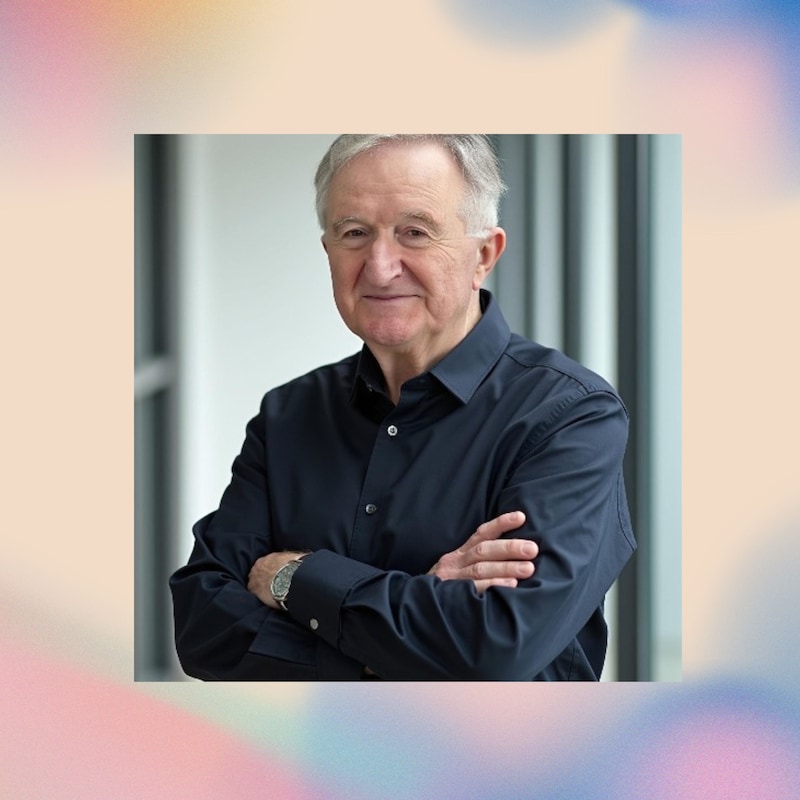
Shownotes
While IQ might get you through the door, it is your emotional intelligence (EQ) that determines how effectively you can build bridges once you are inside. In this episode, we sit down with internationally recognized EQ expert Harvey Deutschendorf, author of The Other Kind of Smart, to explore how mastering our emotions is the ultimate prerequisite for impactful leadership. Harvey shares his moving personal narrative—growing up as a child of refugees, overcoming poverty, and navigating an environment of emotional turmoil—to illustrate how our greatest personal adversities can become the blueprint for our calling.
As Bridge Builders, our capacity to unite divided teams and foster deep organizational trust relies entirely on our willingness to move past transactional metrics and connect on a human level. We dive into practical, real-world strategies to sharpen your EQ, challenge common misconceptions about vulnerability, and look ahead at how human emotional intelligence will bridge the gap in a workplace increasingly shaped by artificial intelligence. If you are ready to elevate your leadership presence and build deeper connections within your professional and personal communities, this conversation provides your essential framework.
Key Takeaways
- EQ as the Foundation of Bridge-Building: True leadership requires more than technical capability. A Bridge Builder relies heavily on emotional intelligence to navigate complex relationship dynamics, build lasting trust, and unite teams across organizational divides.
- Transforming Adversity Into a Leadership Blueprint: Harvey's journey from a volatile childhood to becoming a global EQ advocate demonstrates that personal challenges can be reframed into powerful tools for empathy, personal growth, and collective healing.
- Active Listening as a Relational Conduit: Building a sturdy bridge between differing perspectives requires intentional engagement. Cultivating the discipline of active listening is a non-negotiable skill for anyone looking to foster genuine empathy and mutual understanding.
- Bridging the Human-Tech Divide: As artificial intelligence continues to reshape modern workplace dynamics, the interplay between AI and human EQ will determine future success. True Bridge Builders focus on sharpening the uniquely human skills that technology can never replicate.
- Challenging the Myth of Rigid Intellect: Unlike IQ, which remains relatively fixed, emotional intelligence is a dynamic asset that can be continuously developed over time. True leaders lean into vulnerability and self-reflection to consistently elevate their capacity to lead.
Links referenced in this episode:
Transcripts
Welcome to Becoming Bridge Builders, the podcast where we explore stories, strategies and insights to help us connect, lead, build bridges in our common communities and workplaces. I am your host, Keith Haney and today we have an incredible guest, Harvey Duchendorf.
Harvey is an intentional, organized, recognized emotional intelligence expert, speaker and author of the Other kind of smart simple ways to boost your emotional intelligence for greater personal effectiveness and success.
ork and Life was published in:Harvey is a TEDx speaker, a regular contributor to Fast Company with over 150 articles and was named one of the top top thought leaders in trust by Trust Across America. He's also a certified Confield Success Principles trainer. Harvey's passion for emotional intelligence has inspired the journey.
Has an inspiring journey of overcoming obstacles make him the perfect guest for today's conversation. Harvey, welcome to the podcast.
Harvey Deutschendorf:Thank you. Very excited to be on.
Keith Haney:Glad to have you and it should be a fun conversation.
Harvey Deutschendorf:I think it will be.
Keith Haney:I'm going to ask you my favorite question. What's the best piece of advice you've ever received?
Harvey Deutschendorf:The best piece of advice that I've ever received is just never, never give up. Never. I guess never, never lie to yourself, never lie to yourself, never give up. Yeah, that's two pieces, I guess.
But you know, be honest with yourself, continue to grow, you know, never quit, never give up, never lose sight of your dreams. I love that.
Keith Haney:So you become a leading voice in emotional intelligence area. And that's something that's come up in the last probably what, 10, 15 years that I did. Emotional intelligence.
What sparked your interest in this field and how do, how's your personal journey shape your passion for it?
Harvey Deutschendorf:Well, it all started with my personal journey, Keith. Like I guess unlike most people have written on the topic, for me it was started as my personal. A personal journey and mission.
A little bit of background. Yeah. My parents came to Canada after World War II as refugees. They lost everything, had nothing. They had to borrow money from the church for passage.
We came here with nothing. My brother was two and they came over. I wasn't born yet, but anyways, yeah, when we came over, they were so poor for the last first 12 years or so.
My mother used to tell us when we got older, when we got sick. She said it's probably because you were so malnourished when you were small because some days only had an orange to feed you and your brother.
I don't Remember that? I don't remember being hungry or even though we were very poor, a lot of people in the neighborhood were, and I didn't really see myself as that.
But poverty wasn't the big struggle for me. It was abuse. My father was very, very angry or afraid of him. And he became even angrier as he got older. My mother didn't want to come.
Most of the family resettled in Europe and she dearly missed her family. She wanted to stay with them. So it wasn't a happy, healthy situation. I always wanted to be. I had dreams. I wanted to see what the world was all about.
I had dreams about going out and exploring the world. And my escape was school. And they had books there, sports friends and remember going to high school. And you know, it was very.
Things were going bad at home and my escape out of there was to get a good education. And my high school principal said to me in front of the class one day, harvey, you've got a good head on your shoulders. Don't let it go to your head.
Okay? So that was for me was a life raft. Here was a man who was well educated, you know, was worldly, intelligent, who highly respect that.
He's probably the only one that we knew where I grew up that, you know, was that way and you know, having say this to me, give me a life raft.
And when we get to the end of the interview, if you could remind me there's an ending to this story that I'd like to tie it up right at the end because it's. I think it's a great way to end our talk. So.
Yeah, anyways, yeah, what happened was that I was able to go to university and I was able to get a degree. I was working as a professional. I was a social worker. And life should have been great because I'd gone farther than anybody expected.
I was out there and I was doing, doing my thing and I was out there in the world basically on my own. My mother was very good.
She was very kind, supportive and caring, but she could do very little for me and, you know, like giving me any direction in life or anything like that. So I basically was out there figuring out everything all on my own. So life should have been great.
I had a degree and I was working, you know, job and well paying job as a professional. But it wasn't. I wasn't totally happy. I wasn't totally happy in my work. I didn't have the relationships I wanted.
And I didn't know what was wrong, but I thought, well, you Know, I thought I was smart because my principal told me I'm a smart guy, I could figure it out. So I read self help books, I went for counseling and I was trying to figure out what was wrong and I didn't really know.
And then one day I heard about a thing called emotional intelligence. And this book was out by Daniel Goleman that everybody was talking about emotional intelligence. Why can matter more than iq?
So I picked up a copy of the book and on page four this line jumped out at me. It said, you intellect can come to naught when your emotions hold sway. And I said, that's it. I know what the problem is.
I know exactly what the problem is. You know, it's not that I'm not smart, it's that my emotions, I picked up some. My emotions were out of whack, they were out of skew.
Because, you know, the situation that I grew up with. I grew up to be fearful, suspicious, you know, always and of people, of, you know, the world wasn't, wasn't a very friendly place.
And I grown up to sort of believe that from my experiences growing up. So I thought, you know, first of all, I need to change that. So I joined an organization called the Mankind Project.
It was started in the US in the 90s and where I lived there, we formed some men's groups and stuff. There's kind of a growing men's movement at the time. And I joined the Mankind Project.
And what they do is, I can't say enough about this organization. They help men process their emotions.
Their emotions are, they provide a safe place where men can talk about what really matters, what's going on inside them. They're safe to share and you don't have to be, they're supported and things.
So I joined this organization that helped me to do my own work and try to figure out my own emotions and, and change the things that I really needed to change. And then I decided, well, this is really powerful, this emotional intelligence.
I thought the problem is the books out there, like Goldman's books and all the other books were highly theoretical or they're highly business focused.
Somebody's got to write a book that people, is easy to understand and gives people some actual practical tools that, that, that they can use, you know, to, to change their lives. Because it was changing my life. I, I could see that, you know, the change was happening slowly but surely.
I could see myself changing and I was getting, developing healthier emotions. So, so I wrote a book and I got it published and I called it the other kind of smart. Because I realized being smart like Daniel Gomer wasn't enough.
It wasn't enough. We had to be smart with our emotions. So that's what called the book.
And I haven't looked back since I found my mission in life, and I'm just now just going after it with everything. So, yeah, I love that.
Keith Haney:So let's dig into that a little bit more. You say that EQ is the other kind of smart. Why is EQ more important than IQ in today's world?
Harvey Deutschendorf:Well, I don't know if it's more important, Keith, but it's equally important. Equally, maybe. And, you know, I explained that because the.
It's funny because I wrote an article on that for Fast Company on what's more important, IQ or eq, and I said, that's the wrong question. The question is, how can EQ and IQ work together? You know, it's like. What I explained was that it's like a racing car.
The IQ is something you're born with and basically you have for life. That's the engine, the components that make the car. The EQ is the driver. It's how you manage all that. And, you know, and that's what.
They're very equally important because one without the other, you know, won't work that well because they work together with our eq, lets us manage our iq because we know a lot of people that have a very, very high IQ that haven't been very successful because they're not very good at connecting with people. They're not very good at developing relationships. They're missing that component, which I was at one time, too.
So I realized that EQ is at least equally as important.
Keith Haney:I love that. You know, as I think about, you said something I want to go back to as well.
You said that especially for men, we're not usually in touch with our emotions.
As you have worked with this book and work with emotional intelligence, how important is EQ in not only being successful personally, but also professionally?
Harvey Deutschendorf:Very important professionally, because people get promoted. Basically. First of all, people get promoted because the people that are promoting them, first of all, trust them, and second, like them. Okay?
Now, that's the reason people really get promoted. Well, they have to be competent, too. But beyond that, somebody can have a very, very high IQ and very high technical skills.
And if the people in human resources, the people are interviewing don't like them, you know, it won't come out directly.
But that's the reason people get promoted, because people are promoted, because people want to work with them because they are easy to get along with, they're pleasant. So it's really our EQ that gets us ahead in the world. I mean, IQ is important for basically the marks we get in school. Okay, we get high marks.
But after that, our success in life, after we get our first job is really determined by how well we're able to connect with and work with people. That's really what determines our success.
Keith Haney:Can you think of some real world examples of how EQ has made a difference and maybe someone you've worked with, their chart in life or their projectory in life?
Harvey Deutschendorf:Yeah, yeah, I worked with somebody who is basically, you know, didn't have that much probably technical skills, that type of thing. Was a manager that went very, very far and basically was just a person that you felt really, really comfortable with.
You could talk to them, you could ask them anything. They weren't defensive, they weren't, didn't feel, you know, that they were threatened by anything you would ask. You could challenge them.
It's just a level of comfort and a high level of trust. Even though they didn't know the answer sometimes, they would always be supportive.
You know, somebody that you could talk to them the same way they would talk to their superiors. You didn't have to worry. They'd say one thing to you and another, you know, to their superiors. You could trust them.
You totally knew that they had your back and it was comfortable and they would give you the feedback that you needed from a place that, you know that they wanted you to do better. It was never perceived as criticism. It was a seed rock because you trusted them, that they wanted you to succeed.
Keith Haney:I love that. As you think about common myths or misunderstandings, what are some that we would have when we think about emotional intelligence?
Harvey Deutschendorf:Yeah, funny, I asked that before I talk usually. I was going to ask you that question first. What do we say? Commercial intelligence.
Keith Haney:I thought I would switch it up on you.
Harvey Deutschendorf:Yeah, I was going to ask you because before I do my talks, I ask people, what do you think emotional intelligence is? Okay. To my audience? And I say, okay, somebody offered you $10,000. You give me a decent answer to what emotional intelligence is.
What would you say to them? Have things like, oh, it's, you know, being a good listener, but some of the misconceptions. Source somebody that's nice. Okay. Just being nice.
Okay, well, they can be nice, of course we should be nice. But there's a lot more to it than that. It's also being able to, being able to set your boundaries it's being able to be assertive when you have to.
I mean being nice is okay, but somebody that's highly emotional intelligence doesn't mean they're a pushover and you can just push. That's a misconception. The other thing is too that yeah, we have to be extroverts.
Emotional, you know, extroverts are more highly emotional intelligence because hey, you know, like they're, they're, you know, hey, how are you doing? That type of thing and they can talk to anybody and stuff like that.
Which no, emotional intelligence has nothing to do with whether you're an introvert or an extrovert. That's a personality trait. And you know, one isn't higher than the other. You know, it's just the people we are.
Emotional intelligence is basically how we're able to manage our emotions and basically influence the emotions of others in our environment and our orbit.
Keith Haney:Would you say that one gender has the corner, has all the assets for emotional intelligence, the other one is lacking? Is it women are better at it than men are or does gender not matter?
Harvey Deutschendorf:Well, women are, are higher in some areas like empathy. They're generally women have, are better, are able to empathize better than men overall. Men, however, overall seem to have more self confidence.
That, you know, it's, it's maybe changing Al, but that was something from a few years back. So yeah, there's certain areas that, that men are higher and there's certain areas that, that women are stronger.
And I think it goes back to women being, being the nurturers, having more empathy and men being the ones that were traditionally in charge. They had to go earn a living and that to have more confidence. I don't know where it comes from but, but traditionally that's been the case.
But these things of course are all changing. They're all fluid and they're changing over time. So yeah, that's all open to change and it's changing now probably.
Keith Haney:So we've always heard, I know when I was growing up that leaders are either born or they can be trained. Is emotional intelligence something that you, that you get fixed at birth or is it something you can get better at over time?
Harvey Deutschendorf:Oh, absolutely. It's something you can get better at over time.
And I'm a living walking proof of that because it's of course if, if we have, we, we grew up in a family that was highly supportive, highly emotional intelligence and that of course we would likely naturally pick up, be more emotionally intelligent. However, here's the good news. Unlike iq, it's basically set. By the time we reach our, you know, our teens, emotional intelligence can be developed.
And I am a living, walking example of that. When I'm talking, sometimes I'll say to my audience, the first things I say are, you know, 25 years ago, you wouldn't have wanted to know me.
25 years ago, the person that I am today would not have wanted to know the person that I was 25 years ago. I'm a different person today. I've totally reinvented myself. I changed myself because of using emotional intelligence.
So, I mean, I know we can change it, and I know a lot of people's lives have been changed by using it. So, yeah, we can develop it if we're open to it. We have to recognize the fact that we need to change, and we have to work at changing it.
And I've been very fortunate to have part of a wonderful organization that's given me a lot of support in changing my life and changing, you know, my environment around me. Yeah.
Keith Haney:So that's encouraging. So if I. If I'm listening to this and I know my EQ level is low, what are some simple ways I can use right away to boost my emotional intelligence?
Harvey Deutschendorf:One of the things we can do is become better, better listeners. Most of us aren't. Aren't very good listeners when. When we're. We're not actually listening, we're actually formulating a response.
When somebody's talking to us, we're not really listening. We can work on this so we can become better listeners.
And one of the things, just a simple exercise we can do is somebody that we're our partner or somebody that we're with, somebody that we have a good relationship with. We can do this. We can have them sit down and talk for three minutes about something. Well, something that's maybe been bothering them.
And our job is to listen and feed back to them in our words, what we heard them say. Okay, so we're not. There's no distractions here. We only have one thing to do, you know, not formulate a response. So.
And then we can turn it around and have them do that. Make it kind of a fun game. But practice listening to what people are saying and remembering things.
The people that we want to form relationships with. We may not necessarily want to form relationships with everybody. Probably not.
But, you know, the people that we love to make deeper connections with, whether at work, whether our family or friends, we actually listen to what they're saying and remember things about them. Sometimes I write down things just after I talk to them, and so I can bring it up in the next conversation, letting them know that they've been hurt.
You know, As humans, we need to feel that we're heard, and if somebody feels that they've been heard, we've really listened to them. That's kind of unusual because, like I say, very few people really listen. So they form a special bond with us.
They want to be with us, they want to be around us. You know, if they're an employer of us, you know, they want to hire us, they want to promote us, they want to be friends with us in a relationship.
They want to maybe be a. Be our partner, you know, for dating, whatever. But because we've heard them, there's a. They remember that, and they love that. Hey, you remember.
You know, your dog is vacation. We remember something about them that means to them, that means they're special to us, they're important to us. We're really listening to them.
So that's how the connections build and develop, and that's how relationships grow and things like that.
Keith Haney:Awesome. So in your latest book, Emotional Intelligence, Game changers, you share 101 ways to work at life.
Which of those 101 strategies, one or two, stand out as being the most transformative to you?
Harvey Deutschendorf:Well, the thing that I struggled with is imposter syndrome. And I realized that, like, when somebody introduces me, when I'm. Before I give a speech, they mention all the things that I did.
Like when you introduced me, I think, is that me? I'm going to be. Can I really. Can I really pull this off? Is that really me, or am I just faking it, that I pull it over on people? And I thought, wow.
And I thought, well, am I the only one that is dealing with. And I discovered no. Jodie Foster, when she received an Oscar for her role in the Accused, she was worried.
She was deeply worried that this was a mistake, and somebody was going to knock on the door of her home and let her know that they give her this Oscar by mistake, and they were going to take it back. And I remember watching Jay Leno when he was doing a series on himself and not Jay Leno. Sorry, I'm just trying to remember the name of Issa. Yeah.
Oh, gee, I forgot that the name of the talk show host is not on anymore, but Letterman. David Letterman. Yes.
Keith Haney:Oh, yeah.
Harvey Deutschendorf:Yes, yes.
What he said one day, you know, there he was talking to somebody, and he's very funny, and he said, you know, I'm really worried some days, you know, I'm going To be found out, and somebody's going to take me and drag me back to that post office in Nebraska. So even him, people like that, we see as being very, very highly successful. They still have imposter syndrome.
And so, yeah, I thought, this is normal. And then I thought, you know, and I thought the way to get over that is to make up a list of your accomplishments in life.
Even things like, you know, you take for granted now, like learning how to drive a car, maybe learning how to. How to ride a bicycle. Not everybody's learned to do that. Things that we just take for granted, we've forgotten. So. Yes.
So I was going to ask you, Keith, do you have any, I don't know your background or anything, but I see you, you know, having achieved quite a bit. Do you have imposter syndrome?
Keith Haney:Oh, most definitely. And the more degrees you have in front of your name, the more the imposter syndrome becomes real. No, like you.
When people read my bio, I'm going, yeah, can I live up to this hype of all this? Because the expectations that you put on yourself by accomplishing things, it makes it more difficult.
So being a pastor is hard, too, because every single sermon is imposter syndrome. If last week's sermon was great, then people expect the one after that to be equally as great. So it's like you're always.
Every week, you're trying to outdo the one you did before. So, yeah, definitely. I totally get that.
Harvey Deutschendorf:The fear is going to let somebody down. Somebody won't like it or whatever, won't live up to expectations. Yeah, yeah, yeah. I'm just thinking. The one thing I think that helps, too, is humor.
Keep remembering not to take myself too seriously. You know, I have a friend that used to say to me, don't worry about it. You're going to die anyways. Remember that. Don't take yourself too seriously.
So that really helps, I guess. You know, like, it's because, you know, most people, I'm thinking, aren't, you know, they're so worried about what's going on with them.
They're, you know, what do they say at. We think when we're in our teens, you know, that everybody's thinking about everything we're doing and saying.
When we're in our, you know, middle age, we don't worry about it anymore. Anybody thinks about us. And then when we get older, we realize that nobody is really thinking about us at all. So relax and enjoy them. Enjoy it.
Keith Haney:Right, exactly. The name of this podcast is becoming Bridge Builders. I'm Curious. As you think about emotional intelligence, how can you use EQ to build bridges?
And you talk a little bit about this in our relationships and in our workplace and in our communities.
Harvey Deutschendorf:Yeah, I think it's a great, you know, it's the ultimate bridge builder, emotional intelligence, because it gives us tools to build bridges, basically listening to people and letting them feel heard because, you know, we can disagree with people, we can very strongly disagree with people. If we have a conversation with them and they can feel heard, we can make great progress because.
Yeah, then if they feel heard, it may open them up to other viewpoints. It may open them up to just open them a crack sometimes to other ways of thinking that they haven't considered before.
And they'll want to form a connection with us, even though we may be on totally opposing sides of an issue. But there's an opportunity there to open up.
The divide flows a little bit and there's opportunity to form connections, but it's basically making people feel heard, that their voice matters, that we can.
There are things we have in common, there are things we can agree on and we can respect one another, even though we may be very strongly opposed to each other's ideas.
Keith Haney:Yeah, you've been doing this work for a long time. Where do you see the future of emotional intelligence going?
Harvey Deutschendorf:Oh, I think we're going to need it more than ever, especially with AI. That's the big conversation now, AI and what does it do with emotional intelligence?
I think emotional intelligence becomes more crucial because we have to be able to manage AI, it has to work for our benefit and we have to be able to use it effectively. Because AI, you know, when we. It still cannot take the place of human beings, you know, we can't connect with it like humans can.
We have to move forward with the understanding that it's human connection that's the most important. And so we have to look at AI, building AI and how we use it. It's managed and it's for the benefit of us.
I mean, it can do so many things, but it can't make the human aspect any stronger.
It's only humans that are able to do that and understand and, you know, where we're going and being able to control that in our relationships, that's. We're. We're hardwired as human for connections and we need that. We can't get it from. From AI or, or anything else.
We can only get it from humans, other humans. And of course, we can get it from. From animals too, of course, pets and things like we form connections. We can't make it from a non living.
A non living entity. No, no, it's just not possible.
It was just funny because I was reading this story about this, this woman in, in Japan who's actually married to married AI. So, you know, whatever ceremony. Yeah, yeah, Bizarre.
You know, and I keep reading sometimes and questions about, well, you know, well, can AI show empathy? Well, I mean, it can give us examples of empathy, but it can never on its own express empathy.
Only what is programmed into it, you know, can never become somebody that can develop empathy and show empathy. We, it's. It's sort of impossible.
And, and so I, I'm afraid that people will don't understand that and will think that, you know, maybe we don't need humans as much emotional intelligence because of AI, but it can never, it can never replace the human connection.
Keith Haney:Right?
Harvey Deutschendorf:Yeah.
Keith Haney:So I love to ask my guests this question. Harvey, what do you want your legacy to be?
Harvey Deutschendorf:Well, I want my legacy to be that I've helped people in life, that I've helped people better their lives. I've helped people understand themselves better, bring more joy in their lives, more peace, more understanding.
Yeah, bring more understanding in the world, More peace, more love, more caring. Just somehow that I've made some, some people's lives better and that I've. I've. Well, I guess I'll put it this way.
That I've lived, that I've loved, that I've mattered in some way.
Keith Haney:Awesome.
Harvey Deutschendorf:Yeah.
Keith Haney:So on this season, we have a new thing and that is picking a surprise question. Pick a number between one and ten for your surprise question.
Harvey Deutschendorf:Yes. Okay, one to ten. How about six?
Keith Haney:Six. All right. What is your most unusual talent?
Harvey Deutschendorf:My unusual talent? Probably I was known before for finding nothing to do with emotional intelligence.
I guess maybe finding deals on things, going to auctions and finding buys and different things. And there are some really interesting things. Being able to always find a bargain on that. I was known for that.
People would ask me, hey, where can I get the best deal on such and such? I normally would would know the answer how to find it anyways. Yeah, awesome.
Keith Haney:Well, Harvey, thanks so much for sharing your insights and your wisdom for us today. For those who want to learn more about your work, your books, and connect with you, where can they find you online?
Harvey Deutschendorf:Well, they can find me at WWW The Other Kind of smart. One word. The Other Kind of Smart Donk. That's my website. If they want to connect with me, my email is harvey.period e I guy eiguy e I g u I shaw ca.
I'm the. The EI guy. And I was just gonna kind of end with something here. I'm just gonna finish that story about my high school principal.
Yeah, I just wanted to wrap that up because when I was in my men's group, my mankind project, I had written in the other kind of smart little section about that's the only thing that I shared about my personal life was that story about my high school principal, Lisa, and telling me in front of the class that I've got a good head on my shoulders. So I was in my group and I was telling this story, and one of the men in the group said, he's my neighbor. This was 40 years later.
Okay, this is 40 years. I didn't know if he was still alive.
You know how when we're in school, we think our teachers, you know, are that much older than us, but it's just because we're so anyways, I said, yeah, he's my neighbor.
So I thought, you know, I should reach out to him because I don't know if he'd remember me after all this time, but let him know what difference he made in my life. So I finally got up the nerve to give him a call. I was afraid he wouldn't remember me or anything, but he did.
And so he was living not too far from home, about 30 miles away. So my voice was probably crackling. But I asked him if he wanted to meet for coffee. Because in school, I was very, very shy.
I was under the race, so said, sure. We got together, and it was very, very emotional. I give him a copy of my book that I sign.
I show him where I mentioned him, you know, and we talked and had cough.
And it's very, very, very emotional because it was important to me to let him know the difference that he made in his life because he was getting older, and I think I was hoping that he would know that he made a difference and at least my life and, you know, that his work mattered, that he mattered. So, you know, I was afraid to do it, yet I'm so glad I did because let him know that. Yeah, so that's the end of that story.
Keith Haney:That's a neat story. I'm glad you did that. I'm sure he was too.
Harvey Deutschendorf:Yeah, I'm sure he was. I'm hoping he was. Yeah.
Keith Haney:Well, Harvey, thanks so much for coming on and for my listeners. Thank you for tuning in to becoming Bridge builders. If you enjoyed this episode, please subscribe, share and leave us a review until next time.
Keep building bridges that bring people together and create lasting hope. Harvey, thanks so much for being a guest on the show.
Harvey Deutschendorf:Thanks so much. It's wonderful. I enjoyed it.






