Community Isn't Always the Answer for LGBTQ Teens: What Actually Works When Support Groups Don't Fit
Episode 248 •
17th February 2026 • More Human. More Kind. | Parenting LGBTQ Kids, Unlearning Fear, Becoming More Human • Heather Hester | Advocate for Parents of LGBTQ Teens
As a parent of an LGBTQ teen, are you constantly told that community is the answer? While community can be powerful, it’s not one-size-fits-all.
In this episode, Heather Hester unpacks why traditional LGBTQ support spaces sometimes increase anxiety instead of easing it and how well-meaning parents can unintentionally create pressure instead of inclusion.
In this episode, you’ll:
Understand why some LGBTQ teens reject support groups (and what that really means)
Learn how pushing the wrong format can erode trust and increase isolation
Discover practical, real-world alternatives that feel safer and more aligned with your teen’s personality and pace
Press play now to learn how to support your LGBTQ teen in ways that build connection, reduce pressure, and truly fit who they are.
Hi, I’m Heather Hester, and I’m so glad you’re here!
Feeling uncertain or overwhelmed? Download my free guide to take you from Panic to Plan.
Listen to *NEW* episodes every Tuesday and Friday!
At the heart of my work is a deep commitment to compassion, authenticity, and transformative allyship, especially for those navigating the complexities of parenting LGBTQ kids. Through this podcast, speaking, my writing, and the spaces I create, I help people unlearn bias, embrace their full humanity, and grow their capacity for courageous, compassionate connection.
For parents, allies, and those pioneering a way to lead with love and kindness, I’m here with true, messy, and heart-warming stories, real tools, and grounding support to help you move from fear to fierce, informed action.
Whether you’re listening in, working with me directly, or quietly taking it all in, I see you. And I’m so glad you’re part of this journey.
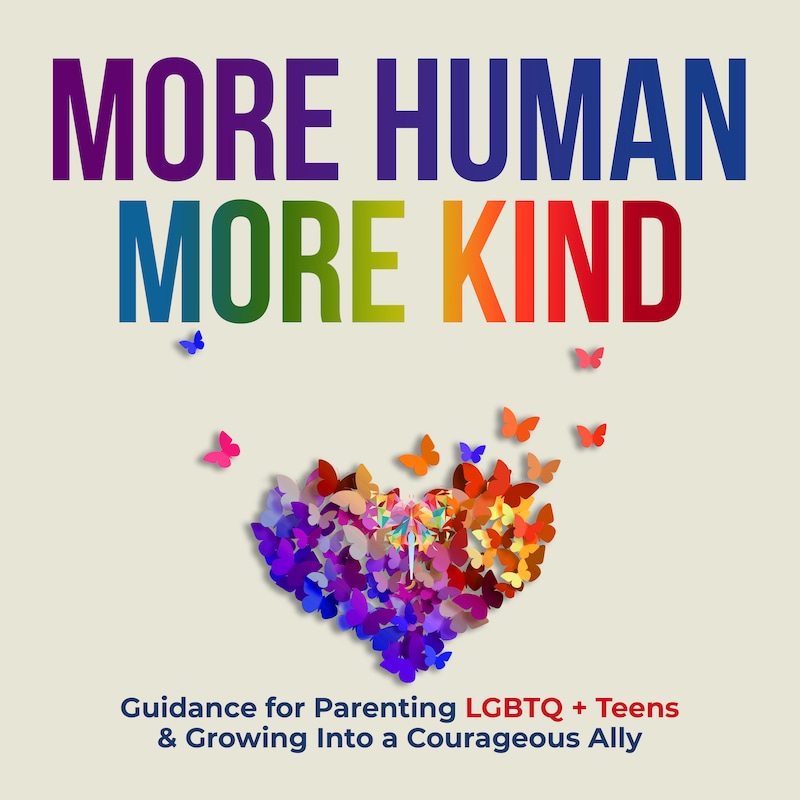
More Human. More Kind. formerly Just Breathe: Parenting Your LGBTQ Teen is a safe and supportive podcast in a heartfelt and empowering space where a mom and advocate offers the wisdom of lived experience and practical guidance and education to parents and allies, teaching empathy, kindness, love, and strong boundaries while supporting LGBTQ teens and the diverse LGBTQ community, including gay, lesbian, bisexual, trans, transgender, and queer individuals, through conversations about mental health, grief, gender identity, sexual orientation, human rights, social justice, parenting, parent support, and meaningful LGBTQ allyship and allyship in action.
This podcast uses the following third-party services for analysis:
Podscribe - https://podscribe.com/privacy
Transcripts
Speaker A:
In today's episode, you will discover why community isn't necessarily the answer for your queer kid.
Speaker A:
Welcome to More Human, More Kind.
Speaker A:
I'm Heather Hester, author, speaker, and advocate for LGBTQ youth and the people who love them.
Speaker A:
This is the podcast for the parent who looks fine on the outside but is carrying a quiet panic on the inside.
Speaker A:
Here we name what's real without shame, so you can become the kind of grounded, brave, loving person your child can actually feel.
Speaker A:
You're not alone.
Speaker A:
You don't have to do this perfectly.
Speaker A:
Let's get into it.
Speaker A:
Have you ever thought if they would just meet other LGBTQ kids, they'd feel better?
Speaker A:
Or maybe somebody told you, find a support group.
Speaker A:
Community will definitely help.
Speaker A:
They just need to meet more kids like them.
Speaker A:
And so you tried.
Speaker A:
But instead of relief, your teen pulled back, they got quieter, they avoided it, and maybe even seemed more anxious than they did before.
Speaker A:
If this all sounds familiar, this episode is going to change the way you think about support.
Speaker A:
This is where we turn fear based parenting into connection based parenting, especially when it comes to supporting our LGBTQ teens.
Speaker A:
Today, we're challenging something that sounds without question like a good idea.
Speaker A:
Community.
Speaker A:
Community can be powerful, and it is not a one size fits all idea.
Speaker A:
So this is what we hear as parents.
Speaker A:
Find a support group for them, let them meet other LGBTQ kids.
Speaker A:
Community will definitely help, and yes, in many cases, it absolutely does.
Speaker A:
But here's the blind spot.
Speaker A:
For some teens, traditional LGBTQ support spaces don't feel safe.
Speaker A:
They feel awkward, too exposed, too gay or not gay enough, pressured to label themselves, watched, judged, forced to identify before they're ready.
Speaker A:
So instead of helping, it increases anxiety.
Speaker A:
Instead of belonging, it creates comparison.
Speaker A:
Instead of confidence, it reinforces isolation.
Speaker A:
And here's the heartbreaking part and what I want you to understand, your teen isn't rejecting support.
Speaker A:
They're rejecting a format that doesn't fit them.
Speaker A:
And I want you to know that this was absolutely the case with Connor when he was in high school.
Speaker A:
And if you have been listening for a while, you know the struggles he went through.
Speaker A:
It wasn't until he went away to college that he found his community and community spaces, some organized groups and some just humans that were his people.
Speaker A:
When teens reject community spaces that don't feel right, we as parents think that they're resisting help.
Speaker A:
But the teens, they feel misunderstood.
Speaker A:
And then trust erodes.
Speaker A:
Conversations shut down, they begin to retreat internally.
Speaker A:
And then what happens?
Speaker A:
We're both frustrated.
Speaker A:
You're thinking, I'm just trying to help.
Speaker A:
They're thinking you don't get me.
Speaker A:
So instead of building confidence, this push and pull, this miscommunication can make things worse.
Speaker A:
And that is exactly where many parents begin to panic.
Speaker A:
So let's talk about these misconceptions or these mistakes that are potentially keeping you stuck.
Speaker A:
The first one is community solves everything.
Speaker A:
It's true that community does help many people, but not all.
Speaker A:
It is not an absolute and we need to acknowledge the complexities and individual needs that exist.
Speaker A:
Two, being around other LGBTQ teens will automatically make my kid feel safe.
Speaker A:
Shared identity doesn't guarantee shared personality, pace or comfort.
Speaker A:
It might actually be helpful to go back and listen to episode two where I talk about the stages of the coming out process.
Speaker A:
And three, the third misconception is if they don't want group, they must be ashamed.
Speaker A:
Not so.
Speaker A:
Some teens are introverted.
Speaker A:
Some are private.
Speaker A:
Some are still exploring.
Speaker A:
Some just don't like group formats.
Speaker A:
Every single teen is different.
Speaker A:
Some of them thrive in structured support groups and some thrive in quiet creative spaces.
Speaker A:
Some thrive in one on one connection.
Speaker A:
It's not about the right type of support.
Speaker A:
It's about the right fit.
Speaker A:
It's why Grace thrived in her high school theater program.
Speaker A:
It was the right fit at the right time for her.
Speaker A:
So what do teens actually need?
Speaker A:
Well, I'll start with what they don't need.
Speaker A:
They don't need pressure.
Speaker A:
They don't need forced identity performance.
Speaker A:
They need support that feels safe and optional.
Speaker A:
So here are some alternatives that often work a little bit better.
Speaker A:
The first one is safe one on one mentorship.
Speaker A:
This could be at school or your local youth and family services.
Speaker A:
It could even be online through a program like the Future Perfect Project.
Speaker A:
Second, through creative expression spaces like art classes, music, writing, theater.
Speaker A:
The third is through just casual, low pressure connections.
Speaker A:
Fourth, emotional coaching, always a beautiful option.
Speaker A:
Fifth is safe online communities that they choose.
Speaker A:
I cannot emphasize the safe part of this enough, so reach out to me if you are interested in some specific suggestions.
Speaker A:
And finally, support that doesn't require immediate labels.
Speaker A:
When support is optional rather than forced, teens relax.
Speaker A:
And when they relax, they open up.
Speaker A:
And when they open up, it becomes possible for them to explore identity at their own pace.
Speaker A:
For you to discover support that actually fits them and then they share more because there isn't that pressure and your relationship feels lighter, not tense.
Speaker A:
That's the shift.
Speaker A:
This requires something actually hard for parents.
Speaker A:
Letting go of the idea that you know the right path and instead asking what would feel supportive to you.
Speaker A:
It means trusting your teen's nervous system.
Speaker A:
Trusting that your teen knows who they are.
Speaker A:
If they tense up around something, pay attention.
Speaker A:
If they soften around something, lean into that.
Speaker A:
Support should regulate them, not activate them.
Speaker A:
And please know that wherever you are with this right now, it is fixable.
Speaker A:
You are not failing because your teen doesn't want a support group.
Speaker A:
You just need a broader definition of support.
Speaker A:
And once you shift from find them community to find what fits them, everything changes.
Speaker A:
To help you navigate this, I created a guide called Connected Without Forcing it five powerful alternatives to support groups that actually work for your LGBTQ teen.
Speaker A:
It's practical, it's real world, and it gives you options that don't require pushing your teen into something that doesn't feel safe.
Speaker A:
And it's free.
Speaker A:
So if you've been pushing your teen toward community and they keep pulling away, and that is making you feel helpless or unsure.
Speaker A:
But what you really, really want is for your teen to feel supported and safe.
Speaker A:
That's why I created Connected Without Forcing It.
Speaker A:
This guide gives you real world alternatives to traditional support groups designed to fit your teen's personality, pace, and comfort.
Speaker A:
If you're interested, go to the Show Notes, click on the first link or visit rebrand ly heatherhester cwf as in Frank.
Speaker A:
Enter your details on that page and I'll send you Connected Without Forcing it right away.
Speaker A:
Today we challenged a common parenting instinct, assuming that the right kind of support is one size fits all.
Speaker A:
And what we've seen instead is this.
Speaker A:
Every single teen needs space to explore their identity on their own terms.
Speaker A:
It's not about pushing them towards support.
Speaker A:
It's about making sure the support fits them.
Speaker A:
If this episode gave you a new perspective or fresh insight, make sure to subscribe so you don't miss what's coming next.
Speaker A:
And if someone you know is struggling to support their teen in the right way, pass this along.
Speaker A:
It might change everything for them.
Speaker A:
Until next time, keep listening, keep learning, and keep leading with love.