Shownotes
The discussion surrounding health often tends to gravitate towards things such as diet and exercise; however, the subtleties of emotional and psychological health are equally important.
While primary health protectants like nutrition and physical activity provide the bedrock for physical health, secondary health protectants—those often underestimated—such as music, art, and engaging with nature, offer profound benefits for our mental and emotional well-being.
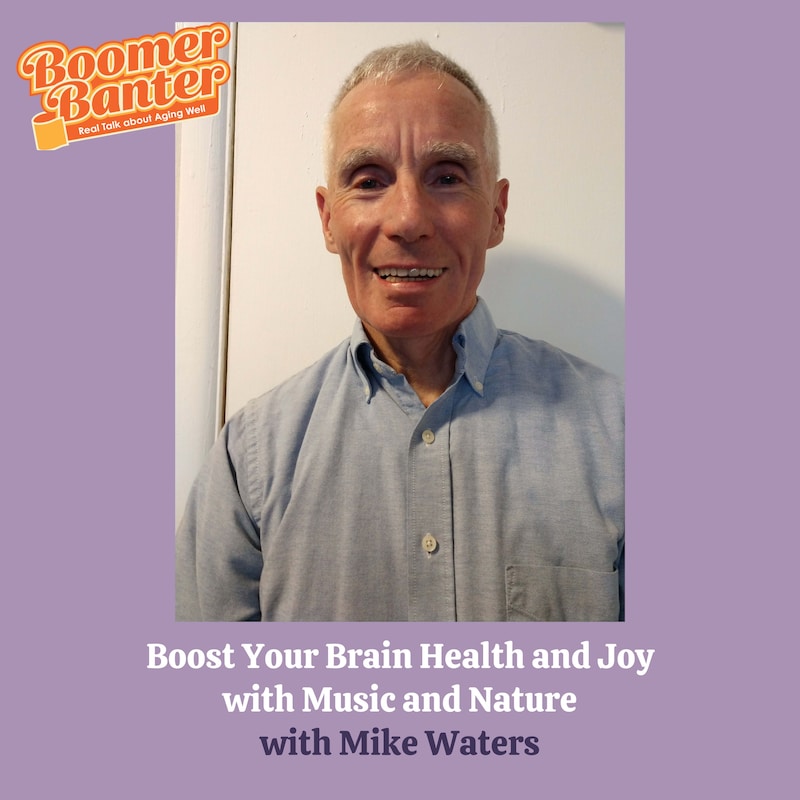
In this episode, I spoke with Mike Waters, a seasoned expert in health promotion, to learn about these secondary health protectants and how they influence our neurochemistry.
He articulates the role of music in enhancing our mood and cognitive function by stimulating the brain's reward pathways, leading to increased production of essential neurotransmitters. This exploration not only sheds light on the scientific underpinnings of how music and art can act as therapeutic agents but also invites listeners to reflect on their personal experiences with these mediums.
The conversation pivoted to the environments we inhabit, advocating for spaces that foster creativity and tranquility.
Through these insights, we are encouraged to embrace the joy found in music and creative expression as integral to our health journey, ultimately leading to a more harmonious existence as we navigate the complexities of aging.
Takeaways:
- Secondary health protectants, including music, art, and time spent in nature, play a significant yet often overlooked role in enhancing our well-being.
- Engaging with music can stimulate the brain's reward system, leading to the release of neurotransmitters that foster joy and emotional resilience.
- The integration of music and art in therapeutic settings has shown remarkable effects on individuals with cognitive impairments, enhancing their quality of life.
- Creating a supportive and aesthetically pleasing environment can improve mental health and overall happiness as we navigate our later years.
- Participating in enjoyable activities, such as listening to music or creating art, may motivate us to adopt healthier lifestyle choices in other areas.
Books mentioned in this episode:
- Positive Addiction by William Glasser
- Emotional Intelligence by Daniel Goleman
Links referenced in this episode:
- wendy@heyboomer.biz - Email to get 1-month free access to Boomer Banter membership or to send me questions of thoughts about the show.
- reinventionrebels.com - Wendy Battle's podcast
- eatbetterfoodtoday.com - link to upcoming show
This podcast uses the following third-party services for analysis:
OP3 - https://op3.dev/privacy
Transcripts
Good morning. You know, as it is, when we get older, we start to think more about our health and staying healthy.
And for most of us, that means we're focusing on the big things like eating well, staying active, managing stress, and staying socially connected. These are what the experts call primary health protectants.
These are the essentials that help us prevent disease and maintain a strong foundation of physical and mental well being. But there's another layer. It's less talked about, but just as powerful. And these are called the secondary health protectants.
They include things like music and art, time in nature, and even how we arrange the spaces that we live in. It's pretty interesting. These secondary protectants work in a different way. They work by engaging the brains reward system.
They boost the neurotransmitters.
You've heard these words like dopamine, serotonin, oxytocin, the feel good chemicals that help us experience joy, reduce stress, and build emotional resilience. And so today, we are zeroing in on the secondary health protectors, especially music.
My guest today, Mike Waters, is here to help us understand what happens in the brain when we listen to music or engage in art or get out in nature, and how it supports our cognitive health. My name is Wendy Greene, and this is the Boomer Banter podcast, and I am your host. Have you ever felt like something's just kind of off a little bit?
Like life is full but not fulfilling in the way you want it to be or the way it used to be? Well, we've.
Most of us have had, you know, very full careers, and some of us have been involved with caregiving, but now we find ourselves missing something like that sense of connection, those friendships that we used to have, those regular chats, even regular laughs with the people who truly get us. And so that's why I started the Boomer Banter membership.
It's a warm, welcoming space for adults 60 + who crave real conversations, meaningful friendships, and something to genuinely look forward to. We meet twice a month for live, engaging discussions that feel more like catching up with a good friend than anything formal.
And your first month, totally free. It's no pressure, just your chance to check us out.
So if you'd like to try the Boomer Banter membership for a month, just drop me an email at wendyeyboomer Biz and I'll personally get you set up. Come and join us. The next one is actually is tomorrow night, so let me know if you want to join it and check us out.
And I want to tell you just a little bit About Mike before I invite him to join us here in Boomer Banter. Mike has spent 45 plus years in clinical adult fitness working with businesses on work site health promotion.
ll Athletic Club in Oregon in:In addition, Mike spent 14 award winning years as the director of the health promotion program at Hewlett Packard in Corvallis, Oregon.
And Mike has been supporting boomer banter on LinkedIn by sharing many of the posts that I put out there and I am grateful to him for doing that and that is how I came to meet him. So please join me in welcoming Mike Waters to Boomer Banter. So nice to see you, Mike.
Mike Waters:Thank you, Wendy. Pleasure to be here. And you know, as I've told you before, you're, you're in health promotion.
All the great speakers that you've had, it's, it's just been neat to listen in on some of the interviews with them. It's, it's, yeah. As you talked about in the beginning, health is more than just the core concepts of fitness, diet and all that.
It's, it's, it's all, it's, I see it as a human development type model and that's the work you're in human development, helping people get better.
Wendy Green:That's so right. Thank you, Mike. So I want to start because we, I mentioned the secondary health protectants like music, art and nature.
Why do you think they've been overlooked for so long in conversations about aging and wellness?
Mike Waters:Well, if you go into, you go. So it starts with you go to universities. Okay. Or you go to like the National Institutes of Health or Centered Disease Control. Okay.
So the research is based on the things we do to make us healthy or ill. Okay. And so for several years it's been that core concepts, it's been the physical activity. Okay. Not necessarily.
Now I want to make sure the viewers understand that. I've run a ton of marathons. Okay. We don't. That's unhealthy. Okay. That's something else.
But you know, being physically active, walk, you know, doing a lot of walking, things like that. Okay. So we looked at that for many years.
The diet, as we all well know, I, I, on LinkedIn, there's constantly people, you know, the processed foods, the whole thing. Yeah, I understand that. Okay. So you look at that. But the era, the area of neurobiology was looked at in mental health as kind of an issue. Okay.
And it took a long time for neuroscientists to start looking at, hey, this is part of our health. Because you look at what's called inflammatory markers.
Wendy Green:Okay.
Mike Waters:And we did that with the heart. That's my expertise in my academic training, my graduate work hard. Cancer came later, has a health promotion topic. I have a whole story about that.
So we've looked from the neck down. Okay, well, then. And then we start seeing things. You know, when Alzheimer's and dementias came out, okay. It was kind of hidden. It was. It was. It was.
It was researched. But there were nursing homes where people just.
And very slowly, some of my colleagues on LinkedIn, Jennifer Melinda, they start talking about music for. For that group.
Wendy Green:Yes.
Mike Waters:Activating their brain. And then everything started going. It's like, wow. Okay, so. So even music for.
And as you mentioned, art of the therapy for people with cognitive disease, that those are health protectants from where they are. From where those people are. Okay. Well, then we started going to. Well, what about a. Apparently.
We call the apparently healthy individual in their brain. And then the research started flowing like crazy. And so there's just a ton of it all. All over.
All over the country at several universities and Oregon Health Sciences University up here in Portland do a lot of that research.
Wendy Green:So are you saying that the neurotransmitters in our brain can protect us from those. Some of those inflammatory diseases if we can spark more oxytocin and serotonin and.
Mike Waters:Through music, we're really a biochemistry set. We're a chemistry set.
Wendy Green:Okay?
Mike Waters:And as everybody knows, through the minutes, hours of the day, at night, our. Our chemistry is changing. Well, that's all these neurotransmitters that you talked about. Okay. And then what we.
What, we take in sugar, you know, plants, everything. Okay. Shifts that biology. Okay.
Wendy Green:Okay.
Mike Waters:And then we start talking about. It started about exercise.
Wendy Green:Right.
Mike Waters:So nobody talked about. So again, I go back to heart. Okay. So we talked about my training, heart disease prevention. Okay. Building up collaterals.
We didn't talk about the brain, but then there was a counselor in San Diego. He wrote a book called Positive Addiction. Forgot his name. And he used. He used running with his patients for the brain. He.
Because psychology people understand the neurochemistry and. And the. The, you know, dopamine, serotonin, and the opioids that we create from it. Well, we. It was talked about in that cohort.
Wendy Green:Okay.
Mike Waters:But not in the general public, because.
Wendy Green:The psychologists and the Biologists were not talking to each other.
Mike Waters:No, no, it wasn't put out. In, In. So I didn't, I didn't talk about this.
Wendy Green:When you talk about the heart.
Mike Waters:Yeah, when I ran. Ran. I could talk about the feeling. It's like, I feel great. I can. I can write articles, I'm ready to go, the whole thing.
But you can't be just me at a, At a health club in Corvallis, Oregon, sharing that or talking to local groups. It has to be key researchers, because that's where we listen. We listen to those kind of people.
Well, when that started happening, it's like, oh, so those of us that were doing it go. That's why I feel that way.
Wendy Green:Oh, that running high. That's what you're talking about. Runners high.
Mike Waters:I get it. Okay, now we explain that. And so when I started. When I started talking about this. So I started in 06 07, started talking about the brain.
Now, one of the things that triggered it was Daniel Goleman's book, Emotional Intelligence. And he talked about the hippocampus and the amygdala. And it's like that set everything off. Oh, it's the brain, around the brain.
Okay, so then here we come in from. In health promotion, the exercise part. Okay, now we talk about the, the neurochemistry that happens when we exercise.
So as I went along and talked about this, people, the people that did it nodded their heads, goes, oh, yeah, that makes sense. I have this feeling.
Wendy Green:I have this feeling that's so interesting, right? And sometimes we don't trust those feelings.
Like I think I told you, you know, if I'm sitting in my house working and it's completely quiet, I suddenly feel this tremendous lag of energy. So I'll go in and put on music. Oh, my gosh. It's like I feel so much better almost instantly.
Mike Waters:Now, here's what's interesting. Okay? So your viewers out there, you've got. Okay, so I follow. I can't remember his name. Multiple intelligences. I can't think of the.
The researcher from Harvard right now. Okay, okay, so basically I break it down to two types of thinkers, linear and non linear. Okay?
So during our time at hp, obviously, huge engineering group. Show me the data. Show me the data.
So I learned as a speaker myself, or if I brought in speakers, Wendy, you better have the data in your back pocket because those engineers are going to ask for it. Now, that doesn't mean they were ready to take action.
Wendy Green:Okay?
Mike Waters:They were learners of. Okay, I need the data to Drive me even then it's like I'm not sure if I want to do this exercise stuff. The non linear thinkers that were kind of.
Oh, okay, yeah. Somebody told me that, who takes a group exercise class that, wow, they move, they're listening to this music. Okay, I get it.
So I was a conduit to bring all this together. But I've learned, you know, as I told you, I'm going to present tomorrow. Okay. In the group will be linear, non linear people.
There'll be people going, show me the data. They almost do that. Show me the data. Especially the people from academia that have a graduate degree.
Wendy Green:So let me ask you this, Mike. Is there a certain type of music that is best for stimulating our brains or is it just a personal preference?
Mike Waters:It's personal.
Wendy Green:Okay.
Mike Waters:Okay. So for me it's certain classic rock, being a boomer. Boomers. Okay. We come from a lot of British groups, you know, classic rock, Right.
Guitar playing, the whole thing. Okay. So certain, certain songs get me going.
Wendy Green:Right.
Mike Waters:Okay. I'll sing to it.
Wendy Green:Oh, for sure.
Mike Waters:Don't have to tell my wife, but I'll stick to it when I talk about that. So I think I shared with you. So I did a talk on this. Your brain, on health. I did a live group in Corvallis. Okay. And everybody.
I shared my experience and I could see eyes laid up. So I. When I see that, I break from the, the outline that I have. Okay, let's go around the room.
If you're willing to share and tell me what song or type of music you. You like to get you going. Rock, country, classical, everything. Totally fascinating. Totally fascinating. Even the researchers, this is interesting.
They can't, you can't put up, put one finger. You can't say one thing. It's all types of music.
Wendy Green:Because I remember when I was, you know, pregnant many, many years ago, and they used to have.
Mike Waters:Isn't it.
Wendy Green:Yeah, yeah, yeah, that's right. Yeah. They used to have this baby Mozart music that they wanted you to play, like in vitro. They wanted you to play it to the baby before. Yeah.
So there was something about that, about maintaining the calm, I guess. I don't know. So. So is there a difference?
Say if you're listening or you're singing or you're playing an instrument, do you get different kind of benefits or is it all kind of the same thing?
Mike Waters:It's, it's, it's about the same thing. It's about the same thing. Now the people that actually play an instrument, okay. They tend to get more of this hit the.
The dbnf, the dopamine, the serotonin, you know, the positive neurotransmitters. They. They get the same. They get the.
They get a higher hit because they've learned to play particularly, like, I'm thinking, the guitar and things like that.
And I don't know, but I'm guessing, because colleagues I have on LinkedIn that work with people who have cognitive diseases, when they play music in assisted living or memory care, people will light up.
Wendy Green:It's true.
Mike Waters:It's true.
Wendy Green:I've seen that happen.
Mike Waters:And people like Daniel Levton, experts like that, they've. In the late Oliver Sacks. Oh, he was the neurobiologist in music. So people with diseases, when they play music, it's like their brains just light up.
Wendy Green:And you see it when you're sitting there with them, like they recognize the music. And I guess you're saying they also see it on brain scans, right?
Mike Waters:Exactly. Yeah. Yeah. So.
So one thing that's really helped is the telemetry, to really look at these things as we're, you know, not guessing, not just looking at somebody, you know, to. Actually, there's science. There's good science. And I'm. I'm a big. Okay, so I'm a big guy. What I. What I tell groups is.
So I'm going to do a talk tomorrow on Alzheimer's from a health promotion perspective, okay? The data, the research matches what I see because I'm in the field.
So when I was at worksite health promotion, okay, so I was mentored in health psychology and motivation. The research, the books, the everything. I would see it play out daily. So it's the same thing here. It's the same thing.
The brain and music, art, it's the same thing.
Wendy Green:So tell me, for those linear thinkers, what really happens in our brains when we're listening to music?
Mike Waters:All right, so it triggers. Okay, so it's an emotional feeling. Okay? So it.
So we always have a steady level of dopamine, serotonin, the bdnf, another neurotransmitter, it's always kind of there. Okay.
But when we do something to heighten all that, particularly with the blood flow increases, okay, all that increases, okay, throughout the body and in the brain. So they all kind of work together. Okay? And there's a whole bunch of. I won't go into it today. Somebody's interested, I'll be glad to talk.
I couldn't find his notes in:I had a. I don't know if anybody's heard of a musicologist. It's a musicologist. Yeah. So you have. At the different universities, you have music majors. Okay.
So the musicologist goes into the psychology. Psychology. And now the, the neuropsychology of music. So I had a, I had a. I don't know, I can't remember how we had them.
We had a PhD musicologist from Oregon State University talk to the employees at hp. We didn't know if anybody was going to show up. Packed house. Packed house. They were interested in the. This is interesting.
And that was:Some certain notes and rhythms trigger this neurochemistry. And that was then and that's. It's even better now.
Wendy Green: That was in: Mike Waters:1994.
Wendy Green:1994. So lots more studies since then.
Mike Waters:Oh, huge. Huge.
Wendy Green:Yeah.
Mike Waters:Huge. Yeah.
Wendy Green:So tell me what you've seen as far as music. I mean, you've touched, you've mentioned it with Alzheimer's patients. Tell me what you've seen in the research around that.
Mike Waters:So I've actually been to a memory care facility. Okay. Where this. It was a male with Alzheimer's sitting down, playing a piano. Playing a piano.
I already knew from the exercise experience with a Alzheimer's patient, I already knew the benefits. That was like his exercise, that was his workout because it gave him for a little bit clarity. Okay.
Without going into detail with the tau plaque buildup and everything, when all these neurotransmitters come in, they kind of clean things up for a little bit, but unfortunately it all returns. So it's like a. It's like, it's like playing music for that population. That's like their workout for that, for that day.
Now that's what got me on this trail because being. Because when I was at Timberhill Athletic Club, we started seeing people with cognitive disease.
And the fitness staff, they were making it up as they went along. They were just doing proprioceptor stuff, moving stuff, things like that. We didn't know.
Now the major fitness organizations, American College of Sports Medicine, ace, they now have training certifications for people that want to work with people that have cognitive issues. That's how far we've come. But I would, I would talk to people that they, at that time, you know, this Guy that I knew, he exercised for a long time.
He was a runner. He's exercising. Wayne. What? What you come. He goes. It gives me a moment of clarity that has stayed with me for years. That stable. So again, the data.
I see the data played out now. It's the same thing with playing music and in these memory care, assisted living. It's. It's incredible. They just light up and then they just like.
And then they forget. They couldn't. They can't forget. They can't remember their own name.
Wendy Green:Right, right. But music is the last thing to go. I. I know a woman who has a program called Music Magic Men's Minds.
And these are all Alzheimer's or dementia patients. And they remember songs.
Mike Waters:Yeah.
Wendy Green:They remember how to play instruments.
Mike Waters:Yeah.
Wendy Green:But you're right, there's a lot of other things they don't remember. So it's pretty miraculous so far.
Mike Waters:I mean, the, the back in the old days, you know, it's like if somebody had a dementia, it's like, well, let's put them away hiding, wait it out. Wait it out till they die.
You know, Now I'm seeing on these link, you know, I'm connecting more with the senior living, you know, because of the talks I'm doing, things like that I'm seeing now. It's. I know they show happy. Everybody's not. It's not. It's tough work. It's very tough work. Huge turnover. I've spoken a lot to independent communities.
It's turnover, you know, that sort of thing. But I like, I like the effort the staff is making, you know, the creative arts, doing painting.
Wendy Green:Absolutely.
Mike Waters:Playing music, all that. I like that. Bringing. Bringing in, you know, a quartet playing music. And the people, it just lights them up. That's their exercise.
Wendy Green:Right. So let's shift a moment from the music to the art. And I see a comment here about spoken word. So, you know, spoken word, poetry and visual arts.
How do we know what kind of impact they have on the brain?
Mike Waters:It's the same neurochemistry. It's the same.
Wendy Green:It's just a personal preference for.
Mike Waters:Yeah, yeah, art. Different color scheme. I have friends who are artists and.
And they tell me, it's like, I don't get why a small group of people, like a certain scheme I do design and others like another one. It's all how we're. I mean, there's a lot of genetics involved with this, but it's. It's all this neurobiology that takes place, captures it.
I know even I'm not A big art guy, you know, But I know when I've been to, when we were in Paris and we were art museum, it's like, oh, that catches my attention. So it's a quick and then some. It's just like, okay, let's move.
Wendy Green:Okay.
Mike Waters:So it's all different. It's all.
Wendy Green:Yeah, yeah.
So a lot of people, including myself, we find it difficult to stay motivated to do all of those primary things, you know, health protectants, exercise and eat right and stress relief and all of that. Can something like music or nature or our living environments help to motivate us to pay more attention to those other things that we should do?
Mike Waters:Thank you. I'm glad you brought that up because this is. Now we get into health psychology.
Wendy Green:Okay, good. Let's go there.
Mike Waters:All right, so I need to share this. I always talk to people, live LinkedIn our days at HP. Why?
Because for the first time in my career, I was around people that had no intention of doing anything healthy. So for our viewers, the world of health promotion is like coaching. Coaching a sport. You're on bower time now.
So in the worksite world, not so much community, but in the worksite health promotion world, if you're a contractor, it's outcome based.
Now, fortunately, we weren't, but most of them are where you better hurry up and get these significant amount of these people healthy or you're out of here.
Wendy Green:Oh, that's what they would tell you.
Mike Waters:Yeah. I've never been in it, but I've had colleagues work in it.
So now we have health coaching and I have people that are health coaches that are on borrowed time. And the problem is it takes time to help people to change. All right, so what we found is we're going to come in through the back door.
We're going to be creative. Like I said, musicologist packed house. We need to get the employees. Not the usual. What I call the usual suspects.
We need to get a significant amount to trust us that we're not going to beat them over the head with the core concepts of health. That's what they expect, right? So we did stuff on parenting, financial planning, the musicologist. Okay, Packed. How they learned to trust us.
Wendy Green:Okay.
Mike Waters:Boys would say to me, I don't know what you're doing, but keep it up. So if we survey people like they do today, I see it on LinkedIn, the same thing. Do you want something on nutrition? Do you want. It's so tired.
Give somebody something different and now try. So we got the trust.
So then quietly, privately, one on One, the moderately motivated people would come in and meet with me and they say, can we talk about physical activity? See, they saw me introduce a talk. It was something different. It was an article on something, whatever. Can we talk?
See, so we came in through the back door. You have to have trust.
You have to have the trust that we're not going to beat you up because you're not, you know, eating hot bowls of steam and, and, you know, that kind of stuff. See, so I would change it. So, so that makes sense.
Wendy Green:Well, I mean, I see where it makes sense and a work environment, you know, and you're presenting, I'm, I'm thinking as individuals who are watching the show or listening to the show. Like, if I put on music, is that going to motivate me to go out and take a walk?
Mike Waters:Not necessarily, but it's part of the process.
Okay, so, so if, so like, if somebody's listening today and they, they're thinking about exercise, they've, they, they've had the personal trainer from hell. They had a bad experience with pe. It's like, okay, I connect with this guy, you know, music. Okay, okay.
You know, he's talking about physical activity in the comparison. Maybe that gets them to think about, I'll start going for a walk. I don't have to kill myself to do it. Because it's about health.
See, when we look at the lifespan, okay, so when we're younger, okay, if we're not. If we didn't have the PE coach from hell, it's about performance. It's about how much weight I can lift. It's about how fast I can run.
It's, it's a physical prowess. This is all in gerontology, okay? But as you go through the lifespan, it has a different meaning. Now we're talking about functional health.
We're talking about fall prevention. We're talking about, you know, keeping the inflammatory markers down so we can possibly prevent a cognitive disease. So it's functional.
Wendy Green:Okay. All right.
Mike Waters:But we have to. There's a dosage. We call it dosage related.
Wendy Green:Now, now, like, how much music do I take? Well, thank you.
Mike Waters:Somebody asked me that. I don't know. It's just like the engineer. I did a talk on men's health. All in all engineers, I talked about the usual.
And I said, now I'm going to talk about the most deadliest disease. Well, everybody had their green engineering pads. Being social. So you mentioned that up front.
Wendy Green:That's right. You have to be socially engaged.
Mike Waters:That, that, that is, that's slowly Becoming, especially coming out of the pandemic, social engagement a primary health protectant.
Wendy Green:Yep. For sure.
Mike Waters:So this engineer asked me, how many times a week and how many minutes do I need to be social? I thought everybody was going to be laughing. And then you go, I was going to ask the same thing.
Wendy Green:Oh my gosh.
Mike Waters:Like that.
Wendy Green:Right, right.
Mike Waters:So you get these linear and non linear thinkers, right? You have to do it and good things will happen.
Wendy Green:Yeah.
And I try and tell people, you know, if you just go out for a walk, pop in your earbuds, listen to some of your favorite music, I mean it, if you can't help bopping down the street a little bit as you're listening to the music, then, you know, find something else to listen to. Other way to exercise, because I can't help it. When I've got that music on, it makes so much better. And I'll go further, you know, So.
Mike Waters:I told you before we came on, I helped put on this half marathon up in Corvallis, okay. And I've noticed through the years, okay, so there's a safety issue involved when you're, when you're doing it like a road race.
So the runners and walkers, well, people had earbuds, you know, or they had the little ipod, you know, thing and connection. And it's like, okay, so they're, they're, they're in their own space, but they're with everybody. That's, that's what's fascinating.
But I understand the neurobiology and probably for some, it gives them through me, I didn't need that. I didn't need that. Now I ran with people, but I was in my own head, okay?
So it's all this neurochemistry that happened and that happened, and it's, it's hard unless you experience it. And then, by the way, okay, so this is another thing with music and art.
The secondary health protectants you get, if you, if everything aligns right, you get the immediate hit.
Wendy Green:Okay?
Mike Waters:With exercise, walking, okay? Using equipment, even doing group exercise, we have to bring in your level of fitness or what we call your aerobic capacity.
So your aerobic capacity connects with your neurobiology, your aerobic capacity. So it takes a little time for that develop. You don't get that immediate hit.
Wendy Green:Okay, that's right. That's true.
Mike Waters:But this is what I tell people. See, I would tell them what you said. Put your music in bebop, walking down the road, enjoy the actual experience of the activity.
The benefits will come later.
Wendy Green:Yeah. If you don't Enjoy it. Find something else that you enjoy.
Mike Waters:So I'm big on that aspect. Don't worry about the benefits. Don't worry. That'll take care of themselves. So we look at motivated people in all these areas of how they do this.
Yeah, I'm not worried about my cholesterol or blood pressure, things like that. I just enjoy doing this. And that's what we call intrinsic motivation.
Wendy Green:Yeah.
So I mentioned also that a couple of the other secondary health protectants being, like, being out in nature or even your surroundings, you know, your home, your office space, which don't look at mine right now. How do those impact our. Our secondary health, our brain health?
Mike Waters:Okay. Thank you.
Wendy Green:You're welcome.
Mike Waters:All right, so we started on this path. So we had a speaker come in called decluttering your home. Decluttering your home. Okay. Packed house, over a hundred employees for a noontime.
We used to call it brown bagger. Who would have thought? Well, we were on the right path, so we knew people would show up.
Wendy Green:Right.
Mike Waters:Perfect. My mentor, Patrick rodin, he's on LinkedIn. Okay. Aging in place. So he's real big on designing your home to stay in your home. Okay.
He got me on the track. I have a book by a couple psychologists. It called the meaning and placement of things.
Wendy Green:Oh, okay.
Mike Waters:Now, the early cohort did feng shui, Right. The Japanese thing. Okay. So we looked at early. We interviewed people. I knew, the neurochemistry, they pet plants.
They even in their work cubicle at hp.
Wendy Green:Oh, yeah, yeah.
Mike Waters:This one employee, this one engineer, she goes, come and see my qb. I'll see you how it's designed. Because it's usually lights and you got computers and things like that. But she had plants. She had.
She had the low water, the fountain thing, which drives some people crazy. But for some people, it's like white noise is very calming. That's what got her through. That's what kept her relaxed.
Wendy Green:Okay.
Mike Waters:All right. So we found the speaker. I just had a ball. We had a ball finding a speaker, talking about the placement of things in your home.
And the neuropsychology packed house even. It was what we call a three roomer.
Wendy Green:So, Mike, did you go home and rearrange your house?
Mike Waters:No, my wife handles all that. No, that doesn't do it for me. That doesn't. That doesn't do it for me. Exercise. But.
But it's like Pat goes, oh, my God, people are taking notes, everything like that.
Wendy Green:Yeah.
Mike Waters:I started studying this. It's like the placement of artifacts, painting.
Wendy Green:Plants and not having Clutter all around makes exactly. Be more landscape. Yeah.
Mike Waters:So the people that can afford it across the nation. I know this to be true. I know if you can afford a landscape person and you're telling, well, can you put the plants here? Can you trim here?
Can you do it? There are landscape companies that understand the neurobiology of this.
Wendy Green:Oh, gosh.
Mike Waters:That's how they get. That's how they get customers. Huh? And they come in and what do you think about this? Or putting stones or things like that?
Designing so you could sit there in your back patio and just. The neurobiology is going. Who would have thought?
Wendy Green:I know, it's. It's a mat. It's amazing.
Mike Waters:I didn't know. So the data was there, but then people show up. I go, okay, this is health.
Wendy Green:It is.
Mike Waters:Again, more trust. We like this guy.
Wendy Green:All right, so give me one or two takeaways, Mike, that you would like to share with the audience around health, brain health and cardio health and whatever other kind of health. And I'm going to share your email because you said you want people to reach out to you.
Mike Waters:I love. I love the email. Meet.
Wendy Green:Zoom meetings. Yeah. So his email is waters w a t e r s m. Like mike808gmail.com one or two takeaways.
Mike Waters:If you're not doing it now, find your favorite music and play it often. Play it often. Okay. Now, it's hard, you know, it's stressed. There's a lot of stress going on right now, but. But it gets you going.
Now, it may not be calm, calming. It may be, you know, classic rock. I'm singing my brains out. I'm listening to Spotify, and I'm saying, man, I'm feeling good. I'm feeling good.
That's before I do the formal exercise. So find that. Find, you know, if you. If you like art, you know, find that. Find these secondary health protectants first. Okay? And then.
And then monitor. You don't need to go to the doctor. Monitor your blood pressure. Okay. And see if that makes that change first. Lifestyle things first.
Before you go on a. You know, they have to go on a med. You know, those changes.
Now, notice I didn't say anything about eating hot bowls of steam or walking a half marathon. So it's a. It's like, do these secondary health protectants and see how that helps first.
Wendy Green:Yeah. So I'm gonna. I'm going to endorse what Mike said.
So as you go about your week, we, Mike and I are both are inviting you to take a moment to tune in to your favorite music or to your environment and to the rhythms that bring you joy. And guess what? Your brain might just thank you.
So I know you're enjoying the stories and inspirations each week on Boomer Banter, and it would be so helpful if you would rate and review this episode or the show in general. The more reviews we get, the more Boomer Banter will show up in other people's feeds, and that means the more people will benefit from what we share.
And while you're there, I want you to check out a friend of mine who has a podcast called Reinvention Rebels. Her name is Wendy Battles. She. She's the host of Reinvention Rebels and she shares inspiring stories to ignite your courage, strengthen your self.
Permission, muscle, what's that? And remind you that you are limitless. So go ahead and check out Reinventing Rebels.
And next week, next week we're going to switch from brain health to nutrition, because this is the month we're talking about health and an unexpected outcome to address hunger in a neighborhood in Cleveland. So my guest, Ken Kunahan is the host of a podcast called Eat Better Food Today for health and longevity.
He had a health scare in:But the unexpected outcome. You're gonna have to tune in next week to find out more about that, so come with an appetite for good food and good learning.
Be sure to check the show notes for links and resources. Mike's email address will be in there. And if today's episode episode struck a chord, please share it with a friend.
We are stronger together, so keep coming back. Thank you so much, Mike. This has been a pleasure having you at a ball.
Mike Waters:Thank you. I love talking about this stuff.



