Shownotes
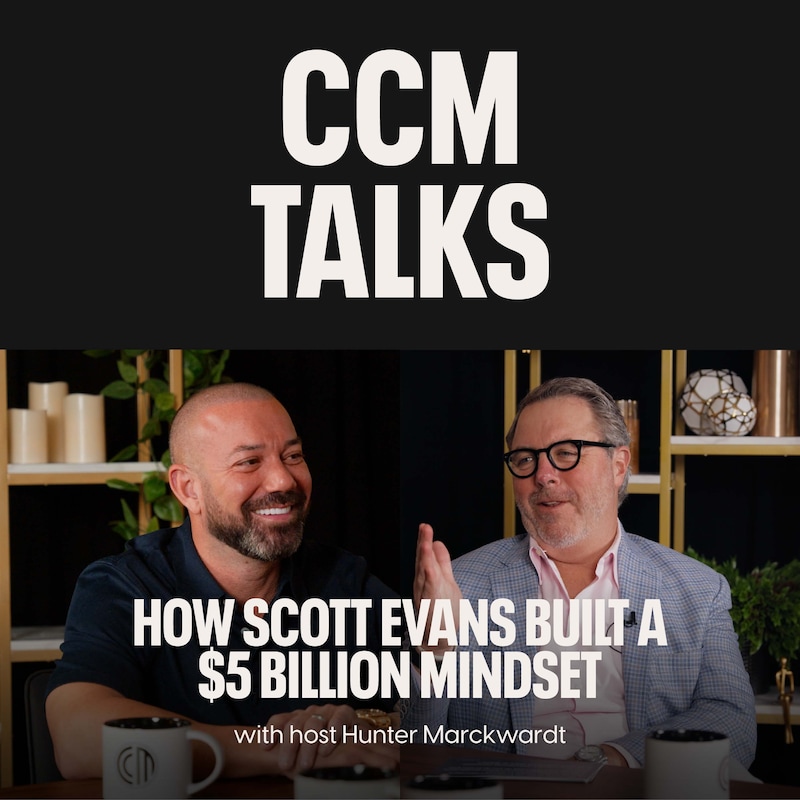
Scott Evans built his business with purpose. In this episode of CCM Talks, he shares how educating Veterans, dreaming bigger and staying disciplined helped shape a business built to last. A must-listen for loan officers who want to grow without burning out.
Transcripts
Hello, everybody. I am Hunter Marckwardt, and I am very happy today to be talking to the great Scott Evans on our CCM Talks. Scott, how are you, brother?
Scott: Good.
Hunter: It's good to see you, man.
Scott: Good to see you, too.
Hunter: So, I mean, I think everybody in the company knows who you are. It'd be nuts not to. Your, if you had to like, if you focused on one piece of the business, what do you like client wise? You focus a ton on Veterans. Yes?
Scott: Yeah.
Hunter: Why?
Scott:My, my grandfather served in the Military. And so I've always had a massive respect of people that served our country. And one of the things that I found out that 25% of Veterans and Active-Duty Service Members actually use their be home benefit.
Hunter: 25%? I didn't know that.
Scott: Yeah.
Hunter: Really?
Scott:So three out of four people that are in the Military never use their VA home benefits. It was shocking. So I started doing, you know, I’ve always been into education. So that's why I started doing those VA homebuying seminars back in 2017 to kind of change, you know, the direction and start educating our Veteran population so they could become homeowners. So I think I did like 500 homebuying seminars in various states.
Hunter: That's incredible. I mean, I'm sure people watching this didn't know that.
Scott:Yeah, that's how it started. My, like, why I started doing more VA business is because I noticed there was there's something not going right. Why do they not know about it?
Hunter: Right. What, what, how many loans do you close a year?
Scott: Probably around 600 to 700.
Hunter: And what percentage of them are VA?
Scott: About 33–34%.
Hunter: Okay. That's amazing. You've, like, I've known you for, what, 12 years? Probably for 13 years. You grind like no one else. Like, talk about, like, 24/7, talking to other LOs or watch, loan officers are watching us right now, what do you, why do you like, you don't need to do what you do. Why do you still do it?
Scott::I mean, goals and gratitude, right? Gratitude. I I'm so grateful for what I have, but I've always realized that every time I set goals, you know, I hit those goals. And I've learned that I have to dream even bigger. And so now I make, you know, crazy goals. So my goal is to I want to close 5 billion in personal production. So just dream big. And in order to, you know, hit those goals, you know you do have to become efficient. And, also people say you can't really grow and be successful without having balance. But I, I disagree with that.
Hunter: Are you balanced?
Scott: I am very balanced.
Hunter: Really?
Scott::Yeah. I work from home. I have breakfast with my, my children, my twins. I have lunch with my wife. Most of the days, I have dinner with them. And then I'm on the phone throughout the day. I go present, and then I just shut it off around 5:00, 6:00.
Hunter::So mindset, I mean, this this is going to be completely random and people are going to be like, what the hell are you guys talking about? But when you and I were in a swim competition with who can hold our breath underwater the longest, you literally did some, like, Buddhist stuff, like, I mean, I saw you like meditating before you. What were you doing?
Scott::I was doing Wim Hof. I was doing Wim Hof breathing. And, yeah, I learned that from Tony Robbins, Wim Hof. So he's doing Wim Hof, so you can hold your breath longer. And then, I was determined to win and beat you all.
Hunter: And you did. It was, yeah, you actually beat Ron, which he'll be really pissed off for me saying. But yeah, you did in fact. He, he had left the pool, but you did, in fact, beat him.
Going back to business, like, if you look at different aspects of what I mean, for you to close 600, 700 loans in a year is insane. Like different components of technology that you utilize. What, like, I think you're number one in the country, not just at CCM but in the country, like at Experience.com.
Scott: Yeah.
Hunter: Is that, is that intentional?
Scott::That was intentional. Yes. Reviews matter. I mean, look at companies that built their entire Yelp. It was all built off of reviews. You know, so many people look at reviews. If you're going to a restaurant, you're looking at the reviews and looking at what other people say. You’re looking at the the stars or hotel. It's same thing goes to someone with a mortgage.
So we already had the reviews. You know, we just asked the clients and our customers to give us reviews, on all the different major sites, you know, Google, Yelp.
Hunter: Trying to figure out what else.
Scott: Google, Yelp, whatever. Zillow. Different reviews. And then when we rolled out Experience, I just put my marketing girl on on top of that and just become number one in that as well. So reviews are important. People look at reviews. I get people calling me because of the reviews on that, that site. Yeah.
Hunter: Like are Veterans?
Scott: Just consumers calling me. I read your reviews on Experience.com, I'm calling you, I want to, can you help me? Yeah.
Hunter: Yeah. It's amazing. One thing, by the way, do you only ask people for reviews that weren't like …
Scott: Everyone. Everyone.
Hunter: Everyone. You're not just looking for five stars. I mean, you are, but I mean, you're also looking for feedback.
Scott::Yeah, we actually just got a bad review and we took it super seriously. We called the client. We want to understand. We want to know more. It was a mistake or what happened. What could we have done better? And it’s very rare that we got a bad review. But we did, and we took it serious, and we wanted to understand why. What could we have change? You know, just, just to fix it. So, so she actually misunderstood the situation.
Hunter::We always talk about, like, a client's perception is our reality no matter what, right? It's like you got to just fix the problem.
One thing, we were talking about VA loans earlier, and I think, like a lot of loan officers, we had, we were talking about construction loans earlier, too, like, there's misconceptions, like, in my market, Northern California, it's amazing how many listing agents won't accept a VA offer because they don't understand it. What do you think are the biggest misconceptions of VA loans?
Scott::That they're slow. That there's going to be, it's going to be very strict on the property. That's why a lot of listing agents don't take them. They think that if they take it, there's they're going to have to pay all this additional money for, you know, the repairs or termite stuff like that. The consumer can pay for the termite clearance. So unlike other loans, you know, you don't have to have termite work, but with VA you do have to have a section one clearance. But the Veteran can pay for that.
There's also the VA Escape Clause, which is essentially the mandatory clause, which a lot of agents don't know what that is, but everyone has to sign that. And if it doesn't come in in value, then they can back out and get their deposit back.
But the biggest mess for Veterans are one they didn't think they have enough credit, that their credit wasn't was not good enough. And VA doesn't have a credit score specific, you know, guideline, right? You just fit into kind of buckets and stuff. They didn't have enough income to qualify. So then they just like, I can't afford a home, you know, and they don't realize they could. So credit income, they're too scared of the process. They're overwhelmed. Right? So they just don't they don't start and they just keep putting it off and putting it off. But a lot of Veterans didn't know that they can actually have two VA loans at one time. That's another myth.
Hunter: I didn't know that.
Scott: Yeah, yeah. You can have VA loans at one time. You could buy a multi-unit. They could buy a four unit, you know.
Hunter: As a primary, right?
Scott::Yeah, as a primary. So that's another one. Which they have to hire a landlord, I'm sorry, a property management company to, for the other three units, for us to be able to use the rent on those other three units to qualify. So that's a little trick.
Hunter: Okay, Got it. When can, when can you use two VA loans at the same time?
Scott::So if someone has a current VA loan, because there's no limit on a VA loan when you're first off, whenever you are, have all your eligibility restored. Right? There's no limit, except for what you can qualify for.
But, so let's say someone buys in Florida, right? They get a $300,000 VA loan. Then they're stationed to San Diego and each county has different limits once a VA loan is, is used. So there's a different calculation. So let's say California is now at $1 million. Right? And they just use $300,000. So conceptually they could probably get a $700,000 at 100% VA loan. But if they went to, you know, Texas, they might only be able to get, you know, $800,000, right, on VA loan and they're at least $300, so they might be able to get $500,000.
Hunter: Got it.
Scott: So that's, it's a really simplified, you know, explanation version, but that's how it works. But they could go higher than that if they bring in 25% of the difference between the new home purchase and what we approve them for a 100% financing.
Hunter: Okay.
Scott: But they can get to two VA loans at one time.
Hunter: Got it. I'm sure my team is going to be like Hunter, I cannot believe you just said that you didn't know that, but it's okay. Your business model is presenting to a ton of realtors.
Scott: I've, I've morphed my, I've changed my business model, to going after real estate agents. That's my customer. So it's really been my customer since I've been in …
Hunter: I was going to say, you say changed, but what? I mean, what was it five years ago to compared to today?
Scott::Well, I was doing a lot of seminars. I was doing the seminars with agents. But then as business changed and, you know, unfortunately, when I was doing the seminars and, and in San Diego, a lot of the Veterans that would come into the rooms in ‘21 and ‘22 now wanted to start buying somewhere else in the United States. And so it was harder to keep, you know, those clients, because once they went into another place in the United States, an agent got ahold of them and then referred them to the lender. So I, I pivoted my business, working with, you know, Matt Weaver and I now I do events for the real estate community, so I’m constantly in front of realtors twice a week.
Hunter: I was going to say, like, how many? Like, just so people understand the scale. Like, what are we talking about?
Scott::Probably twice a week, where I have anywhere from 30 to 60 to 80 agents in a room. I do them in San Diego, Orange County, LA, you know, different places in San Diego, different places in Orange County, different places in LA, Palm Springs and Temecula or Riverside. And so I just make my rounds, do two events a week and to different areas, and then a new event comes up and then I just keep making my rounds.
Hunter: How many people showed up at the first event?
Scott: The first one, probably around 30.
Hunter: I mean, how do you get people?
Scott: Email marketing initially and then just calling, prospecting. It's a combination of both.
Hunter: And that's your day. I mean, like if you said your highest and best use is what?
Scott: I present. I lead the team. I call agents to get offers accepted. And I'll go present at an office for a big team. So that's all I do is present.
Hunter: Okay. Like, literally when you say, I think something that people do not, do not like, I just discovered it, like where I'm, like, on the phone with the buyer, with the buyer's agent, like trying to orchestrate how we're going to write the offer. How much are you doing that?
Scott::I'm not doing that anymore. I have a team that does that now. Yeah, I've been able to build a really solid business that creates balance for our whole organization to my, my entire team. So we actually became a business. So everyone stays in their swimlane and does what they need to do. And we're, we're, you know, missionaries, not mercenaries, like everyone is for the entire good of the group, not for themselves.
Hunter: 11:09 I love it. How do you keep everyone motivated? Like, I mean, actually, how do you keep yourself? I mean, I mean, you funded, I mean, I don't know, probably $6 or $7 billion in loans, if not more. Like, actually, it’s probably more than that. What, what keeps you motivated? And then how do you keep your team motivated?
Scott: For me to keep myself, I just set a big, lofty goal. You know, $5 billion in personal production.
Hunter: In a year?
Scott: In a year. So that's my goal. You guys all heard it. I’m not stopping until I get it.
Hunter: I believe you will.
Scott::And, I'm very competitive, you know, like to compete with Andrew and Matt. So they're, you know, it's fun to compete. And then we do little mini competitions within our group too. Where in our in our team, we have competitions within our group to keep it fun and exciting. You know, between all the different mortgage advisors and stuff like that. So, and then I take them all when we hit our goal, we go to Disneyland and California Adventure VIP tour as a group.
Hunter: Nice. I like that. How many people on the team?
Scott: We have 51.
Hunter::51 people on the team. That's amazing.
You got, you got loan officers listening to us, right? If you were coaching them, and you had five minutes with them, what would you tell them?
Scott: Well, I've been doing this now almost 20 years. So this didn't start overnight. Right? You got to start somewhere. And it starts with you and starts with, you know, figuring out a business model that works. Mine was just cold calling realtors, right?
I mean, I would, Hey, Hunter, I noticed had a brand new listing on one, two, three Main Street. Congratulations. You say, thank you. Hunter, I like to land myself with top and, top and active agents just like yourself. And I want to sit down with you for about 10 to 15 minutes, where I can share with you how I can help you add even more transactions to your year in 2025. Hunter, are you available Monday or would Tuesday work better?
Hunter: Tuesday,
Scott: And that's all I would do. I would just go and present in front of agents constantly present and present and present.
Hunter: What are they, okay, so, so that's what they need to do.
Scott: That's what they need to do. Business is not just going to come knocking on the door. Social media is not going to be the magic trick.
Hunter: I was going to say, I don't think, I was talking to Dan Lemeshev earlier. It was like even with AI, I mean, we're using it, but I mean, it's like people have to pick up the phone and talk to people, right?
Scott::Yes. The phone is the most powerful weapon that we have to generate business. That and then face to face. You know, both go hand in hand. So it's, you know, people just, they need to prospect every day, go out and get, you know, go after agents if you like going after agents. Right? And build relationships. They need to, they're working with someone and you need to provide enough value and eventually pull them off with who they're working with and then for them to start working with you. It's not just going to, like, fall out of the sky. So you have to go get it.
Hunter: Do you think you also have to execute though, too?
Scott: Yes.
Hunter: Right. I mean, it's like you have to create a perception of value and then execute on the value.
Scott: Correct.
Hunter: And your team does that?
Scott: Correct.
Hunter: Like, what do your realtors say about you?
Scott::I mean, they're, they're … what do they say? They think we’re like God, I don't know. It's crazy. They love us. I have raving fans now. I mean, raving fans. When I'm done with an event, there's a line waiting to take pictures with me like I'm, like I'm a superstar. Agents will bring other agents to our events and they're so excited for them to witness what we're, the material we're, we're presenting.
Hunter: Are you coaching the agents?
Scott: So we're not coaching them. We're just giving them strategies in order to win in today's market.
Hunter: Got it.
Scott::And so the grow grows organically from that. From one agent brings another agent and they bring other people and they keep growing that way. And then they keep coming back and keep coming back. I mean, I've had agents, I’ve had, I mean, 700 agents have come to our events in the last two years five times. I mean, I've had people that have come ten times. So we've created this, this environment where they keep coming back, they enjoy, they're motivated, and then they bring other people, and that's how we're growing now organically on our events.
Hunter: How do you like, how do you scale execution?
Scott: How do you scale execution? What do you mean?
Hunter::So like if you think about it right, like salespeople go out and sell, right? And going back to the whole thing, you create, you create a perception of value as opposed to, I personally think it's like it's easy to create a perception of value. That's why people, like, people don't like salespeople because they create a perception of value and then they don't execute on it. Right? It pisses everyone off. How have you been able to like, if you're closing that kind of, like, people can be listened to that's going, I can't relate to Scott because he closes 700 loans a year and he has 51 team members or whatever, but you did something to scale that execution, like, what, what is it?
Scott::Well, so in the beginning is eventually it's you can't do it on your own and you hire, you know, your first employee. Right? And then I remember in the beginning I did work seven days a week for five years straight, right? I didn't have a family. Right? So I was working seven days a week, five days, five years straight. Hired an assistant, you know, and then hired another team member.
And I remember I would be working all throughout the night just emailing people, so I couldn't call them. So I'd be just emailing, copy and paste, do an email, follow up because I didn't have a CRM. So I'd take the same follow up and I'd send it to the next client and so the next client and the next client. Right? So I follow up with people all throughout the night, you know, etc. but that wasn't the, the that was just the beginning.
Now what really turned the cat corners is this, gentleman Daniel Ortiz hired him out of college. He's worked for me for a long time and every single different position, and I moved him into my implementation guy. So he implements all the ideas that I come up with and create, and then he implements. And that was the catalyst, that was the key catalyst that really allowed us to grow is I have someone that all they do is just implement. Something new? Daniel, implement it. So that that was a key component that I put into my business, that everyone and everyone can do that yet.
Hunter: No, but I think it's important to, I mean, like you need to surround yourself with some with an implementer, period.
Scott::I used to be the implementer. That was me, but now I have someone that I can delegate that to, which now creates the balance because I don't have to be working at night implementing all of the ideas and creating and putting it together. I have someone else to do it.
Hunter: I love that. It's cool.
Scott: Implementer. You just hire like …
Hunter: Well, I have one. I got an implement. Yeah. No, it's a gamechanger. And it makes you honestly enjoy your job more, right?
Scott: Yes.
Hunter: Scott. Thank you. I mean, I'm, I'm hopeful, I would expect everybody to take, I mean, I, I'm the interviewer and I took stuff away from it, so thank you for your, for your time, your energy and everything you bring to CCM.
Scott: Thank you.
