Shownotes
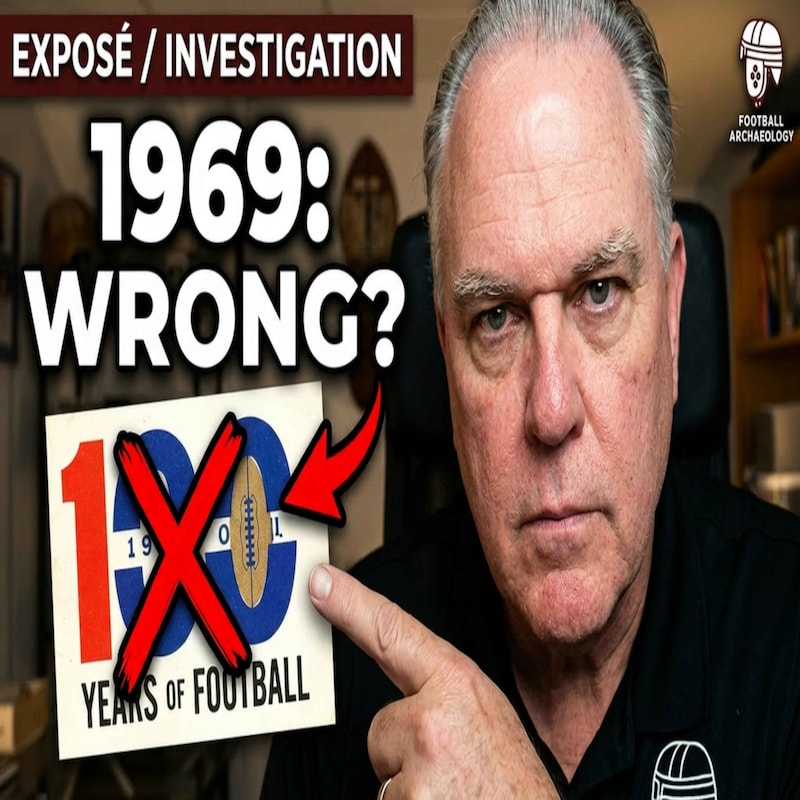
The centenary celebration of football, which erroneously took place in 1969, serves as the focal point of our discourse today. We delve into the nuances surrounding this pivotal moment in sports history, highlighting the misconceptions that have arisen over the years regarding the true inception of the game. Our conversation with Timothy P. Brown, an esteemed football archaeologist, elucidates the various attempts made to commemorate this anniversary, including the issuance of commemorative postage stamps and the distribution of centennial flags to numerous collegiate teams. Despite the planned festivities, the celebration ultimately lacked the anticipated enthusiasm, overshadowed by the tumultuous events of the era, such as the Vietnam War and social unrest. As we reflect on this historical misstep, we invite our listeners to engage with the rich tapestry of football's past through the insights shared in this episode.
Don't forget to check out and subscribe to the Pigskin Dispatch YouTube channel for additional content and the regular Football History Minute Shorts.
Miss our football by the day of the year podcasts, well, don't, because they can still be found at the Pigskin Dispatch website.
Do you want more football history? Test your Gridiron Knowledge, we feed you Daily with our new FREE activity, The Pigskin Trivia Drive.
Grab a copy of our latest book, "Marooned," on the 1925 Pottsville Maroons NFL franchise saga.
*OR* Grab a copy of our book on Western Pennsylvania football history, "World's Greatest Gridiron Team" on the 1903 Franklin All-Stars
Drop us a line at PigskinDispatch@gmail .com and check out and subscribe to the Pigskin Dispatch YouTube channel.
Contact us directly at [email protected]
Miss our football by the day of the year podcasts, well, don't because they can still be found at the Pigskin Dispatch website.
The centennial celebration of American football, erroneously commemorated in 1969, provides a rich tapestry for discussion in this engaging podcast episode. Through the dialogue between hosts Darren Hayes and Timothy P. Brown, listeners are invited to explore the convoluted history surrounding this significant milestone. The episode meticulously unpacks the claim that football truly began in 1876 with the establishment of its first rulebook, contrasting this with the public celebration that took place over ninety years later. The NCAA's attempts to mark the occasion included elaborate plans such as the crowning of a Centennial Queen and the distribution of commemorative medallions, yet the lack of resonance among fans and players alike raises critical questions about the effectiveness of these initiatives. In an exploration of societal impacts, the speakers delve into the tumultuous backdrop of the 1960s, characterized by significant social upheaval and political unrest, which seemingly eclipsed any enthusiasm for the centennial festivities. The discussion reflects on how this historical context contributed to a fragmented response from collegiate teams, with many opting out of wearing commemorative insignia altogether. Such disunity illustrates the broader challenges faced by the sport in cultivating a cohesive identity amidst diverse interpretations of its history, and the episode encourages listeners to consider how these narratives shape the collective memory of American football. As the podcast draws to a close, the hosts extend an invitation to their audience to engage more deeply with football's intricate history, suggesting that a richer understanding of its milestones can enhance the appreciation of the sport. By fostering a dialogue about the narratives that have shaped American football, they hope to inspire listeners to acknowledge and celebrate the myriad influences that continue to define the game today.
Transcripts
When was the 100th anniversary of the game of football?
Speaker A:Perhaps the football archaeologist Timothy P. Brown knows.
Speaker B: was mistakenly celebrated in: Speaker B:1969.
Speaker B:They played a soccer ish game with 25 players per side, blah, blah, blah.
Speaker B:But I've only come to that belief in the last few years myself.
Speaker B: have not yet converted to the: Speaker B:Football.
Speaker A:Hello, my football friends.
Speaker A:This is Darren Hayes of Pigskind dispatch.com welcome once again to the Pig Pen, your portal deposit of football history.
Speaker A: as we celebrate this week of: Speaker A:Tim, welcome back to the Pig Pen.
Speaker B:Hey there.
Speaker B:Good to chat.
Speaker B:And I wanted.
Speaker B:Last week I asked you a quiz and gonna ask you another little quiz this time.
Speaker A:I hope it's just as easy as last week.
Speaker A:I don't know too many things.
Speaker B:You'll see how smart you are.
Speaker B:You got it right the last time.
Speaker A:So why do I feel like I'm getting set up for a trick question here?
Speaker B:No, I wouldn't do that to you.
Speaker A:Won't be another Captain Obvious question.
Speaker B: was mistakenly celebrated in: Speaker B:But do you know why this particular podcast is special?
Speaker A:Well, I think it's probably a.
Speaker A:A big historic number of your visits to our thing.
Speaker A:So I'm guessing probably, probably 200.
Speaker B:Maybe it is number 200.
Speaker A:Okay.
Speaker A:All right.
Speaker A:Well, that is quite a.
Speaker A:A milestone, you know.
Speaker B:Yeah, I mean, that's.
Speaker B:Yeah.
Speaker A:Most people don't want to have 200 conversations with me, so.
Speaker B:Yeah, you're assuming that I did.
Speaker A:I'm glad I, I send those drugs to your wife that she puts in your coffee in the morning.
Speaker A:So you, you don't realize what's going on till it's too late.
Speaker A:Yeah.
Speaker B:Yeah.
Speaker B:So anyways, so congratulations.
Speaker B:And this is our bicentennial podcast.
Speaker A:There you go.
Speaker A:So I can't wait to hear this one.
Speaker A:It's gonna be a good one here.
Speaker A:Yeah.
Speaker B: this, this one, you know, the: Speaker B:And so, you know, it's one of those deals where, you know, I, I've said many times, like, for me, you know, different people disagree on when football, American Football started.
Speaker B: For me it's: Speaker B:1969 They played a soccer ish game with 25 players per side, blah, blah.
Speaker B:So anyways, but I've only come to that belief in the last few years myself.
Speaker B: have not yet converted to the: Speaker A:Before you get, get started in the story, you just brought up something.
Speaker A: , so I, I do not remember the: Speaker A:I was only like 2 years old.
Speaker A:But, but were, were they celebrating the 100th anniversary of football?
Speaker A:Was it something that would.
Speaker A:Was like put in newspapers or maybe said in, during a, you know, a game on TV or something?
Speaker B:Yeah, yeah.
Speaker B:No, so it, so it was, it was supposed to be a big deal.
Speaker B:It actually kind of fizzled.
Speaker B:So like the NCAA planned this big thing and you know, and it was again hundredth anniversary of the, of the Princeton Rutgers games.
Speaker B:But I mean, they did stuff like in June they named this woman as the National Centennial Queen.
Speaker B:You know, like a, like the Queen of the Fair or you know, you know, whatever.
Speaker B:You know, those, like the Queen of the County Fair shoe, that kind of.
Speaker A:The title that they gave her.
Speaker A:That's hard to put on one of those sashes.
Speaker A:That's a lot of words to put on there.
Speaker B:Yeah, well, just use small letters.
Speaker B:So, you know, but they had, they had pretty, you know, pretty significant, significant plans.
Speaker B:They had.
Speaker B:All these different schools were, were got centennial flags.
Speaker B:Now, you know, I don't know if they had to pay for them or what.
Speaker B:Each school got 22 medallions to give to their, you know, essentially their starting varsity players.
Speaker B:And at the time the NCAA had like 423 schools.
Speaker B:So that included, you know, what's now Division 3, you know, 2 and 1.
Speaker B:There was, you know, postage.
Speaker B:USPS issued a postage stamp in celebration.
Speaker B:And then, you know, one of the big deals was that they were going to have every, they wanted every team to, instead of having their normal logo or in addition to their normal logo, they would wear these stickers on the side on their helmet that was like a football shape and it said 100, you know, inside the shape of the football.
Speaker B:And so there were teams that, some teams didn't wear them at all.
Speaker B:There were teams like Texas had the sticker above the Longhorns, the Longhorns horns.
Speaker B:There were teams that wore them on the front of the helmet.
Speaker B:There were teams that wore Them on the back of the helmet.
Speaker B:So it was kind of all over the place.
Speaker B:And then, like, Navy didn't wear the sticker, but they.
Speaker B:They all wore, you know, what, you know, are called TV numbers, right?
Speaker B:And those were much more popular in the late 50s and early 60s, you know, like the Alabama numbers on the side of the helmet.
Speaker B:So everybody wore 100 on the side of their helmets.
Speaker B:So it was just one of those things where I. I don't know if I suspect it was just a combination of things like, you know, Vietnam and, you know, their assassinations in the 60s and, you know, and several in 68.
Speaker B:And so I just think the mood of the country wasn't.
Speaker B:Wasn't there, you know, to celebrate 100 years of football, you know, and so it probably.
Speaker B:It wasn't anything like the.
Speaker B:That the NCAA screwed up.
Speaker B:It was just like they're, they.
Speaker B:It just never gathered enthusiasm.
Speaker B:And so I don't, you know, I don't really have any sense of how many teams wore them, you know, wore those numbers on their helmets.
Speaker B:But a lot of them, you know, either never wore them.
Speaker B:They'd wear them only for certain games, maybe certain uniform combinations.
Speaker B:They wear them for home games or away games or whatever.
Speaker B:So it's kind of all over the map.
Speaker A:But.
Speaker B:But the whole thing just never really, you know, got that, you know, really took off.
Speaker B: toon series that published in: Speaker B:And then like, I did a series showing the cartoon, you know, or cartoons, because I think there were multiple, maybe two a week or something like that.
Speaker B: y of the game from, you know,: Speaker B:So that was kind of cool.
Speaker B:So, I mean, it's not like the NCAA was all alone.
Speaker B:You know, these were syndicated articles appearing in newspapers all over the place.
Speaker B:So, you know, so there's a lot of stuff going on, but just never really, never really took off.
Speaker A:Oh, that's.
Speaker A:That's kind of a shame.
Speaker A:I guess maybe they.
Speaker A:If it would have been more like today where social media and, you know, people are on the Internet and, you know, a little bit more, you know, ESPN's of the world and things like that and pre game shows, maybe it would have been a little bit better.
Speaker A:But really they, they only had.
Speaker A:You had your newspaper and radio and TV when The game came on, you know.
Speaker B:Yeah, yeah.
Speaker A:Back then.
Speaker B:Well, you know, but if you.
Speaker B:If they followed my direction, they could be wearing 150 on their helmets this season, Right?
Speaker A:Yeah.
Speaker A:Yeah.
Speaker A:There you go.
Speaker B:2026 Is the 150th anniversary of football.
Speaker B:So, you know, I don't know, I.
Speaker A: to take some credit, like in: Speaker A:And to go.
Speaker A:To go on your timeline of no football.
Speaker A:Okay.
Speaker B:No, no, I'm not gonna do that.
Speaker A:Okay.
Speaker A:All right.
Speaker A: f us would just pass right by: Speaker A: ds of things that happened in: Speaker A:But you.
Speaker A:You go and you grab this piece of relevance to football history, which really is a milestone in itself.
Speaker A:Even if, you know, people don't agree that that is 100 years.
Speaker A:And you do this a lot with your tidbits, maybe you could share with people how they can participate in this.
Speaker B:Yep.
Speaker B:Just go to footballarchaeology.com it's a substack site.
Speaker B:If you subscribe, you'll get an email from me every time that I publish a story.
Speaker B:Otherwise, you can bookmark it.
Speaker B:You can also follow on substack.
Speaker B:That assumes you want to use the Substacks app, and that's kind of like, you know, following somebody on Twitter, you know, Facebook or whatever.
Speaker B:Yeah.
Speaker B:So, you know, kind of what.
Speaker B:Whatever floats your boat.
Speaker B:Have at it.
Speaker A:All right.
Speaker A:Well, Tim, we really appreciate you coming here and sharing this story and appreciate have you back next week to tell another tale from football's past.
Speaker B:Yes.
Speaker B:It'll be a tall one, I'm sure.




