Shownotes
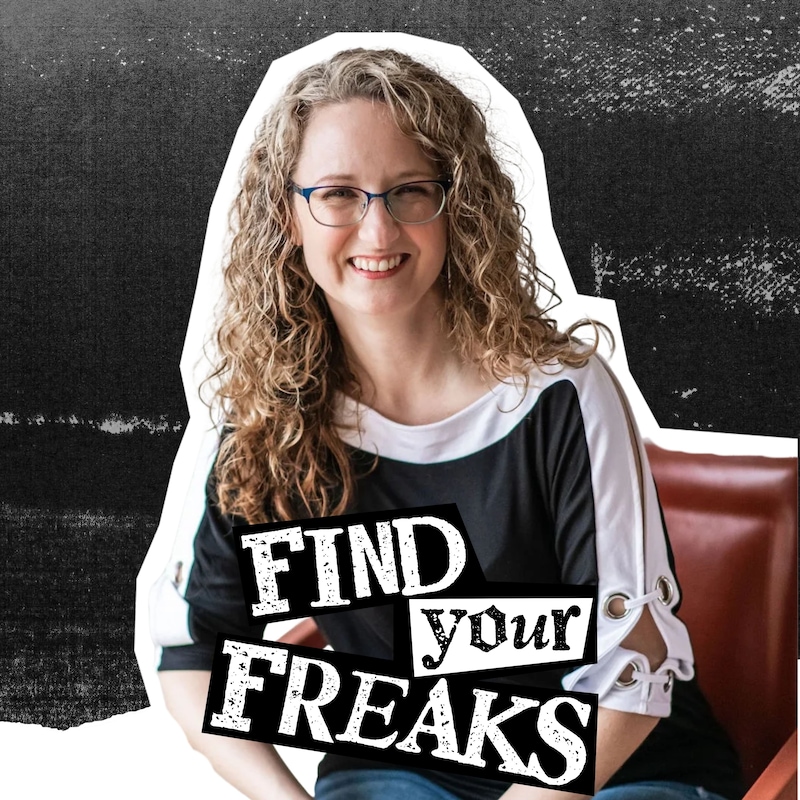
030 – The Hidden Life of Working Homeschool Moms with Jen Mackinnon
Why belonging should never require you to split yourself in two
Working moms are often told they cannot give enough to their children.
Homeschool moms are often told they should give everything to their children.
So what happens when you are both?
In this episode of Find Your Freaks, Tonya Kubo sits down with Jen Mackinnon, founder of Practical by Default and the Working Homeschool Mom Club, to talk about living at the intersection of two communities that were never designed to overlap.
Jen shares why she began homeschooling reluctantly, what it was like to return to work outside the home, and how advice from both sides often amounted to the same thing: quit your job or put your kids in school. What began as one mom looking for people who understood eventually became a worldwide community of more than 30,000 working homeschool moms.
Together, Tonya and Jen explore the judgment these moms face, the practical systems that make an unconventional life sustainable, and why the answer is rarely giving up one of the things that matters most.
If you have ever been told that two important parts of your life cannot coexist, this conversation is your reminder that belonging does not require you to split yourself in two.
You’ll hear how:
- Working homeschool moms can feel like outsiders in both working-mom and homeschool-mom spaces
- Advice becomes judgment when the proposed solution requires abandoning your values
- The pandemic changed public perceptions of homeschooling and created new challenges for families
- Grace and empathy make room for families to choose what actually works for them
- Practical systems should support your life instead of asking you to organize your life around them
- A buffer block creates breathing room when plans, deadlines, and family needs change
- Budgeting your energy can be just as important as budgeting your time
- Online and asynchronous connections can provide meaningful community for busy moms
- Listening without judgment is more helpful than assuming work or homeschooling is the problem
- Teaching children how to learn matters more than getting every lesson perfect
Episode Highlights
[01:30] Meet Jen Mackinnon and the working homeschool moms who are her kind of freaks
[09:50] Why judgment doubles when moms work and homeschool
[15:50] Realizing this was not just one mom’s problem
[20:00] What makes a system practical and sustainable
[24:50] The buffer block and why leaving space in your week matters
[30:50] Rethinking what community can look like for working moms
[38:00] Why making mistakes does not mean you are failing your children
Resources & Mentions
Meet Our Guest
Jen Mackinnon is the founder of Practical by Default, where she helps working homeschool moms balance their careers, their children’s education, and everyday life with confidence. After struggling to find advice that did not tell her to quit working or stop homeschooling, Jen created the Working Homeschool Mom Club to connect with other moms making both work. What began as a small Facebook group has grown into a worldwide community of more than 30,000 members. Through practical resources, flexible planning tools, and honest conversations, Jen helps working homeschool moms create systems that support their real lives.
Meet Your Host
Tonya Kubo is a community strategist, writer, and rebel with a cause: helping people find the place where they truly belong. She’s spent nearly two decades building online spaces that feel more like chosen family than comment sections, and she’s not afraid to call out the fluff in favor of real connection. As the founder of Find Your Freaks, Tonya brings together unconventional thinkers, builders, and bridge-makers who believe that “normal” was never the point. When she’s not hosting the show, she’s raising two daughters, leading client communities, and making meaning out of the mess.
Support the Show
If Find Your Freaks matters to you, help us keep it ad-free by buying us a coffee (or two!). Every dollar goes to production so more weirdos can find their people.
You can purchase Find Your Freaks merchandise online through Abilities and Attitudes.
Let’s Stay Freaky
What’s Next
Since recording this conversation with Jen, Tonya has started homeschooling her twelve-year-old again, this time with more experience and a different perspective. Next episode, she explores a question that keeps becoming more important online: When everyone sounds like an expert, who do you trust?
Transcripts
And so I really felt like I didn't belong anywhere because I couldn't get advice that wasn't telling me to either quit my job or put my kids in school. And that was really difficult. And the thing is, I think so much pressure on all moms, on all people, is that we have to get it right and it has to be perfect.
And they forget that making mistakes and learning with your children is part of the process, right? So if you're out there panicking and you're feeling like, I'm messing up, it's not good enough. I'm never going to get this right. It will get easier.
Step back and remember why you're doing this. And what is the goal for home educating your children? We all have different goals, but in the end, hopefully it is teaching your child how to learn. We're wired for connection, but most of us are faking it to fit in.
I'm Tanya Kubo, and this is Find Your Freaks, the podcast that flips the script and spotlights the quirks you thought you had to keep quiet. Subscribe now and head to findyourfreaks.com for show notes and extras, because around here, what makes you weird makes you wonderful. Normal was never the point.
We love to talk about community here, how to build it, grow it, sustain it. But today, we're going to talk about what has been emerging as a much more common occurrence than I think anybody realizes, which is what happens when you live between two communities that aren't actually built to overlap. In this case, we're talking about working moms and homeschool moms.
Each has its own challenges, expectations, and ideals. But what happens when you belong to both? Well, to answer that question, I can't think of anybody better to bring on the show than Jen McKinnon, the founder of Practical by Default, where she helps working homeschool moms juggle career, education, and everyday life with confidence. Now, I actually encountered Jen prior to the pandemic when I was thinking of homeschooling my eldest, but thought that I would have to quit my university job, which was a full-time gig and had a lot of nights, a lot of weekends, and a lot of overtime.
And a friend who was a consultant had told me she'd been in Jen's community for a few years. So I was like, well, let me see about this. I ended up, I did end up leaving the university job before I started homeschooling, but that had nothing to do with what was possible.
That just simply had to do with personal choices. So what I have found so intriguing about Jen's story over the years is that she really started off as just one mom trying to make sense of her own chaos, and a bunch of other moms jumped in to join the party. So Jen, let's kick this off with our signature question, which is, who are your freaks and why do you love them? Hi.
So I'll say my freaks, I would say, are working moms who are homeschooling and they're trying to do both at the same time. And it's getting more popular, but when I started, it was definitely not something people did. Yeah.
And so when we were talking before the show started, you referred to it as a bold choice because you were saying that the world still sends this message that that is not possible. So tell me how you came to that perspective and like what has happened, maybe tell everybody like how long the community has been around, how long you've been on this journey and what you have found, you know, what is different now or the same now that it was back then. Okay.
community. I think it was in:So I was like, I'm all by myself. Am I the only crazy person who wants to do both? Is this even possible? I was making it work, but it wasn't going very well. I still had a lot to learn.
And so I was talking to a friend and she's like, I said to her, I said, maybe I should start a Facebook group. And I really thought I might get like 10, 15 people to join. Like there's gotta be more than me.
fe of its own. So was this in: Yes. Not:You look good for being a mom in 96. Let me tell you. Oh my goodness.
No. So yes.: 're like, I wasn't born until:And I'll be like, right. I knew that. Of course I did.
Yeah. But the years, they blur together. It's totally fine.
roups were a thing. So that's: Okay.:I think the dates are important, right? Because a lot of people right now, people are like, oh yeah, everybody I know homeschools. Well, everybody you know homeschools because of the pandemic. Okay.
s what we need to do here. So: s happened in the world since:Yeah. So one major difference I've noticed is that the thought process of how it works has really changed. So before the pandemic, and I should clarify, not everybody works at home because every time I say working homeschool mom, they're like, oh, you work at home.
I did not. Many, many do not. They go to the office or they have an office.
They have all kinds of different jobs that they do. And so before there was a very particular way that working moms were trying to homeschool. You know, they had a few methods.
I haven't had a few ways of making it work. And in our community, we really talked about how to make it unique for each child, for each family, that there was a lot of rule breaking. You know, you didn't have to have a method.
I never had a homeschool method. It was kind of whatever worked. That's what I did.
It was a lot of trial and error. And so we had a lot of conversation around that when the pandemic hit, we had a lot of parents who were used to putting their kids in public school, now home with their kids doing an online public education. Right.
So they were like trying to, you know, I have one picture stuck in my head. A father actually sent it to me and he had his kids lined up. He had four computers, four children.
And the whole day he was trying to keep up with like all the things. And then he would go to work and his girlfriend would come in and she was trying to do it. And it was like, that was what homeschooling to them was, was very much a school at home approach.
And so we spent a lot of time as a community saying, that's not exactly what homeschooling is. And kind of helping them mentally transition from like, because that's what the idea was, right? Like, oh, now we're all homeschooling. Kind of terminology is important, but it's also like the thought behind it, right? Like, yes, you're there to support your children and make sure they get an education.
But did you know you can unplug, do what needs to be done to support each child that doesn't take you right there from morning to night, because they were getting burned out and they were getting exhausted. And so we had a lot of conversation, especially in my group about, you know, not chastising them or making them feel like they didn't know what they're doing because we've all been there. We've all done that and we're still learning and it's okay to start one way and make those changes and to start one way.
And if that's actually working for you to keep going. Yeah. Well, and so in my area at that time, the schools and even the state was very careful to refer to it as distance learning because the big thing, of course, with homeschooling, and this is what I found out as a new homeschooling mom pre-pandemic, is that a homeschool day can check all the boxes of a public school day in like a fraction of the hours.
And that blew my mind. I thought homeschooling was six hours because public school was six hours. And so I remember when I was in your community, and we'll talk about this a little bit, like the first advice I got is, well, you're going to have to figure out childcare if you work more hours than your child is occupied by school.
And I was like, oh, it didn't occur to me that that would be a thing. But with the distance learning model, and I remember when our schools came out with it, I'm like, I'm not sitting my kid in front of a computer for six hours, which is why we ended up homeschooling our second for a while. But you just said something that I think it's important to talk about this piece is you talked about how there were a lot of conversations in the community about how we were going to talk to this new crowd of people who didn't have the same basis of knowledge, didn't have the same, I mean, it wasn't their choice either, right? That's the other thing is, you know, talk a lot about how passionate homeschooling families are, because you kind of have to be to do a thing where there's not a lot of playbooks.
And so something that I have seen in your group before, right, is that, and I think you may have said it on a live stream at one point, but that working moms and homeschool moms individually face a lot of judgment, but that when you do both together, or when you make it known that you want to do both together, that judgment doubles. What does that look like in real life? So I'll share my personal experience because I just feel like that's what I have the most knowledge about. So I was a reluctant homeschooler.
I did not want to homeschool. So I'm just going to put that out there because I know some people have dreamed about this before they even had children, that this is the lifestyle they wanted. And I did not want to homeschool, but it just happened that it was the right fit for my oldest.
So, you know, I started homeschooling and then I returned to working full-time outside the home. And that was for financial reasons. We needed money.
So, you know, kids, they like food and clothing and shelter. So I needed to go back to work. And so what happened is I ended up with these friends who were homeschooling, but they stayed home all the time.
Not all the time, but like they didn't go to work. And so then I had the people I went to work with and their kids were going on the bus every day. And so what happened is I was in a place of where I felt judged if I said, boy, work was really hard today.
And to my moms who homeschooled because they'd be like, well, then just quit work. And I'm like, we like to eat. Like, I don't know, but like I could not make it work.
And so if I said it at work that, you know, the kids were just really having a hard day. Oh, this homeschooling thing is challenging because it is, they would say, put your kids on the bus. And that was not the right choice for our family.
And so I really felt like I didn't belong anywhere because I couldn't get advice that wasn't telling me to either quit my job or put my kids in school. And that was really difficult. Yeah.
Well, and I can see how, you know, I'm sure to them in each scenario, they're like, well, I'm just being helpful. Right. It's like, I mean, this happens a lot of times in mom circles, right? Well, they'll go to a therapist, right? Because they're stressed out.
They're sleep deprived. They're all these things, you know, new mom and the therapist big thing is like, well, instead of breastfeeding at night, why don't you, you know, let dad get up in the middle of the night, feed formula, and then you can get a good night's sleep. And the moms are like, why is that the solution? Like I breastfeed because I want to, and I'm sleep deprived.
Like, why can't we have a different idea? Like, I don't know, like dad does dishes during the day or something, right. Or we hire a housekeeper or whatever that could be. So I understand that they think they're giving helpful advice, but when the advice is to go against your values, go against your choices, it feels like judgment.
So what do you wish working moms understood about homeschooling moms and homeschooling moms understood about working moms? That's a good question. I think, well, one thing I wish that they would both come from is more maybe empathy or grace, like understanding each mom is making the best choice for their family. Right.
So instead of immediately going to whatever preconceived notion they have about working moms, because some, not everyone, I don't like slapping labels on people, but you know, some homeschool moms are very proud of the fact that they don't work, get paid. And that's great if they're able to do that and still do all the things. And they've worked very hard to develop these skills and these systems that allow them to save money and, you know, all of the things, but they forget that that's not for everyone, that we don't all have those skills or even those choices, or maybe we have a career or a job we love.
And that idea to them is like, doesn't make sense. Right. So they feel like we're putting a choice of like choosing our career or our job over our kids.
And that's not true. But also the working mom sometimes has that flipped, you know, like, oh, you gave up your career and why would you do that for your kids? I feel like that kind of like meeting in the middle of understanding that both of them are trying their best, they're making choices. And so to offer each other grace, you know, just like whatever works for you and your family is what you should be doing.
And unfortunately, or fortunately, however you want to look at it as a working homeschool mom, it often comes with being a bit of a rebel and going against what society has you doing. Yeah. You just get really good at being okay with that.
Right. I mean, to some degree, as a working homeschool mom, you have to develop a thicker skin. But I also think there is something that we can all learn.
And what you're saying is just because something is the best decision for you, or something is your personal primary driver, doesn't mean it is somebody else's primary driver, or it's the best decision for them, even if you think their life is just like yours. So now I'm curious, because you walked us through the timeline a bit. But at what point did you realize that this wasn't just a you problem, right? You weren't the only person struggling with the working homeschool mom intersection, that it actually was bigger than you.
More people had the same issue. It was when I opened the Facebook group, I really didn't expect it to grow. So I didn't really do what a lot of Facebook group owners do, where they promote their group, and they talk about their group.
I kind of never really did that. The members did that. And it kind of just kept growing and growing.
And I was like, where are all these people came from? And it's incredible now when I go in there, because it's a worldwide group. The moms come from all these different backgrounds. They have all these different jobs, and some have one child, and some have like eight or nine children.
And it's so fascinating to me to one, not feel alone, because I really did for a long time. I just felt like I'm the only one over here trying to make this work. And then seeing how everybody makes it work differently.
ike, I think when we hit like:And now you have what 27,000 34,000 the last time I checked, or 34,000. I think you had 27,000 when I joined. Okay, so how much did it grow during the pandemic? I'm just now this is just the community strategist and me being curious.
I am not really sure, but it grew fast. Now it's slowed down a bit, we get probably 15 to 20 ish new members a week. But there was a period where we were getting like 50 to 75 a day.
And it was amazing and overwhelming at the same time. And it was really, really hard, because I really care about these moms. And a lot of them were in this situation, the pandemic just kind of threw them in.
And they were like, okay, this distance learning, as you called it was not working. They're still stuck with their kids at home. And so they just needed a lot of help and a lot of guidance.
And so that's when I started bringing in moderators from your advice and started asking for help and realized I didn't have to be the only voice in the group, which was really nice. And my community is amazing. So many will step up and share, which I really appreciate.
Yeah, so in the community that we're talking about is the Working Homeschool Mom Club, right? Because I want to make sure I get all the words correct in the right order on that. And something that's a little bit different about the Working Homeschool Mom Club, from my perspective is one, and you said this earlier in the show that there is no specific model or methodology that it is framed around. It's not a Charlotte Mason group, it's not a Reggio Emilia group, it's not a Montessori group, blah, blah, blah, blah, right? Not an unschooling group, right? It's just do you homeschool or want to homeschool and do you work not to work? Are you a mom? Are you not a mom? I mean, it's very simple criteria.
But the other thing that makes it a lot different from other groups is its secular focus. Like you have really made it, it's like this is about working and homeschooling. And so you don't really lean heavily into any of like religious curriculum or, you know, religious reasons around homeschooling, because there are a lot of families that homeschool for religious reasons.
And, you know, and you also keep it kind of out of politics, right? Because people live all over the globe. Some people do live in places where homeschooling is actually not legal. Other places live in areas where homeschooling is tightly regulated.
So you kind of keep the right or wrong of the regulation piece out of the conversation, which I think is why you have to have the admin team you have to have, right? Because a group that was just like Wild Wild West didn't care what anybody posted. A group leader that didn't care as much for the members as you do could get away with a lot less moderation, even at that size. Yeah, I completely agree.
And I feel like that might be something that sets a group a little bit apart, because there are groups for that. You know, if you're a Charlotte Mason group, you know, you can go join that group. And if you're secular, you can go join that group.
So the criteria for my group is, are you a mom who wants to homeschool or is homeschooling? And do you work or are you returning to work? Or are you going to start a job? So it's very, very basic or simple, because those are the moms I want to support. And we all have a lot of the same struggles. I mean, it's hard.
It is. So speaking of the moms you really want to support, the moms maybe who most desperately need your support, your brand, you know, let's pull back from the community in and of itself, because the community is just a small part of what you do now, right? Because this community has become your business, your focus out in the world. So your brand itself is called Practical by default.
What do you mean when you say Practical? What do I mean when I say Practical? I think it needs to be something you can do that makes sense for your family and yourself, something you'll use is kind of where I guess it came from. So my husband actually named the business because he's always complaining that I'm so practical. So we've been married 25 years.
When he buys gifts, he's like, what do you want? And I'm like, well, this broke. So I want this thing to make my life easier. And so he's like, everything you want is practical.
And so I feel like that is very fitting for working moms. You need to have systems, tools, things that make sense, that make your life easier. And what makes sense to each mom is a bit different.
But I think if it's better than something shiny, that's pretty that you put on the shelf and you never use, because that's not helpful. It's kind of a waste of time, energy, resources. Yeah.
So really what you're talking about is like, what is sustainable for you, given all your circumstances? And what I just heard is, when you're talking about systems, you're really talking about systems that work with your life versus against it, or systems created as if you don't have a life. So what do systems that work with your life look like in practice? What do they look like in practice? Things that support what you're trying to do. So for example, one of my favorite systems is meal planning.
And meal planning looks completely different for each person. So I have food sensitivities, things I cannot eat. So going to the store and picking up food is an option for me, but it's a really hard option.
It takes a lot of time. I have to read the ingredients. I have to do this and that.
Meal planning is a system that just supports my life. It makes it simple. And the way I do it for me is, you know, I don't have meals assigned to a day.
So some people have like, Monday we're eating this, Tuesday we're eating this. I don't do that. But I have like a list of meals that I have the groceries for in the house to make these.
And then I look at each day. So if I know it's going to be a long day, I'll pick something that I can either throw in the slow cooker in the morning or pull out and throw in the Instant Pot really quickly. I have meals, because I do like to cook, that I have time to, you know, kind of play in the kitchen, cook, chat with the kids.
Or my husband, as I'm doing that, use it as like a connection while I'm still providing food for me and my family. I know breakfast is really, really hard. So we'll do some meal prepping as a family sometimes.
So it's very like works with your family. How is it going to make your life easier? Is it going to save you time? Other periods of my life when I didn't have so many food allergies, we did a lot of pickup. Like we'll pick up a roastery chicken and salad and bring it home because that was fast and easy and still got food on the table.
You know, we'd pick up pizza. Sometimes I miss those days. But like having a system that supports, the same as your planner.
I am a big believer in having a planner, but I don't have like one planner that I recommend for everybody, because everybody's so different, right? Some of us need a planner that goes with us wherever we go. Some are home a lot. So we like to write it all out.
It's very much like how you make it work for your life. Yeah. And do you sell, you sell planners, right? Yeah.
What kinds? So I have a printable planner that's on dated, because some people just like to write in the dates. I have a dated planner and I also have Trello boards. Oh, okay.
All right. So for people who like that more digital organization, I know that there are planner addicts out there. So I had to ask the question because if they're listening and they're a planner addict, they're like, why did she not ask about planners? I will say one thing that's different about the paper planners, like the printable planners or the on dated planner has the same layout and because everybody has their own thing, but my planners, I try really hard to have room for like your, it helps if you show the right day.
It has like a weekly review in it because to me, that's so important at the end of the week. Like, are you doing what's working? Are you doing what's, are you going to keep doing what's not working? So many of us get in the habit of like, well, I've been doing it this way for years, but it's not working. So make that small change, but to make sure there's lots of room.
So if you're a paper planner and you work and you homeschool or you do a bunch of things, make sure you have lots of room to write everything down because so many planners today are just little, little, and I can't fit my work and my homeschool and my life in one planner and I don't have time to hunt around and find them. That makes sense. That makes sense.
So one of the systems that you taught me that I think is really valuable is the buffer block. Is that something you want to talk about? Sure. Yeah.
So the buffer block is a time block in your week. Some people choose a whole day. Some people choose a half day.
Some people just choose like an hour or 30 minutes that you keep empty on purpose. And that is because life is always changing. So it doesn't matter what your life is.
Something's going to come up, something's going to go off the rails, child's going to get sick, deadline's going to get shifted, and you need time to make up that time. And so what happens is we overpack our week and we don't have time to make adjustments. So knowing we have that empty space that we've kept, you know, when we did our original planning, it's kept empty.
So we can put things in there. And if you have a really great week and everything goes according to plan, you can use that for a nap or doing a load of laundry or going for a walk or playing with the kids or something. Yeah, I love it.
So my buffer block is now, it is nine to noon on Thursdays. And the reason I mentioned that is because we are recording during that time right now, right? Because you, because you work outside the home, you're running a business and you live very rurally, all of that combines to where you don't actually have, and we are in dramatically different time zones, I should add that. So with all of that combined, you don't have a lot of work hours during my work hours.
And so like, we weren't, not for this buffer block that you taught me several years ago to use, we would not have been able to get on the calendar for several more months than we were able to. But it was so easy for me to say, yeah, like just, you know, to tell Sophia, just, hey, go ahead, just book it within the buffer block on any given Thursday, and we can make that work. And that works really well.
I have now found, it took me a long time to do this, but I've now found like anytime I'm trying to make an appointment, I just automatically ask, what do you have on Thursdays between nine and noon? Because I know that that's guaranteed to be open. Yes. And the reason I bring all of this up, aside from the fact that it is my favorite of systems that I've learned from you, is I want to talk about energy, specifically energy and routines, because you know that for years I ran a clutter community, a clutter-focused community.
And you know, routines are everything for cluttery people. Like the fastest path out of your clutter is a daily decluttering routine. And yet so often, cluttery people will fight those routines, right? Because they don't feel like it.
I don't have any energy to do that today. And what I have found, and I just want you to tell me, is this true for you, true for other people? Am I the weirdo? Because it could be. But I have found that having those routines actually saves me so much time and energy.
Like I was just saying, knowing that nine to noon is always open, unless I choose to fill it, saves me a lot of hemming and hawing when somebody calls me when I'm on the road and they want to book a meeting with me that I know I need to have for whatever reason. Yeah, I agree that routines and it just, for me, it just removes that mental fatigue of like, oh wait, and you know, you're second guessing and then you're trying to think. So any type of routine, just yeah, it works with your energy.
And I think that's one thing that as moms, we kind of forget to budget is our own energy. Like when do we have the most energy? And it's true, we don't always get to do the things that need our energy when it is ideal, because life just doesn't work like that. But if you can, or at least be aware of like, okay, this task that's coming up is really, really exhausting.
It takes a lot of my mental energy. Can I do lighter tasks before that so I can save a lot of my energy for that? And yeah, I agree. Energy is really precious.
So that is why I love the buffer block. I use it all the time as well. And mostly for appointments too.
I'm like, okay, mine just shifted, actually. And that's what I love about planning, knowing what's on your planner. Because mine used to be Wednesday afternoon, and now it shifted to Wednesday morning.
Right. And I think, you know, kind of to tie a bow around this, I think a lot of people resist systems because they view the system is trying to control them and they don't want to be controlled. Right.
They want their creative spirit. They want freedom. They want flexibility.
But what I have found is that a strong system that is structured, but allows for some flexibility to fit within your life is actually quite freeing. Yes, absolutely. And then there's all this freedom, free energy, free time that is left over to do things that you really want to do.
Yeah. I always say when you're planning, the purpose is to have that framework. Mm-hmm.
Right. I mean, you need to have enough flexibility, but if you don't know the pieces that hold your framework in place, I don't know. I spend all my time wondering, like, what am I forgetting? What isn't getting done? Getting surprised by time deadlines and things that I knew about, but didn't keep track of because I didn't want to keep controlled.
And so, yeah, you need enough structure. I always tell people, don't overpack it so tight that you can't breathe, but put in enough structure so that you don't wake up every day going, okay, what's going on today? Yeah. Because it's exhausting.
Definitely. Definitely exhausting. And speaking of exhaustion, kind of going back to this community because you're a homeschool dinosaur.
I get to call you that. That's fun. Right? I mean, you've been doing it since before it was cool.
Homeschool moms and then adding working homeschool moms. When I was in it, I was exhausted. Very little free time.
What have you seen that community looks like for these working homeschool moms? I think community is more of an online piece for working moms. It is very hard because it's very hard, as you said, to make that time to meet in person. If you can, that's great.
So when they're looking for in-person community, I find a lot of moms are resorting to meeting for coffee because it's quick. It's easy. It doesn't take a lot of time or eventually as the kids get older, but when the kids were smaller, we did park dates like, okay, we're going to meet at the park.
We've got 15 minutes. The kids are going to run around and play so we can have this community. It takes a lot of effort.
It takes a lot of planning, a lot of juggling, a lot of what's it called when you make plans and they fall apart and then you make them again. Rescheduling. Yes.
Thank you. Words, words are hard, but I find when it's online, Zoom became popular whether we wanted to or not. A lot of us learned how to use Zoom and Zoom is a great way to meet because you can see the other person.
You can see, you get the tones. Voxer has been a really great tool. I find my moms in one of my communities absolutely love it because you don't have to get dressed.
You don't have to meet at a certain time. You're not plugged into your computer. Finding ways to connect with other moms, text messaging, Facebook messaging.
I've done Facebook video calls for coffee dates with friends who are in different time zones in different countries. It's a lot of thinking outside the box, a lot of getting creative and really plugging into what is working for you. I think that is across the board, basically in everything.
You take an idea and you say, oh, that's cool. How can I make it work for my life? Then giving yourself the freedom to do that. First of all, for the uninitiated, Voxer is an app that works on your phone, can also work on your computer, but it's considered a walkie talkie app.
People pass voice notes back and forth and you can also do text notes. I heard from somebody, you can do video. I haven't figured that part out yet.
Voice and text is all I use it for, but it's fun. Most people use the free version. I pay, I think, $30 a year to use the paid version.
That just allows me to not have Voxer eat my messages when they're too old. In theory, Voxer likes to eat my messages every now and then just to keep me on my toes, just to make sure I'm paying attention. When you're talking about community, what I like about what you're saying is it's really about, it's not so much you have to break the rules of community, but you've got to be really flexible with your rules.
For some people, and I saw this when I was in a mom's group, when I was running a mom's group, that so much of mom community is focused on stacking life. It's a play date for the kids that allows the moms to socialize during the play date. It is a park picnic because we all have to eat lunch.
Our kids would love to have picnics, but they get unruly, so if there's a bunch of adults and a bunch of kids, this can make it work. Potlucks were popular because we all have to eat dinner, all of that stacking life stuff. That's not possible when everybody's at the park during your prime working hours.
I found every single co-op, I got invited to so many co-ops as a homeschooling mom, every single co-op met during my standing meetings that I had. My standing meetings were Tuesdays and Thursdays, and that's when our co-ops all met. You do have to be open to what is community to you may not be feasible for somebody else.
What I heard you say is you really just have to prioritize, how bad do I want to connect with that person? If it's bad enough, then what works for them? Is it a video call? Is it a Zoom call? Is it a phone app where we can talk asynchronously throughout the week? I have a good friend. We use WhatsApp. We have conversations every day, but there are times in our lives where it's five days, six days before I can respond to any of her messages.
The same goes for her, but it doesn't feel like we've missed anything because we just pick up. We just listen to the messages we missed on. I think what I would like to do now, because you've given us such good information, good information about giving yourself grace, giving other people grace, good information about building structures that allow for flexibility so that you don't feel boxed in, really great insight into that very unique challenge that the working homeschool mom gets that homeschooling moms don't have, working moms don't have independently.
Then also, you've even added a little extra flavor in there for us, Jen, talking about how there's working homeschool moms who work outside the home, working homeschool moms who work inside the home. I would imagine there's also a different layer of complexity depending on whether you work for yourself or you work for somebody else. All of that adds to even tighter sub-communities within this smallish, larger community.
For the person listening today who didn't even know you could work and homeschool at the same time, much less know that people do this by choice or necessity or whatever, and they've just never really thought about what it takes to work and homeschool or to work or homeschool, what do you think is one small step they could take to be more supportive or more understanding to the people like you in their life, maybe early in the journey even? I think not to assume that the work or the homeschool was the problem. Usually, the first thing someone would say is, well, you don't have to do both, so just give one of them up. It was usually the opposite of whatever they were doing.
If they were working, then just give up homeschooling. I think just assuming that that's the problem immediately puts the other person on defense. They're defensive, like, no, I made this choice.
I think coming from a part of understanding, I think instead of saying, assuming that they need to quit, the thing is to listen. I think having someone to just stop and say, that sounds really difficult, and then trying to figure out what is actually the problem, because it's not usually the work or the homeschool. It's usually the lack of space, the lack of time.
Even just making small changes can make a huge difference, but if you don't know what to change, then that's really hard, so having a listening ear. Okay, so listening without judgment sounds like the number one thing that any of us can do. It doesn't even cost money.
It doesn't even cost money to listen without judgment. Novel concept there. Okay, so now let's flip it to the person who is personally impacted, right? That mom who is out there living this every single day, up late lesson planning after work, trying to juggle fractions.
Remember how fractions were the bane of my existence? I could never teach Lily fractions. I tried my best. Trying to teach fractions in between work meetings.
What would you say to them if they're listening now, and they're like, my best is simply not good enough, and it never will be? That they're wrong. That their best is exactly what they need, and the thing is, I think so much pressure on all moms, on all people, is that we have to get it right, and it has to be perfect, and they forget that making mistakes and learning with your children is part of the process. You know, I was thinking of fractions because I also had the fraction problem, and I passed it off to my husband.
I was like, I cannot do fractions. You have to do fractions, and he did fractions with the pizza. Months my child would not eat pizza.
Hated pizza because she hated fractions, and we ended up going through one, two, three math programs before we found the right one for her, and then once we hit that, it wasn't joy and colors and, you know, perfect land, but she understood fractions. She got through the lesson. She moved on to what was easier for her, and just for those who are panicking because they're like, okay, my child needs to know this thing, and I'll keep this short, is that my youngest hated math.
Weakest subject does not like it, doesn't want anything to do with it, and her job now is in cash balancing, which is math all day, every day, and she loves her job, and she has, yeah, it just amazes me that that's the way life works, right? So if you're out there panicking, and you're feeling like, I'm messing up. It's not good enough. I'm never going to get this right.
It will get easier. Step back and remember why you're doing this, and what is the goal for home educating your children? We all have different goals, but in the end, hopefully, it is teaching your child how to learn. If they know how they process information, if they know how to research, once they can read and research and they can learn pretty much anything because we can't do it, right? It's changing too fast.
Look at technology. I can't keep up. I'm years behind.
So, you know, as long as your children know how they learn, they understand that, they'll be okay. All right. That's great advice.
So just for folks listening, especially if you are in that particular group, Jen has a plethora. I don't resources on her website, which is practicalbydefault.com. You can find her on most social media, but especially Instagram, Facebook, Practical By Default. We'll put the information on the Facebook group here in the show notes as well.
So that'll be on the show notes. The blog article will share to stories all the places. Now, we're at my favorite part of the show.
We call it Freak Flags Fly. And Jen, it is a rapid fire segment, which means five fast questions, no wrong answers. You're just supposed to tell me the first thing that comes to mind.
Are you ready? No. Spoken like a true planner. Okay.
The first one, everybody thinks is easy, but oftentimes stumps them. Finish the sentence. You're my kind of freak if.
I think if you just do what's right for you and your family, seriously, like whatever that is, when it comes to, I want to say education, because that's what I talk to people mostly about. But like so many people come to me, they know I talk about homeschooling and they're like, I want to put my kid back in school. And they freak out thinking I'm going to be like, absolutely not.
No. If your child does best in public school, please put them in the public school system, like do what's right for you. So I think you're my kind of freak if you could just make that choice, talk to somebody, talk it through, but yeah, do what's right for your family.
Okay. What is something you love that your friends just don't get? Sourdough. Hey, we have sourdough.
I get the sourdough. We can talk about sourdough offline. I do.
I love making sourdough. And my friends are like, you can just go to the store and buy it. I'm like, not the same.
No, not the same. And do you do gluten-free sourdough? I do not. Okay.
I had somebody else on the show who does gluten-free sourdough. Okay. Yeah.
I didn't know that was a thing, but it's a thing. This is what happens when you start talking sourdough with people, you find out all sorts of things you didn't know you needed to know, but now you do. Yes.
What community would you infiltrate just to understand it better? Maybe the homesteading community. It intrigues me. Like, how are they doing this? I don't know.
Yeah. Yeah. Sounds good.
What tool, ritual, or practice helps you stay connected to your people? I would say probably a routine. And that is every day I check in with my people. So I check in on all the platforms.
I usually start with my morning cup of coffee and, you know, I start with Facebook group and then I move into Voxer and all the things. So yeah, just making like, it's important. No, it's a priority.
All right. Finally, who's someone doing freakishly good work who deserves a bigger stage? Okay. That's a really good question.
And I would probably say Lisa from the great, the Canadian, great Canadian homeschooler or Canadian homeschooler. I'm not sure if it says great in there or not, but her audience is Canadian homeschoolers. And as a Canadian homeschooler, it is really, really hard to find resources and support just for Canada, especially when in math, like money, because we used American curriculum for our children and it was, they didn't understand your money at all.
That was really hard, which is total, like, relatable because I've talked to American people. They're like, you have monopoly money. I'm like, and you guys don't have any other colors.
Like it all looks the same. So we had a lot of fun with that, but it was really hard. So I think what she does is like, she steps in and she supports other homeschoolers with heart.
And she's very based on like finding Canadian resources. Awesome. Okay.
So that's Lisa at the Canadian homeschooler. We will look up the information. We will have the correct information for her in the show notes, blog article, all the places.
And don't feel bad about not understanding our money because, you know, we don't understand your money. We don't understand metric system and we totally do not understand the Celsius conversion. It's simple, but yet not.
All I know is that it gets hotter than 45 here. And all of you Canadians look like you'll melt when I tell you that it's 45. That's all I know.
All right, Jen, thank you so much for your time today. Thank you for especially putting words around this tension that we have. I mean, no, millions of women are not working in homeschooling every single day, but there are so many.
And like you said early on, so many people around them want to make the problem, the fact that they work and homeschool and ask them to quit one or the other. And that's not necessarily the answer. So what you have shown us, I think is that doing both doesn't have to fracture you.
It can actually just make you more dynamic and give you full permission to be the rebel that we all love. That's why we find our freaks around here, because we have a deep appreciation for good rebels. Everybody listening, though, I just, even if you're not a mom, you don't work and homeschool or any of that, if none of the circumstances of this episode fit you, I hope you take away that if you've ever been told you have to choose between two things that are really important to you, that you don't, right? Belonging does not require you to split yourself in two.
Somewhere there is somebody out there that has built community for people just like you, who love both of those things, whatever they are. And if you can't find it, this is your permission slip to go out and build it. Until next time.
That's it for this episode of Find Your Freaks. To help more weirdos find their way here, subscribe, rate, and leave a review. And if you're craving connection, join the freak show at findyourfreaks.com. What makes you weird, makes you wonderful.
Normal was never the point.
