Shownotes
Life is unpredictable and often throws us into the deep end without warning. This week we talk about how dealing with tough situations, stress, and challenges can make us better and stronger. We look at how nature shows us that facing hard times is a normal part of life and helps us grow. By changing the way we think about these tough situations, we can find more happiness and become better at dealing with our problems.
In this episode you’ll learn:
- How turmoil and fear can become the catalyst for growth and success
- How our language plays a subtle yet significant role in our reaction to life's curveballs
- What nature teaches us about the necessity of enduring challenges in order to thrive
Transcripts
00:04 - Adam (Host)
Welcome to the 200% Life Podcast with Adam Hergenrother and Caitlin Frotland, where we bring you weekly insights into spiritual growth and business success. Hey everybody, today we're going to jump in and talk about how stress and adversity help us grow to withstand any pressure that comes our way, how to reframe your inner perspective and how to achieve more peace and lightness in your life. So one of the conversations that I love to have with my kids is around. You can call it adversity, challenges, problems. I mean it's funny how our world, right, creates words that try to soften or take away the sting of what they are, right. Like people say, a challenge sounds different than a problem, right? So if somebody is like it's a challenge, not a problem, it's still like something you have to deal with, right?
00:56
I mean isn't that like it's funny, because if somebody is like in a more of a tougher situation, like it's a problem right? Yeah like in a more of a tougher situation, like it's a problem. Right, yeah, versus, if they're like want to sound more professional, maybe, or they want to make it sound so it doesn't sting as much, or make themselves feel better, like we have a challenge ahead of us.
01:12 - Caitlin (Host)
Yeah, and don't you think sometimes like the energy is different behind them? So even just like orienting your own mindset towards whatever it is like if I say it's a problem, it just feels heavier.
01:23 - Adam (Host)
You're right, it is.
01:23 - Caitlin (Host)
Like if. I say it's a problem, it just feels heavier. If I say it's a challenge, I feel like there's an opening. Yeah.
01:26 - Adam (Host)
Yeah, I think you're right.
01:27
I think I always the way I kind of see is like I can call it a problem or a challenge to me. I guess it doesn't really it doesn't. It doesn't offend me in a way. To me it's like okay, there's a problem that we have to solve. To me, like a challenge is like something that I've almost set in front of me to kind of work through, and like it's like okay, we have a challenge of getting our organization to get 85% adoption right or something, and it's kind of like something that you rally around to go through.
01:57
Problems to me sound like the things that are just kind of show up that you are more now reacting to for what that is, and so I think this is kind of how people kind of naturally think about them, at least in business. At least that's kind of how I see it. It's like, oh, there's a problem that showed up, but to me it's still a challenge. It's still a problem, either the challenge or the problem itself. I think if it works for you, reframing it makes a lot of sense, right. Either way, you have to step up and do something. There has to be an action, somebody's got to make a decision, something has to kind of jump in there and while all, while you have a problem or challenge, whatever you want to refer to it, as there's going to be adversity, there's going to be, it's going to be a resistance that comes in, and resistance is such an important part of our life. You know, I was, um, my daughter was skiing and, uh, a little while ago, and she was in her first gait, her skis got twisted. She came around the second gait, tried to hold it together and her foot shifted inside her boot by hitting the big ruts. They've been raced out. If you ever race, there's huge ruts and she really she kind of tore to a certain extent her upper ligament. We didn't know what time we thought she broke her foot. They actually diagnosed her wrong. We went to the first. They said, oh, you have a probably a what's called a talus fracture on her foot and it wasn't getting better. And she was in a boot office for a week and after a week it didn't get any better. And then I called one of my friends who runs an orthopedic surgeon company. He came to our house, he looked at her. He goes kids, don't break their taluses, right? Like basically, like he brings somebody else in there and he's like this is not even. I don't think it's a broke, I think it's actually a ligament. And so we went to, uh, the next day I went to his practice and they, they, yes, it's, it was a ligament.
03:42
That was kind of't ski, she, you know, you're on crutches. You're trying to like just just all these different the challenges and problems that show up for kind of being there. And we had this long conversation about just you're going to have different levels of adversity. You're going to have physical adversity that kind of shows up, and we're all going to have that, by the way, right, we're going to have different challenges in our life, adversity that shows up in physicality. We're going to break things. We're going to, you know, have to have surgeries or, you know, not everyone, but I would say the majority of the population, right, deals with physical challenges or problems that kind of show up there.
04:17
And so we got the, we got this opportunity to kind of really work through kind of what that looks like and then how you use that to strengthen different things. And she's like, well, I can't exercise. And I said, well, you can do the tonal. And so now she's you know something that came out of that, but she really likes doing the tonal. She'd have to use her legs. She could do tonals Like it's like a. It's like I want to say the mirror, but it's not. It's like this AI type weight that.
04:39
I think's one of the best pieces of machinery you can have in a house. I've gotten a lot of people on them because lifting weights, you have to grab the weight, put it on the thing, take it off. This is all like your candles or bars and it's all AI based. So if you want it to be 180 pounds, you just move the dial and then, when you get it in place, you click the button and then all of a sudden the weight locks in and then, if you're here and you want to be done, you click the weight again. It takes it all the way off to less than two and a half pounds for each one.
05:05 - Caitlin (Host)
Oh, wow.
05:06 - Adam (Host)
So it's like you don't have to like the big weights, it's just so much more efficient. And then there's like, if you're trying to do like a rep out right, like you want to do 15 reps, and you get seven and it's too much weight you hold it there for a second and component of that type of way.
05:24
That's great anyways, and we'll come back to that.
05:26
But she found that and started doing that type of thing. So we kind of in adversity, like where can you first a can you accept this? That's the first question. And then number two is what can you do, like again when um for her finding something for exercise and being able to kind of keep her there, and it also kind of got her back into swimming, which she'd been out of for a while, and she didn't. She didn't really well, because swimming you don't really need to run on your foot, she can kind of still press off. So she got back into lap swimming, which is kind of good as well too. So she's now on the, on the back end of this and starting to realize that you know, these adversities, these challenges, these problems that kind of show up if we look at them properly. They can actually help guide us, they can help bring new insights into our life, they can help bring us to a different path or kind of like I think you said earlier, just like they just open different doors, right.
06:14 - Caitlin (Host)
For.
06:14 - Adam (Host)
I know you didn't say it that way, but that's kind of I think that's what you're thinking is they just open to different patterns there? And so I think when, when we're faced with adversity and challenges and problems in our lives, the thing is is nobody's immune to it? You know, we had at our last Project U event we had Philip who wrote the book American Beta right, and I thought he did a great job speaking at our event. But one of the things I thought he was really keen on saying, which was very in alignment with the 200% life, is he was like I had friends that you know had gotten out of high school, college and we started kind of getting deep into this meditation, this Buddhism and in different Eastern philosophies and they were like we need to go be living in a um ashram and like becoming a monk their entire times and taking celibacy, and then it's anything else.
07:06
we want to go and go that path. And he said after two or three years, what did he say?
07:09 - Caitlin (Host)
Yeah, that a lot of them left.
07:10 - Adam (Host)
Yes, because they realized like well, hold on, we actually have problems over here too. And he was actually naming the problems, which I thought was hilarious, yeah.
07:18 - Caitlin (Host)
Yeah, it's funny, alan de Botton, that I used to love in college and he wrote a book, the Art of Travel, and the point that he made in that book was like you take your problems wherever you go, and I know I've heard you talk about this too, like, but you show up on a beautiful beach in the most tropical place in the world and, like, when you're looking at the pamphlet, it's like, oh, wow, that'd be amazing. But you go and um, I think it's kind of the same like going to the ashram.
07:47 - Adam (Host)
you know they, you come with you wherever you go yeah, you do and absolutely, I thought it was just really how he said that you'd be like you know you, you show up at the ashram and you have all these chores that you didn't you never did before, now you have to do them every day or you have somebody living with you that you don't, that's two feet away from you, that you don't like living next to.
08:03
You don't like the food that's being served, and he's like now it's just a different level problem. You actually see this like even in um. You know, I, I love my, my parents, uh, a lot, and I know they've listened to this. They'll probably hear this, but it's, you know, even like as they're, as they've gotten older and they've less like interaction with life and I don't want to say it like that, but more of just like there's no more of that business challenges, your mind is automatically find something else to to almost occupy as a challenge. Oh, it's like I got to, you know, four hours to go get my tires off. What am I going to do? Like it's like whatever. It's like wow, that's, that's your, that's a challenge. Like that's I.
08:36
Last 15 minutes I just dealt with so much heavier shit that like it's like you almost want to forget sometimes as you walk away from problems. It did show up differently, but what I think is really the point that I want to drive home here is yes, there is an element of getting adversity and challenges that really show up and it's like you want a little bit of it, but they can kind of consume you the when you move over and and start dealing with again. Let's use that example Like I have to wait four hours for tires, the same inner experience is happening for either problem and that's kind of what I think you were saying about. You take your problems anywhere and it's it's sure you can handle and withstand a bigger problem because you're in it more Right and so, like the last 15 minutes, you handled way bigger problems. But it's actually the same inner experience as somebody having that goes. I just had to wait an hour and a half to get into my doctor's appointment because that's what I'm doing now, right or to get my tires off. It's like they're having. It's actually the same experience. Or the ashram yes, they got rid of a lot of other problems, but now they're seeing their. Their inner experience or self-concept has adopted a new set of problems. That's causing the same inner experience. So it's not even like the level of degree.
09:50
So you may be in when you're, when you're really active in life and you're you know you're pushing kids, you put, you build a business, you're doing all these different things, or you're leading a group or leading a company and you're facing financial challenges or or even financial success, and all of a sudden you know you, you can evade this diversity thing. Show up, these challenges or problems show up and it creates that same inner experience, which then you go. I don't really like the way this feels, and then I'm going to go try to fix this Right. It's the same thing, or I'm going to complain about it. I know it's a much less problem per se, right, but the person is still having the same inner experience Totally, which is why the most important thing that anybody's ever doing is trying to literally get their inner experience to a way that they want.
10:29
There's that truth table right that is, when I get what I want, I feel good. When I avoid what I don't want, I feel good. Or relief. When I get what I don't want, I do not feel good. And if I don't get what I want, then I don't feel good either, and so it's like in either one of those scenarios. They can be applied to whatever you're actually doing.
10:51 - Caitlin (Host)
It's like that's the filter that everything comes through. As you say this, I really noticed that because I took time off when I had my first child and I had a second child and there's that initial period of like bliss of like oh, all my problems have faded. And then, you know, I was home for quite a long period of time with just my two girls and it was blissful at times, but there were problems showing up and it's like, yeah, the problems keep showing up wherever you are and it doesn't really matter.
11:22
I mean even if you're in a cave alone you're going to see a fly. You don't like, you know that's bothering you while you're meditating or whatever.
11:30 - Adam (Host)
It's going to be something that goes on there. That's why you know you're never going to, you're never going to duck pain, you're going to have pain of mediocrity. You're going to have pain from growth and it's kind of the same thing. Challenge is, you knows, or adversity, and we'll get to in a second. It's just really a sign of life. One of the questions that we had was you say that adversity and struggle is everywhere in nature.
11:54 - Caitlin (Host)
Well, I think the point you're kind of getting at here is that it's everywhere, so you're never going to dodge them. Problems are everywhere you go and it is a part of life, and so, yeah, maybe some examples that I know that you've used in the past and stuff that would be helpful for listeners to hear, like, what are some examples of where this shows up in nature, because it's not just humans, yeah, I mean, it's really-.
12:10 - Adam (Host)
Everything isn't it.
12:10 - Caitlin (Host)
Right, right, it's like one. Human problems are one facet of the whole entire picture.
12:21 - Adam (Host)
Yeah, that's exactly right. And one of the things that not like their own situation, but perspective of totality, like again, you maybe you're lived for a hundred years, the earth's been here for 4.5 billion. You don't know anything and again, all of life is, is has adversity. It's part. It's part of what we're here for is if look, if you wanted to go become a, you know you wanted to work out and to get healthier. You wanted to go become a. You know you wanted to work out and to get healthier you have to go through stress. You have to go through a level of the.
12:48
You call it adversity. That's what I mean. It's stress. You're resisting something so it can build your muscles and the reality is is when you're actually lifting weights, you don't actually grow. While you're lifting weights I don't know if you know this like, you actually tear down all the muscle fibers. When you're lit, like, say, you're bench pressing Everyone knows what that is You're actually tearing down the muscles. Where the muscles rebuild themselves is that there is so much pressure and stress on them that they then increase the muscle fibers. So if that event happens again, they can withstand more pressure.
13:16 - Caitlin (Host)
So are they building? Like when you feel pain in the days afterwards, you know it's, it's it's what they're doing, is they're adding?
13:22 - Adam (Host)
the reason why somebody looks bigger in their muscles is because they're actually adding muscle fibers to withstand more stress.
13:28
And that's part of the adoption of the human body is that, like as we were nomadic back in the day, like we needed to be able to move a lot, so we gained strength in our legs and our feet and different things and whatever somebody was using to kind of keep themselves alive, they don't like. The body doesn't know you're working out to be healthy. It just knows that, okay, there's doing something that's adding stress, and so, therefore, let me give the body more resources, because that seems to be a common thing of stress related so I can give them more strength to be able to survive that. And isn't that the same thing with life, though?
13:57
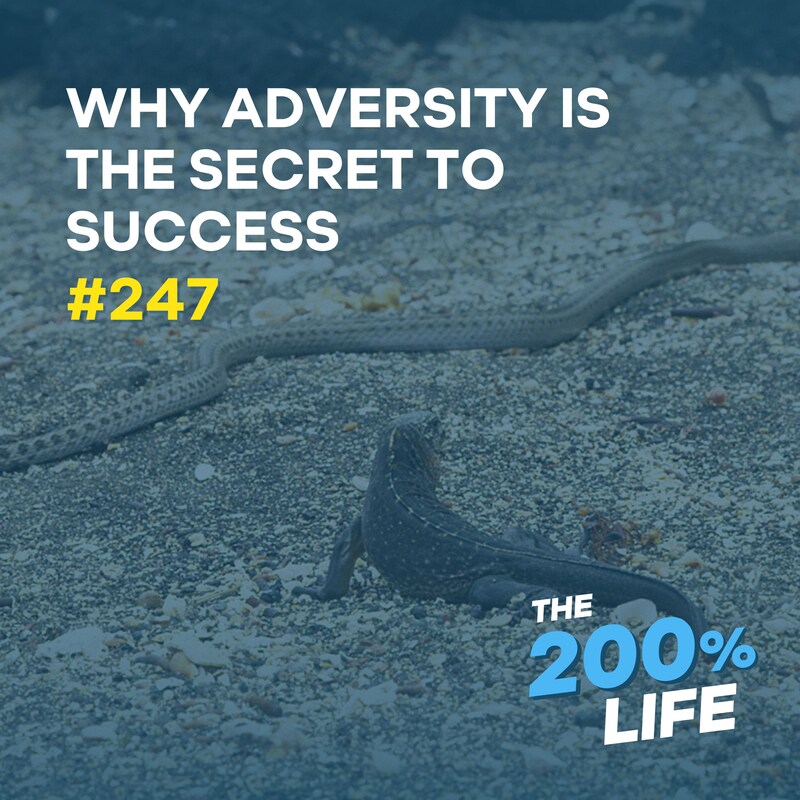
Like it's yeah, it's like. It's like the same thing with like animals, right? You see this everywheres. I mean, lizards are born, right, and they have six seconds to make it beyond the. You know, I always give this example of like. There's like, literally. I don't know if anybody's ever seen this discovery channel. Did you ever go back and look at this?
14:16 - Caitlin (Host)
it was like I haven't seen that one, you know it was like there was literally, I would say, a hundred thousand snakes.
14:22 - Adam (Host)
I mean because I don't, I'm not a huge snake fan yeah, and they were literally like.
14:26 - Caitlin (Host)
I mean they're talking like two feet thick of snakes, oh my gosh, and I don't know.
14:31 - Adam (Host)
The lizard would come out and be like oh wow, it's amazing, it would turn around, it would see, Like born.
14:34 - Caitlin (Host)
It's being born. I mean born.
14:35 - Adam (Host)
Come out of its shell and like literally the egg, and like it would turn around and be like oh, there's an ocean, there's a beach, and it would turn to this right, and there's a thousand snakes coming after it and it goes and it just has to take A lot of them, don't like 30% I made that number up but it seemed like 30% just get eaten right away. But it's also how a snake survives. That's all how the snakes, because they know, and they all come down to this area one time a year, because they know what's going to happen. Right, for what are these? Different things are, but you don't even have to be there to understand this. I mean, watch a chipmunk come out of its nest for the first time. It's cars and railways. You got animals trying to get it. If you ever watched nature which is one of the coolest things specifically animals, they're so, um, they're so astute at every move they make, because their life or death on it. Because if they take a step and it's crunchy and all of a sudden they don't look up to see the bird coming down to get the squirrel like they're dead. Or if you're a deer and there's a wolf right there, you can either know these things right, and so there's all these different.
15:38
You know, every part of nature has adversity to it. Minute you're born, same thing with a human. You were no different, but it's again. I always go back to. That's why there's always going to be problems, challenges.
15:51
I just like to use the word adversity because it actually is giving you these additional muscle fibers. It's giving and I I think it comes from a, an inner perspective. Your inner growth, which means who you are in there, is actually growing. It's experiencing, you're, releasing, you're, you're, you're, you're getting more experience there. You're growing your, your soul, your conscious, whatever you want to refer to it, as is gaining strength, just like your muscles will be gaining strength. It's almost like, again, as you go through adversity and you realize you can go through it and you go through these challenges, it's giving you opportunities for growth. So it's almost like every moment throughout your day is an opportunity for us to grow through adversity.
16:33
The other example that I love to use in nature is it's called the stresswood, which basically there's. I think there's a group of scientists that agreed to basically live in this huge manufactured dome right for like three years and in there they were growing trees and they wanted to see if they could grow trees faster inside the dome than outside, and so they sat in there and basically the trees grew at three or four times faster. So a tree normally grew six feet in a year. I don't I don't know if it's six feet, but if a tree normally grew six feet in a year.
17:04
it grew like 12, 13 feet in this dome and at first they were like, wow, we've figured out how to grow trees.
17:10 - Caitlin (Host)
Cause the conditions were optimal. That's exactly right.
17:12 - Adam (Host)
There was no wind, there was perfect conditions, there was perfect soil.
17:16 - Caitlin (Host)
Temperature, temperature, all that stuff was getting there.
17:19 - Adam (Host)
And then, after a couple, a year or two, what they found is the trees that would grow so much faster all started falling over. They literally started falling over, and the reason why they fell over was what they realized was is that the tree was never exposed to stress. It was never exposed. And the tree was never exposed to stress. It was never exposed, and the tree gets stressed mainly from wind, and so it never built up its strength to be able to handle its own ability to grow. So it's funny because without wood or without the tree experiencing wind pushing back and forth, it couldn't grow. And so again for us without us experiencing wind, challenges, adversity we couldn't grow. And so again for us without us experiencing wind, challenges, adversity we can't grow. And yet it's only our minds that jump in and go. This is bad. This shouldn't be happening. I don't want it to be this way. Instead of just seeing it as a problem, as a challenge, as adversity, you just see these things show up and there's something that knows way bigger than we do and you go. Okay, and it doesn't mean again, it doesn't mean that the event, when it happens, doesn't hurt, right? We've talked a lot about this on there.
18:22
When an event is occurring and it happens, the event itself has its own energetic feel to it. Just like when you walk out, the sun feels different than the rain, just like losing money inside feels different than making money. All those different events trigger an event. The difference is, are you holding it in there and then pushing it away and being like I don't like this? I do like this. You know, I'm always reminded by the story of the push and the cling, because the Buddha and if people know the original story of the Buddha, he basically was that tree inside the dome.
18:53
He, you know, he grew up as a prince and his parents shielded him from death. Right, they shielded him from old age, all the way up until, I think, he was like 17, 18 years old, and then he had a family, he had kids. One day he realized he actually went outside the gates per se and he went out there and he saw somebody either old or dead I forget which one it was and he was like what's wrong with this person? Who are all these people? Why do they look like this? And he had realized that moment that his parents had basically shielded him from any adversity. Right, if you will.
19:23
And so then he kind of went through his this time and realized, okay, I'm going to leave this. And he left, he left his family, all of this stuff to go out there and search for. You know, truth is what he was kind of looking for, because he realized, wow, we're all going to die, right, whatever that that is for him. And and he came back and he said, well, all of life is suffering. And it's again all of life is suffering because people want it a certain way. Right, they have preferences, they have likes, they have dislikes. And he said, the minute you can get rid of that. And there's, there's eight noble truths. We're not going to go through all of them, but essentially that's what it was was. You know, when you are trying to shield yourself, one day you're going to wake up and realize that there's still problems everywhere, and they're a sign of life, and they're a great sign of life.
20:04 - Caitlin (Host)
Yeah, so it's like problems are happening all through life, yes, nature included, but they're only a problem to the human mind when you start resisting them.
20:16 - Adam (Host)
Otherwise, they're just events that are happening, and one of the yes, well said. One of the questions you can always ask is if my mind was not commenting on this, would I have an issue with what's going on? That's a. That's one of the things I use all the time. For me, it's like a. You can call it a positive affirmation or just a, a way of reframing perspective, and the answer, by the way, is almost always actually, I can never remember a time when I asked that that it would say no, that's right.
20:42
So, if my mind wasn't commenting on this, is there anything wrong right now? And the answer is no. And, by the way, if there is something wrong in that moment, you're not going to sit there and go. I wonder if my mind wasn't commenting on this, because if there's a fire, if there's an issue, if you're in the zone, or if there's a problem, like you're really like you're speaking in whatever it is, you're going to be so engaged with that that your mind's not really chattering that much. You're just actually in the moment, right? If you, if there's a fire, you're not going to stop and go. If my mind didn't come to this, is this going to be a problem. No, you're just acting with the whole emotion of what's going on there.
21:14 - Caitlin (Host)
Do you think that this, like problems, pain, suffering, all these things exist to point people to the deeper truth of who they are like beyond that? So just being in that present moment that you're describing like, is that the point? Like what is the point of all the?
21:31 - Adam (Host)
I think it's. I think because it happens every day, I mean it has to be the truth right, Otherwise, I mean it's been happening for as long as human sapiens have been alive. There's been challenges and problems and again, it's rarely when things are going really well for people do they change or do they even want to look for change. That's why it's the challenges, the adversity that shows up that forces you to look deeper and make deeper changes, and I think that's part of most people's evolution and spiritual, particularly inner growth is when they go through adversity. They get to do the inner work right, which is, to me, the relax, the release, the asking deeper questions. Who am I witnessing? The fact that I can experience this negative event or this positive event? You're doing all of the work that we talk about on the podcast.
22:24
That's the inner growth, but a lot of times there has to be an example that tees that up, and I always like to think of it as as life is going like an event happens right, Like, for instance, like if an event occurred right now, you and I would take it differently, which means that life is always shining inwardly on the things that bother us and it's going well. That bothered you, but it didn't bother me, but that bothered me and it didn't bother you. And so we each have these individual experiences for our own growth. That's why, when an event occurs, you can go well, that didn't bother me, or it did, but I didn't really take too much of it. And the other person's like behind besides themselves, because each one of us has these different illumination things inside that can get illuminated, that are pinpointing to go. There's your growth, there's your opportunity, there's your opportunity for growth.
23:11 - Caitlin (Host)
.:23:45 - Adam (Host)
Yeah, I think everyone can have a lot more lightness and peace in their life.
23:48
I think the degree to which people do that is the degree to which they're willing to let go of themselves, and I think that's really what it comes down to and that is somebody's own journey. So some people this lifetime may go I don't want anything to do with that and I'm going to go live the mind and that's great, and at some point they'll come back and go okay, well, let's make some changes, whatever that is, and I think just people that's why that inner growth, people that go through that earlier on and start to ask deeper questions they get put on that path. You just become a master at it. I say a master not necessarily and you just you just get better at letting go, and it doesn't mean that challenges don't show up, it just means that when they show up, they're there and then they're gone Again.
24:30
The Dalai Lama talks about this in his book of joy, which is, you know, obviously a great resource. It's such an amazing book. But he talks about and they said do you ever feel anger Like it's again anger, adversity, problems. He goes well, of course I do, but it lasts no longer than three seconds. It's like writing on water. Michael Singer uses the same example. If anybody's ever listened to Michael like you're sure he's hurt. You've heard him say that when he asks um one of his gurus, Ramana Krishna, when they ask him basically like do you ever like a fully enlightened master?
24:58
do you ever feel anger? And to the disciples' dismay he was like well, of course I do. And he's like but it's like running on water. And so again, I think that's the event itself has an energetic feel to it, like just everything does right, like just woods feel different, paper feels different, your phone feels different, a highlighter feels different. It's got an energetic code to it and when that releases, you experience that.
25:23
But if you experience it and then gone through it, you're no longer living the problem again. And it's the example of like if you eat something in a restaurant and it causes you to get sick, you wouldn't bag it up and eat some of that every single day so you can be sick again. But isn't that what most of us are doing with our problems? A problem occurs and instead of letting it go and handling it or dealing with it or situationally it, we actually go. I don't like this. It shouldn't be this way. That's when you start to store the problem inside and you, by the way, you start reliving it and this becomes the problem for people is that they're no longer using adversity as a way to grow. They're using adversity as a way to suffer, and because the suffering happens only because I'm unwilling to relax, release and allow, just like you said, the event to actually move through.
26:09 - Caitlin (Host)
When you said that initially what came to mind was like birth and death, have a different experience. They do, and normally they're both, I mean, and they are like the beginning and end of life and they're very different energetic experiences. And then everything in between, cuz I think it's a little bit harder to differentiate between like. There's just not such a, it's not so clear when you think about like this work problem or this home problem, but everything within the spectrum of life has a difference, different energetic experience. Everything does. Yeah.
26:39 - Adam (Host)
Everything I mean think about every interaction with people has a different energetic experience. When you walk outside, every moment is different. Every moment is always in flux. It's like every moment can never be the same. That's why time is literally like a. You know, it's like a thief that can never be caught. That's what time is like, because you can, you can see the evidence from it, but you can never capture time because in the moment, the moment then it's no longer the moment, so it's like no long. You can never see it. You can only experience it for that moment that it is, but you can't comprehend it, because once you start comprehending it, you're no longer in time. You're actually now living a past moment of experience. So it's just fascinating the whole thing.
27:20
So again, I think about adversity from the hopefully. The purpose of doing this podcast is you're never going to duck pain. It's always going to be there, and the goal is that you can use adversity as, just like you would use stress in a gym weightlifting to build muscles, you use the adversity that's around us as an opportunity to find more inner experience, to have a better inner experience, to have more joy, to more lightness. So how do you do that it's when the problem occurs. You recognize.
27:50
The first thing is recognizing I'm not allowing this to actually move through me. I'm actually blocking this experience because my mind is saying this should not be happening. This should not be happening and I don't want it to happen. Therefore, that is how you actually block the experience. It's not like you. It feels like you have physical hands in there. But how you're blocking it is you're just using your inner will to prevent it from going through there. And a lot of it is with words, because it's, you know, the experience that you feel is so etheric. It's like you could blow it right, but words are even more denser, so the words almost block it. It's like putting a piece of plywood up.
28:27 - Caitlin (Host)
Yeah, you know what that reminds me of is the Eskimos that have like 20 words for love or something, and it's like there's all these gradients of experience. But if you just say like, oh, it's a problem or it's a challenge, it almost like limits the scope of the experience. It's a challenge, it almost like limits the scope of the experience, where if you can let go of the word and just feel the energy of the event, then it can actually move through you.
28:50 - Adam (Host)
And then be careful that the mind doesn't jump in and comment why it likes this or doesn't like this. And that's why I always use that one. When something happens and I get caught, the first thing I do is if my mind was not chattering about this right now, meaning that it likes it or doesn't like it, would this still be in here? Would I still be thinking about this problem? And the answer every time is no. Because me driving down the road and thinking about a business problem and going like, oh, that's going to whatever it is that is suffering. That is what the Buddha meant by suffering.
29:20
Now, it doesn't mean that you can sit there and go okay, mechanically. How would I structure this out? How do I handle this problem? It's not that. But when your mind's going, this shouldn't be happening. How come you have to deal with this? How come that thing's over there? How come life always that's what I mean Like the personal mind jumps in and starts narrating why this is bad. That's how you suffer and that's how you keep it in you. That's why the event never has gone away and that's what happens.
29:45 - Caitlin (Host)
It's like the anxious trying to figure it out, like, oh, I gotta figure this out and it feels like a problem, versus just the okay, what's my next step?
29:52 - Adam (Host)
here the event came in. What do I do? What steps do I take?
29:56 - Caitlin (Host)
So what would you say the inner takeaway is and what is the outer takeaway For me?
30:00 - Adam (Host)
the inner takeaway is I would ask the question, the simple question, which is if my mind was not commenting on this situation right now, would it still be a problem within me?
30:09
And again most people are going to say it's not because the environment that you're actually in is actually not a problem. It's actually not a problem right now, even if you're at work and you're sitting in there and somebody is yelling at you or you're, you're getting feedback and criticism and that whole thing right there. In that moment your mind's not really saying that. It may be arguing with the other person, but you're not going. It's only when you walk out of that that the mind starts going. How could they dare Like say the event's gone?
30:34 - Caitlin (Host)
Yeah.
30:34 - Adam (Host)
It's gone. It doesn't mean you can't take feedback, but the event's gone now. But now you're reliving the event over and over and over again for a week and then you don't even want to go back in the company. You don't want to see that person again. I think it's just you build up all these things.
30:45 - Caitlin (Host)
But what if it's like a larger thing you know? So it's like you know getting negative feedback. Yes, I can feel like somebody buys next. So again.
30:54 - Adam (Host)
I was actually on the phone with this individual this morning, um, and he was telling me this story. He actually wanted to chat. Somebody had sent him the 200% Life book and then somebody from our organization actually had reached out to him and he's like, wow, this is such a coincidence, your CEO is the guy who wrote this book and somebody just sent this to me. He had an experience where this is really fascinating. He was putting up Christmas tree lights a couple of years ago and had to run to the store to get batteries or something, ran a red light and killed somebody and his child. His third child was born four days after and so he's like, one minute, I'm literally putting up Christmas tree lights and everything's amazing. 15 minutes later I'm wondering if I'm going to jail for the rest of my life. And, by the way, then my four-year-old's born and now I have three kids, and what do I do? And, um, so we, we chatted through a lot of that, but, uh, for I think it's been a couple of years and he's now.
31:49
He's like I'm not, you know, I can talk about it openly, I'm not ashamed about these different things, and he's done a lot of the deep work to kind right, that's a that's a big event is number one is you just. You bring it out in the open, you give it light and again, there's doesn't mean everyone's going to agree with you or disagree with you, but you don't hold it in, you just. You just allow it its space to work its way through you. So then you can, you can learn from the event, you can talk through the event and you can help other people with the event or your story can inspire somebody else. But that's how you do it, that's just. I mean, that's a that's a big event. I can only imagine what those months were like before knowing you're coming.
32:29 - Caitlin (Host)
Imagine that, by the way, like that's.
32:31 - Adam (Host)
But what really took away from me was, just like you know, I'm literally putting up Christmas tree lights and then 15 minutes later, my entire life changed. I mean, just like boom, like not even just in the car, and he, saturday morning, drive that route all time, didn't even think about it, and just right through the red light and killed somebody he was fine, by the way, walked away from it not even a scratch. So it's like that is. Then you just you give it light, you give it space, you work through it, and these bigger things take time. It doesn't mean tomorrow.
32:56
That's why we, if you want to go play andre agassi tennis, you have to start and build your way up there. The same thing in this stuff, which is why we always start with start with the low hanging fruit, the things that bother you, that have no meaning. Start letting those things go, giving them the light, giving them the opportunity to shine. So when these bigger things do show up, whatever they are and hopefully people don't have to go through that experience, but whatever they end up going through the bigger ones you actually have the inner strength to release and let that one go too.
33:25 - Caitlin (Host)
And it might take a lot of time, it's not something that's going to be like a one, and done so. Then what would the outer takeaway be?
33:32 - Adam (Host)
I think for the outer takeaway is every physical thing that we can see has adversity Like. Think about the stress wood example. Think about the animals, the insects, the human sapiens. We all are born into a world that is supposed to have adversity. That is the signal, the guiding light, almost, that then gives way for the growth that you can do.


