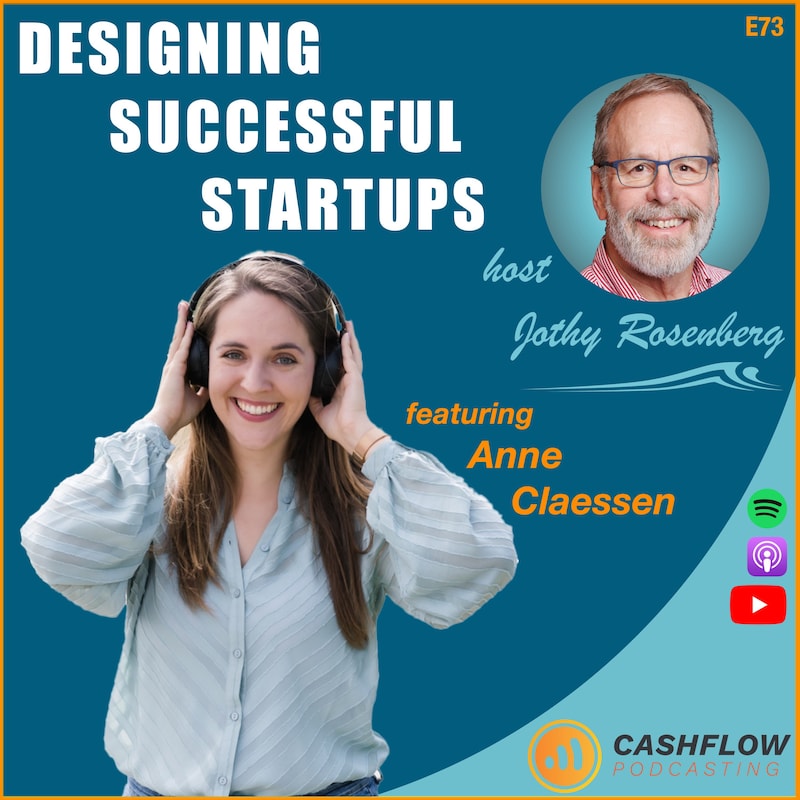
Shownotes
Summary
The discussion with Anne Claessen centers on the profound intersection of podcasting and entrepreneurship, emphasizing that the establishment of a sustainable cash flow can significantly enhance one's ability to serve an audience effectively. As the CEO of Cash Flow Podcasting, Anne elucidates the importance of consistency in content creation, advocating for a commitment of at least one year to truly gauge a podcast's potential impact. Throughout our conversation, we delve into her journey from podcast coach to CEO, exploring her insights on navigating the challenges of team mergers and marketing efforts. Anne's candid reflections on the hurdles faced in the podcasting landscape serve as a valuable guide for aspiring entrepreneurs. Ultimately, this episode provides listeners with practical wisdom on leveraging podcasting not merely as a promotional tool, but as a means to foster genuine connections and meaningful service to their communities.
Conversation
The discourse with Anne Claessen, the esteemed CEO of Cash Flow Podcasting, delves into the intricate interplay between podcasting and entrepreneurship. With a foundation steeped in over a decade of experience, Claessen elucidates the multifaceted benefits of podcasting as an instrument for both audience engagement and revenue generation. She provides a comprehensive overview of her own journey from podcast coach to CEO, highlighting the pivotal moments of her career, including the challenges and triumphs of merging teams following an acquisition. Claessen's insights into the significance of consistency in content creation serve as a vital reminder for aspiring podcasters and entrepreneurs alike. She emphasizes the necessity of patience and a long-term perspective, advocating for a minimum commitment of one year to truly ascertain the efficacy of one’s podcasting endeavors. This episode not only offers a blueprint for successful podcasting but also underscores the broader implications of building a sustainable business model within the ever-evolving landscape of digital media.
Links
- Anne Claessen
- Cashflow Podcasting - The Best Podcast Partner for Businesses
- Jothy's TEDx talk - On why those with disabilities tend to overachieve
- The Who Says I Can't Foundation - Jothy's non-profit that helps disabled kids get back into a sport they love to restore their self-esteem
- Our YouTube channel
- Designing Successful Startups — Jothy Rosenberg | Author | Speaker | Podcaster - Site with all podcasts
- Tech Startup Toolkit book
- Please leave us a review
Takeaways
- The paramount significance of maintaining consistency over a full year in podcasting cannot be overstated, as this dedication fosters audience trust and sustainable growth.
- Establishing a robust cash flow is integral to amplifying one’s mission, even when profit is not the primary objective, thus enabling greater impact.
- Adopting a structured yet flexible work environment is essential for nurturing the entrepreneurial spirit within teams to drive long-term success.
- New podcasters frequently underestimate the time necessary to evaluate their podcast’s potential, requiring ideally a year of consistent content creation before drawing conclusions.
- The importance of a value ladder is highlighted, wherein free content can effectively lead to the sale of books or courses, thereby funding expansion efforts.
- The mindset that podcasting can serve as a quick fix for audience building is misguided; sustainable growth is a gradual process that demands patience and commitment.
Transcripts
Hello.
Speaker A:Please meet today's guest, Ann Kless.
Speaker B:Because from podcasting, you can serve people and also get cash flow from it.
Speaker B:Because I think what you do, Josie, is a perfect example of this because you have your podcast with stories from people who are in the startup space and they share their experience, but then you also have your book.
Speaker B:So then if people are listening to your free content, your podcast, they might want to learn more from you and, and they buy your book, which is a perfect next step into learning more from you.
Speaker B:And then after they purchased a book, they might want to learn even more and they purchase your course.
Speaker B:So it's even if it's not about money and it's about serving people, like you said, it's just a way to serve people, I think.
Speaker A:Welcome to Designing Successful Startups, the podcast where founders share their hard earned wisdom so you don't have to make the same mistakes.
Speaker A:I'm your host, Jothi Rosenberg.
Speaker A:Today's episode features Ann Klesson, the CEO of Cash Flow Podcasting, a company that's been helping entrepreneurs launch and grow their podcasts for over 12 years.
Speaker A:Ann's journey from podcast coach to CEO offers fascinating insights for any startup founder.
Speaker A:Originally from the Netherlands, but now based in Madrid, Ann shares how she merged teams after an acquisition, built a successful service based business model, and reveals the marketing challenges even established companies face.
Speaker A:We'll also explore the critical importance of consistency in content creation and why patience might be your most valuable asset when building an audience.
Speaker A:Whether you're considering podcasting as a marketing channel or simply looking for guidance on navigating company growth, Ann's practical experience and refreshing honesty about what keeps her up at night will provide valuable perspective.
Speaker A:Let's dive in.
Speaker A:Well, hello Anne, and welcome to the podcast.
Speaker B:Thank you so much for having me.
Speaker A:I always like to start off with a context setting question, which is very easy.
Speaker A:Where are you originally from and where do you live right now?
Speaker B:Yeah, I'm originally from the Netherlands and at the moment I live in Madrid, Spain.
Speaker B:So still in Europe, but a little bit warmer.
Speaker A:Like how warm is it today, for example?
Speaker B:So I never know.
Speaker B:I never know Fahrenheit.
Speaker B:So I'll tell you in degrees Celsius, but I think it's like 22 degrees Celsius.
Speaker B:We're recording this the end of May, so like spring slowly going into summer.
Speaker B:So yeah, it's, I would say perfect temperatures.
Speaker B:Yeah.
Speaker A:You have a startup now, it's related to podcasts.
Speaker A:Its name is.
Speaker B:Yeah, so I'm a CEO of Cashflow Podcasting.
Speaker B:I Actually don't own it.
Speaker B:So important to know it's not technically my startup, but I run it.
Speaker B:So in that sense, it's kind of mine to grow it for sure.
Speaker A:This, the CEO is.
Speaker A:You don't have to have ownership, you are in charge of it, you're trying to make it go, make it grow, all of that.
Speaker A:So that's the legitimate thing.
Speaker A:You didn't found it, you were brought in at some point, is that right?
Speaker B:Yeah, exactly.
Speaker B:Yes.
Speaker B:So Cashflow Podcasting was founded about 12 years ago, which for a company in the podcasting space is really early on.
Speaker B:Actually, it was founded by Ben Kruger and he has run the company for about 10 years.
Speaker B:And then he hired me at some point as a podcast coach.
Speaker B:So I started working for Cashflow Podcasting part time, helping their clients launch and grow their podcasts.
Speaker B:And then over time, I did other things.
Speaker B:I took on more responsibility, more responsibility, worked my way up into a marketing director.
Speaker B:And then when I was marketing director, the company got acquired by the current owners, Pete Macaitis and Ryan Carney, after they acquired a company.
Speaker B:Shortly after, they asked me if I wanted to step in as CEO and merged the teams.
Speaker B:Because at this point there were two teams doing different things for different clients.
Speaker B:So I merged the teams, made sure we have now one team, one process, one pool of clients, all those, all those fun things.
Speaker B:So I made that change and that's about a year ago when I started.
Speaker A:Have you had any things that have not gone the way you wanted?
Speaker A:Have you had problems?
Speaker A:Have you had any significant challenges?
Speaker B:I mean, always, right?
Speaker B:Always.
Speaker B:Where would be the fun in business without these things?
Speaker B:I would say our challenge has definitely been, I would say what went really well in this process and of the acquisition was making the teams work together.
Speaker B:That has actually been not as much of a challenge as I expected it to be.
Speaker B:And also the team, it was super, surprisingly easy, which is really interesting.
Speaker B:But then what has been a challenge this past year is that our new marketing efforts are taking more time to generate results as what we expected.
Speaker B:To be honest, we were really thinking that we would say, see results faster from new projects.
Speaker B:So, yeah, that has been the main challenge we've been working on this year to make sure that we have a really good lead pipeline with new clients, especially with a larger team now we can handle more, we can do more.
Speaker B:So, yeah, we also want to make sure that we have the clients to actually do it for.
Speaker A:Is your business model that you sign up a client and you charge them some fixed fee, or do you Get a percent of the revenues that they start to bring in thanks to your efforts?
Speaker B:Oh yeah, that's a great question.
Speaker B:So it's a fixed fee.
Speaker B:We charge a fixed fee for a podcast launch, which includes everything our clients need to actually launch a podcast, including, you know, the strategic conversations that need to be had, all the little details.
Speaker B:Our team creates every single piece of the podcast that you need.
Speaker B:And then there's also a fixed fee for ongoing podcast production and also includes coaching, but we don't take a percentage.
Speaker B:So that's really interesting for our clients because they are, they usually have high ticket services or sometimes products, but very often services that they offer to their clients.
Speaker B:In that case it's even if they would have one new client from the podcast in a year, the podcast would have been profitable.
Speaker B:So it's really scalable.
Speaker B:It's a really scalable marketing effort for our clients.
Speaker A:I'm just wondering if you had a model where you took, negotiated a percentage of what revenues they brought in, you might be able to bring in smaller clients who, they may be low on cash, they may have trouble coming up with the, the, the project fees.
Speaker A:It's just an interesting alternative, I would think.
Speaker B:Yeah, absolutely, absolutely.
Speaker B:And I mean there are more, I think, you know, in, in podcasting, but probably in all things business, you have to invest either time or money, right?
Speaker B:You can either do everything yourself.
Speaker B:It's investing a lot of time, a little money.
Speaker B:You can hire someone for a specific thing, like you might work with a podcast editor, but then you manage the project yourself, you write all the copy yourself.
Speaker B:You know, stuff like that.
Speaker B:That's often where pod podcasts start when they're, when they have a smaller budget and then once they see things work very often podcasts then get, get stuck to a level where it's like it's, it's working but they would like to get it to the next level and then they come to us.
Speaker B:So then they already have a podcast launched, it's already up and running.
Speaker B:There are X amount of episodes in maybe a year in something like that.
Speaker B:And then they come to us to go to that next level and then we either do it on whole relaunch for them or sometimes it's just small tweaks and that's it.
Speaker B:So yeah, I think it's a really interesting model.
Speaker B:I don't know if it would work for us just because of the way operationally how everything works.
Speaker B:But I think it is good to know that if you are listening to this and you feel like, okay, a Podcast sounds really interesting, but I actually don't have the budget for this right now.
Speaker B:There are definitely other ways to.
Speaker B:To do it.
Speaker A:I do really love to hear about a little more detail about, you know, the challenges.
Speaker A:So is there anything in particular that has kept you up at night?
Speaker B:I would say seeing results from new projects, you know, results are important, of course, and I have had some sleepless nights thinking was, was this the right decision to put a lot of resources into this thing?
Speaker B:Like, are we going to see results at all?
Speaker B:I would say that's probably the thing that has kept me up at night at times.
Speaker A:So I'm one of those newish.
Speaker A:I mean, I started podcasting in March of last year, and I've recorded 72 episodes.
Speaker A:I guess I just do one a week and I do it myself.
Speaker A:But I find one of the things I find interesting about this business in general is that there's people who are looking around, looking at your podcasts, and then sending you a message saying, here's what you're doing wrong.
Speaker A:I get those all the time.
Speaker B:That is.
Speaker A:I got one.
Speaker A:I got one.
Speaker A:That was a beautifully crafted email with an image of my.
Speaker A:One of my YouTube covers and then somebody else's YouTube cover.
Speaker A:And he says, in with red bullets, here are all the things that are wrong with this, and in green bullets, here's all the things that are right with this other person's.
Speaker A:I could help you fix it.
Speaker A:And that's, that's.
Speaker A:It's sort of a trolling approach to working in the podcast business, I suspect.
Speaker A:Suspect.
Speaker A:But speaking of which, since you've been working with a lot longer than.
Speaker A:Than you've been the CEO, you've been working with podcasters at all stages of their evolution.
Speaker A:And what would you say is the.
Speaker A:Are the most common things that people are doing wrong who are podcasting?
Speaker A:And I'm sure you're going to list some things that I'm going to say, ooh, that's me.
Speaker B:Yeah, I mean, of course.
Speaker B:Right.
Speaker B:So, yes, I've worked with quite a few clients and, you know, like, at all stages, like you said.
Speaker B:I think one of the most important things that some new podcasters get wrong is not allowing enough time to see the true potential of a podcast, especially when you have a pretty new business, like, for example, startup.
Speaker B:Right.
Speaker B:And I was actually just mentioning, for us, it has been a challenge to see results quickly enough from our new project.
Speaker B:But the same goes with a podcast.
Speaker B:Like, as a, as a business owner, as a startup founder, you want results quickly because you Want to know if it works.
Speaker B:But to have a really good understanding and have enough data from your podcast to actually know if it works, you need ideally, a year of weekly episodes.
Speaker B:If you do that, then, you know, truly, this works.
Speaker B:This doesn't work, which is really difficult because you would need consistency.
Speaker B:You would need to invest that amount of either time or money or a mix of both into this one project.
Speaker B:So it's difficult.
Speaker B:But if you think that podcasting can work really well for your startup, give it a year.
Speaker B:Make sure you have the budget in time and or money to do it for a year and then draw your conclusions.
Speaker B:And within that year, you obviously want to tweak things and change things up as you go.
Speaker B:But a lot of podcasters stop too early.
Speaker B:They start a podcast, they do a few episodes.
Speaker B:Consistency is extremely, extremely difficult.
Speaker B:With podcasting, social media, all of these things that are best if you do it consistently.
Speaker B:And I think that's one of the things that you do so well, Jothi.
Speaker B:Like, you have an episode every single week.
Speaker B:And that's extremely important because it builds trust with your audience.
Speaker B:And especially in, you know, a space where a lot of podcasters don't do this, it already sets you apart as a professional podcaster when you are consistent.
Speaker B:So I think super important, but super, super difficult.
Speaker B:Yeah, I would say main mistake is the mindset around podcasting in that sense, that it can be a quick fix in some ways and you will very likely see some results from the podcast early on, just from having a podcast, launching a podcast, being seen as an expert by being a podcast host.
Speaker B:Yes, but the full extent of it, you can really only know after about a year of consistently releasing content.
Speaker A:For me, for me, I know that a lot of the ones that you're seeing are something that a company wants to do to get the word out about their product or services or whatnot.
Speaker A:For me, it's a little different.
Speaker A:I am trying to, essentially, I'm trying to give back to the startup founders of the next generation, let's say after.
Speaker A:After me.
Speaker A:You know, experience is one of those things that sort of sneaks up on you.
Speaker A:You've done something for, in my case, 37 years, nine startups, and you have a lot of experience.
Speaker A:For me, the thing that's probably the most valuable in that set of experiences are the mistakes.
Speaker A:And people really learn well from hearing about your mistakes.
Speaker A:As long as you're honest, why was it a mistake?
Speaker A:How did it happen?
Speaker A:What did you do about it?
Speaker A:All that kind of stuff.
Speaker A:And for me, the book was.
Speaker A:Was leg number one.
Speaker A:This book is.
Speaker A:Came out last August, and the publisher put, you know, they always do put a limit of 250 pages.
Speaker A:That's the most you can have.
Speaker A:Don't even go over that.
Speaker A:Forget it.
Speaker A:I had a lot to say, so.
Speaker A:So that was hard.
Speaker A:And then.
Speaker A:And.
Speaker A:But the.
Speaker A:For me, the point was that was those are my opinions and my experiences.
Speaker A:And the podcast is everyone else's.
Speaker A:Their experiences.
Speaker A:And.
Speaker A:And they're.
Speaker A:They're from different markets, different countries.
Speaker A:Everything is.
Speaker A:Is.
Speaker A:Is.
Speaker A:Is different.
Speaker A:But in fact, some things aren't because everybody who's doing a startup has, you know, has to make payroll, has to watch their cash, has to do this.
Speaker A:And.
Speaker A:And so there's.
Speaker A:There are some common things.
Speaker A:And the third leg of the stool is.
Speaker A:Is launching two weeks from yesterday, is an online course.
Speaker A:People might learn well from that model, some from the book, some from listening to podcasts on the way to work.
Speaker A:And so that's what I've been doing, but I don't feel like it's.
Speaker A:I'm not trying to make money on it.
Speaker A:There's no monetization at all.
Speaker A:I would like it to have a higher listenership, though, because I think it's got something useful in it to a lot of startup founders, and there are a lot.
Speaker A:And so I am anxious to figure out how to get it to more people.
Speaker A:But it's not about cash flow podcasting.
Speaker A:It's about another goal, which is just serving more people, helping more people is what I'm trying to do.
Speaker B:Yeah.
Speaker A:Hi.
Speaker A:The podcast you are listening to is a companion to my recent book, Tech Startup Toolkit, how to Launch Strong and Exit Big.
Speaker A:This is the book I wish I'd had as I was founding and running eight startups over 35 years.
Speaker A:I tell the unvarnished truth about what went right and especially about what went wrong.
Speaker A:You could get it from all the usual booksellers.
Speaker A:I hope you like it.
Speaker A:It's a true labor of love.
Speaker A:Now, back to the show.
Speaker B:Yeah, no, I absolutely hear you, but I actually think I might disagree with you a little bit, Jonathy, because.
Speaker B:Okay, let me.
Speaker A:Good.
Speaker B:I think cash flow is important in podcasting because no one wants to.
Speaker B:Unless you're the exception.
Speaker B:But usually no one wants to put endless amounts of money into a podcast.
Speaker B:Right.
Speaker B:And having some cash flow from the podcast allows you to get in front of new people.
Speaker B:For example, paid traffic is only possible if there is money to actually put behind those ads.
Speaker B:And there's other things, you know, there's A lot of marketing efforts that just cost money.
Speaker B:Maybe it's by hiring someone to help you with marketing that costs money.
Speaker B:So even if the podcast is not about making money, but it's about visibility and getting your message across to more people, I think cash flow is still really important because it allows you to do that in, in ways you cannot do it without, without that.
Speaker B:So in that way, I think it is actually really important.
Speaker B:And I think that's also, that's, that's really exciting as well.
Speaker B:Right?
Speaker B:Because from podcasting, you can serve people and also get cash flow from it.
Speaker B:Because I think what you do, Josie, is a perfect example of this, because you have your podcast with stories from people who are in the startup space and they share their experience, but then you also have your book.
Speaker B:So then if people are listening to your free content, your podcast, they might want to learn more from you and they buy your book, which is a perfect next step into learning more from you.
Speaker B:And then after they purchased a book, they might want to learn even more and they purchase your course.
Speaker B:So it's, even if it's not about money and it's about serving people, like you said, it's just a way to serve people.
Speaker B:I think so.
Speaker B:I think it's really interesting from the podcast to have these steps because if you only have a podcast, there's only so much you can do to serve people.
Speaker B:Right.
Speaker B:And with a course, it's a different way.
Speaker B:A book is a different way to serve people.
Speaker B:And I think if it all works together, like in your case, I think that's, that's really exciting.
Speaker B:That's, that's how it all comes together.
Speaker B:Right.
Speaker A:Wow.
Speaker A:Spoken like a true CEO.
Speaker A:That was, that was, that was convincing.
Speaker B:Was it visionary?
Speaker A:Yeah, probably so.
Speaker A:One of the things that I like to always get into is that I've never met anyone who's working, whether they're a founder or a CEO who's not a founder, as in your case, they all have grit.
Speaker A:It is just a truism.
Speaker A:I would love to know where your grit comes from.
Speaker B:That's a really good question.
Speaker B:I'm not sure if I know the answer, to be completely honest.
Speaker B:I've always really liked work, which is really weird for a lot of people.
Speaker B:But when I was a child, that's.
Speaker A:True for the Dutch.
Speaker A:I, I, I, I think that's probably part of your, part of your DNA from being from the Netherlands.
Speaker B:Maybe.
Speaker B:Maybe.
Speaker B:But like, truly from when I was a child, I couldn't wait to work and to have a job.
Speaker B:It Just seemed really exciting to me.
Speaker A:Like, at what age, what age did you start thinking like that?
Speaker B:I, when I was 14, I got my first part time job after school delivering newspapers.
Speaker B:And even before, like, I would have started the year before if I could or even two years before, like literally going, going into high school, I was like, okay, like, can I, can I work?
Speaker B:Can I make money?
Speaker B:I don't, like, I don't know, like, I just really, it was really exciting to me and I, I always worked throughout, like literally from that moment that I had that newspaper job when I was, when I was 14 years old, I always worked.
Speaker B:So I did the newspaper thing for a while.
Speaker B:I worked at a butcher for a year, you know, like, I don't know, I just always kept going and tried, which didn't always work, but I always tried to have fun at work.
Speaker B:So an example, when I was, I think I was 17 years old, I worked at a pharmacy or it's more like in the Netherlands you have like a drugstore pharmacy.
Speaker B:It's like between a drugstore and a pharmacy.
Speaker B:And I started working there, I mean, all fun.
Speaker B:But then I actually had a really good manager at this job who saw that I wanted to do more and she gave me like a little bit more responsibility and like, oh, can you handle this project for me?
Speaker B:I was like, yeah, sure.
Speaker B:So I just ran with it until the point that I was 17 years old and I was managing the shop on Saturdays when the manager was out and I was not officially the assistant manager or anything, but I was like supervising a small team as a 17 year old, which was just, it's just wild when I think about it now.
Speaker B:But I don't know, I just took the opportunities that I could get.
Speaker B:I never lost that really.
Speaker B:And I think that's why I went to law school and got all my degrees and did, you know, some internships at law firms and especially at bigger law firms.
Speaker B:I had a horrible time.
Speaker B:And I think that was because it was very structured and there were law firms.
Speaker B:It's just hierarchies on hierarchies.
Speaker B:I think, I think that's where the grid comes from.
Speaker B:It's just, I just want to do my thing.
Speaker A:Was the motivation when you were the young child or teenager, do you think it was initially you wanted the money?
Speaker A:You wanted what the money would then allow you to get or, or do?
Speaker A:Was that the original, you think the original motivation money?
Speaker B:I think it was both.
Speaker B:I think it was both the money and also just the work itself.
Speaker B:I was also just really curious, you know, like, how, like, what is this work thing about?
Speaker B:And I just.
Speaker B:I don't know.
Speaker B:I just want to.
Speaker B:I thought it was exciting, but also the money, because it was not even that I wanted to spend it, but I wanted the freedom that money would give me to spend it on things or not spend it.
Speaker B:And I always saved a lot.
Speaker B:From the moment I started my.
Speaker B:My first job, I always saved the majority of my income at that point, you know, not.
Speaker B:It was not a lot.
Speaker B:Yeah, I think it was.
Speaker B:It was mostly about.
Speaker B:About freedom and the excitement of.
Speaker B:Of gaining skills, if that makes sense.
Speaker A:And at what point did you leave the.
Speaker A:The Netherlands?
Speaker A:I don't mean vacations, but I mean, when did you decide to.
Speaker A:To change where you lived?
Speaker B:Yeah.
Speaker B:For good.
Speaker A:So was that after law school?
Speaker B:It was, yes.
Speaker B:I actually.
Speaker B:I went to law school and also business school.
Speaker B:So I have a ton of degrees that actually no one has ever asked me about since I have them.
Speaker B:So that's a fun fact.
Speaker B:Yeah.
Speaker B:So went to law school, did my MBA after that.
Speaker B:And when I finished that, I realized that I actually did not want to be a lawyer because the original plan, I wanted to be an M and a lawyer.
Speaker B:So mergers and acquisitions, very corporate at a big firm in the Netherlands.
Speaker B:And I had that job lined up, literally, to start after I got my degrees.
Speaker B:And then at some point, a few months before I would finish up my degree, I was like, I don't actually want to do this.
Speaker B:Like, I couldn't imagine going into the office every day and doing the lawyer things.
Speaker B:So I decided not to do it.
Speaker B:I called him up and I was like, listen, I'm very sorry, but I actually changed my mind.
Speaker B:I don't.
Speaker B:I don't want this job.
Speaker B:Thank you so much.
Speaker B:But it's not for me.
Speaker B:I had no plan B at that point because I was.
Speaker B:I was always thinking, this, this will be me, right?
Speaker B:When I grow up, I want to be a lawyer.
Speaker B:When I grew up, I want to be a lawyer.
Speaker B:And then I didn't.
Speaker B:So I applied for some jobs at that point, some more consulting jobs in the Netherlands.
Speaker B:And I was not excellent.
Speaker B:Like, they were like, why are you applying to this?
Speaker B:So that didn't work out.
Speaker B:And I maybe applied to, like, five jobs, you know, nothing.
Speaker B:Nothing major.
Speaker B:And then at that point, I still didn't really.
Speaker B:I was not excited about these jobs.
Speaker B:I didn't really have another plan.
Speaker B:I wanted to travel.
Speaker B:Original plan was to find the job, travel for a few months, get back, start the job.
Speaker B:And then when I actually said, no thank you on the job.
Speaker B:Couldn't find a new job that I actually really liked.
Speaker B:I was like, okay, let's do the traveling first, and then I'll come back and I'll find a job, because then I might know more about what I actually want.
Speaker B:So I started traveling.
Speaker B: This was in: Speaker B:And I never really returned except for visits.
Speaker B:So I traveled around Southeast Asia.
Speaker B:I lived in Australia, and then I continued living in different places for a few months at a time.
Speaker B:So I did the whole digital nomad thing where I would live for a few months in a place and then move on and then, you know, might come back, might not.
Speaker B:Worked online.
Speaker B:Yeah.
Speaker B:For those full seven years.
Speaker B:Until about a year and a half ago, maybe.
Speaker B:Where, and for some, for some part of this, I had a, an apartment in Germany where I would be six months out of the year, and then the other six months I would be traveling.
Speaker B:And then about a year and a half ago, I decided I wanted to move to Spain.
Speaker B:So I moved to Spain, to Valencia at first, and now, now Madrid.
Speaker A:And did you already speak Spanish?
Speaker B:No, I'm still learning, yeah.
Speaker B:Which is a fun project.
Speaker B:It's really challenging and sometimes, sometimes actually fun, but also challenging.
Speaker B:I'm trying to enjoy the process of learning the language as well.
Speaker B:You know, some people, they really have a talent for learning languages, and I notice that that's not me necessarily.
Speaker A:But you grew up with, with both Dutch and, and English.
Speaker A:So you already spoke two.
Speaker B:Yes, but I don't remember ever learning English because of that.
Speaker B:It's, it's more like a bilingual thing where you just have always been able to do it.
Speaker B:So actually, and I, I mean, I learned languages in, in school, but it's definitely different because here I actually have to use it.
Speaker A:Is your boyfriend Spanish?
Speaker B:He is, yes.
Speaker B:Yeah.
Speaker B:So sometimes we practice and he helps me try to understand things and, and, yeah, and I'm, I'm taking classes.
Speaker B:Right.
Speaker B:But it's, it's so around the house.
Speaker A:Do you speak English?
Speaker B:Yeah, at home we speak English.
Speaker A:Well, it's been, it's been fun.
Speaker A:I, I, I think we, we're at a good stopping point.
Speaker B:Sounds good.
Speaker A:Thank you very much for doing this.
Speaker B:Yeah, thank you for having me on.
Speaker B:This was super fun.
Speaker A:Yeah, me for me too.
Speaker A:Now here's your toolkit takeaway tool 1.
Speaker A:The one year rule.
Speaker A:Give your marketing initiatives, especially content based ones like podcasting, a full year of consistent execution and before judging their effectiveness.
Speaker A:Quick fixes rarely exist in audience building, but the compound effect of showing up reliably creates both trust and sustainable growth.
Speaker A:Tool Number two Cash Flow Enables Impact Even if your primary goal isn't profit, establishing healthy cash flow allows you to amplify your mission.
Speaker A:Consider creating a value ladder like Ann described.
Speaker A:Free content that leads to books or courses to fund the expansion of your reach and impact.
Speaker A:Tool number three Structured Freedom Drives grit.
Speaker A:Notice how Ann's grit came from seeking both freedom and structure.
Speaker A:As founders, we need to create environments where team members can take ownership of projects while having clear boundaries.
Speaker A:This balance nurtures the entrepreneurial spirit that drives long term success.
Speaker A:That's our episode with Ann Clesson.
Speaker A:Until next time, keep designing your success.
Speaker A:The show notes contain useful resources and links.
Speaker A:Please follow and rate us@podchaser.com designingsuccessful startups.
Speaker A:Also, please share and like us on your social media channels.
Speaker A:This is Jothi Rosenberg saying TTFN Tata for now.

