Shownotes
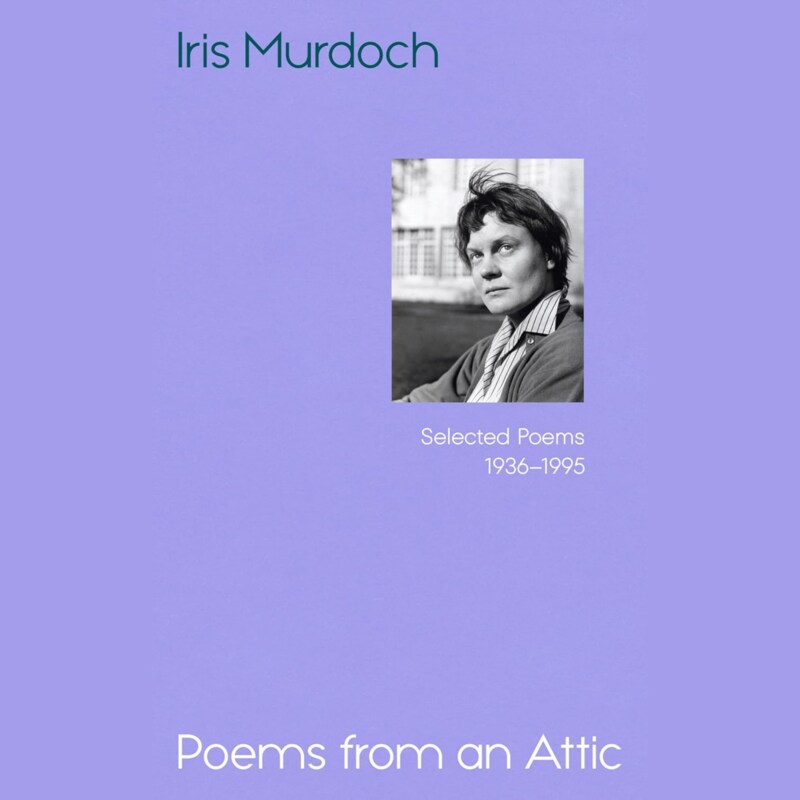
Long hidden in an attic, vivid and revelatory poems shine a new light on the life and loves of Iris Murdoch.
In the dusty attic of Iris Murdoch’s Oxford home lay a battered, black chest. In 2016, when the chest was finally opened, Murdoch’s life in poems was revealed.
Renowned for her fiercely intelligent novels and groundbreaking philosophy, Murdoch was one of the great writers of the twentieth century. Yet she is also known for her equally radical life – intense friendships, relationships with both men and women, and an open marriage – about which much has, often controversially, been written. Now, her tightly wrought and vivid poems reveal a new, deeply personal account in Murdoch’s own voice. They range over the preoccupations closest to her heart, from the state of Ireland to memories of a first love lost in the Second World War.
We speak to Dr Miles Leeson, one of the editors of Poems from an Attic by Iris Murdoch, to learn more about this exciting discovery and how it adds to our understanding of the work of the famous philosopher and novelist.
Dr Leeson also reads three poems from the book, 'Reverie in Winchester Cathedral', 'I find that honesty is a hard thing', and 'Macaw in the Snow'.
Dr Miles Leeson is Director of the Iris Murdoch Research Centre at the University of Chichester and Visiting Research Fellow at Kingston University. He is Lead Editor of the Iris Murdoch Review, Series Editor of Iris Murdoch Today with Palgrave Macmillan, host of the Iris Murdoch Podcast, and has published widely on Murdoch’s work.
He published Iris Murdoch: Philosophical Novelist in 2010, the edited collection Incest in Contemporary Literature (2018), the festschrift Iris Murdoch: A Centenary Celebration (2019), the co-edited collections Iris Murdoch and the Literary Imagination (2022) and Iris Murdoch and the Western Theological Imagination (2025), co-edited her selected poetry Poems from an Attic: Selected Poems 1936-1995 (2025), and is currently writing Visiting Mrs Bayley and Other Essays (2026) Iris Murdoch and Feminism and editing The Oxford Handbook of Iris Murdoch (2028).
You can find out more about him and his work here:
https://www.chi.ac.uk/people/miles-leeson/
Iris Murdoch
Iris Murdoch was born in Dublin in 1919. After working in the Treasury and in the UN, she discovered philosophy, eventually becoming Fellow at St Anne's College, Oxford. Her philosophical concerns are at the heart of the 25 novels for which she became famous, gaining the Whitbread Prize for The Sacred and Profane Love Machine and the Booker Prize for The Sea, The Sea. Until her death in 1999, she lived in Oxford with her husband, the academic and critic, John Bayley. She wrote poetry all her life.
Buy the book: https://www.penguin.co.uk/books/470920/poems-from-an-attic-by-murdoch-iris/9781784746124
Music: “The Silver Swan” (O. Gibbons), performed by Denis Carpenter, Clara IMSLP (CC BY 3.0): https://clara.imslp.org/work/51148 — https://creativecommons.org/licenses/by/3.0/ IMSLP+1
This episode was produced by Tabitha Potts.
Tabitha Potts is a short story writer and novelist, recognised with an Honourable Mention in the Alpine Fellowship Writing Prize. Her debut novel will be published by Rowan Prose Publishing in 2026.
Transcripts
Interview with Dr Miles Leeson editor of Poems from an Attic by Iris Murdoch
[:Host of the Iris Murdoch podcast and has published widely on Murdoch's work. He co-edited her selected poetry poems from an attic, selected Poems, 1936 to 1995. Published by Penguin in 2025, which we're discussing today and is currently writing. Visiting Mrs. Bailey and other essays 2026 Aris Murdoch, and Feminism and Editing The Oxford Handbook of Aris Murdoch [00:01:00] 2028.
Welcome to Story Radio Miles.
[:[00:01:08] Tabitha Potts: The title of the collection is Poems from the Attic. Could you tell us about how you came across the collection and the work you had to do to create it?
[:University of Chichester, myself and our visiting professor, uh, Anne Rowe, who is one of the editors of the volume. She and I were invited to go to Iris Merle's, former home in Oxford in CH Road, um, by, um, John Bailey's second wife. So after Iris had died, uh, her husband, John Bailey married again. And, um, then John died, uh, in, uh.
wife was, um, a little bit. [:It'd be lovely. So, and you know, to, to go to Iris's house was, uh, was a lovely treat and it was very similar to how Iris had left it when she was alive. So it was cleaner. But all the furniture paintings. The book collection, everything was still in situ, so it felt very much as if you were still walk, walking into Iris's house, uh, which was wonderful.
But after we'd had, um, tea and cake and a tour of the house, Aldy said, would you like to have a look in the attic? And so, uh, we did and we went up this very rickety, uh, wooden stairs, um, up into the attic. And nobody had probably been in there for at least 15 or 20 years. And had a look around and there was all sorts of, you know, the, uh, the accumulated material of a life or several lives really.
notebooks of poetry. And so, [:Uh, then it took a long time to process them, transcribe them, and think about them. But, uh, yeah, when it came to actually thinking of a title for the, uh, for the collection, we thought poems from the attic would probably be a very apt one for a, uh, a selected poems of Irish Murdoch.
[:[00:03:24] Dr Miles Leeson: It's, yeah, absolutely. Yeah.
[:[00:03:28] Dr Miles Leeson: Yeah, something brand new. Um, as I say, a wonderful. Number of people worked on the collection. I've got a, um, you know, the, the title was actually thought up by another co-editor, Francis White, and then my, our final editor, uh, Rachel Herschel, was, uh, the main transcriber and there's about 550 poems in the, in the notebooks.
o readers. And yeah, I think [:[00:04:12] Tabitha Potts: The collection is, um, grouped around the different phases of her poetry. Could you, talk about the phases in her poetry and theme and style?
[:So, you know, just after she'd written it and it came out. Both, um, in a little collection that she edited of her and her students at badminton school and the sort of local schools in Bristol with an, um, a forward from WH or in the 1930s. So who she'd sort of convinced that he ought to write the, write the introduction.
that she wrote. So she deals [:Um, so she's interested in the kind of the, um, the Edward Lear kind of, uh, fantastical kind of poem. Uh, she's interested in, uh, nature writing. She's interested in also very emotionally charged poetry around, um, around her own life. So there's a, a lot of material in this collection, um, sort of thematically structured around her own kind of private emotional life.
who she works alongside with [:And she knew exactly what she wanted to. Say in that lecture to her fellow students, and clearly I think there's a great influence of those particular writers on her own style
[:[00:06:35] Dr Miles Leeson: I think it, it's interesting, isn't it, looking back and thinking that obviously, although it's been published now.
the beginning of her poetic [:So how she fits in now, I think it's more, I think. In terms of the modern poetry and free verse, I think she's doing something very different. I think she's, in terms of it, it's easier, I think probably to see her in terms of how she relates to her own time. So thinking of, uh, maybe Elizabeth Jennings or Larkin or later Ted Hughes, I think she's doing something very different to the poets, their own time and deemed of course very different to the, the po um, poetry that's being written at the moment, I think.
And yet. She is, I think, working in particular, in particular classical modes of poetic writing, um, the way that she uses rhyme, um, rhyme and rhythm schemes, even the forms of the even. So take for example, the form of the sonnet. Um, she does something new and interesting with that, and I can talk a little bit about that if you'd like, but certainly it's not a kind of the a, so sort of the classic historical sonet that we'd understand from Shakespeare or Indeed earlier.
f way of writing the sonnet. [:But always, I think coming back to her own particular obsessions, particularly nature and the erotic, I think those are her, the sort of two counterweights within the collection that we've just published.
[:Um,
[:Yeah. So those are there. It's just the way in which use the rhyme scheme is particularly, I think, [00:09:00] particularly interesting, I think for, for people who are deeply invested in poetry who are listening to this. I'm sure there are a lot of people that are doing that, I think to, to look at her sonics, then think about them in terms of how the, the sonet form is working directly.
So classically, if you like, um, you'll find a lot of kind of particular, uh, a lot of interesting things that Murdoch isn't just kind of repeating the same kinds of forms that she's seen. She's trying to be a little bit experimental with what she's doing, but still keep keeping within a kind of a, a, you know, the kind of the structure that we would generally associate with the sonic form, for example.
[:[00:09:40] Dr Miles Leeson: Yes. So obviously, um, very best known as a writer, 2026 novels. Um, also a writer of philosophy, of course, um, from her earliest years, of course. Trained, trained philosopher and, and taught that at Oxford.
r novels, but others sort of [:Um, have an interesting literary value. I think the poems do something very different as well. She published very few of them during her lifetime, so maybe 35, 40 during her lifetime. And we've discovered about 550. So you can see that kind of the, the, the difference in the kinds of the ones that she tended to keep private.
I think they allowed her to experiment in a certain way, but also to think about the kind of, they were not exactly a private notebook and they sort of the kind of the, the emotionals uh, the heightened emotions. But part, I think partly they do deal with that as well. I think there are some. Some, some poems that are dedicated to particular individuals that are, you know, that she just couldn't publish because they, they, they were they at, at that point in time.
They were deeply kind of erotically charged and personal to her.
[:[00:11:06] Dr Miles Leeson: sure. Yeah. Yeah, of course.
asn't legalized well into the:And not just same sex relationships, but all sorts of different relationships right the way through her fiction. And quite often it's kind of what we might think of as a traditional marriage that can, that the one that breaks down, I think famously of, um, a novel of fairly honorable defeats where the, the run relationship that lasts and works is the, um, is the consensual homosexual relationship between two men.
ver kind of take a real life [:That's not her way of working. But in the poetry she does. So there are poems to her lover, Bridget Brophy, a poems to her, her husband. Uh, poem to, uh, Wallace Robson, who was a fiance of hers poet, a a poem to Elizabeth Anscombe, who is one of her fellow philosophers and, you know, a wonderful and a wonderful philosopher in her own right, of course.
And you get, and, and more besides you get this sense in the poetry that she can really let loose in, obviously in, she's not an epic poet by any means, but in, in a very, very tight crystalline form that she can deal with these particular emotions and bring out as well, I suppose. That kind of more biographical element.
d to her husband and also to [:So I think those are important. And you know, when we were making the selection for this collection, we were minded that. We ought to kind of show Murdoch in, you know, in different, different facets of her personality, different relationships to think about, to think about those kinds of aspects. And of course, you know, when, when the, the pre publicity and the Times and Telegraph and The Guardian a lot, that was a lot of what they picked up on was the, the sexuality aspect, which is fair, I think.
Um, and yet there's much more to these poems than just that.
[:[00:13:45] Dr Miles Leeson: They, they are those two poems. Yeah. The, the poems of Bridget Brophy. Um, there's two poems in the collection of Bridget Brophy and theirs was a difficult relationship at times, but they were also quite. Arch and very, they're both highly educated, brilliant writers, [00:14:00] and both deeply invested in their, deeply invested in their relationship and in each other's writing as well.
And I think that comes across on the page in those two talk poems, particularly as you say, um, the comedic one, uh, that Murdoch writes back to briefly, but also there's a very serious point in there as well. I think that Bridget Brophy wanted far more that Mur than Murdoch was willing to give, probably both physically and also.
I, I guess in terms of act, actual time spent together, even though they did spend a great deal of time together. So there is a kind of a, an archness, a playfulness, but also I think there's a serious kind of sense of setting boundaries as well to where the relationship could go. But the relationship did last for almost 10 years.
Uh, so you know, a very important one to both of them. I think.
[:[00:14:55] Dr Miles Leeson: Indeed. Do you think
[:As a poet and [00:15:00] writer? Yes, absolutely.
[:And I think there's this, this sense of course of Murdoch's later on in her life being a little bit sort of. Not exactly anti-air, although perhaps in private it seemed that way. But she was deeply worried that that Ireland was sliding into, you know, into civil war. And she was, she was, she know the Northern Ireland and there was kind of, there's a, a deep worry about that and that comes through in her poetry.
uite regularly, certainly as [:And yeah, she never leaves Yates behind. I think perhaps she leaves Joyce A. Little bit behind. But Yates, I mean, you know, the, the, you know, the great poet. She, she never really leaves, leaves him alone, I don't think. She's always reading, always reading Yates. Yeah, she was de she was deeply proud of her Irish heritage and deeply proud to be, uh, offered honorary degrees in Ireland as well.
n her centenary came round in:Her novel, the Red and the Green is set there, uh, during the Easter Rising. Her novel, the Unicorn is set on the West Coast. So yeah. Great. Kind of a great love and, and affinity with, with Ireland and Irish [00:17:00] culture.
[:I think, um. In a bit of a Ian way limits a language.
[:[00:17:18] Martin Nathan: could you talk a bit about, about that?
[:The sense that they're kind of front and center of the poems. I don't, I don't think she's a philosophical poet in that way. They are, as you say, they're exploring love and the limits of language and ideas of pictures and ideas of, um, symbolic images. And I think if you are a reader of her philosophy and you know, for example, you know, one of the, the, the great images from the ty of good collection, the image of the hovering castrel outside the train window, then you'll probably see that motif repeated.
y poem, Reverend. Winchester [:And I think that's an important aspect of her work. You also, I think, get this sense of. The limit as you, you pointed out the limits of language and you mentioned Heidi and I think she's more sort of drawn towards this kind of Ian sense of, um, the limits of language and what we can and can't say and what, and, and the kind of boundaries of the self as well.
aspect of the philosophical [:Um, stripped of one's ego. And to see the persons, they really are. I think that's an important aspect of the love poetry, but also I think of the individual's interactions with nature. So in the poem, the Brown Horse for example, or in Macor in the Snow in particular, the last poem in the collection. This deep connection with animal life and also with, you know, nature more generally, the natural landscape really comes through, and I think that's the spiritual dimension of Murdock.
That's may, maybe over and above the, kind of the philosophical, beyond the philosophical limit, I suppose. So if you are looking for, I guess, imageries and pictures that Murdoch kind of uses in the philosophy and, and particular ideas about love, then you'll find them here. If you are looking for kind of a deeply philosophical, but I, I guess the, the one to pick out would be word watcher, which is the poem for John Bailey.
at's the one that springs to [:But, uh, yeah, in general, I would say that, um, the, the, this, this collection isn't overly concerned with the philosophical, but it's there. I suppose if you, if you want to find it, you can probably, you can make some connections to it, that's for sure.
[:Yes.
[:[00:20:35] Martin Nathan: And I, you know, I would guess that reflects her own anxiety. And why do you think she felt so anxious about the quality of her poetry?
[:Really, and 'cause quite often when she talk, you know, in, um, in interviews and also in letters to [00:21:00] letters to her, huge, um, a huge range of correspondence. I mean, she quite often she'd spend two, three, maybe sometimes in four hours a day writing handwritten letters. Everybody that wrote to murder got a letter back, whether you were just a fan.
Saying, oh, I really loved the C, the C, or whether you were one of her long-term friends. You always got a handwritten, uh, handwritten letter. There's a sense in the philosophy that she's doing, she's ex that she's explaining, she's being very clear and concise in what she wants to say. And she was trained in that mode.
She was trained in the analytic, uh, method. And I think she was quite certainly in the early to mid period of her life, not with benefits guide morals, but certainly with the early period she was very. She was very, uh, confident. I think as a philosopher with the novels, it seems to me certainly reading her private journals, which aren't published yet.
bell. Her fourth novel from [:Some of the others she'd kind of passed over, um, including the Red and the Green from 65, the novels that she wished she'd never published. Um, so, so she was always anxious, I think, about her creative work rather than the, the philosophical work. And with the poetry particularly, I think because it was a private space in the main.
Although she published a number of poems during her lifetime, not that many, and that she could use it to explore particular feelings and ideas, and also she was really worried about form and making sure that she didn't just ape other people, but created her own work. And so right the way through the, the notebooks, you'll see that there, there isn't just one version of any particular poem.
can see the kind of the, the [:There's a great line in the Black Prince that's, um, um, every book is the wreck of a perfect idea. And I think that's how Murdoch felt about poetry actually.
[:[00:23:15] Dr Miles Leeson: Yes. One, one of the classic Murdoch phrases. But yeah, I think, and, and coming back on that idea about her publishing that and know, and what's Charles gonna do with James' poems at the end of the C the C it, it's something that we, you know, that the, the four editors felt, we, we felt very weighing very heavily on us, you know, the ethics of publication, what to choose, what to leave out, how to, you know, this, why it's taken quite a long time to come to, um, you know, to, to be made public, I suppose.
[:[00:23:45] Dr Miles Leeson: Ooh. Um, I suppose you got an insight more into the, well, the biographical is the easy one to talk about, I suppose, because a lot of the poems are dedicated to people, and we were able to publish the poems with the dedications to these lovers and friends and [00:24:00] other people because, uh, invariably they're, they're no longer with us, right?
, Peter Conrad's biography in:So we learned that. So, yeah, questions around desire, questions around nature. I, I suppose as somebody that's been working on Murdoch for over 20 years, I didn't find anything completely brand new there because, you know, I'm reading Murdoch all the time and, and you know, working in the archives and you, you find, you find particular facets of her work, both, um, interesting at diff different points, of course, but because we've got the, we've got the novels.
ery different picture of the [:And because of all this new information that's come to light, I think we can see her kinda in a sense, struggling as an artist more now. I would say struggling to kind of get this, get to try and get to grips with what poetry actually is, and especially writing it, you know, from a teenager right the way through to, um, her last years when Alzheimer's robbed her of her ability to, to write and think.
ally bother with beyond about:We've now got, you know, another 30, 35 years of poems. Um, and as I say, no, this is just 88 outta 550 odd. So we've got lots. There's, there's lots more in the archives that we haven't, uh, brought to light. Um, and I think there is an awful lot more to [00:26:00] be said and written on Murdoch. You know, there's least most several more PhD thesis I'm sure to be, to be written and more articles to be written about her life because now the potent, the poems are thankfully available.
[:[00:26:23] Dr Miles Leeson: there's, there's, there's 550, uh, individual poems in the archives at the University of Kingston. And in this collection there's 88.
So, uh, yeah, so just about 470 poems that are not out there, not published. So if people wanna read them, they, they, they are open access at the University of Kingston, but they're not digitized and not available, like, so you'd have to go in physically and read them. Um, but yeah, her journals, um, covering. The entirety of her life are at the University of Kingston.
r. So, uh, those needs to be [:Some obviously very work a day, but some are much more interesting in the collection. So yeah, there's, there's a, there's, um, for those people who are interested, you can, you can visit the archives at University of Kingston, south London from Monday to Monday to Thursday each week. Yeah. So people can go and go and look at these if you like.
But yeah, there, there will be more publications. At some point as we kind of, um, yeah, I, I, I see my, you know, part of my, my work as the director of the center at the University of Chichester, which is where research gets undertaken, um, as kind of curate, as helping to curate and kind of, um, sustain murdoch's, uh, literary heritage and, and kind of, you know, promoter.
So myself and my, um, my colleagues and my PhD students, and many, many people load loads of people, um, around the world are doing this as well. So it's a, it's a burgeoning, um, community of Murdoch scholarship.
[:And, um, I suppose, was there ever an ethical question, you know, that some of these, these were private perhaps, wasn't that, should they be left out Yes. As well? Yes. Yes,
[:So it's, it's, it's basically nine years. We, we, we took a long time into the main, kind of main process really was the transcription. Murdoch's early writing is very legible as you get into the seventies and into the eighties. It's so difficult to read. And so to just transcribe all these 550 poems and all their variants, and then to try and work out exactly what, you know, to think about them in terms of their quality and their poetic, you know, the, their poetic quality, but also the, the, the kind of the in, in terms of how you'd viewed them in terms of the rest of her, um, [00:29:00] published work.
, back to Oxford, this was in:Uh, now to somebody like me, that's a terrible thing because you think, oh God, what was lost? Right? But it also suggests that Murdoch really wanted to keep these poems and really wanted them to remain. You know, in, have, have a physical presence and not be to be consumed by fire. So that was one thing, and that she'd left them there in the house.
Um, so we did have to make some ethical decisions around them. You know, also whether to include the names with some of the poems, particularly on the, on the, on the love poems and the sonnets. And we decided to, because these people had already been named in biographies, so there wasn't any great surprise, I don't think.
tions with a Prince, um, from:Um, after sending them off to her publishers at Chatham Windows. So we had those that we had those as well that she decided not to. But mainly I think the main thing was, well, Murdoch didn't think that highly of her poetry should we do that and Ultimate and should we published and ultimately we thought we should not just because we thought they were really good poems.
The selection that we've chosen, but also because of the growing interest in, in, in Murdoch as a writer. And the kind of the, the sense that, you know, we, you know, looking at these poems now rather than the sixties or seventies, we can see that they have a, a, a of, of both really good quality and also speak to our own time.
ught actually it's the right [:[00:31:04] Tabitha Potts: I very much agree.
Oh, well thank you so much Dr. Leason for coming on the show. And, um, we're going to listen now to some recordings, which, uh, Dr. Leason has made for us, and I think you'll enjoy them very much. Poems in The Attic is published by Penguin and it's out now. Thank you so much for, for coming onto the
[:Most welcome. It's been a pleasure.
et in the weary grace of its [:But I hope that nevertheless, I may be most strongly chained and penned so that although I run with wildness, the tugged at Tether will cast me to the ground until I have learned mildness. Being truth's prisoner in the end.
[:Saw a dim rich roof with interlocking wings and then vibrating low. The organ mos foaming in sweet crescendos and its tones have shadowed splendid cloth. The lily pale virginity of breathless nave and isle. I stood in awe and wonder for a while. In dread of such a silence and such sound till swift and sudden sped, a swallow from the [00:33:00] vaulted dark and passed above my head, it seemed a spirit like the Holy Ghost that beat its dove wings in far Galilee.
I knelt in peace though, yet the organ rings above. Its still the darkening arches fill with a merciful murmuring of wings. McCaw in the snow. Snow falls on Gloucester Road and black processions of umbrellas. Bob and Penny Large. The flakes rotate you in your cozy cage. Behind the window pane. Hang upside down the pet shop star then amble to my tap and tumble eyeing me and turn a somersault.
black tongue and witty eyes [:No room to fly. I walk and leave you and I sigh with sorrowful amaze that our two spirits can identify simply by quiet gaze. I walk away and leave you and I sigh tears for your captive state. Once in some netted green great wings are stretch and conscious guiding tail in sun leaf heat and river steam galee, you were sail in your dim cage.
ease pardon us the cage, the [:

