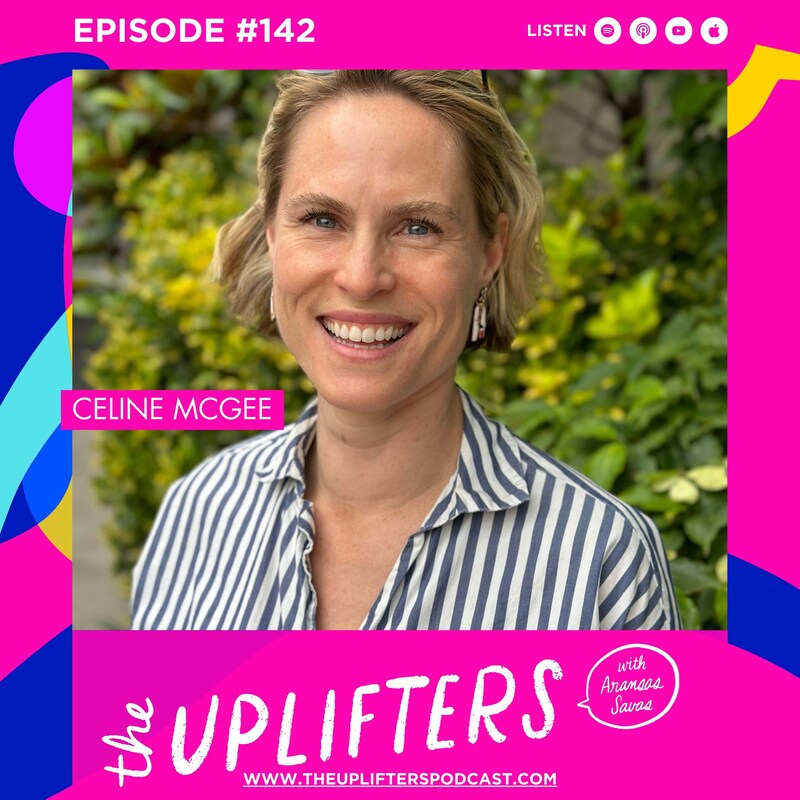
Shownotes
In an era of unprecedented social isolation and loneliness, one Philadelphia engineer is combating disconnection one compliment at a time. Celine McGee, who works in corporate telecommunications by day, has spent over a decade approaching strangers with genuine compliments and cards that say "pass it on"—creating what she calls the Compliment Squad.
What started with a single compliment during a neighborhood walk has evolved into a grassroots movement challenging our collective fear of talking to strangers. Celine shares how she overcomes the vulnerability of approaching people she's never met, why creating connection matters more than perfection, and how small acts of courage can create butterfly effects of kindness.
In this conversation, we explore the crisis of loneliness affecting our communities, practical strategies for overcoming social anxiety, and why sometimes the bravest thing we can do is simply tell someone their shoes look cool. Whether you're an introvert wanting to connect more or someone who believes we need more human interaction in our increasingly digital world, this episode offers both inspiration and practical tools for building courage through everyday connection.
What You'll Learn:
- How to overcome fear of talking to strangers — Practical strategies for approaching people you don't know with genuine compliments
- Building everyday courage through small acts — Why starting with simple compliments can help you develop confidence in all areas of life
- Creating community connection in isolated times — How one person's small initiative can ripple out to create meaningful change
- Navigating social anxiety with purpose — Turning awkwardness into opportunities for authentic human connection
- Sustaining passion projects alongside demanding careers — Strategies for keeping personal missions alive when corporate work drains your energy
Key Timestamps:
0:00 - Introduction 4:30 - The origin story of the Compliment Squad 11:45 - Overcoming the vulnerability of approaching strangers 18:20 - How compliments can bridge social divisions 24:15 - Katie's wisdom: "If you haven't been punched in the face, you're fine" 28:45 - Enlisting amplifiers to grow the movement 33:00 - Courage practices for connection
Key Takeaways:
- For anyone struggling with social connection: Compliments are one of the lowest-barrier ways to break the ice and create authentic moments with strangers
- For those managing fear of rejection: Research shows that even imperfect compliments land well—the intention matters more than perfect execution
- For community builders: Creating movements doesn't require perfection or grand gestures; it starts with doing more of what already feels good and inviting others to join you
Featured Quote:
"If you haven't been punched in the face so far, you're fine. So my point is like I compliment a lot of people I've never seen before or spoken to, and it's fine. So people shouldn't be scared just to give a compliment in any setting." — Celine McGee (quoting her friend Katie)
Resources & Links:
- Follow the Compliment Squad on Instagram: @compliment_squad
- Connect with Celine to learn more about bringing compliment initiatives to your community
About Celine McGee:
Celine McGee works in corporate America's telecommunications industry, specializing in procurement and relationship building. With a background in engineering, she brings analytical thinking to her professional work and creative courage to her passion project: the Compliment Squad. For over a decade, Celine has been approaching strangers in Philadelphia with genuine compliments and cards that invite recipients to "pass it on," creating ripples of kindness and connection in an increasingly isolated world.
About Your Host:
Aransas Savas is a wellbeing and leadership coach who helps people build courage and create meaningful impact in their lives. With 20+ years of behavioral research experience partnering with companies like Disney, Weight Watchers, and Best Buy, she hosts The Uplifters Podcast, featuring people doing brave things in their communities and lives. Aransas combines research rigor with personal warmth, exploring how we can all develop the courage to do the things that matter most.
Connect with Aransas:
- Instagram: @aransas_savas
- Podcast Instagram: @the_uplifters_podcast
- TikTok: @theuplifterspodcast
- Facebook: Aransas Savas
- Website: theuplifterspodcast.com
- YouTube: @theuplifterspodcast
- LinkedIn: Aransas Savas
Keywords:
overcoming social anxiety, building courage everyday, connecting with strangers, combating loneliness, social isolation solutions, kindness movement, Philadelphia community building, compliment practice, building confidence, human connection, grassroots activism, everyday courage, social bridge-building, vulnerability practice, community connection strategies, corporate professional passion projects, engineer entrepreneur, kindness activism, stranger connection, social courage building
Transcripts
As someone who's built my career around [00:00:30] rigorous science, I super love that Nutrafol was the first brand to clinically study hair thinning on menopausal women, which is why I am so proud to have them as a sponsor. Nutrafol takes a whole body approach to [00:00:45] hair health supporting you throughout your life stages.
off your first month [:I'm gonna let Celine tell you a little about her [00:01:30] story, but first I'll tell you how I met her. A good friend of mine who is a huge fan and supporter of this podcast, saw Celine on Instagram and said, this might be just the most uplifting thing [00:01:45] I've ever heard. And ask if she could introduce me to Celine.
created something called the [:Celine, [00:02:15] I'm so excited to meet you, to hear what inspired you to create the compliment squad. And what your dreams are for growing this impact. So thanks so much for taking some time out of your vacation [00:02:30] to come hang out with us today. Yeah, thank you for inviting me. I'm happy to do this. I think it's a good, uh, good use of my vacation time.
would be, but I think you're [:Celine McGee: an engineer by trade. I did study engineering. I worked as an engineer for let's say under 10 years, and then I pivoted to something else.
But you're
neer at heart to some level. [:Celine McGee: telecom industry in procurement, so I do. Relationship building and negotiating [00:03:15] probably, and thinking through like strategies of, uh, yeah.
So strategic in, in a way as well,
d yet there was something in [:Celine McGee: there's maybe a couple things, but I'll go with maybe the simplest [00:03:45] answer it.
and then turn around. And I [:It wasn't so much about the outfit, but just like how she was put together. And I thought, oh wow. It would be very cool if we complimented her. And so I, [00:04:15] that day I just gave her a compliment and this woman lit up. So coming off of, and it was helpful because I was with a friend, so it felt like less scary to go talk to a stranger because I was with someone.
do more of this. And then I [:Aransas Savas: walks with a friend of mine.
out for a walk. You see the [:Celine McGee: relief because it's kind of scary to talk to someone and then you're like, okay, this was received well. And then, and then of course [00:05:00] you're happy 'cause you have this connection with a stranger.
I think probably relief. It was also over 10 years ago, so for me to tell you specifically what my feelings were in that moment. I can't remember exactly, but yeah, probably relief at first.
it's interesting, isn't it? [:Celine McGee: Agreed. [00:05:30] Fully, fully. And then you also don't wanna make the person un, I worry about that quite a bit because I'm talking to strangers, not wanting them to feel uncomfortable because the intent is to give them like a nugget of positivity and not have them walk away with a bad interaction. So that's in the back of my [00:05:45] mind a lot as well.
appropriately and positively [:Celine McGee: [00:06:15] Yeah.
Aransas Savas: And serve as a, a positive interaction that was clearly defined and so.
, literally every person she [:Celine McGee: I love that.
hat she in the past has seen [:The coordination between two items of clothing, a curl and a hair. I mean, she can find something to [00:07:00] admire in every single human because that she's looking for it. Yeah, yeah. And it gives her a sense of purpose and it gives them a sense, I think, of being seen. And it really, it is. It's like these little, like [00:07:15] I feel like I'm on a stage or something.
they suddenly get this sense [:Celine McGee: say, I think two things.
ay to kind of break the ice. [:And yesterday I was in a [00:08:00] coffee shop and this woman had really cool sneakers, just really bright. Like, so for me, bright things. Catch my eye eye and I just thought, okay, I complimented her sneakers without really thinking about it. But then afterwards I thought, it's probably just me trying to break the ice.
that is a way to kind of use [:And it is so nice to see them just light up. And [00:08:30] then the best interactions is when you can have an actual connection and they wanna talk to you for a little bit. I think that's also really nice because then you know, it landed and they're like, they wanna connect even more, which is probably the best outcome.
e in this time where we have [:Oh, I'm sure. Yeah. 'cause of course media now is so highly personalized mm-hmm. That the stories we all [00:09:15] hear are, are completely tailored to reinforce our own belief systems. And so there's a very excellent chance. The messages he hears all day about the world and the messages that I hear about the world all day are completely [00:09:30] on opposite ends of the spectrum, and yet through something like a compliment, it feels like we have this opportunity to reconnect.
, I bring that up because it [:Celine McGee: Oh, fully. I think like three of the key things to me with the compliments is one, just spreading kindness from me, making people smile.
t I always say is it's about [:And I think today, you know, fast forward nine years later, these tendencies we had in 16 in the US at least, are still the same, right? We're consuming very [00:10:45] specific media that's just reinforcing ourselves in this. Path, and then I think other people are doing the same, and it's taking away our ability to connect and compliments our way to bridge that gap.
hopefully find something in [:[00:11:15] Yeah, so connection is a huge part of why I do the compliments.
y powerful, both for our own [:And it doesn't have to be
liments. Six to eight months [:That studies have come out that even if you say it wrong, as long as you say it, like the person still [00:12:00] receives it. Well. And so that I feel like puts less pressure on because I remember once I was complimenting a woman. Had really cool earrings and I can't remember what I said, but I like said something wrong and then I meant, I was like, no, no, I mean your earrings, but I just stumbled.
then it came out within, you [:Even if it's not perfect on your delivery, it'll [00:12:30] still land as long as it's how you feel. So don't be afraid and just do it. Isn't that true for all of life? I think that you're right. Probably it's for all of life. Just put your heart into it and just keep trying. Yeah, I think
curate. Yeah. I always think [:All of these important plot points and [00:13:00] messages when I would get distracted or zone out and my mother was like, oh, no, no, no. That's not how you do it. You don't try to read every word of it. You just try to keep reading. Oh, and trust that the important messages will come through. And I was like, okay, that I can do.
And I [:Celine McGee: I think that's the case. And don't be afraid. One of my friends always says, so I, [00:13:30] I do the compliment squad and I can maybe explain my process in a bit, but in Philadelphia mostly, and one of my friends, Katie, she always says, if you haven't been punched in the face so far, you're fine.
think it's fine. So my point [:Aransas Savas: Yeah. Well, and I think that's another really powerful universal message you're giving us there, which is what is the [00:14:00] real fear?
Celine McGee: Yeah.
could be damaging. Yes, but [:No, I haven't tried that. Yes. Yeah, I would recommend yes. Not
Celine McGee: doing
reed. Yes. So when you think [:What's another one that when you look back, you're like, that moment meant so much to me.
s one guy I compliment. So I [:Yes, not, yeah. I would have the same fear. Had a lot of cool patterns on, and I was like, all right, fine. Just compliment him. And I did. And then we ended [00:15:15] up, it was in the subway and we, or we were getting out of the subway when I did it, and we ended up walking in the same direction for a couple blocks. And then he just talked to me the whole time and it was very cool.
man. And we had this lovely [:So that would be one [00:15:45] that stands out to me.
Aransas Savas: Love that. I have a picture in my mind of what he looked like and it's not grounded in any reality other than my imagination, but I'm enjoying it. Yeah, there you go. So if you see someone that has
a city on the way outta the [:Yeah, it was really nice. We see what happens.
Aransas Savas: So it this started with you complimenting folks and then Yes. How did it become something bigger than that? A compliment squad?
Celine McGee: Well, so the [:All you need to do is compliment people. And I picked the word squad because I wanted it to be like an action [00:16:30] oriented word. It could be as big or as small as I want it to be. So it's like anyone who's complimenting someone could be part of the compliment squad. And then how did I do it? I feel like, what did I do?
cards. And then I would just [:The first [00:17:00] one said pay it forward. I think the first card or pass it on, I think it might have been pass it on. It was just a very simple white card. I think one side was compliment squad and the other side was like, pass it on. Nothing too fancy, but just square, nothing too [00:17:15] exciting. And then during the pandemic, I took a break and then I ended up taking a few months off of work to kind of recharge.
the back of my mind. And so [:So I feel like [00:17:45] that's where a lot of the energy came back was after I, after that work break and I was recharged, I just put a lot of my energy into the compliment squad.
mm. Yeah. Give them the card [:Celine McGee: Yeah. So that, the premise is that, is that it's, I guess it's the butterfly effect where. Maybe I can give you the opposite example, but if you're driving down the road and someone has road rage, unfortunately we're all human and [00:18:15] it's sometimes very hard not to take that road rage on and then pass, pass it on to someone else.
st spreads. That's the whole [:And, but it doesn't have to be with the card. Right. And part of what I'm doing is I'm complimenting people. I don't [00:18:45] know because I'm typically, what I do is I do it on the street and it's pretty surface level because you can only see so much. But the reason I'm doing it is to give them that idea, and I'm hoping that they take it maybe in their life and do it more at a like deeper [00:19:00] level than just complimenting a pattern or a color or something.
ld more of a connection with [:Aransas Savas: That's beautiful. Have you seen the compliment squad crop up in surprising places yet?
Celine McGee: I'm trying to think
Aransas Savas: of
e in public, I'm like, wait, [:Aransas Savas: That's an interesting point. So how do you feel when people compliment you? [00:19:45] Probably as
ike pause and say, thank you.[:Thanks for that compliment. But yes, I'm not, maybe I'm not the best at receiving this. That's interesting, huh?
Aransas Savas: Yeah, yeah, yeah. How it throws us a little bit off guard. Maybe
h is why most people. When I [:And then I say, that's just a compliment. Just do it to spread kindness. And then they think, oh wow, that's so nice. And then they smile and then most of the time, then we move on. I try to do the compliments [00:20:30] with people that the interactions are short, so that way if they're not comfortable, they know they can get away from me quickly.
And if they wanna talk we can talk more. So most of the time it's compliment they, you know, smile
you. I'm thinking about this [:I've noticed that a lot of people like [00:21:00] to compliment or shout at you while you're running. Oh, is that scary or how does that, how's that received? It's honestly, mostly fabulous. Good for you. And the most recent one was a couple of days ago in some man that [00:21:15] in this small town where I know most people, I was like from a few blocks away.
s I passed the man, he said, [:I [00:21:45] love
Energy, like I'm passing the [:And I was like running really hard and had no extra breath. So I compliment people at the beginning and then when the [00:22:15] race was over I was like, cheersing on all these people in the street that I could see had done it. But I find it hard in the moment as I am the runner to be like. I have enough breath left to say something meaningful to someone else.
So I found the thumbs up is my my fault.
ansas Savas: Yeah, thumbs up [:Physical gesture I could make of support and not threat to people. And how like a [00:23:00] hand held up looked like it could be a stop sign or a hello. And so I went away from that and it, I ended up landing like serious overthinking. I should probably be like seeking therapy outta, I dunno. But I [00:23:15] landed on a hand to my heart and a nod.
ything other than I see you. [:Celine McGee: Maybe my next run, I'll try that. So my thumbs up, they're like, thumb thumbs up is really good too.
So enthusiastic. I'm like.
as: That feels really joyful [:Yeah. Yeah. And you can imagine a little story of this person's effort and commitment and you wanna support them. And yet, in our every day, it's so easy to go [00:24:15] internal and to isolate ourselves from the people who are literally inches away from us. And so I think what I'm being reminded of here in your story is that through an activation like [00:24:30] this, through formalizing it into.
ives you an excuse to do the [:Celine McGee: Yeah, I think it's just don't hesitate, just do it. If you something, just say something, but not in.
in there's a bomb. Yeah. If [:Yesterday I was like being such a chicken, like thinking about it and then [00:25:15] I couldn't like get myself off the edge. And then when I eventually did, it was so fun. I did it a few times. But it's similar with the compliment. Just don't overthink it, just do it. And then you'll be like excited that you did it and wanna keep doing it.
d the worst case, worst case [:Aransas Savas: Yeah, it's not so bad and honestly it's a really useful. Thing to get used to. Yeah, I think so too. [00:25:45] To tolerating a
Celine McGee: funny look that Oh yeah, true.
any type of setting. I know [:I also talked to college students that were taking like a Psych 1 0 1 class about how they could use compliments. So. Or it could be, yeah, it could be used in a bunch of different areas. It doesn't have to be like strangers in [00:26:15] the street. You could use it. Yeah. In many aspects of your life. So
Aransas Savas: do you have dreams of the compliment squad reaching far beyond you?
Yeah, so one
work's been quite busy. So I [:And the TR struggle that I have now is like the [00:26:45] compliment squad to me depends on my energy and my ability to go out and go do this. And so one of the things I'm kind of noodling on and trying to figure out is how can I grow this without it being so dependent on lean energy? And so I don't have an answer, [00:27:00] but that is one of the things I'm thinking about.
nna, people that we walk by. [:So those are thoughts, but I do wanna do more and feel guilty when I'm not. So that's kind of what [00:27:30] I'm struggling with, I would say at the moment.
have isolated is one of the [:I call it enlist amplifiers, very clearly. What it means is, mm-hmm. Finding [00:28:00] these people who get it, who see what you're doing. And allow them, hand it over and say, what would you do with this to expand the impact? Yes. I like
at you're willing to talk to [:It gets the message out and then, yeah, and what you just shared that is, yeah, I probably need to think through who those people are that I could reach out to that help be kind of like a microphone, whether it's a microphone through their ideas or through. I like that. [00:28:30] I have to think through more of those.
So the walking group was one thought, but I do think that would be an area where it's shared energy, so it's not so dependent on my energy and shared energy of thought. Yeah, I like that. And
Aransas Savas: the
Celine McGee: way you phrased it,
hat. Well, I'll tell you the [:First of all, you identified what the challenge was, which was your own limited time and resources. So the why is there, and it's big and it's strong, and you know what you want. [00:29:00] But like, do I have enough time to go do this? So the question I always ask myself is like, what is the highest value, lowest resourced answer to solving this problem?
And so [:I pin the note and my phone so that I see it every time. I know Open my notes app, which I do a lot, and I write down whichever answers come to mind [00:29:45] immediately. But then I see it over and over. That keeps me mindful and returns my attention to it again and again. And then I just keep adding names to it.
leting the list. And I think [:I could send that first letter or that first text or whatever to the group that you're thinking of immediately, or maybe it's asking a question. Yeah,
Celine McGee: I [:And then even if it's not perfectly answered, if it just kind of noodles in my brain and I have it. Yeah. Thank you. Very, thank you for that
n. My other name for that is [:Passive progress. Okay.
almost like, yeah, you just [:Aransas Savas: It's so energizing to think about this stuff because these are the kind of things that so easily fall to the back burner.
McGee: Focus on that. Agree. [:Aransas Savas: Yeah, we have a whole episode dedicated to them. You've demonstrated [00:31:30] so many of them.
rful to say, how can I start [:And in the second one is opting for progress [00:32:00] over perfection. And so making progress a really active process. And trusting that you'll learn what you need to learn to improve by doing. Okay. Makes sense. And again, it's just so interesting [00:32:15] to, to me to hear how you do this because the third one was unite with amplify, uh, allies and amplifiers.
actly. Releasing your offers [:And we watched you do this by acknowledging like what was scary about giving [00:32:45] compliments and letting that little bit of fear teach you what you needed to learn in order to. Amplify this with amplify authority and understanding and compassion, [00:33:00] and then giving yourself the permission to speak up bravely about problems and possibilities is a big part of the growth aspect of that.
nd again. So like, you know. [:But
ulate. From there and adjust [:Aransas Savas: Thank you. Thanks for going through them with me, those, they're very helpful.
Oh my gosh. Thank you for asking. I'm a big believer that there is no reason we should learn all this stuff on our own. Well, thanks for sharing. Yeah. And how did, so you,
e: you came across that just [:Aransas Savas: So as a researcher, my brain is constantly looking for patterns and I sat out on this project to really understand how people do big, brave things.
And so then I got to [:George.
Celine McGee: Okay, great. Thank
Aransas Savas: you. Thanks for breaking it
Celine McGee: down the digestible process.
n to reflect on and I get so [:I've like the, the quiet man across the street so far, he has accepted cake. So that was my first like foray. We had a little chat the other day [00:35:30] and I'm gonna just keep kind of like bridging the gap because even though we may continue to get vastly different media fed to us, I think our, our very human interactions can be much more connected and we can all feel a little less.[00:35:45]
Alone on this planet.
also possible he wants to be [:Aransas Savas: but it's always worth trying.
work? I dunno that answer. I [:We have questions.
Celine McGee: Please. We have questions about your truck and what is done. 18 hours a day. Exactly. At least he's outside. I think that's
ransas Savas: very positive. [:I think it's easy. Just compliment [00:36:45]
Celine McGee: people that in your life, strangers, people that you're close with, just use compliments as a way to connect with them. It's that, that easy. And then to do the a, a good compliment, as I said before. Don't be scared. Just do it. Make sure it's genuine so it's something that you really feel.
And [:Aransas Savas: do it with our voice and we can get some more inspiration over on your Instagram. Yes,
Celine McGee: you can.
Aransas Savas: I'll
ent squad. Compliment squad. [:Aransas Savas: love
Celine McGee: it.
Aransas Savas: Every guest nominates a woman who inspires them.
Would you like to nominate someone you know,
Celine McGee: I.
because she works full time [:That sounds
o much for getting my brain. [:Celine McGee: Well, thank you for taking the time to talk to me today and walk through my problem solving earlier on. That was [00:38:15]
Aransas Savas: fun.
n your life and then join us [:Music: Big love painted water, sunshine with rosemary. I'm dwelling, [00:39:00] perplexing. You find it star. Be around best love relish in a new prime MA tree in springtime dance. With that hindsight, [00:39:15] bring the sun to twilight. Lift you up,
lift you up,
lift you up,[:lift you up.
Lift,
lift. You[:lift.
Um, beautiful. I cried. [: