Shownotes
How do you scale a luxury brand without losing what made customers love it in the first place?
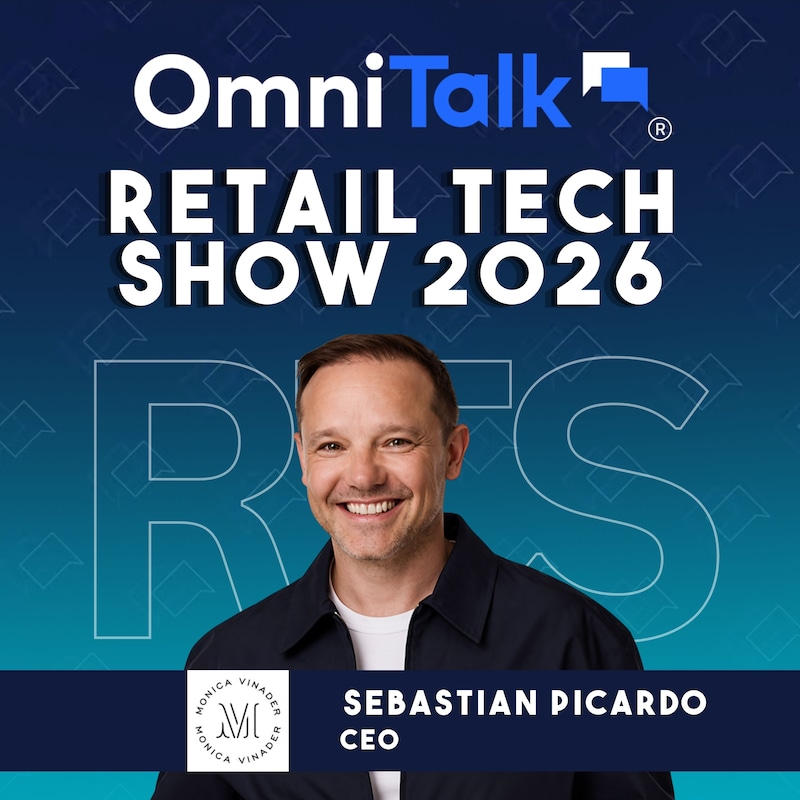
Live from Retail Technology Show 2026 in London, Chris Walton sits down with Sebastian Picardo, CEO of Monica Vinader, to discuss the future of modern luxury retail.
Sebastian shares lessons from leadership roles at Alexander McQueen, Net-a-Porter, and Burberry, plus what it takes to grow Monica Vinader across the UK, US, and beyond.
Key Topics Covered:
• Why great luxury retail always starts with product
• Balancing quality, affordability, and responsible sourcing
• How founder-led brands scale successfully
• The difference between growing in the UK vs. the US
• Building awareness in competitive global markets
• Why relationships matter as much as product in luxury
• How culture becomes a competitive advantage
• Growing a brand customers genuinely love
Thank you to VusionGroup for supporting our coverage from Retail Technology Show 2026.
#RetailTechnologyShow #LuxuryRetail #BrandBuilding #RetailLeadership #OmniTalkRetail #RetailInnovation
This podcast uses the following third-party services for analysis:
Podcorn - https://podcorn.com/privacy
Transcripts
Hello, welcome back.
Speaker A:This is Omnitalk Retail.
Speaker A:I'm Chris Walton and we are coming to you live from the Retail Technology show in London.
Speaker A:And we are once again in the Vuzion podcast studio.
Speaker A:Thanks for viewsion.
Speaker A:Thanks to Vuzion, I should say, and to the Retail Technology show for making our coverage possible.
Speaker A:Now, let me introduce to you my next guest, who is Sebastian Picardo, the CEO of Monica Vinoder.
Speaker A:Sebastian, welcome to omnitalk.
Speaker B:Thank you.
Speaker B:Thank you for having me.
Speaker A:Yeah, it's great to have you.
Speaker A:So your background, I mean, God, I was looking through it on LinkedIn.
Speaker A:Your background is steeped, my friend.
Speaker A:Steeped in luxury and fashion apparel.
Speaker A:So tell us about yourself and your career and also about the company that you work for now.
Speaker B:So I'm originally from Buenos Aires, Argentina.
Speaker A:Okay.
Speaker B:So I grew up there, and I studied there, and I started working there.
Speaker B:I was first an accountant.
Speaker B:Okay.
Speaker B:Second.
Speaker A:Second in a row.
Speaker B:Second.
Speaker B:And, yeah, another one, Helen Dickinson, started.
Speaker A:As an accountant, too.
Speaker B:Yeah, we just of us.
Speaker B:And I started my first job was as an auditor.
Speaker B:So I was checking other people's accounting.
Speaker B:So that was a great way to start because I obviously learned about accounting, but more importantly, I learned about interacting with people and building relationships because I had a lot of clients.
Speaker B:And typically the joke I make is that not many people want to talk to the auditor.
Speaker A:No, I can't imagine I would want to talk to you.
Speaker B:I had to dial up my charming big time.
Speaker A:Wow, so you're an extroverted accountant.
Speaker A:That's what you're telling me?
Speaker B:Pretty much.
Speaker A:Wow, that's amazing.
Speaker A:That's me.
Speaker A:So how'd you get into.
Speaker A:How'd you get into fashion and luxury then?
Speaker B:So when I finished my studies in Argentina, and after working in accounting for five years, I came to the UK to do a master's degree.
Speaker B:And as I was finishing the master's degree, I got approached to do a job with Alexander McQueen in the finance team.
Speaker B:And so at the time, he was alive.
Speaker B:And so I joined the company and I worked.
Speaker B:And that's how I started in luxury.
Speaker B:In luxury fashion.
Speaker A:Okay.
Speaker B:So I worked there for a couple of years.
Speaker B:Then I joined Net A Porter, which was a startup at the time, the first online retailer to sell luxury.
Speaker B:Another innovator.
Speaker B:Then after that, I joined Burberry.
Speaker B:And first I worked in Spain, and then I moved back to London and we worked in all things digital.
Speaker B:And at the time, you know, Burberry was again, one of the most innovative companies in our sector around digital.
Speaker B:And then I moved to Asia.
Speaker B:And I worked for a multi brand retailer called Leng Crawford, which has online operations and stores in Hong Kong and mainland China.
Speaker B:And again, we did a lot of omnichannel work and things that were very exciting and very innovative at the time.
Speaker B:And then I became the deputy CEO of the company.
Speaker B:And after that I joined another retailer in Canada called Whole Renfrew.
Speaker B:It's the largest and today the only luxury retailer in the market after the pandemic.
Speaker B:And basically I worked there for another five years.
Speaker B:So at some point I wanted to come back to Europe.
Speaker B:My wife is from the UK and our parents are not getting any younger and our kids are at a good age to come back, so we wanted to be in Europe at some point.
Speaker B:So this opportunity came up when I was already coming back to Europe and I thought it was fantastic.
Speaker B:I think Monica Vinader is an incredible brand.
Speaker B:It's very loved by a lot of customers here in the uk and it's also loved in all the markets where we operate.
Speaker B:We have our second largest market in the US and it's our fastest growing market and obviously so big that, you know, it's almost unlimited growth opportunities there.
Speaker B:So I absolutely love it here.
Speaker A:Yeah.
Speaker A:For those listening too, I got to hear a story of one of friends of mine who was in the podcast studio before we hit record with Sebastian, was telling him how he bought his wife a 50th birthday present from.
Speaker A:From you guys.
Speaker A:And it was really special moment for him.
Speaker A:And I know you took that to heart when he told you that story.
Speaker B:100%.
Speaker B:I mean, it was such a. I mean, this is exactly what happens.
Speaker A:Yeah.
Speaker B:With a lot of people that interact with, you know, they, they asked me, you know, what you do and so on.
Speaker B:When I mentioned Monica, Vienna, there, there's always a similar story like this.
Speaker A:That's great.
Speaker B:And, and that's one of the reasons why I just thought, you know, this company has a lot of people who love the brand and love what we do, so it's a real privilege to be part of it.
Speaker A:There's no better marketing than word of mouth to 100%.
Speaker B:There's a lot of advocates.
Speaker B:Yeah.
Speaker A:Well, that's an impressive resume, my friend.
Speaker A:And you look so young too, so congrats to you.
Speaker B:Thank you.
Speaker B:Thank you.
Speaker B:Good genes.
Speaker A:Yeah.
Speaker B:Right.
Speaker A:You do.
Speaker A:For sure.
Speaker A:All right, so I'm curious.
Speaker A:So as you move between all those different cultures, all those different countries, all those different business models, you know, and there's different market maturity levels of each of those retailers that you are Working with.
Speaker A:I'm curious, is there anything that you learned that you would say is universally true to luxury retailing?
Speaker B:Absolutely.
Speaker B:I think, you know, in the end, when it comes to luxury retailing, the number one thing is always product.
Speaker A:Okay.
Speaker B:I think people want to get the product.
Speaker B:And so having a product that has personality, character, that is consistent over time.
Speaker B:I'll give you an example.
Speaker B:Monica Vinader's product always has design integrity, which is, as I was telling you earlier, inspired in art and nature, very high quality.
Speaker B:So we have very high standards on quality.
Speaker B:And that has been the case since day one.
Speaker B:Then also we have responsible practices.
Speaker B:We have 100% recycled gold and silver.
Speaker B:We have also traceability.
Speaker B:We have a product passport.
Speaker B:We have all these different things that we do to make sure that customers can trust what we do.
Speaker B:And the most, I would say, important thing is that we offer this incredible product at a very affordable price.
Speaker B:Our challenge is always to ensure that despite how crazy the gold prices and silver prices are, we need to continue to do great design that is consistent and that it's a Ford to a customer.
Speaker B:And yet it's still also high quality.
Speaker B:You know, we offer five year guarantee for our products.
Speaker B:Beyond the five years we offer lifetime repairs.
Speaker B:You know, it's all about doing that consistently.
Speaker B:So that's something that I think is universal in luxury.
Speaker B:Second thing is relationships.
Speaker B:I think relationships are very important in luxury.
Speaker B:And I would say that over time, I think it's not just the customer relationship, but it's also the relationship you have with every stakeholder.
Speaker B:For example, me as the CEO, obviously we need to make sure that we have a great relationship with customers, but also with our teams and with our vendors and people like yourselves.
Speaker B:We need to make sure we have great relationship with everyone so that every time we interact with any of our stakeholders, people can feel who we are and what we stand for and how we do business.
Speaker B:And hopefully they're excited about who we are so that they want to do more things with us.
Speaker A:I like that.
Speaker A:I like that element a lot.
Speaker A:That's something I've never thought about either.
Speaker A:That's really, really fascinating.
Speaker A:Going back to the product side of things too.
Speaker A:I mean, you mentioned to me before we started because I want to let people in on all the conversations we've had too.
Speaker A:You said that Monica takes a really interesting approach to how she designs her collections too, in the terms of she tries to stick kind of inspired by nature and inside of her own head versus looking out in the competition so that she doesn't Kind of gravitate towards the mean, so to speak, in terms of what she's designing.
Speaker A:Can you talk about that a little bit?
Speaker B:Absolutely.
Speaker B:I mean, she's originally from San Sebastian in the north of Spain.
Speaker A:Going there in a month.
Speaker B:Yeah, there you go.
Speaker B:And basically she grew up there, and over time, she basically lived in different places.
Speaker B:And a lot of the things that I noticed with her is that she loves living in places where she's very connected to nature.
Speaker B:And I think she gets a lot of inspiration from that.
Speaker B:She obviously visits places where there's art, art galleries and so on.
Speaker B:But I think nature is one of the key things that she gets inspired from.
Speaker B:And the whole team, the design team, the same, obviously, because that's the ethos of the brand.
Speaker B:And you will see a lot of our products literally have shapes that have to do with nature.
Speaker B:It may be a stone, it may be a wave, it may be, you know, inspired on anything that has to do with nature.
Speaker B:So I think, you know, going back to that product consistency and what builds trust, I think design integrity is one of the key things that we do really well, and we try and stay very focused on that and therefore, you know, not try and visit a lot of other companies doing what we do, because otherwise you forget about who you are and, you know, how you do things.
Speaker A:Yeah, I wanted to share that anecdote with audience, too, because I feel like that.
Speaker A:I feel like that is something that is consistent with artists that I talk to.
Speaker A:Like, true artists don't want to be influenced by the outside.
Speaker A:They want to just stay in their own.
Speaker A:Their own sphere in terms of how they think about things and create the art that means the most to them.
Speaker A:So that's.
Speaker B:It's remarkable.
Speaker B:I mean, nowadays where you get bombarded with information and it's so easy to access things, I just think it's remarkable.
Speaker B:So I always have a lot of respect for how she and the team approaches that and how disciplined they are about it.
Speaker A:So I'm curious, what was.
Speaker A:What was those first.
Speaker A:So when you're.
Speaker A:So you're over in Canada before this, right?
Speaker A:What were those first conversations with Monica like?
Speaker A:Like, what did you say to her that, you know, made you coming in as CEO so compelling for her?
Speaker B:I should ask her.
Speaker B:But my gut tells me is, you know, first of all, I think we obviously connected culturally.
Speaker B:I think, you know, she saw that it would be a very good cultural fit.
Speaker B:I think she probably appreciated my experience from different types of companies.
Speaker B:I work for smaller companies, for larger companies, for retailers, for brands.
Speaker B:I worked in different markets.
Speaker B:I think she appreciated that.
Speaker B:And I also think that she understood that our goal in many ways was to scale up the business.
Speaker B:And so I think she just guessing, you know, but, you know, I'm guessing that from my conversation.
Speaker B:From my conversation.
Speaker B:Maybe that's your next interview.
Speaker B:You know, I think she probably thought that, you know, had a good background to help the company get to the next stage of development, which is probably going to be, you know, a much larger business, much more developed presence in existing markets and probably in new markets and becoming a more global brand.
Speaker A:Does going to a brand that is so, you know, so led by a founder, so much about the founder, does that present any unique challenges relative to the types of jobs you've had before in the industry?
Speaker B:Yeah, I mean, obviously the founder, you know, the founder's personality is everywhere in the company.
Speaker B:I think with her, what's been incredible is that since day one, she always said, you know, my job is to make sure you're successful.
Speaker B:And so she's still in the company as co founder and artistic director, but she's very clear about what her role is.
Speaker B:And she's in a role of influence where she's influencing product design, she's influencing how we come to life digitally and in the stores, she's influencing the marketing.
Speaker B:But really as a guardian of the brand as opposed to the person running the company.
Speaker B:This is what she used to do.
Speaker B:Now I'm the person running the company.
Speaker B:So she's very clear about what her role is and it's working really well.
Speaker A:That's great.
Speaker A:All right, so what are your goals?
Speaker A:You know, what are your goals here as you look forward?
Speaker A:What are your goals for the company and your role?
Speaker B:I think the number one goal is, first of all, in the very short term, is to be laser focused on doing what we do really well.
Speaker B:Because I think there's still opportunities to do exactly what we do today better.
Speaker B:And I think we're all focused on that as we go beyond the next few months.
Speaker B:I think really the goal will be to, as I said earlier, scale up the business and make sure the company is much more global, that is a lot more present in existing markets, especially UK and us, and that we continue to refine our space, be very clear about who we are, what we stand for, and be very differentiated in the space that we play, which is really between fashion and high jewelry.
Speaker B:You know, it's a demi fine and fine space where we play.
Speaker B:And I just think, you know, there's a lot of demand for this we do what we do really well in terms of providing something that the customer values at an affordable price.
Speaker B:So I think that's what we're going to continue to do.
Speaker B:We just need to do it at more scale.
Speaker B:Right.
Speaker A:So I'm curious what comes into your mind then, or day to day focus in the job in terms of what's required to scale in this industry?
Speaker A:Like as you look to scale in the us, let's just keep it in the US and uk.
Speaker A:It's probably the simplest way to ask this question, what are the elements that enable you to scale?
Speaker B:So I think of it as a 360 degree type of set of things that we need to do.
Speaker B:And obviously I love your question about UK and US because it really applies to any market.
Speaker B:Each market is different and your positioning may be not necessarily your position, but the level of awareness may be different.
Speaker B:I mean, the US is such a vast market that having the kind of interactions we just had with your friend in every city you visit in the US at every moment is not necessarily something that you would expect because it's just very vast.
Speaker B:Whereas in the market where we've been here for so long, there's a much higher level of awareness, much higher level of familiarity and a familiarity that is exactly in line with who we are and what we stand for, versus sometimes people are familiar with you, but not necessarily for the things that you are famous for or you want to be famous for.
Speaker B:So I think the challenge in the UK is really to, you know, this is our home market, it's our biggest market.
Speaker B:It's where people are very familiar with us, they love us.
Speaker B:So how do we continue to do a great job here, still in the same space?
Speaker B:Maybe we can have some more stores.
Speaker B:Maybe we can do, you know, we can.
Speaker B:Great.
Speaker B:Obviously we are constantly launching new products.
Speaker B:We just launched a new innovation this week around a new diamond cat, which we call Siren Diamond.
Speaker B:It's been huge successful.
Speaker B:It's the first time we do something that is one carat, it's all lab grown, so we'll probably do product extensions and innovations.
Speaker B:You know, we started producing product for men at the same time.
Speaker B:It will probably involve just refining and fine tuning and being more nuanced.
Speaker B:How do people experience it online?
Speaker B:How do they experience it in the store?
Speaker B:How is it to be in a store in London?
Speaker B:How is it to be in another city in the uk?
Speaker B:Whereas in the US it's probably going to be different, it's going to be a lot more about raising awareness, continue to engage with people and make sure that they have familiarity with us.
Speaker B:And so I think a lot of our efforts will be around that.
Speaker A:So it's brand building in the US it's getting the right product in the UK and probably the US too, and then making sure that the suppliers are set up to deliver in terms of what you're making that brand product promise, about 100%.
Speaker B:I think there's always those nuances across product, across marketing.
Speaker B:What are the things that customers like in different markets is different and especially as in the US is such a big market, not just in terms of number of people but also geographically that there's a lot of nuances as to what people like in different places.
Speaker A:Yeah.
Speaker A:All right, well, let's get you out of here on this.
Speaker A:I'm gonna put your, put your money where your mouth is or put your feet to the fire.
Speaker A: 'm interviewing you at RTS in: Speaker A:What has to be true five years from now for you to know that you've done the job that you set out to do?
Speaker B:I would love to see a Monica Vinnart that is stronger, that is more global, that has created not only a brand and a product that people love, but also a culture that anyone who interacts with us loves interacting with us.
Speaker A:Yeah, maybe.
Speaker A:What?
Speaker A:Maybe my wife will be getting some Monica Vinoder jewelry here soon too.
Speaker A:Maybe that'll be part of the five year plan.
Speaker B:I don't know.
Speaker B:100%.
Speaker A:Hold my feet to that fire too.
Speaker B:100%.
Speaker A:100%.
Speaker B:We'll make it an area of focus.
Speaker A:100%.
Speaker A:Yeah, I think I'm probably going to do that actually after talking to you so.
Speaker A:And hear it from my friend before.
Speaker A:Before we started recording.
Speaker A:So.
Speaker A:Well, thanks for your time.
Speaker A:Man, this was really fabulous.
Speaker A:It was really great.
Speaker B:It has been a pleasure.
Speaker B:Thank you so much for having me here.
Speaker B:And you know, I think you do an amazing job.
Speaker B:So keep it up.
Speaker A:Thank you.
Speaker A:Thank you.
Speaker A:Sebastian Picardo, the CEO of Monica Vinoder.
Speaker A:Thanks for joining me today.
Speaker A:Thanks to the Retail Technology show and to Fusion for making all of our coverage of the conference possible.
Speaker A:And as always, on behalf of Sebastian and myself, as always, be careful out there.